Sunday, March 13, 2011

Chris Christie The Ides of March are coming… and I’m waiting VIDEO


“The Choice” that Governor Christie has laid out for the New Jersey legislature. Overview of this year's budget. Governor Christie's FY 2012 Budget Overview [pdf 1.02MB]

Achieves New Normal in Budgeting By Maintaining Fiscal Discipline and Funding Key Priorities for New Jerseyans

Governor Chris ChristiTrenton, NJ – Advancing his vision for a New Normal in state budgeting, Governor Chris Christie presented a $29.4 billion budget for Fiscal Year 2012 that cuts real spending for a second consecutive year.
The Governor’s Budget proposal includes $200 million in focused tax cuts, provides additional property tax relief, increases school aid and funds a reformed state pension system, while preserving or increasing funding to protect our state’s most vulnerable citizens. The Fiscal Year 2012 Budget marks a departure from the Trenton tradition of budgeting to meet deficit projections that embrace wish-list spending by legislators and assume continuous funding increases that irresponsibly ignore actual revenue sources and the fiscal health of the state.

The Governor’s Budget – which reduces real spending by 2.6 percent from the current fiscal year – hits the reset button on the state budgeting process and starts with the refreshing assumption that budgeting and spending must be reality-based and zero-based. The New Normal means developing a bottom-up approach – establishing priorities and funding them based on revenue that is actually available and predictable versus the old approach of assuming every line item and program will automatically be funded at the same or higher level than prior years.

“The old way of budgeting and thinking must be stricken from our collective minds if we are to successfully emerge from this fiscal crisis with permanently reformed budgeting and spending habits,” Governor Chris Christie said. “This is a new paradigm for state government – a New Normal – that cuts and spends responsibly, incentivizes our local governments to do better with what our taxpayers entrust to them, and causes businesses to feel welcome and want to stay and expand or relocate to our state.”

The Governor’s Budget proposal adheres to necessary spending and budgeting discipline, but also meets New Jersey’s most vital spending priorities. Among those priorities in the budget:

* Increases education aid to every school district in New Jersey by a total of $250 million;

* Fulfills the statutory commitment to make a $506 million payment to a reformed state pension fund, representing the first funding to the defined benefit plans since fiscal year 2009;

* Provides $200 million in job-creating, strategic tax cuts that are responsible and sustainable;

* Doubles funding for the Homestead Rebate to provide direct property tax relief in the form of a property tax credit under the newly named Homestead Benefit program;

* Protects municipal aid and keeps funding at fiscal year 2011 levels to help towns meet the new 2 percent property tax cap (while decreasing by 10 percent the category of Special Transitional Aid to cities, in keeping with the Governor’s pledge to end cities’ reliance on the aid as they adopt best-practices budgeting to improve fiscal and management reforms); and
* Increases and secures New Jersey hospital funding by a total of $20 million, and increases funding for student financial aid by the same amount.

The Governor’s Budget takes all possible steps to maintain the safety net for New Jersey’s most vulnerable and at-need individuals and families. From prescription drug aid for seniors to helping low-income tenants stay in their homes, the Governor’s Budget includes billions of dollars and:

Preserves critical spending and fully funds the fiscal year 2011 increases to the Pharmaceutical Assistance to the Aged and Disabled (PAAD) and Senior Gold Prescription Assistance Programs without increases in co-pays or eligibility – keeping it one of the most generous such benefit programs in the nation;

Allocates $20.4 million to help the developmentally disabled lead richer, happier lives through new community placement and services, and funds day programs and other services; similarly, the budget continues and expands funding for the requirement that the state expand the number of residential and community settings for New Jersey’s mentally ill;

Preserves the current level of support for higher education, after years of cuts, while increasing student aid programs by $20 million and providing $15 million for capital improvements at community colleges;

Provides resources to keep 4,300 low-income citizens in their homes and apartments, including $25 million from the New Jersey Affordable Housing Agency Trust Fund and $9 million from the Housing and Mortgage Finance Agency; and

Avoids an increase in NJ Transit fares and expands bus service to select growth markets.

The damage caused by years of fiscal mismanagement, coupled with the lingering effects of the national recession, will continue to restrain state spending for years to come. The reality is that the New Normal of the current economic and fiscal climate necessitates more painful choices in how the state allocates finite taxpayer dollars. Facing up to those realities, the proposed budget continues on the path of making difficult, often painful choices in nearly every department. Funding in even worthwhile, popular programs is reduced or eliminated in order to fund priorities.

Governor Christie will continue to insist that the shared sacrifice be spread among state employees as well, including in payment of a fair share of medical costs. By increasing co-payments and premiums to levels still below what federal employees pay, the state will save $323 million that will be used to pay for other critically important programs – and prevent increases in some of the highest sales, income and property taxes in the nation.

Finally, to pave the way for the best possible outcome for our state and its people as we deal with the New Normal and emerge from recession, the Governor intends to better position our businesses and attract new ones with tax cuts, reform and incentives to spur job growth and business expansion. To that end, he proposes a comprehensive but phased-in program of $2.5 billion in job-creation incentives over the next five years. As part of the program, Governor Christie is proposing for Fiscal 2012 tax cuts and reforms resulting in approximately $200 million in savings for businesses.

The package outlined by the Governor increases the state’s competitiveness in a responsible and sustainable manner by providing critical tax reform and incentives across a variety of tax-policy areas, including: loss carry-forward relief for small businesses, a reduction of the S-corporation minimum tax, increasing the credit allowed for research and development investments, exemptions for business software technology reinvestment, increasing funding for economic development programs, and the phasing-out of the Technology Energy Facility Assessment to provide needed relief from New Jersey’s already-high energy costs.

Governor Christie has committed to only putting in place tax cuts and incentives that are paid for within the context of a Constitutionally-balanced state budget. By providing for a phase-in of the program, the fiscal impact rises with the expected expansion of the state’s economy while minimizing the impact on the state budget each year.

The budget proposal, a representation of the Governor’s commitment to maintain fiscal discipline, also outlines a bold reform agenda to take on the big issues facing New Jersey, including the Governor’s comprehensive reform plans to restore fiscal sanity to out-of-control pension and health benefits systems, make 2011 the Year of Education Reform to bring the opportunity of a high-quality education to every child, and the pro-growth, responsible package of tax reforms and incentives to create Jersey Jobs and increase New Jersey’s competitiveness, as outlined above.

Attached to this release is a document providing an overview of this year's budget. an overview of this year's budget. Governor Christie's FY 2012 Budget Overview [pdf 1.02MB]

VIDEO CREDIT: GovChristie

TEXT CREDIT: Office of the Governor

Saturday, March 12, 2011

Lisa Murkowski Weekly Republican Address TEXT VIDEO 03/12/11

(Editors Note: i know, i know. our regular readers will remember our support of Joe Miller. Feel free to comment.)


This is Lisa Murkowski, senator for Alaska and lead Republican on the Senate Energy and Natural Resources Committee.

Our hearts and prayers are with the people of Japan in the wake of Friday’s terrible earthquake and tsunami. In Alaska, the memories of the devastating 1964 quake are still with us. We know we’re just beginning to comprehend the magnitude of this quake and its devastation.

Lisa MurkowskiWe share and support the President’s commitment to bring America’s resources to bear to help Japan recover -- and we commend the actions that he has taken so far.

This tragedy -- as well as the upheaval in the Middle East and North Africa -- serve as stark reminders of how intertwined our world economy is; how world events beyond our control can affect all of us. It makes it all the more important that we control those things we can.

I want to speak with you today about one of the threats that we’re....
...experiencing personally, rising energy prices. And, I want to share some of the steps that Republicans are ready to take right now – steps that will protect America from international conflicts, create thousands of new jobs, reduce our budget deficit, and help bring energy prices back down to earth.

Nationwide, gasoline prices have risen by 40 cents over the past month, and have more than doubled since January of 2009. A gallon of gas is heading north of $4. That’s not just pain at the pump; it’s crippling for anyone with bills to pay, groceries to buy, or a long commute.

When gasoline prices go up, families and businesses are stretched thin. Budgets are harder to balance and jobs are destroyed. If energy prices keep climbing, our nation could slip back into recession – just as we’re finally emerging from the last one.

The worst part of this emerging crisis is that our own government deserves much of the blame. International events have pushed prices higher, but our own shortsightedness and restrictions have also played a critical role.

Some in Washington believe higher oil and gas prices, driven even higher by proposed new taxes, are needed to make Americans behave the way they think they should. Higher energy prices are their explicit goal. They don’t realize or don’t care about the damage to the economy, the pain to a mom as she fills her minivan, or a farmer as he tries to bring in a harvest.

America now imports 11 million barrels of oil every day. Last year alone, we spent more than $330 billion on foreign oil, much of it in countries that are not our friends.

We don’t import oil because our domestic reserves are exhausted. Not even close. Since 1919, people have claimed that America is ‘running out of oil.’ It might surprise you that we’re still the world’s third-largest oil producer, and seem to find more whenever we actually look.

Republicans know that it’s past time to produce more of America’s oil. My home state of Alaska alone has estimated resources in excess of 65 years’ worth of Persian Gulf imports.

Republicans would end the de facto moratorium on new development in the Gulf of Mexico and parts of the Rocky Mountain West. Instead of canceling leases and refusing to issue permits, we need to put people back to work.

It’s also time to shelve the bad ideas. Democrats have repeatedly sought to increase taxes and fees while slowing the permitting process. That won’t solve any problems, but it will mean less production, more imports, and higher prices. To boost production, we need to cut red tape and streamline regulations.

Both supply and demand affect oil prices, and that’s why Republicans support both new production and alternatives to reduce consumption. But we’re also thinking about what comes next, and we’re committed to making progress on cleaner energy -- that’s just not our only goal. We also want energy to be affordable, abundant, diverse, and domestic.

For far too long, our nation has lacked a coherent energy policy. For too many decades, opponents have argued against vital long-term policies because they won’t produce instant gratification. We’ve ignored the tremendous benefits of American oil production -- jobs, money, and security -- and now we’re facing the consequences.

Republicans believe that Americans deserve better, and we believe the federal government can do better. We’re ready to make meaningful progress on energy, and we’re hopeful that our Democratic colleagues will join us. ####

VIDEO and IMAGE CREDIT: gopweeklyaddress

COMMENTS FROM YOUTUBE

This "unfortunate" individual is not the true Republican Senator from Alaska.

She is a Democrat. GammaSigmaBeta

Why is she doing the adress? She is not a Republican. smileyyeah

Why in the world would the GOP pick a committed RINO to be their spokesperson. Are these people high? GOP fail. WarEagle8055

Are you kidding me? Alexr197

this woman got all that support from demos against a legitimate conservative candidate and she is delivering the GOP address?? RINO City - nothing has changed. Roachenator

@boyjimmy8 I completely understand your frustration jimmy, I agree with your sentiment, the bad words are a little strong but your message is right on. It makes you wonder what the rino's have that is more important than their integrity and principles our founding Fathers wrote in the Declaration and Constitution, its like the rino's have a pact with the Democrats, maybe a special ticket for something they think is better than freedom, who knows but we do not stand with them or them with us. shootymcblood

why is this skank, this low life RINO and butt kissing establishment corruptocrat given this position of speaking for Republicans? I am embarassed that this skank, this corrupt politician, this butt kissing piece of crap is a "spokesperson"???

This only shows how stupid the Republican Senate is... a bunch of pussies who are in love with the money and the corruption.

I loath this stinky, smelly skank.... what a bitch. boyjimmy8

Friday, March 11, 2011

Scott Walker Budget Repair Bill Saves 1500 Jobs

Wisconsin Governor Scott WalkerMadison — Today Governor Walker directed the Department of Administration and the Office of State Employment Relations to rescind layoff notices because the budget repair bill passed the Legislature.

Along with this announcement Governor Walker released the following statement:

The Legislature helped us save 1,500 middle-class jobs by moving forward this week with the budget repair. The state will now be able to realize $30 million in savings to balance the budget and allow 1,500 state employees to keep their jobs.
The reforms contained in this legislation, which require modest health care and pension contributions from all public employees, will help put Wisconsin on a path to fiscal sustainability.

While tough budget choices certainly still lie ahead, both state and local units of government will not have to do any mass layoffs or direct service reductions because of the reforms contained in the budget repair bill. Moving forward the hardworking, professional public sector employees who show up to work every day and do an excellent job will help ensure Wisconsin has a business climate that allows the private sector to create 250,000 new jobs.

###

For Immediate Release Friday, March 11, 2011

TEXT CREDIT: Office of Governor Scott Walker 115 East Capitol Madison WI 53702 Phone (608) 266-1212 Email: govgeneral@wisconsin.gov

IMAGE CREDIT: Governor Scott Walker

Thursday, March 10, 2011

LIVE VIDEO The Extent of Radicalization in the American Muslim Community and that Community's Response

Committee on Homeland Security LogoLIVE VIDEO The Extent of Radicalization in the American Muslim Community and that Community's Response

LIVE VIDEO “The Extent of Radicalization in the American Muslim Community and that Community's Response” LIVE C-SPAN VIDEO FEED

LIVE VIDEO “The Extent of Radicalization in the American Muslim Community and that Community's Response” LIVE HOUSE VIDEO FEED. This feature is only available during live committee events. The video is broadcast using Windows Media Player

Hearing on “The Extent of Radicalization in the American Muslim Community and that Community's Response.” 311 Cannon House Office Building Washington, DC 20515 | Mar 10, 2011 9:30am

On Thursday, March 10, 2011, the Committee on Homeland Security will hold a hearing entitled “The Extent of Radicalization in the American Muslim Community and that Community's Response.” The Committee will meet at 9:30 a.m. in 311 Cannon House Office Building.

Witnesses:

Panel 1

Hon. John D. Dingell, A Representative in Congress from the 15th District of Michigan

Hon. Keith Ellison, A Representative in Congress from the 5th District of Minnesota

Panel 2

Hon. Frank Wolf, A Representative in Congress from the 10th District of Virginia

Panel 3

Dr. M. Zuhdi Jasser, President and Founder, American Islamic Forum for Democracy

Mr. Abdirizak Bihi, Director, Somali Education and Social Advocacy Center

Mr. Melvin Bledsoe, Private Citizen

Sheriff Leroy Baca, Los Angeles County Sheriff’s Department

TEXT and IMAGE VIDEO CREDIT: Committee on Homeland Security U.S. House of Representatives H2-176 Ford House Office Building Washington, DC 20515 Office: (202) 226-8417 Fax: (202) 226-3399 Media Inquiries Communications Director: Shane Wolfe.

VIDEO CREDIT: www.c-span.org/

Wednesday, March 09, 2011

Stop eTaxes AB 153, AB 155, SB 234, and SB 655 VIDEO


Sen. George Runner (Ret.) Member, Board of Equalization State of California 400 Capitol Mall Suite 2340 Sacramento, CA 95814 Re: Amazon Position on Sales Tax Nexus Bills.

Dear Senator Runner:

Thank you for your recent request for information about Amazon.com’s position on sales tax nexus bills introduced this year in the California Legislature. This letter is our response; please feel free to share it with others as you deem appropriate.

Amazon respectfully opposes the new tax collection schemes proposed in AB 153 (Skinner), AB 155 (Calderon), SB 234 (Hancock), and SB 655 (Steinberg), because they are either facially unconstitutional or would construct Trojan horses for functionally identical unconstitutional regulation. Similar legislation in other states has, counterproductively, led to job and income losses and little, if any, new tax revenue.

The U.S. Supreme Court’s Quill decision prohibits a state from requiring sales tax collection by sellers that lack physical presence in the state. AB 153, AB 155, SB 234, and SB 655 are unconstitutional because they ultimately would be used to require sellers with no physical presence in California to collect sales tax merely on the basis of contracts with California advertisers. One prominent advocate of this approach concludes that it applies not only to advertising through in-state websites, but also to advertising via television and telecommunications providers, as well as through magazines and other publications. This conclusion is supported by the broad wording of AB 153 and the even broader wording in AB 155, SB 234, and SB 655. In addition, AB 155 contains provisions that also would run afoul California Constitutional case law and federal statute.

If any of these new tax collection schemes were adopted, Amazon would be compelled to end its advertising relationships with well over 10,000 California-based participants in the Amazon “Associates Program.” (Participants in the Associates Program place Amazon advertisements on their websites, and then are compensated by Amazon for purchases made by visitors whom they refer to Amazon’s website. Other online sellers have similar programs and participants, which are more generally named “affiliates.”)

The California legislature first considered, and actually passed, similar legislation in 2009. Amazon notified the governor and the leaders of the Legislature that we were prepared to terminate contracts with California-based Associates, but the governor vetoed the bill before that became necessary. Since then, three states (North Carolina, Rhode Island, and Colorado) have enacted legislation with similar provisions. (AB 155 includes provisions nearly identical to parts of the Colorado statute against which a federal court recently issued, on constitutional grounds, a preliminary injunction.) In these three states, Amazon has terminated its advertising contracts with in-state affiliates, and has collected no sales tax for any of these states, nor paid any referral fees since then to any in-state Associates. In addition, last month Illinois passed a nexus bill out of the legislature. Amazon has notified IL-based Associates that we will terminate their contracts if the governor signs the bill, and already the leadership of another state has invited Illinois affiliates to relocate there.

Thus, these bills would provide no new tax revenue collected by Amazon or others who sever their relationships with California-based advertisers, and any revenue estimates should take this into account. Of course, California consumers would still be able to purchase online at www.amazon.com from Amazon’s retail business, so these bills would only deny California-based organizations and individuals the advertising fees they currently receive from out-of-state retailers and, ironically, California’s general fund could suffer a net loss in revenue as affiliates pay less income tax or move out of the state.

California instead should heed the U.S. Supreme Court. A national resolution, involving tax simplification evenhandedly applied, is the legally-permissible path for states to follow. The approaches of AB 153, AB 155, SB 234, and SB 655 could be used to undermine the purposes and viability of the national streamlining effort and, thus, similar bills have been opposed by the relevant task force of the National Conference of State Legislatures, the Council on State Taxation, and the Business Advisory Council to the Streamlined Sales Tax Project (“SSTP”), all of which have supported SSTP instead.

Thank you again for your interest in this matter, and I respectfully ask that you oppose the unconstitutional new tax collection schemes of AB 153, AB 155, SB 234, and SB 655. Please let me know if you have any questions. I can be reached at 202-347-7390 or pmisener@amazon.com.

Sincerely yours, Paul Misener VP for Global Public Policy Amazon Position on Sales Tax Nexus Bills Letter in PDF Format.

TEXT CREDIT: California State Board of Equalization

VIDEO CREDIT: cathyt1973abb

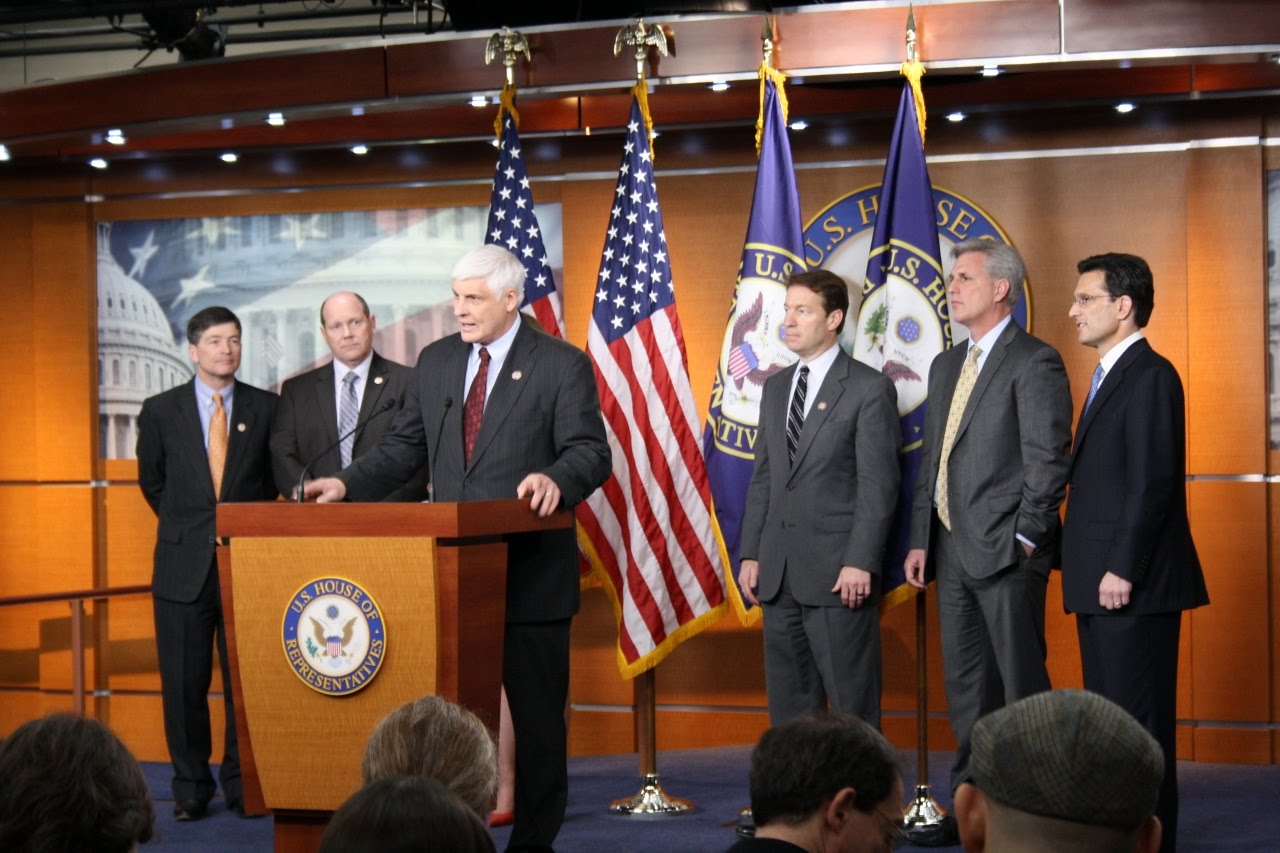
Eric Cantor Where Is The President? VIDEO


House Majority Leader Eric Cantor:

“My question to you is where’s the president?”

“We continue to hear from him and the White House that we’re going to meet you half way.”

Majority Whip Kevin McCarthy:

“They came down with a big car load of people,” “They had a meeting. The vice president is the main negotiator. The vice president is not even in the country today. We have less than a week-and-a-half to go. You ask the press secretary at the White House, ‘well who’s the lead negotiator with the vice president gone?’ Can’t tell you that.”

TEXT CREDIT: Politico GOP Escalates W.H. Attacks Jake Sherman March 9, 2011

VIDEO CREDIT: EricCantor

Tuesday, March 08, 2011

Meet Oversight Watchdog Ann Marie Buerkle VIDEO


WASHINGTON, DC – The House Committee on Oversight and Government Reform today released “Meet Your Oversight Watchdogs: Rep. Ann Marie Buerkle,” the second in a series of videos to introduce committee members to the American people.

Rep. Buerkle serves the people of New York’s 25th Congressional District as Vice Chairwoman of the Oversight Subcommittee on Regulatory Affairs, Stimulus Oversight & Government Spending and on the Oversight Subcommittee on TARP, Financial Services & Bailouts of Public and Private Programs.

TEXT CREDIT: House Committee on Oversight and Government Reform 2157 RAYBURN HOUSE OFFICE BUILDING, WASHINGTON, DC 20515 PHONE: (202) 225-5074 FAX: (202) 225-3974.

IMAGE CREDIT: This United States Congress image is in the public domain. This may be because it is an official Congressional portrait, because it was taken by an official employee of the Congress, or because it has been released into the public domain and posted on the official websites of a member of Congress. As a work of the U.S. federal government, the image is in the public domain.

VIDEO CREDIT: oversightandreform

Doc Hastings Discusses Rising Gasoline Prices, Need for American Energy and American Jobs VIDEO


WASHINGTON, D.C., March 8, 2011 - Today, House Natural Resources Committee Chairman Doc Hastings (WA-04) appeared on Fox News’ Your World with Neil Cavuto to discuss the Committee’s upcoming hearings on rising gasoline prices and the need to limit U.S. dependence on foreign sources by increasing domestic energy production and creating American energy jobs.

“Energy jobs are good-paying jobs, and with the unrest in the Middle East it certainly seems to me from a security standpoint that we should be utilizing more of our resources that we know we have,” said Chairman Hastings. “We should recognize that it is in our best interests to be less dependent on foreign sources, so we need to start that process now.”

TEXT CREDIT: Committee on Natural Resources United States House of Representatives 1324 Longworth House Office Building Washington, D.C. 20515 Phone: (202) 225-2761 Fax: (202) 225-5929

VIDEO CREDIT: NaturalResourcesGOP

Monday, March 07, 2011

Howard P. “Buck” McKeon Criticizes White House Executive Fiat on Detainees

House Armed Services CommitteeAdministration Continues to Ignore Offer to Work Together to Design Detainee Detention and Prosecution Programs.

Washington, D.C. — The top Republican on the House Armed Services Committee today criticized President Obama’s White House for repeating the mistakes of the Bush Administration by attempting to generate detainee policy by executive fiat rather than working with Congress to create a statutory framework that would stand up to judicial scrutiny. An offer (Letter to the President pm PDF FORMAT) by Rep. Howard P. “Buck” McKeon (R-Calif.), the panel’s chairman, to work with the Administration to develop comprehensive policies for the detention and prosecution of detainees captured in the ongoing war against terrorism has been ignored by the White House.

In response to a newly-released White House Executive Order, McKeon also signaled his intent to introduce legislation that would congressionally authorize a legal framework for the prosecution and detention of terrorists held at Guantanamo Bay and those captured on the battlefield in the future.

“It’s baffling to me that the White House, which prides itself on operating differently than its predecessor, would repeat the same mistakes by refusing to work with Congress to create a comprehensive plan for the long-term detention and prosecution of detainees at Guantanamo Bay,” said McKeon. “Not only has this White House failed to reach out to us to discuss the current executive order, but our offers to work with the Administration have gone unanswered as well. The President, while clinging to the rhetoric of bipartisanship, hasn’t followed up with the appropriate actions.”

“I am pleased, however, that that the President reversed his earlier decision and will re-start military commissions at Guantanamo,” continued McKeon. “This is a positive step in the right direction, but today’s announcement remains silent on Khalid Sheikh Mohammed and the other co-conspirators of the 9/11 attacks. These terrorists must be held responsible for their crimes.”

In criticizing the President, Chairman McKeon pointed to a speech delivered by President Obama on May 21, 2009, in which the President committed to working with Congress “to develop an appropriate legal regime” for the detention and prosecution of terrorist detainees.

Specifically, the President stated the following during his high-profile speech at the National Archives:

"But I want to be very clear that our goal is to construct a legitimate legal framework for the remaining Guantanamo detainees that cannot be transferred. Our goal is not to avoid a legitimate legal framework. In our constitutional system, prolonged detention should not be the decision of any one man. If and when we determine that the United States must hold individuals to keep them from carrying out an act of war, we will do so within a system that involves judicial and congressional oversight. And so, going forward, my administration will work with Congress to develop an appropriate legal regime so that our efforts are consistent with our values and our Constitution." ###

TEXT and IMAGE CREDIT: Armed Services Republicans Contact Info: Washington, D.C. Office 2120 Rayburn House Office Bldg. Washington, DC 20515 Phone: (202) 225-4151 Fax: (202) 225-0858

Mike Simpson Grills EPA Administrator Lisa Jackson Over Budget

Committee on Appropriations LogoChairman of House Interior and Environment Appropriations expresses concern about efforts to undo provisions aimed at limiting EPA’s regulatory authority.

March 7th, 2011 - Washington, DC -

Idaho Congressman Mike Simpson, Chairman of the House Interior and Environment Appropriations Subcommittee, questioned Environmental Protection Administrator Lisa Jackson regarding the EPA’s budget request for FY2012. Simpson also grilled Administrator Jackson regarding what many perceive as the EPA’s regulatory overreach and the impact that the agency’s actions are having on the economy.

Simpson questioned the agency’s decision to reduce the EPA’s budget on the backs of states, which are already struggling to balance their own budgets, as state grants have been reduced by 22% while EPA operations and research budgets are reduced by only 2%-4%. “This is not the blueprint for reduced federal spending and debt reduction that the American people and congressional Republicans are demanding,” said Simpson. “In stark contrast, we cut more spending out of the SRFs in the House-passed full year continuing resolution than has been proposed in your entire 2012 budget. The demand for 2012 is simple: cut more and regulate less.”

Simpson also defended provisions included in H.R. 1, the continuing resolution (CR) that reduces funding for the EPA by 30% for the remainder of the current fiscal year, which would have limited funding for what he called EPA’s “litany of overreaching regulations.” Simpson pushed for language to be included in the bill to limit EPA’s ability to regulate greenhouse gases, as well as language to prohibit funding for efforts to expand EPA’s jurisdiction over state waters. In addition, during consideration on the House floor over 20 amendments limiting funding for EPA were accepted by the House.

“It should be up to Congress, not the Administration, to determine whether and how to regulate greenhouse gases,” said Simpson. “We put a hold on all of these regulations in the House-passed CR in order to relieve the burden on industry and to give our authorizers the opportunity to address these issues in a more comprehensive fashion this year. The fact that so many amendments regarding the EPA were offered to the CR and passed so overwhelmingly makes it clear that there is a problem with the way the EPA is cranking out regulations, and I think these funding limitations provide us with an important roadmap for going forward in the 112th Congress.”


Contact: Nikki Watts, 202-334-1953

###

TEXT and IMAGE CREDIT: Committee on Appropriations H-307, The Capitol Washington, DC 20515 Main Number: (202) 225-2771

Sunday, March 06, 2011

The Extent of Radicalization in the American Muslim Community and that Community's Response LIVE VIDEO

Committee on Homeland Security LogoWhat: Committee on Homeland Security Hearing: First in a series of hearings entitled: “The Extent of Radicalization in the American Muslim Community and that Community's Response”

Thursday, March 10 9:30 am Full Committee Hearing Peter King (NY), Chairman 311 Cannon House Office Building.

LIVE WEBCAST: The Extent of Radicalization in the American Muslim Community and that Community's Response

Chairman King on the hearing: “We will examine al Qaeda’s latest and dangerous tactic of radicalizing members of the American Muslim community and recruiting them to engage in jihadist attacks against innocent Americans. We will also examine the American Muslim community’s response to the growing threat. Last month, Homeland Security Secretary Napolitano declared that the terrorist threat level is at its most ‘heightened state’ since 9/11; National Counterterrorism Center Director Michael Leiter called al Qaeda in the Arabian Peninsula (AQAP) the most significant threat to our homeland; and Attorney General Eric Holder recently said that radicalization in this country by AQAP’s Anwar al Awlaki and other terrorist recruiters is what keeps him awake at night.

“At the hearing, we will hear from American Muslims, including those with first-hand, devastating experience with the effects of al Qaeda’s radicalization efforts. This life-and-death issue is too important to ignore in the name of political correctness.”

The hearing room (311 Cannon) has limited seating, and likely will not be able to accommodate all members of the media wishing to cover the hearing from the press viewing area.

Only Congressionally credentialed members of the media will be allowed access to the press viewing area in the committee hearing room and must RSVP by Tuesday, March 8 at 3 p.m. to the Committee on Homeland Security at 202-226-4570 or Harrison.gillen@mail.house.gov.

Members of the media who are not Congressionally credentialed may contact their respective Galleries to apply for a temporary press credential (see numbers below).

All television crews must RSVP to the House Radio TV Gallery at 202-225-5214.

Gallery contact information:

House Radio/TV Gallery: 202-225-5214

House Periodical Gallery: 202-225-2941

House Daily Press Gallery: 202-225-3945

Photographer Gallery: 202-224-6548

###

TEXT and IMAGE CREDIT: Committee on Homeland Security U.S. House of Representatives H2-176 Ford House Office Building Washington, DC 20515 Office: (202) 226-8417 Fax: (202) 226-3399 Media Inquiries Communications Director: Shane Wolfe.

Iowa Faith & Freedom Coalition’s Spring Event on March 7

Iowa Faith & Freedom CoalitionFormer Minnesota Gov. Tim Pawlenty, former Pennsylvania Sen. Rick Santorum, former Godfather’s Pizza CEO Herman Cain and former Louisiana Gov. Buddy Roemer are among people mentioned as potential presidential candidates who have confirmed attendance at the Iowa Faith & Freedom Coalition’s Spring Event on March 7.

Ralph Reed Jr., president of the national Faith & Freedom Coalition, also plans to attend. Prominent Iowa Republicans who have confirmed their attendance include 5th District Congressman Steve King, Gov. Terry Branstad and Lt. Gov. Kim Reynolds.

Here’s the full press release from the Iowa Faith & Freedom Coalition:

Details are being finalized for the Iowa Faith & Freedom Coalition’s Spring Event which will feature several individuals whose names have been mentioned heading into the 2012 Iowa Caucuses. Those confirmed to attend include former CEO of Godfather’s Pizza Herman Cain, former Minnesota Governor Tim Pawlenty, former Louisiana Governor Buddy Roemer and former Pennsylvania Senator Rick Santorum. The event, set to be held on Monday, March 7th, is expected to be attended by more than 600 Iowa activists who will play a foundational role in the first in the nation contest.

Steve Scheffler, president of the Iowa Faith & Freedom Coalition, stated that the importance of this event lies in the fact that 60% of Iowa Caucus participants in 2010 were self-identified evangelical Christians. This is a fact that should not be missed by any of the potential candidates.

In addition to the potential candidates, Iowa Governor Terry Branstad and Lt. Governor Kim Reynolds, president of the national Faith & Freedom Coalition and Fox News contributor Ralph Reed Jr. and conservative Congressman Steve King from Iowa’s fifth congressional district will also be attending the event.

The event is set to take place at Point of Grace church at 305 NE Dartmoor Drive in Waukee, Iowa from 5:30 p.m.-7:30 p.m. Media credentialing is being handled by Gopal Krishna. Gopal can be reached via email at gopkrishna@yahoo.com. For any questions, contact the offices of the Iowa Faith & Freedom Coalition at 515-225-1515.

TEXT and IMAGE CREDIT: Faith and Freedom Coalition

Saturday, March 05, 2011

Diane Black Weekly Republican Address TEXT PODCAST VIDEO 03/05/11


Podcast of the address: Download MP3 for PODCAST || FULL TEXT TRANSCRIPT BELOW. || Download Video MPEG Video || MP4 Video

Weekly Republican Address: Rep. Diane Black on Creating a Better Environment for Job Creation Rep. Black: “What we need is a new approach – a path to prosperity that gets government out of the way by cutting unnecessary spending and removing barriers to job growth.”

Washington (Mar 4)

Delivering the Weekly Republican Address, Rep. Diane Black (R-TN) talks about how the path to job creation and prosperity lies in liberating our economy from the shackles of big government and out-of-control Washington spending. Rep. Black, a member of the Budget and Ways & Means committees, is in her first term representing Tennessee’s Sixth Congressional District. She also serves as the freshman class representative to the Republican Policy Committee.

Diane Black"Hello, I’m Diane Black. In addition to being a nurse, I'm also a small business owner and I taught at a local community college. I’m also a proud mother of three and grandmother of six – all of them wonderful. Just two months ago today, I had the honor of being sworn-in to serve the people of Tennessee’s Sixth Congressional District, as part of the new Republican freshman class in the House of Representatives.

“My colleagues and I in the freshman class know that we weren’t sent to Washington to sit on our hands, or to find new ways to avoid old problems. We were sent here by our constituents to help put an end to Washington's policies that are making it harder to create jobs and threatening our nation’s future.

“Job creation has to be the number-one priority for both parties. The policies of the past haven’t worked, and despite some signs of life in our economy, the unemployment rate is still far above the levels that the president’s advisors promised when the ‘stimulus’ spending bill was signed into law.

“What we need is a new approach – a path to prosperity that gets government out of the way by cutting unnecessary spending and removing barriers to job growth. We need to unleash our nation’s economy instead of burying it under a mountain of regulation, taxation and debt.

“Since the moment we were sworn into office, this has been the focus of our new majority in the House.

“Whenever I tour my district and I ask small businesspeople ‘what can I do to help?,’ they tell me to just get government out of the way and they’ll create the jobs and grow on their own. That’s exactly why our new majority is taking a complete inventory of Washington's rules and regulations, looking to root out the ones that make it harder to create jobs.

“We’re hoping to find things that could have been discovered if Washington had been doing its work in an open and transparent way. There’s no better example of this than the 1099 paperwork mandate in ObamaCare. The House passed a bill this week to repeal it.

“And soon, we’re going to vote to cut wasteful mandatory spending programs – not just in ObamaCare, but also in the Dodd-Frank financial regulation bill that’s drying up credit for our small businesses. We’ve also got our eye on EPA rules that are hurting job creation and creating higher gas prices.

“It’s not just the overreaching that has to stop – it’s the overspending, which many economists agree is a barrier to job creation.

“It’s now been just two weeks since the House passed H.R. 1, a bill that makes much-needed spending cuts and keeps the government running through the end of the fiscal year. Unfortunately, the Democrats who run the Senate haven’t allowed the vote on this bill or any other bill that would cut spending and keep the government running long-term.

“You may have heard President Obama say that we need to make sure ‘we're living within our means.’ He’s right about that. Unfortunately, his budget doesn’t match his words. It continues out-of-control spending, it adds to our $14 trillion debt, and it adds to the uncertainty that makes it harder to create jobs. Maintaining the status quo – and refusing to offer a credible plan to cut spending – is just unacceptable and inexcusable.

“Again, we weren’t sent here to sit on our hands. The American people want us to keep the government running while cutting its cost. So with your support, Republicans spearheaded the passage of a short-term measure that cuts spending by $4 billion. That’s $4 billion of YOUR money that would otherwise have gone to earmarks and other wasteful programs. It’s a start, but it’s not nearly enough. By enacting this bill, we’ve provided another two weeks for our Democrat colleagues in the Senate to either pass H.R. 1, or to pass a credible alternative that meets the people’s priorities. Doing nothing is not an option.

“After two years, we know that government doesn’t create private-sector jobs. It’s small businesses and the people behind them who do. That’s why our majority is focused on getting government out of the way and charting a new path to prosperity. It’s what our constituents sent us here to do, and it’s what we need to do for the future of our children and our country.

“Thank you for listening.”

VIDEO CREDIT: HouseConference

TEXT CREDIT: Speaker of the House John Boehner Contact H-232 The Capitol Washington, DC 20515 P (202) 225-0600 F (202) 225-5117

AUDIO/VIDEO CREDIT: The House Republican Conference - Digital Communications visual.media@mail.house.gov 202-225-5439

Friday, March 04, 2011

Energy Tax Prevention Act (H.R. 910), a bill to block EPA’s controversial backdoor climate change agenda

House Energy and Commerce Committee LogoLeading Bipartisan Voices on Energy Policy Introduce Energy Tax Prevention Act, H.R. 910 Energy Tax Prevention Act in PDF FORMAT

March 3, 2011 WASHINGTON, DC – Republican and Democratic leaders in the U.S. House of Representatives today introduced the Energy Tax Prevention Act (H.R. 910), a bill to block EPA’s controversial backdoor climate change agenda that would further drive up the price of energy for American consumers and job creators at a time when gas prices are already spiking and job creation remains weak. The bill is narrowly drawn to clarify the EPA’s authority under the Clean Air Act, preserving the law’s important and longstanding functions to reduce air pollution.

Introducing the bill are Energy and Commerce Committee Chairman Fred Upton (R-MI), Agriculture Committee Ranking Member Collin Peterson (D-MN), Transportation and Infrastructure Committee Ranking Member Nick Rahall (D-WV), and Energy and Power Subcommittee Chairman Ed Whitfield (R-KY), in addition to others.

“Whether at the pump or on their monthly utility bills, American families, farmers, and employers feel the pinch when energy prices go up. The very last thing the federal government should do is make matters worse by intentionally driving up the cost of energy. Yet that is exactly what’s in store if the EPA moves forward with its plans to regulate and penalize carbon emissions under the Clean Air Act,” said Chairman Upton.

“The EPA is pursuing a dramatic shift in our nation’s energy and environmental policy that would send shock waves through our economy,” said Chairman Whitfield. “Setting the course of our energy policy is the job of Congress, not a single federal agency acting without authority. The Energy Tax Prevention Act is a sensible, straightforward plan to end the uncertainty and economic threat posed by the EPA’s climate change agenda.”

“The EPA needs to be reined in. If Congress does not do something about the regulations being imposed on our farmers, ranchers and rural communities, the economic effects could be devastating. This is the last thing we need when our economy is beginning to show signs of recovery,” said Ranking Member Peterson.

The text in PDF FORMAT of the Energy Tax Prevention Act is available online along with letters of support for the legislation from American Electric Power, the American Farm Bureau Federation, the Industrial Energy Consumers of America, the National Association of Realtors, and the National Mining Association. ###

TEXT and IMAGE CREDIT: House Energy and Commerce Committee January 11, 2011 By Alexa Marrero, (202) 225-3641 or Sean Bonyun, (202) 225-3761 2125 Rayburn House Office Building | Washington, DC 20515 | (202) 225-2927

Thursday, March 03, 2011

Senators Coburn, McCain, DeMint, Ensign, Johnson, Paul, Lee, Ayotte Sign Letter Promising to Hold Unconstitutional and Fiscally Irresponsible Bills

Dear Colleague letterWASHINGTON, D.C.) – U.S. Senators Tom Coburn, M.D. (R-OK), John McCain (R-AZ), Jim DeMint (R-SC), John Ensign (R-NV), Ron Johnson (R-WI), Rand Paul (R-KY), Mike Lee (R-UT) and Kelly Ayotte (R-NH) today sent a Dear Colleague letter in PDF FORMAT to all Senators announcing their intention to withhold unanimous consent, or “hold,” bills that fail meet the following criteria:

• All New Spending Must Be Offset with Cuts to Lower Priority Spending: Congress authorizes billions of dollars in new spending every year to create new or expand existing government programs. Yet, few bills are passed to eliminate outdated, duplicative, unnecessary, inefficient, wasteful, or low priority programs. To make government more efficient, any legislation authorizing new spending or creating a new agency, office, program, activity, or benefit or increasing the authorization of an existing function must offset the cost of this expansion by eliminating an existing program or function or reducing the authorized funding level of ongoing spending.

• Government Programs Must Be Periodically Reviewed and Renewed: Never ending government programs must end. Congress should periodically determine whether or not every government program is working as intended, is still needed, or is worthy of continued taxpayer support. To ensure this happens, any legislation establishing or continuing an agency, office, or program must also include a “sunset” date at which point Congress must decide whether or not to update or extend the life of the program.

• The Cost and Text of Bills Must Be Available Prior to Passage: Too many bills costing billions of dollars with far reaching implications are approved by the Senate with little debate, few if any amendments, and not even time to read the actual text of the legislation. To guarantee taxpayers and senators have sufficient time to read bills and information to understand their cost and impact, all legislation must be publicly available in an electronic format for at least three full days along with a cost estimate completed by the Congressional Budget Office (CBO) prior to being passed.

• Duplicative Government Programs Must Be Consolidated or Eliminated: Despite the existence of hundreds of duplicative federal programs costing billions of dollars, Congress continues to create new programs with similar missions, goals, and purposes. To reduce redundancy, any bill creating a new program that replicates a current government mission must consolidate overlapping activities or eliminate the existing programs.

• Congress Must Not Infringe Upon the Constitutional Rights of the People: Article I, Section 8 of the Constitution grants Congress a very limited set of enumerated powers. Far too often, Congress infringes upon the rights and liberties reserved for the people and the states provided elsewhere in the Constitution. These overreaches are no more than an afterthought when most bills are debated. To restore the intended balance of powers between the states and the federal government and to preserve the freedoms guaranteed by the Constitution, all bills must have a clear and obvious basis connected to one of the enumerated powers and must not infringe upon any of the rights guaranteed to the people.

“Before we can get our fiscal house in order, Congress first has to stop making the problem worse. I’m pleased so many of my colleagues have agreed to withhold consent from bills that borrow and spend new money, duplicate existing programs, violate the Constitution or are not a legitimate role of the federal government. This week’s GAO report exposing widespread duplication in the federal government shows why Congress needs to eliminate programs that don’t work instead of creating new programs we don’t need, and can’t afford,” said Dr. Coburn.

“Each year, the federal government washes billions of taxpayer dollars down the drain through wasteful and duplicative spending. This waste is even more unconscionable in the present economy, as American families and businesses are struggling financially,” said Senator John McCain. “I am pleased to join my colleagues in working to implement simple, commonsense practices in the Senate to reduce wasteful and unnecessary spending.”

“The problem in the Senate isn’t that we’re not passing enough legislation, it’s that we’re passing so many new spending bills and regulations with little review or debate,” said Senator Jim DeMint. “I’m proud to stand with my fellow conservative Senate colleagues to require thorough review of bills to prevent secret passage of wasteful spending and unconstitutional legislation. Our nation is on the edge of bankruptcy and we simply cannot afford more borrowing from foreign nations to spend on programs we don’t need.”

“These gross duplications in federal programs and agencies, along with billions of dollars in binge spending increases, are crippling the present and future of the United States,” said Senator John Ensign. “The GAO report underscores the great negligence of the federal government when it comes to managing hard-earned taxpayer dollars and further highlights the need for Congress to get our fiscal house in order. The time has come for the government to get its act together: decrease its size and increase its effectiveness so that it does what we need it to do not just what some want it to do.”

“This year, according to the Congressional Budget Office, we will spend 1.65 trillion dollars that we don’t have. That is a huge amount of money and a huge problem. It is a problem we must start to address. The letter I have signed - initiated by Senator Coburn - is just a very common sense approach to beginning the process of reining in the out of control spending and debt. We need to hold the federal government accountable. Families are not able to spend beyond their means; Washington certainly shouldn’t be able to do so either,” said Senator Ron Johnson.

“The American people deserve better from their federal government,” said Senator Mike Lee. “By holding bills that spend irresponsibly and overstep the proper role of the federal government, we can begin to rebuild their trust and make Congress more transparent and accountable. I'm proud to stand with my colleagues who agree that this wasteful, irresponsible spending must stop.”

“The status quo in Washington is unacceptable. Rather than continue to create new government programs, we must tighten our belts in Congress and live within our means like families do,” said Senator Kelly Ayotte.

###

TEXT CREDIT: Tom Coburn, M.D., United States Senator from Oklahoma Washington D.C.: 172 Russell Senate Office Bldg. Washington, DC 20510 Main: 202-224-5754 Fax: 202-224-6008

H.R. 4, repealing the onerous 1099 reporting requirement for small businesses

Republican House LeadersH.R. 4, repealing the onerous 1099 reporting requirement for small businesses:

Leader Cantor Statement on 1099 Repeal Bill Text 112th Congress (2011-2012) H.RES.129.EH in PDF Format.

WASHINGTON, D.C. – House Majority Leader Eric Cantor (R-VA) today issued the following statement on the passage of H.R. 4, repealing the onerous 1099 reporting requirement for small businesses:

“Today, the House took another step to make it easier for our small businesses to grow and create jobs by repealing the onerous 1099 provision. This needless tax compliance mandate included in the ill-conceived ObamaCare law bogs down businesses in paperwork, creating yet another hoop for them to jump through, instead of allowing them to focus on growing their business and creating jobs. While Republicans wish to repeal ObamaCare as a whole, we do not agree with the status quo for health care in this country which is why we offered a bill last year that was focused first and foremost on lowering costs.

“Nearly every small business person I meet says this is one of the most damaging provisions in the ObamaCare law because it forces them to issue burdensome tax forms, spending time and money on paperwork rather than hiring new employees or growing their businesses. I am hopeful we can work with the Senate to iron out the differences between the two versions, so that the President can sign this repeal into law.

"House Republicans are taking serious action to remove barriers to economic growth – including repealing ObamaCare and cutting spending – so that people can get back to work and we can start to get our fiscal house in order."

NOTE: 76 Democrats supported the measure. H R 4 RECORDED VOTE 3-Mar-2011 2:12 PM

TEXT CREDIT: Office of the Majority Leader H-329, The Capitol House of Representatives P: 202.225.4000

IMAGE CREDIT: RepBobGibbs

Paul Ryan Announces House Budget Committee Hearings for March

Paul RyanChairman Ryan Announces House Budget Committee Hearings for March Committee to advance dialogue on budget challenges March 2, 2011

WASHINGTON – House Budget Committee Chairman Paul Ryan (WI-01) announced today two upcoming Committee hearings aimed at engaging the public on the Federal’s government unsustainable fiscal trajectory, and the need to repair our health and retirement security safety net.

On Thursday, March 10, the Committee will hear testimony on the subject of “Lifting the Crushing Burden of Debt.” On Thursday, March 17, the Committee will hear testimony on the subject of “Fulfilling the Mission of Health and Retirement Security.” Both hearings will take place at 10:00 a.m. in 210 Cannon House Office Building.

“Lifting the Crushing Burden of Debt”

Thursday, March 10, at 10:00 a.m. ET, the Committee will hear testimony from:

Douglas Holtz-Eakin
President, American Action Forum
Former Director of the Congressional Budget Office
Additional witnesses to address the economic consequences of the debt will be announced.

“Fulfilling the Mission of Health and Retirement Security”

Thursday, March 17, at 10 a.m. ET, the Committee will hear testimony from:

Alice M. Rivlin
Senior Fellow, Brookings Institution
Founding Director of the Congressional Budget Office
Former Director of the Office of Management and Budget

Charles Blahous
Research Fellow, Hoover Institution
Public Trustee for Social Security

James C. Capretta
Fellow, Ethics and Public Policy Center
Former Associate Director of the Office of Management and Budget

TEXT CREDIT: Committee On The Budget U.S. House of Representatives 207 Cannon House Office Building Washington, D.C. 20515 Phone: 202.226.7270

IMAGE CREDIT: RepPaulRyan

Wednesday, March 02, 2011

John Boehner Mitch McConnell press conference Where is Washington Democrats’ Plan to Cut Spending? 03/02/11 VIDEO


WASHINGTON, DC (Mar 2)

At a press conference today with Senate Republican Leader Mitch McConnell (R-KY), House Speaker John Boehner (R-OH) called on Senate Democrats to either hold a vote on House-passed legislation to fund the government for the rest of the fiscal year and cut spending to create a better environment for job growth – or outline their plan. A link to the video and Boehner’s remarks as prepared are below:

John Boehner Mitch McConnell“The American people want us to focus on creating jobs and cutting spending, and passage of this short-term bill shows that we’re listening.

“Today’s Senate vote is a positive step forward.

“American families are doing more with less; the federal government can do the same.

“In order to create a better environment for job creation, we must rein in out-of-control federal spending.

“We’ve now passed two bills in the House to cut spending and keep the government open, including H.R. 1, which funds the government for the rest of the fiscal year.

“These stopgap measures are only necessary because Democrats failed to pass a budget last year.

“Passing this short-term bill gives Senate Democrats two more weeks to either consider H.R. 1 – or outline their plan.

“Americans have a right to know: where is Senate Democrats’ plan to cut spending and fund the government for the rest of the fiscal year?”

# # # # #

TEXT CREDIT: Speaker of the House John Boehner Posted by Speaker Boehner Press Office on February 08, 2011, H-232 The Capitol Washington, DC 20515 P (202) 225-0600 F (202) 225-5117

VIDEO and IMAGE CREDIT: JohnBoehner

Governor Christie on CBS’s Face the Nation with Bob Schieffer 02/28/11 VIDEO TEXT TRANSCRIPT


FULL TEXT Transcript:

Governor Christie on CBS’s Face the Nation with Bob Schieffer on Sunday, February 27, 2011.

BOB SCHIEFFER: Well, now to the protests, back home protests of a very different kind. These are peaceful protests in Madison, Wisconsin, by union members. That demonstration is moving into its thirteenth day. Yesterday’s turnout of seventy thousand was the largest yet. And yesterday, union workers across the country turned out to support them, these demonstrations over the Wisconsin governor’s plan to reduce spending by ending the collective bargaining rights of teachers and many other public service employees.
Well Governor Christie, you took on the-- the public service unions in New Jersey. But you didn’t talk about ending collective bargaining rights. Do you think Governor Walker out there in Wisconsin has gone too far?

GOVERNOR CHRIS CHRISTIE (R-New Jersey): Bob, let me tell you what-- what went on in New Jersey. My predecessor Governor Corzine stood on the front steps of the Capitol at a public sector union rally and said, “I’ll fight to get you a good contract.” And I thought to myself watching that, who’s he fighting with? Once he says that the fights over. What I believe in is true adversarial collective bargaining. And so, every state is different. I’m not going to micromanage Wisconsin from Trenton, New Jersey. I know Scott Walker. I like him. And I trust him. And I think he believe he’s doing what’s in the best interest of Wisconsin, the same way I’m going to do what I think needs to be done for New Jersey, which is, to reform the pension system and roll
back health benefits for public sector workers, to put them more in line with the rest of the population in New Jersey, to put us on a long-term path to fiscal stability.

BOB SCHIEFFER: Well, but what about this idea? Do they have a right to collective bargaining?

GOVERNOR CHRIS CHRISTIE: Now listen. All these rights are legislatively created. They didn’t come down from tablets at the top of a mountain. And so, political things change and go back and forth. And every state is going to make their own determination on that. Wisconsin is in the middle of making that determination. As you know, Bob, there are plenty of states in America where that right doesn’t exist. And so, each state has to make their own determination on that.

BOB SCHIEFFER: Well, is that good or bad for New Jersey? Do you think they ought to have the right in New Jersey to collective bargaining?

GOVERNOR CHRIS CHRISTIE: What I’ve said in New Jersey is, as long as it’s fair and reasonable collective bargaining. You know, we can’t have what we’ve had before. You know, Bob, public sector workers, state workers in New Jersey, this past year, were working under a contract from my predecessor Jon Corzine, got seven percent salary increases in a zero percent inflation world. I don’t think the people who are paying the bills think that’s the result of fair adversarial collective bargaining. They want someone in the room representing the taxpayers. And that’s what I’ll be this June, when that contract expires.

BOB SCHIEFFER: Do you see a danger here that this is turning into some kind of may be not a danger, may be it’s something you would encourage, turning into some kind of national political war, where you have Democrats and the unions on one side and Republicans on the other?

GOVERNOR CHRIS CHRISTIE: I-- I don’t think it is. I think again, there are so many states that don’t have collective bargaining and there are a lot of states are not having this conflict right now. And so, I think this is really a state-by-state issue. There’s a lot of interest in this right now because of the emotion that’s going on in Wisconsin--strong stand by Governor Walker and a
strong stand by the people on the other side. It’ll be resolved politically in the state legislature in Wisconsin. So, I don’t see it that way. Obviously, it has national interest in story, Bob, but we’ve been taking on the unions in New Jersey for the last year and that’s gotten a lot of attention too. So everybody is doing it their own way.

BOB SCHIEFFER: Let me ask you this. You really came on hard against the teachers’ union. I think everybody in this country on all sides of all this thinks we need education reform that we’ve got to do something to make our educational system better. Do you worry that the stance you have taken has somehow demonized teachers and-- and will raise questions in young people’s minds as to whether they want to go into the profession?

GOVERNOR CHRIS CHRISTIE: No, I don’t. In fact, I did quite the opposite. Listen, I think that the teachers in New Jersey, and there’s thousands and thousands of great ones deserve a union as good as they are and they don’t have it. And, I disagree with the premise of your question which is that everybody agrees there should be education reform. It’s everybody, but the teachers union who believes that everything is fine. If you listen to them in New Jersey, they’ll tell you everything is fine. I mean it’s great. It’s great except for the hundred and four thousand kids in New Jersey that are struck in-- stuck in two hundred chronically-failing schools. I mean, you know just because their zip code is in a poor urban center doesn’t mean we should be fighting to change the system that’s failing them. So, no. What I’m trying to do is have a merit-based system for teachers, so that great ones get rewarded and paid more and that the really great ones want to stay in the profession, not only because they love it but because they’re rewarded financially for it. The union, Bob, they protect the worse of the worst. That’s what there for, they make it impossible to fire bad teachers and it’s ruining our education system.

BOB SCHIEFFER: What do you think of President Obama’s plans to reform education at the federal level by his-- you know let’s reward good teachers. His, you know, the-- the things that Secretary Duncan has outlined. Are-- are you-- generally think he’s on the right track?

GOVERNOR CHRIS CHRISTIE: I do. And-- and I’ve said that publicly. I think the President has shown some real courage, especially for a Democrat who’s been dependent upon the teachers union nationally for political support to come out for merit pay and race to the top and some of the things he’s done to push reform, I think the President has been on the right track. I’m little concerned about comments I heard yesterday from Secretary Duncan that seemed to be, you know blowing the hornet for treat on that a little bit. And I-- I hope that that’s not an election year ploy for them to cozy back up to the NEA and the ATF, as the President prepares for reelection. But in general, I think the President has been very strong on this. And that’s why you see Republicans agreeing with him on it.

BOB SCHIEFFER: You have a reputation as a straight talker I think. Do you believe that the budgetary problems across this country can be resolved without raising taxes?

GOVERNOR CHRIS CHRISTIE: Well, let’s take New Jersey, for instance, Bob. We raised taxes and fees a hundred and fifteen times in the last eight years. And we still have one of the worst budget problems in America. And so, I think unless you deal with the underlying structural expense problems and we’ve been dealing with them in New Jersey, you-- there’s no amount of taxation is ever going to keep up with the amount of spending increase that we have. And so, my view is we’ve already done things on the tax side in New Jersey. We have one of the highest top marginal income tax rates one of the highest sales tax rates, one of the highest corporate business tax rates. What we need to get to now is cutting back the size and scope of
government and have those two things meet. For instance, this year in my budget, while we still reduce spending, I added two hundred and fifty million dollars to K-12 education. We’re going to do things that make sense. But we’re not going to continue the spending spree and we’re certainly not just going back to raising more and more taxes. The people in New Jersey have had enough of that. Hundred and fifteen times in eight years, I think they’d given it the office, Bob.

BOB SCHIEFFER: You know there are some groups, anti-tax groups that ask people, especially people who are running for the Republican nomination for president to take a pledge not to raise taxes. I know you’re not running. I know what you’ve said about running. But it’s-- would you do that? Would you ever take a pledge not to raise taxes?

GOVERNOR CHRIS CHRISTIE: Well, listen. If I were running, I guess I’d have to make that decision. But at the end of the day I think what matters much more is what you do and not anything that you sign or-- or that you say. You have to prove and do it. And I think the reason why people in New Jersey are responding to what we’re doing is I’m actually doing in the job,
Bob, what I said I would do. I said if there were income tax increases I would veto them. I did and my veto was sustained. I said I would cut spending in the size of government. We’ve now
cut spending two years in a row--not projected spending, real spending. And we’re taking on the things that they’re not taking on at the federal level--pension benefits and health care. And we’re doing those two things to cut back the cost of that.

BOB SCHIEFFER: One of the things that you have spoken out on is something that a lot of people in politics have not. Here’s what you said at the American Enterprise Institute this week
in Washington.

GOVERNOR CHRIS CHRISTIE (February 16): You’re going to have to raise the retirement age for Social Security. Oh, I just said it and I’m still standing here. I did not vaporize into the carpeting and I said it.

BOB SCHIEFFER: All right. You said it.

GOVERNOR CHRIS CHRISTIE: I did.

BOB SCHIEFFER: Should-- should other people be saying that?

GOVERNOR CHRIS CHRISTIE: Of course, I mean, listen, you know and I know that the overall majority has a problem on the federal level comes down to three programs--Social Security,
Medicare and Medicaid. And unless we go about tackling those three issues, all the rest of the things that the President is talking about and others on Capitol Hill are talking about are minor league issues. Not saying they’re not important. Not saying they’re not, you know, interesting and-- and-- and I might like some of them. But if you don’t deal with those three, those three are
going to eat up everything else. And so, we’ve to start dealing with it. And I think the people of the United States are-- are ready for a frank, adult conversation about it. I’ve seen that in New
Jersey. I’ve done a lot of things that people say I don’t like but I’m glad you’re taking it on because you have to, because we know we’re in trouble. And so, my view on it and the reason I came down and gave that speech was to say to people stop being afraid and stop telling-- selling the people of America short. They’re smart. They know we have to do this.

BOB SCHIEFFER: All right. Governor, let’s take a break here. And we’ll come back and talk about this and some other things, including the government shutdown that may be coming in
this country in-- in-- in Washington. Back in a minute.

(ANNOUNCEMENTS)

BOB SCHIEFFER: And we’re back now with Governor Christie. Governor, Congress is back this week and the first thing they’ve got to tackle is some sort of emergency stopgap legislation to
keep the con-- government from shutting down. But I know there are a lot of people in your party, especially on the Tea Party side, who say maybe just let the government shut down. Let’s do not compromise on-- on spending. Do you think it would be a good idea to shut the government down?

GOVERNOR CHRIS CHRISTIE: I don’t, unless that’s the only way to forward your principles. And I think they’re going to be able to find a way to find compromise that protects the principles
that, you know the folks in my party got elected on and the ones that are important to Democrats. I mean their job is to solve these problems and not just to stand in a corner and hold your breath. So-- and I say that about both sides. So let’s get together. They’ve got a week to figure it out. Let’s get in the room and figure it out. I was a little surprised they took the last week off, to tell you the truth, given that this was looming. Why? I-- I think most Americans wanted to know why they weren’t go to work, but they’re getting back to work tomorrow. So let’s get back to work and let’s get it solved.

BOB SCHIEFFER: Well, what do you say to the Tea Party folks who say, look, I mean, it-- it’s our way or no way. We have simply got to stop this and if it takes shutting down the government, shut it down.

GOVERNOR CHRIS CHRISTIE: Well, those are two different things, right? I mean, I think that you can accomplish the goals of downsizing government, of cutting spending, and you can do it in a way that I think Democrats will go along with you on. I mean you have to have some fights. And that’s fine. As you know, I’m not, you know averse to a fight. But I think also you just have to get in a room and start working it out with people. That’s what we’ve done in New Jersey, Bob. Now I have a democratic legislature. And the things that I’ve accomplished with cutting
spending and putting a cap on property taxes, cap on interest arbitration awards, reforming initially for new employees pension and benefits, I’ve done that with a democratic legislature. It means I don’t get every ounce of what I want but we get in a room and we work it out. And that’s what they should do down here.

BOB SCHIEFFER (overlapping): Well--

GOVERNOR CHRIS CHRISTIE: The President should lead on that.

BOB SCHIEFFER: Once they get this stopgap measure to keep the government running then they have to take a vote on-- on whether to raise the debt ceiling. What’s your view on that?

GOVERNOR CHRIS CHRISTIE: My view on it is that it better be in line also with some real long-term commitments to cutting spending. You’ve got to do both. And-- and I think it’s a good
moment to force that conversation and they should. And-- and I-- I just believe that if the President shows leadership on this, he can bring the parties together. That’s what a president’s for.

BOB SCHIEFFER: Let’s talk about-- let’s talk about President Obama. What do you think of the job he’s doing?

GOVERNOR CHRIS CHRISTIE: Listen, there are some things I like and there some things I don’t like. The spending has been out of control and not as advertised when he ran for
president. And-- and that’s very disappointing to me. I’m-- I’m not a fan of the health care reform. And I think it’s unnecessarily hamstrung states. And I doubt that it’s constitutional. Now
on the other side, as I said before I like what he’s done on education reform. And I think it’s a Nixon to China kind of moment. You know, we need a democratic president to make these
reforms in education to lead the way. I-- I like some of the things he’s had to say in renewable energy because I think we need to find a path to lower our dependence on foreign oil and-- and
we can see what’s going on in the Middle East this week. That it can turn things upside down for us. So I like some of the things he’s been doing on that as well. But, you know, overall, I didn’t vote for him. And I doubt I’ll vote for him next time.

BOB SCHIEFFER: A lot of Republicans, you know are giving hints, indications and so forth that they may or may not seek the Republican nomination to run against Barack Obama. You have said in one of the-- one of your memorable quotes, I’ve-- if I have, I-- I’d have to commit suicide to convince people I’m not running. Well, you may or may not walk back from the ledge on that. What-- you haven’t been all that kind I guess is what I would say to-- to some of the people that do seem to be suggesting they’re going to run. What do you like about the field so far and what don’t you like?

GOVERNOR CHRIS CHRISTIE: Well, we don’t have a field yet. First of all, no one has declared. And-- and what I’ve said is let’s judge the complete field once they all get in. You know lots of people can flirt with it, Bob. But you know it’s-- it’s an enormous decision to make the decision to run for president of the United States and enormous personal commitment. When the team that we’re going to field gets in there, then I’ll make my evaluation of them. And I don’t think I’ve said anything uncharitable about any of them. I’ve said some very nice things about Governor Daniels but I’ve said those things because I really believe that Governor Daniels is speaking about the issues that need to be spoken about and has a track record in Indiana that proves he can actually do it. That doesn’t mean I’d endorse Governor Daniels if he ran. But what it means is, I think those are the things that other people who are considering running should be looking at and talking about, to having an honest conversation with the American people.

BOB SCHIEFFER: Well, what you have said is they’ve got to get out here and talk about these things that are going to be the issues, that you can’t finesse it.

GOVERNOR CHRIS CHRISTIE: No, you can’t finesse it. And then-- and you have to have unscripted moments. I mean you cannot be blow dried and, you know, poll tested and come out here. That’s not what the American people want. They want somebody who is going to speak straight to them. And they want to ask you questions, so they want unguarded moments. That’s
when they can really judge your character.

BOB SCHIEFFER: Is that-- is that aimed at, say, Sarah Palin who seems to talk to people mostly on her website and-- and not-- and she doesn’t do many interviews?

GOVERNOR CHRIS CHRISTIE: Well, I-- I think it’s-- it’s aimed at all of them. But certainly, when I first made that comment, it was in response to a question about Governor Palin. And I think if she wants to prove she’s ready for this, you got to have to have some unscripted moments. Now she may very well be up to it and if she is, good for her, but I think people want to see that. Very-- they’re very much interested in her. So they want to see that about her to make a judgment as to can you trust somebody in the Oval Office who can do that? Unless you do those unscripted moments, I think it’s hard to get the person to pull the lever for you.

BOB SCHIEFFER (overlapping): What-- I mean do you think she’s ready?

GOVERNOR CHRIS CHRISTIE: Well, listen. She’s got to make that judgment herself. And you know what, Bob, I’ll make my vote in the voting booth privately like every other American.

BOB SCHIEFFER: All right. Let me-- let me ask you this. Some of the people on the right have sort of poked fun and made fun of Michelle Obama, because she’s been trying to get people to eat better. I know that you have done dieting. You have worked on your weight and so forth. You described yourself as portly. Do you think-- what do you think about this criticism coming
from the right of Michelle Obama, because she’s trying to get people to eat better.

GOVERNOR CHRIS CHRISTIE: Well, I think it’s unnecessary. I think it’s a really good goal to encourage kids to eat better. You know, I’ve-- I’ve struggled with my weight for thirty years and
it’s a struggle. And if a kid can avoid that in his adult years or her adult years, more power to them. And I think the first lady is speaking out well. I mean, I don’t want the government deciding what you can and what you can’t eat. I still think that’s your choice. But I think Mrs. Obama being out there encouraging people in a positive way to eat well and to exercise and to be healthy, I don’t have a problem with that.

BOB SCHIEFFER: Governor Christie, thank you so much. I hope you’ll come back to see us.

GOVERNOR CHRIS CHRISTIE (overlapping): Absolutely, I will.

BOB SCHIEFFER: We enjoyed having you.

GOVERNOR CHRIS CHRISTIE: Thank you, Bob.

TEXT CREDIT: Office of the Governor PO Box 001 Trenton, NJ 08625 609-292-6000

VIDEO CREDIT: GovChristie

For Immediate Release: Date: Monday, February 28, 2011 Contact: Michael Drewniak Kevin Roberts 609-777-2600

Tuesday, March 01, 2011

Scott Brown Outlines Targeted Approach To Tackle Washington's Binge Spending VIDEO


U.S. Senator Scott Brown (R-MA) outlined his targeted steps to tackle Washington’s binge spending. Brown’s measures include reducing government spending, setting budget priorities, increasing transparency and accountability for taxpayers and eliminating waste and abuse in government agencies and programs:

Scott BrownEnding Earmarks In Washington: Senator Brown is opposed to earmarks, and is the only member of the Massachusetts delegation who refuses to sponsor them. Senator Brown believes that federal spending should be prioritized based on the merits of projects, not on the political influence of a particular member of Congress. In December, Senator Brown opposed the Omnibus Appropriations bill because it was laden with thousands of earmarks and wasteful government spending, and he will continue to support reforms to the appropriations process that incentivize thoughtful stewardship of taxpayers’ hard-earned money.

Increasing Transparency For Taxpayers: In order to help taxpayers understand where their money is being spent, Senator Brown will introduce the bipartisan Taxpayer Receipt Act with U.S. Senator Bill Nelson (D-FL). Brown and Nelson’s bill would provide an itemized taxpayer receipt showing taxpayers where every dime of money paid to the Federal government is getting spent, and how much new debt we’ve put on the national credit card. The receipt would arrive when a taxpayer files their tax returns, on or before April 15th of each year.

Reading Bills And Understanding The Cost: Senator Brown believes all legislative matters should be made available to the public and fully scored by the non-partisan Congressional Budget Office (CBO) before a final Senate vote. Under current law, the Senate has to wait 48 hours before considering a bill that includes a committee report after a bill is reported out of committee. Senator Brown’s bipartisan 48 Hour Spending Transparency Resolution would apply that 48 hour threshold (as well as the CBO score requirement) before any consideration of a legislative matter by a subcommittee or committee, or on the floor of the Senate.

Tackling The Debt: Senator Brown believes that continuing down our current fiscal path threatens the future stability of our country. Senator Brown believes that we should change the way we budget and spend – putting a system in place that helps the federal government prioritize what we really need, while eliminating what we can live without and balancing the budget. On February 1st, Senator Brown sent a letter to the Budget Committee calling for responsible Budget reform. The letter asked Budget Committee leaders to ensure that priorities are actually established before the Senate holds any vote to increase our nation’s debt limit.

Cutting Wasteful Government Spending: Senator Brown is a co-sponsor of the Reduce Unnecessary Spending Act to give the President additional tools, such as a constitutional line-item veto procedure, to eliminate the kind of reckless spending that sticks taxpayers with the bill for congressional pork. This authority helped Congress and the President balance the budget in the past and it can again. Senator Brown also co-sponsored a resolution that would cut back the Senate budget. When families across Massachusetts are making tough choices, we should be doing the same.

Eliminating Waste, Fraud, Abuse In Federal Agencies And Programs: For too long, federal agencies and programs have been immune from accountability and oversight. For example, recent Congressional testimony estimates that $60 billion – or approximately thirteen percent – of our nation’s Medicare spending is at risk of fraud. The Social Security program is also not immune. In fiscal year 2008, the Social Security Administration (SSA) made overpayments in the Social Security Income (SSI) program alone that totaled $ 4.6 billion.

Last year, as ranking member of the Contracting Oversight subcommittee of the Homeland Security and Governmental Affairs Committee, Senator Brown sent a list of recommendations to the President’s Commission on Fiscal Responsibility and Reform, providing concrete proposals to radically reform the acquisition process and save billions of taxpayer dollars. This Congress, Senator Brown will introduce the Federal Acquisition Reform Act – comprehensive legislation that will potentially save billions by streamlining the way the federal government purchases goods and services. As the new ranking member of the Federal Financial Management (FFM) Subcommittee, Senator Brown will hold hearings on the Social Security Program, the Medicare and Medicaid Programs, and federal agencies to root out the problems within these programs and ensure they are operating efficiently.

VIDEO CREDIT: USSenatorScottBrown

TEXT CREDIT: Scott Brown 317 Russell Senate Office Building Washington, DC 20510 Phone: (202) 224-4543 Fax: (202) 228-2646

IMAGE CREDIT: This United States Congress image is in the public domain. This may be because it is an official Congressional portrait, because it was taken by an official employee of the Congress, or because it has been released into the public domain and posted on the official websites of a member of Congress. As a work of the U.S. federal government, the image is in the public domain.