Cassini Huygens 1 | The Cassini-Huygens mission to Saturn is the most ambitious effort in planetary space exploration ever mounted. A joint endeavour of the European Space Agency (ESA), NASA and the Italian space agency, Agenzia Spaziale Italiana (ASI), Cassini-Huygens is sending a sophisticated robotic spacecraft to orbit the ringed planet and study the Saturnian system in detail over a four-year period. |
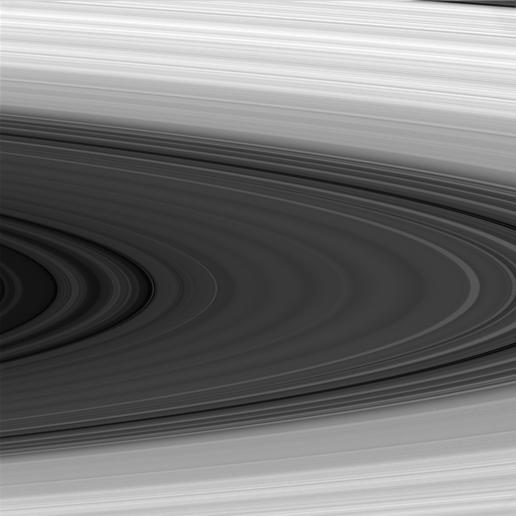
Saturn is the second largest planet in the Solar System. Like the other gaseous outer planets – Jupiter, Uranus and Neptune – it has an atmosphere made up mostly of hydrogen and helium. Saturn’s distinctive, bright rings are made up of ice and rock particles ranging in size from grains of sand to a freight container.
| More moons of greater variety orbit Saturn than any other planet. So far, observations from Earth and space have found Saturnian satellites ranging from small asteroid-size bodies to the aptly named Titan, which is the second largest moon of the Solar System (after Jupiter's Ganymede) and is larger than the planet Mercury. | 
Cassini Huygens 2 |

Cassini Huygens 3 | Titan is a fascinating world because its thick nitrogen-atmosphere is very rich in organic compounds which are constantly reacting. If they were found on a planet with Earth-like conditions, their presence would be considered as a sign of life. |
The Cassini-Huygens mission is named after two European astronomers from the 17th century. The Dutch astronomer Christiaan Huygens (1629-1695) discovered Saturn's rings and Titan.
| A few years later the French-Italian Astronomer Jean-Dominique Cassini (1625-1712) discovered Saturn’s four other major moons – Iapetus, Rhea, Tethys and Dione. He also discovered that Saturn’s rings are split largely into two parts by a narrow gap, known since as the 'Cassini Division'. | 
Cassini Huygens 4 |
CASSINI PHOTO ESSAY
PHOTO SOURCE: NASA Cassini-Huygens Mission
TEXT SOURCE: ESA
No comments:
Post a Comment