Friday, January 14, 2005

Cassini Huygens Saturn mission


Cassini Huygens 1
The Cassini-Huygens mission to Saturn is the most ambitious effort in planetary space exploration ever mounted. A joint endeavour of the European Space Agency (ESA), NASA and the Italian space agency, Agenzia Spaziale Italiana (ASI), Cassini-Huygens is sending a sophisticated robotic spacecraft to orbit the ringed planet and study the Saturnian system in detail over a four-year period.
On board Cassini is a scientific probe called Huygens that will be released from the main spacecraft to parachute through the atmosphere to the surface of Saturn’s largest and most interesting moon, Titan.

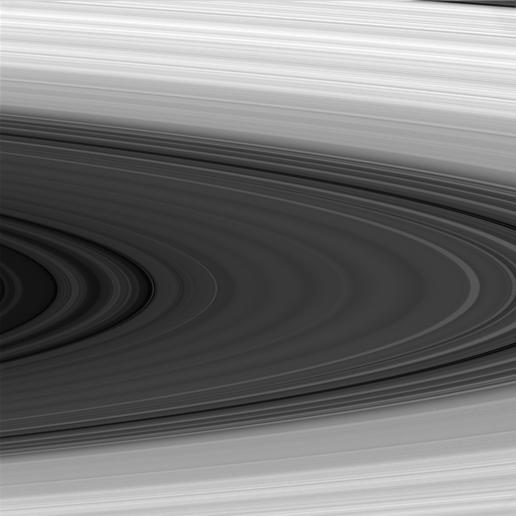
Saturn is the second largest planet in the Solar System. Like the other gaseous outer planets – Jupiter, Uranus and Neptune – it has an atmosphere made up mostly of hydrogen and helium. Saturn’s distinctive, bright rings are made up of ice and rock particles ranging in size from grains of sand to a freight container.
More moons of greater variety orbit Saturn than any other planet. So far, observations from Earth and space have found Saturnian satellites ranging from small asteroid-size bodies to the aptly named Titan, which is the second largest moon of the Solar System (after Jupiter's Ganymede) and is larger than the planet Mercury.
Cassini Huygens 2

Cassini Huygens 3
Titan is a fascinating world because its thick nitrogen-atmosphere is very rich in organic compounds which are constantly reacting. If they were found on a planet with Earth-like conditions, their presence would be considered as a sign of life.
If water exists on Titan, it cannot be in liquid form because its surface is far too cold (at minus 180°C). In fact very little is yet known about the surface and scientists speculate that Huygens may find lakes or even oceans of a mixture of liquid ethane, methane and nitrogen.

The Cassini-Huygens mission is named after two European astronomers from the 17th century. The Dutch astronomer Christiaan Huygens (1629-1695) discovered Saturn's rings and Titan.
A few years later the French-Italian Astronomer Jean-Dominique Cassini (1625-1712) discovered Saturn’s four other major moons – Iapetus, Rhea, Tethys and Dione. He also discovered that Saturn’s rings are split largely into two parts by a narrow gap, known since as the 'Cassini Division'.
Cassini Huygens 4
The Cassini-Huygens mission to Saturn FULL TEXT

CASSINI PHOTO ESSAY

PHOTO SOURCE: NASA Cassini-Huygens Mission

TEXT SOURCE: ESA

Deep Impact spacecraft comet Tempel

DEEP IMPACT STATUS REPORT FULL STREAMING VIDEO

Launch Services - Why launch anything into space?
Calling All Astronomers - Discover how you too can participate in the Deep Impact mission.
Comets -- the Cosmic Nomads - Throughout history, comets have inspired curiosity, fear, fascination and dread.
What is a Comet Made Of? - NASA's Deep Impact mission to begin a new era of comet exploration
Journey to a Comet Begins in Florida - The Deep Impact spacecraft gets a pre-launch check-up at the Kennedy Space Center.

NASA's Deep Impact spacecraft is out of safe mode and healthy, and on its way to an encounter with comet Tempel 1 on July 4, 2005.

Launched from Cape Canaveral Air Force Station on Wednesday, the Deep Impact spacecraft entered a state called safe mode soon after separation from the launch vehicle. When a spacecraft enters safe mode, all but essential spacecraft systems are turned off until it receives new commands from mission control. When Deep Impact separated from the launch vehicle, the spacecraft computer detected higher than expected temperatures in the propulsion system.

While in the safe mode, the spacecraft successfully executed all mission events associated with commencing space flight operations. Data received from the spacecraft indicate it has deployed and locked its solar panels, is receiving power and achieved proper orientation in space.

"We are out of safe mode and proceeding with in-flight operations," said Deep Impact project manager Rick Grammier of NASA's Jet Propulsion Laboratory. "We're back on nominal timeline and look forward to our encounter with comet Tempel 1 this summer."

Deep Impact is comprised of two parts, a "fly-by" spacecraft and a smaller "impactor." The impactor will be released into the comet's path for a planned collision on July 4. The crater produced by the impactor is expected to be up to the size of a football stadium and two to 14 stories deep. Ice and dust debris will be ejected from the crater, revealing the material beneath.

The fly-by spacecraft will observe the effects of the collision. NASA's Hubble, Spitzer and Chandra space telescopes, and other telescopes on Earth, will also observe the collision.

Comets are time capsules that hold clues about the formation and evolution of the Solar System. They are composed of ice, gas and dust, primitive debris from the Solar System's distant and coldest regions that formed 4.5 billion years ago.

The management of the Deep Impact launch was the responsibility of NASA's Kennedy Space Center, Fla. Deep Impact was launched from Pad 17-B at Cape Canaveral Air Force Station, Fla. Delta II launch service was provided by Boeing Expendable Launch Systems, Huntington Beach, Calif. The spacecraft was built for NASA by Ball Aerospace and Technologies Corporation, Boulder, Colo. Deep Impact project management is by JPL.

For more information about the mission on the Web, visit
nasa.gov/deepimpact or deepimpact.jpl.nasa.gov.

For information about NASA and other agency programs on the Web, visit
nasa.gov.
- end -

DC Agle (818) 393-9011 Jet Propulsion Laboratory, Pasadena, Calif.

Gretchen Cook-Anderson (202) 358-0836 Dolores Beasley (202) 358-1753 NASA Headquarters, Washington 01.13.05 RELEASE: 2005-016