Sunday, August 20, 2006

STS-115 Space Shuttle Atlantis FULL MISSION COVERAGE (VIDEO)

LIVE LAUNCH AND MISSION VIDEO NASATV: REAL MEDIA PLAYER amd WINDOWS MEDIA PLAYER

THIS PAGE WILL BE UPDATED DAILY FOR THE REMAINDER OF MISSION STS-115, Find Previous mission STS-121 Space Shuttle Discovery FULL MISSION COVERAGE (VIDEO) here.

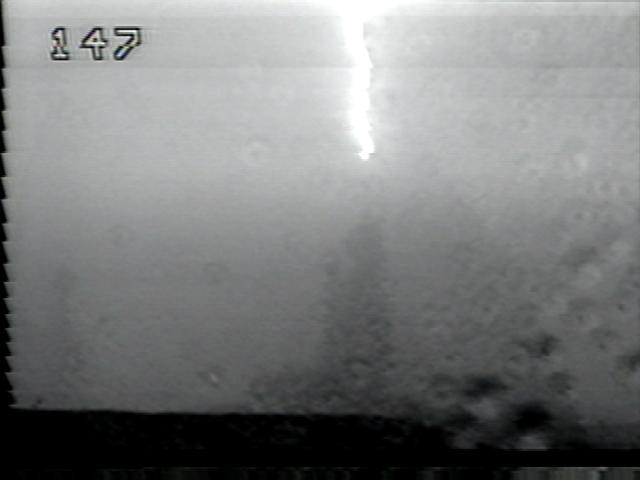
Remote cameras captured a lightning strike at the launch pad on Friday. Photo credit: NASARemote cameras captured a lightning strike at the launch pad on Friday. Photo credit: NASA
Remote cameras captured a lightning strike at the launch pad on Friday. Photo credit: NASA

08/28/06 - RELEASE: 06-302, Tropical Storm Ernesto Forces Shuttle Atlantis' Launch Delay

Tuesday's scheduled launch of Space Shuttle Atlantis on its STS-115 mission to the International Space Station is being postponed because of Tropical Storm Ernesto. A new launch date has not been set.

Although no final decision has been made, shuttle managers meeting at NASA's Kennedy Space Center instructed launch teams Monday to continue preliminary preparations to roll Atlantis off its launch pad and back inside the protection of the Vehicle Assembly Building. Managers will follow developments in Tropical Storm Ernesto's track. A decision on whether to roll back is expected by midday Tuesday.

Ernesto is forecast to pass near Kennedy on Wednesday afternoon.

The STS-115 crew will remain in Florida until a roll back decision is made. Commander Brent Jett, Pilot Chris Ferguson, and mission specialists Joe Tanner, Dan Burbank, Heide Stefanyshyn-Piper and Canadian astronaut Steve MacLean will study flight plans and spend time with their families.

During STS-115, Atlantis' astronauts will deliver and install the 17.5-ton, bus-sized P3/P4 integrated truss segment on the station. The girder-like truss includes a set of giant solar arrays, batteries and associated electronics. The P3/P4 truss segment will provide one-fourth of the total power-generation capability for the completed station.

08/26/06 - Launch Postponed, The Space Shuttle Mission Management Team decided Saturday afternoon to postpone the launch of Space Shuttle Atlantis for at least 24 hours to allow more time for teams to assess ground and flight systems following a strong lighting strike to the lighting protection system at the launch pad on Friday afternoon.

"We're going to let the teams go off and work the plans," said LeRoy Cain, launch integration manager and chairman of the management team. Cain said the Mission Management Team would review data and decide about Monday when they reconvene at 10 a.m. EDT on Sunday. . View Video (Real Media Format), or in (Windows Media Format)

If it is determined that all systems are go for a Monday launch, the weather presents only a 20 percent chance of "no go" according to U.S. Air Force First Lt. Kaleb Nordgren of the 45th Weather Squadron at Cape Canaveral Air Force Station.

The liftoff time for Monday would be 4:04 p.m. EDT.
Image: With the final launch rehearsal completed, the STS-115 crew gathers on the 215-foot level of the fixed service structure on Launch Pad 39B. From left are Pilot Christopher Ferguson, Mission Specialists Heidemarie Stefanyshyn-Piper and Joseph Tanner, Commander Brent Jett, and Mission Specialists Steven MacLean and Daniel Burbank. Photo credit: NASA/Cory Huston.Image: With the final launch rehearsal completed, the STS-115 crew gathers on the 215-foot level of the fixed service structure on Launch Pad 39B. From left are Pilot Christopher Ferguson, Mission Specialists Heidemarie Stefanyshyn-Piper and Joseph Tanner, Commander Brent Jett, and Mission Specialists Steven MacLean and Daniel Burbank. Photo credit: NASA/Cory Huston, High Resolution Image
Final Preparations for Aug. 27 Launch Continue

Rehearses for Launch Crew completes final training for liftoff View Video. (Real Media) or with (Windows Media)

At Launch Pad 39B, hypergolic propellant loading is being completed. Following a decision by Space Shuttle Program managers to remove and replace two Ku-band antenna actuator bolts in the forward section of the orbiter payload bay, workers are preparing access platforms and will complete the task over the weekend. The bolts will be replaced with longer versions to ensure adequate thread engagement. Ordnance installation is now scheduled for Sunday evening, pending completion of the bolt replacement. View Bolt Removal and Replacement Graphics (PDF 3.2 Mb).

Earlier this week, flight crew systems workers installed extravehicular maneuvering units in the crew cabin. The suits are worn by shuttle crew members for spacewalks

Technorati Tags: or and or and or and or and or and or and or and or

RELATED: Keywords Space Shuttle, Monday, June 19, 2006 STS-121 Space Shuttle Discovery FULL MISSION COVERAGE (VIDEO), Monday, June 12, 2006 STS-121 Crew Arrival (LIVE VIDEO), Tuesday, January 03, 2006 President Signs 14 House and Senate Resolutions, Friday, August 19, 2005 Shuttle Discovery Heads Home on Boeing 747, Tuesday, August 09, 2005 Discovery Crew Home Safe (Image Gallery), Tuesday, August 02, 2005 President Calls Space Shuttle Discovery VIDEO, Friday, July 29, 2005 Space Shuttle Discovery STS-114 External Tank Images, Thursday, July 28, 2005 Discovery, STS-114 Crew Arrive at Space Station, Thursday, July 28, 2005 sts-114, Space Shuttle Discovery Foam Shedding From External Tank, Tuesday, July 26, 2005 Discovery Cruises Through Flight Milestones, Monday, July 25, 2005 Launch of Space Shuttle Discovery 07/25/05, Sunday, July 24, 2005 Return to Flight Launch Countdown 07/24/05,

observations shake up galactic formation theories

Technorati Tags: or and or and or and or and or and or and or

Caption: A false-color image of the star AE Aurigae, embedded in a region of space containing smoke-like filaments of carbon-rich dust grains, a common phenomenon. Such dust might be hiding deuterium, an isotope of hydrogen, and stymieing astronomers' efforts to study star and galaxy formation. The FUSE satellite has surveyed the local deuterium concentration in the galaxy and found far more than expected. Because deuterium is a tracer of star and galaxy evolution, this discovery could radically alter theories about how stars and galaxy form. Credit: Credit: T.A. Rector and B.A. Wolpa, NOAO, AURA, and NSF, Usage Restrictions: None.Caption: A false-color image of the star AE Aurigae, embedded in a region of space containing smoke-like filaments of carbon-rich dust grains, a common phenomenon.
Such dust might be hiding deuterium, an isotope of hydrogen, and stymieing astronomers' efforts to study star and galaxy formation. The FUSE satellite has surveyed the local deuterium concentration in the galaxy and found far more than expected.

Because deuterium is a tracer of star and galaxy evolution, this discovery could radically alter theories about how stars and galaxy form. Credit: Credit: T.A. Rector and B.A. Wolpa, NOAO, AURA, and NSF, Usage Restrictions: None.

Surprising telescope observations shake up galactic formation theories

A heavy form of hydrogen created just moments after the Big Bang has been found to exist in larger quantities than expected in the Milky Way, a finding that could radically alter theories about star and galaxy formation, says a new international study led by the University of Colorado at Boulder.

CU-Boulder astrophysicist Jeffrey Linsky said new data gathered by NASA's Far Ultraviolet Spectroscopic Explorer, or FUSE, satellite, shows why deuterium appears to be distributed unevenly in the Milky Way Galaxy. It apparently has been binding to interstellar dust grains, changing from an easily detectable gaseous form to an unobservable solid form, said Linsky, a fellow of JILA, a joint institute of CU-Boulder and the National Institute of Standards and Technology.

The FUSE deuterium study, six years in the making, solves a 35-year-old mystery concerning the distribution of deuterium in the Milky Way while posing new questions about how stars and galaxies are made, according to the research team. A paper on the subject by a team of international researchers led by Linsky is being published in the Aug. 20 issue of The Astrophysical Journal.

"Since the 1970s, we have been unable to explain why deuterium levels vary all over the place," said Linsky. "The answer we found is as unsettling as it is exciting."

Since deuterium -- a hydrogen isotope containing a proton and a neutron -- is believed burned and lost forever during star formation, scientists think the amount of deuterium present in the universe is "pure" and serves as a tracer for star creation and galaxy building over billions of years, said Linsky. While primordial deuterium in the distant, early universe has been measured at concentrations of about 27 parts per million parts hydrogen atoms, measurements by FUSE and NASA's Copernicus satellite have shown a "patchy" distribution of the element in the Milky Way galaxy, often at far lower levels.

In 2003, Princeton University's Bruce Draine, a co-author on the new study, developed a model showing that deuterium, when compared to hydrogen, might preferentially bind to interstellar dust grains. The observations by FUSE -- which can detect the telltale spectral fingerprints of deuterium in the ultraviolet energy range -- strongly support the theory, according to The Astrophysical Journal paper authors.

"Where there are high concentrations of interstellar dust in the galaxy, we see lower concentrations of deuterium gas with FUSE," said Linsky. "And where there is less interstellar dust, we are measuring higher levels of deuterium gas."

In relatively undisturbed areas of the universe -- like regions around Earth's sun, for example -- deuterium atoms systematically "leave" the gas phase and replace normal hydrogen atoms in dust grains, said Linsky. When a pocket of the universe is disturbed by events like a supernova shock wave or violent activity triggered by nearby hot stars, the dust grains are vaporized, releasing deuterium atoms back into a gas, which has been measured by FUSE, the researchers said.

Scientists assumed from astrophysical theories that at least one-third of the primordial deuterium present in the Milky Way was destroyed over time as it cycled through the stars, said Linsky. But according to the new FUSE findings, the present-day deuterium abundance is less than 15 percent below the primordial values.

"This implies that either significantly less material has been converted to helium and heavier elements in stars or that much more primordial gas has rained down onto the galaxy over its lifetime than had been thought," said Linsky. "In either case, our models of the chemical evolution of the Milky Way will have to be revised significantly to explain this important new result."

Launched in 1999, FUSE is a NASA Explorer mission developed in cooperation with the French and Canadian Space Agencies and by Johns Hopkins University, CU-Boulder and the University of California, Berkeley. CU-Boulder's Center for Astrophysics and Space Astronomy designed and built the mission's $9 million spectrograph, which collects and funnels UV light from the satellite's four telescopes. ###

The paper was co-authored by scientists from Princeton, Johns Hopkins and Northwestern universities, the Space Telescope Science Institute, CU-Boulder, the University of Wisconsin-Madison, the University of Texas-Austin, NASA-Goddard, the Laboratoire d'Astrophysique in Marseille, France, and the Observatoire de Paris-Meudon in Meudon, France. Other CU-Boulder co-authors include JILA's Brian Wood, CASA's Michael Shull and CASA doctoral graduate Seth Redfield.

For more information on the FUSE satellite and the spacecraft's search for deuterium go to fuse.pha.jhu.edu/ and fuse.pha.jhu.edu/wpb/.

Contact: Jeffrey Linsky jlinsky@jila.colorado.edu 720-939-7838 University of Colorado at Boulder

RELATED: Keyword, Supernova, Sunday, July 09, 2006 Supernova leaves behind mysterious object, Sunday, June 11, 2006 Massive-star supernovae found to be major space dust factories, Sunday, April 23, 2006 DEADLY ASTRONOMICAL EVENT NOT LIKELY TO HAPPEN IN OUR GALAXY,