 | On-the-Record Briefing on the Upcoming United Nations General Assembly (UNGA), Kristen Silverberg, Assistant Secretary for International Organizations Affairs FULL STREAMING VIBEO |
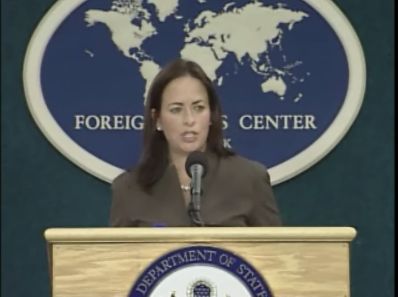
MR. CASEY: Good afternoon, everybody. Glad to be here with you. As you all know, Secretary Rice will be headed on up to New York this weekend to participate in activities at the United Nations General Assembly to talk to you a little bit, both about some of the major themes and activities at the Assembly and also cover some of the multilateral events that the Secretary will be participating in while she's up there. We've got Assistant Secretary of State for International Organization Affairs Kristen Silverberg here. Let me turn the podium over to you, Kristen.
ASSISTANT SECRETARY SILVERBERG: Thank you. Good afternoon, everyone. Glad to talk to you today about next week's events at the opening of the 61st General Assembly. As you know, the annual opening of the General Assembly is an exciting time for us here at the Department because along with President Bush, Secretary Rice, and really most of the senior officials at the Department convene in New York to have meetings with our key counterparts and we cover really the range of foreign policy issues.
This year President Bush will attend, of course, along with 64 other heads of state and 170 foreign ministers. He will address the General Assembly on the 19th and we're looking forward to that. This year we expect a particular focus on events in the Middle East on Darfur and on President Bush's democracy agenda.
You will get more scheduling information later, but I'd like to walk through some of the key multilateral events and then I'm happy to take questions about next week. On Monday, September 18th at 3 p.m., the Secretary will attend the Iraq Compact Conference hosted by the Secretary General. Member states will review Iraq's progress in making reforms. And then later in the week, she'll see President Talabani for a private meeting for further discussions.
On Tuesday, September 19th, she will have a number of opportunities to focus on the international community's efforts to address Iran's nuclear ambitions. She'll first attend President Bush's meeting with President Chiraq and his meeting with Secretary General Kofi Annan. And then at 8 p.m., the Secretary will have a dinner with the P-5 foreign ministers as well as Germany and Italy.
On Wednesday, September 20th at 12:30, the Secretary will attend a meeting of the Quartet to discuss the Middle East peace process. At 2:30 she will meet with foreign ministers of the Gulf Cooperation Council to discuss a range of regional, economic and security issues. At 4 p.m., she'll meet with a Kosovo Contact Group for a discussion of Special Envoy Ahtisaari's efforts to reach a status agreement this year.
On Thursday, September 21st at 11 a.m., Secretary Rice will meet with NATO foreign ministers to discuss the situation in Afghanistan and to prepare for NATO's November summit.
On Friday, September 22nd, at 4 p.m., the Secretary will attend an event on countering trafficking and wildlife. This is, I think, a very interesting event around a partnership to promote wildlife conservation around the world by better enforcing laws against trafficking. And then at 5:30, she'll meet with her P-5 counterparts to discuss a range of issues. At 7:00 she'll attend a dinner of G-8 foreign ministers and political directors.
Then finally on Monday, September 25th at 2:00 p.m., Secretary Rice will meet with members of the Caribbean Community to discuss a range of issues. I'd like to mention one other event, time to be decided, that's of particular importance to President Bush and Secretary Rice. In light of the continuing grave humanitarian situation in Darfur and in light of the UN's -- the decision of the UN Security Council to deploy a peacekeeping operation to Darfur, Secretary Rice and some of her key counterparts, including the Danish Foreign Minister, have made a decision to call together a meeting of key partners. At that meeting, they will commit all of our governments to take steps to end the violence.
With that.
QUESTION: (Off-Mike.)
ASSISTANT SECRETARY SILVERBERG: We haven't decided on it. We're still working on the time with trying to reconcile minister schedules, so we'll keep you posted.
QUESTION: Can I ask something about that? Are you including China in that meeting, or what kind of pressure are you putting on China?
ASSISTANT SECRETARY SILVERBERG: We -- all of the details about the meeting are still being discussed. The purpose of the meeting, as I said, is to call attention to the situation on the ground to talk about next steps, about first how we can deploy the UN peacekeeping operation as soon as possible, how we can deal with the humanitarian situation, how we can strengthen AMIS, the existing African force, and how we can recommit all of our governments to take collection action, the full international community, to end the violence.
Any other questions?
QUESTION: How about a meeting on North Korea?
ASSISTANT SECRETARY SILVERBERG: They -- that will come up at a number of meetings, including her P-5 discussions. But yes, she will be having discussions on North Korea.
QUESTION: Separately from the ones that you’ve announced here?
ASSISTANT SECRETARY SILVERBERG: Yes. I haven’t covered her entire schedule. As I said, you’ll get more detail later. I’m just covering some of the key multilateral issues, but there are events to discuss North Korea on her schedule.
QUESTION: Do you expect a meeting of the five parties out of the six parties minus North Korea? Is that --
ASSISTANT SECRETARY SILVERBERG: I think we’ll come back to you with more details about the North Korea discussions but, yes, this will be an active part of her schedule.
Yes.
QUESTION: Will you have any particular talks regarding the new UNIFIL force and enlargement for Lebanon?
ASSISTANT SECRETARY SILVERBERG: Yes. This is a topic both for her meeting with the Secretary General, Secretary General Annan; it’s for her discussions with our Security Council partners. This remains a real focus. You know that we’ve made some serious progress in Lebanon both deployment of the LAF -- we’re very grateful for the widespread interest by many troop-contributing countries participating in the force. We think that’s great news, and we’re grateful for a lot of the special contributions to maritime security, airport security, and other things. But really, there is a lot to do in terms of understanding more, how we’re going to keep the borders controlled, how we’re going to prevent rearmament. So that’s going to be a topic for the Secretary.
Yes.
QUESTION: You talked about a lot of meetings she’s going to have, but can you kind of flush out what she hopes to accomplish when she’s up there on some of these issues. I mean at the end of the day after these meetings, what are some of the key things that you’d like to see in terms of these issues?
ASSISTANT SECRETARY SILVERBERG: Well, let me give you an example, which is obviously going to be top of the agenda, Iran’s nuclear ambitions. You know, it’s our view that Iran, between years of negotiations with the EU following the IAEA Board of Governors’ clear statement that Iran needs to suspend, a PRST from the Security Council, a resolution from the Security Council that Iran has had ample opportunity to make the decision in favor of cooperation and instead of isolation and confrontation. They haven’t done that. So we think the Security Council needs to move forward as soon as possible.
So one of the things she’ll be dealing with her P-5 counterparts is how we can take steps in the Council on an urgent basis to help address this issue.
Yes.
QUESTION: Javier Solana said today that he thinks that he’s making real progress with Iran.
ASSISTANT SECRETARY SILVERBERG: We think -- one of the things that we worked on with the Security Council resolution is how can we create a clear and verifiable requirement for Iran. So the Council resolution doesn't have a complicated series of steps Iran has to take. It has a very simple, verifiable requirement that Iran suspend its enrichment. They haven't done that. They didn't do it by the deadline. And so it's our view that the Council needs to act as soon as possible. Obviously, if they do it, that's a different circumstance and we'll talk about it then.
Yes.
QUESTION: The Middle East is going to occupy the main focus of your efforts at the United Nations. I wonder if it will cover dealing with the plight of the people under occupation, Israeli occupation in Golan -- the Golan city and Golan Heights and in the Palestinian territories. And if you are going to do that at least on a humanitarian base or level, would the plight and suffering of the Palestinians -- you are carrying your kids, written on their bodies, "I am hungry every day," because of the embargo of transferring money to these people --
ASSISTANT SECRETARY SILVERBERG: I think -- thank you. I think that the -- there's no question that the Middle East peace process will be a topic of discussion. As I said, the Secretary will be meeting with the Quartet. And so that'll be an issue that's discussed in that context. It'll also come up in a number of her bilateral meetings and of course, the humanitarian situation is a big part of those discussions.
The Quartet has laid out a series of principles that a government and a partner for peace needs to sign onto. Those -- all of the Quartet members remain committed to those principles. And so I think you'll see those principles reaffirmed and also, the Secretary will talk with other Quartet members about status in the peace process.
QUESTION: Should we expect a (inaudible) on the peace process efforts of --
ASSISTANT SECRETARY SILVERBERG: I'm sorry, what's that?
QUESTION: Should we anticipate that after all these meetings at the United Nations, that there will be a new invigoration of efforts, American efforts, to push the peace process forward for the Middle East?
ASSISTANT SECRETARY SILVERBERG: I hope the meetings will move the ball. I mean, that's the reason the Secretary has them. And so yes, I think that is our hope that we see progress.
Yes.
QUESTION: President Bush just said a few minutes ago that he is frustrated with the United Nations. He thinks a lot of Americans are frustrated in the context of Darfur and elsewhere. Do you share that frustration? And in a general sense, why does the United States need the United Nations at this point?
ASSISTANT SECRETARY SILVERBERG: I think there are some reasons for frustration. The President mentioned one earlier today. I could add the UN reform process, which is our effort really to make sure that we have a UN that meets the highest ethical standards that spends member-state resources effectively. That hasn’t moved as quickly as we think it should. We think a lot of the reforms we were proposing and others were proposing are long overdue, and they really need to take those steps as soon as possible.
They -- we value the United Nations for a lot of reasons. We value our partnerships in the Security Council, and we’ve seen them take some effective action on Lebanon with regard to Syria, of course, Iran, North Korea. We value UN humanitarian and development programs. The World Food Program is a fabulous organization that feeds people around the globe and does it in a cost-effective way. So we still continue to support the United Nations. We want it to be a valuable partner in our efforts to bring democracy to alleviate poverty, to help address disease. But to do that, we really need a UN that’s prepared, first, to enforce its own judgments; and second, to make member-state resources -- to put them to the most effective use.
QUESTION: Can I follow up on that?
ASSISTANT SECRETARY SILVERBERG: Sure.
QUESTION: Particularly on the UN Security Council, I mean, you have two countries that are permanent members, Russia, and to a greater extent right now with Darfur, China, that are preventing you from moving ahead on some of the key issues that you want to advance, such as sanctions on Iran or putting pressure on the Sudanese Government to allow this UN force. So how effective can the UN Security Council be when you have two members that at every turn the United States is facing opposition every step of the way?
ASSISTANT SECRETARY SILVERBERG: Well, we’ve had disagreements within the Security Council since 1945. It’s not new. And it’s, I think, to be expected in light of the difficulty of some of these issues. But this last period with the Council has been one of the most active and potentially constructive of the Security Council's period.
As I rattled off some of the important things they've done between Darfur -- we expect a decision to soon to add Burma to the Security Council agenda, North Korea and others. But of course the Security Council has to be able to follow up on its decisions. And one of the Security Council decisions was that if Iran failed to fully suspend, it would take further action, including the adoption of sanctions. And so we expect the Council to do that.
QUESTION: It's on Darfur.
ASSISTANT SECRETRY SILVERBERG: Yes.
QUESTION: The President implied an hour ago that it may be possible for a UN force to go into Darfur without the consent of the Sudanese Government. Did I hear that right?
ASSISTANT SECRETRY SILVERBERG: You did. That's absolutely the case. It's absolutely the case under the terms of the resolution. This was a U.S. red line. We insisted on -- that there be no language in the resolution that required the explicit endorsement of the Sudanese Government. Obviously we would like their cooperation and support. We think that the likelihood of ending the violence is much better if we have support and cooperation from the Government of Sudan, but it's not required.
QUESTION: A follow-up.
ASSISTANT SECRETRY SILVERBERG: Yeah, go ahead.
QUESTION: I notice that the Secretary is going to meet with some small Caribbean countries.
ASSISTANT SECRETRY SILVERBERG: Mm-hmm.
QUESTION: And she's not planning to meet with large Latin American countries. Does she now want to sit in the same room with President Chavez of Venezuela?
ASSISTANT SECRETRY SILVERBERG: I think she -- well, she does see some large Latin American countries and I'd have to recap. But she certainly sees -- we obviously have a couple on the Council -- Peru and Argentina. And I'd have to look back at her schedule to see others. But she's -- no, she's not scheduled to meet with President Chavez.
Yes.
QUESTION: I'd like to go back to the Darfur question because no country is going to send troops to a UN force if it doesn't have Sudan's consent. So I want to know what you guys are doing to get China on board to push the Sudanese government and also what the U.S. plans to bring to the table at this meeting. There's been a lot of meetings to highlight the plight, but what are you bringing to the table to help the AMIS force continue?
ASSISTANT SECRETRY SILVERBERG: We have worked closely with the Chinese Government on encouraging them to press the Government of Sudan and they've done that. The Government of China fully supports -- we have a disagreement about the terms of the resolution, but they believe we need a UN peacekeeping mission. They've said that to the Government of Sudan. Obviously we'd like them to be more active in making the case, but you're right there. That's required and we've asked them to do it.
We have -- we briefed a couple of weeks ago with Jendayi Frazer on the contents of her discussions with President Bashir. Those are continuing, so we're continuing to work with the Government of Sudan to encourage their cooperation and consent. And one of the things the ministers will talk about in this meeting is ways that we can work with the Government of Sudan to get their consent and also what are other steps we can take both to strengthen AMIS and to ensure that we're reducing the violence.
QUESTION: But is the U.S. bringing anything to the table? I mean, there's been talk -- President Bush talked about a NATO overlay months and months ago.
ASSISTANT SECRETRY SILVERBERG: Yeah. I think we'll have more to talk about after the meeting next week. But yes, we expect this meeting to move the ball.
Yes.
QUESTION: Are one of the specific goals of the Darfur meeting to look at how you can proceed if Sudan does not accept? Is that going to be one of the main focus?
ASSISTANT SECRETRY SILVERBERG: Well, remember that the Security Council resolution provided a lot of things that are done outside the UN peacekeeping mission, including steps to immediately strengthen AMIS, both to use UN resources to help strengthen logistics capability and communications and other things with the AMIS force. So we're continuing to move on all of those issues while we press for deployment of the UN force. So it's a several-pronged effort.
QUESTION: Are you going to be looking as well as troop commitments in that meeting to see who can contribute troops, what kind of fire power they could have? Because if they’re going in without the Sudanese Government’s consent, then they’re going to need fire power, air support, better logistical support too.
ASSISTANT SECRETARY SILVERBERG: This won’t be a meeting on troop generation. That’s usually done lower than ministerial level, but we’ve -- that’s something the UN Department of Peacekeeping Operations has been actively engaged in for months and with our help.
QUESTION: So how far are you along in terms of troops?
ASSISTANT SECRETARY SILVERBERG: I think we have -- following adoption of the resolution, the DPKO was able to have more concrete conversations with a lot of countries about their willingness to contribute troops, and we think the troops are out there. But as we’ve discussed, there are a number of issues including, will they go into a permissive environment, a semi-permissive environment, or a hostile environment.
QUESTION: So what’s the figure you have now?
ASSISTANT SECRETARY SILVERBERG: They -- honestly, I don’t have it with me and I'd have to go back and check.
Yes.
QUESTION: Where on your agenda is the whole topic of non-state actors, meaning terrorists? Is that high in priority?
ASSISTANT SECRETARY SILVERBERG: I think that’s a really interesting issue that’s come up in a number of Security Council discussions recently. And obviously, the debate about Hezbollah was an important one. This is central to Secretary Rice’s transformational diplomacy agenda, is how do you deal with the transformation of foreign policy to something that happens between capitals, between -- at the head of state level and something that actually involves both constructive and unconstructive non-state actors, meaning terrorist groups to one extreme and civil society groups on the other extreme.
One interesting thing on this line is that the President will be having an event at UNGA to talk about the role of NGOs in building democracy, and that’s the positive side of the non-state actor. And of course, we continue to focus on this on a challenge for some of our Security Council resolutions.
Yes.
QUESTION: The term of General Secretary of the UN is ending soon.
ASSISTANT SECRETARY SILVERBERG: Yes.
QUESTION: Does -- the U.S. has already made up their mind whom they want support or from which state groups they might a support a candidate and -- it has to be a subject in this General Assembly, too.
ASSISTANT SECRETARY SILVERBERG: I think it will be a subject of discussion with the Secretary and her counterparts. We have not endorsed a candidate. It’s our view that we want somebody who is going to be, first, strongly committed to effective and sound management of the United Nations. This isn’t a talk-shop anymore. It’s not just a political organization in New York. It’s an organization that has more than 70,000 peacekeepers deployed. It has development and humanitarian programs all over the world. So we want somebody who’s going to be a good manager and committed to continued reform of the United Nations. We also want somebody who’s going to be -- share our values. First, the importance of promoting democracy around the world, a commitment to human rights is also important.
We’ve said that we’re happy to look at someone from any region including Asia. So we’re very open-minded about the region from which the person comes.
QUESTION: Two follow-ups on this. You say that the person will have to share your values of democracy, human rights. Does that mean that the person will be from a country that is a democracy? Is that your preference?
ASSISTANT SECRETRY SILVERBERG: We haven't said that we'll insist on a person from a democracy. What we want -- remember that the Secretary General serves in his or her personal capacity. He doesn't represent a national government, and so the important thing is that we have a leader who's going to help make the UN an effective organization in supporting democracy promotion efforts and in defending human rights. This is something we've had some real concerns about the UN on recently. And this goes back to the question about frustration with the UN.
You'll remember that last year we had a thorough debate with the highest levels of attention about the Human Rights Council and our efforts to replace the Commission on Human Rights with a stronger and more effective body. And we've been disappointed, really profoundly disappointed, by the quality of the resolutions that are coming out of the human rights council. We think they have an unconstructive focus on Israel, and that they really need to turn their attention to some of the key human rights problems in the world: North Korea, Burma, and other places. And so this is something that we think as an important agenda item going forward.
QUESTION: And just one more on that Asia issue. Obviously you've said for a long time that you would look for the best candidate, no matter where they come from. But then the President in a roundtable with reporters before the G-8 Summit actually said explicitly that his understanding is that it's Asia's turn next. And that was sort of seen by many as an indication that perhaps your opinion might be changing and it might be, you know, going with Asia. Is that a sort of good direction that --
ASSISTANT SECRETRY SILVERBERG: I think we'd be very enthusiastic about a strong Asian candidate who met our criteria. And the President I think was reflecting a -- I think the President was reflecting conventional wisdom that this will be an Asian. But it's long-standing U.S. policy dating back for many, many years that we don't -- we don't sign on to the concept of regional rotation. We don't think this automatically rotates between regions. But if there's an Asian candidate who's the strongest candidate and meets our criteria, then we are obviously prepared to support that person.
QUESTION: Is (inaudible) a person at this point?
ASSISTANT SECRETRY SILVERBERG: Again, we haven't endorsed any candidate.
QUESTION: No, I'm not asking about an endorsement, but potentially is there someone who may --
ASSISTANT SECRETRY SILVERBERG: We haven't spoken publicly about the qualifications of any of the existing candidates.
QUESTION: But have you any --
QUESTION: A (inaudible) with the South Korean candidate upfront. Is that who you would be supporting?
ASSISTANT SECRETRY SILVERBERG: Again, we don't address that (laughter) good, though. (Laughter.)
QUESTION: Well, when you say that you want someone who is strongly committed to improving the management and effectiveness of the UN and its budget, I mean, certainly UN officials that were embroiled in the kind of scandals and conflicts that caused you to launch this major reform effort certainly would not be in the running in your case.
ASSISTANT SECRETRY SILVERBERG: Again, we don't want to talk about any specific candidates and we're unlikely to at any point. So -- but yes, we do want somebody who we can be assured is going to hold the UN to the highest ethical standards.
QUESTION: Do you have any signs that Asian countries have unanimous support for one candidate, whoever that might be? I mean, eight years ago that was a failure that they couldn't present their candidate and support it and it was (inaudible). So do you have any sign that this has changed at this time, they come and they end up with one candidate and not two or three?
ASSISTANT SECRETRY SILVERBERG: There is not a consensus Asian candidate right now and I don't see signs of one emerging, honestly right now. There are five Asian candidates and they all enjoy some support, so we don't expect a consensus.
Yes.
QUESTION: Can you give us a little more idea about the major reform initiatives that you're carrying with you. Are you going to be focusing on in there, and what kind -- and what level of differences do you have with other countries about them?
ASSISTANT SECRETRY SILVERBERG: Well, one of the things that's been the hardest for us to achieve is what we refer to as mandate review. Namely, we think that the UN needs to periodically review its programs and activities to make sure, first, that they're still serving an important purpose; that the purpose isn't outdated. That they're doing it effectively, that they're using resources effectively, that there's not an overlap between programs. Of the 9,000-odd UN mandates, none of them get this periodic review. They -- for the most part, the General Assembly just automatically reauthorizes without any scrutiny and we think that that's led really to proliferation of programs to a lot of duplication and overlap.
And so one of the things we'd like to see the UN do is institute a regular process of reviewing its existing programs to make sure they still make sense.
Yes.
QUESTION: About the P-5+1 dinner. Why Italy is joining this dinner and not Canada and Japan as they did in previous meetings?
ASSISTANT SECRETRY SILVERBERG: You know, I'd have to get back to you on that. Tom, you don't --
MR. CASEY: No, there's a couple a factors involved, but I'll get back to you on that.
QUESTION: Okay and also another question. On the G-8 meeting on Friday, what will it be about?
ASSISTANT SECRETRY SILVERBERG: It's really likely to cover a range of issues. I think it's going to be a kind of far-reaching discussion of really all of the priority issues I listed earlier.
Yes.
QUESTION: Is the Iranian President coming up to New York? Have you issued a visa?
ASSISTANT SECRETRY SILVERBERG: A visa application has been submitted. We haven't responded to it yet. It's still being considered according to our normal procedures, so we'll get back to you as soon as there's a final decision.
QUESTION: But you don't have a precedent for denying a head of state a visa to address the UN General Assembly, do you?
ASSISTANT SECRETRY SILVERBERG: I'm not sure whether we ever have. I can say that the U.S. takes its Headquarters Agreement responsibilities very seriously, and so we always make sure that we've adhered to it. But I'd have to check whether we've -- I don't know whether we've ever denied one or not.
Yes. And I think we should make this the last question.
MR. CASEY: Yeah.
ASSISTANT SECRETARY SILVERBERG: Yes, last question.
QUESTION: What's the U.S. position on Venezuela as non-permanent member?
ASSISTANT SECRETRY SILVERBERG: Well, you know that this year there is a contested seat in Latin America for the non-permanent seat on the Security Council and the two candidates are Guatemala and Venezuela and it's probably no great surprise that we don't think Venezuela would be the best partner on the Security Council. They've opposed our terrorism efforts, they've supported Iran's nuclear ambitions, they’re demagogue a lot at international meetings and don't behave with seriousness. And at the same time, Guatemala we think is a good country with a lot to contribute. They participate in peacekeeping missions, they represent the small countries of the UN which should have their turn on the Security Council and so anyway we've made that point, I think before publicly.
Anyway, thank you all very much.
2006/829, Released on September 15, 2006
Technorati Tags: State Department and Secretary of State or United Nations General Assembly and VIDEO, or Kristen Silverberg and Assistant Secretary for International Organizations Affairs or Condoleezza Rice,
Related: Keywords State Department, Monday, September 18, 2006 Annual Report on International Religious Freedom (VIDEO), Wednesday, September 13, 2006State Department Daily Press Briefing, VIDEO, PODCAST, TEXT, 09/12/06, Monday, September 04, 2006 Media Stakeout Ambassador John Bolton 09/01/06 (VIDEO), Monday, September 04, 2006 Condoleezza Rice American Legion Convention VIDEO, PODCAST, TEXT, Thursday, August 31, 2006 United Nations Daily Press Briefing 08/31/06 (VIDEO), Monday, August 28, 2006Media Stakeout Ambassador John Bolton 08/28/06 (VIDEO), Wednesday, August 23, 2006 Iranian Response to the P5+1 Package, Tuesday, August 22, 2006 Media Stakeout Ambassador John Bolton 08/22/06 (VIDEO), Tuesday, August 22, 2006 Media Stakeout Ambassador John Bolton 08/15/06 (VIDEO), Friday, August 18, 2006 State Department Daily Press Briefing, VIDEO, PODCAST, TEXT, 08/17/06, Thursday, August 17, 2006 Media Stakeout Ambassador Anne Woods Patterson Sudan VIDEO, Wednesday, August 16, 2006 Middle East Update 08/16/06 VIDEO, PODCAST, TEXT, Tuesday, August 15, 2006 Media Stakeout Ambassador John Bolton 08/15/06 (VIDEO), Tuesday, August 15, 2006 State Department Daily Press Briefing, VIDEO, PODCAST, TEXT, 08/14/06, Thursday, August 10, 2006 State Department Daily Press Briefing, VIDEO, PODCAST, TEXT, 08/10/06, Saturday, August 12, 2006 UN Adopts Resolution on Lebanon (VIDEO), Friday, August 11, 2006 International Initiative to Combat Kleptocracy VIDEO, PODCAST, TEXT,