


DoD Comment on ACLU and Human Rights First Lawsuit
There are 4 civil complaints are under review within this Department and at the Justice Department.
We vigorously dispute any assertion or implication that the Department of Defense approved of, sanctioned, or condoned as a matter of policy detainee abuse.
No policies or procedures approved by the Secretary of Defense were intended as, or could conceivably have been interpreted as, a policy of abuse, or as condoning abuse.
There have been multiple investigations into the various aspects of detainee abuse.
None has concluded that there was a policy of abuse.
The Department of Defense has demonstrated a record that credible allegations of illegal conduct by U.S. military personnel are taken seriously and investigated.
- There have been 8 major reviews, inspections, and investigations; three more are in progress.
- To date, more than 100 individuals have undergone, or are undergoing, disciplinary proceedings. We anticipate there may be additional proceedings against additional individuals.
U.S. policy as expressed in relevant Defense Department orders, techniques, and procedures requires that detainees be treated humanely and in accordance with the law.
- The Geneva Conventions apply to the conflict in Iraq.
- The Al Qaeda and Taliban are unlawful enemy combatants who fail to comply with the laws of war.
- The President has ordered and Defense Department policy emphasizes that Al Qaeda and Taliban detainees be treated humanely and, to the extent appropriate and consistent with military necessity, in a manner consistent with the principles of Geneva.
U.S. Department of DefenseOffice of the Assistant Secretary of Defense (Public Affairs)News Release
On the Web: defenselink.mil/releases/2005/ Media contact: +1 (703) 697-5131
Public contact: dod.mil/faq/comment or +1 (703) 428-0711 No. 216-05 IMMEDIATE RELEASE March 1, 2005
Tuesday, March 01, 2005
DoD, ACLU, Human Rights First Lawsuit
0
comments
||
||

Roper v. Simmons 03-633
U.S. Supreme Court today voted 5-4 to outlaw executions of murderers who were under 18 at the time of the crime, saying the practice violates the constitutional ban on cruel and unusual punishment.
"Juvenile offenders cannot with reliability be classified among the worst offenders,"..."stark reality that the United States is the only country in the world that continues to give official sanction to the juvenile death penalty." Justice Anthony M. Kennedy
John Paul Stevens, Ruth Bader Ginsburg, Stephen G. Breyer and David H. Souter voted the majority. Chief Justice William H. Rehnquist and Justices Sandra Day O'Connor, Clarence Thomas and Antonin Scalia dissented.
"Judges are ill-equipped to make the type of legislative judgments the court insists on making here," Scalia
"I would demand a clearer showing that our society truly has set its face against this practice before reading the Eighth Amendment categorically to forbid it," O'Connor
"The basic premise of the court's argument -- that American law should conform to the laws of the rest of the world -- ought to be rejected out of hand," Scalia
Proceedings and Orders, more background at Juvenile Death Penalty Banned by U.S. Supreme Court (Update5)
Roper v. Simmons Docket No. 03-633 PDF Format
Argued October 13, 2004—Decided March 1, 2005 At age 17, respondent Simmons planned and committed a capital murder. After he had turned 18, he was sentenced to death. His direct appeal and subsequent petitions for state and federal postconviction relief were rejected.
This Court then held, in Atkins v. Virginia, 536 U. S. 304, that the Eighth Amendment, applicable to the States through the Fourteenth Amendment, prohibits the execution of a mentally retarded person. Simmons filed a new petition for state postconviction relief, arguing that Atkins’ reasoning established that the Constitution prohibits the execution of a juvenile who was under 18 when he committed his crime.
The Missouri Supreme Court agreed and set aside Simmons’ death sentence in favor of life imprisonment without eligibility for release. It held that, although Stanford
v. Kentucky, 492 U. S. 361, rejected the proposition that the Constitution bars capital punishment for juvenile offenders younger than 18, a national consensus has developed against the execution of those offenders since Stanford. Held: The Eighth and Fourteenth Amendments forbid imposition of the death penalty on offenders who were under the age of 18 when their crimes were committed. Pp. 6–25 FULL TEXT IB PDF Format 67 pages No. 03–633.
0
comments
||
||
President Bashar al-Assad
A Syrian official source on Tuesday denied reports of some news agencies as quoting the Italian "La Republica" Newspaper as saying that President Bashar al-Assad expected an American attack on Syria after the end of war in Iraq.
The source stressed that this information has never been spoken during President Assad’s interview with the Italian newspaper.
Mazen / S.Younes Official Source / Statement Damascus, March 1 (SANA)
SOURCE: Syrian Arab News Agency, SANA address : Damascus-Baramka, nearby Damascus University, P.O. Box : 2661Telephones : 2228239/2231736/2224020/2226429/2129702, Fax : 2224572/2220365/2224292/2224557/2211254/2225774, Telex : 411004/411457/411458. E-Mail : sana@net.sy
0
comments
||
||
Iraqi Soldiers kill, capture terrorist
Iraqi Soldiers kill, capture terrorist
BAGHDAD, Iraq – Iraqi Army Soldiers conducting a route reconnaissance mission on a road leading to Baghdad, killed eight terrorists and captured 11 after running into a terrorist checkpoint.
The Soldiers, members of the 407th Battalion, 52nd Brigade, encountered the enemy near the Wasit Province line. In addition to killing and capturing a number of terrorists, the Soldiers also confiscated two of their vehicles.
Four Iraqi Soldiers were wounded, according to a Coalition Forces report.
FOR MORE INFORMATION, CONTACT CAPTAIN STEVE ALVAREZ, MULTI-NATIONAL SECURITY TRANSITION CORPS-IRAQ PUBLIC AFFAIRS OFFICE AT AlvarezSJ@mnstci.iraq.centcom.mil. OR VISIT mnstci.iraq.centcom.mil. Release #050301c
0
comments
||
||
Secretary Condoleezza Rice London Meeting Supporting the Palestinian Authority
Remarks at the London Meeting Supporting the Palestinian Authority
Secretary Condoleezza Rice Queen Elizabeth II Conference Center London, England March 1, 2005
I would like to join Foreign Minister Asselbourn and Secretary General Annan in thanking you, Prime Minister, for hosting this important event in support of the Palestinian people. Mr. Prime Minister: Your personal dedication to the cause of Middle East peace has helped to make the present moment rich with hope and opportunity.
I would also like to thank President Abbas, whose participation in this meeting demonstrates very, very vividly the Palestinian Authority's commitment to democratic reform. I look forward to working with you and your government at this time of great possibility for your people and for your region.
Distinguished colleagues, ladies and gentlemen: There is a consensus, in the Middle East and beyond, that before us today is the best chance for peace that we may see for years to come. To realize this opportunity, we must help the Palestinian people establish institutions that secure their freedom and their dignity, ensure law and order, and bring an end to terrorism. Friday’s terrorist attack in Tel Aviv is a reminder that there are still groups and individuals who will literally kill to prevent peace. And if they are not stopped, the path to peace will be blocked. The roadmap to peace correctly stated that terrorist organizations must be dismantled if our common goals are to be achieved.
During his recent visit to Europe, President Bush reaffirmed the clear vision that guides our efforts: We are determined to see two democratic states, Israel and Palestine, living side by side in peace and in security. Genuine peace will only blossom when it is rooted in genuine democracy. As President Bush said last week in Belgium: “Only a democracy can serve the hopes of Palestinians, and make Israel secure, and raise the flag of a free Palestine.”
In January, the Palestinian people held presidential elections that international observers agreed were free and fair. These elections were a credit to the Palestinian Authority and a source of honor for the Palestinian people. Israel offered its support to the Palestinians as they took this important first step toward democracy. And we hope to see similar cooperation for the Palestinian elections for parliament this July … and for the municipal elections in Gaza and the West Bank that will continue through the end of this year.
We in the international community must encourage the Palestinians to advance democratic reforms. A more representative Palestinian Authority must continue to answer the people’s call for good governance, economic opportunity, and real justice.
We applaud recent Palestinian efforts to make their government more transparent and accountable. A revised Palestinian Basic Law is serving well as an interim constitution. A new electoral law is being discussed in the Palestinian Legislative Council. And just last week, this Council approved a dynamic new cabinet of ministers who are committed to strengthening the cause of reform.
Ramallah is buzzing these days with vigorous debates and even the occasional shouting match. These are the sounds of democracy. And they are a true joy to hear, Mr. President. The Palestinian people are writing the opening chapter of a more hopeful national story. And their brave efforts deserve our utmost support -- for there is still much work to do.
Good governance requires the establishment of the rule of law, reform of the judiciary, an end to official corruption, and an overhaul of the pension and civil service systems. We must also help the Palestinian Authority build its capacity to deliver basic services like education and health care to its citizens. Political reform must be accompanied by social and economic development that prepares the Palestinian people for the challenges of a 21st-century world.
Advancing reform is urgent work that cannot be deferred. It will come to nothing if terrorist groups, like Palestinian Islamic Jihad, continue to attack Israelis and to deny the Palestinian people the better life they deserve. Therefore, all nations committed to peace must now join together to help the Palestinians prevent terrorists, and the states that support them, from killing this hopeful moment.
The Palestinian Authority needs to reform its security institutions in order to fight terrorism and lawlessness effectively. The United States is prepared to work with partners in the region and around the world to realize this essential goal. General Ward, who is here with me today, will soon relocate to the region to lead our efforts. We commend those neighbors, especially Egypt and Jordan, who have made specific commitments to help the Palestinians create honest and accountable security services.
Peace must be nurtured by many hands if it is to flourish. We all have important roles to play. The Israeli government will soon take a historic step to disengage from Gaza and parts of the West Bank. Israel must also take no actions that prejudice a final settlement, and must help ensure that a new Palestinian state is truly viable. A state of scattered territories will not work.
Arab states must end incitement in their media, cut off all funding for terrorism, stop their support for extremist education, and establish normal relations with Israel. We in the international community must share our expertise in all areas of democratic governance … and offer our full financial assistance.
For our part, the United States is eager to support the Palestinians in this time of hope and need. As President Bush announced in his State of the Union address, the United States is pledging $350 million to help the Palestinians build their democratic state. We are also providing $41 million in quick-impact funding. This money should be used immediately to help Palestinian citizens get health care, enroll in higher education programs, and develop their nation’s economy.
Just as we all share a responsibility for peace, so too will we share in the benefits of peace. A free and democratic Palestine will energize the pace of reform in the broader Middle East … and unleash a resounding chorus of hope throughout the wider world.
Today we have the chance to make our shared future one of peace and prosperity for all citizens. We can transform this present moment of hope into an historic turning point -- a pivotal time when free nations join together to help end a conflict, once and for all, that has ruined the lives of millions. And the roadmap to peace will show us the path to the two state solution we all seek.
The course of human liberty is often uneven. But from the long perspective of history, the forward movement of freedom is clear. So let us work together to seize this opportunity for peace. For if we do not, there is no telling when we will get another chance.
2005/252 Released on March 1, 2005
0
comments
||
||
American Red Cross Month 2005
American Red Cross Month, 2005 A Proclamation by the President of the United States of America
Americans have a long history of rising to meet humanitarian challenges, and the American Red Cross is a leader in these efforts. Since 1881, the American Red Cross has met disaster with compassion and courage. During American Red Cross Month, we honor this dedication and reaffirm the importance of volunteering time and contributing resources to make our communities and the world better.
From offering blood drives and lifesaving courses to providing disaster relief services at home and abroad, American Red Cross employees and volunteers work countless hours to care for those in need and serve a cause greater than self. As a result of the recent tsunami in the Indian Ocean, over 150,000 lives were lost and many more were left homeless and without food and water. The American Red Cross swiftly dispatched relief workers to assist those affected, and to distribute supplies, counsel survivors, and help people return home.
Here at home, the American Red Cross helps support our troops by transmitting emergency messages to members of the Armed Forces and their families. In this past year, the Red Cross has also contributed significantly to relief efforts for hurricanes in Florida, flooding in Western Pennsylvania, wildfires in the Western United States, and mudslides in California. These good works provide hope and healing to those dealing with profound loss and demonstrate the character of the American Red Cross.
NOW, THEREFORE, I, GEORGE W. BUSH, President of the United States of America and Honorary Chairman of the American Red Cross, by virtue of the authority vested in me by the Constitution and laws of the United States, do hereby proclaim March 2005 as American Red Cross Month. I commend the efforts of American Red Cross employees and volunteers, and I encourage all Americans to donate their time, energy, and talents to support this organization's humanitarian mission.
IN WITNESS WHEREOF, I have hereunto set my hand this twenty-eighth day of February, in the year of our Lord two thousand five, and of the Independence of the United States of America the two hundred and twentyninth.
GEORGE W. BUSH
# # # For Immediate Release Office of the Press Secretary February 28, 2005
0
comments
||
||
Nominations Sent to the Senate 02/28/05
Nominations Sent to the Senate
William Cobey, of North Carolina, to be a Member of the Board of Directors of the Metropolitan Washington Airports Authority for a term expiring May 30, 2010, vice John Paul Hammerschmidt, term expired.
Linda Morrison Combs, of North Carolina, to be Controller, Office of Federal Financial Management, Office of Management and Budget, vice Linda M. Springer.
John C. Dugan, of Maryland, to be Comptroller of the Currency for a term of five years, vice John D. Hawke, Jr., resigned.
Christopher J. Hanley, of Maryland, to be a Member of the Board of Directors of the Overseas Private Investment Corporation for a term expiring December 17, 2006, vice George J. Kourpias, term expired.
Nancy Ann Nord, of the District of Columbia, to be a Commissioner of the Consumer Product Safety Commission for the remainder of the term expiring October 26, 2005, vice Mary Sheila Gall, resigned.
Nancy Ann Nord, of the District of Columbia, to be a Commissioner of the Consumer Product Safety Commission for a term of seven years from October 27, 2005. (Reappointment).
Jeffrey Clay Sell, of Texas, to be Deputy Secretary of Energy, vice Kyle E. McSlarrow, resigned.
# # # For Immediate Release February 28, 2005
0
comments
||
||
Monday, February 28, 2005
Iraqi soldiers get permanent base in Al Anbar Province
Iraqi soldiers get permanent base in Al Anbar Province
CAMP HABBINYAH, Iraq -- Iraqi soldiers from the 9th Battalion, 2nd Iraqi Intervention Force Brigade, formally marked their new permanent duty station with a ceremony here today, marking a significant step for Iraqi security forces taking full responsibility for security in the area.
The battalion has been conducting operations in Fallujah since November 2004, operating from temporary facilities aboard the East Fallujah Iraqi Camp.
Camp Habbinyah is currently undergoing a $25 million renovation program to refurbish base infrastructure to support the permanent stationing and training of additional 1st IIF Division units.
The 9th Battalion is the first unit to receive military assistance teams in the Al Anbar province. The training program pairs an Iraqi security force unit with a Multi-National Force unit to train, mentor and assist the Iraqi unit as they develop the skills and experience necessary to provide security and stability in the region. The 9th Battalion will be partnered with the 1-506th Infantry Battalion, 2nd Battalion Combat Team, which serves under the 1st Marine Division.
“The combination of permanently stationed Iraqi Army forces and the introduction of the military assistance teams and training will increase security in Al Anbar province, and enable Iraqi security forces to take complete responsibility for security in the province,” said Brig. Gen. Joseph F. Dunford, assistant division commander, 1st Marine Division, I Marine Expeditionary Force.
The training program will provide a team of approximately 30 U.S. service members as the core-training cell. However, the entire Multi-National Force unit will be partnered with their Iraqi counterparts and fully engaged in training and combined operations. -30-
Release # 0228-05-1350 United States Marine Corps Press Release Public Affairs Office I Marine Expeditionary Force (Forward) Feb. 28, 2005
0
comments
||
||
Lahoud Accepts Karami Resignation Beirut
 Lahoud | Lahoud Accepts Karami Resignation Beirut, Feb. 28 (SANA) President Emile Lahoud of Lebanon on Monday accepted resignation of Lebanese Premier Omar Karami’s government. |
"President Lahoud accepted resignation of Karami and asked the government to continue dealing Lebanese issues until a new government is formed,"
a statement issued by Lebanese presidency Directorate said.
Karami earlier resigned during the second session of Lebanese parliament.
"Out of concern that the government doesn’t become an obstacle to the good of the country, I declare the resignation of the government I had the honor to Lead," Karami said.
Mazen.
SOURCE: Syrian Arab News Agency, SANA address : Damascus-Baramka, nearby Damascus University, P.O. Box : 2661
Telephones : 2228239/2231736/2224020/2226429/2129702, Fax : 2224572/2220365/2224292/2224557/2211254/2225774, Telex : 411004/411457/411458. E-Mail :sana@net.sy
0
comments
||
||
Resignation of Interim President and Elections in Togo
Resignation of Interim President and Elections in Togo
The United States is pleased that Faure Gnassingbe has stepped down as interim President of Togo, preparing for the return of full constitutional order.
The Economic Community of West African States has lifted its sanctions on Togo and the African Union has issued a statement on the Togolese transition. We welcome the success of these two organizations in upholding the principles of democracy and good governance enshrined in their charters. We join with them in urging all Togolese to conduct the upcoming elections peacefully and on the basis of consensus.
A key element for credible and transparent elections is unfettered access to the entire country and to all aspects of the electoral process for all political parties, relevant civil society organizations and international organizations providing assistance or fielding observer missions. The United States will send a team of elections experts to assess how we may best support this effort.
Togolese governing and opposition parties and government security forces deserve credit for their responsible and peaceful conduct during political demonstrations held over the weekend. We call on all Togolese to avoid violence and to seek peaceful national reconciliation through democratic elections.
2005/250 Released on February 28, 2005 Press Statement Adam Ereli, Deputy Spokesman Washington, DC February 28, 2005
0
comments
||
||
whitehouse briefing, lebanon, syria, resignation of the Karami government, video
Press Briefing by Scott McClellan FULL STREAMING VIDEO, TRANSCRIPT
MR. McCLELLAN: Good afternoon. I want to begin with one announcement to update on the President's schedule, and then make a few comments on today's events in Lebanon.
The President will welcome Cardinal Nasrallah Boutros Sfeir, the Maronite Patriarch of Antioch and all the East, to the White House on March 16th. The Cardinal was respected throughout Lebanon and around the world for his religious leadership and for promoting intra-communal harmony among the different faiths in his country, and is an important voice of Lebanese independence, freedom and democracy. So the President looks forward to that visit on March 16th.
With regards to Lebanon and the developments there today, we are closely watching developments with great interest. The resignation of the Karami government represents an opportunity for the Lebanese people to have a new government that is truly representative of their country's diversity. The new government will have the responsibility of implementing free and fair elections that the Lebanese people have clearly demonstrated they desire. We believe the process of a new government should proceed in accordance with the Lebanese constitution and should be free of all foreign interference. It is time for Syria to fully comply with United Nations Security Council Resolution 1559. That means Syrian military forces and intelligence personnel need to leave the country. That will help ensure the elections are free and fair.
And with that, I will be glad to go to your questions.
Q Scott, when you take all of this together -- the resignation of the government today, Syria's apparent capture and handover of Saddam Hussein's half-brother, Syria's declaration last week that it was going to pull troops back closer to its border -- do you see this as being some small steps on the part of Syria to try to show its goodwill toward the United States and Europe, in light of some of the pretty strong comments that you've been making in the past few weeks?
MR. McCLELLAN: Well, first of all, on the capture of Saddam Hussein's half-brother, I'm going to let the coalition forces and the Iraqi authorities speak to that. They have made some public comments about it; they have not gotten into any of the specifics relating to that at this point. And I don't want to get in front of what they are saying from the ground there in Iraq. There are reasons for that oftentimes, so I want to state that first.
In terms of our concerns with Syria, I just expressed some of our continuing concerns regarding Syria, particularly when it comes to Lebanon, and they need to comply with their international obligations, the obligation of the United Nations Security Council that calls on all those in Lebanon, all those foreign entities in Lebanon, to leave Lebanon.
Q Again, regardless of who's speaking to what, a couple of these moves that Syria has made in the past few days, do you see this as being -- as sort of reaching out to the United States, or do you think they're just trying to get some of the heat off?
MR. McCLELLAN: Well, the President has spoken about the concerns he has when it comes to Syria. He laid those out very clearly. There are several concerns we have with regards to Syria. We have concerns about their continuing support for terrorism, namely Hezbollah. We have concern about Syria allowing terrorist organizations to operate within their territory. We have concerns about regime elements operating from Syrian territory. And we've expressed those concerns. We have concerns about Syria's interference in Lebanon's internal affairs, and we will see by their actions if they're committed to changing their behavior.
Go ahead, Terry.
Q Scott, these are remarkable scenes we're witnessing in Beirut. Is this a domino falling? Does this show the President's strategy is vindicated and confirmed and right?
MR. McCLELLAN: Well, the President has often spoken about how all people desire to live in freedom. I think you're seeing today in Lebanon that the Lebanese people are clearly demonstrating their desire to have a free and independent future, free from outside interference. And we continue to see the Lebanese people standing up and speaking out for their desire to live in freedom, and that's why we made the comments -- that's why I made the comments I did at the beginning of the briefing.
Q Can I follow up?
Q Is this a vindication of the Iraq strategy that the President set out? Is this a domino falling in the Middle East?
MR. McCLELLAN: Well, I think that you're seeing across the world -- most notably in the Middle East -- that democracy and freedom are on the march. The Iraqi people demonstrated their desire to live in freedom and peace when they went to the polls in overwhelming numbers and showed their courage and determination to defy those who want to return to the past, the terrorists.
And I think you're seeing in other parts of the Middle East that there is a commitment to moving forward on democratic reforms. You're seeing that with regards to the Palestinian territories. The Palestinian people want a future that is built on a free and democratic and viable state. And you have a leadership now that is committed to helping them realize that vision that the President outlined.
Q Are you seeing that in Egypt, with President Mubarak's statement?
MR. McCLELLAN: We welcome the commitment by President Mubarak that he made to move forward on elections that would allow for more than one candidate to participate in those elections. We will see, through the implementation of the reforms that were announced, the commitment to moving forward on that.
Q Has the President ever issued an order against torture of prisoners? And do we still send prisoners to Syria to be tortured?
MR. McCLELLAN: The President has stated publicly that we do not condone torture and that he would never authorize the use of torture. He has made that --
Q But has he issued an order?
MR. McCLELLAN: -- statement very publicly, and he's made it clear to everybody in the government that we do not torture.
Q Well, why do we still hear these stories then?
MR. McCLELLAN: If there are allegations of wrongdoing, then the President expects those allegations to be fully investigated and if there is actual wrongdoing that occurs, then people need to be held to account. The President has made that very clear.
Q Well, do you deny that we still send prisoners to other countries to be tortured? Is that a denial?
MR. McCLELLAN: Judge Gonzales testified previously that we have an obligation not to render people to countries that we know would torture them.
Q He did not rule out torture.
MR. McCLELLAN: Go ahead, David.
Q Scott, you said this morning that for Iran, ascension to the WTO is now on the table in exchange for something, presumably ultimately abandoning their nuclear weapons designs. What's changed the President's mind? Why is he now prepared to maybe take such a step, when Europeans have been at this for some time, and wanting the U.S. to get more engaged?
MR. McCLELLAN: Well, you're asking me to speculate about decisions that haven't been made. And I want to correct you, I don't think that's exactly what I said this morning. What I said this morning was what we had indicated last week, as well, that the President is considering ideas that were discussed last week in Europe for moving forward on our efforts to get Iran to end its pursuit of nuclear weapons, and abandon its nuclear weapons ambitions.
Q That's one of the options. I think we all know that's one of the options.
MR. McCLELLAN: There are ideas that have been discussed publicly by the Europeans. The President had very good discussions with our European friends about how we can move forward toward our shared goal of getting Iran to abandon its nuclear weapons program. And so the --
Q Well, but the question is what's changed, because, I mean, all of this was -- has been in place for some time. It didn't just take going to meet the Europeans face-to-face for him to really be convinced of this. So I'm trying to get a sense of what has changed in the President's mind, that he is willing to potentially go down a different road.
MR. McCLELLAN: We have always supported the efforts by our European friends to get Iran to abandon its nuclear weapons ambitions. We want to see them succeed in those efforts. And we have seen that over the last several months that Iran is now providing more information to the International Atomic Energy Agency. They're providing greater access to the International Atomic Energy Agency. That is an organization which we are a member of, and we work very closely with all the other 30-some members of that organization, in addition to working with our European friends.
The President had very good discussions last week. The European-3, as they are referred to, have continued to have discussions with Iranian authorities over the course of the last year. Those discussions have been moving forward. And so we have been discussing our concerns with Iran's pursuit of nuclear weapons, in addition to our concerns about Iran's behavior in general, its behavior when it comes to supporting terrorism, and its behavior when it comes to refusing to allow its own people to have the freedoms that they seek.
And I think there's a broader recognition on the part of the international community that the concerns are not only about their pursuit of nuclear weapons, but their treatment of their own people and their support for terrorism.
Q I'm sorry, I'm just trying to pin you down. It's not clear to me in that answer what has happened that's convinced the President to stand closer to the EU-3 strategy than he had previously.
MR. McCLELLAN: We've always stayed in close contact with our European friends on these issues. Like I said, we want to see their efforts succeed. We all have a shared goal that Iran does not acquire a nuclear weapon. That's something we all share. And we want to make sure that Iran abandon its nuclear weapons ambitions.
And we've been supportive of those efforts. We've continued to stay in close contact with them. The President had a number of meetings last week where we discussed these issues. We talked about the progress that has been made in some of those discussions. And we talked about how we can move forward to accomplish that shared goal.
And so the President was very much in a listening mode during some of those meetings. He listened to some of the ideas for how we can move forward together, and the President is now considering some of those ideas that were discussed. I'm not going to speculate about any decisions that have yet to be made at this point. I think it's something we can talk further about once decisions are made. But that's where it stands at this point.
Q Can I follow up on that?
MR. McCLELLAN: Tom, did you have something?
Q Yes. You seem to indicate a flexibility, in terms of incentives, but is anything off the table? For instance, one of the suggestions was that the United States participate directly in these negotiations, joining the three European countries. Is that something that is being considered, or is that off the table?
MR. McCLELLAN: Well, I think the President addressed that last week. We need to keep the focus on Iran. It's their behavior that needs to change. Iran's behavior needs to change when it comes to their interest in nuclear weapons. Iran's behavior needs to change when it comes to the treatment of their own people and their aspirations to have more of a say over their own government; their aspirations for greater --
Q That doesn't involve --
MR. McCLELLAN: -- for greater freedoms. But the President addressed this issue on a couple of occasions just last week. Nothing has changed, in terms of his view on that issue. And we can sit here and try to go through hypothetical decisions that have yet to be made, but I think it's best, let's let those decisions be made and then we can discuss it at that point.
Q But in terms of the U.S. participating directly in the talks, is that something that's under review, as well, as any other things?
MR. McCLELLAN: The President addressed that last week, and there's no change in terms of what he said last week on that.
Go ahead, Wendell.
Q How much was the President -- how much did it play a part in the President's thinking about this President's apparent openness to incentives that European countries convinced him that they, too, believe that it's intolerable for Iran to have a nuclear weapon? That's one. And the second question is, the IAEA is about to give what one official of the agency calls a modestly positive report -- a report card on Iran tomorrow, in Vienna. Does the U.S., as a member of the board, agree with that?
MR. McCLELLAN: Agree with what?
Q That Iran should get a modestly positive report card?
MR. McCLELLAN: Well, I mean, let's let the report come out and then we can talk about that report at that time. Those discussions -- they're meeting right now and having discussions. We have representatives that are there on behalf of the United States government. I'm not going to jump ahead of what has yet to be reported at this point.
Q All right. The President's decision-making then, was it -- was it swayed by Europe convincing him that they basically share a common agreement --
MR. McCLELLAN: Let me make clear that the policy is the same. We all have a shared goal of making sure Iran does not acquire a nuclear weapon. That's something we all share. We're all speaking with the same voice. Iran needs to abide by its international obligations. They need to come clean and they need to end their pursuit of nuclear weapons. We've made that very clear. What we are doing is continuing to talk with our European friends about the best way forward for addressing this issue and accomplishing our shared goal. And those are discussions that were had at length last week with representatives -- with the leaders of those countries who are involved in those discussions with Iran. We very much support their efforts. But the focus needs to be on Iran and its behavior, and that's where the focus needs to remain.
Q One more. Before the trip, Ambassador Bruton said that the idea of taking Iran to the U.N. Security Council over this is really not an option. Did the President hear that from European leaders last week?
MR. McCLELLAN: Well, we are still in the early diplomatic stages of this effort. We've expressed our views when it comes to Iran's continued defiance of its international obligations in the past, and our support for it being referred to the Security Council.
But the President went last week to Europe, had very good discussions about a number of areas where we can work together on a common agenda, first and foremost spreading the advance of -- spreading democracy and freedom. And when it comes to Iran, there are a number of discussions about where we stand with regards to Iran and its interest in nuclear weapons. And there was a lot of discussion about how we move forward together on our shared goal. And the President is thinking through some of the ideas that were mentioned last week, and thinking about what the next steps are for how we move forward to accomplish that shared goal. That's where we stand on this point.
Go ahead, I'm sorry.
Q I'm not hearing an answer to my question.
MR. McCLELLAN: Go ahead.
Q Did the President hear from Europeans that he really doesn't have the option of taking Iran before the U.N. Security Council? The support is not there to impose tougher sanctions.
MR. McCLELLAN: Well, I think that that's been addressed in previous International Atomic Energy Agency meetings, and they would be the ones that would make that referral. What we're doing right now is talking about how we move forward to accomplish this shared goal, and what Iran needs to do. The focus needs to remain on Iran and its behavior, and that's where our focus will remain. We're going to continue working very closely with our European friends to accomplish this shared goal.
Q On Lebanon, is the President prepared to back up his words with any actions to ensure a free and a fair election there?
MR. McCLELLAN: We will do everything we can to support the Lebanese people. I think you have seen that through our discussions with the French. We've worked very closely with the French on this issue, where we both share a common concern. We both are committed to seeing Security Council resolutions complied with. We are both committed to seeing Lebanon be sovereign, independent and free from outside interference. We are fully committed to supporting free and fair elections that would be free from outside interference. So, absolutely, we will -- and it's an issue that I expect we will continue to stay in close contact with our French counterparts on.
Q I'm just curious -- I know it just happened, but did the President watch anything that is going on? Did he see the pictures of what's happening --
MR. McCLELLAN: I don't think he saw -- when I walked in there, there wasn't TV on, but he certainly was briefed on the demonstrations that were going on in Lebanon.
Q Is there any reaction from him --
MR. McCLELLAN: Well, I think the reaction is what I said. And that's why I also made the point that it's time for Syria to comply with Security Council resolutions.
Q And just to follow up, to sort of come at what Terry was trying to ask in a different way. Specifically on Lebanon, to what does the White House ascribe what you're seeing there, exactly?
MR. McCLELLAN: The desire for the Lebanese people to live in freedom. You're seeing the Lebanese people stand up and speak out in a very clear way that they want to determine their future free from outside, foreign interference. And that's what you're seeing. The Lebanese people are standing up and speaking out. I think that the attack that took place recently and led to the assassination of the former prime minister was horrific, and I think it demonstrated the importance of allowing Lebanon to be free from outside interference.
Q Scott, when you were discussing Iran before, the first time I heard you say that you thought that Iran was beginning to comply more fully with the IAEA. On the other hand, over the weekend we've all been hearing that they only turned over documents relating to their 1987 acquisition when confronted once again with evidence. How do you square these two positions? Do you see a change in their --
MR. McCLELLAN: Our view is that we expect full compliance. You have seen --
Q And you're seeing greater compliance?
MR. McCLELLAN: -- some steps taken, where they are starting to provide more information to the International Atomic Energy Agency, and where they're starting to provide greater access. There is much more that needs to be done. It's very clear what they need to do to live up to their international obligations.
Q And does that include, in your mind, opening up all military sites to foreign inspection?
MR. McCLELLAN: Well, I think that they've indicated that they would provide some access to the International Atomic Energy Agency. We want to see full compliance and full transparency when it comes to their nuclear weapons program.
Q Scott, the -- Dick Armey, the former congressman, made a speech where he was talking -- commenting on the President's calls with evangelicals. How often does the President have these conference calls with evangelicals, and what's the nature of them?
MR. McCLELLAN: How often? I'll have to check. I'm not sure exactly what he was referring to. I'll be glad to check into it. But we stay in close contact with a number of people that -- across the political spectrum, and certainly, that is one community that we stay in close contact with, and we appreciate all their support for the President's agenda. But I'll be glad to look into it. I mean, a number of those, I think, were probably referring to staff level contacts.
Q This said the President, so --
MR. McCLELLAN: The President meets with people from all different religious backgrounds on a fairly regular basis. In fact, one of the things he'll be doing tomorrow is attending the leadership conference for his faith-based and community initiative. You're going to have leaders from across the United States representing faith-based and community-based organizations that are helping people in need, and the President is very much committed to building upon the great progress we have made to reach out to faith-based and community organizations to help people in need. And so he looks forward to attending that conference tomorrow.
John, go ahead.
Q Okay. This morning I mis-spoke when I said that Senate Majority Leader Frist had said that he was against raising caps on the level of payroll taxes to pay for Social Security reform. I mis-read his press release, and he takes the same position as the President, which is everything is on the table, except raising the rates for the payroll taxes. Has the President talked to the Majority Leader since this issue first came up, about what is on and off the table on February 14th, and has he spoken with leaders in the House on it, as well?
MR. McCLELLAN: I think Congress has just -- well, Congress is just coming back into session this week. I'm not aware of any additional discussions he has had with the Majority Leader, beyond some of the recent ones -- I think probably prior to our trip to Europe. Obviously, our staff -- our legislative staff, in particular -- stays in close contact with the leadership and those offices on these issues.
I think the President has made it very clear that we need to work together to find a bipartisan solution to save and strengthen Social Security for future generations. The President believes it's important that we all recognize that there are serious problems facing Social Security, that there are serious financial challenges facing Social Security. And he welcomes all ideas that are being expressed for solving the problem. We've expressed our views and our principles for moving forward to strengthen Social Security. We want to hear from others what their ideas are, as well.
I think you see in survey after survey that the American people recognize there are serious problems facing Social Security. Social Security is unsustainable over the long haul. That's why we need to act now to strengthen it. And the President is not going to get into commenting on every idea that is discussed or every idea that is mentioned for solving the problem. He's going to say, I welcome those ideas and let's talk about how we can find a bipartisan way to solve this problem.
Q Scott, can we go back to Iran for a second. Apparently, the deal that Russia made with Iran to sell Iran nuclear fuel is on, at least, a temporary hold. The press report said that a meeting with the President and Russia's Putin didn't go very well, that the President was not able to talk him out of the deal. And, yet, since it is on hold, have there been further talks --
MR. McCLELLAN: Well, I don't know that that's an accurate description of their meeting, first of all. I'm not sure how much that issue actually came up in the discussions.
Q Has there been any attempt, then, on the part of the President since Europe, or anybody else in the administration to convince Russia not to go through with that deal to sell uranium to Iran?
MR. McCLELLAN: I don't have any update beyond what we've said previously. Russia has previously assured us that no nuclear fuel should be delivered to Iran until Iran comes into compliance with its international obligations and that any spent nuclear fuel must be returned to Russia. They've previously provided those assurances to us. And we've also made it clear it's important that Iran ratify and adhere to the additional protocol of the International Atomic Energy Agency. We believe the fuel take-back is important to reducing any proliferation concerns, and Russia has worked to build such protections into its agreement with Iran. So that's something that they have previously assured us about.
We have continuing concerns, as we have publicly stated, about Iran's pursuit of nuclear weapons under the cover of a civilian nuclear program. We've expressed those concerns publicly. Russia is someone that shares the concern of the international community that Iran should not be permitted to acquire a nuclear weapon. We are all working together toward that shared goal.
And that's what you're seeing in these discussions that took place last week. That's what you're seeing in our consideration of some of the ideas that were brought forward by our European friends for how we move forward toward that shared goal. Ultimately it's going to be on Iran to change its behavior and end its pursuit of nuclear weapons.
Q And do you actually trust the Russians on this?
MR. McCLELLAN: Go ahead, Goyal.
Q Scott, if President has seen the report issued by the State Department this morning, global violation of human rights. It blames or accuses China and Saudi Arabia, including many other countries, violators of human rights this year.
MR. McCLELLAN: Well, in fact we've been talking about some of these very issues at the beginning of the briefing. But promoting human rights and human dignity are at the foundation of our foreign policy. Democracy and freedom and human rights are on the advance, and democracy is the best way to guarantee human rights and human dignity for all. And that's why the President has been such a strong proponent of advancing freedom and democracy.
Q Second, the former President George Bush and Bill Clinton, they were on tsunami -- they were promoting how to help the tsunami victims, and they raised millions of dollars. And now President Clinton is in Taiwan. Were they or President Clinton carrying any message or carrying any message from the President Bush?
MR. McCLELLAN: Let me check and see if there's anything to add to that. We've obviously expressed our views in terms -- when it comes to China and Taiwan, and our position remains the same. We also continue to encourage cross-strait dialogue between the countries as the best way to resolving some of the issues that remain.
Q The governors, since they've come to town, have talked a lot about Medicaid. In the question and answer with the President today, did they talk about Medicaid, and did the President give them any assurances or any --
MR. McCLELLAN: Medicaid did come up. First of all, Medicaid is an important program for providing health care for millions of low-income Americans, particularly our children. And this administration is strongly committed to making sure Medicaid is working the way it is intended to work, and getting care to those who need it. The governors, I think, expressed a view that they want to work with us to move forward on some smart ways to reform Medicaid and make sure that it's working the way that it was intended.
The President -- the governors, I think, very much appreciate our efforts to provide them more flexibility when it comes to Medicaid. And I would point out that when it comes to the Medicaid program that spending on Medicaid is going to continue to grow over the next 10 years; it's going to grow at about 7.2 percent a year for the next 10 years. And when you put that in terms of dollars, we're talking about spending nearly $5 trillion on Medicaid over the next decade. But because of some accounting gimmicks that have been used and some loopholes that have been exploited, Medicaid is putting some tight constraints on our budgeting process.
And the President believes we need to move forward to reform Medicare and strengthen it, so that those who it is intended to help are getting the care that they need, and also that we're giving governors the flexibility that they need to provide health care to more people with the dollars that are available. We want them to be able to expand that coverage and cover more people.
That's why under this administration you've seen us provide waivers to states that have extended Medicaid coverage to 2.6 million people since 2001. And I think that's an important step toward our ultimate objective.
And we're working very closely with the governors. Secretary Leavitt is having good discussions with the governors about how we can move forward together on these reforms. And that's where it stands at this point. But, yes, there were a couple of questions that came up on it, and that was kind of the spirit in which it was discussed, that we all understand some of the challenges facing Medicare, and that's why we need to work together as we move forward to implement some smart reforms.
Go ahead, Roger.
Q In connection with Medicaid, there were some reports this morning that there was an apparent effort to get some sort of compromise between the White House and governors by week's end on that. Do you know anything about that? One, is that accurate? And --
MR. McCLELLAN: I don't know about any timeline. I know that Secretary Leavitt has remained in close contact with the governors. He's been our point person on this issue, as the head of the Health and Human Services Department, and he continues to be in close contact with the governors on those matters.
Q But there's no deadline or anything like that --
MR. McCLELLAN: You can check with Secretary Leavitt's office to see --
Q And the other question I had was the President, in his remarks this morning to the governors, said that he wanted to expand the number of children available getting Medicaid benefits. But he didn't say how he might pay for that.
MR. McCLELLAN: It's our Cover the Kids program. It's something that we outlined in the budget, the President strongly supports. And that's making sure that those who qualify are enrolled in the program. The Cover the
Kids would be to extend S-CHIP to children. We enrolled an additional one million children in the S-CHIP program since 2001, and now the President, in his budget, wants to commit an additional $1 billion to cover even more children, and that's how he's talking about doing it.
Q Where does that money come from?
MR. McCLELLAN: It's in our budget. You can go and look at where that money --
Q Is there any offsetting decrease elsewhere, or is it just increase?
MR. McCLELLAN: I'll go look at our budget and try to get you that information.
Bob, go ahead.
Q Scott, in Iraq today, reportedly scores have been killed by a suicide bomber. I'm wondering, first off, if you have any reaction to that. Secondly, during the trip -- more to the point, during the trip, did the President come away with anything really concrete from the allies, in terms of helping bear the burden of securing Iraq at this point?
MR. McCLELLAN: From the trip?
Q Yes.
MR. McCLELLAN: Yes, you should look at some of the comments that were made. In fact, there was an agreement with the European Union that we would support an international conference on Iraq, if it was requested by the Iraqi leadership, to talk about additional ways that we can support the Iraqi people as they move forward.
In terms of the attack today, we condemn this attack in the strongest possible terms. It was an attack on innocent Iraqi civilians. The terrorists who carry out these attacks are the enemies of the Iraqi people and the enemies of their aspirations for a free and peaceful future. We are continuing to work closely with Iraqi security forces to bring to justice the terrorists and former regime elements who seek to derail the transition to democracy. They will be brought to justice. They will be defeated. The Iraqi people have shown, through their courage and determination, that they want to live in freedom. And we stand with the Iraqi people as they seek to build a free and peaceful future.
Q Let me just follow up on my second question.
MR. McCLELLAN: Let me keep going, and then I'll come back. Go ahead, Rick.
Q Is the administration concerned or anxious that Russian -- the Russian deal with Iran on the fuel and -- nuclear fuel and Russia's sale of missiles to Syria is hampering western efforts to put pressure on both countries?
MR. McCLELLAN: Well, in terms of the agreement with Iran on the nuclear fuel that would be provided to the Bushehr reactor, we're still waiting to learn about the details of that agreement. That's why I pointed out earlier today that Russia had provided assurances to us about how they would go about that agreement. And I think that's important to note when we're talking about this issue. But you can understand our skepticism when it comes to Iran's nuclear program, because Iran has vast amounts of oil. And we don't see a need for Iran to develop such a broad civilian nuclear program. That's why we are concerned that they are trying to develop nuclear weapons under the cover of that civilian nuclear program.
Q So there is a concern, then, that the fuel deal could, in some way, inhibit --
MR. McCLELLAN: Well, but Russia talked about the protections that would be built into the agreement, that -- and that's why I said that fuel being taken back to Russia is important to providing protections against that fuel being used for purposes other than what it's intended for.
Q Okay, and what about missile sales to Syria?
MR. McCLELLAN: We've expressed our concerns on that issue. I'm not sure that anything is final at this point. We would hope that Russia would continue to use its influence to urge Syria to abide by the Security Council resolutions and get out of Lebanon.
Q Thank you.
MR. McCLELLAN: Thank you.
END 2:00 P.M. EST For Immediate Release Office of the Press Secretary February 28, 2005
0
comments
||
||
Nasrallah Boutros Sfeir, Maronite Patriarch of Antioch
President Bush will welcome Cardinal Nasrallah Boutros Sfeir, the Maronite Patriarch of Antioch and all the East, to the White House on March 16, 2005. The Cardinal is respected throughout Lebanon and around the world for his religious leadership and for promoting intra-communal harmony among the different faiths in his country, and as an important voice for Lebanese independence, freedom, and democracy.
# # # For Immediate Release Office of the Press Secretary February 28, 2005 Statement by the Press Secretary
0
comments
||
||
Lebanon, Syria
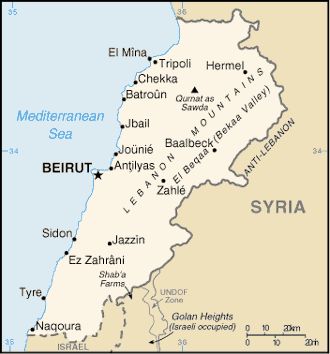 Lebanon | Lebanon has made progress toward rebuilding its political institutions since 1991 and the end of the devastating 15-year civil war. Under the Ta'if Accord - the blueprint for national reconciliation - the Lebanese have established a more equitable political system, particularly by giving Muslims a greater say in the political process |
Hizballah, a radical Shia organization, retains its weapons. Syria maintains about 16,000 troops in Lebanon, based mainly east of Beirut and in the Bekaa Valley. Syria's troop deployment was legitimized by the Arab League during Lebanon's civil war and in the Ta'if Accord.
Damascus justifies its continued military presence in Lebanon by citing Beirut's requests and the failure of the Lebanese Government to implement all of the constitutional reforms in the Ta'if Accord. Israel's withdrawal from southern Lebanon in May 2000, however, encouraged some Lebanese groups to demand that Syria withdraw its forces as well.
The passage of UNSCR 1559 in early October 2004 - a resolution calling for Syria to withdraw from Lebanon and end its interference in Lebanese affairs - further emboldened Lebanese groups opposed to Syria's presence in Lebanon.
SOURCE: CIA World FactBook
0
comments
||
||
Iraqi Security forces arrest Khaled Rajab in Mosul
Security forces in Iraq arrested the terrorist Khaled Rajab in Mosul City on 02/06/05 following information from a citizen.
Khaled Rajab was a former officer in the security services of the former regime, with the rank of Lieutenant Colonel. He used his previous military experience to lead a terrorist cell consisting of 40 people. This cell launched many attacks against the security forces in Iraq , using various kinds of weapons. Khaled Rajab and a group of terrorists also tried to impose control over a village near Mosul from where they were trying to launch missile attacks on the city's airport.
The terrorist Khaled Rajab was responsible for filming beheadings with the help of his terrorist group.
SOURCE: Iraqi Interim Government
0
comments
||
||
President's Toast at National Governors Association State Dinner
President's Toast at National Governors Association State Dinner
State Dining Room 8:06 P.M. EDT
THE PRESIDENT: It's always a pleasure to host the nation's governors here in Washington. Laura and I are proud to have you here for our first state dinner of my second term. (Applause.)
It's a joyous occasion, even made more so by the -- by the fact that I learned that the Blancos -- Governor Blanco and her husband are celebrating their 40th wedding anniversary tonight. (Applause.)
Ever since a former governor of Virginia, Thomas Jefferson, lived in this house, many of our Presidents have first served as governors. And there's a reason why. The experience of running a state government, of pulling together a capable team, of setting an agenda and working with an elected legislative body, is critical to the success of any administration.
My six years as governor of Texas have been invaluable to me as I carry out my duties as the presidency [sic]. And because I know firsthand how -- the valuable experience governors get, I've asked a lot to serve in my Cabinet. I had six governors in my first Cabinet. I am pleased that Mike Johanns -- Johanns -- (laughter) -- and Mike Leavitt -- (laughter) -- have agreed to serve in my second term. I'm proud you guys are here. (Applause.)
When our founders devised our federal system two centuries ago, they recognized, in Jefferson's words, that "our country is too large to have all its affairs directed by a single government." The President and the governors are partners in our great enterprise, and that means we share great responsibilities. Together, we'll work to secure our homeland, protect our environment, to strengthen our economy. Together, we will work to ensure that every child gets a good education and good health care. And together, we'll work to make sure that we care for those in our society who hurt and who need help. I'm proud of our work together during the last four years. I look forward to working with you for the next four years.
I want to ask you to join me in a toast to our partners -- the governors and the administration -- in building a more perfect union. To the governors of the United States.
(A toast is given.)
END 8:09 P.M. EST For Immediate Release Office of the Press Secretary February 27, 2005
0
comments
||
||
Sunday, February 27, 2005
employment tax return Form 941
IRS Unveils Redesigned Employment Tax Return
WASHINGTON –– The Internal Revenue Service today unveiled the redesign of the employment tax return Form 941, Employer’s Quarterly Federal Tax Return. The simplified form should help businesses, tax practitioners and payroll companies avoid common errors as well as reduce the burden associated with completing and filing Form 941.

The redesigned form features an improved layout, plain language instructions, simplified deposit reporting and paid preparer identification. The form is also scannable, which the IRS expects will reduce transcription errors.
“Where we can, the IRS wants to simplify its forms,” said IRS Commissioner Mark W. Everson. “The new Form 941 will help achieve that.”
More than 23 million of these forms are filed annually by 6.6 million employers.
The Form 941 is used to report wages, tips and other compensation paid, as well as Social Security, Medicare and income taxes collected.
The Office of Taxpayer Burden Reduction led an IRS team in the redesign. External stakeholders from the payroll tax community provided input. The revision also reflects information gathered from the public and feedback from focus group participants.
“The new 941 is much easier on the eye and much more user-friendly,” said Scott Mezistrano, senior manager of government relations for the American Payroll Association. “With the shading, bigger boxes and improved instructions right on the form, you know exactly what you are supposed to report and where to put it. IRS did a very thorough job of reviewing every line on the 941 and considering how it could be made more clear.”
The form is available on IRS.gov. Printed copies of the form and instructions are also available by calling the IRS at 1-800-829-3676.
Related links: In PDF Format
• Form 941, Employer’s Quarterly Federal Tax Return
• Instructions for Form 941
IR-2005-18, Feb. 23, 2005
1 comments
||
||
House Speaker Hastert to Launch Neutrino Experiment at Fermilab
House Speaker Hastert to Launch Neutrino Experiment at Fermilab, Friday, March 4
BATAVIA, Ill.—Speaker of the House J. Dennis Hastert Jr., of the Illinois 14th Congressional District, will officially launch the MINOS neutrino experiment during dedication ceremonies at the Department of Energy’s Fermi National Accelerator Laboratory on Friday, March 4, 2005.
The dedication will take place at 2:30 p.m. in Wilson Hall’s Ramsey Auditorium.
All media wishing to cover the dedication must respond to the Fermilab Office of Public Affairs by Noon on Wednesday, March 2 to arrange for event access and security passes.
The MINOS experiment sends neutrinos from Fermilab through the earth to a 6,000-ton detector located a half-mile below the surface in a former iron mine in Soudan, Minnesota. The neutrinos leave virtually no trace as they make the 450-mile trip in 2.5 milliseconds.
Again, all media wishing to cover the MINOS experiment dedication must respond to the Fermilab Office of Public Affairs by Noon on Wednesday, March 2 to arrange for event access and security passes.
Fermilab is a U.S. Department of Energy Office of Science national laboratory, operated under contract by Universities Research Association, Inc. -30-
Contact:Mike Perricone, Fermilab Public Affairs, 630-840-5678 email mikep@fnal.govKurt Riesselmann, Fermilab Public Affairs, 630-840-5681 email kurtr@fnal.gov
0
comments
||
||
SENATE ENERGY COMMITTEE SCHEDULE FOR THE WEEK OF FEBRUARY 28
SENATE ENERGY COMMITTEE SCHEDULE FOR THE WEEK OF FEBRUARY 28
Washington, D.C. - The Senate Energy & Natural Resources Committee will hold three full committee hearings next week.
The full committee will hold a hearing on Tuesday, March 1 at 10:00 a.m. to receive testimony regarding the President’s FY 2006 Budget for the Department of the Interior.
Invited Witnesses Include:
The Honorable Gale Norton Secretary Department of the Interior
accompanied by:
The Honorable P. Lynn Scarlett Assistant Secretary Policy, Management, and Budget Department of the Interior; Nominee, Deputy Secretary
John Tresize Chief Budget Officer Department of the Interior
The full committee will hold a hearing on Wednesday, March 2 at 10:00 a.m. to receive testimony regarding the President’s FY 2006 Budget for the U.S. Forest Service.
Invited Witnesses Include:
The Honorable Mark Rey Undersecretary Natural Resources and Environment Department of Agriculture
accompanied by:
Mr. Dale Bosworth Chief Forest Service Department of Agriculture
The full committee will hold a hearing on Thursday, March 3 at 10:00 a.m. to receive testimony regarding the President’s FY 2006 Budget for the Department of Energy.
Invited Witnesses Include:
The Honorable Samuel W. Bodman Secretary Department of Energy ###
0
comments
||
||
Sabawi Ibrahim Al- Hassan Al- Tikriti
Security Forces in Iraq arrest the criminal Sabawi Ibrahim Al- Hassan Al- Tikriti
Security Forces in Iraq have arrested the criminal, Sabawi Ibrahim Al- Hassan Al- Tikriti, the half-brother of the ousted president Saddam Hussein and one of the leaders in the former Security Service, who has killed and tortured Iraqi citizens.
Mr. Thair Al- Nakib, the Prime Minister's Spokesman announced " Sabawi's detention comes from the insistence of the Iraqi government in chasing and detaining all criminals who have committed massacres and have their hands stained with the blood of the Iraqi nation. We will bring them to the justice so that they are punished.
Sabawi Al- Tikriti contributed effectively in planning, supervising and carrying out many terrorist acts inside Iraq .
SOURCE: Iraqi Interim Government
0
comments
||
||
USPS SEEKS TO EXTEND NEGOTIATED PRICING TO FOURTH MAILER
USPS SEEKS TO EXTEND NEGOTIATED PRICING TO FOURTH MAILER
WASHINGTON, D.C. -- The U.S. Postal Service has filed for a recommended decision on a fourth negotiated service agreement (NSA) from the Postal Rate Commission that extends the innovative product to the financial services company HSBC North America Holdings Inc.
The agreement with HSBC would be similar to three previous NSAs with other mailers, and is functionally equivalent to the Postal Service's landmark first such agreement with Capital One.
"Providing price incentives for mailers to encourage more mail volume and best practices can help make it possible for us to keep rates affordable for everyone," said Anita Bizzotto, Senior Vice President and Chief Marketing Officer.
HSBC is one of the largest banking and financial services organizations in the world, and one of the ten largest originators of First-Class Mail in the United States.
The agreement has three main features: it provides incentives for HSBC to send additional First-Class Mail, ensures that the customer will maintain superior mail- quality practices, and produces cost savings for the Postal Service from the customer agreeing to receive electronic information about undeliverable mail instead of having pieces physically returned.
A negotiated service agreement is a pricing instrument that gives the Postal Service a mechanism for customizing rates and services to accommodate the unique mailing needs of specialized business customers and to encourage cost-efficient mail preparation for accurate sorting and distribution.
The Postal Service broke new ground when it negotiated the first NSA with Capital One. "Clearly with the results of the Capital One NSA, which produced $21.7 million of contribution to the cost of overhead in just one year, we have demonstrated the value of NSAs to encourage incremental First-Class Mail volume" said Stephen Kearney, Vice President of Pricing and Classification.
The Postal Service anticipates an expeditious review of this NSA under the Commission's rules governing "functionally equivalent NSAs." Once the Postal Service receives a recommended decision, the Governors must still vote to implement the NSA.
"Since 1775, the Postal Service has connected friends, families, neighbors and businesses by mail. It is an independent federal agency that visits 142 million homes and businesses every day and is the only service provider delivering to every address in the nation. The Postal Service receives no taxpayer dollars for routine operations, but derives its operating revenues solely from the sale of postage, products and services. With annual revenues of more than $69 billion, it is the world's leading provider of mailing and delivery services, offering some of the most affordable postage rates in the world. The Postal Service delivers more than 46 percent of the world's mail volume-some 206 billion letters, advertisements, periodicals and packages a year-and serves seven million customers each day at its 37,000 retail locations nationwide."
# # # FOR IMMEDIATE RELEASE Contact: Media Relations 202-268-2155 February 25, 2005 News Release No. 05-014 www.usps.com
0
comments
||
||


