


Press Briefing by Scott McClellan, FULL STREAMING VIDEO, James S. Brady Briefing Room 1:06 P.M. EDT
MR. McCLELLAN: Good afternoon, everyone. I want to begin with a statement by the President:
On July 11th, we remember the tragic loss of lives in Srebrenica 10 years ago. The mass murder of nearly 8,000 men and boys was Europe's worst massacre of civilians since World War II, and a grim reminder that there are evil people who will kill the innocent without conscience or mercy. This horrific event remains a source of pain for people in the Balkan region, and for all those who believe in freedom and the dignity of human life. I join all Americans in sending the deepest condolences and expressions of sympathy on this solemn occasion.
The United States supports the people of Bosnia and Herzegovina and the families of those who suffered as they commemorate this terrible chapter in history. We grieve for their loss and applaud the strength and courage of those who have returned to Srebrenica to rebuild their lives. We also remain committed to ensuring that those responsible for these crimes face justice -- most notably, Radovan Karadzic and Ratko Mladic.
I appreciate all the individuals who are advancing reconciliation and a strong European future for Bosnia and Herzegovina. A modern, democratic Balkan region is an essential element in a Europe that is unified, free and at peace. As we work to make the world more peaceful, we share a common faith in the value of freedom, the sanctity of life, and the triumph of good over evil.
May God bless the people of the Balkan region, and the souls of the departed.
And with that, I will be glad to go to your questions. Terry.
Q Does the President stand by his pledge to fire anyone involved in the leak of a name of a CIA operative?
MR. McCLELLAN: Terry, I appreciate your question. I think your question is being asked relating to some reports that are in reference to an ongoing criminal investigation. The criminal investigation that you reference is something that continues at this point. And as I've previously stated, while that investigation is ongoing, the White House is not going to comment on it. The President directed the White House to cooperate fully with the investigation, and as part of cooperating fully with the investigation, we made a decision that we weren't going to comment on it while it is ongoing.
Q Excuse me, but I wasn't actually talking about any investigation. But in June of 2004, the President said that he would fire anybody who was involved in this leak, to press of information. And I just want to know, is that still his position?
MR. McCLELLAN: Yes, but this question is coming up in the context of this ongoing investigation, and that's why I said that our policy continues to be that we're not going to get into commenting on an ongoing criminal investigation from this podium. The prosecutors overseeing the investigation had expressed a preference to us that one way to help the investigation is not to be commenting on it from this podium. And so that's why we are not going to get into commenting on it while it is an ongoing investigation, or questions related to it.
Q Scott, if I could -- if I could point out, contradictory to that statement, on September 29th, 2003, while the investigation was ongoing, you clearly commented on it. You were the first one who said, if anybody from the White House was involved, they would be fired. And then on June 10th of 2004, at Sea Island Plantation, in the midst of this investigation is when the President made his comment that, yes, he would fire anybody from the White House who was involved. So why have you commented on this during the process of the investigation in the past, but now you've suddenly drawn a curtain around it under the statement of, "We're not going to comment on an ongoing investigation"?
MR. McCLELLAN: Again, John, I appreciate the question. I know you want to get to the bottom of this. No one wants to get to the bottom of it more than the President of the United States. And I think the way to be most helpful is to not get into commenting on it while it is an ongoing investigation. That's something that the people overseeing the investigation have expressed a preference that we follow. And that's why we're continuing to follow that approach and that policy.
Now, I remember very well what was previously said. And at some point, I will be glad to talk about it, but not until after the investigation is complete.
Q So could I just ask, when did you change your mind to say that it was okay to comment during the course of an investigation before, but now it's not?
MR. McCLELLAN: Well, I think maybe you missed what I was saying in reference to Terry's question at the beginning. There came a point when the investigation got underway when those overseeing the investigation asked that it would be their -- or said that it would be their preference that we not get into discussing it while it is ongoing. I think that's the way to be most helpful to help them advance the investigation and get to the bottom of it.
Q Scott, can I ask you this; did Karl Rove commit a crime?
MR. McCLELLAN: Again, David, this is a question relating to an ongoing investigation, and you have my response related to the investigation. And I don't think you should read anything into it other than we're going to continue not to comment on it while it's ongoing.
Q Do you stand by your statement from the fall of 2003 when you were asked specifically about Karl and Elliott Abrams and Scooter Libby, and you said, "I've gone to each of those gentlemen, and they have told me they are not involved in this" -- do you stand by that statement?
MR. McCLELLAN: And if you will recall, I said that as part of helping the investigators move forward on the investigation we're not going to get into commenting on it. That was something I stated back near that time, as well.
Q Scott, I mean, just -- I mean, this is ridiculous. The notion that you're going to stand before us after having commented with that level of detail and tell people watching this that somehow you decided not to talk. You've got a public record out there. Do you stand by your remarks from that podium, or not?
MR. McCLELLAN: And again, David, I'm well aware, like you, of what was previously said, and I will be glad to talk about it at the appropriate time. The appropriate time is when the investigation --
Q Why are you choosing when it's appropriate and when it's inappropriate?
MR. McCLELLAN: If you'll let me finish --
Q No, you're not finishing -- you're not saying anything. You stood at that podium and said that Karl Rove was not involved. And now we find out that he spoke out about Joseph Wilson's wife. So don't you owe the American public a fuller explanation? Was he involved, or was he not? Because, contrary to what you told the American people, he did, indeed, talk about his wife, didn't he?
MR. McCLELLAN: David, there will be a time to talk about this, but now is not the time to talk about it.
Q Do you think people will accept that, what you're saying today?
MR. McCLELLAN: Again, I've responded to the question.
Go ahead, Terry.
Q Well, you're in a bad spot here, Scott, because after the investigation began, after the criminal investigation was underway, you said -- October 10th, 2003, "I spoke with those individuals, Rove, Abrams and Libby, as I pointed out, those individuals assured me they were not involved in this." From that podium. That's after the criminal investigation began. Now that Rove has essentially been caught red-handed peddling this information, all of a sudden you have respect for the sanctity of the criminal investigation?
MR. McCLELLAN: No, that's not a correct characterization Terry, and I think you are well aware of that. We know each other very well, and it was after that period that the investigators had requested that we not get into commenting on an ongoing criminal investigation. And we want to be helpful so that they can get to the bottom of this, because no one wants to get to the bottom of it more than the President of the United States. I am well aware of what was said previously. I remember well what was said previously. And at some point, I look forward to talking about it. But until the investigation is complete, I'm just not going to do that.
Q Do you recall when you were asked --
Q Wait, wait -- so you're now saying that after you cleared Rove and the others from that podium, then the prosecutors asked you not to speak anymore, and since then, you haven't?
MR. McCLELLAN: Again, you're continuing to ask questions relating to an ongoing criminal investigation, and I'm just not going to respond any further.
Q When did they ask you to stop commenting on it, Scott? Can you peg down a date?
MR. McCLELLAN: Back at that time period.
Q Well, then the President commented on it nine months later. So was he not following the White House plan?
MR. McCLELLAN: John, I appreciate your questions. You can keep asking them, but you have my response.
Go ahead, Dave.
Q We are going to keep asking them. When did the President learn that Karl Rove had had a conversation with the President -- with a news reporter about the involvement of Joseph Wilson's wife and the decision to send --
MR. McCLELLAN: I've responded to the questions.
Q When did the President learn that Karl Rove had --
MR. McCLELLAN: I've responded to the questions, Dick.
Go ahead.
Q After the investigation is completed, will you then be consistent with your word and the President's word that anybody who was involved would be let go?
MR. McCLELLAN: Again, after the investigation is complete, I will be glad to talk about it at that point.
Q And a follow-up. Can you walk us through why, given the fact that Rove's lawyer has spoken publicly about this, it is inconsistent with the investigation, that it compromises the investigation to talk about the involvement of Karl Rove, the Deputy Chief of Staff?
MR. McCLELLAN: Well, those overseeing the investigation expressed a preference to us that we not get into commenting on the investigation while it's ongoing. And that was what they requested of the White House. And so I think in order to be helpful to that investigation, we are following their direction.
Q Scott, there's a difference between commenting on an investigation and taking an action --
MR. McCLELLAN: Go ahead, Goyal.
Q Can I finish, please?
MR. McCLELLAN: You can come -- I'll come back to you in a minute. Go ahead, Goyal.
Q Scott, today also the President spoke about the war on terrorism and also, according to -- report, there was bombings in London and also bombings in India, and at both places, al Qaeda was involved. According to the India report and press reports, a Pakistani television said that Osama bin Laden is there alive and they have spoken with him, and his group is still -- as far as terrorism around the globe is concerned. So now the major bombings after 9/11 took place in London, and more are about to come, according to al Qaeda and Osama bin Laden. They are still -- and again, the President is doing a great job as far as fighting against terrorism is concerned. But where do we stand now, really? Where do we go from London, as far as terrorism is concerned? How far we can go after Osama bin Laden now to catch him? Because he's still in Pakistan.
MR. McCLELLAN: Well, what occurred in London is a grim reminder that we are at war on terrorism. We are waging a comprehensive war on terrorism. You heard the President talk earlier today to the FBI personnel and others who are at Quantico, and the President talked about our global war on terrorism. He talked about our strategy for taking the fight to the enemy, staying on the offensive, and working to spread freedom and democracy to defeat the ideology of hatred that terrorists espouse.
And the President pointed back to the 20th century. He pointed out that in World War II, freedom prevailed over fascism and Nazism. And in the Cold War, freedom prevailed over communism. Freedom is a powerful force for defeating an ideology such as the one that the terrorists espouse. And that's why it's so important to continue working to advance freedom and democracy in the broader Middle East. And that's what we will continue to do. And the President also talked about the great progress we've made at home to protect the home front.
The families and friends of those who lost their lives in London are -- continue to be in our thoughts and prayers. We know what it's like to be attacked on our soil. And that's why the President made a decision that we were going to take the fight to the enemy to try to disrupt plots and prevent attacks from happening in the first place. And that's exactly what we are doing. But we're also going to work with the free world to support the advance of freedom and democracy in a dangerous region of the world. For too long we ignored what was going on in the Middle East. We accepted and tolerated dictatorships in exchange for peace and stability, and we got neither. As the President said, free nations are peaceful societies. And that's why it's so important that we continue to support the advance of freedom, because that's how you ultimately defeat the ideology of hatred and oppression that terrorists espouse.
Carl, go ahead. I'll come to you, David, in a second.
Q Does the President continue to have confidence in Mr. Rove?
MR. McCLELLAN: Again, these are all questions coming up in the context of an ongoing criminal investigation. And you've heard my response on this.
Q So you're not going to respond as to whether or not the President has confidence in his Deputy Chief of Staff?
MR. McCLELLAN: Carl, you're asking this question in the context of an ongoing investigation. And I would not read anything into it other than I'm simply not going to comment on an ongoing --
Q Has there been -- has there been any change --
MR. McCLELLAN: -- investigation.
Q Has there been any change or is there a plan for Mr. Rove's portfolio to be altered in any way?
MR. McCLELLAN: Again, you have my response to these questions.
Go ahead. Sarah, go ahead.
Q A secret British memo says plans are underway for a significant troop withdrawal from Iraq early next year. Does the President agree with those plans? And even though he doesn't want to give an exact date --
MR. McCLELLAN: Who? Who has a plan? I'm sorry.
Q With the plans of the -- a secret British memo says plans are underway for a significant troop withdrawal from Iraq early next year. Does the President agree with those plans, even though he doesn't want to give an exit date? Is there White House and Pentagon pressure to draw down U.S. troop levels in Iraq as soon as possible?
MR. McCLELLAN: I think you're referring to reports of a British memo talking about reduction in troop forces. First of all, the military always plans for all contingencies. And that's something our military is always looking at -- what are the various contingencies, and how do we meet our commitments and complete the mission. The President has made it clear that we are going to complete the mission, and then our troops will return home with the honor that they deserve.
We always look to -- the President always looks to his commanders on the ground to make assessments in terms of what troops levels are needed, and the commanders on the ground will have the troops that they need to complete the mission. But the commanders have said that that will be based on the conditions on the ground, it will be based on circumstances on the ground, so you're always looking at the circumstances on the ground.
Now, one part of our strategy for victory in Iraq is to train and equip the Iraqi security forces. As we stand up the Iraqi forces, we will stand down coalition and American forces. And the President talked about that again today. That's part of our two-track strategy for succeeding in Iraq. And what you're seeing now is that the number of Iraqi forces that are trained and equipped continues to go up. They are the largest contingent providing for security in Iraq. And we continue to expand those forces. But not only are we expanding the numbers, we're strengthening their capability. And the commanders have talked about that, as well. So there's good progress being made there. The President referenced some of that in his remarks today.
Now I'll go back to David. Go ahead.
Q There's a difference between commenting publicly on an action and taking action in response to it. Newsweek put out a story, an email saying that Karl Rove passed national security information on to a reporter that outed a CIA officer. Now, are you saying that the President is not taking any action in response to that? Because I presume that the prosecutor did not ask you not to take action, and that if he did, you still would not necessarily abide by that; that the President is free to respond to news reports, regardless of whether there's an investigation or not. So are you saying that he's not going to do anything about this until the investigation is fully over and done with?
MR. McCLELLAN: Well, I think the President has previously spoken to this. This continues to be an ongoing criminal investigation. No one wants to get to the bottom of it more than the President of the United States. And we're just not going to have more to say on it until that investigation is complete.
Q But you acknowledge that he is free, as President of the United States, to take whatever action he wants to in response to a credible report that a member of his staff leaked information. He is free to take action if he wants to.
MR. McCLELLAN: Again, you're asking questions relating to an ongoing investigation, and I think I've responded to it.
Q Scott, since President William Howard Taft became Chief Justice after his presidency, you would not rule out the President nominating former law school professor Bill Clinton to the Supreme Court, would you? And if you wouldn't, we can report that President Clinton is under consideration, can't we?
MR. McCLELLAN: Well, that's the first time I've heard that name suggested. I know there are a lot of names being suggested out there, and you know that I'm not going to get into speculating about any particular names.
Q One follow-up. Considering the widespread interest and the absolutely frantic Democrat reaction to Karl Rove's excellent speech to conservatives last month, does the President hope that Karl will give a lot more speeches?
MR. McCLELLAN: He continues to give speeches. He was traveling this weekend talking about the importance of strengthening Social Security. And he has continued to go out and give speeches.
Let me back up, though. You brought up the Supreme Court, and I would like to update you, in terms of where we are in terms of consultations with the Senate, because the White House consultations have been wide and deep with the United States Senate. I think you heard Senator Hatch yesterday talk about how, in his 29 years in the United States Senate, he has not seen anything like this when it comes to the level of consultation that is going on. It is unprecedented, in his words, and he's certainly been around the Senate for a long time to see the type of consultations that go on.
But we have reached out to more than 60 senators now, and we have actually consulted with most of those. We are continuing those outreach calls and meetings to listen to what senators have to say and hear what their views are. The President --
Q Did you try to reach all the senators?
MR. McCLELLAN: The President has reached out, himself. The President looks forward to meeting tomorrow with four distinguished leaders in the Senate. He will be listening to what their views are. The President is not prejudging anything. He wants to hear what their views are and hear what they have to say as we move forward on a Supreme Court nominee. The President --
Q Does he want to hear names, Scott?
MR. McCLELLAN: The President welcomes people suggesting names. That's part of the consultation process. But not only are we going to consult before the nomination is made, but we'll continue to consult once the nomination is made.
We've also consulted with more than half of the Democratic conference in the United States Senate. We've spoken with every member of the Senate Judiciary Committee. And we are continuing that outreach as we speak. A number of White House staffers have been reaching out to individual members, and the President is going to be sitting down and meeting with those four leaders tomorrow.
Q What does he think of Specter -- what does he think of Specter suggesting O'Connor as Chief?
MR. McCLELLAN: Look, Les, there are going to be a lot of suggestions made. I'm just not going to get into speculating about potential nominees. The President takes this responsibility very seriously. And that's why he is going through a deliberate and thorough process. That's why he has instructed us to reach out to senators and get their views and hear what they have to say about a potential nominee.
The President hopes that we can move forward in a dignified and civilized way. You heard him express that. It's important to elevate the discourse as we move forward. The American people want this nomination process to be something that we can all be proud of. And the President is going to select the nominee who meets the criteria that he outlined -- that is someone of high intellect, someone of integrity, someone who -- someone of great legal ability and someone who will faithfully interpret our Constitution and our laws and not try to make law from the bench.
Q Will the President discuss his names with Democrats, as well, and get their thoughts on those names?
MR. McCLELLAN: Go ahead, April. Go ahead.
Q Scott, what was the President's interaction today with Karl Rove? Did they discuss this current situation? And understanding that Karl Rove was the architect of the President's win for the second term in the Oval Office, how important is Karl Rove to this administration currently?
MR. McCLELLAN: Again, this is coming at it from --
Q It has nothing to do with what you just said.
MR. McCLELLAN: This is still coming at the same question relating to reports about an ongoing investigation, and I think I've responded to it.
Q Who is Karl Rove as it relates to this administration?
MR. McCLELLAN: Do you have questions on another topic?
Q No, no, no, no. Who is Karl Rove as it relates to this current administration?
MR. McCLELLAN: I appreciate the question, April. I think I've responded.
Go ahead, Connie.
Q Is the President going to make any outreach to conservative groups on the Supreme Court nominee and listen to their point of view at all?
MR. McCLELLAN: Well, we are listening to what others have to say, not only in the United States Senate, but outside, as well. And there are a lot of people expressing their views right now.
Q -- seemed to get annoyed last week --
MR. McCLELLAN: I wouldn't try to label anything.
Go ahead.
Q Scott, I think you're barrage today in part because we -- it is now clear that 21 months ago, you were up at this podium saying something that we now know to be demonstratively false. Now, are you concerned that in not setting the record straight today that this could undermine the credibility of the other things you say from the podium?
MR. McCLELLAN: Again, I'm going to be happy to talk about this at the appropriate time. Dana, you all -- you and everybody in this room, or most people in this room, I should say, know me very well and they know the type of person that I am. And I'm confident in our relationship that we have. But I will be glad to talk about this at the appropriate time, and that's once the investigation is complete. I'm not going to get into commenting based on reports or anything of that nature.
Q Scott, at this point, are we to consider what you've said previously, when you were talking about this, that you're still standing by that, or are those all inoperative at this point?
MR. McCLELLAN: Again, you're still trying to come at this from a different angle, and I've responded to it.
Q Are you standing by what you said previously?
MR. McCLELLAN: You've heard my response.
Go ahead.
Q The six-party talks are finally to be resumed on July 27th. The United States policy has been to demand complete, verifiable and irreversible dismantlement of nuclear weapon by the North Korea to ensure nuclear-free Korean Peninsula. If North Korea does not agree to that, what would happen to the six-party talks?
MR. McCLELLAN: Well, first of all, we are pleased that North Korea is coming back to the talks. The five parties put a proposal on the table, and we believe it's now time to make progress on what we outlined. It's important for North Korea to return to the talks prepared to talk in a serious way about how to move forward on that proposal. The goal is not for North Korea to come back to the talks; the goal is a denuclearized peninsula. That's a goal that we all share. And we need to make progress toward that goal. That's why it's important that when North Korea comes back, that they are prepared to respond to the proposal and move forward in a serious way to make progress toward that goal.
In the discussions recently with North Korea, they have expressed a commitment to a denuclearized peninsula and making progress toward that goal. These meetings or this upcoming six-party talks is a way to move forward toward that goal. And we want to move forward in a serious way.
Q It is reported the United States would offer some new incentives to the North Korea. Would you tell us, what is the contents of new --
MR. McCLELLAN: I think any such impression is wrong. We have put a proposal on the table along with the other four parties in the talks. That is a proposal that was -- it's a serious proposal. It was put on the table by the five parties for North Korea to consider and respond to. Now North Korea is committed to coming back to the talks with a date certain. And when they come back later this month, we want them to be prepared to talk in a serious way about how to move forward on that proposal. That's the proposal that is on the table. It was a proposal that was outlined to North Korea in the last round of talks over a year ago by the other five parties.
Go ahead, Alexis.
Q When the leak investigation is concluded, does the President believe it might be important for his credibility, the credibility of the White House, to release all the information voluntarily that was submitted as part of the investigation, so the American public could see what the -- what transpired inside the White House at the time?
MR. McCLELLAN: This is an investigation being overseen by a special prosecutor. And I think those are questions best directed to the special prosecutor. Again, this is an ongoing matter; I'm just not going to get into commenting on it further at this time. At the appropriate time, when it's complete, then I'll be glad to talk about it at that point.
Q Have you in the White House considered whether that would be optimum to release as much information and make it as open a process --
MR. McCLELLAN: It's the same type of question. You're asking me to comment on an ongoing investigation, and I'm not going to do that.
Q I'm actually talking about the communication strategy, which is a little different.
MR. McCLELLAN: Understood. The President directed the White House to cooperate fully with the investigation. And that's what he expects people in the White House to do.
Q And he would like to that when it is concluded, cooperate fully with --
MR. McCLELLAN: Again, I've already responded.
Go ahead.
Q Scott, was it -- who in the investigation made this request of the White House not to comment further about the investigation? Was it Mr. Fitzgerald? Did he make the request of you --
MR. McCLELLAN: I mean, you can ask -- you can direct those questions to the special prosecutors. I think probably more than one individual who's involved in overseeing the investigation had expressed a preference that we not get into commenting on the investigation while it's ongoing. I think we all want to see the prosecutors get to the bottom of this matter. The President wants to see the prosecutors get to the bottom of this matter. And the way to help them do that is to not get into commenting on it while it is ongoing.
Q Was the request made of you, or of whom in the White House?
MR. McCLELLAN: I already responded to these questions.
Go ahead.
Q According to the Gallup Poll, 62 percent of the American people believe that a terrorist attack like the one we saw in London could happen here. In the President's speech today, we haven't heard anything new. What his plan exactly to protect the American people?
MR. McCLELLAN: It's exactly what he outlined in his remarks earlier today. It's a comprehensive strategy. We are working on multiple fronts to protect the American people. As he said, the best way to defend the American people is to stay on the offense and take the fight to the enemy. That's exactly what we are doing.
You see, the terrorists have been carrying out attacks for years. They felt that the civilized world would only respond in a very limited way. We saw the attacks back in '83 on the Marine barracks in Lebanon. We saw the attacks on -- or the attack on the World Trade Center back in 1993. We saw the attacks on our embassies back in '98. They've certainly carried out attacks in other parts of the civilized world, as well.
The President saw the attacks of September 11th and said we are going to take the fight to the enemy. We are going to wage a comprehensive war, and we are going to see it through. The enemy will be defeated. And the way we will ultimately defeat the enemy is to defeat their hateful ideology. And you do that by spreading freedom because free societies are peaceful societies, as the President said.
Bob, go ahead.
Q Yes, in your dealings with the special counsel, have you consulted a personal attorney?
MR. McCLELLAN: Again, I'm just not going to say anything further. I expressed all I'm going to say on this matter from this podium.
Go ahead.
Q How does the uncertainty over Chief Justice Rehnquist affect the President's selection of a replacement for Justice O'Connor?
MR. McCLELLAN: How does the speculation about another vacancy?
Q How does the uncertainty about Chief Justice Rehnquist affect the process?
MR. McCLELLAN: Well, the President is moving forward to fill the vacancy. He spent time on his trip looking over the background materials of potential nominees and some of their key rulings or decisions. The President has been talking with senior staff -- I know he visited with Andy Card about it on the trip, as well -- and talking to them about potential nominees and the process for moving forward to name a nominee.
We are prepared for additional vacancies, if they should occur. This is something that we have prepared for, for quite some time at the White House. But I'm not aware of any announcement that's been made on an additional vacancy at this point.
Q Scott, voting rights reauthorization. I understand the President is for voting rights reauthorization, but he still wants to study portions of it. It sounds kind of contradictory. Could you explain what that means, as it's up for renewal?
MR. McCLELLAN: Sure. As you point out, it's up of reauthorization in 2006. The President does support reauthorization. That process is getting underway in Congress. And as it works its way through Congress, the White House will look at and consider any improvements to strengthen it. And that's -- that's really where it stands at this point.
Q Well, what does he think could strengthen it? What tweaks is he thinking of right now --
MR. McCLELLAN: Well, I think that's something we'll look at. There are suggestions that I'm sure people are going to make as we move forward, and we'll look at and consider those suggestions. The President also met with the Congressional Black Caucus and said he would take their views into account as we move forward, as well.
Thank you. Immediate Release, Office of the Press Secretary, July 11, 2005
more at Karl Rove or Rove and Supreme Court or Scott McClellan and Rehnquist
Tuesday, July 12, 2005
Briefing by Scott McClellan, July 11, 2005
0
comments
||
||

U.S. Assistance to Cuba for Hurricane Dennis
U.S. Assistance to Cuba for Hurricane Dennis
The United States expresses its condolences to the families of those in Cuba who lost their lives as a result of Hurricane Dennis. We also extend our sympathies to the many others who suffered injury and loss as a result of this storm.
On July 10, the U.S. Interests Section in Havana informed the Cuban government that we were prepared to provide immediate humanitarian assistance of emergency supplies to help those Cubans affected by the hurricane. We also offered to deploy an assessment team to Cuba to independently help determine what relief supplies were most needed. Unfortunately the Castro government declined these offers.
We will continue to work through appropriate non-governmental organizations to deliver relief provisions quickly and directly to the Cuban people. Individuals and groups that wish to send humanitarian goods to the hurricane victims in Cuba may do so through nongovernmental organizations with an existing license, or by applying for a license through the Department of Treasury and the Department of Commerce.
Source: state.gov 2005/691 Press Statement, Tom Casey, Acting Spokesperson, Washington, DC, July 11, 2005 more at Hurricane Dennis or Cuba and state department or department of state
0
comments
||
||
London: Search warrants issued under the Terrorism Act 2000
Search warrants issued under the Terrorism Act 2000
This morning (12/7/05) in a pre-planned, intelligence-led operation, MPS officers - supported by officers from West Yorkshire Police - executed search warrants issued under the Terrorism Act 2000 at four residential premises in West Yorkshire. Police are currently attending a fifth address.
No arrests at this stage.
The searches are in connection with the terrorist attacks in London on July 7. The operation continues.
Bulletin 0000000216 12 July 2005 Source: London Metropolitan Police more at London or London Explosion or London bombing and London bomb
0
comments
||
||
President Congratulates 2004 and 2005 NCAA Sports Champions
President Congratulates 2004 and 2005 NCAA Sports Champions FULL STREAMING VIDEO The South Lawn 10:48 A.M. EDT
THE PRESIDENT: Thank you all. Please be seated. Not you. Welcome to the South Lawn of the White House for Championship Day. (Applause.) Today we have the largest group of NCAA champs ever gathered at the White House, and we want to thank you all for coming. I am honored to be joined on stage by the captains of the 15 teams that we're honoring today. Thank you all for being here. Congratulations for being such strong leaders.
I appreciate the members of Congress who have come today. Welcome -- we're proud you're here. I want to thank the coaches and athletic directors who are here today. But most of all, I want to congratulate the men and women who have conducted themselves in the field of play in such a manner that they're called champions. Welcome. (Applause.)
UCLA has won more NCAA championships than any school in the nation -- (applause) -- so it's fitting that three of the champs here today wear the uniform of the Bruins. Back in December, the UCLA men's water polo team won the national championship with an overtime victory against Stanford. Congratulations, and welcome. (Applause.) This spring the UCLA women's water polo team beat Stanford to win the national championship. Welcome to the UCLA women's polo team. (Applause.) And finally, the UCLA men's team won the national championship. I had an honor to meet all three teams. I'm glad you're here. Thanks for coming. Congratulations on a job well done.
And then we have the Georgia Bulldogs, who are well represented today. (Applause.) It's the South Lawn; behave yourself. (Laughter.) The Georgia men's golf team posted a wire-to-wire victory at the NCAA champions. In the final round, interestingly enough, all five of Georgia's golfers shot the same score, even par. That's called consistency. The Georgia women's swimming and diving team brought home their fourth NCAA championship. Interestingly enough, the Lady Bulldogs won all five of the relay races. And finally, the Georgia women's gymnastics team is with us today. They started the championship meet seeded number 12 and came out number one. Congratulations to the teams from Georgia. (Applause.)
Two of the teams here made history by winning their schools' first national championships in their respective sports. The Northwestern's women's lacrosse team posted an undefeated season. (Applause.) Twenty-one straight victories got them here to the White House. Congratulations to you all.
And then the Michigan women's softball team is here today. (Applause.) One of the women asked me if I wanted to hit against her, I said, I don't think so. (Laughter.) This will interest you: the first 33 games that the Michigan women's softball team played were on the road. It turns out it's a little chilly in Michigan about softball time. They won 32 of the 33. It was an auspicious beginning to a championship season. Welcome to the Michigan women's team. (Applause.)
Two of the teams here are celebrating a championship for the second year in a row. The Stanford women's tennis team -- (applause) -- finished with an undefeated season and a repeat national championship. They beat the Texas Longhorns in the finals. (Laughter.)
The Minnesota women's hockey team. (Applause.) The Gophers beat Harvard last year to come to the White House; they beat Harvard this year to come to the White House. Congratulations to the mighty Gophers of Minnesota. (Applause.)
The Auburn men's swimming and diving team is celebrating a three-peat. Congratulations. (Applause.) Glad you all are here. Thanks for the Speedo. (Laughter.) I'm not going to wear it. (Laughter.) In public that is. (Laughter.)
The Duke women's golf team is here to celebrate the national championship in -- (applause.) They were -- in 2002, they're back. Coach Brooks of the Duke women's golf team has now won three national championships with the Blue Devils. That ties him with Coach K. Therefore, he shall be known as Coach B. Not bad. (Laughter.)
The Johns Hopkins men's lacrosse team is with us today. (Applause.) And Congressman Elijah Cummings is here to honor them. Johns Hopkins compiled a perfect record and pulled out a 9-8 victory to win the first championship they've had in almost two decades. Congratulations to Johns Hopkins.
The Pepperdine men's volleyball team is with us today. (Applause.) They're brought the championship trophy back to Malibu in the first time in more than a decade. I want to thank them for the gift -- Surfboard One. (Laughter.)
And finally, we honor the Oklahoma men's gymnastics team. (Applause.) It's the third national championship they've won in the past four years.
It's such an honor to have you all here. I want to thank you for being champs on the field; I want to thank you for being champs off the field. I know you know this, but there's a lot of boys and girls who watch -- watch you all to determine what it means to be a champ. You probably don't realize it, but when you're in the field of play, there's a lot of kids wondering what it takes.
And therefore, when you serve your community, you're teaching a kid to read, or when you take the extra time to set a good example, you really are affecting people's lives. See, you have a responsibility as a champ, not only to win contests for your respective schools and set personal goals and achieve them, but I think you have a responsibility as a champ to set a good example. And I've read about the mentoring programs and the hospital work and all the good works that you have done, and I want to thank you for setting such a good example.
Again, welcome to the White House. If you're a junior or a sophomore, work hard and come back. I'll be here to greet you. In the meantime, may God bless you all and your families. Thanks for coming. (Applause.)
END 10:54 A.M. EDT For Immediate Release, Office of the Press Secretary, July 12, 2005
President Bush or NCAA and UCLA or Georgia Bulldogs and Northwestern or Stanford
0
comments
||
||
Joint Statement President Bush, Prime Minister Lee of Singapore
Joint Statement between President Bush and Prime Minister Lee of Singapore
President George W. Bush and Prime Minister Lee Hsien Loong reaffirm the strong U.S.-Singapore partnership and will open a new chapter in strategic cooperation by signing the "Strategic Framework Agreement Between the United States of America and the Republic of Singapore for a Closer Cooperation Partnership in Defense and Security."
The Agreement is a natural step in the expansion of bilateral ties. President Bush and then-Prime Minister Goh Chok Tong first announced their intention to conclude this agreement in October 2003. It was born out of a shared desire to address common threats such as terrorism and the proliferation of weapons of mass destruction (WMD), which called for even closer cooperation between the United States and Singapore. The Agreement recognizes Singapore's role as a Major Security Cooperation Partner and will expand the scope of current cooperation in areas such as counterterrorism, counter-proliferation, joint military exercises and training, policy dialogues, and defense technology. The Agreement will further enhance regional stability by supporting the continued security presence of the United States in Southeast Asia.
The President and Prime Minister agree that the U.S. presence in the region has promoted peace and stability, which are crucial for regional cooperation and economic development. The President and Prime Minister instruct their senior officials to meet to continue close coordination on strategic issues in the period leading up to their next bilateral meeting.
The President and the Prime Minister acknowledge progress in the war on terror. The Prime Minister commends the President for the United States' resolute and steadfast stance in the war on terror and expresses Singapore's continued support in this endeavour.
The two leaders welcome the successful election of the first Iraqi National Assembly. President Bush expresses appreciation for Singapore's contributions to Iraq's reconstruction and stabilization. He commends the professionalism of the Singapore Armed Forces personnel who have been deployed in support of Iraq operations over the past two years and of the Singapore Police Force, which has provided critically important training.
The President and Prime Minister express optimism about the outlook in Southeast Asia. They welcome successful elections, the strengthening of democratic institutions, and renewed economic growth in the region and agree that these trends should be encouraged. The two leaders note the progress countries in the region have made in disabling terrorist networks through enhanced cooperation among ASEAN nations and with the international community. The President and Prime Minister condemn the terrorist attacks in London and call on governments around the world to fight terrorism together. They agree that a sustained, long-term effort is needed to defeat terrorism and reaffirm their commitment to continue working closely on law enforcement, non-proliferation, and other appropriate measures to address all aspects of the war on terror.
The President and Prime Minister express satisfaction with the seamless cooperation between the United States and Singapore in responding to the humanitarian disaster caused by the tsunamis in the Indian Ocean. The two leaders note the increasing importance of the Regional Emerging Diseases Intervention (REDI) Centre in light of growing concern over transnational-public-health threats such as SARS and avian influenza. They also note the importance of the Straits of Malacca, and President Bush pledges U.S. support for the region's initiatives for maritime security.
The President and Prime Minister welcome the successful implementation of the U.S.-Singapore Free Trade Agreement and the growth in bilateral trade since it became effective on January 1, 2004. They express satisfaction with growing commercial ties between our two countries and are confident that trade and investment relations will continue to expand.
The President and Prime Minister pledge to sustain the close cooperation between the United States and Singapore in key regional and global multilateral institutions. The President reaffirms U.S. support for ASEAN and the ASEAN Regional Forum. The two leaders note the central role of the Asia-Pacific Economic Cooperation (APEC) forum in supporting trade and investment liberalization and in promoting cooperative efforts to strengthen regional security. With the forthcoming first Meeting of the East Asia Summit in Kuala Lumpur in December 2005, they agree that the future development of cooperation among countries in the region should be open, transparent, and inclusive. The President and Prime Minister reaffirm the warm and strong ties between the United States and Singapore, which are grounded in historical cooperation, common interests, and shared strategic perspectives.
### For Immediate Release Office of the Press Secretary July 12, 2005
more at President Bush or Singapore and Lee Hsien Loong
0
comments
||
||
President, Prime Minister of Singapore
President, Prime Minister of Singapore Discuss Strong Bilateral Relations
The Oval Office 9:50 A.M. EDT
PRESIDENT BUSH: Mr. Prime Minister, welcome.
PRIME MINISTER LEE: Thank you.
PRESIDENT BUSH: We've just had a very interesting and comprehensive discussion about our bilateral relations, which are strong. But Singapore is -- is a country that has an interesting position in the Far East. The Prime Minister brings a perspective about the U.S. role, about the future of the region that I have found fascinating. The Prime Minister is a strategic thinker. He obviously worries about the lives of the citizens in his country, daily lives in what's taking place, but he's also got the capacity to see beyond the horizon.
And I want to thank you for sharing your insights. I appreciate so very much your -- your advice. And I look forward to working with you. We're going to sign a very important document here, cementing our good relationship.
And, finally, the Prime Minister and I share a clear vision about the world in which we live when it comes to terror -- these terrorists that kill on a moment's notice. They don't care who you are. They want to shake our will. They want to -- they want to drive America from the world. They want the free world to retreat. They've got ideological ambitions, and it's going to require a steadfast response. And the Prime Minister understands that.
And I appreciate your strength of character and your clear vision about the dangers we face. Welcome. Glad you're here.
PRIME MINISTER LEE: Thank you, Mr. President. I'm very happy to be here to meet the President in the Oval Office. Singapore and America share many common interests and many similar perspectives on the world around us, particularly in Asia. And I've been happy to have a wide exchange of views with the President on how East Asia is developing; what's happening in Asia; how China and India are opening up and becoming influential in the region and exerting a positive influence on many of the countries; and how America can be part of Asia and engage, participating, and continuing to stabilize and to maintain the security in the region, as it has done for many years.
One aspect of security, of course, is anti-terror. And I told the President how much we appreciated America's strong, consistent stand on this, that not withstanding any -- whatever the terrorists may throw at America, that it will stay firm and there's absolute confidence that it will not waver, whether in Iraq or anywhere else in the world.
It's critical to watch because, for us, anti-terror is also a hot agenda item. So it's one of the areas of mutual interest which has lead our two countries to embark upon a strategic framework agreement which will set out the basis for us to broaden and deepen the cooperation which we already have had over these many years. And I'm very happy that today we'll have the chance to sign that agreement.
PRESIDENT BUSH: Thank you, sir.
We'll answer a question a piece. Deb.
Q Mr. President, you had a meeting this morning with four leading senators. How much more input do you need before you'll be able to make a decision on this? And, you know, how close are you?
PRESIDENT BUSH: Closer today than I was yesterday. (Laughter.) I did have a good breakfast with four United States senators, the leaders of the Senate plus the heads of the Judiciary Committee. I asked their advice on a couple of matters. One, I asked their advice on the timing of a nominee. In other words, how fast could they get to the -- to the hearings necessary for a nominee's name to move forward. Obviously, we're in a very interesting period here; you got the end of the session coming up, then you got an August break. So I was just trying to get a sense of their view of the calendar. And I want to thank them for being forthright.
Obviously, they get to decide. They're the legislative branch; they get to determine how fast to move a nominee's name, or not. My only question to them is, what will it take to be able to get a person confirmed by early October.
Secondly, we talked in general about a potential nominee. They've got strong opinions, and I wanted to hear them. And they have shared some opinions with me. And, of course, they're sharing -- many senators are sharing their opinions with others on my staff. We're actively seeking recommendations.
I am going to be deliberate in the process because I want the American people to know that, when I finally make a decision, it's going to be one based upon a lot of research and a lot of thought about the character of the person, the integrity of the person, the ability of the person to do the job, and the philosophy of the person. And as you know, I campaigned twice for President of the United States, and I said, if I have a chance to name somebody to the Supreme Court, or courts in general, I'll pick people who will use the bench -- will interpret the Constitution while on the bench, but not use the bench to legislate. We've got a legislative body called the U.S. House of Representatives and the Senate. They do the legislation. And the courts will then interpret the Constitution as to whether or not the laws are constitutional or not.
And so that's where we are in the process. It's a --
Q Have you heard from your wife about her desire for you to name a woman?
PRESIDENT BUSH: My wife? Listen, I talked to her yesterday. She's in Africa on a mission of goodwill. She's talking about women's education and HIV/AIDS. Listen, I get her advice all the time. I didn't realize she'd put this advice in the press. That's -- (laughter.) She did? Well, good. I'm definitely considering -- we're definitely considering people from all walks of life, and I can't wait to hear her advice in person when she gets back. (Laughter.)
Q Can we ask some questions on Singapore? What's the significance of the agreement that's going to be signed from Singapore's perspective and from the United States' perspective?
PRIME MINISTER LEE: Well, from our perspective, it builds on a very sound relationship and broadens and deepens it further. It enables us to focus more on anti-terrorism, on anti-WMD proliferation, as well as on other aspects of our relationship -- defense technology cooperation, military cooperation between our armed forces, and strategic and security exchanges.
PRESIDENT BUSH: From our perspective, it is a -- it is a statement about how important our relations with Singapore are. We've made a statement before on economic relations when we signed a free trade agreement. And that was an important agreement. It's important for our economy; it's important for the economy of Singapore. This agreement takes our relationship beyond just economics. It's a strategic relationship. It is one that will have long-term consequences for both our peoples. But I happen to believe that it will have long-term consequences for peace in the region. And that's very important.
This is a relationship based upon mutual trust, shared values, but it's also a relationship that recognizes that we have an active role to play, both countries have an active role to play, in laying the foundations for peace in the region of the world that -- in the Far East. And it's an important region.
One of the points that the Prime Minister has made to me, and he keeps reminding me that our involvement in the Far East is very important. And we will stay involved in a constructive way. And this agreement is a constructive agreement. It's a constructive way to stay involved.
Thank you all for coming.
END 9:59 A.M. EDT For Immediate Release Office of the Press Secretary July 12, 2005
more at President Bush or Singapore
0
comments
||
||
President Discusses War on Terror at FBI Academy
President Discusses War on Terror (FULL STREAMING VIDEO) at FBI Academy, FBI Academy, Quantico, Virginia, 10:37 A.M. EDT
 | THE PRESIDENT: Thanks for the warm welcome. It's my pleasure to be back here at Quantico, at the FBI Academy. I'm honored to be with so many courageous men and women who have stepped forward to protect our nation. |
I thank the FBI folks who have welcomed me here. I also want to thank the DEA agents who are with us here today. By working to keep drug money from financing terror, you're playing an important part in this world -- in this war. I want to thank the U.S. and international police officers who are training here. I want to thank the local first responders who have joined us. You protect us in times of emergency. I want to thank you for being on the front lines of fighting these terrorists. (Applause.)
Quantico is also known as the "Crossroads of the Corps." (Applause.) In the war on terror, the Marines are serving with valor and distinction. You helped liberate 50 million people in Afghanistan and Iraq. Today you stand between the American people and the worst dangers in the world. In this war, the Marines will fight, in the words of the Rifleman's Creed, "Until victory is America's, and there is no enemy." America is grateful to have the United States Marine Corps defending our freedom. I want to thank you for your courage and your sacrifice. (Applause.)
I appreciate our Attorney General, Al Gonzales, who has joined us today. General, thank you for being here. I want to thank Ambassador John Negroponte, the Director of the National Intelligence. Thanks for coming, Mr. Director. I appreciate Director Bob Mueller, of the FBI -- doing a fantastic job. Thank you, Bob, for coming. Director Porter Goss of the CIA; Administrator Karen Tandy of the Drug Administration -- the Drug Enforcement Administration -- (Laughter.) Thank you, Karen.
I appreciate the Chairman of the Senate Armed Services Committee, Senator John Warner of Virginia, joining us today. Senator, thank you for coming. Senator George Allen from Virginia is with us, as well. And I appreciate the Vice Chairman of the House Homeland Security Committee, Congressman Curt Weldon, for being with us today. Thank you all for being here. (Applause.)
Finally, I appreciate Colonel Mike Lowe, the Base Commander at Quantico. Colonel, thank you very much. I appreciate your hospitality today, and I appreciate your hospitality when I bring my mountain bike out here to ride. (Laughter.)
In London last Thursday terrorists killed dozens of commuters and wounded hundreds more. Americans know what it's like to be attacked on our own soil. Our hearts go out to the many innocent people in London who suffered terrible injuries, and we pray for the families mourning the loss of loved ones. In this difficult hour, the people of Great Britain can know the American people stand with you.
I was with the Prime Minister, Prime Minister Tony Blair, at the G8 summit in Scotland when the terrorists struck his homeland. The contrast could not have been more vivid. We were there to discuss ways to make the world a better and more compassionate place; and in the London, the terrorists were killing innocent men and women in cold blood. These attacks were barbaric, and they provide a clear window into the evil we face.
We don't know who committed the attacks in London, but we do know that terrorists celebrate the suffering of the innocent. We do know that terrorists murder in the name of a totalitarian ideology that hates freedom, rejects tolerance and despises all dissent. Their aim -- the aim of the terrorists is to remake the Middle East in their own grim image of tyranny and oppression by toppling governments, by exporting terror, by forcing free nations to retreat and withdraw.
To achieve these aims, they attacked our country on September the 11th, 2001. They've continued to kill -- in Bali, in Casablanca, Riyadh, Jakarta, Istanbul, Madrid and elsewhere. These kind of people who blow up subways and buses are not people you can negotiate with, or reason with, or appease. In the face of such adversaries there is only one course of action: We will continue to take the fight to the enemy, and we will fight until this enemy is defeated. (Applause.)
The terrorists want to attack our country and harm our citizens. They believe that the world's democracies are weak, and that by killing innocent civilians they can break our will. They're mistaken. America will not retreat in the face of terrorists and murderers. (Applause.) And neither will the free world. As Prime Minister Blair said after the attacks in London, "Our determination to defend our values and our way of life is greater than their determination to cause death and destruction to innocent people." The attack in London was an attack on the civilized world. And the civilized world is united in its resolve: We will not yield. We will defend our freedom. (Applause.)
Our nation has no greater mission than stopping the terrorists from launching new and more deadly attacks. And whether you're fighting the terrorists in Afghanistan or Iraq, or routing out terrorists here at home, America is counting on you to stop them.
To accomplish this vital mission, we have a comprehensive strategy in place. We're working to protect the homeland. We're working to improve our intelligence so we can uncover terrorist plots before they unfold. And we're staying on the offensive. We're fighting the enemy in Iraq and Afghanistan and across the world so we do not have to face them here at home.
And we are spreading the hope of freedom across the broader Middle East. By offering an alternative to the terrorists' dark vision of hatred and fear, we are laying the foundation of peace for our children and our grandchildren. (Applause.)
To protect the American people, we continue to take extraordinary measures to defend the homeland. We created a new Department of Homeland Security. We're posting Homeland Security personnel at foreign ports and strengthening airport and seaport security. We're instituting better visa screening for those entering the United States. We're working to prevent potential terrorists from coming across our borders and violating our immigration laws. We're protecting our nation's critical infrastructure -- our bridges and tunnels, our transportation systems, our nuclear power plants and water treatment facilities, and the cyber networks that keep our government and our economy running.
We've provided more than $14 billion over the last four years to train and equip local first responders. In all, we've more than tripled funding for homeland security since 2001. We're working tirelessly to protect the American people and to prevent new terrorists attacks. In an age of new dangers, we're doing everything in our power to do our jobs. And I want to thank you for your hard work. (Applause.)
To defend our homeland, we need the best possible intelligence. We face a new kind of enemy. This enemy hides in caves and plots in shadows, and then emerges to strike and kill in cold blood in our cities and communities. Staying a step ahead of this enemy and disrupting their plans is an unprecedented challenge for our intelligence community. We're reforming our intelligence agencies to meet the new threats. We've established a new National Counterterrorism Center where we are bringing together all the available intelligence on terrorist threats. We're sharing intelligence across all levels of government -- the federal level, the state level, and the local level.
We're working with our allies to share information, and to prevent terrorists from obtaining weapons of mass destruction. Thanks to the hard work of hundreds in our intelligence community, we have stopped a number of grave threats to the American people. Together with our allies, we uncovered and dismantled Libya's nuclear program. We worked with Pakistan and other nations to shut down the world's most dangerous nuclear trading network. And since September the 11th, our coalition has disrupted a number of al Qaeda terrorist plots, arrested al Qaeda operatives here to case specific U.S. targets, and caught others trying to sneak into our country.
Our enemy is constantly studying our defenses and adapting its own tactics, so we must constantly strengthen our capabilities. And that's why I appointed a bipartisan commission, led by Judge Laurence Silberman and former Senator Chuck Robb. I asked them to give me an unvarnished look at our intelligence capabilities and our intelligence successes, as well as analyzing our intelligence failures. Two weeks ago, after careful review, I approved 70 of the commission's recommendations for implementation.
One of the new steps we're taking is the creation of the National Security Service within the FBI, to more completely integrate the Bureau's work with the intelligence community. The purpose of this change is to strengthen the FBI, so it not only investigates terrorist crimes after they happen, but the FBI can be more capable to stop the terrorist acts before they happen. The FBI is in the fight. The FBI has deployed its personnel across the world, in Iraq and Afghanistan and other fronts in the war on terror. FBI agents are questioning captured terrorists and uncovering information that will help prevent new attacks on our homeland.
Here in America, the FBI has helped break up terrorist cells and financing networks in California, in Oregon, Illinois, North Carolina, New York, New Jersey, Virginia, Florida and other states. And one of the important tools federal agents have used to protect America is the Patriot Act. I call on Congress to reauthorize the 16 critical provisions of this act that are scheduled to expire at the end of this year. The terrorist threats against us will not expire at the end of this year, and neither should the protections of the Patriot Act. (Applause.)
The FBI efforts are central to our success in the war on terror. The agents and analysts in this hall, and your colleagues around the country, work around the clock to prevent new attacks, and I thank you for that. With every cell you uncover, and every terrorist you arrest, you're making this country safer. Thanks for a job well done. (Applause.)
We know that there is no such thing as perfect security, and that in a free and open society it is impossible to protect against every threat. As we saw in London last week, the terrorists need to be right only once. Free nations need to be right a hundred percent of the time. The best way to defend America is to stay on the offense. When terrorists spread their -- spend their days and nights struggling to avoid death or capture, they are less capable of arming and training and plotting new attacks.
So, together with our allies, we're on the offense, and we will stay on the offense. We have damaged the al Qaeda network across the world. In the Persian Gulf, al Qaeda's chief of operations has been captured. In southeast Asia, a top strategist for al Qaeda's associate group was captured. In Pakistan, top al Qaeda leaders have been captured, including one of bin Laden's senior terrorist facilitators. We captured the mastermind of the September the 11th attacks. We captured a terrorist involved in the bombings of the U.S. embassies in Kenya and Tanzania, and a key planner in the attack on the USS Cole. Our ally, Pakistan, has killed or captured more than 600 terrorists, including bin Laden's chief of operations, a man named al-Libbi. Saudi Arabia has killed or captured more than two dozen of its most wanted terrorists.
The terrorists remain dangerous, but from the mountains of Afghanistan to the border regions of Pakistan, to the Horn of Africa, and to the islands of the Philippines, our coalition is bringing our enemies to justice, and bringing justice to our enemies. (Applause.) We will keep the terrorists on the run until they have no place left to hide.
In the war on terror, Iraq is now a central front. The terrorists fight in Iraq because they know that the survival of their hateful -- hateful ideology is at stake. They know that as freedom takes root in Iraq, it will inspire millions across the Middle East to claim their liberty, as well. And when the Middle East grows in democracy and prosperity and hope, the terrorists will lose their sponsors. They'll lose their recruits. They will lose their hopes for turning that region into a base of attacks against America and our allies.
The stakes in Iraq are high, and no one knows the stakes better than our troops. An American battalion commander in Iraq put it this way in an email: "I know that most of you are probably asking if our presence here and loss of human life are worth it. We're here for a purpose. And if not now, when will we stand up to the terrorists that are sick enough to do these things in God's name?"
We are standing up, and the sacrifice is worth it. By helping Iraq's -- the Iraqis build a free nation that is an ally in the war on terror, we are advancing the cause of freedom and the cause of peace. (Applause.)
To help Iraqis build a free nation, we have a clear plan with both a military track and a political track. Our military is pursuing the terrorists and helping to train Iraqi security forces so they can defend their people and fight the enemy on their own. Our plan can be summed up this way: As the Iraqis stand up, we will stand down.
Our troops see the progress the Iraqi security forces have made. Captain Glenn Colby of the Rhode Island National Guard says that when he arrived in Iraq over a year ago, the Iraqi police were afraid to go outside their building. Recently, he says, the soldiers were on patrol when the Iraqi police charged past them in hot pursuit of insurgents. He says of the Iraqi police, "Now you see them everywhere. You see them at checkpoints on the streets; you see them on patrol; you see them stand and fight."
The Iraqi people are seeing progress. They're stepping forward to the fight. One Iraqi who stepped forward is a traffic cop named Jamal. Recently, Jamal was training in the city of Irbil with about 200 other recruits, when a red car came hurtling toward them and it exploded. He survived, but many of his comrades did not. Here's what he says: "I saw friends killed and wounded and crying out and blood everywhere. It is not the first time they tried to kill us ... we're not afraid. I'll stay a policeman and serve my country." Americans are proud to serve alongside such brave allies, people willing -- (applause) -- people willing to take risk for democracy and freedom, people willing to sacrifice.
The leaders of the new Iraqi military see the progress. The Iraqi general in charge of his country's elite special forces puts it this way: Before, "the Americans were taking the lead and we were following." Now, he said proudly that his forces were taking the lead. We are working for the day when the entire Iraqi army can say the same thing. Our coalition will help Iraqis so they can fight the enemy on their own. And then American forces can come home to a proud and grateful nation. (Applause.)
We know that the terrorists will not be defeated by force of arms alone. Iraqis need a strong military to engage the enemy. But just as important is a strong and secure democracy that will provide an alternative to the terrorists' ideology of hate. So Iraqis are hard at work building the institutions of a free society.
In January, more than 8 million Iraqis defied the terrorists and cast their ballots in the country's first free elections in decades. (Applause.) Now, their Transitional National Assembly is working to write a new constitution for a free Iraq. And Iraq's new leaders are reaching out to Sunni Arabs who did not participate in the January elections. Last week, 15 Sunni Arab delegates jointed the committee that is drafting a new Iraqi constitution. More and more Sunni Arabs say they intend to vote in the constitutional referendum later this year. Support for the democratic progress -- process is growing throughout Iraq, including in the Sunni Arab communities.
As a Iraqis take these steps toward political and military reform, they are building a free nation that will be a beacon -- a beacon of liberty in the Middle East. The success of democracy in Iraq is sending forth the news from Damascus to Tehran that freedom can be the future of every nature.
The Palestinian people have gone to the polls and have chosen a leader committed to negotiation instead of violence. In Lebanon, people took to the streets to demand the restoration of their sovereignty, and they have now gone to the polls and voted in free elections. And as freedom spreads in these countries, it is inspiring democratic reformers in places like Egypt and Saudi Arabia.
Our troops on the front lines see this transformation up close. Marine Lance Corporal Marty Schwader recently returned from Iraq. He says, "We really kicked something off in the Middle East, and all the countries over there are starting to really think about the way they want to run their countries."
The heart of our strategy is this: Free societies are peaceful societies. So in the long run, the only way to defeat the ideologies of hatred and fear, the only way to make sure our country is secure in the long run, is to advance the cause of freedom.
We have seen freedom conquer evil and secure the peace before. In World War II, free nations came together to fight the ideology of fascism, and freedom prevailed. And today Germany and Japan are allies in securing the peace. In the Cold War, freedom defeated the ideology of communism and led to a Europe whole, free and at peace.
Today in the Middle East freedom is once again contending with an ideology that seeks to sow anger and hatred and despair. And like fascism and communism before, the hateful ideologies that use terror will be defeated by the unstoppable power of freedom and democracy. (Applause.)
Prime Minister recently said, "There is no hope in terrorism, nor any future in it worth living, and it is the hope that is the alternative to this hatred." So we'll spread the hope of freedom and leave a more peaceful world for our children and our grandchildren.
This week there's great suffering in the city of London, but Londoners are resilient. They have faced brutal enemies before. A city that survived the Nazi blitz will not yield in the face of thugs and assassins. And just as America and Great Britain stood together to defeat the totalitarian ideologies of the 20th century, we now stand together against the murderous ideologies of the 21st century.
History teaches us that we can be confident in the future because the darkness of tyranny is no match for the shining power of freedom. There will be tough fighting ahead; there will be difficult moments along the path to victory. The terrorists know they can't defeat us on the battlefield. The only way the terrorists can win is if we lose our nerve. This isn't going to happen on my watch. (Applause.) America and its allies will continue to act decisively, and the cause of freedom will prevail.
Thank you for your service. (Applause.)
END 11:07 A.M. EDT For Immediate Release, Office of the Press Secretary, July 11, 2005
more at President Bush or War on Terror and FBI or Quantico
0
comments
||
||
President Bush to nominate three individual, appoint fourteen
President George W. Bush today announced his intention to nominate three individuals and appoint fourteen individuals to serve in his Administration:
The President intends to nominate James Caldwell Cason, of Florida, to be Ambassador Extraordinary and Plenipotentiary of the United States of America to the Republic of Paraguay. A career member of the Senior Foreign Service, Mr. Cason currently serves as Chief of Mission in Havana, Cuba. He recently served as Director of the Office of Policy Planning and Coordination for the Bureau of Western Hemisphere Affairs at the Department of State. Prior to that, Mr. Cason was Deputy Chief of Mission in Kingston, Jamaica and Tegucigalpa, Honduras. He also served as the Political Advisor to the U.S. Atlantic Command and to NATO's Supreme Allied Commander, Atlantic. Mr. Cason received his bachelor's degree from Dartmouth College and his master's degree from Johns Hopkins University.
The President intends to nominate Rebecca F. Dye, of North Carolina, to be a Commissioner of the Federal Maritime Commission, for the remainder of a five-year term expiring June 30, 2010. Mrs. Dye has served as a Commissioner of the Federal Maritime Commission since 2002. Prior to her appointment, she served as Counsel to the Transportation and Infrastructure Committee of the U.S. House of Representatives. Earlier in her career, she served as a Lieutenant Commander in the U.S. Coast Guard. Mrs. Dye received her bachelor's degree and her J.D. from the University of North Carolina at Chapel Hill.
The President intends to nominate Keith A. Nelson, of Texas, to be an Assistant Secretary of Housing and Urban Development (Administration). Mr. Nelson currently serves as Associate Deputy Secretary for Management at the Department of Labor. Prior to joining the Administration, he worked in business development for the technology divisions of media firms, including Dow Jones & Co., CNN and the Los Angeles Times. Mr. Nelson received his bachelor's degree from the University of Texas, a master's degree from the University of California at Los Angeles and a master's degree from the University of California at Berkeley.
The President intends to appoint Gordon Charles Brenner, of Illinois, to be a Member of the National Veterans Business Development Corporation, for the remainder of a six-year term expiring December 4, 2010.
The President intends to appoint the following individuals to be Members of the Advisory Committee for Trade Policy and Negotiations for terms of two years:
Craig Radford Barrett of Arizona
Jose Behar of California
Michael E. Campbell of Connecticut
Stephanie Harkness of California
Maria Guadalupe Taxman of Missouri
The President intends to appoint the following individuals to be Members of the American Battle Monuments Commission:
Leslie Gromis Baker of Pennsylvania
Chester L. Berryhill, Jr. of Mississippi
Donald T. Bollinger of Louisiana
James Culbertson of North Carolina
Brigadier General Jerry L. Laws, USA, Ret., of New Mexico
Rear Admiral Thomas E. Morris, USN, Ret., of Florida
General Carol Ann Mutter, USMC, Ret., of Indiana
James Reynolds of Georgia
# # # For Immediate Release, Office of the Press Secretary, July 11, 2005, Personnel Announcement
more at President Bush or Paraguay and Federal Maritime Commission or Housing and Urban Development and National Veterans Business Development Corporation
0
comments
||
||
Monday, July 11, 2005
10th Anniversary of the Massacre in Srebrenica
Presidential Message: 10th Anniversary of the Massacre in Srebrenica
On July 11, we remember the tragic loss of lives in Srebrenica ten years ago. The mass murder of nearly eight thousand men and boys was Europe's worst massacre of civilians since World War II and a grim reminder that there are evil people who will kill the innocent without conscience or mercy. This horrific event remains a source of pain for people in the Balkan region and for all those who believe in freedom and the dignity of human life. I join all Americans in sending our deepest condolences and expressions of sympathy on this solemn occasion.
The United States supports the people of Bosnia and Herzegovina and the families of those who suffered as they commemorate this terrible chapter in history. We grieve for their loss and applaud the strength and courage of those who have returned to Srebrenica to rebuild their lives. We also remain committed to ensuring that those responsible for these crimes face justice, most notably Radovan Karadzic and Ratko Mladic.
I appreciate all the individuals who are advancing reconciliation and a strong European future for Bosnia and Herzegovina. A modern and democratic Balkan region is an essential element in a Europe that is unified, free, and at peace. As we work to make the world more peaceful, we share a common faith in the value of freedom, the sanctity of life, and the triumph of good over evil.
May God bless the people of the Balkan region and the souls of the departed.
# # # For Immediate Release, Office of the Press Secretary, July 11, 2005
more at president bush or Bosnia and Herzegovina and Bosnia or Srebrenica
0
comments
||
||
S. 714, Junk Fax Prevention Act of 2005
President Signs Junk Fax Prevention Act of 2005
On Saturday, July 9, 2005, the President signed the following bill into law:
S. 714, the "Junk Fax Prevention Act of 2005," relating to unsolicited advertisements via telephone facsimile machines.
# # # For Immediate Release, Office of the Press Secretary, July 11, 2005
more at S. 714 or Junk Fax Prevention Act and President Bush
0
comments
||
||
Final Missing SEAL Team Member Found
Final Missing SEAL Team Member Found; Four Bagram Detainees Missing
American Forces Press Service
WASHINGTON, July 11, 2005 – Coalition forces have found the body of the final member of a Navy SEAL counterterrorism team who had been missing since June 28, military officials in Afghanistan said today.
The location and disposition of the servicemember's remains indicate he died while fighting off enemy terrorists on or about June 28, a coalition spokesman said. Officials said there was no evidence to support a statement from a purported Taliban spokesman that the sailor had been beheaded by Taliban members.
The remains of the final missing sailor were recovered during a combat-search-and-rescue operation July 10 in Kunar province.
One team member was found alive July 3; two members died in action before their bodies were found July 4.
The sailor's name is being withheld until notification of his next of kin.
In other Afghanistan news, officials announced today that four detainees are missing from the coalition detention facility at Bagram Air Base, prompting an extensive search.
The detainees were reported missing at about 5 a.m., and search operations began shortly thereafter. U.S. military helicopters are assisting ground units with search efforts.
Local government officials are working with U.S. forces to search the surrounding area. An investigation into the incident is ongoing, officials said.
Elsewhere, a second group of detainees was released from coalition detention facilities July 9 as part of the Government of Afghanistan's Takhim-e-Solh, or "Strengthening Peace" program.
Seventy-six participants were released. They were given a medical examination, given their personal effects and transferred from coalition custody to the government of Afghanistan. They were transported to the Takhim-e-Solh commission office in Kabul to be registered in the program and allowed to return home under the supervision of tribal elders.
A total of 199 detainees accepted participation in the program. The first group of 57 was released July 2. The rest of the participants will be released in the near future, officials said.
Source: defenselink.mil/ more at navy SEALS or operation red wing and Bagram or Afghanistan
0
comments
||
||
London bombs
Following the bombings in central London on Thursday 7 July, the Metropolitan Police are currently reporting the total number of fatalities to be more than 50.
The total number of casualties is known to be approximately 700. Of those, 300 were taken to hospital by ambulance and the remainder presented themselves at hospital.
Members of the public who remain concerned about relatives or friends who may have been affected by these incidents and have been unable to contact them directly are asked to contact the Metropolitan Police Casualty Bureau on 0870 156 6344
The Metropolitan Police is asking the public to remain vigilant and to report any unattended items or suspicious activity to transport staff or the police. The Anti-Terrorism Hotline is 0800 789 321.
Transport for London is also encouraging everyone to remain vigilant, to question who owns items that are unattended and to report any unattended items or suspicious activity to transport staff or the Police. Passengers are advised to check the latest travel information for their routes by calling TfL travel information on 020 7222 1243 or visiting their website for real time travel news.
Advice for tourism business: The London Development Agency and Visit London have developed a guide for the tourism industry in London. Its aim is to help tourism businesses through the first few weeks of this crisis; to give some advice and guidance and to signpost the many sources of further help and support.
Crisis management for tourism business in (PDF) Format
Book of condolence: A book of condolence has been opened to the public on Monday at City Hall.
You can submit a message for the book of condolence in person at City Hall or by completing the online form.
View a video of the book of condolence signing ceremony.
Relief fund: The Mayor of London has set up, in coordination with the Red Cross, the London Bombings Relief Charitable Fund to raise funds to assist those who have suffered dreadful loss and injury in these terrible attacks.
Statements: The following statements have been made following the bombings.
Statements by the Mayor and Commissioner on Friday 8 July 2005:
Read the transcript of the Mayor's statement
View the video of the Mayor's statement
Mayor's statement on Thursday 7 July 2005:
Read the transcript of the Mayor's statement
View the video of the Mayor's statement
Source: Mayor of London, the London Assembly and the Greater London Authority more at London or London Explosion or London bombing and London bomb
0
comments
||
||
TROPICAL DEPRESSION DENNIS ADVISORY 5 AM 07/11/05
000, WTNT34 KNHC 110829, TCPAT4, BULLETIN TROPICAL DEPRESSION DENNIS ADVISORY NUMBER 28 NWS TPC/NATIONAL HURRICANE CENTER MIAMI FL, REAL TIME SATELLITE LOOP 4 AM CDT MON JUL 11 2005
...DENNIS WEAKENS TO A DEPRESSION...STILL A RAINFALL THREAT...
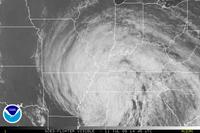 | AT 4 AM CDT...0900Z...THE CENTER OF TROPICAL DEPRESSION DENNIS WAS LOCATED INLAND NEAR LATITUDE 33.3 NORTH... LONGITUDE 88.3 WEST OR ABOUT 40 MILES WEST OF TUSCALOOSA ALABAMA. |
MAXIMUM SUSTAINED WINDS HAVE DECREASED TO NEAR 35 MPH...WITH HIGHER GUSTS. FURTHER WEAKENING IS LIKELY DURING THE NEXT 24 HOURS.
ESTIMATED MINIMUM CENTRAL PRESSURE IS 993 MB...29.32 INCHES.
TOTAL RAINFALL ACCUMULATIONS OF 3 TO 6 INCHES WILL BE POSSIBLE FROM WESTERN TENNESSEE INTO WESTERN KENTUCKY...SOUTHERN ILLINOIS...AND SOUTHERN INDIANA. ISOLATED MAXIMUM RAINFALL AMOUNTS NEAR 12 INCHES ARE POSSIBLE IN ASSOCIATION WITH DENNIS.
ISOLATED TORNADOES ARE POSSIBLE TODAY OVER NORTHERN ALABAMA...NORTHERN MISSISSIPPI...AND THE WESTERN TENNESSEE VALLEY.
REPEATING THE 4 AM CDT POSITION...33.3 N... 88.3 W. MOVEMENT TOWARD...NORTH-NORTHWEST NEAR 14 MPH. MAXIMUM SUSTAINED WINDS... 35 MPH. MINIMUM CENTRAL PRESSURE... 993 MB.
THIS IS THE LAST PUBLIC ADVISORY ISSUED BY THE NATIONAL HURRICANE CENTER ON DENNIS. FUTURE INFORMATION ON THIS SYSTEM CAN BE FOUND IN PUBLIC ADVISORIES ISSUED BY THE HYDROMETEOROLOGICAL PREDICTION CENTER...UNDER AWIPS HEADER TCPAT4 AND WMO HEADER WTNT34 KWNH... BEGINNING AT 10 AM CDT.
FORECASTER PASCH $$
Source: National Hurricane Center more at Hurricane DENNIS or noaa
0
comments
||
||
Space Shuttle Discovery's Launch Countdown
Space Shuttle Discovery's Launch Countdown Begins July 10
NASA will begin the official countdown for the Return to Flight launch of Space Shuttle Discovery on mission STS-114 July 10 at 6 p.m. EDT. Discovery's seven-member crew will test new equipment and procedures to increase the safety of the Shuttle and deliver spare parts, water and supplies to the International Space Station.
NASA's Kennedy Space Center (KSC) launch team will conduct the countdown from Firing Room 3 of the Launch Control Center. The countdown includes nearly 27 hours of built-in hold time leading to a preferred launch time at about 3:51 p.m. on July 13 with a launch window extending about five minutes.
This historic mission is the 114th Space Shuttle flight and the 17th U.S. flight to the International Space Station. STS-114 is scheduled to last about 12 days with a planned KSC landing at about 11:01 a.m. EDT on July 25.
For the latest information on NASA's Return to Flight efforts, visit: nasa.gov/returntoflight
COUNTDOWN MILESTONES (all times are Eastern)
Launch-3 Days (Sunday, July 10)
Prepare for the start of the STS-114 launch countdown
Perform the call-to-stations (5:30 p.m.)
Countdown begins at the T-43 hour mark (6 p.m.)
Begin final vehicle and facility close-outs for launch
Check out backup flight systems
Review flight software stored in mass memory units and display systems
Load backup flight system software into Discovery's general purpose computers
Launch-2 Days (Monday, July 11)
Remove mid-deck and flight-deck platforms (2 a.m.)
Complete preparation to load power reactant storage and distribution system (5 a.m.)
Activate and test navigational systems (7 a.m.)
Flight deck preliminary inspections complete (10 a.m.)
Enter first built-in hold at T-27 hours for duration of four hours (10 a.m.)
Clear launch pad of all non-essential personnel
Perform test of the vehicle's pyrotechnic initiator controllers
Resume countdown (2 p.m.)
Begin loading of cryogenic reactants into Discovery's fuel cell storage tanks (3:30 p.m.)
Enter 4-hour built-in hold at T-19 hours (10 p.m.)
Demate orbiter mid-body umbilical unit (10:30 p.m.)
Resume orbiter and ground support equipment close-outs
Launch-1 Day (Tuesday, July 12)
Resume countdown (2 a.m.)
Final preparations of Shuttle's three main engines for tanking and flight (2 a.m.)
Begin filling pad sound suppression system water tank (3 a.m.)
Pad sound suppression system water tank filling complete (6 a.m.)
Close out the tail service masts on the mobile launcher platform
Enter planned hold at T-11 hours for 12 hours, 55 minutes (10 a.m.)
Begin star tracker functional checks (10:50 a.m.)
Activate Shuttle's inertial measurement units
Activate the orbiter's communications systems
Install film in numerous cameras on the launch pad (11:55 a.m.)
Flight crew equipment late stow (2:50 p.m.)
Move Rotating Service Structure (RSS) to the park position (7 p.m.)
Perform ascent switch list
Fuel cell flow-through purge complete
Resume countdown at T-11 hours (11 p.m.)
Launch Day (Wednesday, July 13)
Activate the orbiter's fuel cells (12:05 a.m.)
Clear the blast danger area of all non-essential personnel
Switch Discovery's purge air to gaseous nitrogen (1:10 a.m.)
Enter planned 2-hour built-in hold at the T-6 hour mark (3:55 a.m.)
Verification of launch commit criteria prior to cryogenic loading of External Tank (ET)
Clear pad of all personnel
Resume countdown (5:55 a.m.)
Chill-down of propellant transfer lines (5:55 a.m.)
Begin loading the ET with 500,000 gallons of cryogenic propellants (approx. 6:05 a.m.)
Complete filling the ET with propellants (approx. 8:55 a.m.)
Final Inspection Team proceed to launch pad
Enter planned 3-hour built-in hold at T-3 hours (8:55 a.m.)
Perform inertial measurement unit preflight calibration
Align Merritt Island Launch Area (MILA) tracking antennas
Perform open loop test with Eastern Range
Resume countdown at T-3 hours (11:55 a.m.)
Crew departs Operations and Checkout Building for the pad (12 p.m.)
Complete close-out preparations in the white room
Check cockpit switch configurations
Flight crew begins entry into the orbiter (approx. 12:30 p.m.)
Astronauts perform air-to-ground voice checks with Launch and Mission Control
Begin to close Discovery's crew hatch (about 1:35 p.m.)
Begin Eastern Range final network open loop command checks
Perform hatch seal and cabin leak checks
Complete white room close-out
Close-out crew moves to fallback area
Primary ascent guidance data is transferred to the backup flight system
Enter planned 10-minute hold at T-20 minutes (2:35 p.m.)
NASA Test Director conducts final launch team briefings
Complete inertial measurement unit preflight alignments
Resume countdown at T-20 minutes (2:45 p.m.)
Transition the orbiter's onboard computers to launch configuration
Start fuel cell thermal conditioning
Close orbiter cabin vent valves
Transition backup flight system to launch configuration
Enter estimated 40-minute hold at T-9 minutes (2:56 p.m.)
Launch director, Mission Management Team and NASA test director conduct final polls for go/no go to launch
Resume countdown at T-9 minutes (about 3:36 p.m.)
Launch Day (Wednesday, July 13)
Start automatic ground launch sequencer (T-9:00 minutes)
Retract orbiter crew access arm (T-7:30)
Start mission recorders (T-6:15)
Start Auxiliary Power Units (T-5:00)
Arm Solid Rocket Boosters (SRBs) and ET range safety safe and arm devices (T-5:00)
Start liquid oxygen drainback (T-4:55)
Start orbiter aerosurface profile test (T-3:55)
Start main engine gimbal profile test (T-3:30)
Pressurize liquid oxygen tank (T-2:55)
Begin retraction of the gaseous oxygen vent arm (T-2:55)
Fuel cells to internal reactants (T-2:35)
Pressurize liquid hydrogen tank (T-1:57)
Deactivate bi-pod heaters (T-1:52)
Deactivate SRB joint heaters (T-1:00)
Orbiter transfers from ground to internal power (T-0:50 seconds)
Ground Launch Sequencer go for auto sequence start (T-0:31 seconds)
SRB gimbal profile (T-0:21 seconds)
Ignition of three Space Shuttle main engines (T-6.6 seconds)
SRB ignition and liftoff (T-0)
CREW FOR MISSION STS-114
Commander (CDR): Eileen Collins
Pilot (PLT): James Kelly
Payload Commander (MS1): Soichi Noguchi
Mission Specialist (MS2): Stephen Robinson
Mission Specialist (MS3): Andrew Thomas
Mission Specialist (MS4): Wendy Lawrence
Mission Specialist (MS5): Charles Camarda
SUMMARY OF STS-114 LAUNCH DAY CREW ACTIVITIES
Wednesday, July 13 (*Televised events-times may vary, but all times are EDT.)
5:45 a.m. Crew wakes up
6:15 a.m. Breakfast
*10:15 a.m. Crew eats snack
11:20 a.m. Weather Briefing (CDR, PLT, MS2)
*11:20 a.m. Don flight suits (MS1, MS3, MS4)
*11:30 a.m. Don flight suits (CDR, PLT, MS2)
*12:00 p.m. Depart for launch pad
*12:30 p.m. Arrive at white room and begin ingress
*1:45 p.m. Close crew hatch
*3:51 p.m. Launch
- end -
Katherine Trinidad, Headquarters, Washington (Phone: 202/358-3749)
Jessica Rye, Kennedy Space Center, Fla. (Phone: 321/867-2468)
MEDIA ADVISORY: M05-114W more at Space Shuttle and Discovery or nasa and Space Shuttle Discovery
0
comments
||
||


