


National Bio and Agro-Defense Facility
The U.S. Department of Homeland Security (DHS) is leading a requirements analysis process to identify a next-generation biological and agricultural defense facility to replace the important but aging facility at Plum Island, New York. The Plum Island Animal Disease Center (PIADC) is an essential component of the national strategy for protecting U.S. agriculture from a bioterrorist attack involving the intentional introduction of foreign animal diseases such as foot-and-mouth disease, as described in the Homeland Security Presidential Directive, “Biodefense for the 21st Century.”
The Plum Island facility was built in the 1950s and is nearing the end of its lifecycle, and the Homeland Security mission requires replacing PIADC with a new facility. The President’s FY06 budget requests $23 million for the needs assessment and design process for a new National Bio and Agro-defense Facility (NBAF). In addition to agricultural and animal studies, public health threats from emerging high consequence zoonotic pathogens and the development and licensure of medical countermeasures are generating additional demands for biocontainment laboratory space. DHS is working closely with the U. S. Department of Agriculture and the U.S. Department of Health and Human Services to evaluate future needs in the context of this new national facility.
Why a New Facility?
Recognizing that protecting the agricultural infrastructure is a critical element of our Nation’s homeland security, the Homeland Security Act of 2002 transferred the ownership of the Plum Island Animal Disease Center from the U. S. Department of Agriculture (USDA) to the newly formed Department of Homeland Security (DHS). PIADC is the Nation’s designated facility for studying and responding to foreign animal diseases such as foot and mouth disease and classical swine fever. While DHS now has responsibility for operating PIADC, both DHS and USDA conduct programs there as part of an integrated agro-defense strategy.
As our Nation evaluates future research requirements in this area, the need to take specific steps to replace this aging facility to meet the new challenges of the coming decades has become increasingly clear:
PIADC is now 50 years old and is becoming increasingly more costly to maintain.
The laboratory and test space in the current facility is insufficient to support the increased levels of research and development needed to meet the growing concerns about accidental or intentional introduction of foreign animal diseases into this country, and it is completely inadequate to address zoonotic diseases.
Homeland Presidential Security Directive 9, “Defense of the United States Agriculture and Food,” states: “The Secretaries of Agriculture and Homeland Security will develop a plan to provide safe, secure and state-of-the-art agriculture biocontainment laboratories that research and develop diagnostic capabilities for foreign animal and zoonotic diseases.”
The Next Steps
To meet these requirements, the President requested $23 million in FY06 for the design and initiation of a National Bio and Agro-defense Facility. In preparation for this process, DHS will conduct a conceptual design study to characterize the key programmatic requirements driving the NBAF design and to analyze the cost and benefit tradeoffs associated with each of these drivers.
This design study will explore three major NBAF options:
Keep the scope the same as the current PIADC mission but build the facilities required to meet the needs of the first half of the 21st century;
Expand the scope to include additional agriculture biocontainment laboratories at biosafety level 3 agriculture, and possibly biosafety level 4 for foreign animal and zoonotic diseases as called for in HSPD-9 as described above; or
Add expanded test and evaluation facilities to support non-clinical testing under the Animal Rule needed to support advanced development of security medical countermeasures by the Department of Health and Human Services.
The options for a location, or locations, for the biocontaiment facilities have not been identified at this time, but will be considered during the conceptual design study. DHS will continue to work closely with USDA and HHS throughout the conceptual design process, which will also include ongoing consultation with other key stakeholders including professional societies and industry groups.
Experts from DHS, USDA and DHHS, will review the key programmatic requirements for each of these options in order to us assess key facility determinants such as the amount and type of required laboratory and support space. DHS will also conduct a design solicitation in the coming months in order to be able to better estimate the costs of key components of such a facility, such as biocontainment laboratories, support space, and administrative space.
Source: dhs.gov/ ### For Immediate Release, Office of the Press Secretary, Contact: 202-282-8010, August 22, 2005
more at Department of Homeland Security and biological or agricultural and bioterrorism or Plum Island
Monday, August 22, 2005
National Bio and Agro-Defense Facility
0
comments
||
||

HUD AWARDS $18.8 MILLION HIV/AIDS
HUD AWARDS $18.8 MILLION TO HELP PEOPLE and FAMILIES LIVING WITH HIV/AIDS
Grants to provide permanent homes and services to more than 1,000 families in 13 states
WASHINGTON - More than a thousand low-income individuals and families living with HIV/AIDS will find a permanent home and get access to the services they need because of nearly $18.8 million in grants announced today by Housing and Urban Development Secretary Alphonso Jackson. Over the next three years, the funding announced today will offer compassionate assistance to some of the most impoverished Americans, persons with HIV/AIDS who are in households experiencing a high risk of homelessness.
The funding announced today is part of HUD's Housing Opportunities for Persons with AIDS (HOPWA) Program. Housing assistance and related services funded by HOPWA are a vital part of the comprehensive system of care for those living with HIV/AIDS. A stable home environment is critical for low-income persons managing complex drug therapies and potential side effects from their treatments. Later this year, HUD anticipates awarding an additional $18 million for other programs committed to finding supportive housing for persons living with HIV/AIDS.
"HOPWA provides housing support to some of the most vulnerable Americans," said Jackson. "We know that a stable home environment helps persons living with HIV/AIDS to better care for themselves and when that happens, people live longer."
In connection with the HUD funding announced today, these projects are using $27 million in other public and private resources to carry out these projects and help even more persons living with HIV/AIDS to find a stable home. Over the next three years, the HOPWA grants announced today will renew funding for 14 outstanding projects that provide permanent supportive housing activities. The funding will also support five new special projects that will design new approaches to meet the housing and service needs of their clients to help them transition to more permanent and self-sufficiency arrangements (see attached list for project summaries).
Ninety percent of HOPWA funds are distributed by formula to cities and states based on the number of AIDS cases reported to the Centers for Disease Control and Prevention. HUD's formula grants are managed by 121 local and state jurisdictions, which coordinate AIDS housing efforts with other HUD and community resources. This year, HUD is making available a total of $282 million in HOPWA funds to help communities provide housing for this special needs population.
HUD is the nation's housing agency committed to increasing homeownership, particularly among minorities; creating affordable housing opportunities for low-income Americans; and supporting the homeless, elderly, people with disabilities and people living with HIV/AIDS. The Department also promotes economic and community development as well as enforces the nation’s fair housing laws. More information about HUD and its programs is available on the Internet at hud.gov and espanol.hud.gov.
HUD No. 05-108 Brian Sullivan (202) 708-0685 hud.gov/news/ For Release Friday August 19, 2005
more at HIV/AIDS and HIV or AIDS and HUD or Housing and Urban Development
0
comments
||
||
COSMED TO PAY FOR CLEAN AIR ACT VIOLATIONS
COSMED AGREES TO PAY $1.5 MILLION FOR CLEAN AIR ACT VIOLATIONS
Agreement Will Result In Improved Air Quality In Six States
WASHINGTON, D.C. - The Department of Justice and the U.S. Environmental Protection Agency today announced the first nationwide settlement of a Clean Air Act enforcement action for violations of the federal standards for ethylene oxide emissions from sterilization facilities. The settlement was reached with the Cosmed Group, Inc., (Cosmed), headquartered in Jamestown, R.I., which sterilizes products for the food and medical industries. EPA investigations found violations of ethylene oxide Maximum Achievable Control Technology (MACT) requirements at six of the eight sterilization facilities in Rhode Island, New Jersey, Maryland, Illinois, Texas, and California.
Under the consent decree, lodged today in the U.S. District Court for the District of Rhode Island, Cosmed will pay a $500,000 civil penalty and spend an additional $1 million to perform supplemental environmental projects that will improve air quality in urban areas. Cosmed also will complete environmental audits at all eight of its current and former facilities, and establish an environmental management system that will help ensure that the company fully complies with environmental regulations in the future at its three remaining facilities.
“This case underscores both the importance of enforcement of EPA’s MACT standards to protect the public health and the value of coordinated national environmental enforcement efforts to address widespread violations at multiple facilities owned by the same company,” said Acting Assistant Attorney General Kelly A. Johnson, for the Justice Department’s Environment and Natural Resources Division. “The Department of Justice is committed to taking vigorous, nationwide enforcement action to ensure that companies make compliance with the MACT standards a top priority.”
Ethylene oxide is a probable human carcinogen that may cause serious reproductive harm, irritate the lungs, and damage the liver and kidneys. In addition, as a volatile organic compound, ethylene oxide also contributes to the formation of ground-level ozone (smog). Ozone can irritate people’s respiratory systems, causing coughing and throat irritation. More seriously, exposure to ground level ozone can aggravate asthma and damage lung cells, and may cause permanent lung damage. These effects can be worse in children and people with respiratory ailments such as asthma. Cosmed uses an ethylene oxide gas-based sterilization process at its facilities. EPA regulates these facilities to prevent emissions of unsafe levels of ethylene oxide into the atmosphere from the facilities’ sterilization and aeration chambers.
“Because of the risks associated with exposure to ethylene oxide, it is essential that facilities comply with regulations for this toxic air pollutant,” said Phyllis P. Harris, Principal Deputy Assistant Administrator of EPA’s Office of Enforcement and Compliance Assurance. “Through active oversight and enforcement of these regulations, we are working to ensure that all citizens breathe cleaner air.”
The complaint, filed with the consent decree, alleges that Cosmed violated the MACT standards-part of EPA’s National Emissions Standards for Hazardous Air Pollutants-in failing to install pollution control equipment in a timely manner, failing to measure its ethylene oxide emissions, and failing to submit required reports to EPA for its six facilities in Baltimore, MD; Grand Prairie, TX; San Diego, CA; Coventry, RI; South Plainfield, NJ; and Waukegan, IL. The violations are thought to have occurred from at least 1998 until 2003. EPA estimates that more than 30 tons of excess emissions of ethylene oxide were emitted from the Coventry, South Plainfield and Waukegan facilities combined. No excess emissions were found at the other facilities, and no violations were alleged at the Linden, NJ, and Sparks, NV, facilities.
Cosmed’s supplemental environmental projects include projects to reduce pollution from municipal diesel vehicles through the use of advanced pollution controls and cleaner diesel fuel in the urban areas of Camden, NJ; Lake County, IL; and San Diego, CA. A project in Dallas, TX, will convert gasoline-powered school buses to run on propane, a cleaner burning fuel. Collectively, these projects will eliminate approximately 235 tons of air pollution in their first three years, including some toxic air pollutants that pose serious health concerns. Urban areas were chosen as the locations for these projects in light of the disproportionately high air pollution burden that is typically experienced by populations in urban areas.
“An important part of this settlement is that the company will pay to help ease air pollution in urban neighborhoods, which are those most often damaged by industrial pollution,” U.S. Attorney Robert Clark Corrente said. “As we pursue those who are alleged to have violated clean air standards, we must also ensure that they pay to help alleviate the overall problem.”
Cosmed was a major provider of contract sterilization services in the United States, at one point representing almost one-third of the large sterilization facilities (those using more than 10 tons of ethylene oxide per year) regulated by EPA. The Cosmed facilities involved in this action provided sterilization services for a diverse range of products including medical devices, pharmaceuticals, packaging, cosmetics, seeds, and food ingredients. Cosmed sold its five medical device sterilization facilities to STERIS in January 2005. It continues to own and operate three facilities that provide sterilization for other products in Baltimore, MD; Linden, NJ; and Sparks, NV.
A copy of the consent decree lodged today is available on the Department of Justice website at: usdoj.gov/enrd/pressroom
The proposed consent decree is subject to a 30-day public comment period and final court approval. For more information about the settlement, go to: epa.gov/compliance/resources/cases/civil/caa/
### 05-423
Source: USDOJ.GOV FOR IMMEDIATE RELEASE, THURSDAY, AUGUST 18, 2005, WWW.USDOJ.GOV, ENRD (202) 514-2007, EPA (617) 918-1070, TDD (202) 514-1888
more at Department of Justice or Environmental Protection Agency and Clean Air Act or ethylene oxide and Cosmed Group
0
comments
||
||
Norman Mineta Announces Appointment of Roger Minami
Secretary Mineta Announces Appointment of Minami As Director of DOT’s Small and Disadvantaged Business Office
U.S. Transportation Secretary Norman Y. Mineta announced the appointment of Roger Minami as director of the Office of Small and Disadvantaged Business Utilization (OSDBU) at the U.S. Department of Transportation (DOT). The office helps small, minority-owned, women-owned and other disadvantaged businesses compete for DOT and DOT-assisted contracts and grants.
“Roger brings to DOT a strong recognition of the potential of small businesses to help us build a safer, more efficient and more reliable transportation system,” Secretary Mineta said. “I look forward to working with him as we continue our efforts to involve all segments of the business community in our programs.”
Minami, who was appointed to the position on Aug. 8, comes to DOT from the U.S. Department of Agriculture, where he served in the agency’s Office of Small and Disadvantaged Business Utilization, its Foreign Agricultural Service, and its Marketing and Regulatory Programs. During that time, Minami helped small and disadvantaged businesses find more opportunities in the food industry by negotiating agreements between representatives of the firms and large food-service companies.
Before working for the government, Minami helped create and produce Central Coast Seniors, a weekly news and information television program for active older adults living in Santa Barbara and nearby coastal communities in California.
Minami, who comes from a family farming background, graduated with a Bachelor of Arts in communications from the University of Southern California. He was active in a number of Japanese American charitable and community-based groups prior to moving from California to Washington, DC. Minami is the first Asian-American to serve as OSDBU director.
-END- Source: DOT 111-05, Contact: Bill Mosley, Tel.: (202) 366-4570, Monday, August 22, 2005
more at Transportation or Norman Mineta and Department of Transportation or DOT and Roger Minami
0
comments
||
||
Sunday, August 21, 2005
Peru's ancient bureaucrats used knotted-string devices as ledgers
Harvard anthropologists find evidence that 'khipu' were used to track accounting data
CAMBRIDGE, Mass. -– Anthropologists at Harvard University have found evidence that ancient Inka accountants shared numbers across their sprawling bureaucratic hierarchy using khipu, aggregations of knotted strings that served to record information in the Andean empire. The finding sheds new light on the uses of khipu, used by Inkans in lieu of the two-dimensional writing favored by other ancient civilizations.
The work is described this week by researchers Gary Urton and Carrie J. Brezine, writing in the journal Science.
"Every major ancient civilization -- Inka, Chinese, Egyptian, Mayan, Aztec and Mesopotamian -- developed sophisticated means of tracking its sprawling empire," says Urton, Dumbarton Oaks Professor of Pre-Columbian Studies in Harvard's Faculty of Arts and Sciences and a curator at Harvard's Peabody Museum of Archaeology and Ethnology. "This communication was used to record the information deemed most important to the state, which often included accounting and other data related to censuses, finance and the military. In this regard, the discovery that khipu were used as ledger books reveals a new consonance between the Inka and other ancient cultures."
The researchers used a computer database developed by Brezine to ascertain that khipu, also known as quipu, may have been used as bureaucratic ledgers. This searchable database, which contains data on nearly half the 650 to 700 extant khipu, can locate patterns in the devices' arrays of 2 to 1,500 knotted strings of varying colors and lengths.
Using the database to analyze 21 khipu gathered at a burial site located at the ancient Inkan administrative center of Puruchuco, on the central Peruvian coast about 11 kilometers northeast of modern-day Lima, Urton and Brezine found that seven of the khipu appeared to contain cumulative numerical data, such as that generated as successive officials compiled sums. The values on the khipu appear to sum upward and subdivide downward, suggesting the addition or subtraction of values as the khipu moved up and down the ranks of the Inka bureaucracy.
Such compilation is consistent with the Inka state's enormous labor hierarchy, wherein groups of 10, 50, 100, 500 and more laborers nestled into increasingly large administrative units. The empire levied tributes in the form of a "labor tax," with each worker required to work a specified number of days each year on state projects and each official required to keep careful records.
"This work gives us some sense of how this complex information was compiled, manipulated, shared and archived in the Inka hierarchy," Urton says. "Instructions of higher-level officials for lower-level ones would have moved, via khipu, from the top of the hierarchy down. This information would have been partitive in nature, with assignments made to groups of 1,000 workers broken down into two groups of 500, and so on. In the reverse direction, local accountants would forward information on accomplished tasks upward through the hierarchy, with information at each successive level representing the summation of accounts from the levels below."
While anthropologists lack the ability to decipher khipu precisely, Urton's previous research has led him to argue that the instruments may also have been used as calendars: Ancient Peruvian burial sites have yielded khipu with 730 strings grouped in 24 sets -- exactly equivalent to the number of days and months in two years. ###
Urton and Brezine's work is funded by the National Science Foundation, the Dumbarton Oaks Foundation, Harvard's Faculty of Arts and Sciences, and the John D. and Catherine T. MacArthur Foundation, which in 2001 awarded Urton a MacArthur Fellowship.
Contact: Steve Bradt steve_bradt@harvard.edu 617-496-8070 Harvard University
more at Anthropology or technology and accounting or khipu and Pre-Columbian or Peru
0
comments
||
||
female senior faculty are still rare
More women receive Ph.D.'s, but female senior faculty are still rare
New study examines cultural issues that affect advancement
Despite gains over recent years in the number of women who receive Ph.D.'s in science and engineering fields, a relative few go on to assume high-level faculty positions. Writing in the Aug. 19 issue of the journal Science, several top women scientists and university administrators attribute the imbalance to four pervasive elements:
small numbers of women in the faculty pipeline a hostile or "chilly" campus climate toward women junior faculty unconscious bias that results in covert discrimination sacrifices to balance family and work "While we as a nation have made considerable progress in attracting women into most science and engineering fields, we still see fewer women at the full-professor and academic leadership levels than we would expect..." said Alice Hogan, director of the National Science Foundation's (NSF) ADVANCE program, which aims to increase the representation and advancement of women in academic science and engineering careers.
"After investing in creating this pool of highly trained talent," she said, "we should see a high rate of return--productive, creative and respected teachers and researchers attracting more students into fields that might have seemed closed to them given the traditional profile of science and engineering faculty."
Lead author Jo Handelsman, a professor of plant biology at the University of Wisconsin-Madison, and her colleagues focus on the "cultural issues that manifest in the behavior of individuals and the policies of institutions because these factors make a difference and can be changed."
The article goes on to identify results from participants in the ADVANCE Institutional Transformation Program, which the authors say "appear to work."
To address the pipeline shortage, for example, Georgia Tech engineering and ADVANCE professor, Jane Ammons, has developed a "speed mentoring" workshop, in which junior faculty consult for 15 to 20 minutes with experienced, tenure-case reviewers to learn ways to strengthen their odds with tenure committees.
Meanwhile, the University of Michigan's ADVANCE program hosts workshops that include an interactive theater program that portrays typical academic situations, such as hiring, retention, and climate for women faculty in the sciences and engineering, to raise awareness of personal thoughts and behaviors that affect the campus climate toward women faculty.
Workshops at UW-Madison train members of search committees in good search methods and sensitize the participants to bias.
Although systematic examination and critique of pipeline problems, campus climate, unconscious bias and work-family juggling can be "disquieting," the report says, it is necessary to create a "scientific community reflective of the pluralist society that supports it."
In addition to Handelsman, authors of the paper include Nancy Cantor, chancellor and president of Syracuse University; Molly Carnes, a UW-Madison Medical School professor and co-director of the Women in Science and Engineering Leadership Institute; Denice Denton, chancellor of the University of California at Santa Cruz; Eve Fine of the Women in Science and Engineering Leadership Institute; Barbara Grosz, Higgins professor of natural sciences, Harvard University; Virginia Hinshaw, provost and executive vice chancellor at the University of California at Davis; Cora Marrett, senior vice president of the University of Wisconsin System; Sue Rosser, dean of the Ivan Allen College of Liberal Arts at the Georgia Institute of Technology; Donna Shalala, president of the University of Miami; and Jennifer Sheridan of the Women in Science and Engineering Leadership Institute at UW-Madison. ###
Read the full University of Wisconsin release.
NSF program solicitation: ADVANCE: Increasing the Participation and Advancement of Women in Academic Science and Engineering Careers
Media Contacts: Leslie Fink, NSF, (713) 292-5395, lfink@nsf.govTerry Devitt, UW-Madison, (608) 262-8282, trdevitt@wisc.edu
NSF-PR 05-146
The National Science Foundation (NSF) is an independent federal agency that supports fundamental research and education across all fields of science and engineering, with an annual budget of nearly $5.47 billion. NSF funds reach all 50 states through grants to nearly 2,000 universities and institutions. Each year, NSF receives about 40,000 competitive requests for funding, and makes about 11,000 new funding awards. The NSF also awards over $200 million in professional and service contracts yearly.
Receive official NSF news electronically through the e-mail delivery and notification system, MyNSF (formerly the Custom News Service). To subscribe, visit nsf.gov/mynsf/ and fill in the information under "new users".
Useful NSF Web Sites: NSF Home Page: nsf.gov NSF News: nsf.gov/news/ For the News Media: nsf.gov/news/newsroom.jsp Science and Engineering Statistics: nsf.gov/statistics/ Awards Searches: nsf.gov/awardsearch/
Contact: Leslie Fink lfink@nsf.gov 703-292-5395 National Science Foundation
more at faculty or women and science or engineering and academic
0
comments
||
||
Gene discovery sheds light on causes of rare disease, cancer
Gene discovery sheds light on causes of rare disease, cancer
National Institute on Aging (NIA) researchers have discovered a new gene, FANCM, which sheds light on an important pathway involved in the repair of damaged DNA. Specifically, mutation in this gene is responsible for one of the forms of Fanconi anemia (FA), a rare genetic disorder that primarily affects children. Like many rare, inherited diseases, understanding this gene's role in the development of FA provides insights into other medical problems -- in this case, age-related conditions including ovarian and pancreatic cancers, as well as leukemia, the researchers said. Discovery of this gene and its protein provides a potential target for the development of drugs that can prevent or alleviate FA and a variety of cancers.
The finding is scheduled for advanced online publication in Nature Genetics (nature.com/ng/) during the week of August 21, 2005.* The report also will be published in the journal's September 2005 print edition. The NIA is a component of the National Institutes of Health (NIH) at the U.S. Department of Health and Human Services.
"FA is a disease that appears to be the result of a breakdown in vital DNA repair mechanisms," said Weidong Wang, Ph.D., a senior investigator in the NIA's Laboratory of Genetics, who led the study. "Some scientists theorize that DNA damage, which gradually accumulates as we age, leads to malfunctioning genes and deteriorating tissues and organs as well as increased risk of cancer. We believe that this new gene, FANCM, may be a potent cog in the DNA repair machinery," Wang said. "It is possible that we could learn how to promote the function of DNA repair complexes and thereby prevent the age-related accumulation of DNA damage."
FANCM, like most genes, contains information for making a specific protein. The FANCM protein, part of the molecular machine called the FA core complex, is the only protein within this machine that affects DNA by enzyme activity (enzymes are proteins that encourage biochemical reactions, usually speeding them up). FANCM apparently provides an engine that moves the FA DNA repair machine along the length of DNA. It also is a key component of the complex that is switched "on" or "off" by phosphorylation, or the addition of a phosphate group to a protein, in response to DNA damage. In the future, researchers hope to use the newly-discovered activities of FANCM as targets to select drugs that enhance the FA DNA damage response for intervention in patients.
Fanconi anemia, named for Swiss pediatrician Guido Fanconi, affects about 1 in every 300,000 children. If both parents have the same mutation in the same FA gene, each of their children has a one-in-four chance of inheriting the defective gene from both parents and developing FA or certain types of cancer. The disease leads to bone marrow failure (aplastic anemia) and is associated with birth defects such as missing or extra thumbs and skeletal abnormalities of the hips, spine, or ribs. Many who have FA eventually develop acute myeloid leukemia and are prone to head and neck, gastrointestinal, and other cancers. The first symptoms, such as nose bleeds or easy bruising, usually begin before age 12. In rare instances, however, symptoms do not become apparent until adulthood. This is the third FA gene and protein combination identified in the last 3 years by Wang and his colleagues. ###
In addition to the NIA, researchers were supported by the FA Research Fund in Eugene, OR, the Daniel Ayling Fanconi Anemia Trust, the Dutch Cancer Society, and the Netherlands Organization for Health Research and Development.
The NIA is one of 27 institutes and centers at the NIH. The Institute leads Federal efforts to support and conduct basic, clinical, epidemiological, and social research on aging and the special needs of older people. Press releases, fact sheets, and other materials about aging and aging research can be viewed at the NIA's general information web site, nia.nih.gov. Please note: Dr. Wang will be available for interviews on weekdays.
*AR Meetei et al, "A Human Orthologue of Archaeal DNA Repair Protein Hef is Defective in Fanconi Anemia Complementation Group M," Nature Genet., August 21, 2005, 1 p.m. online.
Contact: Vicky Cahan or Jeannine Mjoseth cahanv@nia.nih.gov 301-496-1752 301-785-3101 (weekend) NIH/National Institute on Aging
more at Gene or DNA and Genetics or Science and cancer or Health
0
comments
||
||
Cultural norms not unique to human societies
Yerkes-based experiment confirms cultural transmission and conformity in chimpanzee communities
ATLANTA -- Humans are not alone in their desire to conform to cultural norms, according to new study findings that confirm, for the first time, chimpanzees share the same conformist tendencies. Researchers, in determining how chimpanzee communities share and maintain traditions, discovered they possess a natural motivation to copy their peers well into adulthood and say that although other species show some cultural behaviors, the level of cultural variation shown by chimpanzees is exceeded only by humans. The study, conducted at the Yerkes National Primate Research Center of Emory University by a collaborative team of scientists from the United States and the United Kingdom, is published in the current online edition of Nature.
Unlike previous studies that used human models for cultural-learning experiments with chimpanzees, researchers Victoria Horner, PhD, and Frans B. M. de Waal, PhD, of the Living Links Center at the Yerkes Research Center, and Andrew Whiten, PhD, of the University of St. Andrews, Scotland, applied a unique method that extends the experimental approach to the group
level, focuses on ape-to-ape transmission and uses a two-action methodology. This approach bridges the gap between two conventional research methods: population-level observations on wild apes and one-to-one social learning experiments.
In the study, researchers introduced a naturalistic foraging task into three groups (two experimental and one control) to see if chimpanzees can learn by observation. While unseen by other chimpanzees, researchers taught a high-ranking female from each of the two experimental groups a different way, either Lift or Poke, to retrieve food from a system of tubes called Pan-pipes. Once the two females mastered the task, other chimpanzees within their groups were allowed to watch them perform the new skill over a seven-day period before all group members were allowed to use the tool. According to the researchers, group members gathered around the local expert, watched attentively and proved successful when allowed to try the task on their own. The third group, which did not have the benefit of a local expert and was left to decipher the task on its own, was unsuccessful in retrieving food from the Pan-pipes.
"This study demonstrates apes do copy members of their own species and they develop different traditions by doing so," said Dr. Horner. "It makes it likely differences in tool use between wild chimpanzee communities in Africa indeed reflect a form of culture and establishes another link between human and chimpanzee societies."
The conformity bias finding was an unexpected, but equally important, result of this culture study, according to Dr. Horner. A few members of each group independently discovered the alternative method for freeing food from the Pan-pipes, but this knowledge did not endanger the groups' traditions because most of these chimpanzees reverted back to the norm set by their local expert. "Choosing the group norm over the alternative method shows a level of conformity we usually associate only with our own species," said Dr. Horner. "By using the group's technique rather than the alternative method, we see the conformity is based more on a social bond with other group members than the simple reward of freeing the food."
A characteristic traditionally thought to be solely human, the propensity to conform, may be part of an evolutionary progression. "These results suggest an ancient origin for the cultural conformism that is so evident in humans," said de Waal. "Further research may reveal these findings to be more widespread throughout the animal kingdom." ###
The Yerkes National Primate Research Center of Emory University is one of eight national primate research centers funded by the National Institutes of Health. The Yerkes Research Center is a recognized leader for its biomedical and behavioral studies with nonhuman primates, which provide a critical link between research with small laboratory animals and the clinical trials performed in humans. Yerkes researchers are on the forefront of developing vaccines for AIDS and malaria, and treatments for cocaine addiction and Parkinson's disease. Yerkes researchers also are leading programs to better understand the aging process, pioneer organ transplant procedures and provide safer drugs to organ transplant recipients, determine the behavioral effects of hormone replacement therapy, prevent early onset vision disorders and shed light on human behavioral evolution.
Contact: Stephanie McNicoll stephanie.mcnicoll@emory.edu 404-727-9254 Emory University Health Sciences Center
Note: Additional resources for readers include: emory.edu/LIVING_LINKS/ --ape and human evolution information nature.com/news --an interactive chimpanzee-related quiz (available in an upcoming news@nature.com item. Portions of the quiz material were provided by the Yerkes Research Center.)
more at biomedical ot evolution and Science or behavioral and cultural
0
comments
||
||
President Bush and Lance Armstrong
 | President George W. Bush and 2005 Tour de France winner Lance Armstrong take a ride together through a field of sunflowers on the President's ranch in Crawford, Texas on August 20, 2005. White House photo by Paul Morse |
0
comments
||
||
Saturday, August 20, 2005
Freedom Calendar 08/20/05 - 08/27/05
August 20, 1996, Bill authored by U.S. Rep. Susan Molinari (R-NY) to prohibit racial discrimination in adoptions, part of Republicans’ Contract With America, becomes law.
August 21, 1959, Republican James Kealoha becomes first Hawaiian and Chinese-American Lt. Governor of Hawaii, after Statehood.
August 22, 1867, Founding of Fisk University; named for Republican Clinton B. Fisk, Commissioner of Freedmen’s Bureau that assisted emancipated slaves.
August 23, 1882, At Texas Republican Party convention, over half of delegates are African-Americans.
August 24, 1985, Death of Hawaiian and Chinese-American Republican James Kealoha, first Lt. Governor of Hawaii after statehood.
August 25, 1862, President Abraham Lincoln authorizes enlistment of African-American soldiers in U.S. Army.
August 26, 1820, Birth of Republican anti-slavery activist James Harlan, U.S. Senator from Iowa, whose statue is in U.S. Capitol.
August 27, 1809, Birth of Hannibal Hamlin (R-ME), first Republican elected Vice President of the United States; instrumental in passage of anti-slavery Wilmot Proviso.
"Our principles are those of humanity...they are those of equal rights”
Governor Oliver Morton (R-IN), whose statue is in Statuary Hall in the U.S. Capitol and also at the entrance to the Indiana State Capitol Building, 1866
SOURCE: 2005 Republican Freedom Calendar more at Freedom Calendar or Republican and Republicans
0
comments
||
||
bush radio address 08/20/05 full audio, text transcript
bush radio address 08/20/05 full audio, text transcript
President's Radio Address
THE PRESIDENT: Good morning. In a few weeks, our country will mark the four-year anniversary of the attacks of September the 11th, 2001. On that day, we learned that vast oceans and friendly neighbors no longer protect us from those who wish to harm our people. And since that day, we have taken the fight to the enemy.
We have combated terrorists on the home front by disrupting terror cells and their financial support networks. We're fighting the terrorists in Afghanistan, Iraq, and around the world, striking them in foreign lands before they can attack us here at home. And we're spreading the hope of freedom across the broader Middle East. By advancing the cause of liberty in a troubled region, we are bringing security to our own citizens and laying the foundations of peace for our children and grandchildren.
In this war, our nation depends on the courage of those who wear the uniform. During the coming weeks, I will meet with some of the brave men and women who have been on the front lines in the war on terror. Next week in Idaho, I will visit with some of the fine citizen soldiers of the Idaho National Guard. I will also see the men and women of the Mountain Home Air Force Base who played a leading role in the air campaign in Afghanistan after the September the 11th attacks. I will thank all of them for their service in the war on terror and I will thank the families who make their essential work possible.
Our troops know that they're fighting in Iraq, Afghanistan, and elsewhere to protect their fellow Americans from a savage enemy. They know that if we do not confront these evil men abroad, we will have to face them one day in our own cities and streets, and they know that the safety and security of every American is at stake in this war, and they know we will prevail.
Next week, in Utah, I will also address the Veterans of Foreign Wars Convention and thank the proud veterans who have given today's troops such a noble example of devotion and courage. At the end of the month, I will join our veterans and current service members in San Diego to commemorate the 60th anniversary of V-J Day, the day that ended World War II, the bloodiest conflict in human history.
The veterans of World War II defended America when ruthless foes threatened our freedom and our very way of life. And after winning a great victory, they helped former enemies rebuild and form free and peaceful societies that would become strong allies of America. The World War II generation endured great suffering and sacrifice because they understood that defeating tyranny in Europe and Asia was essential to the security and freedom of America.
Like previous wars we have waged to protect our freedom, the war on terror requires great sacrifice from Americans. By their courage and sacrifices, today's soldiers, sailors, airmen, Coast Guardsmen and Marines are taking their rightful place among the heroes of history, and the American people are thankful and proud. In this war, many of these brave men and women have given their lives to defend their fellow citizens and to bring the hope of freedom to millions who have not known it. We owe these fallen heroes our gratitude, and we offer their families our heartfelt condolences and prayers.
Now we must finish the task that our troops have given their lives for and honor their sacrifice by completing their mission. We can be confident in the ultimate triumph of our cause, because we know that freedom is the future of every nation and that the side of freedom is the side of victory.
Thank you for listening.
END For Immediate Release, Office of the Press Secretary, August 20, 2005
more at President Bush or Afghanistan and Iraq or World War II and V-J Day
0
comments
||
||
Friday, August 19, 2005
Cristeta Comerford Named White House Executive Chef
Cristeta Comerford Named White House Executive Chef
 | Chef Cristeta "Cris" Comerford prepares a meal inside the White House kitchen in this July 17, 2002 photo. Mrs. Laura Bush announced on August 14, 2005 that Comerford has been named the White House Executive Chef. |
"I am delighted that Cris Comerford has accepted the position of White House Executive Chef," Mrs. Bush said. "Her passion for cooking can be tasted in every bite of her delicious creations."
Trained in French classical techniques and specializing in ethnic and American cuisine, Ms. Comerford has worked as an Assistant Chef in the White House kitchen since 1995. She has helped develop inventive menus that showcased American foods and wines for special White House events including the State Dinner in honor of Her Excellency, Gloria Macapagal-Arroyo, President of the Philippines; the Official Dinner in honor of His Excellency, Dr. Manmohan Singh, Prime Minister of the Republic of India; and a social dinner in celebration of William Shakespeare's birthday.
Ms. Comerford received her bachelor's degree in Food Technology from the University of the Philippines and gained culinary experience serving as Chef Tournant at Le Ciel in Vienna, Austria; Chef at Le Grande Bistro at The Westin Hotel in Washington, D.C.; and Chef at The Colonnade at the ANA Hotel in Washington, D.C., where she implemented the "Culinary Arts Gallery" which showcased the best of American fine cuisine.
In addition, she collaborated with Chef John Ash to promote American game cooking and assisted and coordinated on the "East Meets West" promotion featuring the late Barbara Tropp. Ms. Comerford melds training received from institutions such as The Education Institute, American Hotel and Motel Association with experiences with some of the nation's most innovative chefs in the California wine country and San Francisco restaurants to produce original dishes with American flavor.
# # # For Immediate Release, Office of the First Lady, August 14, 2005
more at White House and Cris Comerford or Laura Bush and First Lady or Chef
0
comments
||
||
Military Order of the Purple Heart
Vice President's Remarks at the 73rd National Convention of the Military Order of the Purple Heart, University Plaza Hotel, Springfield, Missouri, 12:46 P.M. CDT
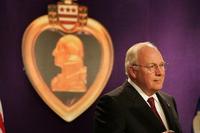 | Vice President Dick Cheney speaks to the attendees at the 73rd National Convention of the Military Order of the Purple Heart in Springfield, Missourri, Thursday, August 18, 2005. |
Well, thank you very much. It's great to be back in Ozark Mountain country, and to join the 73rd National Convention of a great American organization, the Military Order of the Purple Heart.
Let me thank your national commander, Bob Lichtenberger of Texas, for the introduction, and for his leadership of the M.O.P.H. I also want to thank Bill Bacon, Carol Lance, the President of the Ladies auxiliary, and chapter leaders from around the country for being here today. I'm pleased that we are joined by members of our military stationed at Fort Leonard Wood and by Medal of Honor recipient Nick Bacon, as well.
It's good to see all of you, and I'm honored to bring warm greetings to you from our Commander-in-Chief, the President of the United States, George W. Bush. (Applause.)
Members of this order come from all regions of the country, and from every walk of life, but you share a distinction that all citizens recognize and respect: The medal you wear is the oldest decoration in the American armed forces, created by General George Washington and originally named the Badge of Military Merit. The Purple Heart is the only award that comes not through any recommendation or approval, but as a matter of right to those wounded in combat. It is also known as "the medal that no one ever tries to earn."
But all of you did earn it. And in so doing you took your place among the men and women who suffered most to protect this nation. You put your life on the line for the United States of America. You bled in freedom's cause, and you have the nation's gratitude.
As combat veterans you know the toughest realities of the battlefield, and you have seen fellow Americans give the last full measure of devotion in defense of our country. My old friend Joe Foss, who earned both the Purple Heart and the Medal of Honor in World War II, used to say, "Those of us who lived have to represent those who didn't make it."
I know that all of you feel the same way. And I know your fallen comrades would be proud of you -- not just for your service in uniform, but for your enduring service as patriotic citizens. You look out for each other, and move swiftly to the side of veterans in need. You build and care for war memorials across our country. You stand behind our men and women in uniform, and welcome home returning soldiers. For those who have been wounded, you give the moral support and encouragement that only you can give. And like every generation of veterans, you are a daily example of the values of personal responsibility, physical and moral strength, and unselfish courage.
The United States of America and its military are today as we began: a democracy, defended by volunteers. And we owe so much to every generation of American soldiers. More than two centuries ago, citizens stepped forward to wage a war of independence, fighting the army of an empire and facing the longest of odds. The struggle was to last eight years; and of those, the pivotal one was 1776, as David McCullough writes in his new book. "This," McCullough recently said, was "the most important year of the most important conflict in our history. And we damned near lost it."
The victories in 1776 were few, and the condition of the Army was dreadful. By Christmastime our men were cold, hungry, and exhausted, and many of them didn't even have boots to wear. The volunteers were near the end of their rope, and thousands of enlistments were set to expire on New Year's Day. These men were bound and determined to leave, so the Continental Army was about to evaporate. General Washington himself said, "I think the game is pretty near up."
General Washington decided to make one final appeal to his discouraged soldiers. "My brave fellows," he said, "you have done all I asked you to do and more than could be reasonably expected; you have worn yourself out with fatigues and hardships; but we know not how to spare you. The present is emphatically the crisis, which is to decide our destiny." One by one the men stepped forward. They could not let their country or their fellow soldiers down. Inspired by leadership and renewed in their strength, they stayed in the fight -- and America won the war.
From that day to this, our country has always counted on the bravest among us to answer the call of duty -- fighting our wars, defending our interests, standing by our friends, and keeping patient vigil against the enemies of freedom.
All who wear the uniform today, and every person who has served honorably in the military, can be proud of the cause that America represents in the world. As a nation born in revolution we believe, and we know, that tyranny must be opposed and ended, that cruelty and violence must be answered, not with indifference but with justice, that innocent captives deserve to be liberated, and that every person on this earth has a yearning to be free.
At this moment, all branches of the armed services are fighting the new war against one of our most ruthless enemies. Those who attacked America have proven their eagerness to kill innocent men, women, and children by the thousands. They are looking to obtain weapons of mass destruction by any means they can find. They would not hesitate to use such weapons at the first opportunity. And their prime target is our country.
Four years ago, on a Tuesday morning in September, a threat that had been gathering for years, in secret and far away, arrived in America and brought grief to the entire nation. And after 9/11, the United States made a decision: Having been attacked by stealth inside our own country, we will not sit back and wait to be hit again. We will do everything we can to prevent attacks by taking the fight to the enemy. (Applause.)
In these 47 months, we have been unrelenting in the effort to defend the freedom and security of the American people. In a multinational campaign, we continue to make progress on many fronts -- financial, legal, military, as well as others.
Defeating the terrorists and their ambitions requires that we deny them sanctuary and support, and the United States is leading a global coalition in that effort. We are dealing with a network that has had cells in countries all over the world. Yet bit by bit, through diplomacy and by force, with our allies and partners, we are acting to shrink the area in which the terrorists can safely operate.
Many countries have joined us in tracking the enemy, disrupting plots against America and our friends, destroying the training camps of terror, and closing off their access to funding. We have also enforced a doctrine that is understood by all: Governments that support or harbor terrorists are complicit in the murder of the innocent, and equally guilty of terrorist crimes.
We gave ultimatums to the brutal regimes led by the Taliban and Saddam Hussein. And when those regimes defied the demands of the civilized world, we removed them from power and liberated 50 million people.
Our actions have also persuaded the regime in Libya to voluntarily abandon its weapons of mass destruction programs. In addition, we uncovered a sophisticated, large-scale network selling nuclear technologies on the black market, and we've shut that network down. The United States has acted decisively, and we have sent a clear message: We will not stand by and allow terrorists to find safe haven, or to gain access to weapons of mass destruction.
The war on terror has a home front, and we have taken extraordinary measures to protect the American people and our homeland. Yet for all the improvement in homeland security, we are mindful of a continuing danger to this country. Every morning President Bush and I receive an intelligence briefing that includes a review of the threats we face. The enemy that appeared on 9/11 is wounded, off-balance, and on the run, yet still very active, still seeking recruits, still trying to hit us.
Since 9/11 terrorists have continued to wage deadly attacks -- never as a conventional military force, but as a hidden element determined to slip in unnoticed, to shed innocent blood, and to shake the will of the civilized world.
In Bali, bombs in a commercial district killed more than 200. In Riyadh, simultaneous suicide car bombings of civilian targets left 34 dead and many more injured. Since the mid-1990s in Jerusalem and in other cities in Israel, multiple suicide bombings have killed and maimed hundreds. In Casablanca, five separate attacks took the lives of over 40 civilians and hurt more than 100. In Jakarta, a blast in front of a hotel killed 13 and injured at least 150. In Istanbul, terrorists set off four trucks filled with explosives, killing approximately 60 people and injuring some 700 more. In Madrid, 10 bombs on commuter trains killed nearly 200 and wounded more than 1,800. Six weeks ago today in England, terrorists set off four explosions at rush hour, all of them targeted at commuters taking the train or the bus. The body count in central London was 56, including the bombers, together with another 700 injured. A few weeks later in Sharm el-Sheikh, Egypt, suicide bombers in a commercial district killed as many as 90 people, and injured more than 100 others.
In Iraq, terrorists have slaughtered innocent people in marketplaces, in restaurants, in private homes, at police recruiting stations, in a hospital, and outside a mosque. They have beheaded bound men in front of cameras, and killed UN employees and international aid workers. Earlier this summer, as American soldiers were giving candy to children, a suicide bomber drove into the crowd, killing 18 boys and girls and an American soldier.
That's the nature of the enemy we face in the war on terror, and will face for the duration of this struggle. And our duty is clear. Killers who target innocent, unsuspecting men, women, and children on a peaceful street, or set off explosions during a morning rush hour, or fly passenger jets into buildings are not the kind of people you can bring to the bargaining table and sit down for a reasonable exchange of ideas. This is not a war we can win strictly on the defensive. Our only option against these enemies is to find them, to fight them, and to destroy them. (Applause.)
Iraq is a critical front in the war on terror, and victory there is critical to the future security of the U.S. and other free nations. We know this, and the terrorists know it as well. Osama bin Laden has said the "Third World War is raging" in Iraq. "The whole world," he said, "is watching this war." He says it will end in "victory and glory -- or misery and humiliation."
Our mission in Iraq is clear. On the military side, we are hunting down the terrorists, and training Iraqi security forces so they can take over responsibility for defending their own country. And over time, as Iraqi forces stand up, American forces will stand down. On the political side, we're helping Iraqis build a vital, peaceful, self-governing nation that can be an ally in the war on terror.
There, as in Afghanistan and across the broader Middle East, we are encouraging free markets, democracy, and tolerance -- because these are the ideas and the aspirations that overcome violence, and turn the creative gifts of men and women to the pursuits of peace. And this is the very kind of progress that will promote the long-term security of our country, and make the world safer for future generations.
After decades of tyranny and neglect in the broader Middle East, progress toward freedom will not come easily. It will be resisted by men whose only hope for gaining power is through the spread of terror and violence. Yet the direction of events is clear. Afghanistan has held the first free elections in the nation's 5,000-year history. In Iraq, voters turned out in incredible numbers and elected leaders now preparing the way for a new constitution and a new government. The Palestinian people have chosen a new President and have new hopes for democracy and peace. The citizens of Ukraine have stood strongly for their democratic rights, and chosen a new leader for their country. In Lebanon, citizens have poured into the streets to demand freedom to determine a peaceful future for their own country as a fully independent member of the world community.
We are once again seeing the power of freedom to change our world, and all who strive for freedom can know that the United States of America is on their side. (Applause.)
When our war on terror began nearly four years ago, President Bush told Congress and the country that we "should not expect one battle, but rather a lengthy campaign, unlike any other we have seen." It may, he said, "include dramatic strikes, visible on TV, and covert operations, secret even in success." All of this has come to pass. And the greatest challenges are borne by the men and women who take the oath to serve.
No matter how many advances are made in military technology, our greatest asset has always been, and will always be, the ones who man the aircraft and the ships, and carry the rifles. The United States Armed Forces reflect extraordinary credit on this nation. As a former Secretary of Defense, I am proud to say the cause of freedom is in very good hands. (Applause.)
Right now in Iraq and Afghanistan, there is still tough fighting, in conditions ranging from urban to desert to the high mountains. At every stage of this conflict, members of our military have had to carry out some of the most perilous, technical, time-sensitive missions ever attempted. When you have enemies that are hidden, diffuse, secret in their movements, and asymmetrical in their tactics, you have to go into the shadows and get them -- one at a time, if necessary.
In the Cold War, national security required massing large forces at borders, year in and year out for a stand-off. The present security environment often requires small teams to go searching in caves and hiking over mountain peaks, or to conduct hazardous patrols in urban settings. They are hanging tough, going directly into the face of danger, rooting out deadly enemies, and dealing with them. By their training, their tactical skill, and above all their character, men and women in our uniform are making us proud each and every day.
In this difficult and necessary cause we have lost some of our finest Americans. That loss is irreplaceable, and no one can take away the sorrow that has come to the families of the fallen. In military hospitals we also have many soldiers recovering from serious injuries in battle. Some are facing a very hard road ahead, and they can be assured of the finest care we can give them. These Americans can wear the Purple Heart with pride, knowing with absolute certainty that they have contributed to the future safety of this nation, and to the peace of our world.
Every man and woman who fights and sacrifices in this war is serving a just and noble cause. This nation will always be grateful to them, and we will honor their sacrifice by completing our mission. (Applause.)
Like the President, over the last several years I have had the honor of presenting the Purple Heart to my fellow Americans. As in all wars, a good number of battle decorations have been awarded posthumously. One of those we've honored is Army Sergeant Paul Ray Smith -- and the story of this young man is one of the most impressive in our history. In April of 2003, during the campaign to liberate Iraq, a task force led by Sergeant Smith came under surprise attack in Baghdad by a company-sized force of Saddam Hussein's Republican Guard. Under constant enemy fire, with his unit pinned down and a number of men wounded, Sergeant Smith climbed onto a damaged armored vehicle and manned a 50-caliber machine gun, all the while in a completely exposed position. He remained in that spot, subjecting himself to greater danger than the military or the country could ever ask, firing incessantly at the enemy until he took a fatal round to the head. After the firefight, the Army concluded that this one soldier had personally killed as many as 50 Republican Guard, and saved the lives of more than 100 Americans. On the second anniversary of that fight, President Bush presented the Medal of Honor to the wife and children of Sergeant Smith. One of Paul Ray Smith's men said that he "was hard in training because he knew we had to be hard in battle." For as long as citizens step forward to wear the uniform of the United States, our nation will remember this man of courage. (Applause.)
I don't need to explain to the Military Order of the Purple Heart that wartime conditions are a severe test of national resolve and military skill. We have no illusions about the difficulty of engaging enemies that recognize neither the laws of warfare nor standards of morality. These enemies hate us, they hate our country, and they hate the liberties for which we stand. They have contempt for our values. They doubt our strength. And they believe that America will lose our nerve and let down our guard. They are sorely mistaken. (Applause.)
We will not relent in this effort, because we have the clearest possible understanding of what is at stake. None of us wants to turn over the future of mankind to tiny groups of fanatics committing indiscriminate murder, enslaving whole populations, oppressing women, imposing an ideology of hatred on an entire region, and arming to create death and destruction on an unbelievable scale. And so we must direct every resource that is necessary to defending the peace and freedom of our world, and the safety of the people we serve. That is the commitment the United States -- that we've made to ourselves and to other nations. And with good allies at our side, we will see this cause through to victory.
It was George Washington who said, "Perseverance and spirit have done wonders in all ages." And ever since those first desperate days for the republic, the perseverance and spirit of our military have always come through for the people of the United States. I am in the presence today of fellow citizens who have shown those qualities under enemy fire. In the words of one of your department commanders, "It can be a very high price to join our organization."
On behalf of the President and the American people, I want to thank each and every one of you for paying that price, for placing duty and honor above self-interest, and for valuing service to this nation above your own life. You did your part to keep our country free, and you inspired a new generation of freedom's defenders.
Thank you very much.
END 1:07 P.M. CDT
more at Vice President or Dick Cheney and Purple Heart or Military Order of the Purple Heart
0
comments
||
||
Shuttle Discovery Heads Home on Boeing 747
 | NASA's modified Boeing 747 Shuttle Carrier Aircraft with the Space Shuttle Discovery on top lifts off from Edwards Air Force Base to begin its ferry flight back to the Kennedy Space Center in Florida. NASA photo by Carla Thomas. View high-res version |
Flying ahead of the Shuttle Carrier Aircraft by about 100 miles is a "pathfinder" KC-135 aircraft, which monitors the weather in the flight path for the 747's crew.
Source: NASA more at Space Shuttle Discovery or Space Shuttle and STS-114 or Discovery
0
comments
||
||
Human Rights in North Korea
Statement on Appointment of Jay Lefkowitz as Special Envoy on Human Rights in North Korea
President George W. Bush today announced the appointment of Jay Lefkowitz as Special Envoy on Human Rights in North Korea. Mr. Lefkowitz recently served as Deputy Assistant to the President for Domestic Policy at the White House. He has previously served as a member of the U.S. delegation to the United Nations Human Rights Commission in Geneva, Switzerland and the U.S. delegation to the International Conference on Anti-Semitism sponsored by the Organization for Security and Cooperation in Europe. Mr. Lefkowitz received his bachelor's degree from Columbia College and his JD from Columbia University Law School.
In accordance with the North Korean Human Rights Act of 2004, Mr. Lefkowitz will increase awareness and promote efforts to improve the human rights of the long-suffering North Korean people. Mr. Lefkowitz is a devoted public servant, and his appointment will greatly enhance our efforts to encourage North Korea to accept and abide by internationally accepted human rights standards and norms.
# # # For Immediate Release, Office of the Press Secretary, August 19, 2005
more at Human Rights or North Korea and Jay Lefkowitz and President Bush
0
comments
||
||
Rocket Attacks Miss U.S. Navy Ships
Rocket Attacks Miss U.S. Navy Ships, Story Number: NNS050819-07, Release Date: 8/19/2005 12:01:00 PM, From Samantha L. Quigley, American Forces Press Service
WASHINGTON (NNS) -- No U.S. Sailors or Marines were injured in an apparent rocket attack Aug. 19 that missed two U.S. Navy ships in the Red Sea port of Aqaba, Jordan, officials reported.
 | "At approximately 8:44 a.m. local time, a suspected mortar rocket flew over the USS Ashland's (LSD 48) bow and impacted in a warehouse on the pier in the vicinity of the Ashland and the USS Kearsarge (LHD 3)," U.S. 5th Fleet officials said in a statement. |
According to news reports, a Jordanian soldier was killed and another severely wounded when the rocket hit the warehouse. A second rocket hit near a Jordanian hospital and a third partially exploded, damaging a road and a car. A third rocket reportedly landed in the nearby Israeli city of Eilat, with no casualties and only minor damage.
The ships were in Aqaba supporting the 26th Marine Expeditionary Unit (MEU) training with the Jordanians, fleet officials said. The two ships, which appeared to be undamaged by shrapnel from the building, have left the port. Ashland is an amphibious landing ship; Kearsarge is an amphibious assault ship that also serves as command ship of an amphibious ready group.
The U.S. military said the attack is currently under investigation. News sources cite a Jordanian government release that states three Katyusha rockets were fired from a warehouse in Aqaba close to the port.
Information available on the Web said the Katyusha was originally a World War II-era Soviet rocket. However, references now to the weapon mean not just one type of rocket, but a whole range of different artillery rockets, whether from old Soviet or other-nation stock. The Katyusha reportedly has been used in a number of insurgencies, including those in Iraq.
more at USS Kearsarge and USS Ashland or Katyusha rockets and 26th Marine Expeditionary Unit or Red Sea and Jordan
Related Sites: U.S. Navy 5th Fleet or USS Ashland and USS Kearsarge
0
comments
||
||
Thursday, August 18, 2005
Republic of Korea Foreign Minister Ban
Question Taken at the August 17, 2005 Press Briefing
Question: Has Under Secretary of State for Arms Control and International Security Robert Joseph met recently with Republic of Korea Foreign Minister Ban? If so, what was the subject and context of the meeting?
Answer: During his August 17 visit to Seoul, Under Secretary of State for Arms Control and International Security Robert Joseph met with Foreign Minister Ban Ki-moon, National Security Adviser Kwon Chin-ho, National Security Council Deputy Secretary General Lee Jong-seok, Deputy Foreign Minister Chun Young-woo, and Vice Foreign Minister Yu Myung-whan. Discussions focused on coordinating U.S. and Korean counter-proliferation efforts.
2005/794 Released on August 17, 2005
Taken Question Office of the Spokesman Washington, DC August 17, 2005 Question Taken at the August 17, 2005 Press Briefing
more at Korea or Ban Ki-moon or Department of State and State Department or Arms Control and International Security
0
comments
||
||
Bombings in Bangladesh
Bombings in Bangladesh
The United States condemns the terrorist bombings that occurred throughout Bangladesh the morning of August 17. We extend our condolences to the families and friends of those who lost their lives and wish a rapid and full recovery to all those who were injured.
We stand with the Government and people of Bangladesh as they hold to account those responsible for this heinous crime.
2005/792, Released on August 17, 2005 Press Statement, Sean McCormack, Spokesman, Washington, DC, August 17, 2005
more at Bangladesh or Bangladesh bombings or Department of State and State Department
0
comments
||
||
Algeria Moroccan Prisoners
Statement on President Requesting Senator Lugar to Travel to Algeria to Facilitate Release of Moroccan Prisoners
At the request of the President, Senator Richard Lugar traveled to Algeria today to facilitate the release of all remaining 404 Moroccan prisoners of war held by the Polisario. Their release is the product of quiet and intense diplomatic efforts among the United States, Morocco, and Algeria. This humanitarian success was achieved in cooperation with the International Committee of the Red Cross and the United States Department of Defense, which procured the aircraft that are returning the prisoners to Moroccan soil.
Senator Lugar met this morning with President Bouteflika for a wide-ranging discussion on bilateral relations, the global war on terror, and other regional issues. Senator Lugar is now en route to Morocco to ensure the safe homecoming of the former prisoners. There he will meet with Moroccan officials to reaffirm strong U.S.-Moroccan ties, discuss continued U.S.-Moroccan cooperation on counterterrorism and promoting democracy in the region, and congratulate Morocco on the success of its diplomatic efforts to win the release of the prisoners.
Senator Lugar will also travel to Libya for official meetings as a part of the President's initiative to move toward more normal relations reflecting that country's renunciation of terrorism and abandonment of its weapons of mass destruction and longer range missiles.
The President is grateful to Senator Lugar and his staff for undertaking this mission and for delivering important messages to our friends in the region.
# # # For Immediate Release, Office of the Press Secretary, August 18, 2005
more at President Bush and Moroccan Prisoners or Algeria and Richard Lugar or Morocco and Libya
0
comments
||
||


