


President George W. Bush today announced his intention to nominate two individuals to serve in his Administration:
The President intends to nominate Ronald L. Schlicher, of Tennessee, to be Ambassador Extraordinary and Plenipotentiary of the United States of America to the Republic of Cyprus. Mr. Schlicher is a career member of the Senior Foreign Service and most recently served as Deputy Assistant Secretary of State for Near Eastern Affairs and Coordinator for Iraq. Prior to that, he served as Director of the Iraq Task Force and as a senior political advisor for the Coalition Provisional Authority in Baghdad, Iraq. Earlier in his career, Mr. Schlicher served as Chief of Mission and Consul General in Jerusalem. He has also served as Director of the Office of Egyptian and North African Affairs and Deputy Chief of Mission in Beirut. Mr. Schlicher received his bachelor's degree and JD from the University of Tennessee.
The President intends to nominate Alejandro Daniel Wolff, of California, to be Deputy Representative of the United States to the United Nations, with the Rank and Status of Ambassador Extraordinary and Plenipotentiary, United States Deputy Representative in the Security Council of the United Nations, and Representative of the United States to the Sessions of the General Assembly of the United Nations during his tenure of service as Deputy Representative of the United States of America to the United Nations. Mr. Wolff is a career member of the Senior Foreign Service. He has served as Deputy Chief of Mission in Paris. Prior to that, he served as Executive Assistant to the Secretary at the Department of State. Earlier in his career, Mr. Wolff served as Deputy Executive Secretary of the Department of State and Deputy Chief of Mission in Nicosia, Cyprus. Mr. Wolff received his bachelor's degree from the University of California, Los Angeles.
# # # For Immediate Release, Office of the Press Secretary, October 14, 2005, Personnel Announcement
more at President Bush and Ronald L. Schlicher or Cyprus and Alejandro Daniel Wolff or United Nations
Tuesday, October 25, 2005
President to nominate Ronald L. Schlicher, Alejandro Daniel Wolff
0
comments
||
||

Monday, October 24, 2005
EXPLOSIONS AT BAGHDAD HOTELS
EXPLOSIONS AT BAGHDAD HOTELS, SOLDIERS AND IRAQI FORCES SECURE AREA
BAGHDAD, Iraq - A combination of rockets and car bombs exploded near the outer walls of the Palestine and Sheraton hotels in downtown Baghdad, on the evening of Oct. 24.
Initial reports of civilian casualties have yet to be determined. No Coalition Forces were injured in the attack. Iraqi security forces and Coalition Forces are securing the area and bringing order to the site.
UPDATE: CAR BOMB ATTACKS FAIL; SOLDIER FIRES ON CEMENT TRUCK
BAGHDAD, Iraq -- Three car bombs detonated near the Palestine and Sheraton hotels in central Baghdad early Oct. 24.
The first car bomb caused a breach in an outer barrier wall of the Palestine and Sheraton hotels at Firdos Square traffic circle.
About five minutes later a second car bomb approached the square and tried to maneuver through the breach but was engaged by civilian security forces and detonated near the 14th Ramadan Mosque.
Thirty seconds later, a Task Force Baghdad Soldier engaged a cement truck that was moving through the breached wall. The truck exploded near a coalition vehicle causing moderate damage.
At least six civilians were killed and 15 others were wounded in the attacks. No Coalition Forces were injured.
Coalition Forces continue to assist Iraqi security forces restoring order in and around the two hotels.
FOR ADDITIONAL INFORMATION CONCERNING THIS RELEASE, CONTACT TASK FORCE BAGHDAD PUBLIC AFFAIRS AT DAVID.ABRAMS@ID3.ARMY.MIL. -30-
HEADQUARTERS UNITED STATES CENTRAL COMMAND, 7115 South Boundary Boulevard, MacDill AFB, Fla. 33621-5101, Phone: (813) 827-5894; FAX: (813) 827-2211; DSN 651-5894, October 24, 2005, Release Numbers: 05-10-83 and 05-10-85, FOR IMMEDIATE RELEASE
more at CENTCOM and Iraq or Terrorism and Palestine Hotel or 14th Ramadan Mosque and Task Force Baghdad or Coalition Forces
0
comments
||
||
Appointment Ben Bernanke Federal Reserve (VIDEO)
Remarks by the President at Announcement of the Appointment of Dr. Ben Bernanke for Chairman of the Federal Reserve, FULL STREAMING VIDEO The Oval Office, 1:00 P.M. EDT Biography of Dr. Ben S. Bernanke, Tuesday, June 21, 2005, President Congratulates CEA Chairman Ben Bernanke
THE PRESIDENT: Good afternoon. One of a President's most important appointments is Chairman of the Federal Reserve. In our economy, the Fed is the independent body responsible for setting monetary policy, for overseeing the integrity of our banking system, for containing the risk that can arise in financial markets, and for ensuring a functioning payment system. Across the world, the Fed is the symbol of the integrity and the reliability of our financial system, and the decisions of the Fed affects the lives and livelihoods of all Americans.
To lead this institution, a Chairman must be a person of impeccable credentials, sound policy judgment, and character. Today I'm honored to announce that I'm nominating Ben Bernanke to be the next Chairman of the Federal Reserve.
Over the course of a career marked by great accomplishment, Ben has done path-breaking work in the field of monetary policy, taught advanced economics at some of our top universities, and served with distinction on the Fed's Board of Governors. He's earned a reputation for intellectual rigor and integrity. He commands deep respect in the global financial community. And he'll be an outstanding Chairman of the Federal Reserve.
Ben will replace a legend, Alan Greenspan, who will retire when his current term runs out at the end of January. For nearly two decades, Chairman Greenspan has shepherded our economy through its highs and its lows. Under a steady chairmanship, the United States economy has come through a stock market crash, financial crises from Mexico to Asia, two recessions, corporate scandals, and shocks ranging from devastating national disasters to a terrorist attack in the heart of America's financial center.
Through all these challenges, Chairman Greenspan's prudent judgment and wise policies have kept inflation low. He's played a major role in America's strong economic growth. He has dominated his age like no central banker in history. He has contributed to a better life for all Americans. And I thank him for his service.
Ben Bernanke is the right man to build on the record Alan Greenspan has established. Ben graduated from Harvard with top honors, earned a doctorate in economics from Massachusetts Institute of Technology. He's built a record of excellence as both an academic and policymaker. He is the author of several scholarly books and is one of the most cited economists in the world. As Fed governor, Ben advocated greater transparency in communication with the public and markets. His speeches were widely admired for their keen insight and clear, simple language.
Ben's career has also been distinguished by leadership. He was chairman of Princeton's Economics Department, founding director of Princeton's Bendheim Center for Finance, and a founding editor of the International Journal of Central Banking. Since June he has served as Chairman of the Council of Economic Advisors.
Ben is also a kind and decent man who is held in high regard by all those who have worked with him. He has the support of a strong and loving family. I'm pleased to see that Ben's wife, Anna, and his two children, Alyssa and Joel, are with us today.
I want to thank Ben for his willingness to serve in a position so important for world markets and so vital to the well being of the American people. I urge the Senate to act promptly to confirm Ben Bernanke as the 14th Chairman of the Federal Reserve.
Ben, thanks for serving.
DR. BERNANKE: Thank you. I'd like to express my deep appreciation to President Bush for the trust he has shown in me in asking me to lead the Federal Reserve System. If I am confirmed by the Senate, I will do everything in my power, in collaboration with my Fed colleagues, to help to ensure the continued prosperity and stability of the American economy.
In light of the announcement the President has just made, it's especially gratifying to have Chairman Greenspan here. In more than 18 years at the helm of the Federal Reserve, Alan Greenspan has set the standard for excellence in economic policymaking. I am personally grateful to Chairman Greenspan for his collegiality and support during my time as a member of the Fed's Board of Governors.
Our understanding of the best practice in monetary policy evolved during Alan Greenspan's tenure at the Fed, and it will continue to evolve in the future. However, if I am confirmed to this position, my first priority will be to maintain continuity with the policies and policy strategies established during the Greenspan years.
Finally, I would like to thank my wife, Anna, my daughter, Alyssa, and my son, Joel, for their love and support. I could not contemplate undertaking these new challenges without their help.
Thank you very much.
THE PRESIDENT: Congratulations, sir. Thank you, Ben.
DR. BERNANKE: Thank you.
THE PRESIDENT: Mr. Chairman, thank you for being here. I appreciate you.
CHAIRMAN GREENSPAN: Thank you.
THE PRESIDENT: Thank you all.
END 1:08 P.M. EDT, For Immediate Release, Office of the Press Secretary, October 24, 2005
more at President Bush and Dr. Ben S. Bernanke or Ben S. Bernanke and Ben Bernanke or Bernanke and Federal Reserve or Chairman of the Federal Reserve
0
comments
||
||
Biography of Dr. Ben S. Bernanke
Biography of Dr. Ben S. Bernanke
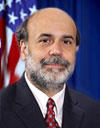 | Ben S. Bernanke was sworn-in on June 21, 2005 as Chairman of the President's Council of Economic Advisers. Appointment Ben Bernanke Federal Reserve (VIDEO) |
Dr. Bernanke was born on December 13, 1953, in Augusta, Georgia. He received a B.A. in economics in 1975 from Harvard University (summa cum laude) and a Ph.D. in economics in 1979 from the Massachusetts Institute of Technology.
Before becoming a member of the Board, Dr. Bernanke was the Howard Harrison and Gabrielle Snyder Beck Professor of Economics and Public Affairs and Chair of the Economics Department at Princeton University (1996-2002). Dr. Bernanke had served as a Professor of Economics and Public Affairs at Princeton since 1985.
Dr. Bernanke has published many articles on a wide variety of economic issues, including monetary policy and macroeconomics, and he is the author of several scholarly books and two textbooks. He has held a Guggenheim Fellowship and a Sloan Fellowship, and he is a Fellow of the Econometric Society and of the American Academy of Arts and Sciences. Dr. Bernanke served as the Director of the Monetary Economics Program of the National Bureau of Economic Research (NBER) and as a member of the NBER's Business Cycle Dating Committee. Dr. Bernanke's work with civic and professional groups includes having served two terms as a member of the Montgomery Township (N.J.) Board of Education.
Dr. Bernanke and his wife, Anna, have two children.
more at President Bush and Dr. Ben S. Bernanke or Ben S. Bernanke and Ben Bernanke or Bernanke and Federal Reserve ir Chairman of the Federal Reserve
0
comments
||
||
Sunday, October 23, 2005
single-molecule car, 'Nanocar'
Rice scientists build world's first single-molecule car, 'Nanocar' with buckyball wheels paves way for other molecular machines
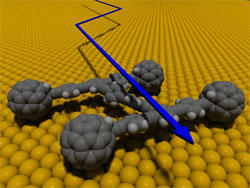 | HOUSTON, Oct. 20, 2005 – Rice University scientists have constructed the world's smallest car -- a single molecule "nanocar" that contains a chassis, axles and four buckyball wheels. |
 | "The synthesis and testing of nanocars and other molecular machines is providing critical insight in our investigations of bottom-up molecular manufacturing," said one of the two lead researchers, James M. Tour, the Chao Professor of Chemistry, professor of mechanical engineering and materials science and professor of computer science. |
The nanocar consists of a chassis and axles made of well-defined organic groups with pivoting suspension and freely rotating axles. The wheels are buckyballs, spheres of pure carbon containing 60 atoms apiece. The entire car measures just 3-4 nanometers across, making it slightly wider than a strand of DNA. A human hair, by comparison, is about 80,000 nanometers in diameter.
Other research groups have created nanoscale objects that are shaped like automobiles, but study co-author Kevin F. Kelly, assistant professor of electrical and computer engineering, said Rice's vehicle is the first that actually functions like a car, rolling on four wheels in a direction perpendicular to its axles.
Kelly and his group, experts in scanning tunneling microscopy (STM), provided the measurements and experimental evidence that verified the rolling movement.
"It's fairly easy to build nanoscale objects that slide around on a surface," Kelly said. "Proving that we were rolling – not slipping and sliding – was one of the most difficult parts of this project."
To do that, Kelly and graduate student Andrew Osgood measured the movement of the nanocars across a gold surface. At room temperature, strong electrical bonds hold the buckyball wheels tightly against the gold, but heating to about 200 degrees Celsius frees them to roll. To prove that the cars were rolling rather than sliding, Kelly and Osgood took STM images every minute and watched the cars progress. Because nanocars' axles are slightly longer than the wheelbase – the distance between axles – they could determine the way the cars were oriented and whether they moved perpendicular to the axles.
In addition, Kelly's team found a way to grab the cars with an STM probe tip and pull them. Tests showed it was easier to drag the cars in the direction of wheel rotation than it was to pull them sideways.
Synthesis of the nanocars also produced major challenges. Tour's research group spent almost eight years perfecting the techniques used to make them. Much of the delay involved finding a way to attach the buckyball wheels without destroying the rest of the car. Palladium was used as a catalyst in the formation of the axle and chassis, and buckyballs had a tendency to shut down the palladium reactions, so finding the right method to attach the wheels involved a good bit of trial and error.
The Rice team has already followed up the nanocar work by designing a light-driven nanocar and a nanotruck that's capable of carrying a payload. ###
Other members of the research team include chemistry graduate student Yasuhiro Shirai and post doctoral associate Yuming Zhao.
The research was funded by the Welch Foundation, Zyvex Corporation and the National Science Foundation.
Contact: Jade Boyd jadeboyd@rice.edu 713-348-6778 Rice University
more at Chemistry and mechanical engineering or computer science and computer engineering or Nanotechnology and Nanotech or Science
0
comments
||
||
WILMA Latest REAL TIME Loops and Images 10/23/05
Satellite Services Division - Tropical Atlantic Satellite Imagery
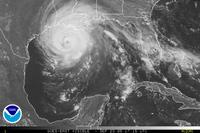 | 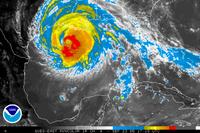 | 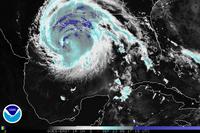 | 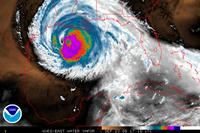 | 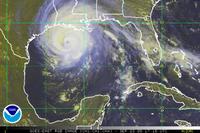 |
000, WTNT34 KNHC 231758, TCPAT4, BULLETIN, HURRICANE WILMA INTERMEDIATE ADVISORY NUMBER 33A, NWS TPC/NATIONAL HURRICANE CENTER MIAMI FL, 1 PM CDT SUN OCT 23 2005
...CATEGORY TWO WILMA GRADUALLY ACCELERATING NORTHEASTWARD......COULD STRENGTHEN TODAY OR TONIGHT OVER WARM GULF WATERS...
A HURRICANE WARNING REMAINS IN EFFECT FOR ALL OF THE FLORIDA KEYS...INCLUDING THE DRY TORTUGAS AND FLORIDA BAY...ALONG THE FLORIDA WEST COAST FROM LONGBOAT KEY SOUTHWARD...AND ALONG THE FLORIDA EAST COAST FROM TITUSVILLE SOUTHWARD...INCLUDING LAKE OKEECHOBEE.
A TROPICAL STORM WARNING REMAINS IN EFFECT ALONG THE FLORIDA WEST COAST NORTH OF LONGBOAT KEY TO STEINHATCHEE RIVER...AND ALONG THE FLORIDA EAST COAST NORTH OF TITUSVILLE TO FLAGLER BEACH.
A TROPICAL STORM WATCH REMAINS IN EFFECT ALONG THE EAST COAST OF FLORIDA FROM NORTH OF FLAGLER BEACH TO FERNANDINA BEACH.
A TROPICAL STORM WARNING IS IN EFFECT FOR THE NORTHEASTERN COAST OF THE YUCATAN PENINSULA FROM SAN FELIPE TO TULUM...INCLUDING COZUMEL AND THE NEARBY ISLANDS.
A HURRICANE WARNING REMAINS IN EFFECT FOR THE CUBAN PROVINCES OF CIUDAD DE LA HABANA...LA HABANA...AND PINAR DEL RIO. A TROPICAL STORM WARNING IS IN EFFECT FOR THE ISLE OF YOUTH. A HURRICANE WATCH REMAINS IN EFFECT FOR THE PROVINCE OF MATANZAS.
A HURRICANE WARNING REMAINS IN EFFECT FOR THE NORTHWESTERN BAHAMAS...INCLUDING THE ABACOS...ANDROS ISLAND...BERRY ISLANDS... BIMINI...ELEUTHERA...GRAND BAHAMA ISLAND...AND NEW PROVIDENCE.
FOR STORM INFORMATION SPECIFIC TO YOUR AREA...INCLUDING POSSIBLE INLAND WATCHES AND WARNINGS...PLEASE MONITOR PRODUCTS ISSUED BY YOUR LOCAL WEATHER OFFICE.
AT 1 PM CDT...1800Z...THE CENTER OF HURRICANE WILMA WAS LOCATED NEAR LATITUDE 23.1 NORTH... LONGITUDE 85.3 WEST OR ABOUT 240 MILES... 390 KM... WEST-SOUTHWEST OF KEY WEST FLORIDA... OR ABOUT 300 MILES... 485 KM... SOUTHWEST OF THE SOUTHWESTERN COAST OF THE FLORIDA PENINSULA.
WILMA IS MOVING TOWARD THE NORTHEAST NEAR 12 MPH... 19 KM/HR. A CONTINUED NORTHEASTWARD MOTION AND A GRADUAL INCREASE IN FORWARD SPEED ARE EXPECTED TODAY AND MONDAY.
MAXIMUM SUSTAINED WINDS ARE NEAR 100 MPH...160 KM/HR...WITH HIGHER GUSTS. WILMA IS A CATEGORY TWO HURRICANE ON THE SAFFIR-SIMPSON SCALE. SOME STRENGTHENING IS POSSIBLE TODAY OR TONIGHT.
HURRICANE FORCE WINDS EXTEND OUTWARD UP TO 70 MILES...110 KM... FROM THE CENTER...AND TROPICAL STORM FORCE WINDS EXTEND OUTWARD UP TO 200 MILES...
0
comments
||
||
Mehlis Report (Death of Rafik Hariri)
President Discusses Mehlis Report from United Nations, Ronald Reagan Presidential Library, Simi Valley, California 11:50 A.M. PDT
THE PRESIDENT: Today, the United Nations issued what is called the Mehlis Report. It's a report into the death of Prime Minister Hariri of Lebanon, and the report is deeply disturbing. The report suggests that it is -- strongly suggests that the politically motivated assassination could not have taken place without Syrian involvement.
I called Secretary Rice this morning and instructed her to call upon the United Nations to convene a session as quickly as possible to deal with this very serious matter. We have made it clear that the position of the United States is that there be no foreign involvement in Lebanon. The United Nations made that clear through Resolution 1559. And today, a serious report came out that requires the world to look at it very carefully and respond accordingly.
Thank you all, very much., END 11:52 A.M. PDT, For Immediate Release, Office of the Press Secretary, October 21, 2005
REPORT OF THE INTERNATIONAL INDEPENDENT INVESTIGATION COMMISSION ESTABLISHED PURSUANT TO SECURITY COUNCIL RESOLUTION 1595 (2005) FILE IN PDF FORMAT
VI. CONCLUSIONS
202. It is the Commission’s view that the assassination on 14 February 2005 was carried out by a group with an extensive organization and considerable resources and capabilities. The crime had been prepared over the course of several months. For this purpose, the timing and location of Mr. Rafik Hariri’s movements had been monitored and the itineraries of his convoy recorded in detail. (Pg.52)
203. Building on the findings of the Commission and Lebanese investigations to date and on the basis of the material and documentary evidence collected, and the leads pursued until now, there is converging evidence pointing at both Lebanese and Syrian involvement in this terrorist act. It is a well known fact that Syrian Military Intelligence had a pervasive presence in Lebanon at the least until the withdrawal of the Syrian forces pursuant to resolution 1559. The former senior security officials of Lebanon were their appointees. Given the infiltration of Lebanese institutions and society by the Syrian and Lebanese intelligence services working in tandem, it would be difficult to envisage a scenario whereby such a complex assassination plot could have been carried out without their knowledge.
204. It is also the Commission’s view that the context of the assassination of Mr. Hariri was one of extreme political polarization and tension. Accusations and counter accusations targeting mainly Mr. Hariri over the period preceding his assassination corroborate the Commission’s conclusion that the likely motive of the assassination was political. However, since the crime was not the work of individuals but rather of a sophisticated group, it very much seems that fraud, corruption, and money-laundering could also have been motives for individuals to participate in the operation.
205. The Commission considers that the investigation must continue for some time to come. In the short time period of four months more than 400 persons have been interviewed, 60 000 documents reviewed, several suspects identified, and some main leads established. Yet, the investigation is not complete.
206. It is the Commission’s conclusion that the continuing investigation should be carried forward by the appropriate Lebanese judicial and security authorities, who have proved during the investigation that with international assistance and support, they can move ahead and at times take the lead in an effective and professional manner. At the same time, the Lebanese authorities should look into all the case’s ramifications including bank transactions. The 14 February explosion needs to be assessed clearly against the sequence of explosions which preceded and followed it, since there could be links between some, if not all, of them.
207. The Commission is therefore of the view that, should the Lebanese authorities so wish it, a sustained effort on the part of the international community to establish an assistance and cooperation platform together with the Lebanese authorities in the field of security and justice is essential. This will considerably boost the trust of the Lebanese people in their security system, while building self-confidence in their capabilities.
208. The recent decision to proceed with new senior security appointments was hailed by all the Lebanese parties. It was an important step towards improving the integrity and credibility of the security apparatus. However, it took place after months of a security vacuum and extensive sectarian-political debate. Much needs to be done to overcome sectarian divisions, disentangle security from politics, and restructure the security apparatus to avoid parallel lines of reporting and duplication and to enhance accountability. (pg.53)
209. It is the Commission’s conclusion that, after having interviewed witnesses and suspects in the Syrian Arab Republic and establishing that many leads point directly towards Syrian security officials as being involved with the assassination, it is incumbent upon Syria to clarify a considerable part of the unresolved questions. While the Syrian authorities, after initial hesitation, have cooperated to a limited degree with the Commission, several interviewees tried to mislead the investigation by giving false or inaccurate statements. The letter addressed to the Commission by the Foreign Minister of the Syrian Arab Republic proved to contain false information. The full picture of the assassination can only be reached through an extensive and credible investigation that would be conducted in an open and transparent manner to the full satisfaction of international scrutiny.
210. As a result of the Commission’s investigation to date, a number of people have been arrested and charged with conspiracy to commit murder and related crimes in connection with the assassination of Mr. Hariri and twenty-two others. The Commission is of course of the view that all people, including those charged with serious crimes should be considered innocent until proven guilty following a fair trial. (pg.54) (FULL TEXT PDF FORMAT)
more at President Bush and United Nations or Mehlis Report and Lebanon or Rafik Hariri and Syria or Middle East and Syrian or Lebanese and resolution 1559
0
comments
||
||
Saturday, October 22, 2005
Presidential Podcast 10/22/05
Presidential Podcast 10/22/05 Subscribe to Our Odeo Podcast Channel and receive the Presidential Radio Address each week. Featuring real audio amd full text transcript
more at President Bush and mmigration or illegal immigration or temporary worker program and temporary worker program or Mexican and Border Patrol
0
comments
||
||
Freedom Calendar 10/22/05 - 10/028/05
October 22, 1868, While campaigning for re-election, Republican U.S. Rep. James Hinds (R-AR) is assassinated by Democrat terrorists who organized as the Ku Klux Klan.
October 23, 1906, President Theodore Roosevelt nominates first Jewish Cabinet member, Republican Oscar Straus, as Secretary of Commerce and Labor.
October 24, 1972, Death of Jackie Robinson, athlete and Republican civil rights activist.
October 25, 1858, U.S. Senator William Seward (R-NY) describes Democratic Party as “inextricably committed to the designs of the slaveholders”; as President Abraham Lincoln’s Secretary of State, helped draft Emancipation Proclamation.
October 26, 1919, Birth of Republican Senator Edward Brooke (R-MA), who in 1967 became first African-American elected to U.S. Senate by popular vote.
October 27, 1800 Birth of U.S. Senator Benjamin Wade (R-OH), author of 1862 law banning slavery in all U.S. territories.
October 28, 1842, Birth of Republican suffragist and abolitionist Anna Dickinson, “Joan of Arc of the Union cause,” whose campaign speeches in many states contributed to victories of Republican candidates.
October 29, 1864, African-American abolitionist Sojourner Truth says of President Lincoln: “I never was treated by anyone with more kindness and cordiality than were shown to me by that great and good man”.
"With courage, born of success achieved in the past, with a keen sense of the responsibility which we shall continue to assume, we look forward to a future large with promise and hope. Seeking no favors because of our color, nor patronage because of our needs, we knock at the bar of justice, asking an equal chance.”
Mary Terrell, African-American Republican and co-founder of the NAACP
SOURCE: 2005 Republican Freedom Calendar more at Freedom Calendar or Republican and Republicans or African-Americans and NAACP or Jewish and Theodore Roosevelt or Emancipation Proclamation
0
comments
||
||
bush radio address 10/22/05 full audio, text transcript
bush radio address 10/22/05 full audio, text transcript podcast
President's Radio Address
THE PRESIDENT: Good morning. This week I signed into law a bill that supports our ongoing efforts to defend our homeland.
To defend this country, we have to enforce our borders. When our borders are not secure, terrorists, drug dealers, and criminals find it easier to sneak into America. My administration has a clear strategy for dealing with this problem: We want to stop people from crossing into America illegally, and to quickly return the illegal immigrants we catch back to their home countries.
For the past four years, we've been implementing this strategy. To stop illegal immigrants from coming across our borders, we've added manpower, upgraded our technology, and taken the final steps necessary to complete a 14-mile barrier running along the San Diego border with Mexico. To enforce our immigration laws within our borders, we've hired more immigration agents, gone after criminal gangs, and targeted smugglers and coyotes who traffic in human beings. We are getting results: Since 2001, we have removed more than 4.8 million illegal immigrants from the United States, including more than 300,000 with criminal records.
Our border patrol and immigration agents are doing a fine job, but we still have a problem. Too many illegal immigrants are coming in, and we're capturing many more non-Mexican illegal immigrants than we can send home. And one of the biggest reasons we cannot send them back is that we lack space in our detention facilities to hold them until they are removed. When there's no bed available, non-Mexicans who are caught entering our country illegally are given a slip that tells them to come back for a court appearance. Most never show up. And then they disappear back into the shadows of our communities. This is called "catch-and-release," and it is unacceptable.
The bill I signed includes $7.5 billion that will help us address the problem of illegal immigration in two important ways. First, it provides more than $2.3 billion for the Border Patrol so we can keep more illegal immigrants from getting into the country in the first place. These funds will help us hire a thousand new border patrol agents, improve our technology and intelligence, expand and improve Border Patrol stations, and install and improve fencing, lighting, vehicle barriers, and roads along our border areas. I appreciate the help Congress has given us for our common goal of creating more secure borders.
Second, this bill also provides $3.7 billion for Immigration and Customs Enforcement so we can find and return the illegal immigrants who are entering our country. With these funds, we can expand the holding capacity of our detention facilities by 10 percent. This will allow us to hold more non-Mexican illegal immigrants while we process them through a program we call "expedited removal." This will make the process faster and more efficient. Putting more non-Mexican illegal immigrants through expedited removal is crucial to sending back people who have come here illegally. As Secretary Chertoff told the Senate this week, our goal is to return every single illegal entrant, with no exceptions. And this bill puts us on the path to do that.
For Mexicans who cross into America illegally, we have a different plan, but the same goal. Now, most of the 900,000 illegal immigrants from Mexico who are caught each year are immediately escorted back across the border. The problem is that these illegal immigrants are able to connect with another smuggler or coyote and come right back in. So one part of the solution is a program called "interior repatriation" where we fly or bus these illegal immigrants all the way back to their hometowns in the interior of Mexico. By returning illegal Mexican immigrants to their homes, far away from desert crossings, we're saving lives and making it more difficult for them to turn right around and cross back into America.
As we improve and expand our efforts to secure our borders, we must also recognize that enforcement cannot work unless it's part of a comprehensive immigration reform that includes a temporary worker program. If an employer has a job that no American is willing to take, we need to find a way to fill that demand by matching willing employers with willing workers from foreign countries on a temporary and legal basis. I'll work with members of Congress to create a program that will provide for our economy's labor needs without harming American workers, and without granting amnesty, and that will relieve pressure on our borders.
A critical part of any temporary worker program is ensuring that our immigration laws are enforced at work sites. America is a country of laws; we must not allow dishonest employers to flout those laws. So we've doubled the resources for work site enforcement since 2004.
We have much more work ahead of us. But the Homeland Security bill I signed this week provides vital support for our efforts to deal with the problem of illegal immigration, and make all Americans safer and more secure.
Thank you for listening.
END For Immediate Release, Office of the Press Secretary, October 22, 2005
more at President Bush and mmigration or illegal immigration or temporary worker program and temporary worker program or Mexican and Border Patrol
0
comments
||
||
Friday, October 21, 2005
WILMA Latest REAL TIME Loops and Images 10/21/05
Satellite Services Division - Tropical Atlantic Satellite Imagery
| | | | |
0
comments
||
||
Tom DeLay Arraignment (VIDEO)
Rep. Tom DeLay (R-TX) Arraignment FULL STREAMING VIDEO (10/21/2005)
House Majority Leader Tom Delay Indicted, Texas v. Colyandro, et al.
U.S. House Majority Leader Tom Delay is indicted by a Texas grand jury on criminal conspiracy charges relating to a campaign finance probe. (September 28, 2005).
Page 1 of 4, Page 2 of 4, Page 3 of 4, Page 4 of 4
Rep. DeLay Indictments: 10/4/2005N INDICTMENT 2 IN PDF Format, THE DISTRICT COURT OF TRAVIS COUNTY, TEXAS 403RD JUDICIAL DISTRICT
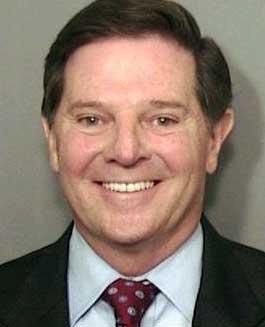 | For Immediate Release Contact: Ben Porritt or Kevin Madden September 28, 2005 STATEMENT FROM THE OFFICE OF THE MAJORITY LEADER (WASHINGTON) - Kevin Madden, spokesman for House Majority Leader Tom DeLay (TX) today released the following statement regarding today's announcement by the Travis County (TX) District Attorney's Office: |
This purely political investigation has been marked by illegal grand jury leaks, a fundraising speech by Ronnie Earle for Texas Democrats that inappropriately focused on the investigation, misuse of his office for partisan purposes, and extortion of money for Earle's pet projects from corporations in exchange for dismissing indictments he brought against them. Ronnie Earle's previous misuse of his office has resulted in failed prosecutions and we trust his partisan grandstanding will strike out again, as it should. Ronnie Earle's 1994 indictment against Senator Kay Bailey Hutchison was quickly dismissed and his charges in the 1980s against former Attorney General Jim Mattox-another political foe of Earle-fell apart at trial.
We regret the people of Texas will once again have their taxpayer dollars wasted on Ronnie Earle's pursuit of headlines and political paybacks. Ronnie Earle began this investigation in 2002, after the Democrat Party lost the Texas state legislature to Republicans. For three years and through numerous grand juries, Ronnie Earle has tried to manufacture charges against Republicans involved in winning those elections using arcane statutes never before utilized in a case in the state. This indictment is nothing more than prosecutorial retribution by a partisan Democrat." ###
more at Tom DeLay and DeLay or Politics and News or Republicans and Congress or Ronnie Earle
1 comments
||
||
President Welcomes Palestinian President Abbas (VIDEO)
President Welcomes Palestinian President Abbas to the White House, FULL STREAMING VIDEO The Rose Garden
 | PRESIDENT BUSH: Thank you all, thanks. It's my honor to welcome the democratically elected leader of the Palestinian Authority to the White House for the second time this year. |
President Abbas is a man devoted to peace and to his people's aspirations for a state of their own. And today the Palestinian people are closer to realizing those aspirations. It's a really interesting period of history, I think. I was just commenting to the President when we were in the Oval Office how much things have changed in the Holy Land. After all, he got elected in January; there were successful Palestinian municipal elections, and then we witnessed the completion of Israel's disengagement from Gaza and parts of the West Bank. It's been an eventful year.
And I say it's an eventful year because the ultimate objective is there -- for there to be two states, living side-by-side in peace; two democracies living side-by-side in peace. And I believe that's where we're headed. Israel's withdrawal from Gaza and parts of West Bank was a bold decision, with historic significance. President Abbas and the Palestinian Authority contributed to the success of the withdrawal in significant ways. Mr. President, thank you.
Through the active coordination and ground-level cooperation between Israeli and Palestinian security forces, the disengagement has been completed successfully and calmly. Israeli withdrawal creates new opportunities, creates responsibilities for the Palestinian people.
The way forward must begin by confronting the threat that armed gangs pose to a genuinely democratic Palestine. And those armed gangs must confront the threat that armed gangs pose to lasting peace between the Israelis and the Palestinians.
Now, Mr. President, you ran on a platform of peace. That's why the people voted for you. I strongly support your rejection of terror and your commitment to what you have called one authority, one law, and one gun. The United States, in cooperation with the international community, has helped you achieve this through the efforts of our senior U.S. security coordinator, General Kip Ward. I appreciate your service, General Ward. Thank you for being here, and thank you for all your hard work to help the Palestinian security forces at a critical time. Job well done.
In the coming days, I'll be naming our new coordinator to build on the progress General Ward has made. This person will take on an enhanced mission to help President Abbas and the Palestinian Authority carry out their responsibility to end terror attacks, dismantle terrorist infrastructure, maintain law and order, and, one day, provide security for their own state.
The way forward must include rebuilding the Palestinian economy. This goal has the support of the Quartet: the United States, the United Nations, the European Union, and Russia. Quartet Special Envoy Jim Wolfensohn is coordinating a broad effort to generate economic and financial support from the international community for the Palestinian Authority, and he's doing a good job. I'm going to continue to consult with our Quartet partners to ask Jim to extend his mission until next spring.
It's important that we make quick progress on the issues that Jim has identified as most critical for the Palestinian economy, including opening the Rafah crossing, connecting the West Bank in Gaza, improving the ability of Palestinians to travel in the West Bank, and beginning work on the Gaza seaport. These are all practical steps that will help the Palestinian economy grow and flourish. I believe that Arab states have a particular responsibility to help the Palestinians build a strong and prosperous economy, and I urge them to create an environment in the region that strengthens the possibility of peace.
The way forward must continue to include democratic elections. The upcoming elections for the Palestinian Legislative Council offer an opportunity to open the door to the next generation of Palestinian leaders. They'll be responsible for building a peaceful and hopeful future for their country.
In the short-term, the Palestinian Authority must earn the confidence of its peoples, by holding elections and having a functioning government that delivers economic opportunity. The Palestinian Authority must also earn the confidence of its neighbors by rejecting and fighting terrorism.
As I have stated in the past, achieving peace demands action from all parties. Israel must continue to work with Palestinian leaders to help improve the daily lives of Palestinians. At the same time, Israel should not undertake any activity that contravenes its road map obligations, or prejudices the final status negotiations with regard to Gaza, the West Bank, and Jerusalem. This means that Israel must remove unauthorized posts and stop settlement expansion. It also means that the barrier now being built to protect Israelis from terrorist attacks must be a security barrier, rather than a political barrier. Israeli leaders must take into account the impact this security barrier has on Palestinians not engaged in terrorist activities.
This is a time of great possibility in the Middle East. And the people of the region are counting on their leaders to seize the opportunities for peace and progress. This work isn't going to be easy, but the path forward is clear. I want to thank President Abbas for his hard work. I appreciate your service, Mr. President. I assured him that the United States will use our influence to help realize a shared vision of two democratic states, Israel and Palestine, living side-by-side in peace and security.
Welcome.
PRESIDENT ABBAS: (As translated.) Thank you. Mr. President, I would like to thank you for your warm welcome, and I would like to express my satisfaction with the talks that I conducted with you and your senior aides.
You have emphasized, Mr. President, from this place, about five months ago, the basic counters for the U.S. position regarding the various aspects of the Palestinian-Israeli conflict. This position, which you have reiterated today, contributes fundamentally to advance the chances of reviving and resuming the peace process in the region.
In the last few months, the dismantling of settlements and the withdrawal of Israeli forces from the Gaza Strip was concluded. The Palestinian Authority have worked very hard with all its energy, in order to make sure that this will happen without any incident, in order to have this as a window of an opportunity that will help us to move faster toward achieving additional steps on the way toward realizing just peace, based on your vision and on international resolutions.
This window, Mr. President, must remain open. And this opportunity must be strengthened through resolving all the outstanding issues -- as you have mentioned, the Gaza crossing point and the establishment of a permanent link between Gaza and the West Bank. At the same time, we must immediately start implementing what the road map and the Sharm el-Sheikh agreements regarding the cessation of settlement activities and construction of the wall in the West Bank, particularly in Jerusalem, in addition to withdrawal of the Israeli forces to positions prior to September 28, 2000.
With the removal of the roadblocks, which, unfortunately, turned the lives of Palestinians into hardship, suffering, humiliation, and also a very important sensitive issue, which is the release of prisoners of freedom from Israeli jails. The implementation of these requirements, Mr. President, represents urging the talks on permanent status issues regarding Jerusalem, refugees, settlements, borders, in order to reach, at the end, peace, which would allow for the establishment of an independent, democratic Palestinian state, on all the territories occupied in 1967. That state that would live in a good, neighborly relationship in peace with the state of Israel.
Mr. President, there is approximately 100 days between us and the elections for our legislative council, where the Palestinian people would go to the ballot box to elect for the first time since their -- for the first time in 10 years their representatives. This, for us, represents a very important landmark. On one hand, it comes a whole year since I assumed office, and also these elections would represent a renewal process, rebuilding process of our political process.
Also, these elections would consolidate and reinforce the slogan I ran on during my presidential election, which emphasized clearly the one authority, the one law, the one legal, legitimate law and political pluralism. The new legislative council would be mandated by the people to legislate and issue these slogans and make them a reality.
Once again, we repeat our pride of our democratic experience that has been undertaken by the Palestinian people, and we repeat and we say that democracy can lose a lot of its momentum in the absence of freedom and with the continuation of occupation.
Mr. President, our discussions today have allowed us to inform you of what the Palestinian National Authority is doing and what we are doing in terms of various policies in various spheres. We have worked and we will continue to work to continue to ensure the calm and maintain it. We are also intensifying our work in the field of security. We have taken active steps in imposing the rule of law and public order and banned armed demonstrations.
Our measures are continuing to reinforce the judiciary branch, as well as the administrative reform. We have said and we did during the last week start launching a series of economic projects in the infrastructure and in health and education and agriculture in both Gaza and the West Bank.
And here I would like to salute the United States for its contribution, and also the help that came from a variety of Arab countries and countries around the world. And we hope that all these projects will be activated by the donors' countries in order to increase the number of projects that our people are in need of.
Our discussion of the overall situation in the region has afforded us the opportunity to point out what we reaffirmed repeatedly through the past few weeks on behalf of the Palestine Liberation Organization: We are determined not to interfere in domestic Lebanese affairs. We reiterate that the Palestinian refugees in Lebanon are subject to the authority and the laws of Lebanon as temporary guests awaiting the resolution of the refugee problem in the accordance with the international resolutions.
Mr. President, we reaffirm again here today our commitment to peace and negotiated settlement. We expect that our people's quest in this direction will be supported. The time has come to put an end to the Palestinian-Israeli conflict. The time has come that the Palestinian people will attain their freedom and independence. The time has come to move quickly towards the resumption of permanent status negotiations.
Peace requires a departure from the policies of occupation and the adoption of the principle of freedom. Peace requires departure from the policies of settlements construction, the collective punishment, unilateral acts that undermine your vision toward two states and replace that with progress towards negotiations. Peace and security cannot be guaranteed by the construction of walls, by the erection of checkpoints, and the confiscation of land, but rather by the recognition of rights.
Peace cannot be attained by the enforcement of discriminatory road policies and by the policies of imposition and creation of facts on the ground, but rather through belief in the principles of partnership, parity and mutual respect.
We are presenting, based on wide public support, our positions that call upon the Israeli side to join us in a real partnership for making peace. We are calling for a Palestinian-Israeli partnership for the sake of creating a better future, and for the entire region that can end decades from wars, occupation, and open the doors wide open. We were promised peace, independence and freedom, and we hope that all of this will be achieved.
Mr. President, once again, I thank you, and reaffirm to you, as we did in our last visit, we are leaving Washington more sure and more confident of the possibility of reviving and resuming the peace process, and more determined to forge ahead along with the path of peace, democracy and freedom. Thank you, Mr. President.
PRESIDENT BUSH: We'll take two questions a side. Terry.
Q Thank you. Mr. President, there are a lot of distractions for your White House. The CIA leak investigation, a conservative uproar and congressional criticism over the Harriet Miers nomination, and even investigations of top Republican leaders in Congress. How preoccupied is the White House by these problems, and how are you dealing with them?
PRESIDENT BUSH: Well, I've just finished a very constructive dialogue with the President of the Palestinian Authority, talking about how to achieve peace.
And I've got a job to do. Part of my job is to work with others to fashion a world that will be peaceful for future generations. And I've got a job to do to make sure this economy continues to grow. I've got a job to make sure that there is a plausible reconstruction plan for cities affected by Katrina. I've got a job to make sure this hurricane headed toward Florida is -- the federal response is prepared for it.
So to answer your question -- there's some background noise here, a lot of chatter, a lot of speculation and opining. But the American people expect me to do my job, and I'm going to.
Want to call on somebody, Mr. President. Oops. We've better go one at a time here.
Q President Bush --
PRESIDENT BUSH: Who do you work for?
Q AFP. The road map that your administration backs calls for the creation of a Palestinian state in the Gaza strip and the West Bank. Yet, the Israelis' settlement activities, despite your repeated calls, included today, still continue in the West Bank. What is your administration planning to do to get Israel to put an end to those activities?
And then, President Abbas -- (as translated) -- what are the practical steps that they want Bush -- President Bush to take in order to establish the Palestinian state before the end of his term?
PRESIDENT BUSH: As I said in my -- in my comments, that we expect all parties to adhere to the road map. And we are holding people to account on the pledges that most of the Palestinians and the Israelis have made on the road map. And we do so publicly and we do so privately.
It's -- a lot of these issues that have been very difficult for a long period of time become easier to resolve as there's more trust between the parties. And trust becomes a permanent part of the political process as action on the ground takes place. The Gaza withdrawal is a magnificent opportunity to help develop trust. It's an opportunity to develop trust between the Palestinians and the Israelis. And after all, the world watched strong cooperation between two willing governments to help good disengagement of Gaza, which is a -- right now, I guess, we take it all for granted.
You look back -- I think prior to the disengagement, there was a lot of consternation, a lot of concern. I suspect some of you might have even reported that, you know, better watch out, this disengagement could end up being a very difficult period. And yet thanks to the President's leadership and Prime Minister Sharon's leadership, the disengagement worked, which established trust.
Mr. President has got an -- a job, and that's to establish trust with the Palestinian people. He is a man who said, "I'm running on a peace platform," and therefore, he has talked to us about using security forces to make sure that armed gangs don't disrupt the democratic process. And our job is to help him do that. And so to answer your question, yes, we hold people to account for their promises made on the road map. And many of those promises will be easier to keep for all parties as there's progress on the ground. And we have seen remarkable progress during the past year.
And there's -- and the progress isn't over this year. There will be elections. This is a very hopeful period. I'm very upbeat about being able to achieve this vision. I understand it's hard. Things don't happen overnight. Old feuds aren't settled immediately. And it takes a while.
The key thing, as far as I'm concerned, is that there are partners in peace. Prime Minister Sharon wants there to be peace. President Abbas wants there to be peace. And both men are showing strong leadership toward achieving that objective. And that's why I'm confident. I'm a heck of a lot more confident today than when -- I was when I first came into office. I know it's nearly five years ago, and that's an eternity for some, but there has been remarkable progress in this part of the world. And we'll continue to work with the parties to achieve this important objective: two democratic states living side-by-side in peace.
PRESIDENT ABBAS: (As translated.) Thank you. The truth is, our answer to that question, we have to change the question: What are we supposed to do -- as Palestinians and Israelis -- to do.
First of all, we have to work. We have to do our part. We have to think as partners. So many years passed by, more than four years we did not have any dialogue. We did not have any talks. And now we have confidence. We need to rebuild and build on that confidence and on the relationship.
And on our side, we are extending our hand to be true partners in the peace process, and we hope that the Israeli side also will do the same, so we can do our parts. And what we ask President Bush to do is what he mentioned during his remarks, the road map and the achievement and the realization of his vision. The road map talks about settlements, about the barrier; all these issues that will facilitate the road to achieving true peace, and will facilitate building the confidence between the two peoples, the Israelis and the Palestinians.
PRESIDENT BUSH: Steve.
Q Thanks very much, sir. Senator Specter called the rollout of the Miers nomination "chaotic." Is that a fair criticism? Are you satisfied with the way the nomination has been handled? Would you be willing to release any more documents about her if it would help?
PRESIDENT BUSH: First of all, it's an unusual nomination because she's never been a judge. And so, generally, people are used to looking at different court opinions and how one ruled on this case, or how one ruled on that case. That's not the case with Harriet.
I picked Harriet for a lot of reasons. One reason was because she had never been a judge. I thought it made a lot of sense to bring a fresh outlook of somebody who has actually been a very successful attorney -- and not only a successful attorney, but been a pioneer for women lawyers in Texas. I remind you that she was one of the top 50 women lawyers in the United States; she's consistently ranked that way. And so this is a little different process than the norm. I understand that.
Secondly, the questionnaire that she filled out is an important questionnaire, and obviously they will address the questions that the senators have in the questionnaire -- or as a result of the answers to the questions in the questionnaire. But one thing the questionnaire does show -- if people look at it carefully -- is Harriet's judicial philosophy. And it's the main reason I picked her to serve on the bench, if confirmed, and that is that she is not going to legislate from the bench. She will strictly interpret the Constitution.
I said that when I ran for President -- I said, if you elect me, I will name people that will have that judicial philosophy. I've now had two chances -- one, John Roberts, and now Harriet Miers. And they share the same judicial philosophy. That's what the questionnaire says.
And so Harriet will answer all the questions asked, and -- but out of this will come a clear picture of a competent, strong, capable woman who shares the same judicial philosophy that I share.
Do you want to call on somebody, Mr. President?
Q Thank you, President Abbas. As President Bush referred and said, that the only way to achieve progress and the peace road is combating armed gangs. And you are facing difficulties in doing this. Are you going to seek help and support from American President George Bush, to help you in disarming the resistance movements?
And, President, you say you wanted to see the Palestinian state made before the end of your presidency. Are you still hoping to see something like that? This is number one. Number two, don't you think the time has come to talk about timetables to get the two parties to the issues of final status negotiations?
PRESIDENT ABBAS: (As translated.) Regarding your questions, I am saying that we are truly in need of help from the United States in a variety of issues -- economic issues, and financial issues, and also security support. And the reason is having General Ward among us, a man who has done a magnificent job, and we appreciate him and appreciate his work very much.
Regarding our internal issues, we are following a policy. I believe it is a successful policy. When we started and we asked everyone to accept the hudna, or the calming, all the organizations that are recognized accepted that. Then we moved into another phase, and that is the phase of banning all public demonstrations with fire arms. All groups accepted that.
Now, all groups are underway to the electoral process, so all groups will become a part of the political Palestinian fabric. I believe this will create a new phase in the life of Palestinian people. It's a phase of democracy and pluralism in full fledge in order to be a solid base for peace in the region.
PRESIDENT BUSH: I believe that two democratic states living side-by-side in peace is possible. I can't tell you when it's going to happen. It's happening. And the reason I can't is because there will be moments of progress, and there will be moments of setback. The key is to keep moving forward, is to have partners in peace to move forward.
But one thing that will not happen is that we will try -- the United States will try to conform and force parties to make decisions based upon the political schedule in America. That doesn't make any sense. What matters is the decisions made by the Palestinians and the Israelis, and the confidence earned as we move forward.
And so you said I would like to see two states before I get out of office." Not true. I'd like to see two states. And if it happens before I get out of office, I'll be there to witness the ceremony. And if it hadn't -- if it doesn't, we will work hard to lay that foundation so that the process becomes irreversible.
Timetables are interesting -- an interesting thing. Everybody wants a timetable, it seems like, on different issues. And these are very complicated matters where years of conflict and years of mistrust are being resolved by some basic truths. And one of the basic truths is free societies are peaceful societies. And so we can look forward to working with a partner in peace, a person who said, vote for me, I'm for peace, and a man who declares his understanding that the Palestinian people, the long-suffering Palestinian people, will be well served by a democracy, a truly functioning democracy.
And so, Mr. President, we're glad you're back. I want to thank you for your strong leadership, and we wish you all the very best. Thank you, sir. Appreciate you.
END 11:27 A.M. EDT, For Immediate Release, Office of the Press Secretary, October 20, 2005
more at President Bush or Palestinian and Israel or Palestine and Middle East or Gaza and West Bank or Palestinian Authority and Mahmoud Abbas
0
comments
||
||
Thursday, October 20, 2005
WILMA Latest REAL TIME Loops and Images
Satellite Services Division - Tropical Atlantic Satellite Imagery
| | | | |
Hurricane Wilma—the season's 21st named storm and 12th hurricane—became the most intense hurricane recorded in the Atlantic Basin on Wednesday with a minimum central pressure of 882 millibars. The hurricane is forecast to lose some strength before a weekend landfall currently projected to be along the west coast of Florida.
000 ABNT20 KNHC 202114 , TWOAT, TROPICAL WEATHER OUTLOOK (en Español*), NWS TPC/NATIONAL HURRICANE CENTER MIAMI FL, 530 PM EDT THU OCT 20 2005
FOR THE NORTH ATLANTIC...CARIBBEAN SEA AND THE GULF OF MEXICO...
THE NATIONAL HURRICANE CENTER IS ISSUING ADVISORIES ON EXTREMELY
DANGEROUS HURRICANE WILMA...LOCATED ABOUT 135 MILES SOUTHEAST
OF COZUMEL MEXICO.
CLOUDINESS AND SHOWERS ASSOCIATED WITH A WESTWARD MOVING TROPICAL WAVE EXTEND FROM THE LESSER ANTILLES SOUTHEASTWARD INTO THE ATLANTIC FOR SEVERAL HUNDRED MILES. THIS SYSTEM REMAINS DISORGANIZED AND TROPICAL CYCLONE FORMATION IS NOT EXPECTED AT THIS TIME.
ELSEWHERE...TROPICAL STORM FORMATION IS NOT EXPECTED THROUGH FRIDAY. FORECASTER BEVEN , $$
more at hurricane or Wilma and hurricane Wilma or VIDEO and NOAA
0
comments
||
||
Trial of Saddam Hussein (VIDEO)
Excerpts of Trial of Saddam Hussein by Iraqi Special Tribunal (10/19/2005) FULL STREAMING VIDEO, file is real media format, running time is 47:05
TRIBUNAL FOR SADDAM HUSSEIN CASE SET UP WITH FAIR STANDARDS
The Iraqi special tribunal that is hearing the case against former Iraqi leader Saddam Hussein and his co-defendants was established with basic standards based on international law,
Those basic standards include the right to due process, access to legal counsel and appeals procedures.
It's important that they continue to move forward on those basic international standards that are expected for a fair trial.
Hussein is facing Iraqi justice for atrocities he committed against the Iraqi people and against humanity during his presidency, the trial is an important step in building a democratic Iraq that is based on the rule of law and is another symbol that the rule of law is returning to Iraq.
Iraq established the special tribunal to have jurisdiction to decide crimes against humanity, war crimes, genocide and other offenses, and both its judges and prosecutors received extensive training in international law from experts in a number of coalition countries including the United Kingdom and Italy.
The Transitional National Assembly, elected in January, also reviewed the tribunal’s statute, made amendments and approved its judges.
The first case against Saddam Hussein and other leaders of the former regime concern the hundreds of villagers who were rounded up, tortured and executed in the Shi’ite village of Dujail in 1982.
SOURCE: TEXT, usinfo.state.gov, VIDEO C-SPAN
more at Saddam Hussein or Iraq and Middle East or Terrorism and Current Affairs or Politics and News or VIDEO
0
comments
||
||


