


January 14, 1975, Republican William T. Coleman nominated as first African-American to be U.S. Secretary of Transportation.
January 15, 1901, Republican Booker T. Washington protests Alabama Democratic Party’s refusal to permit voting by African-Americans.
January 16, 1954, Consuelo Bailey (R-VT) announces her ultimately successful candidacy to become nation’s first woman elected Lt. Governor of a state.
January 17, 1874, Armed Democrats seize Texas state government, ending Republican efforts to racially integrate government.
January 18, 1815, Birth of Republican Gov. Richard Yates (R-IL), who prevented Democrat-controlled legislature from withdrawing state troops from the Union Army.
January 19, 1818, Birth of anti-slavery activist Alvan Bovay, who organized first meeting of Republican Party in 1854, to oppose Democrats’ pro-slavery policies.
January 20, 2001, Mississippi Republican Rod Paige is confirmed as first African-American U.S. Secretary of Education; calls for school choice to allow poor and minority children to “throw off their chains”.
January 21, 1813, Birth in Georgia of John C. Fremont – abolitionist, western explorer, U.S. Senator from California, U.S. Army general, Arizona Governor, and first Republican presidential candidate.
“It’s that expression of the individual and a willingness to put the educational opportunities before me that led to who I am. Who you are is who you are as an individual.”
Condoleezza Rice Secretary of State
SOURCE: Republican Freedom Calendar more at President Bush and Freedom Calendar or Republican and Republicans or African-Americans and Hispanic or right to vote and Civil Rights or Abraham Lincoln
Related: Keywords Freedom Calendar, Saturday, January 07, 2006 Freedom Calendar 01/07/06 - 01/14/06, Saturday, December 31, 2005 Freedom Calendar 12/31/05 - 01/07/06, Saturday, December 24, 2005 Freedom Calendar 12/24/05 - 12/31/05, Saturday, December 17, 2005 Freedom Calendar 12/17/05 - 12/24/05, Saturday, December 10, 2005 Freedom Calendar 12/10/05 - 12/17/05, December 03, 2005 Freedom Calendar 12/03/05 - 12/10/05, Saturday, November 26, 2005 Freedom Calendar 11/26/05 - 12/03/05, Saturday, November 19, 2005 Freedom Calendar 11/19/05 - 11/26/05, Saturday, November 12, 2005 Freedom Calendar 11/12/05 - 11/19/05, Saturday, November 05, 2005 Freedom Calendar 11/05/05 - 11/12/05, Saturday, October 29, 2005 Freedom Calendar 10/29/05 - 11/05/05, Saturday, October 22, 2005 Freedom Calendar 10/22/05 - 10/028/05, Saturday, October 15, 2005 Freedom Calendar 10/15/05 - 10/022/05, Thursday, September 29, 2005 The Opelousas Massacre, Saturday, October 08, 2005 Freedom Calendar 10/08/05 - 10/015/05 , Saturday, October 01, 2005 Freedom Calendar 10/01/05 - 10/08/05, Saturday, September 24, 2005 Freedom Calendar 09/24/05 - 10/01/05, Saturday, September 17, 2005 Freedom Calendar 09/17/05 - 09/24/05, Saturday, September 10, 2005 Freedom Calendar 09/10/05 - 09/17/05
Saturday, January 14, 2006
Freedom Calendar 01/14/06 - 01/21/06
0
comments
||
||

bush radio address 01/14/06 full audio, text transcript
bush radio address 01/14/06 full audio, text transcript PODCAST
President's Radio Address
THE PRESIDENT: Good morning. Last October, I was proud to nominate Judge Sam Alito to be an Associate Justice on the Supreme Court of the United States. This week, Judge Alito testified before the Senate Judiciary Committee, and the American people saw a man of character and intelligence. He forthrightly answered questions with grace and composure, and showed his personal humility and legal brilliance -- qualities that have made him one of America's most accomplished and respected judges.
In his opening statement to the Committee, Judge Alito offered an eloquent description of the proper role of a judge. He put it this way: "A judge cannot have any agenda, a judge cannot have any preferred outcome in any particular case. The judge's only obligation is to the rule of law. In every single case, the judge has to do what the law requires."
Judge Alito has embodied this understanding of a judge's proper role throughout his distinguished career. He has participated in thousands of appeals, and he has authored hundreds of opinions. His record shows that he strictly and fairly interprets the Constitution and laws, and does not try to legislate from the bench or impose his personal preference on the people. As the American people saw this week, Judge Alito always approaches the law in a thoughtful, fair, and open-minded way.
Throughout his life, Sam Alito has demonstrated a mastery of the law, great decency, and a strong commitment to public service. As a young man, he wore his country's uniform in the Army Reserve, and achieved the rank of Captain. Early in his legal career, he worked as a federal prosecutor. As Assistant to the Solicitor General, Sam Alito argued 12 cases before the Supreme Court. He later served in the Justice Department's Office of Legal Counsel, where he provided constitutional advice for the President and the executive branch.
In 1987, President Reagan named Sam Alito the United States Attorney for the District of New Jersey -- the top federal prosecutor in one of the Nation's largest federal districts. The Senate confirmed him by unanimous consent. In this important post, Sam Alito showed a passionate commitment to justice and the rule of law, and earned a reputation for being both tough and fair. He moved aggressively against white-collar and environmental crimes, drug trafficking, organized crime, and violations of civil rights. In 1990, President Bush nominated Sam Alito for the United States Court of Appeals for the Third Circuit, and the Senate once again confirmed him by unanimous consent. He's served with distinction on that court for 15 years, and he has more prior judicial experience than any Supreme Court nominee in more than 70 years.
Sam Alito's brilliance, integrity, and accomplishments have gained him respect and praise from his colleagues and from attorneys across the political spectrum. This week, fellow judges from the Third Circuit publicly testified in support of his confirmation, and they praised his integrity and fairness. The American Bar Association gave Judge Alito a unanimous rating of "well-qualified" -- the ABA's highest possible rating. The ABA concluded that Judge Alito meets "the highest standards" of "integrity, professional competence, and judicial temperament." In the past, leading Democratic senators have called the ABA's rating system the "gold standard" for judicial nominees.
During this week's hearings and over the course of his career, Judge Alito has demonstrated that he is eminently qualified to serve on our Nation's highest court. I'm grateful to Senator Arlen Specter for his superb work in chairing the hearings. I also thank Judge Alito's wife, Martha, and the Alito children for their patience and dignity during the confirmation process.
Now the Senate has a duty to give Judge Alito a prompt up-or-down vote. I look forward to the Senate voting to confirm Sam Alito as 110th Justice of the Supreme Court. America is fortunate to have a man of his intellect and integrity willing to serve, and as a Justice on our Nation's highest court, Sam Alito will make all Americans proud.
Thank you for listening.
END For Immediate Release, January 14, 2006
more at President Bush and White House or Supreme Court and Sam Alito, or Judiciary Committee and Judge Alito, or Senate, and ABA,
Related: Keywords radio address, podxast, Saturday, January 07, 2006 bush radio address 01/07/06 full audio, text transcript, Saturday, December 31, 2005 bush radio address 12/31/05 full audio, text transcript, Saturday, December 24, 2005 bush radio address 12/24/05 full audio, text transcript, Saturday, December 17, 2005 bush radio address 12/17/05 full VIDEO, text transcript, Sunday, December 04, 2005 Presidential Podcast 12/03/05, Saturday, December 03, 2005 bush radio address 12/03/05 full audio, text transcript, November 26, 2005 Presidential Podcast 11/26/05, Saturday, November 26, 2005 bush radio address 11/26/05 full audio, text transcript, Saturday, November 19, 2005 Presidential Podcast 11/19/05, Saturday, November 19, 2005 Freedom Calendar 11/19/05 - 11/26/05, Saturday, November 12, 2005 Presidential Podcast 11/12/05, Saturday, November 12, 2005 bush radio address 11/12/05 full audio, text transcript, Saturday, November 05, 2005 Presidential Podcast 11/05/05, Saturday, November 05, 2005 bush radio address 11/05/05 full audio, text transcript, Saturday, October 29, 2005 bush radio address 10/29/05 full audio, text transcript, Saturday, October 22, 2005 Presidential Podcast 10/22/05, Saturday, October 15, 2005 Presidential Podcast 10/15/05, Saturday, October 08, 2005 bush radio address 10/08/05 full audio, text transcript, Saturday, October 01, 2005 bush radio address 10/01/05 full audio, text transcript, Saturday, September 24, 2005 bush radio address 09/24/05 full audio, text transcript, Saturday, September 17, 2005 bush radio address 09/17/05 full audio, text transcript
0
comments
||
||
Martin Luther King, Jr., Federal Holiday, 2006
Martin Luther King, Jr., Federal Holiday, 2006, A Proclamation by the President of the United States of America
As we observe the 20th anniversary of the Martin Luther King, Jr., Federal Holiday, we reflect on the history of civil rights in America and honor Dr. King for the power of his intellect, the truth of his words, and the example of his courage. Dr. King created a powerful and enduring legacy for all Americans by calling upon our Nation to ensure equal justice under law and uphold our founding ideals of life, liberty, and the pursuit of happiness for all people.
Dr. King became an active leader in the civil rights movement in the 1950s, strengthened in his resolve by the quiet courage of Rosa Parks' refusal to give up her seat on a Montgomery, Alabama, bus. He advocated non-violent action as a means to overcome the evil of racism in America, and he led the effort that resulted in the Civil Rights Act of 1964. Dr. King later said that the legislation was the work of every citizen who took to the streets and marched for justice and equality. The Voting Rights Act, which became law the next year, guaranteed all citizens the right to vote, regardless of race, and helped our country realize the promise of the 15th Amendment to our Constitution.
Dr. King believed that all people are made in God's image and created equal. He dedicated his life to empowering people, no matter their circumstances, and challenged them to lift up their neighbors and communities. He broke down barriers within our society by encouraging Americans to look past their differences and refused to rest until our Nation fulfilled its pledge of liberty and justice for all.
As we observe and honor Dr. King's birthday, we are reminded that great causes often involve great sacrifices. In the five decades since Dr. King and Mrs. Parks stood together in Montgomery, Alabama, our country has made great progress toward equality for every citizen. Yet more work remains. In the words of Dr. King, "We will not be satisfied until 'justice rolls down like waters and righteousness like a mighty stream.'"
NOW, THEREFORE, I, GEORGE W. BUSH, President of the United States of America, by virtue of the authority vested in me by the Constitution and laws of the United States, do hereby proclaim Monday, January 16, 2006, as the Martin Luther King, Jr., Federal Holiday. I encourage all Americans to observe this day with appropriate civic, community, and service programs and activities in honor of the memory and legacy of Dr. King.
IN WITNESS WHEREOF, I have hereunto set my hand this thirteenth day of January, in the year of our Lord two thousand six, and of the Independence of the United States of America the two hundred and thirtieth.
GEORGE W. BUSH
# # # For Immediate Release, Office of the Press Secretary, January 13, 2006
more at President Bush and Martin Luther King or Republican and Republicans or African-Americans and Rosa Parks or right to vote and Civil Rights or Abraham Lincoln
Related: Keywords Freedom Calendar, Saturday, January 07, 2006 Freedom Calendar 01/07/06 - 01/14/06, Saturday, December 31, 2005 Freedom Calendar 12/31/05 - 01/07/06, Saturday, December 24, 2005 Freedom Calendar 12/24/05 - 12/31/05, Saturday, December 17, 2005 Freedom Calendar 12/17/05 - 12/24/05, Saturday, December 10, 2005 Freedom Calendar 12/10/05 - 12/17/05, December 03, 2005 Freedom Calendar 12/03/05 - 12/10/05, Saturday, November 26, 2005 Freedom Calendar 11/26/05 - 12/03/05, Saturday, November 19, 2005 Freedom Calendar 11/19/05 - 11/26/05, Saturday, November 12, 2005 Freedom Calendar 11/12/05 - 11/19/05, Saturday, November 05, 2005 Freedom Calendar 11/05/05 - 11/12/05, Saturday, October 29, 2005 Freedom Calendar 10/29/05 - 11/05/05, Saturday, October 22, 2005 Freedom Calendar 10/22/05 - 10/028/05, Saturday, October 15, 2005 Freedom Calendar 10/15/05 - 10/022/05, Thursday, September 29, 2005 The Opelousas Massacre, Saturday, October 08, 2005 Freedom Calendar 10/08/05 - 10/015/05 , Saturday, October 01, 2005 Freedom Calendar 10/01/05 - 10/08/05, Saturday, September 24, 2005 Freedom Calendar 09/24/05 - 10/01/05, Saturday, September 17, 2005 Freedom Calendar 09/17/05 - 09/24/05, Saturday, September 10, 2005 Freedom Calendar 09/10/05 - 09/17/05
0
comments
||
||
Friday, January 13, 2006
President to Welcome Pakistani Prime Minister Shaukat Aziz
President to Welcome Pakistani Prime Minister Shaukat Aziz to the White House
President Bush will welcome Pakistani Prime Minister Shaukat Aziz to the White House on January 24. This will be the Prime Minister's first visit to the White House since taking office. The President looks forward to discussing earthquake reconstruction, bilateral trade and economic ties, and the war on terror.
# # # For Immediate Release, Office of the Press Secretary, January 13, 2006
more at President Bush and White House or Pakistani and Pakistani and Shaukat Aziz and earthquake reconstruction or bilateral trade
Related: Keyword, Pakistani Friday, February 11, 2005 U.S.-Pakistan Bilateral Investment Treaty, Thursday, March 17, 2005 Secretary Condoleezza Rice, Foreign Minister Khurshid Mahmood Kasuri, Saturday, March 19, 2005 Secretary Rice, South Asia and East Asia, Friday, April 08, 2005 Pakistani Passports, Saturday, May 07, 2005 Foreign Relations Volume XI, South Asia Crisis, 1971, Friday, July 01, 2005 Mukhtar Mai's Passport, Tuesday, July 12, 2005 Briefing by Scott McClellan, July 11, 2005,
0
comments
||
||
Vice President to Travel to Egypt and Saudi Arabia
Vice President to Travel to Egypt and Saudi Arabia
The President has asked the Vice President to travel to Egypt and Saudi Arabia next week. These visits were originally scheduled as part of the Vice President's travel to the region in December, but were postponed because he had to return to Washington to vote on the budget.
The Vice President will meet with President Mubarak of Egypt and King Abdullah of Saudi Arabia on Tuesday, January 17, 2006.
Press coverage: travel pool
# # # For Immediate Release, Office of the Vice President, January 13, 2006
more at Egypt and Middle East or Vice President and Dick Cheney or Saudi Arabia and President Mubarak
Relared: Keywords Vice President Cheney, Friday, January 06, 2006 Vice President's Remarks on Iraq and the War on Terror (VIDEO), Thursday, November 17, 2005 Vice President's Remarks 11/16/05, Monday, October 31, 2005 Vice President appointed David S. Addington chief of staff, Saturday, October 29, 2005 Vice President's Statement on Libby Resignation, Friday, October 28, 2005 Resignation of Scooter Libby (VIDEO, Tuesday, October 04, 2005 Remarks by the Vice President to Second Marine Expeditionary Force, Monday, September 26, 2005 Statement on Vice President Cheney's Medical Procedure, Tuesday, September 06, 2005 President Meets with Cabinet (VIDEO), Thursday, August 11, 2005 President Meets with Defense and Foreign Policy Teams (VIDEO), Tuesday, July 26, 2005 Vice President at Dinner for Vito Fossella, Saturday, July 09, 2005 President, VP Signs Book of Condolence at British Embassy, Thursday, May 12, 2005 Vice President, A Nation Honors Nancy Reagan, Saturday, April 16, 2005 Vice President Dick Cheney and Mrs. Cheney Release 2004 Income Tax Return
0
comments
||
||
President Bush, German Chancellor Merkel (VIDEO)
President Welcomes German Chancellor Merkel to the White House FULL STREAMING VIDEO, The East Room 11:37 A.M. EST, In Focus: Global Diplomacy
 | Chancellor Angela Merkel of Germany, adjusts her earpiece as President George W. Bush begins his remarks during a joint press availability Friday, Jan. 13, 2006, in the East Room of the White House. White House photo by Eric Draper. |
Germany is a valued ally. We've got a friendship that's important. We share common values based upon human rights and human decency and rule of law; freedom to worship and freedom to speak, freedom to write what you want to write.
We've got an important job ahead of us to work on key issues, like Iran. We spent some time talking about the Iranian issue and the desire to solve this issue diplomatically by working together.
We talked about the war on terror. I told the Chancellor that there's still an enemy that wants to do harm to the American people and others who like freedom; an enemy there that lurks, and that we've got to share information and share intelligence and work carefully to protect our peoples; that the threat is real; and that my obligation as the President of this country is to do everything in my power to protect the people, and we can't do it alone.
We talked about Eastern Europe and the Balkans. I thanked the Chancellor for Germany's contribution in Afghanistan. Afghanistan is a country that has gone from being ruled brutally by the Taliban, a group of people who have values the exact opposite of the values of Americans and the German people, to one that's now beginning to see the light of freedom. Democracy yields to peace and it's important that democracy succeed in Afghanistan, and I want to thank the German people and the German government for their contributions.
We talked about Iraq -- and we've had our disagreements on Iraq, obviously. It's been a difficult issue in our relationship and I fully understand that. But in spite of disagreements, we share the desire for the Iraqi people to live in freedom. I want to thank the German government for help with reconstruction.
We talked about Israel and Palestine. Both of us care deeply about the health of Ariel Sharon, Prime Minister Sharon. We wish him all the very best and hope for his recovery. We also care deeply about the plight of the people in that part of the world, and we hope that there will be two states living side-by-side in peace.
We talked about NATO as the foundation of our collective defense and consultations. We talked about the importance of trade relations and business relations and commerce so that people on both sides of the Atlantic in our respective countries can find meaningful, high-paying jobs.
We talked about a lot, and the reason we talked about a lot is because we've got a lot in common. And the reason we talked about a lot, because there's a lot of issues in the world that require our intense cooperation and desire to work together. And I appreciate the candid conversation, and I appreciate the beginning of what's going to be an important relationship for the sake of our respective peoples.
Welcome.
CHANCELLOR MERKEL: (As translated.) Well, thank you very much. And let me say that we, indeed, had a very open, a very candid discussion, one that was characterized by a spirit of trust that builds on a long tradition of German-American relations. But I think that will open up, also, a new chapter, as I hope, in our relationship.
This is my first visit as Chancellor, heading a new federal government. And I explained that there are two objectives that we have set out for ourselves. First of all, as regards our domestic agenda. We would like to strengthen our economic force, our economic strength. We look at the challenges that globalization entails, and we would like to explain to our people that in order to meet the social challenges ahead, we need to be economically strong.
And I think there is a lot of common ground here because we are at one in thinking that, obviously, we ought not to fall back into isolationist tendencies. We know that these tendencies are there, for example, in the European Union. We think we ought to meet these challenges of competition head-on. And I think what we need to do is we need to convince our people to believe in themselves and to believe that even in the face of the challenges of globalization, prosperity and social equality is possible.
Secondly, apart from the domestic component, Germany wants to be a reliable partner to our partners in the world, but also to our partners in Europe. And in order to be able to do that -- well, Europe, as you know is composed of smaller and larger nations. We talked about the European Union. We talked about the possibilities and the chances open to the European Union. And I think it's essential that those countries that feel that they share common ground as regard to values in the Western world stand together. And for Germany, I would like to say that throughout the period of the Cold War, the fact that for more than 40 years we believed in the value of freedom actually was the firm foundation for what was possible later on in a European unification.
The fact that your father's partnership and leadership, that was an incredible offer that was made to us by President Bush at the time. And I think that this is certainly in our vested interest to work together with you. What does that mean, "our vested interest"? It means that we face the challenges in the world today head-on. It means that after the threat through the Cold War is no longer with us. Obviously, the threat of terrorism is certainly the greatest challenge to our security in the 21st century.
There may sometimes be defenses as to the acuteness of the danger, as to what form it presents itself, how we actually also counteract here and how we face up to this. Afghanistan, for example, is a case in point. We are engaged and we're committed to Afghanistan because we see that as a vested interest. We think it is only in our interest that the whole of this region is stabilized. The same is for Iraq. Secure democratic structures ought to be in existence in Iran. This is in our vested interest. In spite of the fact that we don't have troops on the ground there, stability there is in our very own vested interest, and we've shown that through commitments that we've entered on in other areas.
On the Balkans, the Balkans, too, their stability is the only promising sign which can actually ensure stability for the whole of the region. And NATO, for me, is the forum where we need to discuss, where we need to debate strategic issues and what we think is necessary as regards further military capabilities.
We also openly addressed that there sometimes have been differences of opinion. I mentioned Guantanamo in this respect. But I think that at the end of the day, what counts is that we come back to the situation where we openly address all of the issues -- not only how we envisage the fight against terrorism, but I just mean a very broad-based debate, for example, on trade issues, how do we see our relationship with China, how do you see our relationship with Russia, what sort of strategic relationships do we want to forge as Western nations. And this is why I'm so happy about the fact that we were at one in saying we need to intensify our contacts further; we need to address all of these issues.
And I think a very successful chapter, for example, was opened over the past few days and weeks as regards Iran. To us Germans, too, it is totally unacceptable what Iran has said recently, for example, as regards the questioning the right of existence of Israel, the statements that were made with relevance to the Holocaust. And it's essential, we feel, that the EU3, together with the United States, take a common position here, become active, that we try to persuade as many other countries as possible to join themselves to us, to ally themselves with us, and we will certainly not be intimidated by a country such as Iran.
I must say that I was greatly encouraged by our meeting here today, Mr. President, and I hope and trust that we shall continue our very good discussions, that we will further intensify them. We have every opportunity, I think, to intensify our economic relations, our business relations, relations in the area of research and development, in foreign policy. And I'm very, very pleased that we made such a good start here today.
PRESIDENT BUSH: Terry.
Q Thank you, Mr. President. Chancellor Merkel has said that the U.S. prison camp at Guantanamo should not be kept open indefinitely. Are you willing to close it down anytime soon? And, Chancellor, what are your concerns about Guantanamo?
PRESIDENT BUSH: Yes, she brought up the subject, and I can understand why she brought it up, because there's some misperceptions about Guantanamo. First of all, I urge any journalist to go down there and look at how the folks that are being detained there are treated. These are people picked up off a battlefield who want to do harm. A lot of folks have been released from Guantanamo.
Like the Chancellor, I'd like to see a way forward there. The way forward, of course, is ultimately through a court system. I think the best way for the court system to proceed is through our military tribunals, which is now being adjudicated in our courts of law to determine whether or not this is appropriate path for a country that bases itself on rule of law, to adjudicate those held at Guantanamo.
The answer to your question is that Guantanamo is a necessary part of protecting the American people, and so long as the war on terror goes on, and so long as there's a threat, we will, inevitably need to hold people that would do ourselves harm in a system that -- in which people will be treated humanely, and in which, ultimately, there is going to be a end, which is a legal system. We're waiting for our own courts to determine how that's best to proceed.
CHANCELLOR MERKEL: (As translated.) Well, it is true that we addressed this issue openly, and I think it's, after all, only one facet in our overall fight against terrorism. I made it very clear and I completely share your assessment as regards the nature and dimension of this threat, and that the Federal Republic of Germany, just as other European countries, need to come up with convincing proposals as to how we ought to deal with detainees, for example, who do not feel bound by any law; and how do we deal with people who come from countries where such structures don't exist.
So I think what we need to address is how we further want to proceed. We need to, for example, find a reform of the international law in this respect, and I think the United Nations is, indeed, a good forum to do that. But I think that's part of a permanent dialogue between our two countries, where we really need to debate how we wish to proceed further. And the basis and the common ground needs to be we have shared values, and I have seen that this is a very best precondition, even though from time to time we may have differences of opinion here.
Q -- been discussed. Are you in favor of sanctions against Iran in the Security Council, and what kind of sanctions should that be? And another question is, in Germany, there's a discussion about intelligence, secret service people working in Baghdad during the Iraq war. From your knowledge, did the German intelligence help the U.S. before and during the Iraq war in Baghdad?
PRESIDENT BUSH: I have no idea about the latter. (Laughter.) You did say, secret intelligence, right? (Laughter.) I understand. I really -- the truth of the matter is, the Chancellor brought this up this morning. I had no idea what she was talking about. The first I heard of it was this morning, truthfully.
Secondly, the first part of your question was Iran.
Q Iran, sir.
PRESIDENT BUSH: Okay, good. Sometimes when you mix them up, it throws us off balance, you know?
I'm not going to prejudge what the United Nations Security Council should do. But I recognize that it's logical that a country which has rejected diplomatic entreaties be sent to the United Nations Security Council. I want to put it in this perspective: The U.N. Security Council is part of the diplomatic process, started by Germany, France, and Great Britain representing the interests of a lot of countries like ourself, which made it abundantly clear to the Iranians that the development of the know-how and our -- a nuclear weapon was unacceptable. And the reason it's unacceptable is because Iran, armed with a nuclear weapon, poses a grave threat to the security of the world.
And countries such as ours have an obligation to step up working together, sending a common message to the Iranians that it's their behavior -- trying to clandestinely develop a nuclear weapon, or using the guise of a civilian nuclear weapon program to get the know-how to develop a nuclear weapon is unacceptable. And Germany has played an incredibly constructive role in this dialogue. And I want to thank the Chancellor for continuing that dialogue.
As I say we're working very carefully together in consultation about how to proceed next. One of the things friends do is they spend time discussing strategies before we make a common statement about what next ought to happen. And we spent a fair amount of time today, and I know Condi Rice has spent a fair amount of time with the current government about strategizing how best to achieve the objective. That's what we want to do. We want an end result to be acceptable, which will yield peace, which is that the Iranians not have a nuclear weapon in which to blackmail and/or threaten the world.
I want to remind you that the current President of Iran has announced that the destruction of Israel is an important part of their agenda. And that's unacceptable. And the development of a nuclear weapon seems like to me would make them a step closer to achieving that objective. And we have an obligation in order to keep the peace to work together to achieve the objective that we're trying to achieve through the current diplomatic process.
I don't know if you want to add to that brilliance or not. (Laughter.)
Steve.
Q Thank you, sir. If I could just follow up on that. China's U.N. Ambassador says referring Iran to the Security Council might complicate the issue. How hard is it going to be to get a --
PRESIDENT BUSH: Say that again, Steve. I'm getting a little old. I'm getting old; I'm having trouble hearing.
Q China's U.N. Ambassador --
PRESIDENT BUSH: The Chinese Ambassador said what?
Q It might complicate the issue if you refer Iran to --
PRESIDENT BUSH: Might complicate the issue?
Q Yes, sir -- of how hard it's going to be -- what's your timetable? Should the sanctions include the threat of military force?
PRESIDENT BUSH: First of all, I want to repeat what I said before. We should not prejudge the strategy in the Security Council until they get to the Security Council. What we're doing now is beginning to lay out the strategy of what happens in the Security Council. That's what friends do. We consult, we talk, we strategize as to how to achieve an important objective, which is not allowing an -- for Iran not to have a nuclear weapon.
And you're going to see a lot of public discussion about this matter. And the Chinese, you know, have got an opinion, the Russians have an opinion, we have opinions, everybody has opinions. Our job is to form a common consensus. And so you're -- this is what's called diplomacy. I know you know that, Steve. I don't mean to insult you. But diplomacy is out talking to friends, allies, and others about a common objective. This meeting has got a lot of diplomacy in it today, because this is a subject in which we've spent a lot of time. I'm very interested in the Chancellor's opinion on this subject.
We did talk about the Chinese statement. Our job is to make it clear to all parties that it is in the world's interest that Iran not have a nuclear weapon. In other words, share the same goal. Once that goal is established, it makes it easier to come up with the strategy to achieve the goal.
And so, of course, we'll reach out to the Chinese and remind them, once again, that it's not in their interest or the world's interest for the Iranians to develop the capacity to -- and/or a nuclear -- to build a weapon and/or to possess a weapon. And I just gave you one reason why.
Another reason why is it's very important for non-transparent societies not to have the capacity to blackmail free societies. We're thinking about how to lay the foundation for peace. We must be proactive. And that's what you're seeing. You're seeing the evolution of a proactive diplomatic policy --
Q What about --
THE PRESIDENT: Military option?
CHANCELLOR MERKEL: (As translated.) Allow me, if I may, and give you my German perspective on the matter. What is essential and is crucial is that over the next -- when we look at the next step to be taken by the EU3 and the United States together in a genuine consultation process that where we say at one point in time, we actually did everything we could. They refused it -- Iran refused every offer we made, even the Russian offer. Now we refer this matter back to the Board of Governors of the IAEA. But they, too, do their utmost to try to enlist as large a number of member states to join in on a proposal that will then be made to the Iranians. And I think this is going to be absolutely crucial for the Iranians to see how serious we are about all of this.
So what is at stake now is what sort of attempt and serious attempt is taken by all of us. And we've seen it with Syria, that it does leave an impression, it does leave an impact, if as large a number of nations in this world as possible makes it abundantly clear we are not accepting a stance that says, in effect, the right of existence of Israel is questioned, you are trying to lie to us, you are trying to cheat. This is something that we don't accept. And this is what we need to discuss: who is going to take which role, who is going to play which part, and what will be the final proposal. And then I think this has -- it was what made this EU3 approach so successful. They stood together and they had one uniform position.
Thank you.
Q (As translated.) A question addressed to you, Madam Chancellor, and then one to you, Mr. President. Chancellor, would you say that this visit today has opened up a new chapter in German-American relations? And how do you think this should look? (In English) -- better than with Chancellor Schr der at the last year? (Laughter.)
CHANCELLOR MERKEL: (As translated.) Well, for my part, I can say that there is every opportunity for us to further enhance our relations, and such enhancement of relations is founded on a shared experience, no doubt about this. Afghanistan was mentioned here, the Balkans were mentioned. And here, too, we're also able to tell you that, after all, we have been successful in WTO negotiations.
So what is important to me, I think, is to have as many international contacts as possible, because I think, to a very large part, misunderstandings occur when you don't meet often enough, when you don't talk to each other often enough. The President just pointed out how much intellectual effort has to go further into trying to come up with a convincing strategy as how to deal with Iran and we can't resort to some kind of ivory tower and think for ourselves. We have to do it in exchange with others.
Secondly -- and I do see a chance here, a climate of openness has to exist, an area where one says quite clearly and candidly to one another, well, there we agree, there we disagree. But there also has to be a climate of absolute trust, of reliability, where one stands by what one has agreed upon.
Thirdly, in spite of the great threat of terrorism that is the great threat to us in the 21st century, we need to point out that U.S.-Germany relations cannot only rest on fighting terrorism, but we have common interests. We have, for example, competitors, such as China and other countries, who don't abide by any rule. And we would like to see the rules kept. And now we need to find a common basis, a common approach, even though we sometimes may be ourselves competitors in certain business fields, for example, where we vie for orders.
So I see opportunities and I think that we need to be aware of the fact that after the end of the Cold War, many of the contacts that existed in the past and also because of our cooperation as allies, that these cannot be taken for granted these days anymore. So it's going to be essential for us not to only talk at governmental level -- it's a good experience, obviously -- but that also our scientists have to be engaged, that they have to understand that we need their contribution, too, to have good relations. And I think I made a little start in the right direction. So in about six months you may ask me again whether I've been able to add a few more chapters to it.
PRESIDENT BUSH: We've got something in common, we both didn't exactly landslide our way into office. (Laughter.)
I'm convinced that we will have a really important and good relationship.
First, I do want to send my best regards to Gerhard Schröeder. We spent a lot of time together, and we talked about issues. Listen, there was room for agreement and room for disagreement. And I do hope he's doing well.
Our job now is to work together. We've got big interests. Germany is a really important country. It's right in the heart of Europe; it's vital that Germany take the lead on a lot of issues. And I look forward to working with the Chancellor on common objectives. And my first impressions, with 45 minutes alone in the Oval Office, were incredibly positive. She's smart -- (laughter) -- she's plenty capable. She's got kind of a spirit to her that is appealing. She loves freedom.
I was particularly touched by hearing about her early life in communist Germany. There's something uplifting to talk to somebody who knows the difference between just talking about tyranny and living in freedom and actually done it.
So we're going to have a very good relationship. And that's important for our respective people. I'm looking forward to consultations, visits, contacts, phone calls, all the things you do. And now I'm going to take her to lunch. (Laughter.)
Thank you.
CHANCELLOR MERKEL: Thank you.
END 12:04 P.M. EST, For Immediate Release, Office of the Press Secretary, January 13, 2006
more at President Bush and German Chancellor Merkel or Angela Merkel and Germany and Merkel and NATO or German
Related: Keyword Germany, Friday, February 04, 2005 Condoleezza Rice Tony Blair Jack Straw Gerhard Schroeder, Saturday, February 05, 2005 Secretary Rice Europe and the Middle East, Wednesday, February 23, 2005 Bush Schröder Exchange Toasts, Wednesday, March 02, 2005 Sale of U.S. Military Equipment from Germany to Greece, Tuesday, March 08, 2005 Nazi Medical Experiments, Friday, March 18, 2005 GERMANY PARTNERS WITH IRAQ, UNITED ARAB EMIRATES FOR TRAINING, Sunday, May 08, 2005 President Honors and Commemorates Veterans in the Netherlands, Friday, May 20, 2005 President to Welcome German Chancellor Schroeder, Tuesday, May 24, 2005 pseudoneglect phenomenon, Monday, June 27, 2005 President Welcomes German Chancellor, Thursday, July 21, 2005 William Robert Timken, Jr Ambassador to Germany, Tuesday, September 20, 2005 Simon Wiesenthal - A Short Biography, Thursday, October 06, 2005 German-American Day, 2005,Thursday, December 01, 2005, President Bush to Welcome German Chancellor Merkel, Tuesday, December 21, 2004 President to Germany, Slovak Republic,
0
comments
||
||
Thursday, January 12, 2006
Samuel Alito Confirmation Hearings (VIDEO)
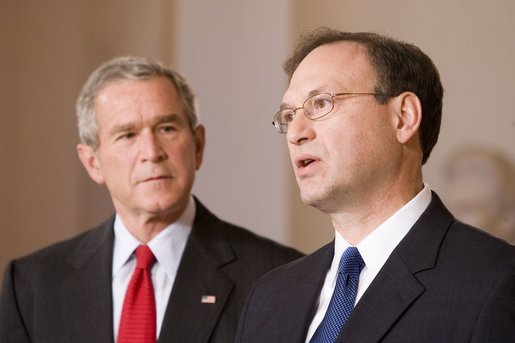 | Samuel Alito Confirmation Hearings, FULL STREAMING VIDEO, "Supreme Court Witness List for Thursday, January 12, 2006 at 9:30 a.m.", Senate Judiciary Committee, Full Committee, DATE: January 12, 2006, TIME: 09:00 AM, ROOM: Hart Building 216, |
Samuel Alito Supreme Court Justice Confirmation Hearings - Day 4, Morning Session (1/12/2006
Samuel Alito Supreme Court Justice Confirmation Hearings - Day 3, Afternoon Session (1/11/2006)
Samuel Alito Supreme Court Justice Confirmation Hearings - Day 3, Morning Session (1/11/2006
Samuel Alito Supreme Court Justice Confirmation Hearings - Day 2, Afternoon Session (1/10/2006)
Samuel Alito Supreme Court Justice Confirmation Hearings - Day 2, Morning Session (1/10/2006
1. Samuel Alito Suprme Court Justice Confirmation Hearings - Day 1, Part 1 (1/9/2006)
2. Samuel Alito Suprme Court Justice Confirmation Hearings - Day 1, Part 2 (1/9/2006)
SCOTUS Nomination Information (FILES IN PDF FORMAT)
1. Media Guidelines for the upcoming Nomination Hearing of Samuel A. Alito, Jr., of New Jersey, to the Supreme Court of the United States
2. Public Guidelines for the upcoming Nomination Hearing of Samuel A. Alito, Jr., of New Jersey, to the Supreme Court of the United States
3. Questionnaire of Samuel A. Alito, Jr., of New Jersey, Nominee to the Supreme Court of the United States
DAY 1. HEARING NOTICE / WITNESS LIST: December 12, 2005, NOTICE OF COMMITTEE HEARING
DAY 4 OFFICIAL HEARING NOTICE / WITNESS LIST:
Witness List Hearing before the Senate Judiciary Committee on The Nomination of Samuel A. Alito Jr. to be an Associate Justice of the Supreme Court Thursday, January 12, 2006 Hart Senate Office Building Room 216 9:00 a.m.
PANEL I
Stephen L. Tober, Esq. Chairman, American Bar Association, Standing Committee on the Federal Judiciary, Portsmouth, NH, Marna Tucker, D.C. Circuit Representative, American Bar Association, Standing Committee on the Federal Judiciary, Washington, DC, John Payton, Federal Circuit Representative, American Bar Association, Standing Committee on the Federal Judiciary, Washington, DC
PANEL II
The Honorable Edward R. Becker, U.S. Court of Appeals Judge (Senior), Philadelphia, PA, The Honorable Anthony J. Scirica ,Chief Judge, U.S. Court of Appeals for the Third Circuit, Philadelphia, PA, The Honorable Maryanne Trump Barry, U.S. Court of Appeals Judge, Philadelphia, PA, The Honorable Ruggero J. Aldisert, U.S. Court of Appeals Judge (Senior), Philadelphia, PA, The Honorable Leonard I. Garth, U.S. Court of Appeals Judge (Senior), Chicago, IL, The Honorable John J. Gibbons, U.S. Court of Appeals Judge (Retired), Director, Gibbons, Del Deo, Dolan, Griffinger & Vecchione, Newark, NJ, The Honorable Timothy K. Lewis, U.S. Court of Appeals Judge (Retired), Counsel, Schnader Harrison Segal & Lewis LLP, Washington, DC
PANEL III
Edna Ball Alexrod, Attorney at Law, Law Offices of Edna Ball Alexlrod, South Orange, NJ, Michael J. Gerhardt, The Samuel Ashe Distinguished Professor of Constitutional Law, University of North Carolina School of Law, Chapel Hill, NC, Peter Kirsanow, Commissioner, U.S. Commission on Civil Rights, Partner, Benesch, Friedlander, Coplan and Aronoff LLP, Cleveland, OH, Samuel Issacharoff, The Bonnie and Richard Reiss Professor of Constitutional Law, New York University School of Law, New York, NY, Carter Phillips, Managing Partner, Sidley Austin LLP, Washington, DC, Goodwin Liu, Assistant Professor of Law, University of California, Berkeley, CA
PANEL IV
Nora Demleitner, Professor of Law, Hofstra University School of Law, Hempstead, NY, Erwin Chemerinsky, The Alston & Bird Professor of Law, Professor of Political Science, Duke University Law School, Durham, NC, Anthony Kronman, The Sterling Professor of Law, Yale Law School, former Dean of Yale Law School, New Haven, CT, Beth Nolan, Partner, Crowell & Moring LLP’s Litigation Group, Counsel to the President 1999 - 2001, Washington, DC, The Honorable Charles Fried, Former Solicitor General of the United States. Beneficial Professor of Law, Harvard Law School, Cambridge, MA, Laurence H. Tribe, Carl M. Loeb University Professor, Harvard Law School, Cambridge, MA
PANEL V
Fred Gray, Senior Partner, Gray, Langford, Sapp, McGowan, Gray & Nathanson, Tuskeegee, AL, Kate Michelman, Former President, National Abortion and Reproductive Rights Action League (NARAL) Pro-Choice America, Washington, DC, Ronald S. Sullivan, Jr., Associate Clinical Professor of Law and, Supervising Attorney, New Haven, CT, Amanda Frost, Assistant Professor of Law, American University Washington College of Law, American University, Washington, DC, John G. S. Flym, Retired Professor of Law, Northeastern University School of Law, Boston, MA
PANEL VI
Kate Pringle, Partner, Friedman, Kaplan, Seiler and Adelman LLP, New York, NY, The Honorable Charles A. Gonzalez, United States Representative (D-TX, 20th District), The Honorable Debbie Wasserman Schultz, United States Representative (D-FL, 20th District), Jack White, Associate, Kirkland and Ellis LLP, San Francisco, CA, Reginald M. Turner, Jr., President, National Bar Association, Washington, DC, Theodore Shaw, President, NAACP Legal Defense and Educational Fund, Washington, DC
more at Supreme Court and Judge Alito or Current Affairs and Politics or SCOTUS and Samuel A. Alito or VIDEO
Related: Keywords Judge Alito, Monday, January 09, 2006 Nomination of Samuel A. Alito, Jr. (VIDEO), Monday, January 09, 2006 President Discusses Confirmation Hearing of Judge Alito, Monday, October 31, 2005 President Nominates Judge Samuel A. Alito (VIDEO), Thursday, September 29, 2005 Swearing-In Ceremony of Chief Justice Roberts (VIDEO, Wednesday, September 21, 2005 Leahy, YES on Roberts, Monday, September 05, 2005 Roberts Chief Justice (VIDEO), Wednesday, July 20, 2005 President After Meeting with Judge Roberts, Wednesday, July 20, 2005 John Roberts, Supreme Court, George Bush,
0
comments
||
||
Wednesday, January 11, 2006
H.R. 972, Trafficking Victims Protection Act (VIDEO)
President Signs H.R. 972, Trafficking Victims Protection Reauthorization Act, Room 350, Eisenhower Executive Office Building :33 P.M. EST
 | President George W. Bush signs H.R. 972, the Trafficking Victims Protection Reauthorization Act of 2005, in the Dwight D. Eisenhower Executive Office Building Tuesday, Jan. 10, 2006. The bill directs the U.S. Agency for International Development (USAID), the State Dept., |
THE PRESIDENT: Thank you all. Please be seated. Thanks for coming. I appreciate you all being here. In a moment I'll have the honor of signing the Trafficking Victims Protection Reauthorization Act.
Human trafficking is an offense against human dignity, a crime in which human beings, many of them teenagers and young children, are bought and sold and often sexually abused by violent criminals. Our nation is determined to fight and end this modern form of slavery. And this bipartisan bill will help expand our efforts to combat this brutal crime that steals innocence and destroys lives.
I want to thank the members of the United States Congress who have joined me here. I appreciate Senator Sam Brownback; Chris Smith, Deborah Pryce, and Carolyn Maloney for their hard work on this important legislation. (Applause.) I appreciate the Secretary of State who has joined us here. (Applause.) And the Attorney General, Al Gonzales. (Applause.) And his wife.
In today's world, too often human traffickers abuse the trust of children and expose them to the worst of life at a young age. It takes a perverse form of evil to exploit and hurt those vulnerable members of society. Human traffickers operate with greed and without conscience, treating their victims as nothing more than goods and commodities for sale to the highest bidder. In recent years, hundreds of thousands of people around the world have been trafficked against their will, across international boundaries, and many have been forced into sexual servitude. Thousands of teenagers and young girls are trafficked into the United States every year. They're held hostage. They're forced to submit to unspeakable evil. America has a particular duty to fight this horror because human trafficking is an affront to the defining promise of our country.
We're attacking this problem aggressively. Over the past four years, the Department of Homeland Security has taken new measures to protect children from sexual predators, as well as pornography and prostitution rings. The Department of Health and Human Services has partnered with faith-based and community organizations to form anti-trafficking coalitions in 17 major cities across our country. The Department of Justice has more than tripled the number of cases brought against these traffickers.
The bill I sign today will help us to continue to investigate and prosecute traffickers and provide new grants to state and local law enforcement. Yet, we cannot put the criminals out of business until we also confront the problem of demand. Those who pay for the chance to sexually abuse children and teenage girls must be held to account. (Applause.) So we'll investigate and prosecute the customers, the unscrupulous adults who prey on the young and the innocent.
We also have a duty to reach out to victims of trafficking, some of whom were smuggled into this country as children. The legislation I sign today will help us provide important new services to these victims, including appointing a guardian for young victims and providing access to residential treatment facilities to help victims get a chance at a better life.
We'll continue to call on other nations to take action against trafficking within their own borders. Three years ago, at the United Nations, I asked other governments to pass laws making human trafficking a crime. Since then, many have risen to the challenge. Secretary Rice and I will continue to press the others to rise to the challenge. We are working with the nations of Southeast Asia and others to crack down on sex tourism. America is a compassionate and decent nation, and we will not tolerate an industry that preys on the young and the vulnerable. The trade in human beings continues in our time and we are called by conscience and compassion to bring this cruel practice to an end.
For those of you who have worked on this bill, thank you very much. For those of you who are involved in this important struggle, I appreciate your efforts, continue to do so. For those of you who are providing the compassionate care to those who have been affected by human trafficking, thank you for your love. And for those of you in Congress who have worked to make this reality, good work. (Applause.)
(The bill is signed.) (Applause.)
END 1:39 P.M. EST, For Immediate Release, Office of the Press Secretary, January 10, 2006
more at President Bush and White House or H.R. 972 and Human trafficking, or Trafficking Victims Protection Reauthorization Act and Congress, or Homeland Security, and United Nations,
Related: Keyword VIDEO, Monday, January 09, 2006 Nomination of Samuel A. Alito, Jr. (VIDEO), Monday, January 09, 2006 President Discusses Confirmation Hearing of Judge Alito, Friday, January 06, 2006 Vice President's Remarks on Iraq and the War on Terror (VIDEO), Friday, January 06, 2006 President's Remarks on International Education (VIDEO), Wednesday, January 04, 2006 President Discusses War on Terror Following Pentagon Briefing (VIDEO, Monday, December 19, 2005 President's Address to the Nation (VIDEO) 12/18/05, Wednesday, December 14, 2005 Iraqi Elections, Victory in the War on Terror (VIDEO), Monday, December 12, 2005 President Discusses War on Terror and Upcoming Iraqi Elections (VIDEO), Friday, December 09, 2005 Democrats’ Plan For Iraq, “Retreat and Defeat" (VIDEO), Thursday, December 08, 2005 President and Mrs. Bush Menorah Lighting (VIDEO), Thursday, December 08, 2005 A Very Beazley Christmas (VIDEO), Thursday, September 01, 2005 W Asks Poppi and Bubba for Hurricane Relief (VIDEO), Friday, September 02, 2005 President Heads to Katrina Affected Areas (VIDEO), Saturday, September 03, 2005 Navy Personnel, Family Helpline, Pentagon Briefing (VIDEO), Saturday, September 03, 2005 President Addresses Nation, Katrina Relief (VIDEO), Saturday, September 03, 2005 FEMA Afternoon Operational Briefing (VIDEO), Monday, September 05, 2005 William Rehnquist (VIDEO), Monday, September 05, 2005 American Red Cross (VIDEO), Monday, September 05, 2005 Roberts Chief Justice (VIDEO), Tuesday, September 06, 2005 President Meets with Cabinet (VIDEO), Tuesday, September 06, 2005 Press Briefing Scott McClellan (VIDEO) 09/06/05, Wednesday, September 07, 2005 Bush-Clinton Katrina Fund. (VIDEO), Wednesday, September 07, 2005 President, Voluntary Organizations (VIDEO), Wednesday, September 07, 2005 Students and School Districts (VIDEO),
0
comments
||
||


