Friday, February 17, 2006

Press Briefing Scott McClellan 02/16/06 (VIDEO)

Press Secretary Scott McClellan responds to a question during his White House press briefing. White House photo by Tina HagerPress Briefing by Scott McClellan, FULL STREAMING VIDEO, James S. Brady Briefing Room, 12:33 P.M. EST, MR. MCCLELLAN: Good afternoon, everyone. I want to begin with a couple of important issues.
MR. McCLELLAN: Good afternoon, everyone. I want to begin with a couple of important issues. First of all, on the economy, there is more good news that came out on the economy today, a couple of indicators. The housing starts were up significantly in January. Home ownership is at an all-time high. The latest unemployment insurance claims also came out today, and they point to continued strong job creation as we move forward. Our economy is strong -- it grew at 3.5 percent over the last year. That's faster than any other major industrialized country in the world. There have been nearly 4.8 million new jobs created since the summer of '03, and the unemployment rate is at 4.7 percent, below the averages of the '70s, '80s and '90s.

And the President is focused on continuing to keep our economy growing strong by moving forward on three key areas -- well, I should say, four -- moving forward on our initiatives to reduce our dependence on oil, foreign oil, and moving forward on his competitiveness and innovation initiatives, and making the tax relief permanent and also continuing to build upon our record of restraining spending.

Secondly, there was some action today on the Patriot Act. We're pleased that the Senate took a step forward on renewing the Patriot Act. This law provides important tools to our law enforcement and intelligence officials who are on the front lines in the war on terrorism, saving lives and protecting the American people.

There was a good agreement that was reached by members of the Senate. It was reached in a good faith effort. Yet there are still some Senate Democrats that want to continue to engage in obstructionist tactics and prevent this vital legislation from being reauthorized. We hope the Senate will move ahead quickly and reject the continued obstructionist efforts, and get this act renewed before it is set to expire next month.

And with that, I'll be glad to go to your questions.

Q Scott, to revisit a subject from this morning --

MR. McCLELLAN: And from the last week. (Laughter.)

Q Does President -- not last week, this week.

MR. McCLELLAN: I said, from the last week.

Q Does the President think the Vice President's shooting accident was disclosed in a timely enough fashion?

MR. McCLELLAN: I think that, one, the Vice President participated in an interview yesterday and answered all the big questions relating to this issue, and explained his rational behind the decision that he made. The President is very satisfied with the way this matter has been addressed. I think that at this point, what we are doing is looking forward to the future, not looking back to the past. The American people saw yesterday that the Vice President is very concerned about his friend Harry Whittington. They saw his concern and compassion for a friend of his who he shot in a hunting accident. As he said, it was one of the worst days of his life.

The top concern for the Vice President has been and continues to be the well being of Mr. Whittington. He remains in our thoughts and prayers. And I think that the views have been expressed pretty thoroughly on this matter.

Q We haven't heard from the President on whether he thought it should have been disclosed sooner. And that's what I was asking.

MR. McCLELLAN: Well, if the President wants to say more on this, you're going to have the opportunity to see him later today, and we'll go from there.

Kelly, go ahead.

Q Also on this subject, does the President feel that it was appropriate to give the discretion to the Vice President to make those decisions -- as he described to us yesterday -- about disclosure, at a time when he was understandably under enormous personal duress, concerned about his friend, having just been through a traumatic event. Is that the right time for him to be making those decisions, when you have a formal apparatus here to deal with disclosures to the public?

MR. McCLELLAN: Look, Kelly, like I said, I think we've been through these issues thoroughly over the last few days. I think the American people are looking at this and saying, enough already; let's focus on the priorities that are most important to this nation. We're all focused on the well being of Mr. Whittington. We're all concerned about his health and well being. And the last reports from his doctors were that he was doing well. I think they're providing an additional update here shortly. But we keep him in our thoughts and prayer -- want to see him recover fully and return home.

But we are continuing to focus on the priorities that the American people are most concerned about, like the ones I talked about at the beginning of this briefing. The views have been expressed thoroughly from me at this podium. I think the Vice President went through this pretty thoroughly in a 30-minute or so interview yesterday with Brit Hume, who is a respected journalist. And he covered, I think, all the major questions that people are interested in. And the Vice President answered those questions in a very thorough way.

Go ahead, follow --

Q Has the Vice President been seen by a physician or had any medical follow up himself, again, given the stress of the circumstances?

MR. McCLELLAN: Yes, Kelly, I think that we have heard from the Vice President. I think that there is a tendency in this town to over-analyze things. And I think that falls into that category. If there's additional information the Vice President's Office thinks is appropriate to share, I'm sure they will.

Go ahead.

Q Scott, one of the top priorities for the American people, no doubt, is their confidence in their leaders. And this has been an administration that has made it very clear that credibility and just telling the facts was important, that it's clear that that's what you guys do. And I asked you about this in the morning gaggle, you said that you thought I'd taken it out of context, or misunderstood, so I've gone back and re-read the transcript. After the Vice President went through the entire course of events why he asked Mrs. Armstrong to do the talking, he was asked, "Does it raise the question whether you could have headed off the firestorm if you had put out the word to the national media," and the Vice President's response was, "Well, who was going to do that? Are they going to take my word for what happened?" Does the Vice President believe that his word is not credible with the American people?

MR. McCLELLAN: No, I think that the Vice President feels like I do, that sometimes in situations like this there is a tendency to over-interpret what was said. I think what the Vice President was referring to was the fact that he was involved in this hunting accident. He was the one who accidentally shot his friend, and he feels horrible about it. He wants to see his friend fully recover. He felt that Mrs. Armstrong, who was an eyewitness, could provide the most credible account of what occurred. She was not someone that was involved in this accident. And that's all he was saying.

Q There have been accounts that Republicans on the Hill feel that this has damaged the party, in general. Is that a message that was conveyed to the President when they had breakfast here with him?

MR. McCLELLAN: Well, again -- no. And nothing that I've heard from that breakfast yesterday -- are you talking about yesterday? Well, that was a bipartisan leadership meeting --

Q But some of the Republicans later --

MR. McCLELLAN: I'm not aware that that topic came up. I know that what they did talk about were our foreign and domestic policy priorities. They talked about important priorities like the ones I mentioned at the beginning that we're working to move forward on to keep America the most competitive and most innovative economy in the world. So I don't think that that issue came up at all, and I haven't heard anyone express that. In fact, I heard -- a short time ago the President met with some House Republican leaders on another important bipartisan priority, which is making sure that we succeed in Iraq. They had a very good discussion, and I think some members in there expressed their appreciation for the Vice President.

Q Another topic. I know you addressed some of this in the gaggle this morning. Are you upset with the new publication of some of the old pictures from Abu Ghraib? Are you upset with the publication at this time? And on Guantanamo, is there any credibility to U.N. calls to close down Guantanamo?

MR. McCLELLAN: What we were upset with was the appalling acts that took place at Abu Ghraib. That's why this administration acted quickly, and our military acted quickly, to hold people to account and bring them to justice, and to also take steps to prevent something like that from happening again. That's the difference between the United States and some countries in the world that systematically engage in torture. When we find abuses or atrocities like that, we show the world that people are held to account; we show the world that we take these matters seriously, and we take steps to prevent that from happening ever again. These are relating to the same instance that took place back at the original time.

And we've taken a lot of steps since that time to hold people to account and take steps to prevent something like that from happening again. Our military goes out of their way to represent the best of America and our values. And one of those values is treating all people with respect and dignity, and treating people humanely. And the vast majority, the 99.9 percent of the men and women in our uniform, do an outstanding job representing the United States.

What was your question about the United Nations?

Q The U.N. committee call on Guantanamo.

MR. McCLELLAN: Well, I'd point out a couple of things. First of all, the U.N. team that was looking into this issue did not even visit Guantanamo Bay. They did not go down and see the facilities. They were offered the same kind of access that congressional leaders, who are responsible for oversight of these matters, have been provided. Yet, they declined to go down there.

I think that what we are seeing is a rehash of allegations that have been made by lawyers representing some of these detainees. We know that these are dangerous terrorists that are being kept at Guantanamo Bay. They are people that are determined to harm innocent civilians, or harm innocent Americans. They were enemy combatants picked up on the battlefield in the war on terrorism. They are trained to provide false information. And al Qaeda training manuals talk about ways to disseminate false information and hope to get attention.

But the International Committee for the Red Cross has been provided full access to the detainees. The military treats detainees humanely, as directed by the President of the United States. And the United Nations should be making serious investigations across the world, and there are many instances when they do, when it comes to human rights. This was not one of them. And I think it's a discredit to the U.N. when a team like this goes about rushing to report something when they haven't even looked into the facts. All they have done is look at the allegations.

Carl.

Q Scott, back to the reaction to Mr. Cheney's statements yesterday. The House Democratic Leader, Nancy Pelosi, says that this is analogous or comparable to the administration's inability to come clean, and suggested that the delay of it and the administration's unwillingness to come clean is analogous to a lack of cooperation with the Abramoff investigation and even the response to Katrina. Can you react to that?

MR. McCLELLAN: I think that just shows that the only ones who are making such allegations like that are the most partisan of people or the conspiracy theorists that live out there, and they try to take this matter and paint with a broader brush. I think most Americans reject that wholeheartedly.

Q I have another question. On the subject of the NSA surveillance program and its regular review, et cetera --

MR. McCLELLAN: And I would say, too, that I think some want to use this to distract from the real issues, because they don't want to talk about the agenda, they don't want to talk about their ideas for America, they don't want us to engage in a debate on the substantive issues that matter most to the American people.

Q On the NSA surveillance program. There's talk on the Hill that there may be some movement in a way to legislatively improve either FISA or create some sort of a better supervision of the NSA surveillance program that would satisfy one of the two of the branches, legislative or judicial. What is the White House's current view of that dialogue, and where it seems to be headed?

MR. McCLELLAN: There's good discussion going on with some members of Congress. We have worked very closely with Congress on the terrorist surveillance program. It is a critical tool that is both lawful and necessary. And that's -- and the President felt it was such a vital tool that he felt it was also important to keep Congress briefed about this program. And that's what he has done. We have briefed members of Congress more than a dozen times. It is a carefully tailored program that is aimed at intercepting international communications of al Qaeda or al Qaeda-affiliated terrorists. And that's what his focus is.

Hang on, I'm coming to the question I think that you're getting to.

So we have spelled out the legal rationale behind this vital tool. We don't believe that congressional authorization is something that is necessary, because, as the President has spelled out, and others have spelled out, he already has the constitutional and the statutory authority to authorize the terrorist surveillance program.

The President also has said that we will continue working with Congress. We will -- we are open to ideas regarding legislation. The one thing the President said was that he would resist legislation if it would compromise this vital program that helps save lives and prevent attacks from happening.

But we have seen some good ideas presented by Senator DeWine, and we are committed to continuing to work with Congress on legislation that would not undermine the President's ability to protect Americans. And so we'll keep working with members of Congress as we move forward.

Q In short, though, the administration is open to the idea of some legislative adjustments?

MR. McCLELLAN: Well, we previously expressed that we will work with Congress on this, and we previously expressed that we're open to ideas. We've talked about how there's kind of a high bar to overcome. But at this point, we've only heard ideas from Senator DeWine. We think there's some good ideas, but we have not seen actual legislation.

Go ahead, Elaine.

Q Scott, going back to the Vice President, you said yesterday on Air Force One that you speak for the White House, on behalf of the White House and the President, and you also reiterated --

MR. McCLELLAN: I am the White House Spokesman. I believe that statement is fact.

Q And you also reiterated that in talking about the way the Vice President's information came out, you said you can always look back at these issues and learn to do better in the future. Did the President -- if so, did the President communicate that view to Vice President Cheney?

MR. McCLELLAN: I think as I indicated earlier, I'm not interested in going back and rehashing what has already been said on this matter. I don't know that there's anything else I can say that I haven't already said about these issues. You all heard from the Vice President on this issue, as well, yesterday, and heard his views. And he talked about his rationale behind that. And I think there are a lot of people that understand that his focus was first and foremost where it should be, on making sure that his friend was getting the medical care he needed. And also, after that, secondary to that, making sure that all the facts were together and that the American people were provided an accurate account of what occurred. And the public was informed about this very matter.

Q And on the NSA surveillance discussions, why couldn't those discussions have taken place sooner?

MR. McCLELLAN: What do you mean, why couldn't they have taken place sooner?

Q Before the program was made public and the disclosure was made -- why couldn't there have been --

MR. McCLELLAN: Maybe you have forgotten about what has already been said. First of all, we talked to members of Congress and briefed key leaders on this more than a dozen times. It is a highly classified program. It is critical in a time of war that you are able to surveill the enemy, and that's what this is about. So let's keep that in mind. And this is about international communications involving al Qaeda or suspected al Qaeda members.

And during those discussions I think the Attorney General pointed out -- with congressional leaders -- pointed out that the subject of legislation came up and there was concern expressed that if you moved ahead on legislation that it could compromise this program. And I don't think anyone who recognizes how vital this program is wants to do anything to undermine it, because it is a successful program; it has helped us to better protect the American people and prevent attacks. I think you've heard from key intelligence officials, whether it was General Hayden or Director Negroponte, the two top intelligence leaders, or the head of the FBI, they have talked about how vital this program has been.

Q Thank you, Scott. When the Department of Homeland Security was created and organized shortly after 9/11, FEMA was made part of it, a lower level agency within the department, which many say was the genesis of the clash between FEMA Director Michael Brown and Secretary Chertoff. Now, yesterday, Congressman Shuster of Pennsylvania, criticized the structure, and called for FEMA being made an independent agency once again outside the Department of Homeland Security. Your reaction?

MR. McCLELLAN: Well, my reaction is to point out a couple of things. First of all, when the Department of Homeland Security was created, there was a bipartisan effort that was undertaken. And there was strong bipartisan support for putting all these departments and agencies under one umbrella, where they all focused on one priority, and that is protecting the American people.

And now in the aftermath of Hurricane Katrina, we have undertaken a comprehensive lessons-learned review to look at things that we can do better to prepare for future response efforts. And Secretary Chertoff has already taken a number of steps to make sure that we are in position to be better prepared in the future.

And one of those initiatives he undertook was to look at FEMA and take some steps to strengthen FEMA and make it work better, and put it in a better position to respond in the future. Now, we have to keep in mind that the first responders are always going to be the state and local folks. They're the ones who are on the front lines. And the role of the federal government is to support those efforts. But we have seen that this was a catastrophic hurricane, and in those instances where something like that happens, what do you do?

And that's why we have taken a comprehensive look at how we move forward. And our Director of Homeland Security is going to be talking about more than a hundred recommendations that we are making to move forward on. And much -- many of those we need to act on now, and move ahead on. There are some that will take a longer-term effort. But I think everybody recognized the importance of the way the Department of Homeland Security was structured when FEMA was put under it. And that remains where our support is, as well. But we also must continue to work to make sure that everything is fully integrated at the Department of Homeland Security.

Q So while you support measures for reform, none of those hundred measures you refer to include making FEMA independent again?

MR. McCLELLAN: I think we've expressed our view previously, and we continue to support FEMA being where it is.

Go ahead.

Q Scott, the Vice President spoke yesterday to Brit Hume, but everything is still not in a nice, neat package that the White House wants to make it look like it is. Some are still concerned with the fact that the Vice President was not interviewed by local police until the day after. And now we're hearing that there was alcohol at lunch, a couple of hours prior to, and the investigators did not get a chance to talk to the Vice President or find out the level -- the blood level -- or what alcohol level at that time. That is not a nice, neat package. And there's still a concern about --

MR. McCLELLAN: I don't think you characterized the full picture there, April. I think you ought to look at what law enforcement officials have said on that very matter. And I think most Americans believe that this issue has been covered thoroughly, and most Americans recognize that the Vice President is first and foremost concerned about his friend. So I reject this characterization. I think this room and this town sometimes gets overly caught up in this. But the American people appreciate the answers to the questions that have already been asked.

Q But the Vice President himself addressed the issue that he had alcohol prior to -- hours prior to. And no one tested --

MR. McCLELLAN: I'll refer to --

Q -- no one tested in the hours prior to. And no one tested --

MR. McCLELLAN: April, if you want to continue to pursue this, you can do that. I think most Americans recognize this is what it is, which is a hunting accident, a terrible hunting accident, where someone was injured --

Q If an average person --

MR. McCLELLAN: -- and our thoughts and prayers are with Mr. Whittington. We want to see him recover fully.

Q That is very true.

MR. McCLELLAN: If you want to over interpret things, that's your business. The American people have heard the answers.

Q But Scott, what the average American -- if that situation were to be the case, they would be investigated, and a blood alcohol level tested and taken that day.

MR. McCLELLAN: Maybe you ought to look at what the sheriff's department put out about that very matter. And they interviewed people, April. Because you are not giving people a full picture when you characterize it that way. It's already been provided by law enforcement officials, by eyewitnesses. And the Vice President has provided those answers, too. He was very thorough in his responses to the questions that were asked yesterday.

Again, if you want to continue to pursue this, that's your business. We're going to continue to focus on the priorities of the American people.

Go ahead.

Q Thank you. Scott, Secretary Rice is calling on the international community to pressure Iran into giving up its nuclear program. But Iran seems to be thumbing its nose at the world by enriching uranium. It doesn't seem to be concerned about U.N. action, so what's left? Is the military option still on the table?

MR. McCLELLAN: A couple of things. First of all, we are continuing to pursue a diplomatic approach to resolve this matter. The international community is very concerned about the regime's continued pursuit of a nuclear weapons capability. And the international community is determined to prevent Iran from developing a nuclear weapons capability. They have shown that they cannot be trusted. The regime continues to openly defy the international community. That's why the International Atomic Energy Agency voted in a very strong way to refer the matter to the United Nations Security Council.

Now the board -- the Atomic Energy Agency board is waiting for Director ElBaradei to report back on his review of the nuclear program in Iran. And he provided a preliminary assessment a few weeks ago, and he'll be providing additional information. But I think the international community is determined to prevent Iran from having a nuclear weapons capability. This isn't about the question of whether or not Iran has the right to a civilian nuclear program. They do. We've said we support the proposal that was offered by Russia. But the regime has shown through two decades of hiding their activities, and continued defiance of their international obligations that they cannot be trusted.

And so it's a matter of confidence. In order to gain that -- regain some confidence with the international community, what they need to do is take the steps that were spelled out by the board of the International Atomic Energy Agency. And that means abiding by the Paris agreement, suspending all enrichment in uranium -- in enrichment and enrichment-related activities. And it means cooperating fully with the International Atomic Energy Agency, and acting in good faith in negotiation with the Europeans to resolve this matter in a diplomatic way.

There is a menu of options, as Secretary Rice pointed out yesterday, that are available to us. And we will consider those very carefully along with our partners in the international community.

Les.

Q Scott, I have a two-part. The government's Committee on Foreign Investment in the United States has approved a deal that will put six major ports in the United States under the control of a state-sponsored company based in Dubai, the United Arab Emirates. And my question: Knowing, as we do, that the Arab Emirate was tied in many ways to the 9/11 hijackers and their deeds, and knowing the critical nature of port security and protecting the nation, will the President step in and stop this deal from going into effect March 2nd?

MR. McCLELLAN: Well, my understanding, Les, is that this went through the national security review process under CFIUS, at the Department of Treasury. That is the agency that is responsible for overseeing such matters. And this includes a number of national security agencies -- the Department of Homeland Security, the Department of Defense, the Justice, among others, and there is a rigorous review that goes on for proposed foreign investments for national security concerns. And in terms of specifics relating to this, Treasury is the chair of this and you should direct those questions to Treasury.

Q Among a considerable number of very strong media criticisms, syndicated columnist Michelle Malken, this morning described as -- in her words -- "circus antics of clown journalism 101, one print reporter is going on television wearing an orange hat and vest, and a TV reporter yelling at you that you're a jerk." And my question: Do you honestly believe Michelle is wrong, or will you evade?

MR. McCLELLAN: Les, I haven't heard her specific comments and I haven't had a chance to take a look at them --

Q Well, it's in the paper, Scott.

MR. McCLELLAN: Let me point out a couple things. One, we talked about this earlier in the week -- there have been some legitimate questions and legitimate issues that have been raised. At the same time, I think that those questions and those issues have been addressed. They've been addressed in a very thorough way. I went out of my way to be as responsive as I could be earlier in this week. The Vice President thoroughly addressed all the questions that came up yesterday in his nearly 30-minute interview with Brit Hume. Brit Hume is a very respected journalist, and I think that I'll leave it to others to make judgments, or get into that kind of --

Q But is Michelle wrong? Are you saying she's wrong, or do you want to evade?

MR. McCLELLAN: -- or get into that kind of analysis. I'll leave that to others.

Q Scott, I think you said, in regard to this whole matter, you want to look forward. Obviously one thing, looking back on how it all played out, that would have mitigated some of these issues and problems, is if we'd had greater access to the Vice President, not only that day, but in general. Is there any internal discussion about making him more available --

MR. McCLELLAN: Well, there are times when you all travel with him. This was not one of those times. This was a weekend hunting trip with friends of his down in Texas.

Q Scott, can you describe the supplemental that's about to go up to the Hill?

MR. McCLELLAN: No, Mark. We're going to be having a briefing on that later. I expect it will probably be a conference call and they'll be talking about it more. But this includes emergency funding for our efforts in Iraq and Afghanistan. We want to make sure that our troops have all the resources they need to succeed and to complete the missions in those theaters and the global war on terrorism.

There's also important funding for ongoing Katrina recovery and response. Don Powell, our federal coordinator, yesterday announced an additional $4.2 billion that will be going to Louisiana. Governor Blanco expressed her deep appreciation for that on behalf of the people of Louisiana and said it shows the President is strongly committed to doing what we can from the federal level to help the people recover and rebuild their lives and their communities.

But we have not sent the supplemental to the Hill yet. There are ongoing notifications with members of Congress, I believe. And so I don't think it's appropriate for me to jump out ahead of that process until we send that supplemental up. And then we will probably be providing you with additional information, including fact sheets and a briefing.

Q Just a quick one in general terms, though. In the past, critics have suggested that this is -- that it's -- that the war spending ought to be part of a regular budget that gets sent --

MR. McCLELLAN: There's nothing changed in terms of we've said previously on that, and I would leave it to the briefers to talk more about it once this goes up.

Go ahead.

Q Scott, you said the U.N. team that didn't go to Guantanamo was offered the same kind of access as congressional leaders. U.N. team says that the reason it didn't go was because it was not going to be given access to the prisoners themselves, and that it saw no point in going, although it mentioned that it had good cooperation with the U.S. military. Why was it not possible to give the U.N. team direct access to the prisoners --

MR. McCLELLAN: I don't know that that's accurate characterization. I think they were going to be provided good access to the facilities there, and I don't know that's an accurate description. I think you ought to direct that to the Department of Defense, as well as maybe our U.S. office at the United Nations. I don't think -- I don't know that that's an -- I don't know that's accurate, Victoria.

Q One other quick one. Vice President Cheney talked yesterday about the trauma of seeing his friend fall to the ground when he shot him, and I was wondering whether this has caused Mr. Cheney to reflect on the kind of trauma that's experienced daily by the men and women in the military who have to shoot people?

MR. McCLELLAN: Again, here's another example of where I think this town sometimes gets into taking an incident like this and trying to draw broader conclusions or over interpret or overanalyze things and get into all sorts of other issues. We are all deeply concerned about our men and women in uniform who have been injured. We are deeply concerned for all those who have made the ultimate sacrifice in the name of freedom. And their families remain in our thoughts and prayers.

And I think you've seen that by what the President and Vice President have done, Victoria. They have visited the wounded, they have visited the families of the fallen, and they will continue to do so. But I think that it's just absurd to try to get into looking at it in the way that you just suggested.

Go ahead.

Q Scott, you mentioned when you first came in that the number of job creations has gone up impressively. But this country continues to lose quality jobs -- like the Ford Motor Company layoffs, GM, and manufacturing jobs. What's being done to prevent those from being outsourced overseas while you say that the number of jobs in this country that are created --

MR. McCLELLAN: Well, what we've had to do is what the President outlined in his State of the Union Initiative. The President outlined an agenda to keep America the most competitive and innovative economy in the world, and he outlined specific initiatives. I don't think this room wants me to go back through all of them right now, but he outlined the Competitive Initiative, and he recognizes that there is some anxiety among the American people, despite the fact that our economy is very strong. There are millions of new jobs that have been created.

People are also living in a changing world and a changing economy. And many people -- the President has talked about this -- in the 18-39 range are changing jobs more frequently than previous generations. And what we've got to do is make sure that we continue to have the most skilled and educated work force in the world. And that -- it starts with education. And that's why the President, when he came into office, passed historic education reforms to make sure that we have the best educated work force in the world.

But it also means investing in our sciences, investing in research and development, as the President outlined. And there's a lot of bipartisan agreement on what the President outlined. He thinks this is one area where we can really get something done this year to strengthen our economy even more. And that's why I hit on those four areas after I made the remarks about the economy, because there is some concern among families about the future of our economy. That's why we must continue to build upon the pro-growth policies that we've put in place, and continue to make sure that workers have the skills they need to fill the high-paying jobs that are being created.

Q The Vice President did one interview with one news organization. Will he be available to the rest of us to talk about this accident?

MR. McCLELLAN: Well, I think he pretty thoroughly addressed the questions that were raised.

Q To one news organization. Would he be available --

MR. McCLELLAN: Well, I don't know what you're suggesting.

Q Well, no, no, just a general press briefing about --

MR. McCLELLAN: I think it was a pretty lengthy interview that covered all the major topics related to this subject, and I think the Vice President went through it pretty thoroughly. Of course, he has public appearances on a frequent basis, and if you all want to ask him questions down the road, then that's your business. But I think the American people look at this and appreciate the fact that the Vice President went out there and thoroughly responded to all the questions relating to this issue.

Now, the reason he waited, as he said, was he had been talking about going out and addressing these issues, but on Tuesday his friend had some complications and he wanted to wait to make sure he was doing better before he went out there and started talking about this.

Q Scott, we have seen from the press release -- Without Borders, and an article -- the attack and robbery happened to --

MR. McCLELLAN: I can't hear you very well.

Q Sorry. There was an attack and robbery happen to Dr. -- Lee in his Atlanta home last Wednesday -- independent newspaper -- and also -- developing -- to help Chinese people get information outside of China. -- featured in a front-page article on Wall Street Journal two days ago. I wonder if you have any comment on this? Actually, this case is one of many ongoing cases of attack and harassment of people who work for independent news organizations --

MR. McCLELLAN: Are you talking about in China? I mean, I think that we make our views very clear to the government of China on these matters, and our concerns. We strongly support freedom of press. We strongly support freedom of religion. And we've made those views very clear to China in discussions we have with them. There are a lot of areas we work together, but when we have concerns we express those directly to the government, as well, and say so publicly.

Thank you.

END 1:09 P.M. EST

more at
and or and ot and or and or and or and or and or

Related: Keywords Press Briefing Scott McClellan, Friday, February 17, 2006 Press Briefing Scott McClellan 02/14/06 (VIDEO), Tuesday, February 14, 2006
Press Briefing Scott McClellan 02/13/06 (VIDEO), Thursday, January 19, 2006 Press Briefing Scott McClellan 01/18/06 (VIDEO), Friday, December 16, 2005Press Briefing, Scott McClellan, Levee Reconstruction (VIDEO), Tuesday, December 06, 2005 Press Briefing Scott McClellan (VIDEO) 12/06/05, Thursday, November 10, 2005 Press Briefing by Scott McClellan 11/09/05 (VIDEO, Wednesday, November 09, 2005 Press Briefing by Scott McClellan 11/08/05 , Wednesday, October 26, 2005 Press Briefing Scott McClellan and Zal Khalilzad (VIDEO), Monday, September 19, 2005 09/19/05 Scott McClellan (VIDEO), Tuesday, September 06, 2005 Press Briefing Scott McClellan (VIDEO) 09/06/05, Wednesday, August 03, 2005 Press Briefing by Scott McClellan 08/01/05 VIDEO, Monday, February 28, 2005 whitehouse briefing, lebanon, syria, resignation of the Karami government, video, Monday, May 16, 2005 White House, Newsweek, Korans in the toilets?, Monday, May 16, 2005 Newsweek Report of Quran's Desecration Erroneous, Sunday, July 03, 2005 LIVE 8 Performers in Philadelphia Speak Out for Africa, Tuesday, July 12, 2005 Briefing by Scott McClellan, July 11, 2005, Wednesday, July 13, 2005 Briefing by Scott McClellan, July 12, 2005, Tuesday, July 19, 2005 07/18/05 White House Press Briefing, Thursday, July 21, 2005 White House Press Briefing by Scott McClellan 07/21/05, Sunday, July 24, 2005 US Coordinates with UK on Counterterrorism, Monday, August 01, 2005 Press Briefing by Scott McClellan 08/01/05,

Press Briefing Scott McClellan 02/14/06 (VIDEO)

Press Secretary Scott McClellan responds to a question during his White House press briefing. White House photo by Tina HagerPress Briefing by Scott McClellan, FULL STREAMING VIDEO, James S. Brady Briefing Room, 12:18 P.M. EST, MR. MCCLELLAN: Good afternoon, everyone. I'd like to begin with a little preview of tomorrow's remarks in Ohio.
MR. MCCLELLAN: Good afternoon, everyone. I'd like to begin with a little preview of tomorrow's remarks in Ohio. The President will be traveling to Dublin, Ohio tomorrow to deliver remarks on his health care agenda. The President has outlined a comprehensive plan to make health care more affordable and available for all Americans. It is focused on expanding choice, lowering cost, and improving quality of care through common-sense, innovative reforms.

Americans are concerned about rising health care costs, and I expect the President will talk about that in his remarks. There are really two goals that we are working to meet. First, government has a responsibility and obligation to make sure that we take care of the elderly and the poor. And we're doing that through programs such as Medicare and Medicaid and working to expand community health centers.

The second goal is to make sure health care is more affordable and available for families. And the President will really talk about his five-part plan for doing that. The President will focus in his remarks on expanding health savings accounts. That is the foundation really of making the health care system more consumer- or patient-driven. And he will expand on some of what you have already heard him talk about in the State of the Union, and he'll talk about some of the new proposals that he has, as well, on health savings accounts.

Over the last 10 months we've seen an expansion of people in health savings accounts go from one million people to three million people, and we want to continue to expand that proposal.

And the other parts of his plan that he'll touch on tomorrow are -- the second part is transparency. The President wants to make sure that consumers are informed, because that will help make health care more affordable and accessible. He wants patients to have information on prices and quality of care. And he has called on health care and insurance industries to make that information available to consumers.

He'll also talk about information technology. The President, in 2004, called for making sure most Americans have electronic health records within 10 years. And he also will talk about making it easier for small businesses to afford health insurance for their employees. Many small businesses are struggling to provide them health insurance, and one way of expanding that is through associated health plans, where small businesses can pool together and provide coverage for their employees.

And finally, he'll talk about the importance of confronting lawsuit abuse, lawsuit abuse that is driving good doctors out of business and driving up cost for consumers. One area in particular is the OB/GYN profession, where many counties across America are now without an OB/GYN physician. And the President wants to see Congress get medical liability reform to him this year.

And that's a preview of tomorrow's remarks, and with that I will be glad to go to your questions.

Q Scott, I just have two questions to follow up on the accidental shooting by the Vice President. Does the President think that the Vice President should address this publicly, personally, speak to the American people in any fashion to explain what happened and why it took so long to disclose it publicly?

MR. McCLELLAN: Well, I think what happened has been explained. The Vice President's Office has talked about it; I've talked about it. And I represent the President and speak for him. The Vice President's spokeswoman speaks for him, as well. So that information has been provided. We went through this pretty thoroughly yesterday.

Q So the President doesn't think that the Vice President should actually think about it himself, not through intermediaries?

MR. McCLELLAN: You talk to the Vice President on a fairly frequent basis in the past, and I'm sure you will in the future, as well.

Q But he shouldn't really have to address specifically, in your view --

MR. McCLELLAN: Well, he has, through his office.

Q Okay, let me ask you this -- is the President concerned that the Vice President made decisions about the public disclosure of this incident that are clearly at odds with how you and others advising the President disclose personal information about the President's activities?

MR. McCLELLAN: Let me just say this, since there's some follow-up questions that you all have. First of all, I think we went through this pretty thoroughly yesterday and I worked to answer the questions to the best of my ability and in a forthright manner, based on the facts that I knew. There were some very legitimate questions that were asked. As I indicated, I always believe that you can look back and work to do better. I indicated that yesterday. I think today what we're focusing our efforts is on what are the most pressing priorities before the American people. And that's where we're focusing. I understand you still have some --

Q That's fine, and that's appropriate.

MR. McCLELLAN: If you want to continue to spend time on that, that's fine. We're moving on to the priorities of the American people. That's where our focus is.

Q That's fair, and that's your prerogative, and I've got my job to do, which is, try to get you to answer that question. Does the President think it's appropriate for the Vice President to essentially make decisions at odds with the public disclosure process of this White House?

MR. McCLELLAN: Well, I think that I've expressed my views, and we went through this yesterday.

Q But that's a non-answer.

MR. McCLELLAN: Well, that's what I was trying to indicate to you --

Q Does the President have a view about how the Vice President has conducted himself?

MR. McCLELLAN: Again, that's what I -- I indicated to you yesterday what our views were.

Q No, I don't recall you sharing the President's view.

MR. McCLELLAN: Yes, but can I finish responding? I'm glad to answer your questions.

Q You didn't answer that question. It was very respectful --

MR. McCLELLAN: I was very respectful and responsive to you all --

Q The Vice President basically decided on his own to not disclose this, which is at odds with how you do business and how the President does business, right?

MR. McCLELLAN: I don't want to make this about anything other than what it is. It is what it is, David. I was very respectful and responsive to your questions yesterday. I provided you the information I knew based on the facts that were available, and we've been through this pretty thoroughly.

Q You don't have an answer to this question. All right, one final question.

MR. McCLELLAN: Wait, wait, I'm just not going to go back through it again. I'd appreciate it if you'd let me respond fully before you jump in.

Q All right, but -- well, hold on one second. I've got one final question.

MR. McCLELLAN: Other people in this room have questions, and we've got an event coming up.

Q I understand that, but I'm not getting answers here, Scott, and I'm trying to be forthright with you, but don't tell me that you're giving us complete answers when you're not actually answering the question, because everybody knows what is an answer and what is not an answer.

MR. McCLELLAN: David, now you want to make this about you, and it's not about you, it's about what happened. And that's what I'm trying to --

Q I'm sorry that you feel that way, but that's not what I'm trying to do.

MR. McCLELLAN: And I'm trying to provide answers to the questions.

Q I have one final question, since that one wasn't answered. Is it appropriate for the Vice President to have waited 14 hours after the incident before he spoke with local law enforcement officials? And do you think that an average citizen would have been accorded that same amount of time before having to answer questions about a shooting incident?

MR. McCLELLAN: That was what was arranged with the local law enforcement authorities. You ought to ask them that question.

Suzanne, go ahead.

Q Is the President satisfied that he learned of the details about the shooting through Karl Rove and Andy Card, and not directly from the Vice President?

MR. McCLELLAN: He was informed about it, and there are lots of different ways to keep the President informed about events, and that was the way it happened in this instance.

Q Is he satisfied that he didn't hear directly from Cheney regarding --

MR. McCLELLAN: Again, Suzanne, if you all want to continue to focus on this, you all can spend your time on it. We're going to keep focusing on the pressing priorities of the American people, like talking about how to make health care more affordable and accessible. We've got important work to do for the American people, and that's where we're going to keep our focus. You're welcome to continue to focus on these issues. I'm moving on.

Q Two time line questions on this that I don't think was fully addressed yesterday. Could you tell us who it was in the Vice President's party who first informed the Situation Room? And could you tell us how it was that Mr. Rove learned of this and got involved enough, then, to call --

MR. McCLELLAN: I did answer that question yesterday. Karl spoke with Mrs. Armstrong.

Q But who informed -- I'm trying to understand the chain of custody of the information prior to that. In other words, who from the Vice President's party first informed the Situation Room? You told us the Situation Room --

MR. McCLELLAN: Well, he has an entourage that travels with him. I'm not going to get into -- he has an entourage that travels with him, from a military aide to Secret Service personnel. I'm not going to get into discussing specific people. I don't think that's -- I don't think it's necessary.

Q Can you tell us if it was a military aide or if it was a Secret Service person --

MR. McCLELLAN: David, I think I just answered your question. I'm just not going to get into naming specific people.

Q You're not going to tell us who informed the Situation Room?

MR. McCLELLAN: It was from the Vice President's traveling team.

Q We're asking, will you tell us who informed the Situation Room?

MR. McCLELLAN: I just told you.

Q Okay. And now, the second question, can you tell us who, then, informed Mr. Card? Was it Andy Card -- sorry, who informed Mr. Rove? Was it Andy Card, was it somebody else?

MR. McCLELLAN: I don't know where he first heard it. He may have heard it from the Situation Room. I know Andy spoke to him pretty quick after he heard about it.

Q Okay. And then the third issue related to this is, we know and established yesterday through you that the President heard about it on Saturday evening. Could you explain to us why it is this piece of information was important enough for the President to hear about relatively quickly, within three hours of the event --

MR. McCLELLAN: David, as I --

Q -- but in your view, it was not important enough --

MR. McCLELLAN: -- as I indicated, there are some pressing priorities before the American people and they want us to spend our time on that, and that's where we're going to keep our focus today.

Q It's our briefing, we get to ask the questions.

MR. McCLELLAN: You do, but I've indicated to you where I am today, and that's where I'm going to continue to focus.

Q Can you talk about, when the Vice President travels, does he bring with him any special medical group, given his heart condition, anything above and beyond what Vice Presidents typically bring?

MR. McCLELLAN: You can check with his office for specifics, because I don't travel with him, but he does have a medical team that travels with him, similar to what the President does.

Q And could you provide cost estimates when the President [sic] takes these hunting trips -- like what it costs the taxpayers --

MR. McCLELLAN: Check with his office, Jim.

Q -- to bring both his staff and medical staff?

MR. McCLELLAN: Check with his office. I travel with the President.

Go ahead, Goyal.

Q Two questions. One, lately the former two President George Bush and President Clinton both getting along well and they have been traveling together and also have done a lot of humanitarian work --

MR. McCLELLAN: Let's go to the question.

Q The question is, recently President Bush said that, I have a third brother, President Bill Clinton. What he meant by that? Is he getting some advice from him --

MR. McCLELLAN: I'm sorry, what comment?

Q He said that I have a third brother, which is President Bill Clinton --

MR. McCLELLAN: I think he was in a lighthearted way referring to President Clinton's relationship with his father.

Q Back to the Saturday activities, understanding that the Vice President and his entourage's primary concern was Mr. Whittington's health, and remains so, last night the late-night comics went to town; this morning you joked about orange and the Longhorns being here. To what extent is there a certain degree of relief that Mr. Whittington seems to be fine, but a bit of, perhaps, humor involved --

MR. McCLELLAN: Well, I think Mr. Whittington remains in our thoughts and prayers. We all want to make sure that he's okay and that he gets home and he recovers fully. And that's where our focus is and that's where it will continue to be. And I think people have to make their own judgments in terms of how they go about that.

Q Scott, on page one of this morning's Washington Times reports, "Army silences chaplain after prayer criticism," for which Republican Congressman Walter Jones is demanding an investigation into whether Chaplain Jonathan Stertzbach was illegally forbidden to preach in Iraq. And my question: How long will the spokesman of a devout Christian like President Bush go on dodging the question of why the Commander-in-Chief is allowing Christian chaplains to be ordered not to mention Christ?

MR. McCLELLAN: First of all, I think you need to check with the military to get the specific facts. They're the ones who implement these rules --

Q They did, The Washington Times did.

MR. McCLELLAN: Les, let me answer your question. The President believes very much that our men and women in uniform ought to be able to freely express their religious views. The President also very much appreciates the role military chaplains play and the contributions they make to help our men and women in uniform do so. That's what our view is. In terms of specific issues and policies and rules, I think you ought to direct those questions to the Department of Defense.

Next question.

Q There are Canadian news reports that the British Columbia Human Rights Tribunal has contended that one of the sexual orientations is sadomasochism, while in Ottawa, the Justice Department has called for the legalizing of polygamy. And my question: Does the President recognize these developments as logical progression from the current demand for same-sex marriage by the sodomy lobby?

MR. McCLELLAN: Are you talking about Canada? (Laughter.)

Q Canada, yes.

MR. McCLELLAN: Well, direct your questions to Canada.

Q No, no, no, I wanted to know what does the President think about this.

Q So you'd rather go back to Saturday? (Laughter.)

MR. McCLELLAN: I'm glad to answer your questions, but I think we went through it thoroughly yesterday. It is what it is, and I think it's time to move on for the American people.

Q But, Scott, one of the reasons you said you delayed telling people about this is because you wanted to get all the information and some more information perhaps was gathered. So can you go back to your role again? You first heard about it Saturday evening, then didn't hear that the Vice President was involved until Sunday morning. Were you asking questions? What were your concerns about a hunting accident, the Vice President was there --

MR. McCLELLAN: I went through this yesterday. I'm not going to --

Q I know we went through it already, but we didn't get that answer. Why didn't you know and --

MR. McCLELLAN: Martha, I think that if you have additional questions relating to this matter, that you should direct them to the Vice President's Office. I've responded to you pretty fully in terms of my view, I've responded to those questions. I did so yesterday.

Q But, Scott, you didn't answer that particular question. You never answered why it took so long to inform you, who has a responsibility to inform the public.

MR. McCLELLAN: We went through that yesterday. I laid out the facts and what the facts were, and that's all I can do.

Q You said you didn't know until Sunday morning. Why not?

Q Did the President direct Cheney or his office to handle things differently in a case like this, if it happens again -- if something like this happens again?

MR. McCLELLAN: You can keep asking those questions; you're welcome to cover this issue. I expressed our views.

Q Has the President directed -- given any direction to the Vice President's Office about how things like this should be handled in the future?

MR. McCLELLAN: I just told you that you can always look at these issues and find a way to do a better job in the future. I'm not going to get into private conversations between the President and Vice President.

Sarah, go ahead.

Q Thank you. If you remember, I asked last week if the President is considering canceling his visit to Pakistan because of the violent demonstrations there because of the cartoons. The violence continues and even escalates. Is it wise for the President to possibly put himself in harm's way by going to Pakistan?

MR. McCLELLAN: Well, first of all, we have full confidence in the President's security detail and the job that they do. The President's trip remains on schedule, and the President looks forward to going to both India and to Pakistan in a few weeks here.

In terms of the cartoons and the controversy there, I think we've expressed what our views are. And the President has made it clear that all governments need to act to prevent violence. There have been some peaceful demonstrations. Peaceful demonstrations are one thing, but there's no justification for engaging in violence.

I think we all need to work together, and we can all look to the Olympics to see an example of the kind of events that promote better understanding of people of all backgrounds and all races and all religions, and we ought to keep that in mind during this time, as well.

Go ahead, Victoria.

Q Scott, was it Karl Rove's idea that Katharine Armstrong contacted the local press? I know that they spoke on the phone.

MR. McCLELLAN: No, I think Mrs. Armstrong has said how that idea came about.

Q So did they discuss it while they were on the phone?

MR. McCLELLAN: Not that I know of, no.

Q Could you find out for us?

MR. McCLELLAN: I just said I don't believe so.

Q And one other quick one, on Michael Chertoff. Have there been discussions between Mr. Chertoff and Mr. Bush about whether Chertoff should, in fact, resign over Katrina?

MR. McCLELLAN: No. In fact, Secretary Chertoff is doing a great job at the Homeland Security Department. The President appreciates his strong leadership. He is someone who is committed to doing everything he can to protect the American people and to continue to take steps to make sure we are better prepared to respond to the threats that we face, whether those threats are natural disasters or those threats are from terrorism or other incidents.

Q Scott, do you think that there is a -- do you think that this continuing questioning about the events of Saturday indicate some kind of White House press corps not getting it and sticking -- continue to stick to something long past a reasonable discussion of it?

MR. McCLELLAN: Well, two things --

Q Or do you think it reflects a feeling in the country that this just doesn't pass the sniff test?

MR. McCLELLAN: Two things. One, as I indicated at the beginning, I think you all had some very legitimate questions. And we went through this is a very thorough manner yesterday. And I continued to provide additional information to reports in the afternoon. I work to be very responsive to your needs, and I thought that the issues that were raised were legitimate ones.

At the same time, I think the American people want this White House to do what we have always done, and what we were doing yesterday and what we're doing today, which is focusing on the priorities they care most about. That's what we're doing. The President is spending his time focusing on the threats that we face and how do we confront those threats and better protect the American people, and how do we continue to keep the economy competitive and growing.

We've got a great economy. The retail sales numbers came out today; they were significantly higher than what was expected. We're seeing a lot of job creation going on. But there's a lot of anxiety out there about issues like the economy, and people changing jobs, and people losing health care coverage because they change jobs, or rising health care costs. And those are the priorities that I think the American people want us to spend our time on.

Now, you all have to make decisions about what to report and, as I indicated, if you all want to continue spending time on this, that's fine. But this administration is focused on doing what the American people want us to do -- and that's to address the biggest priorities facing this country.

Q One on Hamas, and one on oil royalties. Is there a formal or informal plan to starve Hamas financially?

MR. McCLELLAN: I saw the news reports earlier today about some sort of plan that was talking about forcing Hamas from power so that there could be new elections. There is no plot, there is no plan. I talked about this a little bit earlier with some of you. Israel has said that there is no plan. We have always been very clear and consistent in our views when it comes to Hamas. The conversations that we have with Israel are the same kind of conversations we have with European governments, Arab governments and others.

Hamas is the one who has a choice to make. If Hamas wants relations with the international community, then it must renounce terror, recognize Israel, and disarm -- as the Quartet has called for. The Quartet spelled out what needs to be done and it's a choice that Hamas now has to make. We want a partner for peace. But you cannot be a partner for peace if you advocate the destruction of Israel and if you engage in terrorism. So there is a choice facing Hamas right now and we'll see what they do.

Q And on oil company royalties? Is this a done deal? Does the White House support a plan to allow --

MR. McCLELLAN: Is what a done deal?

Q There's a report that the oil companies plan to drill in federal lands --

MR. McCLELLAN: Let's kind of differentiate here what we are talking about. First of all, the President has made very clear what his view is. Oil companies should not be receiving incentives when the price of oil is where it is. The President has spoken out very clearly about that for some time. When the price of oil is as high as it is, he doesn't think we need to be providing additional incentives to oil companies.

Secondly, we --when we came into office, we limited and imposed triggers at the beginning of the administration to cut off relief once oil and gas prices reached a certain point. Secretary Norton and the Department of Interior undertook that initiative.

And finally, the article that you're bringing up is really focusing on royalty relief that was started back in 1996 under the Clinton administration. Now, the President opposed additional incentives for oil companies with the price of oil where it is. The President is focused on making sure that we are expanding alternative sources of energy from renewables like hydrogen and nuclear power. And the President has worked with Congress to pass a comprehensive energy plan for America. He recently announced in his State of the Union a new initiative, the Advanced Energy Initiative, that will help change the way we power our cars and we heat our homes and our businesses. And that's where the President's focus is, so that we can end our dependence on Middle East oil.

Go ahead, Paula.

Q On the tax reconciliation bill, the administration has said it supports both a temporary AMT patch, as well as extending capital gains and dividend cuts. If you can't do both within the tax reconciliation bill, would you support having the AMT patch handled in a separate bill?

MR. McCLELLAN: Well, we're going to continue working with Congress on these issues. Congress is moving forward on this. We've made very clear that it's important to make the tax cuts permanent, because that will keep our economy strong and keep it growing. Tax relief has allowed American families and workers to have more money to save, invest and spend. And it has helped create a strong foundation for growth. We've seen nearly 4.8 million jobs created since the summer of 2003, and the unemployment rate is now down to 4.7 percent, below the averages of the '70s, '80s, and '90s. And we're going to continue working with Congress on these issues to meet the objectives that were outlined in our budget.

Q -- I wondered if the administration is considering revisiting the proposal to eliminate the program that provides defibrilators to rural areas and train personnel how to use them.

MR. McCLELLAN: Let me mention a couple of things, because I think you have to take a look at the whole budget when you're looking at issues, in terms of the funding that's being provided and the priorities that are outlined in that budget.

First of all, overall health care spending at HHS has gone up in the President's budget, both in discretionary and the mandatory side. Discretionary spending goes from $68 billion to more than $70 billion. And mandatory goes from $571 billion to $627 billion. So the President's proposal continues -- budget continues to invest and support health programs.

And in terms of rural health care, the issue you bring up, the budget maintains strong support for health care in rural areas. Medicare, through a program it has, provides payments that improve the profitability of many rural hospitals and ensure that beneficiaries can continue to find a provider of Medicare wherever and whenever they need care. The budget also proposes $2 billion, a $181-million increase, for community health centers. This is something the President will touch on tomorrow. Community health centers have been expanding under this President. We want to continue to expand community health centers so that rural Americans are getting the kind of care that they need. And there are a number of other initiatives that we're pursuing, as well, under that.

Q Al Gore made several provocative statements before a Saudi audience. Does the White House have a position on anything he said?

MR. McCLELLAN: I think we'll leave the political comments to the RNC to respond to. I think the Democrats need to first come up with what their ideas are before they start getting into attacking others.

Q On Iran and its confirmation today that it's restarting its enrichment program -- what's the administration's position? I guess the Iranians are saying, look, this isn't about our atomic energy program, it's about our independence, and the United States is invested in Iran not being an independent actor on the world stage. I'm just wondering what the position is and what your thoughts are --

MR. McCLELLAN: Well, it's not a problem with the United States, it's a problem with the international community that they have, and it's an issue of trust. The regime in Iran has shown that it cannot be trusted. For two decades it hid its activities from the international community. It did not follow its safeguard obligations. And the International Atomic Energy Agency board spelled out very clearly what Iran needs to do. It also referred the matter the United Nations Security Council.

Now, Iran has an opportunity to respond to what was passed by the Board of Governors. It spelled out that the regime needs to return to the Paris agreement, suspending all enrichment and enrichment-related activities. It needs to cooperate fully with the International Atomic Energy Agency and it needs to return to negotiations in good faith with the Europeans. And that's what our position is. It was the position of a vast majority of the Board of Governors at the International Atomic Energy Agency. I think there are conflicting statements that keep coming out of the regime in Iran. This is not a time to play games with the international community. This is a time to cooperate and work in good faith with the international community.

So far, I think what we're seeing is a regime that is more determined to defy and confront the international community than it is to work with us so that they can realize the benefits of peaceful nuclear energy. There is a proposal on the table by the Russians, and that offer remains on the table. We have supported that proposal. And it's not about the right to nuclear energy, it's a matter of trust -- and Iran has to show the world that they can be trusted, the regime in Iran. And the way they build better confidence with the world is to move forward on what the Board passed in the meeting in Vienna recently.

Q And the fact that they're now resuming its enrichment program?

MR. McCLELLAN: Well, like I said, I think there's -- that's one official from the regime said that; another official said they weren't. But it spells out very clearly what they need to do. If they continue in that direction, the regime would only further isolate Iran from the rest of the international community, and undermine the aspirations of the Iranian people. We support the right of the Iranian people to chart their own future and to win their freedom. We stand with them. We have great respect for the Iranian people. This is about a regime that seems more interested in defying and confronting the international community than being a part of it.

Q By your own account yesterday, information flowing from Texas to Washington on Saturday evening and Sunday morning took a while, you said, to get all of the information of what transpired in Texas. When the Vice President goes on these private trips, does he have inadequate staff and support with him to communicate quickly in case of an emergency?

MR. McCLELLAN: Well, there are communications with the Vice President and with the President, and they stay in touch through a variety of means. This was a weekend hunting trip. There wasn't a press entourage with him, there wasn't a broader staff with him that he might normally have.

Q You said you found out, like 6:00 a.m. the next morning. Are you suggesting that he had plenty of ability to contact Washington and didn't use it?

MR. McCLELLAN: I'm suggesting that it's time to focus on the priorities of the American people, and that's what we're going to do. You're welcome to continue focusing on that.

Thank you. Go see the Longhorns.

END 12:45 P.M. EST

more at
and or and ot and or and or and or and or and or

Related: Keywords Press Briefing Scott McClellan, Tuesday, February 14, 2006
Press Briefing Scott McClellan 02/13/06 (VIDEO), Thursday, January 19, 2006 Press Briefing Scott McClellan 01/18/06 (VIDEO), Friday, December 16, 2005Press Briefing, Scott McClellan, Levee Reconstruction (VIDEO), Tuesday, December 06, 2005 Press Briefing Scott McClellan (VIDEO) 12/06/05, Thursday, November 10, 2005 Press Briefing by Scott McClellan 11/09/05 (VIDEO, Wednesday, November 09, 2005 Press Briefing by Scott McClellan 11/08/05 , Wednesday, October 26, 2005 Press Briefing Scott McClellan and Zal Khalilzad (VIDEO), Monday, September 19, 2005 09/19/05 Scott McClellan (VIDEO), Tuesday, September 06, 2005 Press Briefing Scott McClellan (VIDEO) 09/06/05, Wednesday, August 03, 2005 Press Briefing by Scott McClellan 08/01/05 VIDEO, Monday, February 28, 2005 whitehouse briefing, lebanon, syria, resignation of the Karami government, video, Monday, May 16, 2005 White House, Newsweek, Korans in the toilets?, Monday, May 16, 2005 Newsweek Report of Quran's Desecration Erroneous, Sunday, July 03, 2005 LIVE 8 Performers in Philadelphia Speak Out for Africa, Tuesday, July 12, 2005 Briefing by Scott McClellan, July 11, 2005, Wednesday, July 13, 2005 Briefing by Scott McClellan, July 12, 2005, Tuesday, July 19, 2005 07/18/05 White House Press Briefing, Thursday, July 21, 2005 White House Press Briefing by Scott McClellan 07/21/05, Sunday, July 24, 2005 US Coordinates with UK on Counterterrorism, Monday, August 01, 2005 Press Briefing by Scott McClellan 08/01/05,

Thursday, February 16, 2006

Interview of the Vice President by Brit Hume (VIDEO)

Interview of the Vice President by Brit Hume, FOX News FULL STREAMING VIDEO, 2:01 P.M. EST

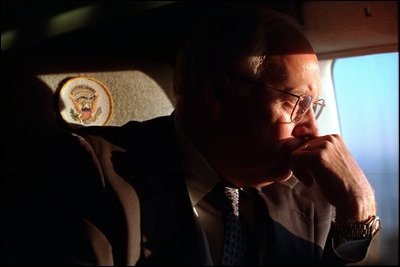
Vice President Dick Cheney looks out the window of Marine Two, the Vice President's helicopter, as he returns to the White House from an undisclosed location. White House Photo by David BohrerVice President Dick Cheney looks out the window of Marine Two, the Vice President's helicopter, as he returns to the White House from an undisclosed location. White House Photo by David Bohrer
Q Mr. Vice President, how is Mr. Whittington?

THE VICE PRESIDENT: Well, the good news is he's doing very well today. I talked to him yesterday after they discovered the heart problem, but it appears now to have been pretty well resolved and the reporting today is very good.

Q How did you feel when you heard about that?

THE VICE PRESIDENT: Well, it's a great relief. But I won't be, obviously, totally at ease until he's home. He's going to be in the hospital, apparently, for a few more days, and the problem, obviously, is that there's always the possibility of complications in somebody who is 78-79 years old. But he's a great man, he's in great shape, good friend, and our thoughts and prayers go out to he and his family.

Q How long have you known him?

THE VICE PRESIDENT: I first met him in Vail, Colorado, when I worked for Gerry Ford about 30 years ago, and it was the first time I'd ever hunted with him.

Q Would you describe him as a close friend, friendly acquaintance, what --

THE VICE PRESIDENT: No, an acquaintance.

Q Tell me what happened?

THE VICE PRESIDENT: Well, basically, we were hunting quail late in the day --

Q Describe the setting.

THE VICE PRESIDENT: It's in south Texas, wide-open spaces, a lot of brush cover, fairly shallow. But it's wild quail. It's some of the best quail hunting anyplace in the country. I've gone there, to the Armstrong ranch, for years. The Armstrongs have been friends for over 30 years. And a group of us had hunted all day on Saturday --

Q How many?

THE VICE PRESIDENT: Oh, probably 10 people. We weren't all together, but about 10 guests at the ranch. There were three of us who had gotten out of the vehicle and walked up on a covey of quail that had been pointed by the dogs. Covey is flushed, we've shot, and each of us got a bird. Harry couldn't find his, it had gone down in some deep cover, and so he went off to look for it. The other hunter and I then turned and walked about a hundred yards in another direction --

Q Away from him?

THE VICE PRESIDENT: Away from him -- where another covey had been spotted by an outrider. I was on the far right --

Q There was just two of you then?

THE VICE PRESIDENT: Just two of us at that point. The guide or outrider between us, and of course, there's this entourage behind us, all the cars and so forth that follow me around when I'm out there -- but bird flushed and went to my right, off to the west. I turned and shot at the bird, and at that second, saw Harry standing there. Didn't know he was there --

Q You had pulled the trigger and you saw him?

THE VICE PRESIDENT: Well, I saw him fall, basically. It had happened so fast.

Q What was he wearing?

THE VICE PRESIDENT: He was dressed in orange, he was dressed properly, but he was also -- there was a little bit of a gully there, so he was down a little ways before land level, although I could see the upper part of his body when -- I didn't see it at the time I shot, until after I'd fired. And the sun was directly behind him -- that affected the vision, too, I'm sure.

But the image of him falling is something I'll never be able to get out of my mind. I fired, and there's Harry falling. And it was, I'd have to say, one of the worst days of my life, at that moment.

Q Then what?

THE VICE PRESIDENT: Well, we went over to him, obviously, right away --

Q How far away from you was he?

THE VICE PRESIDENT: I'm guessing about 30 yards, which was a good thing. If he'd been closer, obviously, the damage from the shot would have been greater.

Q Now, is it clear that -- he had caught part of the shot, is that right?

THE VICE PRESIDENT: -- part of the shot. He was struck in the right side of his face, his neck and his upper torso on the right side of his body.

Q And you -- and I take it, you missed the bird.

THE VICE PRESIDENT: I have no idea. I mean, you focused on the bird, but as soon as I fired and saw Harry there, everything else went out of my mind. I don't know whether the bird went down, or didn't.

Q So did you run over to him or --

THE VICE PRESIDENT: Ran over to him and --

Q And what did you see? He's lying there --

THE VICE PRESIDENT: He was laying there on his back, obviously bleeding. You could see where the shot had struck him. And one of the fortunate things was that I've always got a medical team, in effect, covering me wherever I go. I had a physician's assistant with me that day. Within a minute or two he was on the scene administering first-aid. And --

Q And Mr. Whittington was conscious, unconscious, what?

THE VICE PRESIDENT: He was conscious --

Q What did you say?

THE VICE PRESIDENT: Well, I said, "Harry, I had no idea you were there." And --

Q What did he say?

THE VICE PRESIDENT: He didn't respond. He was -- he was breathing, conscious at that point, but he didn't -- he was, I'm sure, stunned, obviously, still trying to figure out what had happened to him. The doc was fantastic --

Q What did you think when you saw the injuries? How serious did they appear to you to be?

THE VICE PRESIDENT: I had no idea how serious it was going to be. I mean, it could have been extraordinarily serious. You just don't know at that moment. You know he's been struck, that there's a lot of shot that had hit him. But you don't know -- you think about his eyes. Fortunately, he was wearing hunting glasses, and that protected his eyes. You -- you just don't know. And the key thing, as I say, initially, was that the physician's assistant was right there. We also had an ambulance at the ranch, because one always follows me around wherever I go. And they were able to get the ambulance there, and within about 30 minutes we had him on his way to the hospital.

Q And what did you do then? Did you get up and did you go with him, or did you go to the hospital?

THE VICE PRESIDENT: No, I had -- I told my physician's assistant to go with him, but the ambulance is crowded and they didn't need another body in there. And so we loaded up and went back to ranch headquarters, basically. By then, it's about 7:00 p.m. at night. And Harry --

Q Did you have a sense then of how he was doing?

THE VICE PRESIDENT: Well, we're getting reports, but they were confusing. Early reports are always wrong. The initial reports that came back from the ambulance were that he was doing well, his eyes were open. They got him into the emergency room at Kingsville --

Q His eyes were open when you found him, then, right?

THE VICE PRESIDENT: Yes. One eye was open. But they got him in the emergency room in the small hospital at Kingsville, checked him out further there, then lifted him by helicopter from there into Corpus Christi, which has a big city hospital and all of the equipment.

Q So by now what time is it?

THE VICE PRESIDENT: I don't have an exact time line, although he got there sometime that evening, 8:00 p.m., 9:00 p.m.

Q So this is several hours after the incident?

THE VICE PRESIDENT: Well, I would say he was in Kingsville in the emergency room probably within, oh, less than an hour after they left the ranch.

Q Now, you're a seasoned hunter --

THE VICE PRESIDENT: I am, well, for the last 12, 15 years.

Q Right, and so you know all the procedures and how to maintain the proper line and distance between you and other hunters, and all that. So how, in your judgment, did this happen? Who -- what caused this? What was the responsibility here?

THE VICE PRESIDENT: Well, ultimately, I'm the guy who pulled the trigger that fired the round that hit Harry. And you can talk about all of the other conditions that existed at the time, but that's the bottom line. And there's no -- it was not Harry's fault. You can't blame anybody else. I'm the guy who pulled the trigger and shot my friend. And I say that is something I'll never forget.

Q Now, what about this -- it was said you were hunting out of vehicles. Was that because you have to have the vehicles, or was that because that's your -- the way you chose to hunt that day?

THE VICE PRESIDENT: No, the way -- this is a big ranch, about 50,000 acres. You cover a lot of territory on a quail hunt. Birds are oftentimes -- you're looking for coveys. And these are wild quail, they're not pen-raised. And you hunt them

-- basically, you have people out on horseback, what we call outriders, who are looking for the quail. And when they spot them, they've got radios, you'll go over, and say, get down and flush the quail. So you need --

Q So you could be a distance of a miles from where you spot quail until the next place you may find them?

THE VICE PRESIDENT: Well, usually you'll be, you know, maybe a few hundred yards. Might be farther than that; could be a quarter of a mile.

Q Does that kind of hunting only go forward on foot, or is it mostly --

THE VICE PRESIDENT: No, you always -- in that part of the country, you always are on vehicles, until you get up to where the covey is. Then you get off -- there will be dogs down, put down; the dogs will point to covey. And then you walk up on the covey. And as the covey flushes, that's when you shoot.

Q Was anybody drinking in this party?

THE VICE PRESIDENT: No. You don't hunt with people who drink. That's not a good idea. We had --

Q So he wasn't, and you weren't?

THE VICE PRESIDENT: Correct. We'd taken a break at lunch -- go down under an old -- ancient oak tree there on the place, and have a barbecue. I had a beer at lunch. After lunch we take a break, go back to ranch headquarters. Then we took about an hour-long tour of ranch, with a ranch hand driving the vehicle, looking at game. We didn't go back into the field to hunt quail until about, oh, sometime after 3:00 p.m.

The five of us who were in that party were together all afternoon. Nobody was drinking, nobody was under the influence.

Q Now, what thought did you give, then, to how -- you must have known that this was -- whether it was a matter of state, or not, was news. What thought did you give that evening to how this news should be transmitted?

THE VICE PRESIDENT: Well, my first reaction, Brit, was not to think: I need to call the press. My first reaction is: My friend, Harry, has been shot and we've got to take care of him. That evening there were other considerations. We wanted to make sure his family was taken care of. His wife was on the ranch. She wasn't with us when it happened, but we got her hooked up with the ambulance on the way to the hospital with Harry. He has grown children; we wanted to make sure they were notified, so they didn't hear on television that their father had been shot. And that was important, too.

But we also didn't know what the outcome here was going to be. We didn't know for sure what kind of shape Harry was in. We had preliminary reports, but they wanted to do a CAT scan, for example, to see how -- whether or not there was any internal damage, whether or not any vital organ had been penetrated by any of the shot. We did not know until Sunday morning that we could be confident that everything was probably going to be okay.

Q When did the family -- when had the family been informed? About what time?

THE VICE PRESIDENT: Well, his wife -- his wife knew as he was leaving the ranch --

Q Right, what about his children?

THE VICE PRESIDENT: I didn't make the calls to his children, so I don't know exactly when those contacts were made. One of his daughters had made it to the hospital by the next day when I visited. But one of the things I'd learned over the years was first reports are often wrong and you need to really wait and nail it down. And there was enough variation in the reports we were getting from the hospital, and so forth -- a couple of people who had been guests at the ranch went up to the hospital that evening; one of them was a doctor, so he obviously had some professional capabilities in terms of being able to relay messages. But we really didn't know until Sunday morning that Harry was probably going to be okay, that it looked like there hadn't been any serious damage to any vital organ. And that's when we began the process of notifying the press.

Q Well, what -- you must have recognized, though, with all your experience in Washington, that this was going to be a big story.

THE VICE PRESIDENT: Well, true, it was unprecedented. I've been in the business for a long time and never seen a situation quite like this. We've had experiences where the President has been shot; we've never had a situation where the Vice President shot somebody.

Q Not since Aaron Burr.

THE VICE PRESIDENT: Not since Aaron Burr --

Q Different circumstances.

THE VICE PRESIDENT: Different circumstances.

Q Well, did it occur to you that sooner was -- I mean, the one thing that we've all kind of learned over the last several decades is that if something like this happens, as a rule sooner is better.

THE VICE PRESIDENT: Well, if it's accurate. If it's accurate. And this is a complicated story.

Q But there were some things you knew. I mean, you knew the man had been shot, you knew he was injured, you knew he was in the hospital, and you knew you'd shot him.

THE VICE PRESIDENT: Correct.

Q And you knew certainly by sometime that evening that the relevant members of his family had been called. I realize you didn't know the outcome, and you could argue that you don't know the outcome today, really, finally.

THE VICE PRESIDENT: As we saw, if we'd put out a report Saturday night on what we heard then -- one report came in that said, superficial injuries. If we'd gone with a statement at that point, we'd have been wrong. And it was also important, I thought, to get the story out as accurately as possible, and this is a complicated story that, frankly, most reporters would never have dealt with before, so --

Q Had you discussed this with colleagues in the White House, with the President, and so on?

THE VICE PRESIDENT: I did not. The White House was notified, but I did not discuss it directly, myself. I talked to Andy Card, I guess it was Sunday morning.

Q Not until Sunday morning? Was that the first conversation you'd had with anybody in the -- at the White House?

THE VICE PRESIDENT: Yes.

Q And did you discuss this with Karl Rove at any time, as has been reported?

THE VICE PRESIDENT: No, Karl talks to -- I don't recall talking to Karl. Karl did talk with Katherine Armstrong, who is a good mutual friend to both of us. Karl hunts at the Armstrong, as well --

Q Say that again?

THE VICE PRESIDENT: I said Karl has hunted at the Armstrong, as well, and we're both good friends of the Armstrongs and of Katherine Armstrong. And Katherine suggested, and I agreed, that she would go make the announcement, that is that she'd put the story out. And I thought that made good sense for several reasons. First of all, she was an eye-witness. She'd seen the whole thing. Secondly, she'd grown up on the ranch, she'd hunted there all of her life. Third, she was the immediate past head of the Texas Wildlife and Parks Department, the game control commission in the state of Texas, an acknowledged expert in all of this.

And she wanted to go to the Corpus Christi Caller-Times, which is the local newspaper, covers that area, to reporters she knew. And I thought that made good sense because you can get as accurate a story as possible from somebody who knew and understood hunting. And then it would immediately go up to the wires and be posted on the website, which is the way it went out. And I thought that was the right call.

Q What do you think now?

THE VICE PRESIDENT: Well, I still do. I still think that the accuracy was enormously important. I had no press person with me, I didn't have any press people with me. I was there on a private weekend with friends on a private ranch. In terms of who I would contact to have somebody who would understand what we're even talking about, the first person that we talked with at one point, when Katherine first called the desk to get hold of a reporter didn't know the difference between a bullet and a shotgun -- a rifle bullet and a shotgun. And there are a lot of basic important parts of the story that required some degree of understanding. And so we were confident that Katherine was the right one, especially because she was an eye-witness and she could speak authoritatively on it. She probably knew better than I did what had happened since I'd only seen one piece of it.

Q By the next morning, had you spoken again to Mr. Whittington?

THE VICE PRESIDENT: The next morning I talked to his wife. And then I went to the hospital in Corpus Christi and visited with him.

Q When was that?

THE VICE PRESIDENT: Oh, it was shortly after noon on Sunday.

Q Now, by that time had the word gone out to the newspaper?

THE VICE PRESIDENT: I believe it had. I can't remember what time Katherine actually talked to the reporter. She had trouble that morning actually finding a reporter. But they finally got connected with the reporter, and that's when the story then went out.

Q Now, it strikes me that you must have known that this was going to be a national story --

THE VICE PRESIDENT: Oh, sure.

Q -- and it does raise the question of whether you couldn't have headed off this beltway firestorm if you had put out the word to the national media, as well as to the local newspaper so that it could post it on its website. I mean, in retrospect, wouldn't that have been the wise course --

THE VICE PRESIDENT: Well, who is going to do that? Are they going to take my word for what happened? There is obviously --

Q Well, obviously, you could have put the statement out in the name of whoever you wanted. You could put it out in the name of Mrs. Armstrong, if you wanted to. Obviously, that's -- she's the one who made the statement.

THE VICE PRESIDENT: Exactly. That's what we did. We went with Mrs. Armstrong. We had -- she's the one who put out the statement. And she was the most credible one to do it because she was a witness. It wasn't me in terms of saying, here's what happened, it was --

Q Right, understood. Now, the suspicion grows in some quarters that you -- that this was an attempt to minimize it, by having it first appear in a little paper and appear like a little hunting incident down in a remote corner of Texas.

THE VICE PRESIDENT: There wasn't any way this was going to be minimized, Brit; but it was important that it be accurate. I do think what I've experienced over the years here in Washington is as the media outlets have proliferated, speed has become sort of a driving force, lots of time at the expense of accuracy. And I wanted to make sure we got it as accurate as possible, and I think Katherine was an excellent choice. I don't know who you could get better as the basic source for the story than the witness who saw the whole thing.

Q When did you first speak to -- if you spoke to Andy Card at, what, mid-day, you said, on Sunday?

THE VICE PRESIDENT: Sometime Sunday morning.

Q And what about -- when did you first -- when, if ever, have you discussed it with the President?

THE VICE PRESIDENT: I talked to him about it yesterday, or Monday -- first on Monday, and then on Tuesday, too.

Q There is reporting to the effect that some in the White House feel you kind of -- well, look at what Scott McClellan went through the last couple days. There's some sense -- and perhaps not unfairly so -- that you kind of hung him out to dry. How do you feel about that?

THE VICE PRESIDENT: Well, Scott does a great job and it's a tough job. It's especially a tough job under these conditions and circumstances. I had a bit of the feeling that the press corps was upset because, to some extent, it was about them -- they didn't like the idea that we called the Corpus Christi Caller-Times instead of The New York Times. But it strikes me that the Corpus Christi Caller-Times is just as valid a news outlet as The New York Times is, especially for covering a major story in south Texas.

Q Well, perhaps so, but isn't there an institution here present at the White House that has long-established itself as the vehicle through which White House news gets out, and that's the pool?

THE VICE PRESIDENT: I had no press person with me, no coverage with me, no White House reporters with me. I'm comfortable with the way we did it, obviously. You can disagree with that, and some of the White House press corps clearly do. But, no, I've got nothing but good things to say about Scott McClellan and Dan Bartlett. They've got a tough job to do and they do it well. They urged us to get the story out. The decision about how it got out, basically, was my responsibility.

Q That was your call.

THE VICE PRESIDENT: That was my call.

Q All the way.

THE VICE PRESIDENT: All the way. It was recommended to me -- Katherine Armstrong wanted to do it, as she said, and I concurred in that; I thought it made good sense.

Q Now, you're talking to me today -- this is, what, Wednesday?

THE VICE PRESIDENT: Wednesday.

Q What about just coming out yourself Monday/Tuesday -- how come?

THE VICE PRESIDENT: Well, part of it obviously has to do with the status of Harry Whittington. And it's a difficult subject to talk about, frankly, Brit. But most especially I've been very concerned about him and focused on him and feel more comfortable coming out today because of the fact that his circumstances have improved, he's gotten by what was a potential crisis yesterday, with respect to the developments concerning his heart. I think this decision we made, that this was the right way to do it.

Q Describe if you can your conversations with him, what you've said to him and the attitude he's shown toward you in the aftermath of this.

THE VICE PRESIDENT: He's been fantastic. He's a gentleman in every respect. He oftentimes expressed more concern about me than about himself. He's been in good spirits, unfailingly cheerful --

Q What did he say about that? You said, "expressed concern" about you -- what did he say?

THE VICE PRESIDENT: Well, when I first saw him in the hospital, for example, he said, look, he said, I don't want this to create problems for you. He literally was more concerned about me and the impact on me than he was on the fact that he'd been shot. He's a -- I guess I'd describe him as a true Texas gentleman, a very successful attorney, successful businessman in Austin; a gentleman in every respect of the word. And he's been superb.

Q For you, personally, how would you -- you said this was one of the worst days of your life. How so?

THE VICE PRESIDENT: What happened to my friend as a result of my actions, it's part of this sudden, you know, in less than a second, less time than it takes to tell, going from what is a very happy, pleasant day with great friends in a beautiful part of the country, doing something I love -- to, my gosh, I've shot my friend. I've never experienced anything quite like that before.

Q Will it affect your attitude toward this pastime you so love in the future?

THE VICE PRESIDENT: I can't say that. You know, we canceled the Sunday hunt. I said, look I'm not -- we were scheduled to go out again on Sunday and I said I'm not going to go on Sunday, I want to focus on Harry. I'll have to think about it.

Q Some organizations have said they hoped you would find a less violent pastime.

THE VICE PRESIDENT: Well, it's brought me great pleasure over the years. I love the people that I've hunted with and do hunt with; love the outdoors, it's part of my heritage, growing up in Wyoming. It's part of who I am. But as I say, the season is ending, I'm going to let some time pass over it and think about the future.

Q On another subject, court filings have indicated that Scooter Libby has suggested that his superiors -- unidentified -- authorized the release of some classified information. What do you know about that?

THE VICE PRESIDENT: It's nothing I can talk about, Brit. This is an issue that's been under investigation for a couple of years. I've cooperated fully, including being interviewed, as well, by a special prosecutor. All of it is now going to trial. Scooter is entitled to the presumption of innocence. He's a great guy. I've worked with him for a long time, have enormous regard for him. I may well be called as a witness at some point in the case and it's, therefore, inappropriate for me to comment on any facet of the case.

Q Let me ask you another question. Is it your view that a Vice President has the authority to declassify information?

THE VICE PRESIDENT: There is an executive order to that effect.

Q There is.

THE VICE PRESIDENT: Yes.

Q Have you done it?

THE VICE PRESIDENT: Well, I've certainly advocated declassification and participated in declassification decisions. The executive order --

Q You ever done it unilaterally?

THE VICE PRESIDENT: I don't want to get into that. There is an executive order that specifies who has classification authority, and obviously focuses first and foremost on the President, but also includes the Vice President.

Q There have been two leaks, one that pertained to possible facilities in Europe; and another that pertained to this NSA matter. There are officials who have had various characterizations of the degree of damage done by those. How would you characterize the damage done by those two reports?

THE VICE PRESIDENT: There clearly has been damage done.

Q Which has been the more harmful, in your view?

THE VICE PRESIDENT: I don't want to get into just sort of ranking them, then you get into why is one more damaging than the other. One of the problems we have as a government is our inability to keep secrets. And it costs us, in terms of our relationship with other governments, in terms of the willingness of other intelligence services to work with us, in terms of revealing sources and methods. And all of those elements enter into some of these leaks.

Q Mr. Vice President, thank you very much for doing this.

THE VICE PRESIDENT: Thank you, Brit.

END 2:28 P.M. EST, For Immediate Release, Office of the Vice President, February 15, 2006.

more at
and or and ot and or and or and or or and or


Relared: Keywords Vice President Cheney, Wednesday, February 15, 2006
Update by the Office of the Vice President, Saturday, January 21, 2006 Vice President, Neil Cavuto, FOX News (VIDEO), Friday, January 13, 2006 Vice President to Travel to Egypt and Saudi Arabia, Friday, January 06, 2006 Vice President's Remarks on Iraq and the War on Terror (VIDEO), Thursday, November 17, 2005 Vice President's Remarks 11/16/05, Monday, October 31, 2005 Vice President appointed David S. Addington chief of staff, Saturday, October 29, 2005 Vice President's Statement on Libby Resignation, Friday, October 28, 2005 Resignation of Scooter Libby (VIDEO, Tuesday, October 04, 2005 Remarks by the Vice President to Second Marine Expeditionary Force, Monday, September 26, 2005 Statement on Vice President Cheney's Medical Procedure, Tuesday, September 06, 2005 President Meets with Cabinet (VIDEO), Thursday, August 11, 2005 President Meets with Defense and Foreign Policy Teams (VIDEO), Tuesday, July 26, 2005 Vice President at Dinner for Vito Fossella, Saturday, July 09, 2005 President, VP Signs Book of Condolence at British Embassy, Thursday, May 12, 2005 Vice President, A Nation Honors Nancy Reagan, Saturday, April 16, 2005 Vice President Dick Cheney and Mrs. Cheney Release 2004 Income Tax Return