Thursday, March 30, 2006

State Department Podcast, VIDEO and Text 03/29/06

Daily Press Briefing, Spokesman Sean McCormack, FULL STREAMING VIDEO, file is real media format, running time is 53:59 PODCAST, file is MP3 for PODCAST, running time is 52:49 Washington, DC, March 29, 2006
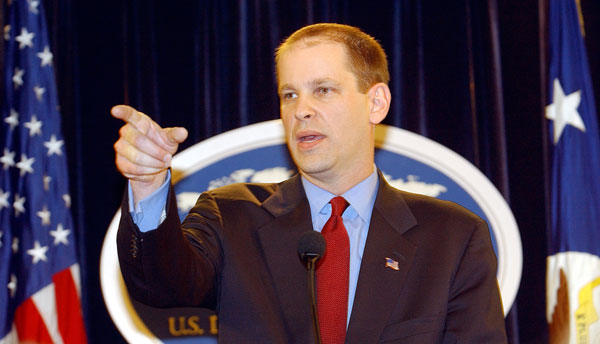
Department Spokesman Sean McCormack (shown during the  Daily Press Briefing) was sworn in as Assistant Secretary for Public Affairs and Department Spokesman on June 2, 2005. Immediately prior to returning to the State Department, Mr. McCormack served as Special Assistant to the President, Spokesman for the National Security Council, and Deputy White House Press Secretary for Foreign Policy. State Department Photo by Michael Gross.Department Spokesman Sean McCormack (shown during the Daily Press Briefing) was sworn in as Assistant Secretary for Public Affairs and Department Spokesman on June 2, 2005. Immediately prior to returning to the State Department,
Mr. McCormack served as Special Assistant to the President, Spokesman for the National Security Council, and Deputy White House Press Secretary for Foreign Policy. State Department Photo by Michael Gross. TRANSCRIPT:, DPB # 52, 12:50 p.m. ESTMR. MCCORMACK: Good afternoon, everybody. How are you? I think some of you here are going to be traveling with us later this afternoon. Sue, a hearty soul, here in the front row, congratulations to you. I don't know where the rest of your colleagues are – if they’ll even be on the trip. I don't have any opening statements, so I'll be happy to take your questions.

QUESTION: Have you seen the story about how the Administration is not particularly fond of the Iraqi Prime Minister and would like to see somebody else get the job?

MR. MCCORMACK: I've seen a lot of stories out there, George. And look, the bottom line here is that the Iraqi people are going to be the ones who choose the next Iraqi prime minister. It is for them to decide. They're going through a political process right now. There's a lot of bargaining. There's a lot of back and forth, not only about who will fill what job but also about what the platform of this government is going to be. So there's a lot of work going on behind the scenes and I expect that that is going to continue in the coming days.

That said, we are urging the Iraqi political leaders to move forward quickly and form a government of national unity, not because of what the U.S. expects but that's what the Iraqi people expect. They held an election, they put their trust in these political leaders and they expect them to move forward and form a government of national unity that is acceptable to all Iraqis and that has strong leadership. And who fills what position is going to be a decision for the Iraqi people and the Iraqi political leaders to make.

QUESTION: And so we didn't weigh in?

MR. MCCORMACK: Excuse me?

QUESTION: So we didn't weigh in on whether Jafari should pull himself out?

MR. MCCORMACK: Like I said, the bottom line here is that the Iraqi political leaders will decide who's going to fill those jobs in the national unity government. Of course, Ambassador Khalilzad is on the sidelines advising the Iraqis in this process, of course, and at their request. But the hard decisions that are going to be made and that are being made about who is included in this Iraqi government as well as what the platform of that Iraqi government is are going to be made by the Iraqis.

QUESTION: Is that one of the things he advised?

MR. MCCORMACK: I'm not going to get into what discussions Ambassador Khalilzad or anybody else may have had through private diplomatic channels. You have those discussions through diplomatic channels because they're private and I'm going to keep them private.

Yes. That was quick. All right, Sue.

QUESTION: On Iran. Do you -- how close do you think you are to getting the agreement on a presidential statement? And also you've said that the goal of this meeting in Berlin tomorrow is to look at the medium and long-term strategies. What are those medium and long-term strategies? If you could be specific, is it sanctions? Maybe if you could give a few examples as to what those strategies might be to get Iran to change.

MR. MCCORMACK: Well, on the last part of your question, I'm not going to get into specifics. There are a lot of -- number of diplomatic levers that are available to the international community, both acting as a community, as groups of nations and as individual nations. So I would expect that the P-5 + 1 member ministers represented at the Berlin meeting are going to have a discussion about their thoughts about what the medium and long term will hold. But ultimately the key to resolving this is the Iranian regime making a decision to change its behavior, to suspend its uranium enrichment programs, to seek to engage the international community in a serious manner, and to come back into the mainstream of the nonproliferation framework.

Right now this regime has taken Iran far outside that mainstream. They have isolated Iran and the Iranian people from the rest of the world. We see that right now just by the fact that we have -- are having these discussions about a presidential statement up in New York. The reason why we are having those discussions is repeatedly, over the course of many years, the Iranian regime has deceived the international community. The Iranian regime has lied to the international community about the nature of its nuclear program. It is, we believe, seeking to develop a nuclear weapon under the cover of a peaceful nuclear program; that is an abrogation of its Nonproliferation Treaty obligations and it is also an abrogation of commitments it has made to individual members of the international community.

So what the international community did at the Board of Governors was said: Enough -- we are going to hold you to account and one of the ways we are going to do that is we're -- this is issue is going to be sent to the Security Council. And that's where the issue resides at the moment. We're working very hard with other members of the Security Council on a presidential statement and this presidential statement will send a strong clear message to the Iranian regime that the international community is united in its demand that Iran come back into compliance with its Nonproliferation Treaty obligations.

And just one brief update for you on that, the Secretary just spoke with Foreign Minister Lavrov on this issue. They did make some progress regarding the language. There have been two meetings already up in New York among the Security Council members and I would expect that there's probably going to be at least one more today. They're working on it -- they have been working on it hard.

We all know that these questions of working out specific language in these multilateral fora take time. And the reason why it takes time in this particular case is because the issue is so serious and we understand that. We understand that people want to take time and look at this statement very carefully because it has meaning. We also, on the other hand, are urging the Security Council members to move forward because while it is an important -- it is an important issue, they need to move forward on this presidential statement and we're hopeful that we will be able to get a presidential statement today or in the next couple of days. If it -- I don't expect it -- it was not planned to be the main topic of conversation at the Berlin meeting. We'll see if it is something that they still need to discuss. We are hopeful that we'll be able to resolve any differences over the language in the next day.

QUESTION: When did the Secretary speak to the Foreign Minister Lavrov?

MR. MCCORMACK: Just a minute a go, within the past hour.

QUESTION: Today. So it's the third time in a few days.

MR. MCCORMACK: At least the second time. I have lost count of the various phone calls.

QUESTION: Okay. I have a question about the Foreign Minister Lavrov. He said today that any ideas about the coercive forceful solution to the issue of nuclear -- Iranian nuclear program are highly counterproductive. So do you think it would -- it will help for the (inaudible) you will have in Germany?

MR. MCCORMACK: Again, we're working right now up in New York to come to agreement on a presidential statement and we're hopeful that we'll be able to come to agreement in the next day. And on the issue of force, we've made it very clear that we're working on a diplomatic --

QUESTION: It's not force -- it's coercive forceful solution. So it can mean sanctions, it's not really military. It's not as precise as the military --

MR. MCCORMACK: Well, there are a number of different levers at the disposal of the international community. We are -- in seeking a presidential statement at the Security Council, seeking to use one of those levers -- a presidential statement. And we hope the fact that Iran finds itself in the spotlight of the international community, the subject of discussion, that that will bring more pressure to bear on the regime so that it will change its behavior, so that it will walk back its nuclear program. It will suspend uranium enrichment activities and that it will re-engage the international community in serious discussions. If the Iranians, after a presidential statement, choose not to pursue a policy of engagement in cooperation with the international community and insist upon continuing a strategy of confrontation, then the international community will have to take a look at what steps are next.

We've made it clear and we are showing through our actions that, as a first step, we are not seeking sanctions. But clearly, that is a lever that is available to the international community to individual states, but that's not the matter that's being discussed at the moment. The matter that's being discussed at the moment is a presidential statement and the idea behind it is to, again, create a consensus and send a strong message to the Iranian Government that they have to change their behavior.

QUESTION: (Inaudible.)

MR. MCCORMACK: I'm not going to try to predict what future diplomatic measures might be agreed upon by the international community. Right now we are working on a presidential statement.

QUESTION: Who placed the call -- which way did the call go to Lavrov?

MR. MCCORMACK: I think the Secretary called for Foreign Minister Lavrov.

QUESTION: I mean, if you don't -- if it ends up that there is no statement and you're meeting in Berlin, are you able to look ahead and move forward on next diplomatic steps without this kind of in hand, this presidential statement, or are you just kind of -- is it a foregone conclusion that there will be some presidential statement and you'll -- you know, the text of which you may not have at this meeting? I mean, how are you going to look ahead if you can't be in the present?

MR. MCCORMACK: Well, we're hopeful that the presidential statement will be finished by the time they have this meeting in Berlin. If not, we'll deal with that situation. But the original intent of this meeting, which was thought about, I think, a couple of weeks ago, or at least in the wake of Under Secretary Burns's last meeting with his counterparts in this group, was to look down the road. And I expect that that will be the primary focus of the meeting. If there is some residual business that needs to be concluded with regard to a presidential statement or any other action in the Security Council, I'm sure that they'll discuss it.

QUESTION: When you say that you hope that there's be one in the next couple of days, have you seen, you know, a substantial amount of continual progress that you feel that you're very close at this point? I mean, you've been saying for the last, I don't know, week to ten days that you hope to have one in the next couple days.

MR. MCCORMACK: Well, I think the use of the word "substantial" depends on your perspective. When you're going at this hammer and tong and we're looking at individual words and word tenses, a little change means a lot. And that's when you get down to the -- when you get down to the end game of these kinds of discussions on these documents that are a product of a multilateral forum, it takes some time and small changes can mean a lot. So that's where the focus is. It's very detail-oriented and I think that it has come quite a way. We are hopeful that we'll be able to get this presidential statement, which would mean the 15 members of the Security Council would be speaking with one voice to Iran on behalf of the international community.

QUESTION: So when you -- so you are in the end game here? There's not like -- like a couple of days ago you were talking about fundamental differences on, you know, some of the main aspects of the resolution and now you're talking end game. So is it just kind of dotting -- well, I know, as you said, that's a big deal, but do you have fundamental agreement on the principles of the resolution at this point?

MR. MCCORMACK: Look --

QUESTION: I mean the statement.

MR. MCCORMACK: Nothing's done till everything's done so I'm not going to give you a kind of percentage completion rate on the presidential statement. It has come a long way. There has been certainly a narrowing of differences over language in the presidential statement and we're hopeful that through hard work and some concerted diplomacy that we're going to be able to finish this up.

Mr. Weisman.

QUESTION: Mr. McCormack, does the United States view Iran's nuclear activities as a threat to international peace and security, and should that be a part of the language of a presidential statement?

MR. MCCORMACK: Steve, we've talked about the fact that introduction of a nuclear weapon by Iran into the region is a destabilizing event, not only for the region but for the rest of the world. It is a threat. It certainly is a threat. And that's why the international -- and everybody agrees that that is an action that we want to avoid. Everybody. I don't think -- you might find a few outliers, maybe some of the countries that voted with Iran in the IAEA Board of Governors, but I don't think you're going to find any disagreement with the idea that Iran can't be allowed to develop a nuclear weapon because it would be destabilizing and it would be a threat.

So we are seeking to deal with that situation, that potential situation, to avoid that situation through the use of diplomacy. And we have over the course of the past -- certainly over the past year built a larger and larger consensus among the members of the international community that that can't be allowed to happen. Now we're down to talking about various diplomatic tactics: How can we increase the pressure on the Iranian regime so that they will change their behavior and so that we don't get to that state where Iran has been able to develop a nuclear weapon.

QUESTION: I mean, some countries on the Security Council are willing to say that that language needs to be in the resolution -- or rather the statement. Is that the U.S. view?

MR. MCCORMACK: Well, right now, Steve, we are negotiating specific language and I don't want to, from the podium, start predicting exactly what language may or may not be in a final presidential statement. But what we want to accomplish in doing this is to send a strong, clear -- the strongest possible, most clear message we can to Iran. So that has been the principle under which we have been working and as well as other members of the Security Council. And in terms of specific language, I don't want to get into exactly where we are on specific language, but we're hopeful that we'll be able to conclude something here in the near future.

Yes, on Iran.

QUESTION: Yes. Just before this meeting, the P-5 meeting, the German Foreign Minister said today that the agreement, the India nuclear agreement is --

MR. MCCORMACK: That's a tricky was of getting to Iran.

QUESTION: No. He said it was not helpful --

MR. MCCORMACK: I saw --

QUESTION: -- because of the timing of this agreement during the negotiations with Iran. So --

MR. MCCORMACK: I saw the quote and he also said that Germany wasn't going to impose any changes in the Nuclear Supplier Group. Look, the Secretary and the President as well as other members of this Administration have talked about the importance of this agreement between the United States and India. And certainly we have talked about it in the past, how we would differ with anybody who tries to make any comparisons between the behavior of Iran and the behavior of India.

Our view, in sum, is that at the end of the day, India has been a responsible member of the international community when it comes to issues of nonproliferation. Iran, on the other hand, has abrogated its treaty obligations not to seek to develop a nuclear weapon, continually lied to the international community about that, continually deceived the international community about that. And certainly we do have concerns about Iran's involvement in proliferation of WMD. Certainly we can -- one great example is going back to the contacts between the Iranian regime and the A.Q. Khan network. The A.Q. Khan network was in business for one thing, and that was to help parties develop nuclear weapons.

So the track record of Iran with regard to nonproliferation behavior, I think is -- stands in stark contrast to the -- over the recent history, the behavior of India in this regard and that is the reason. And it is on merits of that behavior by the Indian Government that we have concluded the agreement between the United States and India and are now working with the Congress to seek some changes in U.S. law that would allow that agreement to be fully implemented.

Joel.

QUESTION: Sean, change of subject. Everyone, meaning all the attendees at the Arab League summit in Khartoum have rejected Prime Minister-elect Olmert's unilateral pullout consolidation plan from the West Bank, including President Abbas. Are we back at square one and, of course, right now both the Israelis and the Palestinian Authority are forming new governments?

MR. MCCORMACK: Well, Joel, you bring up the issue of the recent elections in Israel. Certainly, we congratulate President Olmert on the apparent victory of Kadima. I don't think the results will be actually certified and final for quite some time, but it's I think -- the votes are in. And we look forward to working with the next Israeli Government. We have worked over the years very well and very closely with the succession of Israeli governments. They are now going to enter into a process of government formation and also during that process come up with a platform for that government, and we will during this period of time, I am sure, be in contact with them about their thoughts on a variety of different issues, including the one that you raise.

Our views on the issues of borders and settlements and related issues are clear. They're unchanged. And just one additional bit of information. I expect that Elliot Abrams and David Welch would probably be traveling to the region in the near future. I think they're probably on their way and they'll be holding consultations in the --

QUESTION: (Inaudible.)

MR. MCCORMACK: Yeah, David is already in the region and I think Elliot is on his way.

QUESTION: There's a report that U.S. officials ordered diplomats and contractors not to have contact with the Hamas government and I assume that's a result of the actions today in the territories. Can you corroborate that?

MR. MCCORMACK: Let me try to walk you through this and provide a little bit of context. There is now a new Palestinian Government. The Hamas government has been sworn in. They hold the reins of authority in the day-to-day operation of the Palestinian Authority. President Abbas retains a separate set of powers and quite clearly he has chosen a different pathway with respect to abiding by the Palestinians' previous commitments to seek a two-state solution though peaceful negotiation.

Sadly, Hamas has not. They have ignored the wishes of President Abbas when he asked the Hamas government -- Hamas to form a government based on a platform of recognition of Israel, abiding by the Palestinians' previous agreements to seek a two-state solution via the roadmap. Hamas has also ignored the demands of the international community of the three conditions that were laid out very clearly in the statement made in London.

It will be -- in the future Hamas's decisions and actions will certainly influence the reaction from the international community. I say all this to say that we are now in a period of transition and change from a Palestinian Authority that was committed to seeking a two-state solution, seeking peace with Israel via negotiation, to a Hamas-led government which does not. And I say that with the caveat of President Abbas is still committed to the two-state solution.

Now, I would expect, George, over the coming days and weeks, based on the fact that Hamas has refused to heed the call of the international community, specifically the Quartet statement, to meet those conditions, that you're going to see some changes in policy and behavior on the part of the international community.

With respect to the United States, we are going to in the coming days and weeks take a look at our contact policy with regard to Palestinian Authority officials as well Palestinian diplomats around the world.

This story to which you refer, I believe, is talking about an administrative notice that was put out in the Consulate in Jerusalem, which has primary responsibility for contact with Palestinian officials. And all that administrative notice did was, before you have a contact with Palestinian officials, check with the leadership of the consulate because there is going to be a review of the United States contact policy with Palestinian officials. Based on the fact that Hamas now is leading a government and they have refused to meet the conditions laid out by the international community, also the United States as an individual country has certain laws that U.S. officials must abide by and part of those laws say that we will not deal with a member of a terrorist organization. So we will not have contact with members of Hamas, no matter what title they may have.

QUESTION: Follow up, Sean.

MR. MCCORMACK: Yes.

QUESTION: If it's U.S. policy, if U.S. law bans contact for U.S. officials with Hamas, why did you need to put out a statement saying that --

MR. MCCORMACK: Because again, what it did is it said check first because there --

QUESTION: A what?

MR. MCCORMACK: It said check first.

QUESTION: It said check first.

MR. MCCORMACK: Because there is going to be a review of our contact policy. The reason for that, Janine, is because there are -- it's a period of transition, it's a period of change. You have a Hamas-led government. You also have President Abbas who have independent members of parliament as well who are not Hamas. So there may be questions in the minds of individuals -- well, with whom can I have contact? And we -- I'm not prepared to at this time to outline exactly what the policy will be for you. But certainly, that's a natural question that might arise in the mind of an individual that's seeking to do their job. But again, I have to point out that this is a period of transition, so we're going to try to answer people's questions as best we can, within the confines of the policy.

QUESTION: Just a follow-up, there's been two things. First, the story said that it also -- statement also said we do not have any contact with Hamas officials; did it say that? And second, saying that you're going to review the policy might suggest that you're going to be open to meeting with Hamas officials --

MR. MCCORMACK: No.

QUESTION: -- since it's banned right now.

MR. MCCORMACK: No, no. That's -- it's you know, and certainly, I hope that you don't take away at all from anything that I said -- leaving open the door for contact with Hamas. It's not. We don't deal with terrorist organizations. What it's meant to do is just really try to answer questions for our people in the field in embassies around the world who have to deal with very practical questions about, well, if there's a Palestinian ambassador, how do I engage with that individual? So it's really just a -- it's a very practical thing that we have to outline for our diplomats around the world so they know that their behavior will be consistent with our policy.

QUESTION: But if you're saying the policy is under review now and you don't -- and it's not finished, what are they going to be told, if they're asking these questions and you don't have -- you don't have answers ready?

MR. MCCORMACK: Teri, as I said, this is -- it's a period of transition and change and I would expect that we will get answers to any questions that people may have in the field in the very near future.

QUESTION: Okay. Can I Just follow up on that? Did this note or is the thinking at the moment that whole ministries will be off limits?

MR. MCCORMACK: Again, at this point, Teri, I'm not going to get in -- I can't get into detailed answers to these questions. I know it's a valid question. In due course, we'll be able to share all this with you.

QUESTION: On a related issue, now that there is a Hamas government, have you finished your review of U.S. aid programs?

MR. MCCORMACK: A couple of points of principle, Charlie. And one, as the Secretary has said, we're looking at ways to increase our humanitarian aide to the Palestinian people and there's been a review that is really substantially completed with regard to humanitarian and other types of aid there. I think there's some i's that need to be dotted and t's crossed on that. So I'm not prepared at this point to get into details of that. So we're looking at ways that we can increase humanitarian aid to the Palestinian people. On the other hand, we've said it before and I'll reiterate it that we are not going to provide funds to a terrorist organization. And we are not going to provide U.S. funds to a Hamas-led government.

So in terms of the details, the practical matters of, well, what does that mean for individual programs, in due course I'd be happy to share those things with you. But at the moment, I don’t have those details to share with you.

Steve.

QUESTION: Circling back to the issue of contact, you said a second ago that the U.S. would not have contact with members of Hamas, no matter what title they have.

MR. MCCORMACK: Right.

QUESTION: Does that leave the door open to having contact with officials in a Hamas-led government who are not members of Hamas themselves, like civil servants or --

MR. MCCORMACK: Right. People working in ministries and that sort?

QUESTION: Yeah. I mean, do you intend to leave the door open to that?

MR. MCCORMACK: On those questions, you know, I don't want to give you a steer at this point one way or the other. I want to be able to -- we'll certainly in due course be able to talk about these issues with you in detail, but at this point I can't provide -- I'm not able to provide you a detailed answer on that.

QUESTION: Why isn't that policy ready? It's not like it's a surprise that these guys were going to be in these places.

MR. MCCORMACK: Well, we now just today have the Hamas government. Certainly you can have changes right up until the last minute and you want to make sure that whatever your policies are, whatever your regulations and guidelines are, that they accurately reflect reality. So that's --

QUESTION: It didn't matter who the individuals were. You (inaudible) ---

MR. MCCORMACK: Teri, I would expect in the near future we'll be able to talk to you a little bit more in detail about this.

Hold on. Sue's been very patient here.

QUESTION: Has the Palestinian Authority -- a couple of days ago, the previous Palestinian Authority, handed over the $20 million that was outstanding? I think it's slightly less. And have you informed aid agencies that they must have absolutely no contact with Hamas and have you asked for more funds to be returned from aid groups who are dealing with --

MR. MCCORMACK: On the first part of your question, I'll check. I haven't checked on that issue in a while. I know that some part of the 50 million was returned and there was a continuing discussion about that matter. I can't tell you exactly where that was left off.

In terms of the specific aid programs and specific regulations that might guide NGOs who receive U.S. funds, again, that would get into some of the details of the review. And again, in due course we'll be happy to share those with you, but at the moment I don't -- part of the dotting the i's and crossing the t's is once you have a policy decision or you have the substantial outlines of a policy decision, how do you go about implementing that at a technical level? There are a lot of practical questions that need to be answered in that regard, and you bring up a couple of them. So before -- I don't want to get into the details of it before we're able to answer some of those questions for you.

George.

QUESTION: Same general subject.

QUESTION: I have another question on this.

MR. MCCORMACK: Do you yield the floor, Mr. Gedda?

QUESTION: I understand that --

QUESTION: No.

QUESTION: -- there's a Palestinian --

MR. MCCORMACK: It's the same subject.

QUESTION: Oh, okay.

QUESTION: Palestinian human rights activist who had -- who was planning on coming to the United States who had been smart enough to bring a copy of the piece of paper – (inaudible) be better off -- but anyway, he had a whole schedule planned here for this week and but he was not allowed to come because he declined to get a police certificate from the Israelis. Do you have something on that?

MR. MCCORMACK: I think you're referring to the case of Mr. Raji Sourani.

QUESTION: Yes.

MR. MCCORMACK: And his visa application is currently being adjudicated according to all relevant U.S. laws.

On this particular matter, certainly we are aware of the case. We're aware of Mr. Sourani's prominence and his interest in the case. On the specific question of the police certificate, as a matter of practice consular officers notify individual applicants of any documentation that might be required to complete processing of their visa application, and as part of the visa record this information is confidential.

U.S. law does require consular officers to request additional documentation under certain circumstances. This can include police certificates from a competent police service. This requirement does not connote the need for a third-country clearance; rather, it is solely for the administration of U.S. law. Additional documentation would not be the sole factor in determination of an applicant's eligibility when consular officers evaluate all information available to them to adjudicate visas under U.S. law.

So this is a matter -- it's an open visa application and, as many of you know, we can't get into the details of the visa application process. This information is provided to consular officers in confidence and that's not a confidence that we can break.

QUESTION: Can I follow up on that?

MR. MCCORMACK: Sure.

QUESTION: Well, I mean, do you at this point, with everything going on with the Israelis, I mean, for the Israelis to help adjudicate -- to help in the process of adjudicating this guy's visas, do you --

MR. MCCORMACK: Well, they don't help him adjudicate the visa.

QUESTION: Well, what I mean is they have to provide certain documentation that, you know, helps a favorable outcome. I mean --

MR. MCCORMACK: I can't comment on the specific -- this specific case, but I know in the past that these police certificates have been obtained.

QUESTION: Are you helping with this matter? My understanding is that --

MR. MCCORMACK: It's not our job to help with the visa application --

QUESTION: Well, no, I understand but you --

MR. MCCORMACK: -- or to provide the documentation --

QUESTION: This guy was invited to Washington and, apparently, he has a lot of meetings with various Administration officials. So, you know, it just seems like this happens occasionally, not just with the Palestinians but with other people, that these people are invited to Washington and then have a problem obtaining a visa to get here to meet with the Administration. I mean, do you ever -- when you have a review of the visa process, I mean, is this one of the things that you look at?

MR. MCCORMACK: Look, as somebody who's been on the other side of a consular interview window I know how hard people work and the discretion that people try to use in making these judgments, these are hard judgments concerning people's backgrounds, people's intention as well as the paperwork that they have in front of them. So certainly the United States and our consular officers around the world try to make the visa process as understandable, comprehensible and -- if I dare use the word -- pleasant as possible. And oftentimes that's hard to do. Sometimes there are extenuating circumstances that make the visa application process more difficult. We try to work with individuals to get them through that process, but at the end of the day consular officers have an obligation to uphold and implement U.S. law, and that's what the consular officers in this particular case are doing.

QUESTION: Right. But shouldn't there be coordination with the agencies that are actually inviting the guy? I mean --

MR. MCCORMACK: Again, the consular officer has an obligation to make a judgment based on the merits of the case just before him, not whether or not somebody is going to be missing a meeting. They have to make their judgments based on the facts in front of them. And so somebody's schedule, while it may be a factor taken into consideration, is not the primary factor in making a judgment. The primary factor in making a judgment are the facts as they are before you and whether or not the facts will allow a consular officer to issue a visa given the circumstances.

QUESTION: I'm sorry. One more, though.

MR. MCCORMACK: Okay.

QUESTION: I mean, if this guy is not -- and whether -- maybe he's not eligible for a visa. Is this the kind of guy you should be inviting to Washington in the first place? I just think that there's a disconnect in maybe the order in which -- you know, do you do background checks on people before you invite them to Washington, or you invite them and then see if they're applicable for a visa?

QUESTION: (Off-mike.) It was a private (inaudible).

QUESTION: My understanding was that he had meetings in the Administration.

MR. MCCORMACK: You know, I don't have access to his schedule.

Yes.

QUESTION: If I can go back to the administrative note?

MR. MCCORMACK: Mm-hmm.

QUESTION: Does it apply only to U.S. diplomats or it applies also to contractors?

MR. MCCORMACK: I don't know to whom it was addressed.

QUESTION: Change of subject?

MR. MCCORMACK: Samir.

QUESTION: Oh, Samir, go ahead.

QUESTION: What is the U.S. assessment about the declaration by the Arab Summit in Sudan? Were you satisfied with all the positions they took or do you have any complaints?

MR. MCCORMACK: Well, we would certainly welcome Arab League -- individual Arab country contributions to the AMIS mission as it makes the transition to a UN mission. The AU itself has agreed in principle to this transition. So individual group contributions in moving this process forward are welcome -- would be welcome.

QUESTION: But in general, the Arab Summit, the declaration, the communiqué, were you satisfied on Iraq on Palestine on Syria on Lebanon?

QUESTION: On nuclear power?

MR. MCCORMACK: I haven't read through it, Samir.

QUESTION: (Inaudible.)

MR. MCCORMACK: Honestly, haven't read through it.

QUESTION: Could we talk about Charles Taylor, please?

MR. MCCORMACK: Sure.

QUESTION: What do you want to say about him?

MR. MCCORMACK: He will face justice. He will face justice for the crimes that he has committed. He will face justice for the chaos and unmentionable pain he has caused in the region. He is on his way to the court in Sierra Leone as we speak.

QUESTION: Have you come to any conclusion about whether the government of Nigeria was negligent in letting him escape or do you think they did a great job in apprehending him at the border? I mean, how would you rate their --

MR. MCCORMACK: I think it's an open matter as to what happened that allowed him to escape. Certainly, we -- people in the region and around the world are gratified that he is in custody where he should be and that he is now on his way to facing justice.

QUESTION: And one final one, is the U.S. looking at -- there's some aid to Nigeria that has been frozen, I believe, some military aid, is that correct, that may now be freed up?

MR. MCCORMACK: Don't know. I'll check. Be happy to check for you, Teri.

QUESTION: Okay. I thought there might be some programs that were frozen until he was turned over.

MR. MCCORMACK: I'll be happy to check into it for you.

QUESTION: Thanks.

MR. MCCORMACK: Janine.

QUESTION: Could you take us through President Obasajano's arrival last night and who he met with and what happened overnight in the discussions between the U.S. and his delegation?

MR. MCCORMACK: Well, I don't know specifically what time he landed here. It was some time after 9 o'clock, I think. He and his party, I think, had some discussions with Assistant Secretary Frazer -- Jendayi Frazer, as well as Cindy Courville. We were, of course, very interested in what the President's party knew about Charles Taylor's escape, his status and the status of the manhunt for him. So that was really the nature of the conversations that we had last night with President Obasanjo's party.

QUESTION: And do you know at what point the U.S. learned that the Nigerians had detained him and had decided, in fact, to immediately send him to Liberia?

MR. MCCORMACK: I don't have the exact time. I don't know the exact time. I know that the Secretary found out early this morning.

QUESTION: As of late yesterday, they hadn't even informed you officially that he was missing, as I understand it. So what made you think there was a manhunt?

MR. MCCORMACK: Well, we would naturally assume that since he was under detention by Nigerian authorities, that they would want to re-detain him.

QUESTION: And did you have any evidence that that order was given long before President Obasanjo came?

MR. MCCORMACK: Don't have a specific timeline. I think it's probably best to put those questions to the Nigerian Government.

QUESTION: Are you doing that? Are you guys asking? You said it's an open matter what exactly happened --

MR. MCCORMACK: It's an open question as to what happened. I think it would be -- it's certainly a matter of interest, yes, but I think it's probably a matter of greater interest to the Nigerian Government since they were the -- they were the authorities responsible for holding Charles Taylor. The important fact now is that he is now on his way to the international court in Sierra Leone where he will be tried for his crimes.

MR. MCCORMACK: Steve.

QUESTION: The discussions last night with the Assistant Secretary, were they face to face or where were they?

MR. MCCORMACK: They did. I think they were at his hotel, Steve.

QUESTION: And was there ever any point where the meetings that he was supposed to have today were in jeopardy?

MR. MCCORMACK: I think Scott McClellan addressed this over at the White House. He said that the meeting was always on the President's schedule.

QUESTION: Will the U.S. be investigating how he actually -- how this all came to be, how he escaped and then was caught? You know, the details of it? Will the U.S. be looking into it or are they going to leave it to the Nigerians and you're happy that now Charles Taylor --

MR. MCCORMACK: We will follow up with the Nigerian Government on that issue. But as I said, the important fact is that he is in custody and he's going to face justice.

Joel.

QUESTION: Sean, a change of subject. Yesterday a rally -- or Monday a rally was held here in Washington, D.C., with the Falun Gong expressing moral outrage about secret death camps in China in which their practitioners are being tortured, murdered and live organs harvested. Yesterday Beijing issued a statement saying that this donation practice would end. I wonder what pressures are you contemplating to end this formally or seek a clarification with the Chinese Government for this to end. And also, what is being done to pressure them to quickly end this repression against Falun Gong and these so-called death camps?

MR. MCCORMACK: Joel, I haven't seen those reports. If we have anything to add to them, we'll certainly get it to you.

Sue.

QUESTION: Do you have any comments or words of wisdom on the Secretary's trip to Liverpool and Blackburn? And the Stop the War Coalition in Britain is planning, apparently, some quite large demonstrations to protest, you know, U.S. and British involvement in Iraq. Are you prepared for these demonstrations and anticipate them?

MR. MCCORMACK: The Secretary looks forward to her visit to Liverpool and Foreign Secretary Straw's district. This is a return visit. The Secretary hosted Foreign Secretary Straw in Birmingham, Alabama, and so she's quite pleased to be able to visit Foreign Secretary Straw and get to know and get to meet the people that are important in his life and in Blackburn.

I think as a theme for those of you who were on the trip to Birmingham or who saw the reporting on it, an important theme of that trip was democracy and the journey that states undertake on the pathway to democracy. And I think if you look at some of the historical connections between Birmingham and Liverpool and Blackburn, it's quite striking how far our democracies have come separately in the UK and in the United States.

And there have been bumps along the way, but what's important is that we have persevered in that journey and that we have sought to address injustices; we have sought to address inequities in our lives and our societies.

And a big part of that in seeing that come about is freedom of expression and part of what is great about our democracy here, the democracy in England, is the ability of people to express freely without fear of harm or retribution their point of view.

And we all know, we've seen the reporting, there are certainly those who oppose the hard decisions that President Bush, Prime Minister Blair and other members of their respective cabinets took. It is the right of these individuals to protest, to protest peacefully and to air in public their differences with the United States and the policy decisions that we have taken. And I don't think in any way that diminishes the message the Secretary will convey, while she is in Blackburn -- in Liverpool and certainly it in no way diminishes the Secretary's enthusiasm for making this trip and visiting with Foreign Secretary Straw.

QUESTION: You know, three days is quite a long time to spend in one place and the Secretary doesn't always spend that long in one place. Why are you going for such an extended period of time? Is this a reflection of the sort of close relationship or is it an attempt to show a different kind of diplomacy at work with a more sort of public face of the Secretary?

MR. MCCORMACK: Well, it mirrors the stay that Foreign Secretary Straw had in Birmingham and it is intended to get the ministers and the people that work with them out beyond our respective beltways and see a different part of the country. Foreign Secretary Straw and his delegation were able to see a different part of the United States. And we're -- I know the Secretary is very much looking forward to seeing a different part of England, meeting the people there. And it, as you point out, it is also important as part of our public diplomacy efforts to engage directly people out beyond capitals to hear what's on their mind and also it's an opportunity for those people to hear directly from the Secretary. Part of our public diplomacy efforts are aimed at breaking down any barriers that may exist. Certainly that task is much less in the UK than it would be many other places, given the close special relationship between our two nations.

So it's a great opportunity to -- for the two ministers to spend time together and also to -- for the Secretary to see a different part of England and meet some people outside of London.

QUESTION: Is she planning anymore of these down-home visits with other -- (Laughter.)

MR. MCCORMACK: I would expect that you'll see some more, George. We don't have any currently on the calendar.

QUESTION: I have a question.

MR. MCCORMACK: Elise.

QUESTION: Do you have anything on the federal grand jury indictment of a former State Department diplomatic security officer and an obstruction of justice in a terrorism case in Detroit?

MR. MCCORMACK: No details for you on that, Elise.

Janine.

QUESTION: Can you go back to Charles Taylor for one second? The President just said in a speech at the Heritage Foundation, that Charles Taylor would be sent to the Netherlands, hopefully, and that Secretary Rice was working on some sort of resolution to that effect? Did we already address this?

MR. MCCORMACK: No.

QUESTION: No. Do you have anything on that?

MR. MCCORMACK: If the President said it, it's right.

QUESTION: Do you know anything about this?

MR. MCCORMACK: There are some discussions about how to facilitate the prosecution of Charles Taylor and part of that discussion is because of the substantial nature of this case, what -- physically where is the best place to do it. The jurisdiction is still the international tribunal on Sierra Leone. And as for a possible movement to the Netherlands, physical movement of the trial, that is certainly something that we are working on. And it will require some actions up in New York, some things that we are currently undertaking. Actions aren't yet completed, so I can't say that -- can't give you a definitive timeline on this but, yes, we are working on it.

QUESTION: So it would go to The Hague -- to the International Criminal Court or --

MR. MCCORMACK: The jurisdiction would remain the same. It's just a question of where physically do you have the trial, where physically the -- where are the accommodations that can deal with a trial of this magnitude.

QUESTION: So it would be a special tribunal, such as the Rwanda --

MR. MCCORMACK: Again, I don't want to get ahead of myself in terms of the details. A lot of these things are still being worked on, as the President mentioned.

QUESTION: (Inaudible) New York a UN resolution? I mean, obviously, what kind of New York --

MR. MCCORMACK: It would require some action by the Security Council, yes.

QUESTION: And the reasons for doing this are logistical?

MR. MCCORMACK: They have -- again, I don't want to get too far down the road to something that hasn't happened yet.

QUESTION: Just give us some idea.

MR. MCCORMACK: It's because of the nature of this trial and its prominence --

QUESTION: Security reasons?

MR. MCCORMACK: -- and a lot of other -- a lot of other reasons, I think, so that we can best ensure that this trial proceed in the way that it should. That's the reason why people are taking a look at another venue, but the same jurisdiction.

QUESTION: Isn't about one man getting off on a heart attack?

QUESTION: Isn't the mandate due to expire on the Sierra Leone Court as well?

MR. MCCORMACK: I'll check for you. We got one more right behind you.

QUESTION: Does the Secretary plan on observing any of the congestion fees in London when she travels in her motorcade?

MR. MCCORMACK: Well, we'll post an answer for you on that, Steve.

QUESTION: Do you have any comments on the criticisms, to put it mildly, of the Ambassador in London?

MR. MCCORMACK: I have seen some of the comments.

QUESTION: Yours or theirs?

MR. MCCORMACK: The -- I have seen some of theirs. And I think I'm going to -- I'm not going to engage in that sort of back and forth. It certainly doesn't -- the sort of ad hominem criticisms really don't merit a reply.

QUESTION: (Inaudible.)

MR. MCCORMACK: In terms of a substantive issue, that is something that we will continue to be engaged with the UK government on.

QUESTION: So you're considering possibly changing?

MR. MCCORMACK: Again, it's a continuing topic of discussion.

QUESTION: But not necessarily, because you're reconsidering because they won't let it go?

MR. MCCORMACK: It's a continuing topic of discussion.

(The briefing was concluded at 1:42 p.m.), Released on March 29, 2006

Technorati Tags:
and or and , or and or , or and , or , and , or , and , or ,

Related: Keywords State Department, Thursday, March 23, 2006
State Department Podcast, VIDEO and Text 03/22/06, Monday, March 13, 2006 State Department Podcast, VIDEO and Text 03/13/06, Wednesday, March 01, 2006 State Department Podcast and Text 02/28/06, Wednesday, February 22, 2006 State Department Podcast and Text 02/21/06, Monday, February 13, 2006 State Department Podcast and Text 02/10/06, Thursday, February 09, 2006 State Department Podcast and Text 02/08/06, Friday, January 27, 2006 State Department Podcast and Text 01/25/06, Friday, January 27, 2006 Rice on Palestinian Elections (PODCAST), Tuesday, January 24, 2006 State Department Podcast and Text 01/23/06 , Friday, January 20, 2006 State Department Podcast and Text 01/19/06, Thursday, January 19, 2006 Secretary Rice, South Korean Foreign Minister PODCAST 01/19/06, Wednesday, January 18, 2006 State Department Podcast, Text 01/17/05,

President's Remarks on the Release of Jill Carroll

President's Remarks on the Release of Jill Carroll, LeBlanc Spa and Resort, Cancun, Mexico, 8:07 A.M. (Local)

Q Mr. President, do you have a reaction to Jill Carroll's release?

THE PRESIDENT: Thank God.

Q What is your reaction?

THE PRESIDENT: I'm really grateful she was released and thank those who worked hard for her release, and we're glad she's alive.

It's good to see you all. And I'd like to make sure you work, more than you play.

Q Are you optimistic you can resolve the softwood dispute today?

THE PRESIDENT: I'm always optimistic.

END 8:08 A.M. (Local), For Immediate Release, Office of the Press Secretary, March 30, 2006

Technorati Tags:
and or and , or and ,

Related: Keyword Iraq, Monday, March 20, 2006
Third Anniversary of Beginning of Iraq Liberation (VIDEO), Tuesday, March 14, 2006 President Discusses Freedom and Democracy in Iraq, 03/13/05 VIDEO, Thursday, March 09, 2006 President Signs USA PATRIOT Act (VIDEO), Saturday, February 25, 2006 President Addresses American Legion, Discusses Global War on Terror (VIDEO), Wednesday, January 25, 2006 President Discusses War on Terror at K-State (VIDEO), Wednesday, January 04, 2006 President Discusses War on Terror Following Pentagon Briefing (VIDEO), Monday, December 19, 2005 President's Address to the Nation (VIDEO) 12/18/05, Thursday, December 15, 2005 President, McCain, Warner, Discusses Interrogation, Wednesday, December 14, 2005 Iraqi Elections, Victory in the War on Terror (VIDEO), Monday, December 12, 2005 President Discusses War on Terror and Upcoming Iraqi Elections (VIDEO), Sunday, July 17, 2005 Soldiers charged with assault on suspected insurgents, Sunday, July 24, 2005 Iraqi, American Women Discuss Constitution, Women's Rights, Thursday, July 28, 2005 Killing of Algerian Diplomats to Iraq, Saturday, August 06, 2005 Operation Quick Strike,

Wednesday, March 29, 2006

Press Briefing Scott McClellan 03/28/06 (VIDEO)

Press Secretary Scott McClellan responds to a question during his White House press briefing. White House photo by Tina HagerPress Briefing by Scott McClellan, FULL STREAMING VIDEO, James S. Brady Briefing Room, 1:13 P.M. EST, MR. MCCLELLAN: Good afternoon, everyone, It's been a busy day here. Sorry for my tardiness.
We've had a number of meetings this morning. I would like to update you on a few things regarding the President's day.

First of all, the President, this morning, called Jamaican Prime Minister Patterson, as he leaves office, to commend him for his distinguished service to the people of Jamaica and for his leadership in the Caribbean. The two leaders briefly reflected on their work together, including their shared commitment to free trade in the hemisphere.

The President then called Prime Minister-designate Simpson-Miller to congratulate her and let her know that he looks forward to working with her once she takes office. The President and Minister Simpson-Miller both expressed their commitment to strengthening U.S.-Jamaican relations.

Also this morning, the President, as you heard, had a good meeting with his Cabinet. This Cabinet meeting went a little longer than usual. I think it was probably in the hour-and-15-minute range -- I think typically they run 45, maybe up to an hour at most. But we are a nation that remains at war and the President emphasized to his Cabinet that all of us have a responsibility to do our part to help us meet our commitments during a time of war. And this was an opportunity really for the Cabinet to receive an update from our commanders, as well as our Ambassador in Iraq, about the broader war on terrorism and about Iraq fits into that, as well.

General Abizaid, our commander at Central Command, provided an update on the broader war on terrorism and talked about the long struggle that we're engaged in against an extremist ideology, and the progress we're making. Secretary Rice also talked about the importance of, once the Iraqi government takes shape and is in -- formed and is in place, that it's important for the Cabinet to continue to work to provide technical expertise to the ministries as they get up and running. This is a young and emerging democracy. This is a new experience and they are learning many things as they move forward.

Secretary Rumsfeld and General Casey both talked about the training and equipping of Iraqi security forces. And Ambassador Khalilzad, in Iraq, talked about the progress that the Iraqis are making on the political front. He talked about how the Iraqi leaders were back meeting this morning and how they are moving forward to form a government of national unity. And he talked about how they have made a lot of tough choices and they have reached a lot of compromises along the way. There is still work that they are finishing up, but they're making good progress, and we are continuing to urge the government -- the government leaders to move forward as quickly as possible to get a unity government in place.

And then, following that, the President had a good meeting with three congressional delegations that just recently returned from Iraq. This included bipartisan members of both the Senate and the House, and this was an opportunity for the President to get an update from these members about what they saw during their visit, as well as listen to their thoughts an ideas that they have as we move forward toward victory in Iraq.

Then, finally, I would just like to make some brief comments about the announcement earlier today by the President that Andy Card will be stepping down as Chief of Staff. Andy has been an inspiration to all of us here at the White House through his leadership. He represents the best of public service. Andy is someone who is committed to serving others. He is a person of the highest integrity, a person of humility and decency and thoughtfulness and good judgment. And he exemplifies the high ideals that we all strive to meet. And all of us who have worked here with him have been honored to serve with him, and we will deeply miss him.

And with that, I'll be glad to go to your questions.

Q Scott, does Josh Bolten have the authority, or will he have the authority, to make other personnel changes if he deems it necessary?

MR. McCLELLAN: Sure, he'll have all the authority he needs to -- as Chief of Staff -- to make the decisions that he feels best, working with the President. Josh Bolten is someone who brings a lot of broad experience to the position. The President felt he was the best one to succeed Andy Card. Andy has done a great job. As the President talked about earlier, he has the highest admiration and respect for Andy, and appreciates the great job that he has done through some very historic and challenging times. We have accomplished much over the last five-and-a-half years. And now the President has tapped Josh Bolten to come into this position. Andy is not leaving until April 14th, so there will be a smooth transition period. Josh is certainly someone who knows the President well, knows his priorities, knows his philosophy. And the President looks forward to working with him in his new position as Chief of Staff.

But, I mean, I think that all of us here serve at the pleasure of the President. And that's important to keep in mind. But the President will look to Josh for his advice and counsel on management and staffing issues throughout the administration. But I think it's premature to try to speculate about what, if any, decisions might come.

Q Does the President think that this move today will satisfy the concerns of many Republicans who were calling for a White House shakeup?

MR. McCLELLAN: Well, Terry, I know that there's a tendency in this town to look at it in those terms and look at it in kind of zero-sum ways. That's not the way the President approached this. Let me back up, because I think it's best to kind of lay out some of the facts for you.

Andy initially approached the President back -- I think it was on March 8th -- he came to the President and raised the possibility of him stepping down. And after that period they had a number of conversations over the last few weeks, over the last three-week period. The most recent conversation they had was this weekend at Camp David on Saturday. And after a lot of thought and a lot of discussion, the President -- I think the best way to describe it would be -- reluctantly accepted his resignation. Andy is someone who has had the trust and confidence of the President and the staff and those throughout the administration. There were a number of standing ovations for him today, both in the senior staff meeting, as well as at the Cabinet meeting, for the great job that he has done.

But I think Andy recognized that it is time for a change. So he and the President had a good discussion about that over the last few weeks. The President reached out to Josh, to talk to him about the possibility of succeeding Andy. And that's some of the facts.

Q Well, there have been these calls, as you know, among Republicans for some big changes here at the White House. And there are some people who feel the President is just trading one insider for another -- Andy Card, who is a longtime Washington hand, worked for him for five years, with Josh Bolten, who's worked for him for five years and also is well --

MR. McCLELLAN: Well, Josh Bolten is someone that is well-respected not only throughout the administration, but by members of Congress, members of both parties. And I think that you will hear that from people who know him well. Josh is someone who brings his own unique experiences to the position. And he will certainly run things the way he sees best. But the President believes he was the best person for the job, and that's why he reached out to Josh to succeed Andy.

Q The question, though, Scott is, did the President feel the change was necessary as he tries to better his political standing in his second term?

MR. McCLELLAN: Well, after a lot of discussion with Andy, he felt that this was the right decision. He accepted the wise judgment of his Chief of Staff.

Q Why is it time in the President's view?

MR. McCLELLAN: Well, first of all, I think we need to step back and look at the broader picture, because over the course of the last year, since the election of -- the reelection of 2004, I think half the senior staff has changed. So there's constantly change within the White House. Now, it's important that that change be smooth and that you continue to bring in good people. The President has surrounded himself with very smart and capable people. He has had a good team that has helped him accomplish many great things for the American people, particularly during a time of war. And remember, as he talked about earlier, we came into office during a recession, and we are now in a strong economic expansion, and we need to keep that going. We need to continue to move forward in the war on terrorism.

So I think it shouldn't be surprising that after five-and-a-half years, his Chief of Staff would come to him to talk to him about this very matter, and say that it's time for a new season, as he talked about earlier in his remarks.

Q But was there atrophy among the senior staff? Did the President have a sense that he's getting knocked around politically, he's -- there are missteps in the White House that may be attributable to staff, and that he needed to shake things up? Did he have that view?

MR. McCLELLAN: I don't know that he looked at it necessarily in those terms at all, David. He appreciates the job that his staff is doing. He talked about that in this very room just last week. He has a great team. He appreciates the job they're doing and they have his confidence. And certainly Andy Card has served very well, and with the admiration and respect of the entire White House, starting with the President.

Q Scott, when Andy Card shows up on March the 8th and raises the possibility, what's motivating that? Just because he's tired, or was it on the heels of the ports deal, and the low poll numbers --

MR. McCLELLAN: Having worked with Andy for the last five-and-a-half years, one thing I know is that I've never seen him tired. Although he is someone that puts in as long as hours [sic] as anyone -- he's the first one to come into the White House each morning, and many times is the last one to leave, and he's constantly working round the clock from wherever he is.

Q What was new on March 8th?

MR. McCLELLAN: But I think that -- he talked about this a little bit earlier in his remarks. In a White House, particularly a White House of this size, there's always going to be change, and that change can be good. And so Andy and the President had a good discussion about that over the last few weeks.

Q Scott, can you expand on that a little bit? You said Andy recognized it was time for a change, and you're right, he did talk about it a little bit. But did he feel someone else could do a better job at this point, that anything had gone wrong? Give us some clarity on why Andy Card would --

MR. McCLELLAN: Well, you always learn from experience over the last few years, Martha. But I don't think that's the way anyone was looking at it. I think that Andy was looking at it from a very selfless standpoint -- selfless standpoint. And he talked to the President about it on a number of occasions over the last few weeks. And so this was something that they put a lot of thought into, and the President accepted his resignation after those discussions.

Q But even saying he did this as a selfless -- meaning what? Meaning he thought the White House needed a change, fresh blood, what?

MR. McCLELLAN: Well, Andy has a lot of experience. And the President has -- he has continued to enjoy the President's full confidence throughout the last five-and-a-half years, because he has done a really spectacular job. And I think that he's someone who knows that there comes a time when it's time to move on and allow someone else to come in. And I think that is what he -- the recognition that he came to.

Q They could have fresh eyes? Just give us a sense of why he wanted to do this. Did they think someone else, looking at the same situations, or after Dubai Ports, or after any of what you've been through, might be able to bring more to --

MR. McCLELLAN: I wouldn't try to overanalyze it. I would take it for what it is. That's why I laid out the facts for you. The facts are exactly as they were spelled out earlier today, and it's exactly as I'm spelling out to you right now. This was something --

Q So Mr. Card didn't think there were any problems?

MR. McCLELLAN: -- Andy felt it was time, that change is necessary in any administration, and this was a time for change in this position.

Q Scott, completely off the subject, and I'm sure others will come back to it soon. On Charles Taylor's disappearance in Nigeria, what's the White House reaction? Will President Bush go ahead with tomorrow's meeting with the Nigerian President? If so, will he have some message, some threat of sanctions for him, or any other country that might give sanctuary to Taylor?

MR. McCLELLAN: Well, first of all, we're not in a position to confirm his location because we have not been informed by the Nigerian government of Mr. Taylor's whereabouts. It is the responsibility of the Nigerian government to see that he is conveyed to the Special Court for Sierra Leone. We expect the government of Nigeria to fulfill this commitment. And I think if you have further questions about his whereabouts, that that's something that needs to be directed to the Nigerian government. We have been committed to working with the Liberian government, the Nigerian government, and the tribunal to make sure that he is brought to justice.

Q Will the meeting with Obasanjo go ahead tomorrow?

MR. McCLELLAN: Well, right now we are looking for answers from the Nigerian government about the whereabouts of Charles Taylor.

Q Scott, on Iraq, there's a report that the President does not want Prime Minister al Jafaari to lead a new government of national unity, and that he actually put this into some sort of a letter or some sort of communication to a Shiite leader. Does the President want Prime Minister al Jafaari to move forward as leader?

MR. McCLELLAN: What we are doing is encouraging the Iraqi leaders to move forward on a government of national unity, based on strong leadership. It is up to the Iraqi people to decide who the prime minister is. And I don't think that's an accurate report at all, what you just described.

Q So the President did not contact any Shiite leaders and tell them what he thinks?

MR. McCLELLAN: I know of no letter.

Q Scott, back on Charles Taylor. Reading between the lines, it looks like you're saying the meeting is on hold for now, until you get answers to the whereabouts of Charles Taylor, correct? It may not happen tomorrow?

MR. McCLELLAN: I'm saying that right now we're interested in getting answers from the Nigerian government.

Q Do you think the Nigerian government, or someone in Nigeria had anything to do with Charles Taylor's disappearance?

MR. McCLELLAN: You're asking me to speculate; I'm not going to do that. We have not been informed by the Nigerian government about his whereabouts.

Q But, Scott, if you're asking for answers from Nigeria, you're putting the onus of everything on Nigeria, it seems, as to Charles Taylor. Could you explain --

MR. McCLELLAN: Well, they have a responsibility here. I think I described it in my initial comments in response to Matt.

Go ahead, David.

Q Scott, just to follow up first on your answer on Jafaari. While there may not have been a letter, is it your understanding that the President or others in the White House have conveyed through our embassy there, their sense that Mr. Jafaari would not be the best person to be heading the unity government?

MR. McCLELLAN: What we have conveyed is what I just described to you. We continue to encourage the Iraqi leaders to move forward on a government of national unity. But it is up to the Iraqi people to decide who their prime minister is. And our Ambassador briefed the Cabinet earlier today; he was also on -- through video conference with the congressional delegations that had just returned, as well, and he talked about the progress that's being made to form a government of national unity. But it's up to the Iraqi people to make those decisions, David.

Q Should I interpret that, Scott, as a denial that the United States has indicated to the Iraqi government what our preferences were, even if it is up ultimately --

MR. McCLELLAN: What we are doing is supporting the Iraqi leaders as they move forward on putting a government in place that represents all Iraqis. And what we have emphasized and encouraged is that it be a government of national unity based on strong leadership. And it's up to them to decide who those leaders are within that government.

Q The question you're sort of stepping around, Scott, is understanding that it's their decision to make, have we expressed a preference or advice?

MR. McCLELLAN: I would describe it the way I just did, David.

Q And one further on Andy Card's move. Should we assume that the current deputy chiefs of staff are staying in place?

MR. McCLELLAN: Well, David, I think it's premature to talk about any future decisions that may or may not be made, and so I would discourage you from doing that. First of all, Josh is going to have plenty of time to transition and get in place. And he has the full confidence of the President and his authority to manage the White House staff and to look at personnel issues throughout the administration and within the White House. And if there are any discussions about future decisions that need to be made regarding personnel matters, those are discussions that the President and the Chief of Staff will -- new Chief of Staff will have, and they'll move forward based on those discussions.

Q Scott, two topics, on Afghanistan and Hamas. Can you tell us the whereabouts of Abdul Rahman, and will he be protected here? And has the image of Afghanistan suffered through this incident?

MR. McCLELLAN: I don't know the latest in terms of his whereabouts. Obviously, it's good news that he has been released. I haven't received an update because of some of the other meetings I've been in this morning prior to coming out here. What was the second part of your question?

Q Is he likely to receive asylum here?

MR. McCLELLAN: I saw some other countries that had talked about offering asylum to him and I don't have any additional update on that at this point.

Q Has the image of Afghanistan been hurt through all this?

MR. McCLELLAN: Well, I think it's important to put in context where Afghanistan is. This is a new and emerging democracy. This is a democracy that has enshrined in its constitution certain universal principles of human rights, and we will continue to emphasize the importance of adhering to the universal values that all democracies hold dear, such as freedom of expression and freedom of religion. The President has made it clear that we expect people's religious freedoms to be protected. And so we'll continue to make that clear to the government of Afghanistan as they move forward. But we are pleased that this was resolved in a favorable manner and that he has been released.

Q And can I ask on Hamas, where does U.S. aid to the Palestinian Authority stand now, given this Hamas majority?

MR. McCLELLAN: Well, we've been having discussions with the international community about how to continue to provide humanitarian assistance to the Palestinian people. But in terms of our views of Hamas, nothing has changed. Hamas has a decision and choice that they need to make. It was spelled out very clearly what the international community expects of Hamas in the Quartet statement that was put out in recent weeks. And it's up to Hamas to make the decision if they want to realize better relations with the international community. And the decision they have to make is, will they renounce violence and terrorism; will they disarm; and will they recognize Israel.

Go ahead, Richard.

Q Scott, there's been a lot of speculation that one of the reasons why there's a need for change in the White House staff is because many people are tired. Did Andy Card ever indicate to the President that that was one of the reasons why --

MR. McCLELLAN: I think Jim was asking that question earlier, and as I said, I mean, I know no one has put in more hours and worked harder than Andy Card, but I've never known Andy Card to tire. He is someone who is deeply committed to serving the public and serving the American people, and doing his best to help the President advance his agenda. And we have accomplished much over the last several years, from getting our economy growing and creating millions of new jobs, to advancing in the war on terrorism, to passing a modernization of Medicare that is providing seniors now with real savings on their prescription drugs, to moving forward on a comprehensive energy plan, to passing tax cuts for the American people.

So there's much we have accomplished, but the President also emphasized the importance of, we still have a few years left, there's a long road ahead of us, and he's determined to continue getting things done. And he looks forward to working with Josh and the rest of the White House staff and the Cabinet Secretaries to continue to build upon our record of results.

Q Scott, in regard to -- a two-part question -- regarding Connie's question, a group monitoring Christian persecution reported yesterday that two more Christian converts in Afghanistan have been jailed, with Abdul Rahman having narrowly escaped the death penalty for the crime of converting to Christianity. What does the President plan to do --

MR. McCLELLAN: I don't know about those reports, Les, but our view has been very clear. We talked about how deeply troubled we were about the case involving Abdul Rahman, and we will continue to express our views and work with the Afghan government to make sure that they continue to move forward on important universal values of democracies.

Q The result of five national polls, including Gallup and NBC/Wall Street Journal, show an overwhelming majority of the American people believe that the federal government should do more to prevent illegal immigration, instead of the McCain/Kennedy amnesty proposal, so similar to what was tried in 1986 and which failed. And my question: Why does the President believe that illegal immigrants will bother to sign up for a guest worker plan when so many millions have been able to stay in this country while breaking the law?

MR. McCLELLAN: Well, first of all, I think you should look back to the President's principles that he outlined for comprehensive immigration reform. And let me remind you what the President said yesterday: "Comprehensive immigration reform begins with securing our borders." That's why we have taken a number of steps to better secure our borders. We've increased funding by some 66 percent since he came into office. We're continuing to move forward and increase that funding and hire more Border Patrol agents, and deploy technology along the border to stop people from entering this country illegally. And the President talked about the interior enforcement side, as well.

But if we're going to have an orderly and secure and rational immigration system, then we need to address it in a comprehensive way. All of these elements reinforce one another. That's why the President believes that we need a temporary worker program, where most people, the President believes, would eventually return home after they have gone through their time period in the temporary worker program.

Now, there are a lot of --

Q What was his reaction --

MR. McCLELLAN: -- the President has made it very clear that he is opposed to amnesty. He's opposed to any effort that would put these immigrants on an automatic path to citizenship. And he will stand firmly opposed to amnesty. But what's important right now, I think, Les, is that this is early in the legislative process, that the legislative process is moving forward. The Senate is working to move forward on legislation. They're taking the matter up today. We believe it ought to be comprehensive, but at this point we are pleased that the legislative process is moving forward. And we'll continue to work with members of Congress to iron out the details and work on some of the specific matters that you bring up as we move forward.

Q What is his reaction to the hundreds of thousands of people demonstrating in Los Angeles and across the country? What does he think? They seem to be demonstrating in favor of no restrictions at all, an open border --

MR. McCLELLAN: Well, what he thinks is what he has spelled out in his remarks yesterday and what he spelled out two years ago, when he outlined his principles for comprehensive immigration reform. So I would encourage to you to look back at exactly what he talked about.

Q Scott, back to his Chief of Staff. Josh Bolten once worked in Congress. Would you expect, or would it be reasonable to expect further changes, say, in the congressional liaison staff, or other places to improve --

MR. McCLELLAN: As I said earlier and as I indicated in previous questions, I think it's premature to get into any sort of speculation.

Q Okay, you're not ruling anything out yet?

MR. McCLELLAN: I'm not ruling anything in. I'm saying that Josh Bolten will be the new Chief of Staff. He will start on April 15th, and he has the confidence of the President to do what he needs to do to help him advance his agenda and make the decisions that are in the best interest of the American people.

Q Scott, the U.N. Special Rapporteur on Freedom of Religion and Belief has said that she's highly concerned that the government of Iran is about to increase its persecution of the 300,000 members of the Baha'i faith in that country. What is the President's message to the government of Iran on this issue?

MR. McCLELLAN: Well, as you pointed out, she has expressed her concern that the situation with regard to religious minorities in Iran, the Baha'i, is, in fact, worsening. We share those concerns. We call on the regime in Iran to respect the religious freedom of all its minorities, and to ensure that these minorities are free to practice their religious beliefs without discrimination or fear. And we will continue to monitor the situation of the Baha'i -- the Baha'is in Iran very closely, and to speak out when their rights are denied.

Q What pressure would you urge, perhaps, other countries to put on Iran?

MR. McCLELLAN: Well, I think we will talk with ambassadors of other countries in the region and raise this issue with them, and with their governments. We will continue to speak out and to raise this issue, the treatment of the Baha'is, in the United Nations and other organizations, and to ask all those who have any sort of influence in Tehran to continue to defend the rights of the Baha'i and other religious minorities.

Q Thank you. Scott, what specifically does the President want Mexico to do to stop the flow of illegals into this country?

MR. McCLELLAN: Well, the President looks forward to going to Cancun. We will be leaving tomorrow afternoon. He will be having a bilateral meeting with President Fox and he looks forward to talking with President Fox about immigration. I think one of the things the President will do is reiterate his commitment to comprehensive immigration reform. It's also an opportunity to talk about the responsibilities that we all have, that both governments have, to address the issues along the border and to secure our borders. There are responsibilities on both sides, and we all need to work together to make sure those responsibilities are met.

Q I have a second question. Will the President sign any immigration bill that does not contain a guest worker provision?

MR. McCLELLAN: Well, this question came up yesterday, and the President believes very strongly that any immigration reform ought to be comprehensive, and that means it ought to have all three elements that he outlined, including a temporary worker program, because what a temporary worker program would do is help relieve pressure on the border. It will allow our law enforcement officials and Border Patrol agents to focus on those who are coming here for the wrong reasons -- the criminals and the drug dealers and the terrorists. And so it will help us better secure our borders.

So the President, when he looks at this, starts with, what is our objective. Our objective is a rational, orderly and secure immigration system. And how do we get to that? We have an immigration system that is broken. I think it's clear to everyone that we need to continue to do more to secure our borders. We need to do a better job of enforcing our laws in the interior, and we need to address the situation when it comes to the undocumented workers who are in this country that are filling jobs that Americans are not wanting to fill. And so that's why the President outlined a comprehensive approach. And if we're going to fix the system, we need to do it in a comprehensive way, we ought to do it right.

Q Does the President plan to nominate a successor to Josh Bolten before he leaves his post?

MR. McCLELLAN: Before he leaves -- well, we'll move forward as quickly as possible to name a successor to Josh at the Office of Management and Budget. As you know, I don't speculate about the timing or any of those personnel issues relating to it. The President will have more to say, I'm sure, soon.

Q Scott, Andy Card said he resigned because it was time for a change. Was it a time for a change for himself, or did he believe it was a time for a change for the White House?

MR. McCLELLAN: Well, I think Andy always looks at it in terms of what's best for the President. And so that's the way he approached it.

Q So he did it because it was best for the White House for him to leave?

MR. McCLELLAN: I'm sorry?

Q So he did it because he believed it was best for the White House if he left?

MR. McCLELLAN: Well, I think he was looking at what is in the best interest of the President, in his view.

Q And, obviously, the President agreed.

MR. McCLELLAN: Well, no, Ken, I think that that's simplifying it too much. As I indicated earlier, the President reluctantly accepted his resignation. This was after a number of discussions that they had. And Andy was the one who first approached the President about it and raised the possibility of it. And the President took time to think about it, discussed it with others, discussed it with Andy, and came to the decision he did over the course of the weekend.

Q So he agreed with Andy that it was best for the President if Andy left at this time?

MR. McCLELLAN: Ken, I think you're trying to simplify it, and I wouldn't do that. And I would not agree with the characterization. I would look at the facts and then move forward from there.

Q Well, does the President think this was the best thing for this White House, for Andy to leave at this time?

MR. McCLELLAN: Ken, he expressed what his views were when it came to Andy. And now you're trying to get me to fall into this simplification that this town likes to do in terms of describing things. I wouldn't do that.

Q Would it be fair to --

MR. McCLELLAN: I know, it's not that simple. But that's my point, Ken, it's not that simple. I'm trying to encourage you to look at the facts.

Q It was not too long ago, a White House Conference on Aging, and delegates came from all the states, red and blue, and they voted unanimously that the Medicare drug benefit plan needs a lot of work and a lot of revisions. Do you think that's going to be a political issue in the midterm elections?

MR. McCLELLAN: Well, I noticed that just last week, I believe it was, the Center for Medicare and Medicaid Services announced that there are now some 27.5 million people who have signed up or who enrolled in the prescription drug benefit. And I've seen recent stories where people who are enrolled in it are very pleased with how the program is working for them. For the vast majority of people, the prescription drug benefit is working very well. But anytime you have a change of this size, there are going to be some kinks in it that you need to work out, and that's what we have worked to do.

But the enrollment period is still going on, and it's up to seniors to make the decisions that best fit their own individual health care needs. What's important now is that they have the choices available to them and they have better benefits available to them, including prescription drug coverage. So you're seeing substantial savings realized for our seniors, and I think that's important to take a look at.

Q Can you talk a little bit more about Cancun and the other side of the talks, with Canada -- border, immigration? Are those high priorities?

MR. McCLELLAN: Well, this will be -- you're talking about Canada? I mean, the President had a -- first of all, had a good discussion with Prime Minister Martin {sic} yesterday. That was a call that Prime Minister Martin [sic] initiated, really to thank the President on behalf of the people of Canada for the efforts of our coalition forces, our American forces, part of the coalition, to rescue the hostages last week, including one Canadian.

But I think that when you're looking at this trip, first of all, it was last year in Waco when the three leaders -- Prime Minister Martin, at the time, President Fox and President Bush -- announced a new initiative, the Security and Prosperity Partnership, among the three nations. And this is a way to build upon our efforts to really make sure that North America is more integrated and remains competitive in this global changing economy that we live in. So they're going to talk about concrete ways that we can move forward on the security and prosperity partnership. And the President looks forward to those discussions with the other two leaders.

In terms of Canada, this will be the President's first meeting with Prime Minister Harper since he took office -- he had met with him briefly previously when he was the opposition leader. And each of these relationships -- the relationship with Mexico, the relationship with Canada -- is a unique relationship. We've had good relations with both countries. And the President looks forward to visiting with Prime Minister Martin [sic] and strengthening our relations. So he very much looks forward to this trip.

Q Scott, the Arab summit has convened today in Sudan. Does the President have any expectations from this summit, especially from neighboring countries to Iran?

MR. McCLELLAN: I'm sorry, the --

Q The Arab summit.

MR. McCLELLAN: Well, we continue to encourage all governments in the region -- many of the Arab governments that you're referencing -- to do their part to support the Iraqi people and the Iraqi government as they move forward on putting a lasting democracy in place. We will continue to call on those nations to establish diplomatic relations with Iraq, and have a diplomatic presence inside Iraq. There are lots of ways that they can help. The Iraqi people have shown they want to chart their own future, and all of us -- particularly those in the neighborhood -- have a responsibility to help them as they move forward.

Q Scott, going back to this meeting with Obasanjo, beyond being the President of Nigeria, he is the Chairman of the African Union. And the White House put out a statement saying there would be other issues to be discussed, to include Darfur/Sudan.

MR. McCLELLAN: Absolutely, that's a top priority for the President. I know it has been a priority for President Obasanjo, too.

Q But as you're saying it's a priority, is this meeting being held up because the President looks at Charles Taylor as a threat to the United States, as well?

MR. McCLELLAN: I would just leave it where I did earlier. Right now we're seeking answers from the Nigerian government.

Q It's known that Charles Taylor harbored al Qaeda in his country when he was President. Do you --

MR. McCLELLAN: We have called for Charles Taylor to be brought to justice. We have supported the wishes of the Liberian people to see that he is brought to justice.

Q Scott, can you just explain, why did the President reluctantly accept Card's resignation, if, as you pointed out, he's been on the job five-and-a-half years, it's reasonable he wants to move on to other things, they both came to the realization that it would be the best thing? Doesn't that --

MR. McCLELLAN: I think for the reasons that the President stated in his remarks. Andy is someone who has earned his admiration and respect, and the President has a deep appreciation for the job that he has done, particularly during the challenging times that we have been living in and that this administration has faced.

We live in historic times. There are many challenges that we have had to address, and Andy has done a great job heading the White House staff in helping the President address these challenges and get results for the American people, results that are helping to make the world safer and results that are helping to make America more prosperous. So the President knows that he is someone who has given it his all, and he has done everything he can to help the President represent the American people and do what is in their best interest.

Q But might that be criticism that the President is insulated, doesn't want to move beyond a small circle of advisors?

MR. McCLELLAN: No, I think that's another tendency of this town to overanalyze things, and I would discourage that.

Q Thank you.

MR. McCLELLAN: Thank you.

END 1:49 P.M. EST, For Immediate Release, Office of the Press Secretary, March 28, 2006

Technorati Tags:
and or and , or and , or , and , or and or and or and or and

Related: Keywords Press Briefing Scott McClellan, Friday, March 24, 2006
Press Briefing Scott McClellan 03/23/06 (VIDEO), Sunday, March 19, 2006 Press Briefing Scott McClellan 03/17/06 (VIDEO), Friday, March 17, 2006 Press Briefing Scott McClellan 03/15/06 (VIDEO), Wednesday, March 15, 2006 Press Briefing Scott McClellan 03/13/06 (VIDEO), Friday, March 10, 2006 Press Briefing Scott McClellan 03/09/06 (VIDEO), Tuesday, March 07, 2006 Press Briefing Scott McClellan 03/07/06 (VIDEO), Tuesday, February 28, 2006 Press Briefing Scott McClellan 02/27/06 (VIDEO), Friday, February 17, 2006 Press Briefing Scott McClellan 02/16/06 (VIDEO), Friday, February 17, 2006 Press Briefing Scott McClellan 02/14/06 (VIDEO), Tuesday, February 14, 2006 Press Briefing Scott McClellan 02/13/06 (VIDEO), Thursday, January 19, 2006 Press Briefing Scott McClellan 01/18/06 (VIDEO), Friday, December 16, 2005Press Briefing, Scott McClellan, Levee Reconstruction (VIDEO), Tuesday, December 06, 2005 Press Briefing Scott McClellan (VIDEO) 12/06/05, Thursday, November 10, 2005 Press Briefing by Scott McClellan 11/09/05 (VIDEO, Wednesday, November 09, 2005 Press Briefing by Scott McClellan 11/08/05 , Wednesday, October 26, 2005 Press Briefing Scott McClellan and Zal Khalilzad (VIDEO),

President Bush Welcomes President Obasanjo of Nigeria

President Bush Welcomes President Obasanjo of Nigeria to the White House. FULL STREAMING VIDEO

President George W. Bush speaks with Nigerian President Olesegun Obasanjo on the South Lawn Wednesday, March 29, 2006, during his visit to the White House. White House photo by Shealah Craighead.President George W. Bush speaks with Nigerian President Olesegun Obasanjo on the South Lawn Wednesday, March 29, 2006, during his visit to the White House. White House photo by Shealah Craighead.

The Oval Office
In Focus: Global Diplomacy 10:30 A.M. EST.
President George W. Bush welcomes Nigerian President Olesegun Obasanjo to the Oval Office Wednesday, March 29, 2006. White House photo by Shealah Craighead.President George W. Bush speaks to the press as they gather Wednesday, March 29, 2006, in the Oval Office for a photo availability with President Olesegun Obasanjo of Nigeria. President Bush thanked President Obasanjo for his leadership and said, President Bush Welcomes President Obasanjo of Nigeria to the White House.
PRESIDENT BUSH: Mr. President, welcome back to the Oval Office. We have just had a discussion that covered a lot of topics. Every time I meet with the President he brings a fresh perspective about the politics and the situation on the continent of Africa, and I want to thank you. I want to thank you for your leadership.

The President and I talked about Darfur and the Sudan, and I made it very clear to him that we're deeply concerned about the humiliation, the rape, the murder that is taking place among the -- against the citizens of Darfur. He agreed. And I want to thank you for your compassion.

We talked and strategized about how to move forward, how to make it clear to the Sudanese government that there will be a international response in working toward a peace. We talked about a dual track, that the rebels must come together and negotiate with the government, and at the same time, we talked about bolstering the AU peacekeeping force with a Blue Helmet force. And I explained my desire to have a NATO overlay, to make sure that force is robust.

We talked about economic development. Of course, I brought up energy to the President. He's -- and I talked about the situation in the Nigerian Delta. He talked to me about his strategy to deal with the energy issue.

And finally, I appreciate the decision he made regarding Charles Taylor. In my visit last week with the President of Liberia, we talked about Charles Taylor. The fact that Charles Taylor will be brought to justice in a court of law will help Liberia and is a signal, Mr. President, of your deep desire for there to be peace in your neighborhood.

So welcome to the Oval Office. It's good to have you here, sir.

PRESIDENT OBASANJO: Thank you very much. And as usual, I want to thank you for the warm and hardy reception that you have accorded us.

The areas that I would call the areas of concern, by the time I arrived here last night, seemed to have been definably dealt with by this morning, particularly the issue of Charles Taylor. And as I said to you about a minute -- a few minutes ago, Charles Taylor should be landing in Liberia by now, which should start putting the issue of Charles Taylor behind us.

I appreciate the understanding of everybody and the way that the issue has been handled. I met the press earlier today to actually give what was our own position and how we were hoping to deal with the issue of Charles Taylor's disappearance. And of course, I do not agree, must disagree that we have been negligent in the way we handled the Charles Taylor issue. If we had been negligent then Charles Taylor would have got away. He would not have been arrested if there was connivance or condonation on our part.

Having said that, we, of course, talked about the general situation of peace and security in the West Africa sub-region, and how West Africa sub-region, with Charles Taylor issue behind us, how West Africa sub-region is gradually becoming a haven of peace. We have dealt with Togo, we have dealt with Guinea-Bissau, we have dealt with Sierra Leone. Hopefully, we are now dealing with Liberia. And things seem to be going fairly well in Cote D'Ivoire. Well, of course, we are keenly watching the situation in Guinea Conakry.

Then we looked at the rest of Africa, particularly Democratic Republic of Congo, Ethiopia and Eritrea, and the Great Lakes, generally. Then we talked about the issue of development, particularly security -- supplies, security, stability, and also -- of hydrocarbons from the Gulf of Guinea area, and how we are working hard to establish a Gulf of Guinea commission that will also deal with the issue of reconciling and dealing with ending misunderstanding among those in that -- among countries that are in the Gulf of Guinea, how we can protect and how we can monitor what happens in that area, because the hydrocarbon we need for our own development and we need for the economic development and progress of the world. We are moving in this regard not only by ourselves, but also by our -- with our development partners.

Then, of course, we talked about NEPAD, which is where we work with the G8 and -- politically and individually.

And we -- I briefed the President on what we are doing with the Niger Delta, which is very important. And we are very grateful that the measures we are taking, which are essentially socioeconomic measures, to address some of the grievances, identified grievances, will resolve the issue of the Niger Delta.

I think these are some of the points. And I think -- I want to thank President for remaining his charming self. (Laughter.)

PRESIDENT BUSH: Thank you, sir.

END 10:38 A.M. EST

Technorati Tags:
and or and , or and , or , and ,

Related: Keywords: Africa, Monday, March 27, 2006
President Bush to Welcome Nigerian President, Thursday, March 23, 2006 President Welcomes President Sirleaf of Liberia (VIDEO), Thursday, March 16, 2006 President to Welcome President of the Republic of Liberia, Wednesday, January 18, 2006 First Lady After Liberia Inauguration,

the Death of Caspar Weinberger

Statement by the President on the Death of Caspar Weinberger

Caspar Weinberger was an American statesman and a dedicated public servant. He wore the uniform in World War II, held elected office, and served in the cabinets of three Presidents. As Secretary of Defense for President Reagan, he worked to strengthen our military and win the Cold War. In all his years, this good man made many contributions to our Nation. America is grateful for Caspar Weinberger's lifetime of service. Laura and I send our condolences and prayers to the entire Weinberger family.

# # # For Immediate Release, Office of the Press Secretary, March 28, 2006

Technorati Tags:
and or and , or and ,

RELATED: Keywords, Statement by the President on the Death of, Monday, January 24, 2005
death of Johnny Carson, Thursday, March 31, 2005 Terri Schaivo's death, Statement by the President, Monday, August 08, 2005 Statement by the President on Death of Peter Jennings, Monday, January 16, 2006 Sheikh Jabir al-Ahmad Al Sabah, Tuesday, January 31, 2006 Death of Coretta Scott King,

Tuesday, March 28, 2006

Federal Open Market Committee Statement 03/28/06

The Federal Open Market Committee decided today to raise its target for the federal funds rate by 25 basis points to 4-3/4 percent.

The slowing of the growth of real GDP in the fourth quarter of 2005 seems largely to have reflected temporary or special factors. Economic growth has rebounded strongly in the current quarter but appears likely to moderate to a more sustainable pace. As yet, the run-up in the prices of energy and other commodities appears to have had only a modest effect on core inflation, ongoing productivity gains have helped to hold the growth of unit labor costs in check, and inflation expectations remain contained. Still, possible increases in resource utilization, in combination with the elevated prices of energy and other commodities, have the potential to add to inflation pressures.

The Committee judges that some further policy firming may be needed to keep the risks to the attainment of both sustainable economic growth and price stability roughly in balance. In any event, the Committee will respond to changes in economic prospects as needed to foster these objectives.

Voting for the FOMC monetary policy action were: Ben S. Bernanke, Chairman; Timothy F. Geithner, Vice Chairman; Susan S. Bies; Jack Guynn; Donald L. Kohn; Randall S. Kroszner; Jeffrey M. Lacker; Mark W. Olson; Sandra Pianalto; Kevin M. Warsh; and Janet L. Yellen.

In a related action, the Board of Governors approved a 25-basis-point increase in the discount rate to 5-3/4 percent. In taking this action, the Board approved the requests submitted by the Boards of Directors of the Federal Reserve Banks of Boston, New York, Philadelphia, Cleveland, Richmond, Atlanta, Chicago, St. Louis, Minneapolis, Dallas, and San Francisco.

Release Date: March 28, 2006, For immediate release.
2006 Monetary policy

Technorati Tags:
and or and or and or and or and

Related: Wednesday, February 15, 2006
Chairman Ben S. Bernanke, Semiannual Monetary Policy Report, Monday, February 06, 2006 President Attends Swearing-In Ceremony for Federal Reserve Chairman Ben Bernanke VIDEO, Monday, October 24, 2005 Appointment Ben Bernanke Federal Reserve (VIDEO), Monday, October 24, 2005 Biography of Dr. Ben S. Bernanke, Tuesday, June 21, 2005 President Congratulates CEA Chairman Ben Bernanke (VIDEO)

President Announces Bolten as Chief of Staff (VIDEO)

President Thanks Andy Card, Announces Bolten as New Chief of Staff, FULL STREAMING VIDEO, The Oval Office 8:31 A.M. EST

President George W. Bush shakes the hand of Josh Bolten Tuesday, March 28, 2006, after introducing him as the new Chief of Staff, succeeding Secretary Andrew Card. ' No person is better prepared for this important position, and I'm honored that Josh has agreed to serve,' said the President. White House photo by David Bohrer.President George W. Bush shakes the hand of Josh Bolten Tuesday, March 28, 2006, after introducing him as the new Chief of Staff, succeeding Secretary Andrew Card.
' No person is better prepared for this important position, and I'm honored that Josh has agreed to serve,' said the President. White House photo by David Bohrer.

THE PRESIDENT: Earlier this month, Andy Card came to me and raised the possibility of stepping down as Chief of Staff. After five-and-a-half years, he thought it might be time to return to private life, and this past weekend I accepted Andy's resignation

Andy Card has served me and our country in historic times: on a terrible day when America was attacked, during economic recession and recovery, through storms of unprecedented destructive power, in peace and in war. Andy has overseen legislative achievements on issues from education to Medicare. He helped confirm two justices to the Supreme Court, including a new Chief Justice.

In all these challenges and accomplishments, I have relied on Andy's wise counsel, his calm in crisis, his absolute integrity, and his tireless commitment to public service. Andy is respected by his colleagues for his humility, his decency and his thoughtfulness. They have looked to him as a leader and a role model and they, like me, will miss him.

On most days, Andy is the first one to arrive in the West Wing and among the last to leave. And during those long days over many years I've come to know Andy more than my Chief of Staff. He is leaving the White House, but he will always be my friend. Laura and I have known Andy and his wife, Kathi, for more than 20 years, and our close friendship will continue.

With me today is Joshua Bolten, who will be the new White House Chief of Staff. Josh is a man with broad experience, having worked on Capitol Hill and Wall Street and the White House staff, and for nearly three years as a Director of the Office of Management and Budget. Josh is a creative policy thinker. He's an expert on the budget and our economy. He's respected by members of Congress from both parties; he's a strong advocate for effective accountable management in the federal government.

He's a man of candor and humor and directness, who's comfortable with responsibility and knows how to lead. No person is better prepared for this important position, and I'm honored that Josh has agreed to serve.

The next three years will demand much of those who serve our country. We have a global war to fight and win. We have great opportunities to expand the prosperity and compassion of America. We've come far as a nation, yet there's a lot on the road ahead. I'm honored to have served with Andrew Card. I've got great confidence in my next Chief of Staff.

Congratulations, Josh.

DIRECTOR BOLTEN: Mr. President, thank you for those kind words and for your confidence. It's been the privilege of a lifetime to serve in your Cabinet as head of a great organization, the Office of Management and Budget. I'm deeply honored now by the opportunity to succeed Andy Card as White House Chief of Staff.

I say "succeed" Andy Card, and not replace him, because Andy cannot be replaced. His hallmarks of honesty had decency, dedication and courage, have made him not only a great leader of your White House staff, Mr. President, but they've also placed him among the finest public servants of this generation.

Mr. President, the agenda ahead is exciting. You've set a clear course to protect our people at home, to promote freedom abroad, and to expand our prosperity. I'm grateful for Andy's willingness to stay on for a couple of weeks to help break me in, and then I'm anxious to get to work.

Thank you again, Mr. President, for the privilege of serving you and our nation.

SECRETARY CARD: Mr. President, Ecclesiastes reminds us that there are different seasons, and there is a new season. Working in the White House is a tremendous privilege. It's almost beyond description, the great privilege it is to work at the White House. But it is even a greater honor to serve as the President's Chief of Staff, especially to you, Mr. President.

I have watched as you have kept your oath to preserve, protect and defend our Constitution, and I know that there are a lot of people who help you do that, and it starts with the White House staff, goes through everybody who serves in the executive branch of government, and most especially those young men and women who wear uniforms and help defend us.

I've watched your leadership guide them during troubled times. I'm watched you comfort Americans, rally the world to meet real needs. I've watched as you've guided us from a recession to economic recovery. But most of all, I've watched you as a person. And you're a good man, Mr. President, and you do great things.

I'm grateful for the friendship that you've shown me. I'm grateful for the love that Laura has shared with Kathi and with me. I'm grateful for the White House staff that has served you so well and helped me do a better job.

But it is a different season, and Josh Bolten is the right person for that season. I'm excited about the leadership that he will bring to the White House staff and to all of your government, and I'm grateful to the Cabinet that has helped to serve you, as well.

Mr. President, as a Chief of Staff, I know I was a staffer, and now I look forward to being your friend. Thank you, Mr. President.

END 8:37 A.M. EST, For Immediate Release, Office of the Press Secretary, March 28, 2006.

Technorati Tags:
and or and , or and ,

Related: Keywords radio address, podcast, Saturday, March 18, 2006
Presidential Podcast 03/18/06, Saturday, March 11, 2006 bush radio address 03/11/06 full audio, text transcript, Saturday, March 04, 2006 bush radio address 03/04/06 full audio, text transcript, Saturday, February 25, 2006 bush radio address 02/25/06 full audio, text transcript, Saturday, February 18, 2006 bush radio address 02/18/06 full audio, text transcript, Saturday, February 04, 2006 bush radio address 02/04/06 full audio, text transcript, Saturday, January 28, 2006, bush radio address 01/28/06 full audio, text transcript, Saturday, January 21, 2006 bush radio address 01/21/06 full audio, text transcript, Saturday, January 14, 2006 bush radio address 01/14/06 full audio, text transcript, Saturday, January 07, 2006 bush radio address 01/07/06 full audio, text transcript, Saturday, December 31, 2005 bush radio address 12/31/05 full audio, text transcript, Saturday, December 24, 2005 bush radio address 12/24/05 full audio, text transcript, Saturday, December 17, 2005 bush radio address 12/17/05 full VIDEO, text transcript, Sunday, December 04, 2005 Presidential Podcast 12/03/05,

Monday, March 27, 2006

President Bush to Welcome Nigerian President

President to Welcome Nigerian President to the White House

President Bush will welcome President Olusegun Obasanjo of the Federal Republic of Nigeria to the White House on March 29, 2006. Nigeria is a strategic partner of the United States in Africa and the visit provides an opportunity for the President to thank President Obasanjo for his leadership as Chairman of the African Union in the deployment of African troops in response to the genocide in Darfur, Sudan. The two leaders also will discuss a broad range of regional and international issues including continuing cooperation in the areas of Darfur, regional security, energy security, fighting corruption, strengthening democratic institutions, and the need to bring Charles Taylor to justice.

# # # For Immediate Release, Office of the Press Secretary, March 24, 2006

Technorati Tags:
and or and , or and , or , and ,

Related: Keywords: Liberia Thursday, March 23, 2006
President Welcomes President Sirleaf of Liberia (VIDEO), Thursday, March 16, 2006 President to Welcome President of the Republic of Liberia, Wednesday, January 18, 2006 First Lady After Liberia Inauguration,