Thursday, July 06, 2006

President Bush, Prime Minister Harper, (VIDEO)

Technorati Tags: and or and or and or and or and or and or and

President Bush Participates in Press Availability with Canadian Prime Minister Stephen Harper, The East Room, 11:55 A.M. EDT, FULL STREAMING VIDEO, In Focus: Global Diplomacy
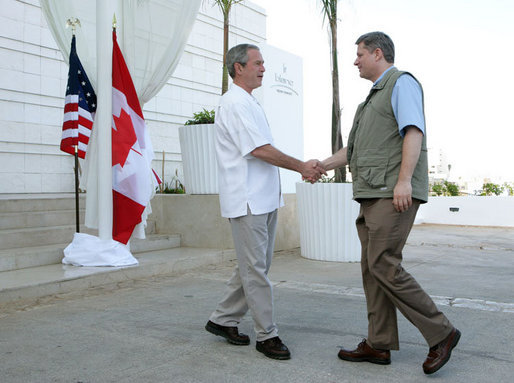
President George W. Bush shakes hands with Canadian Prime Minister Stephen Harper, Thursday, March 30, 2006 in Cancun, Mexico, in their first meeting since Harper was elected Prime Minister. President Bush is participating in a three-day summit with the leaders of Mexico and Canada. White House photo by Kimberlee Hewitt/President George W. Bush shakes hands with Canadian Prime Minister Stephen Harper, Thursday, March 30, 2006 in Cancun, Mexico, in their first meeting since Harper was elected Prime Minister.
President Bush is participating in a three-day summit with the leaders of Mexico and Canada. White House photo by Kimberlee Hewitt.

PRESIDENT BUSH: Thank you all. Welcome. It's been my honor to visit with Stephen Harper, the Prime Minister of Canada, in the Oval Office. After this exercise in democracy, I'll be buying him lunch, where we'll continue our discussions. I'm impressed by his leadership style. I appreciate the fact that he doesn't mince words, he tells me what's on his mind and he does so in a real clear fashion.

We talked about a lot of subjects. We talked about Iran, and our joint desire to convince the Iranian regime to give up its nuclear weapons ambitions. We talked about North Korea, and I shared with him our strategy to work with five other -- four other nations to convince the North Koreans to adhere to agreements they had already reached with the world.

We talked about the war on terror, and I told the Prime Minister how pleased Americans were that the Canadian government did the hard work necessary to disrupt terrorist plots. It just goes to show how safe Canada is. When you've got a government that's active and a police force that's capable, people ought to be rest assured that Canada is on top of any plots.

I thanked the Prime Minister and the Canadian people for their involvement in Afghanistan. This is a serious foreign policy decision by the government, and it's a necessary decision, in my judgment, to help make this world a more peaceful place. It just goes to show the important role Canada can play in foreign policy. Canada has got -- has got a set of values that are extremely important for the world to see.

And I do want to thank the families of those soldiers who are in Afghanistan for supporting their loved ones. Their soldiers are doing fantastic work. I asked prior to your visit here from our military folks how they were doing; they said, great. And they're making the country proud.

I appreciate very much our discussion about Darfur. I believe that Canada and the United States can make a difference in Darfur, and should. As you know, our nation declared the situation in Darfur a genocide. We will work with the international community to bolster the AU forces that are there now. I believe they ought to be blue-helmeted, and I believe there ought to be NATO involvement with a blue-helmeted AU augmented force on the ground. The message has got to be clear to the government of Sudan, we're not going to tolerate this kind of activity.

I speak frequently with my Secretary of State on this issue, Mr. Prime Minister, to make sure that we expedite the arrival of augmented troops to save lives. I talked to Kofi Annan the other night, by the way, about this very subject. And so I appreciate your understanding and I really appreciate your working on this.

You know, we cooperate closely in our neighborhood. We just renewed the NORAD Accord, and I want to thank you for that. I remember going out -- one of the hurricanes was about to hit us here, and I remember talking to, and having dinner with a Canadian general there, and it was a -- it just reminded me of how close that our relations need to be.

We talked about trade. We have a lot of trade with Canada. It's in this nation's interest to trade with Canada. It's in, I think, the Canadian interest to trade with the United States. I'll let the Prime Minister speak to that. But it's important when you have trade to have goods and services and people flow as smoothly as possible between our two countries.

We've had some disputes in the past, trade disputes. That's what you expect when you have a lot of trade. And probably the most nettlesome trade dispute was softwood lumber. And I appreciate the Prime Minister's leadership in helping us resolve this issue. It's a tough issue. It was a tough issue for the Canadian government, it's a tough issue for us. Nevertheless, the fact that we were able to reach an accord just goes to show how trading partners can be active in trade and be willing -- and solve problems. I think this is a really important solution, and I want to thank you for that.

Needless to say, the Prime Minister expressed deep concerns about the Western Hemisphere Travel Initiative. The last time I was with him he expressed concerns. He basically was a little impatient, if I might clarify your -- it seemed like you were impatient, at least -- (laughter) -- and straightforward. Look, he said, I understand there's a law on the books; show us what's going to happen. And I understand the concerns. If you have a relationship like we have, where there's a lot of activity and a lot of people moving across the border, it makes sense for the Prime Minister of Canada to say, look, we just want to know what the rules are to determine whether or not it is compatible with our relationship.

And so I assured him that my view is, simple and easy to understand is the operative words. And we will continue our discussions about this initiative, particularly since the Secretary of Homeland Security Chertoff -- who is sitting right over there, by the way -- will be joining us for lunch. Unless you don't want me to invite him. (Laughter.)

We talked about -- well, we talked about a lot of subjects, and that's what you'd expect friends to do.

Mr. Prime Minister, the floor is yours. I'm proud you're here, and thanks for coming.

PRIME MINISTER HARPER: Well, thank you very much, Mr. President, for the invitation and for the kind words. And thank you for doing something I never thought I'd see, which is have the Canadian media stand when I entered the room. But we certainly enjoy that.

(Begins to speak in French.)

(Returns to speaking English.) The United States and Canada have a strong relationship, strong and firm relationship based on the largest commerce and social interaction in the history of any two countries of the world, and we were able to discuss a wide range of bilateral and international matters where we, more often than not, share common values and common objectives.

We discussed many topics of interest to our respective countries and citizens, in particular, as the President mentioned, the Western Hemisphere Travel Initiative. The President and I agreed that the implementation of the provisions of the WHTI must not unduly hinder cross-border travel or tourism or trade. And to that end, we've tasked our officials to agree on common standards for securing alternate documents, and preferably, as soon as possible.

We discussed the critical role Canada, in particular our oil sands, can play in providing energy security. The President and I have agreed to task our officials to provide a more forward-looking approach focused on the environment, climate change, air quality and energy issues in which our governments can cooperate. We raised the issue of how regulatory cooperation could increase productivity, while helping to protect our health, safety, and environment.

We also expressed, as the President just did, our mutual satisfaction on the significant progress made on the longstanding softwood lumber dispute. Both countries have now initialed the legal text; that legal text faithfully reproduces and documents the agreements reached between our governments and various premiers on April the 27th, and I now urge all relevant parties to move forward with its implementation.

The President and I also discussed a number of important international issues, in particular our role in Afghanistan. We have 2,300 men and women on the ground as part of the Canadian forces. They're playing an important role in security and development in order to protect our national interest, rebuild Afghanistan, and ensure it never becomes again a safe haven for terrorists.

We also discussed recent developments in Iran, and we expressed our mutual concern about North Korea's latest provocative acts. We also discussed the upcoming G8 meeting in Russia, where issues like energy security, infectious diseases, education and innovation will be on the agenda. And finally, we did touch briefly on the recent Mexican election. Canada has full confidence in Mexico's institutions and processes, and I look forward very much to working with the next President of Mexico.

PRESIDENT BUSH: Thank you, sir.

Kyl.

Q Thank you, Mr. President. Do you want the United Nations to impose sanctions on North Korea? And how will you go about persuading the Russians and the Chinese to back those moves if you make them? And in addition to that, sir, what kind of threat do you think North Korea poses to world peace right now?

PRESIDENT BUSH: Non-transparent societies run by governments that aren't selected by the people are -- very difficult to tell what's going on. That's part of the problem. We're dealing with a person who was asked not to fire a rocket by the Chinese, the South Koreans, the United States, the Japanese, and the Russians, and he fired seven of them -- which then caused the Secretary of State and myself to get on the phone with our partners, and reminded them that -- of the importance of speaking with one voice.

It's to -- saying to Kim Jong-il, there is a better way forward for you than isolating yourself from the rest of the world; that there is a opportunity for you to stick to some of your agreements, and that is to verifiably disarm; and that there will be a better life than being isolated, and most importantly, a better life for your people than isolation will bring.

And so I was on the phone this morning with Hu Jintao and President Putin, and last night I talked to Prime Minister Koizumi and President Roh. And my message was that we want to solve this problem diplomatically, and the best way to solve the problem diplomatically is for all of us to be working in concert, and to send one message, and that is -- to Kim Jong-il -- that we expect you to adhere to international norms and we expect you to keep your word.

One way to send a message is through the United Nations. And the Japanese laid down a resolution which we support. But we're working with our partners to make sure we speak with one voice. Diplomacy takes a while, particularly when you're dealing with a variety of partners. And so we're spending time diplomatically making sure that voice is unified.

I was pleased from the responses I got from the leaders. They, like me, were -- are concerned, concerned about a person who doesn't seem to really care about what others say. And so we're working it, working it hard. And it's -- and by the way, an effective policy is one which is not just the United States trying to solve problems. So I spent time talking to the Canadian Prime Minister about it. I mean, Canada is a -- should be, and must be, an active participant in helping deal with problems.

He brought up Haiti, for example, in the Oval Office. Canada has made a significant contribution to stability in Haiti in the past. And it's an important -- my only point is, is that we will continue to work with others to deal with problems that crop up.

Q How much of a threat to the world --

PRESIDENT BUSH: Well, you know, Dick, I think that -- let's put it this way -- he's going to pose less of a threat the more isolated he becomes and the more we work together. And as I mentioned to you, it's hard to tell. This is a society in which there's very little freedom, including freedom of the press. There's not a lot of light shining in there.

And so we take his statements very seriously. He's kind of declared himself to be a nuclear power. We obviously watch very carefully his testings. We're trying to make sure, by the way, that the missile that he fired wasn't headed for Canada. We don't know, for a fact, where it was headed. But, for example, one thing that Stephen and I talked about is he could be seemingly firing a missile at the United States, say, at -- I don't know, this is all speculation -- but could be headed toward the Northwest of our country, and it wouldn't take much for it to get off course, and end somewhere where he may not have intended.

My only point is, is that we will work very closely on these matters together. It's in our interests that we send a clear message to the leader of North Korea.

Q Christian St. Pierre, Radio Canada. Happy birthday, sir.

PRESIDENT BUSH: It's amazing, the first birthday greeting I got from the press came from the Canadian press. (Laughter.) Thank you, I am grateful. You're not 60 years old, are you? (Laughter.) Well, let me just say this -- it's a lot younger than you think.

Q President Bush --

PRESIDENT BUSH: Sure.

Q My question is about the security at the border. On the passport issue, you seems very open. But there is a deadline of 2008.

PRESIDENT BUSH: Yes.

Q Is there any chance of getting a -- of dealing? And, Mr. Harper, can you comment in French and English, please?

PRESIDENT BUSH: Thank you. We are responding to congressional law. And I -- let me reinterpret your -- is your question, is there flexibility in the law, basically? Yes, I think that if Congress decides there needs to be flexibility, there will flexibility. Interestingly enough, the Senate passed -- made its intention clear to extend deadlines. That hasn't happened in the House yet. And so we are operating in the executive branch under the idea that nothing will change, and therefore, we need to get to the Canadian government as quickly as possible our definition of what a reasonable policy is. If Congress decides to be flexible, we, obviously, will be flexible.

But the reason we're dealing with this issue is because the legislative branch put this into law, put the need to have these kind of documents into law. And as I told Chertoff, who is responsible for implementing the law, that I would like this, to the extent the law allows, for there to be a lot of flexibility and simplicity.

As the governor of Texas, I'm used to a border situation where hundreds of thousands of people crossed every day. See, we -- on our southern border, there are a lot of Mexican citizens who come into the United States and work on a daily basis and then go back home. It happens a lot. And therefore, I fully understand the need for there to be simplicity in the documentation. It needs to be easy for somebody who is known and a person that is -- makes a living on the other side of the border. There's -- a lot of kids go to college in, like, El Paso, Texas, and they're living in Mexico, so they've got to go back and forth on a regular basis. So I'm familiar with this issue a lot, and I really do emphasize the need for us to be mindful of what a onerous program could mean to good relations, as well as facilitation of trade.

I can remember Stephen's concerns about the effect this initiative might have on conventions, for example, in Canada. He brought up today an interesting example of Little League teams playing baseball in Manitoba. And so, in other words, there's a lot of just daily commerce that we've got to be mindful about -- not just trade, but the movement of people. And we are, we are.

And so to answer your question, if the Congress provides flexibility, of course, we will work with the Canadian government to extend deadlines. If the Congress says, no, this is what our intent is, we will work with the Canadian government to make the law work.

PRIME MINISTER HARPER: (Answers in French.)

(Continues in English) We're on two tracks here. We've indicated we want to cooperate. We understand this is a congressional law the administration has to put into place. We're prepared to cooperate to make it work as smoothly and effectively as possible. We need more information, and we've been pressing for that for some time, and we'll continue to do so.

At the same time, our other track is obviously to encourage some reexamination of the law. The Senate has recently passed an amendment that would delay this process by a year and a half. We have some indications from some quarters of the House of Representatives, some will there to consider the same thing.

As I say, we -- and I just want to emphasize -- we in Canada share the United States' security concerns and objectives. I think as you all know, recently with events in Toronto it's been brought home to all of us that we face exactly the same kind of security threats, and are defending exactly the same kinds of values. And I would hate to see a law go into place that has the effect of not just limiting and endangering trade or tourism, but endangering all those thousands of social interactions that occur across our border every day, and are the reason why Canada and the United States have the strongest relationship of any two countries, not just on the planet, but in the history of mankind.

And I would just urge the Congress to think carefully, that if the fight for security ends up meaning that the United States becomes more closed to its friends, then the terrorists have won. And I don't think either of us want that. So we're prepared to cooperate and also urge the Congress to apply some flexibility in reaching their objectives of security.

PRESIDENT BUSH: Thank you.

Jim Axelrod.

Q Thank you, Mr. President. Kim Jong-il has been described as quirky, as odd. A member of your administration yesterday compared him to an unloved child looking for attention. And I'm wondering if you agree with that assessment. Does he pose --

PRESIDENT BUSH: Who was that person? (Laughter.)

Q Does he pose -- come to the booth, sir, I'll tell you who it was. (Laughter.) Does he pose any particular unique problems to deal with? And do you feel that he's looking, for instance, at what's been offered to the Iranians by the world community in terms of incentives, and saying, I'd like a little of that for myself?

PRESIDENT BUSH: It's hard for me to tell you what's on his mind. He lives in a very closed society. It's unlike our societies where we have press conferences and people are entitled to ask questions, and there's all kinds of discussions out of administrations and people saying this, saying that, and the other. This is a very closed society.

We do know there's a lot of concentration camps. We do know that people are starving. As a matter of fact, our nation has tried to help feed the hungry. But what we don't know is his intentions. And so I think we've got to plan for the worst and hope for the best. And planning for the worst means to make sure that we continue to work with friends and allies, as well as those who've agreed to be a part of the six-party talks, to continue to send a unified message.

We've also got a very strong Proliferation Security Initiative, because one of the threats that can emanate from a closed society, particularly one that claims to have nuclear weapons, is proliferation. One of the real dangers we face is weapons of mass destruction in the hands of people who would like to continue to hurt us -- hurt the United States or hurt Canada, or anybody who has the courage to stand up and embrace freedom, see? That's the big threat.

And so we don't know, Jim, about his intentions, but we take -- we're planning. And so one of the things we've done -- and I thank Canada's contribution -- is for there to be a very strong initiative to prevent proliferation, through what we call the Proliferation Security Initiative. And it's an important initiative. And so it's a way to say, we're not going to allow you to threaten us; we're not going to allow you to --.

The rocket -- as I say, I'm not exactly sure what the azimuth was of the rocket. We've got our people still analyzing that. But, for example, we didn't -- we don't know what was on the rocket, we don't know where the rocket was headed. It would have been helpful, of course, had he said, here's what we're going to do, here's our intentions, here's what -- we want to work with you, we want to explain it. Who knows -- send a satellite -- who knows what his intention was.

But that's not the way he decided to deal with it. He just decided to say -- to start firing; he fired seven of them. And we take this seriously. We take -- and we all should take threats seriously. That's one of the lessons of September the 11th, is that what takes place in other parts of the world can come home to hurt the American people. See, a failed government in Afghanistan enabled plotters and planners to train and them come and kill 3,000 of our citizens. And so it used to be that's it's okay if something were happening from afar, oceans could protect us. I presume that's how some in Canada used to feel. The lesson of September the 11th is, is that we're vulnerable, and therefore, we've got to deal with each threat.

I've assured the American people and assured our friends and allies we want to deal with threats diplomatically. The best way to deal with threats diplomatically is to encourage others to be a part of the process. And that's what we're doing. That's why we've got the six-party talks.

And one of the keys in the six-party talks is for all the nations to send clear messages to Kim Jong-il. That's why I was on the phone this morning, saying as clearly as I could to our fellow partners, four other leaders, to say, let's send a common message that you won't be rewarded for ignoring the world, and that you'll be isolated if you continue to do this, and yet, there's a way forward.

See, I care deeply about the people in North Korea. I truly do. It breaks my heart to know that young children are literally starving to death. And I wish -- I just wish at some point in time there was an openness in that society where we could help save lives. I'm also realistic enough to realize what weapons of mass destruction could mean in the world in which we live.

And so we're working this issue hard. We're working the Iranian issue hard. Steve and I talked about a strategy going into the G8 session. I talked to President Putin this morning abut making sure that not only do we send messages to the North Koreans, but that our strategy will work with Iran.

And it's just really important for the American President to see the world the way it is, not the way we would hope it would be, and to deal with threats, and to do so in a way that will achieve results. And it takes a while. I mean, these threats didn't arise overnight, and these problems won't be solved overnight. But we've got strategies in place to deal with them.

And one of the reasons why it's important to have Steve here is so we can talk about how we can work together to deal with it. And they're not just threats to our security that normal people think of. HIV/AIDS on the continent of Africa is a threat to our security in the long run. That's why I'm proud to report the United States took the lead on setting up the Global Fund, as well as bilateral programs to help save people's lives. I think it's in our interests. I also happen to believe in the admonition, "to whom much is given, much is required."

And so, we've got a robust foreign policy on a lot of fronts, and I intend to keep it that way. And I'm confident that what we're doing is going to make this world a better place. And I'm proud to have allies like Steve who understand the stakes of the 21st century.

Q Mr. President, Mr. Prime Minister, before I ask you a question, I'm just curious what you think of that belt buckle the Prime Minister gave you as a birthday gift, and are you wearing it?

PRESIDENT BUSH: I hadn't seen it yet. (Laughter.) Oh, Lee, you gave it away. (Laughter.)

Q Mr. President, on a serious note, in light of the North Korea missile test, and the fact that North Korea could launch another series of missiles at any minute, did you ask Canada to reconsider joining in the Ballistic Missile Defense Shield?

And, Prime Minister, do you still think it's wrong and not in Canada's interest to join the BMD? And when you're responding, could you do it in French and English, please?

PRESIDENT BUSH: Anyway, thanks for the belt buckle in advance. (Laughter.)

PRIME MINISTER HARPER: No problem at all.

PRESIDENT BUSH: Looking forward to getting it.

PRIME MINISTER HARPER: Figure if you're going to be 60, you should get something.

PRESIDENT BUSH: That's right. Just hope the belt fits. (Laughter.)

No, I didn't bring it up, because I figured if he was interested, he would tell me. I did explain to him, however, that we will continue to build a robust system, because I think it's in -- I know it's in our interest to make sure that we're never in a position where somebody can blackmail us.

So we'll continue to invest and spend. And since this issue first came up, we've made a lot of progress on how to -- towards having an effective system. And it's in our interest that we continue to work along these lines.

But, no, my attitude was -- this is a -- this was a particularly difficult political issue inside Canada, and my relationship is such that if Stephen thought it was of importance, he would have told me what's on his mind. Now, maybe he's going to bring it up over lunch, but he didn't bring it up earlier.

PRIME MINISTER HARPER: Let me just begin by saying --

PRESIDENT BUSH: Interesting question, though.

PRIME MINISTER HARPER: Let me just begin by saying that -- first of all, the question was asked earlier, I think, is North Korea a threat. I don't think the issue is whether North Korea is a threat. North Korea clearly wants to be a threat. And I think -- I just want to repeat what the President has said -- given that that's a society of the kind of nature it is, I think this should concern us immensely, and the fact that it is prepared to arm itself and prepared to threaten to use such armaments I think it is something that we should be gravely concerned about, as was said earlier.

Missiles that are fired in the direction of the United States constitute a threat to Canada. That's one of the reasons why our government renewed, on a permanent basis, the NORAD Treaty. Through NORAD we have a special relationship on air defense and we share information on these kind of matters. I think as you know, to answer your specific question, the government of Canada is not prepared to open a missile defense issue at this time, but I will say that I think it should be obvious, when we look at this kind of threat, why the United States and others would want to have a modern and flexible defense system against this kind of threat. So I think that's something, at least, our government fully understands.

(Begins to answer in French.)

PRESIDENT BUSH: Welcome. Thank you for your birthday gift.

Q Mr. President, happy birthday.

PRESIDENT BUSH: Thank you, very much. Yes.

Q It's also my birthday.

PRESIDENT BUSH: Today's your birthday, too?

Q Yes, sir.

PRESIDENT BUSH: It is? Come on up. Come up, come up, come up. (Laughter.) Come on. Get up here. Anybody else have their birthday today? (Laughter.) It's your birthday? Yes, sure. It is your birthday? Come on. (Laughter.) It's amazing everybody's birthday.

(The press sings "Happy Birthday.")

PRESIDENT BUSH: Dear Richard -- he just told me he's 30 years old. (Laughter.) Happy birthday. Happy birthday.

END 12:34 P.M. EDT, For Immediate Release, Office of the Press Secretary, July 6, 2006

RELATED: Keywords, President to Welcome, Wednesday, July 05, 2006 President Bush Welcomes President Saakashvili, Thursday, June 29, 2006 President Welcomes Prime Minister Koizumi (VIDEO), Wednesday, June 21, 2006 President Bush to Welcome President Mikheil Saakashvili, Wednesday, June 14, 2006 President Bush Welcomes President Bachelet of Chile (VIDEO), Saturday, June 10, 2006 Bush and Prime Minister Rasmussen of Denmark (VIDEO), Monday, June 05, 2006 President Bush Welcomes President Sassou Nguesso of the Congo , Monday, May 29, 2006 President Bush to Welcome Prime Minister Harper of Canada, Monday, May 29, 2006 President Bush to Welcome President Paul Kagame of Rwanda, Monday, May 29, 2006 President Bush to Welcome Prime Minister Junichiro Koizumi of Japan, Monday, May 29, 2006 President Bush to Welcome President Zelaya of Honduras, Saturday, May 27, 2006 President Bush and Prime Minister Tony Blair (VIDEO), Friday, May 26, 2006 President Bush and Prime Minister Ehud Olmert (VIDEO), Monday, May 15, 2006 President Bush will welcome Prime Minister Ehud Olmert of Israel Saturday, May 06, 2006 President Bush Welcomes President Vázquez of Uruguay (VIDEO), Monday, April 24, 2006 President Bush to Host Danish Prime Minister Anders Fogh Rasmussen, Wednesday, April 12, 2006 President Bush to Welcome German Chancellor Merkel, Wednesday, April 12, 2006 President Bush welcomes Ghana President John A. Kufuor, Wednesday, March 29, 2006 President Bush Welcomes President Obasanjo of Nigeria, Thursday, March 23, 2006 President Welcomes President Sirleaf of Liberia (VIDEO), Friday, March 17, 2006 President Welcomes Irish Prime Minister Ahern (VIDEO), Saturday, February 11, 2006 President Bush Welcomes President of Poland (VIDEO), Friday, February 10, 2006 President Bush Welcomes King Abdullah (VIDEO),

Wednesday, July 05, 2006

President Bush Welcomes President Saakashvili

Technorati Tags: and or and or and or and or and or and or and

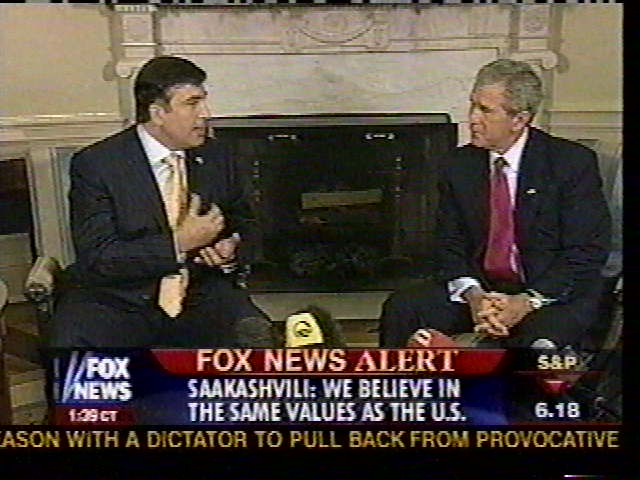
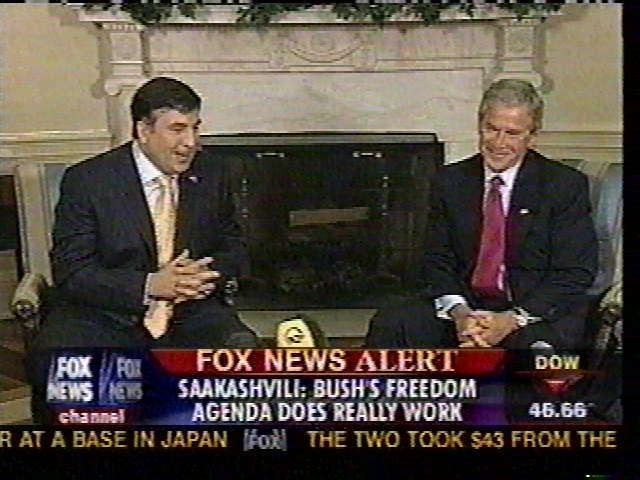
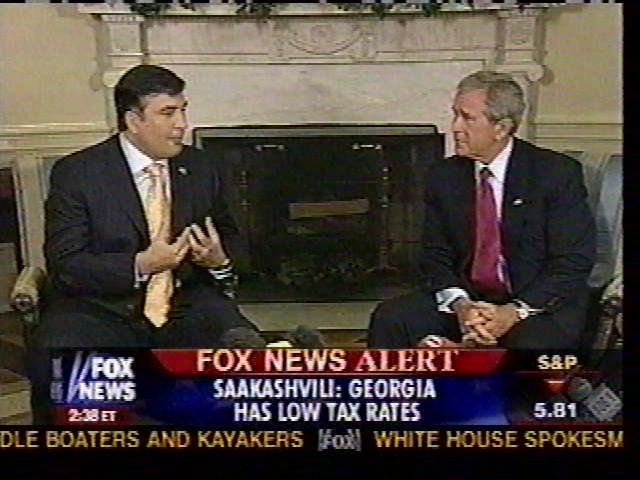
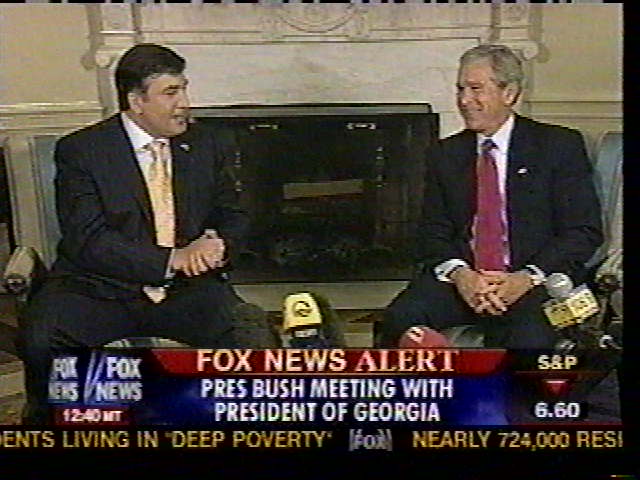
President Bush Welcomes President Saakashvili of Georgia to the White House, FULL STREAMING VIDEO, The Oval Office, 2:15 P.M. EDT. In Focus: Global Diplomacy

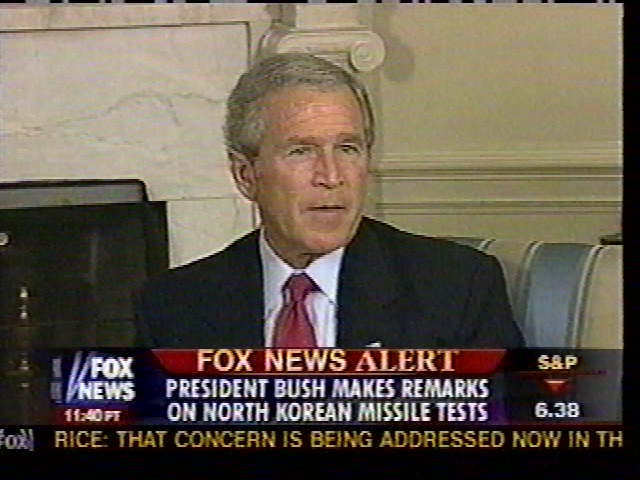
President Bush Welcomes President Saakashvili, Vidcap COPYRIGHT FOX NEWSPresident Bush Welcomes President Saakashvili, Vidcap COPYRIGHT FOX NEWSPresident Bush Welcomes President Saakashvili, Vidcap COPYRIGHT FOX NEWSPresident Bush Welcomes President Saakashvili, Vidcap COPYRIGHT FOX NEWSPresident Bush Welcomes President Saakashvili, Vidcap COPYRIGHT FOX NEWS
Vidcaps FOX NEWS, From their live coverage of this event.

PRESIDENT BUSH: We'll have opening statements and a couple of questions.

First, Mr. President, welcome. I reminded the President about what a fantastic visit I had to Georgia. Laura and I will never forget your hospitality, we will never forget the food for which Georgia is quite famous, we will never forget the fantastic folk dancing we saw. And then I'll never forget our visits and the speech to the Georgian people. It was a fantastic trip.

It was made fantastic because my friend not only was a good host, but he is a man who shares the same values I share. He believes in the universality of freedom. He believes that democracy is the best way to yield the peace. The Georgian government and the people of Georgia have acted on those beliefs. I want to thank you for your contribution in Iraq, to help the Iraqi people realize the great benefits of democracy. It's hard work, but it's necessary work.

We had a very good discussion about a variety of topics. I assured the President that Georgia is our friend and we care deeply about the people of Georgia. So a remarkable experience has taken place. I congratulate the President and his government on creating an economic climate that fosters growth and opportunity. I love the stories about the entrepreneurial spirit that's beginning to flourish.

One of the interesting stories that captured my imagination is when the President first came into office and he cleaned out the police forces in order to rid the country of corruption in the law enforcement -- understanding full well that the people must trust security in order for a society to flourish.

And so, Mr. President, you've got hard work ahead of you. You've tackled problems with vigor and enthusiasm. But, most importantly, you've stayed true to a philosophy that I admire. So welcome back to the Oval Office, and please give your good wife all my very best.

PRESIDENT SAAKASHVILI: I will certainly tell Sandra. Mr. President, it was an incredible honor for me to stand next to you in the Freedom Square in Tbilisi. And I felt like it was, you know, after -- it was vindication for all those Georgians, including my family members, who perished in gulag, who died fighting for their freedom, their liberty, their independence. And, basically, this was an incredible occasion because I'm also -- I've studied diplomacy for many years, and I can tell you it was brilliant exercise of self-diplomacy, the way you appreciated our culture, our openness, our warmth. And we will certainly never forget it.

Georgia is, indeed, performing. It has strong economic growth. This is a very beautiful country that attracts lots of investment now. We have low tax rates, but we dramatically increased our tax collection, which means that low taxes and less government is a very good thing to have, as you well know.

So basically we are getting there. And one thing, you know, we discussed with President Bush the upcoming G8 summit. And, certainly, there are lots of issues that are at stake there and we believe very strongly in the same values, in the same principles, and we are talking to the President -- to the country which is the -- for Georgians, for generations of Georgians, American freedom are synonymous -- they have been synonymous for me all my life, when I lived under Soviets and after that. And it still stays very much that way, because all freedom-loving people today, whenever they have something to share with somebody, come to America. And this is a very strong thing.

And one thing I can tell, Mr. President, your freedom agenda does, indeed, work. I mean, you can see it in Georgia. We are seeing it in Iraq. And please stay there, please fight there until the end. We will stay with you there, whatever it takes, because your success in Iraq is success for countries like Georgia. It's a success for every individual that loves freedom, every individual that wants security, to live in more secure world for himself, herself or their children. And whatever it takes to help you, we are not a big country -- we are beautiful, small country with a lot of attractions -- I invited you to come, I had mountain biking here yesterday and I invited you to come over and have mountain biking in Georgia.

But one thing is important, that you know we really cherish the same things. And I'm so honored to be here on Independence Day, and I watched yesterday fireworks -- and around the time of your birthday. So happy birthday. I'm honored to be invited now. (Laughter.) And God bless you, America, Georgia, and the whole world. Thank you, very much.

PRESIDENT BUSH: Thanks, Mr. President. Thank you. Deb.

Q Mr. President, on North Korea, how is it possible to punish a country that is one of the poorest and most isolated in the world? And secondly, had you been hoping for a stronger response from China?

PRESIDENT BUSH: The North Korean government can join the community of nations and improve its lot by acting in concert with those who -- with those of us who believe that she shouldn't possess nuclear weapons, and by those of us who believe that there's a positive way forward for the North Korean government and her people. In other words, this is a choice they made. Yesterday, as you know, they fired off a series of rockets. The world had -- particularly those of us in the six-party talks -- had asked for that not to happen. It's a matter of good faith. The government made a different decision.

And so it's their choice to make. What these firing of the rockets have done is they've isolated themselves further. And that's sad for the people of North Korea. I am deeply concerned about the plight of the people of North Korea. I would hope that the government would agree to verifiably abandon its weapons programs. I would hope that there would be a better opportunity to -- for that government and its people to move forward. The Chinese will play -- have played and will continue to play a very important role in the six-party talks. It's my view that the best way to solve this problem diplomatically is for there to be more than one nation speaking to North Korea, more than America voicing our opinions.

And therefore, the five of us -- Russia, South Korea, Japan, China, and the United States -- spoke with one voice about the rocket launches, and we will work together to continue to remind the leader of North Korea that there is a better way forward for his people.

Georgia.

PRESIDENT SAAKASHVILI: You know, regarding the -- I mean, I'm not intervening off the agenda, but one thing I have to tell you, in Georgia that I just sent over to President Bush the letter that Georgian freedom fighters sent him seven years ago, and it never made it to the White House. It was intercepted by KGB and all the people who wrote it were shot.

I'm sure lots of people out there in Korea are writing similar letters today. And I'm sure that North Korean missiles will never reach the United States, but those letters will, eventually, very soon, because that's a part of the freedom agenda that President Bush has and we strongly believe in.

PRESIDENT BUSH: Do you want to call on a Georgia? Please.

Q Georgia is planning -- to NATO. What do you think how can Georgia finish this IPP process and get Membership Action Plan? And do you think that Georgia should and will be a NATO member during your presidency? Thank you, sir.

PRESIDENT BUSH: Listen, I believe that NATO would benefit with Georgia being a member of NATO, and I think Georgia would benefit. And there's a way forward through the Membership Action Plan. And we -- we'll work with our partners in NATO to see if we can't make the path a little smoother for Georgia. Georgia has got work to do, and the President understands that. And I'm a believer in the expansion of NATO. I think it's in the world's interest that we expand NATO.

Kelly.

Q Thank you, sir. On the North Korean missiles, what have you learned about their intentions or their capabilities, and what threat level do you think they still possess given that their intercontinental missiles failed?

PRESIDENT BUSH: I spoke with Secretary Rumsfeld yesterday. He called me right after the launch, and he said they had preliminary information that they are going to analyze about the trajectory of the larger rocket. The other five rockets that were fired, the scuds, were -- their performance was pretty predictable. It's kind of a routine weapon that some of these nations have.

I asked him this morning, again, when I met with him about the information. They're still analyzing, trying to figure out the intention of the North Korean leader as to why he would have fired the rocket and what they were trying to learn from it.

One thing we have learned is that the rocket didn't stay up very long and tumbled into the sea, which doesn't, frankly, diminish my desire to solve this problem. So the first part of your question is, we're still analyzing what the intentions were. We're trying to analyze the data to determine flight path, for example.

I view this as an opportunity to remind the international community that we must work together to continue to work hard to convince the North Korean leader to give up any weapons programs. They've agreed to do that in the past, and we will hold them to account. And I also strongly believe that it is much more effective to have more than one nation dealing with North Korea. It's more effective for them to hear from a group of nations rather than one nation.

And so today the Secretary of State, starting last night, the Secretary of State has been in touch with counterparts. I, of course, will be on the phone, as well. We want to send -- to continue to send a clear message that there is a better way forward for the leader of North Korea. It's hard to understand his intentions. It's hard to understand why he would not only fire one missile that failed, but five others. So we're talking with our friends and allies on the subject.

Q Mr. President, as you mentioned, you've faced a lot of important challenges in many places, like Iran, Iraq, Afghanistan and North Korea. And at the same time, the whole world recognizes your personal role in promoting democracy and freedom all around. And how do you think, is there any chance that Georgia's aspiration to build free and democracy country may be left off of your agenda?

PRESIDENT BUSH: Freedom -- I believe freedom is universal. And I believe the spread of liberty is important for peace. And therefore, the freedom agenda will be at the heart of everything I do. The freedom agenda is ingrained in my -- it's not only ingrained in my policy, it's ingrained in my soul. I believe it strongly. And I believe the United States has an obligation to work with others to help them secure their liberty.

I understand that elections are only the beginning of the freedom agenda, and that there's work needed to be done around the world, including our own country, to continue to build strong institutions and build the organizations necessary for a civil society to develop. Remember, ours was a country that wrote a great Constitution but enslaved people for a hundred years. It takes time. And so I understand that. And I want to work with our friends that ask. Georgia is a sovereign government, and when governments say, will you help, America must always listen to requests for help, and specifically to Georgia.

One of the signature pieces of policy in my administration has been the Millennium Challenge Account. It's a foreign funding mechanism that recognizes countries that fight corruption, support rule of law, invest in the health and education of their people, and adopt open markets. And one of the most robust Millennium Challenge Account projects is with Georgia. It's a sign -- should be a sign to the people of Georgia, and people in the neighborhood, that the United States respects the decisions this government has made, and wants to work closely with the people of Georgia to help Georgia succeed, to help create the conditions for success.

And so to answer your question, yes, I've got a lot that comes to my desk here, absolutely. I've got a lot to think about. But my friend, the President, wouldn't be sitting here if I didn't have Georgia on my mind. (Laughter.)

Thank you all very much.

END 2:36 P.M. EDT, For Immediate Release, Office of the Press Secretary, July 5, 2006

RELATED: Keywords, President to Welcome, Thursday, June 29, 2006 President Welcomes Prime Minister Koizumi (VIDEO), Wednesday, June 21, 2006 President Bush to Welcome President Mikheil Saakashvili, Wednesday, June 14, 2006 President Bush Welcomes President Bachelet of Chile (VIDEO), Saturday, June 10, 2006 Bush and Prime Minister Rasmussen of Denmark (VIDEO), Monday, June 05, 2006 President Bush Welcomes President Sassou Nguesso of the Congo , Monday, May 29, 2006 President Bush to Welcome Prime Minister Harper of Canada, Monday, May 29, 2006 President Bush to Welcome President Paul Kagame of Rwanda, Monday, May 29, 2006 President Bush to Welcome Prime Minister Junichiro Koizumi of Japan, Monday, May 29, 2006 President Bush to Welcome President Zelaya of Honduras, Saturday, May 27, 2006 President Bush and Prime Minister Tony Blair (VIDEO), Friday, May 26, 2006 President Bush and Prime Minister Ehud Olmert (VIDEO), Monday, May 15, 2006 President Bush will welcome Prime Minister Ehud Olmert of Israel Saturday, May 06, 2006 President Bush Welcomes President Vázquez of Uruguay (VIDEO), Monday, April 24, 2006 President Bush to Host Danish Prime Minister Anders Fogh Rasmussen, Wednesday, April 12, 2006 President Bush to Welcome German Chancellor Merkel, Wednesday, April 12, 2006 President Bush welcomes Ghana President John A. Kufuor, Wednesday, March 29, 2006 President Bush Welcomes President Obasanjo of Nigeria, Thursday, March 23, 2006 President Welcomes President Sirleaf of Liberia (VIDEO), Friday, March 17, 2006 President Welcomes Irish Prime Minister Ahern (VIDEO), Saturday, February 11, 2006 President Bush Welcomes President of Poland (VIDEO), Friday, February 10, 2006 President Bush Welcomes King Abdullah (VIDEO),
Statement by the President on Immigration

Technorati Tags: and or and or and or and or and or

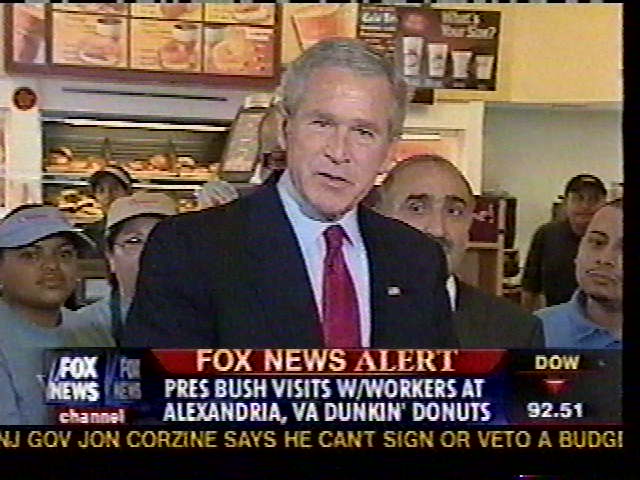
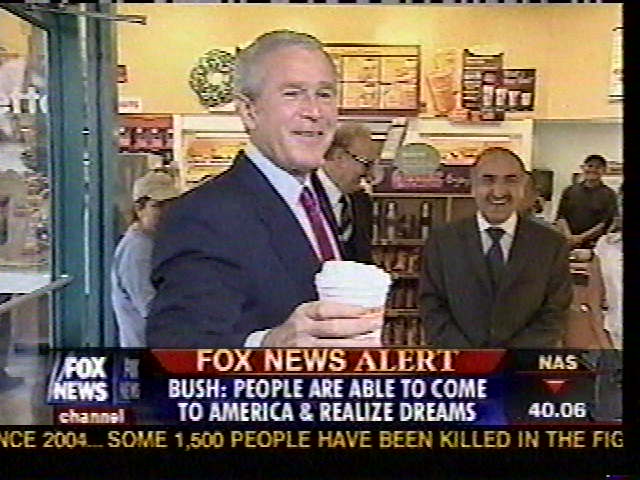
Statement by the President on Immigration, FULL STREAMING VIDEO, Dunkin' Donuts/Baskin Robbins, Alexandria, Virginia Declaraciones del Presidente acerca de la Inmigración

Statement by the President on Immigration, Vidcap COPYRIGHT FOX NEWS.Statement by the President on Immigration, Vidcap COPYRIGHT FOX NEWS.
Vidcaps FOX NEWS, From their live coverage of this event.

THE PRESIDENT: I just had a really interesting conversation. First of all, this business is owned by two Iranian American brothers. They are small business owners, they are entrepreneurs, they are employing people. And then I met with the district manager, who works with the two Iranian American brothers, happens to be a Guatemalan American citizen. She is learning business. She is taking on additional responsibility. Then I talked to the store manager, who was a Salvadoran American.

These people remind me that one of the great features of our country is that people are able to come here and realize dreams. One of the problems we have because our economy is strong is that small business owners have trouble finding workers. People come here to work.

And one of the things we've got to do is to make sure that they have a verification plan that will enable them to determine, as they hire new workers, whether or not the workers are here illegally. See, it's against the law to hire somebody who is here illegally. And we intend to enforce that law. Part of a comprehensive immigration plan is to give employers the tools necessary to determine whether or not the workers they're looking for are here legally in America. And we've got such a plan -- Basic Pilot, it's called. It's working.

One of the reasons I came is I asked the owner of the business, was the plan working. He said, yes, it is -- it makes it easier for us to verify whether the documents a person gives us are true. I also want -- so therefore I want this plan to be expanded. When I first became President, it was only in six states. Now it's across the nation, but it's a voluntary plan. It ought to be a mandatory plan.

I'm strongly for a comprehensive immigration policy, one that enforces the border. And we're doing that by expanding agents and putting new technologies on our border. But part of a comprehensive immigration plan is to make sure we have interior enforcement, that we uphold our laws, and say to employers, it's against the law for you to hire somebody here illegally; we intend to fine you when we catch you doing it. But we've got to get the employers the tools to make sure that the people who are here are here legally.

Thirdly, I think there needs to be -- I know there needs to be a worker program that says you can come here on a temporary basis and work here legally for jobs Americans aren't doing. If you talk to employers such as these folks, they'll tell you they need workers. And people are willing to do the work that others aren't willing to do, but we want to make sure there's a legal way to do it.

So I look forward to working with Congress for a temporary worker plan that will have background checks to make sure that people that are coming aren't criminals, that say you can come here for a temporary basis, that you can do work others aren't doing, and that's one way to make sure that employers know they're hiring people who are here legally.

We need to make sure we help people assimilate. I met four people here who assimilated into our country. They speak English; they understand the history of our country; they love the American flag as much as I love the American flag. That's one of the great things about America, we help newcomers assimilate. Here's four folks that are living the American Dream, and I think it helps renew our soul and our spirit to help people assimilate.

And finally, we cannot kick people out who have been here for a while. And so I look forward to working with Congress on a rational plan as to how to make sure people who have been here, the 11 million or so people who have been here for a while are treated with respect and dignity. I'm absolutely opposed to amnesty. Amnesty says you're automatically a citizen. That would be a mistake to grant amnesty. Amnesty would say to somebody, all I've got to do is wait it out; all I've got to do is get here illegally myself and I'll become a citizen. That would be bad policy.

But I'm also realistic to tell you that we're not going to be able to deport people who have been here, working hard and raising their families. So I want to work with Congress to come up with a rational way forward.

Again, I want to thank you all for having me. I love being -- I cannot tell you how I love being with entrepreneurs and dreamers and doers and people who are running things, and managers, and to be with my fellow citizens as we talk about a very important public policy, and that's rational, comprehensive immigration reform.

Thank you all very much. See you back at the White House.

Q Mr. President, North Korea -- do you believe there should be --

THE PRESIDENT: April, would you like me to buy you a cup of coffee?

MS. RYAN: I would love you to.

THE PRESIDENT: What would you want in it?

MS. RYAN: Anything you want to give me.

THE PRESIDENT: What would you like in it, cream and sugar?

MS. RYAN: Sure, sir. (Laughter.)

THE PRESIDENT: It's coming your way. It's in the spirit of --

MS. RYAN: Spirit of what?

THE PRESIDENT: Spirit of reaching out.

MS. RYAN: All right. And you got money in your pocket. Do you typically keep money in your pocket?

THE PRESIDENT: No, this is -- Jared let me have this. (Laughter.) I'll repay him. The man offered to give me the coffee for free. You can't run a business if you give your coffee away. I understand how commerce works. He offers a product I want, I then pay for that product -- I'll handle that, sir, thank you -- (laughter.)

MS. RYAN: Mr. President, thank you so much.

THE PRESIDENT: Anything for you.

MS. RYAN: Thank you. Presidential coffee, mmm.

END 11:08 A.M. EDT

For Immediate Release, Office of the Press Secretary, July 5, 2006

Related: Keywords radio address, podcast, Saturday, July 01, 2006 bush radio address 07/01/06 full audio, text transcript, Saturday, June 24, 2006 bush radio address 06/24/06 full audio, text transcript, Saturday, June 17, 2006 bush radio address 06/17/06 full audio, text transcript, Saturday, June 10, 2006 bush radio address 06/10/06 full audio, text transcript, Monday, June 05, 2006 bush radio address 06/03/06 full audio, text transcript, Wednesday, May 31, 2006 bush radio address 05/27/06 full audio, text transcript, Saturday, May 20, 2006 bush radio address 05/20/06 full audio, text transcript, Saturday, May 13, 2006 bush radio address 05/13/06 full audio, text transcript, Saturday, May 06, 2006 bush radio address 05/06/06 full audio, text transcript, Saturday, April 29, 2006 bush radio address 04/29/06 full audio, text transcript, Saturday, April 22, 2006 bush radio address 04/22/06 full audio, text transcript, Saturday, April 15, 2006 bush radio address 04/15/06 full audio, text transcript, Saturday, April 08, 2006 bush radio address 04/08/06 full audio, text transcript, Saturday, April 01, 2006 bush radio address 04/01/06 full audio, text transcript, Saturday, March 25, 2006 bush radio address 03/25/06 full audio, text transcript, Saturday, March 18, 2006 bush radio address 03/18/06 full audio, text transcript, Saturday, March 11, 2006 bush radio address 03/11/06 full audio, text transcript,

Condeleeza Rice, Turkish Foreign Minister VIDEO, PODCAST, TEXT

Technorati Tags: and or and , or and , or , and , or , and , or , and ,

Secretary of State Condeleeza Rice meets with Foreign Minister of Turkey. FULL STREAMING VIDEO, PODCAST, MP3.

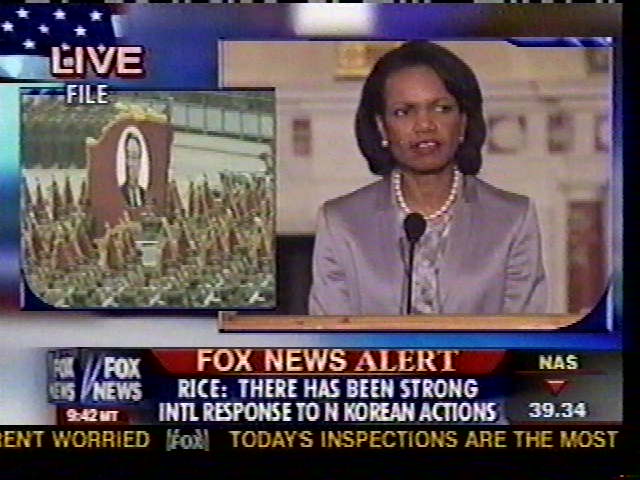
Remarks With Deputy Prime Minister Abdullah Gul After Their Meeting, Secretary Condoleezza Rice, Copyright FOX NEWSRemarks With Deputy Prime Minister Abdullah Gul After Their Meeting, Secretary Condoleezza Rice, Copyright FOX NEWS
Vidcaps FOX NEWS, From their live coverage of this event.

Remarks With Deputy Prime Minister Abdullah Gul After Their Meeting, Secretary Condoleezza Rice, Benjamin Franklin Room, Washington, DC, July 5, 2006

SECRETARY RICE: Good morning. I am very pleased to welcome my colleague, the Foreign Minister of Turkey Abdullah Gul, to Washington to the State Department. It was not very long ago that I was in Turkey and he received me there and we continue our discussions based on our tremendously strong friendship, our strategic relationship, our commitment to common values. I especially want to note for you that we will issue shortly a statement of the strategic vision for U.S.-Turkish relations. It is indeed a relationship that has a great deal to contribute to regional stability and indeed to global stability.

The Foreign Minister and I have had a brief discussion of some issues of interest, the situation in the Middle East. I have had a briefing on some of the work that the Foreign Minister has undertaken to convince Iran that this is a time to accept the international community's offer to solve this by diplomatic means. I want to say too that the Foreign Minister has been stalwart in his support for young democracies like Afghanistan and Iraq, and I thank him very much for that. So we will have further discussions over lunch and I look forward to many more opportunities, Abdullah, to be with you as Turkey is such an important and strong partner of the United States. Thank you.

DEPUTY PRIME MINISTER GUL: Good morning. I'm really pleased to meet once again my friend Secretary of State Dr. Rice shortly after her visit to Turkey. Since our last meeting, we had several talks over the phone and exchanged views. We will continue our discussions over lunch, as she just said, and we will have the opportunity to talk further about bilateral, regional and international matters of common concern, including Iraq, Iran, combating the PKK, recent developments in the Middle East, Cyprus and energy issues. The result of our joint efforts on Baku-Tblisi-Ceyhan will be integrated on 13 July in Ceyhan and we hope to see a representative from the United States over there. During our talks, I expressed our gratitude for the support given by the U.S. to matters that are important for Turkey. I also emphasized my strong belief and hope that this support will continue to strengthen.

Our discussions have reaffirmed that our deep-rooted alliances is well grounded. It's based on strategic partnership, cooperation and mutual trust. We have once more confirmed our common desire to advance this relationship, which is based on universal values such as democracy, respect for human rights, the rule of law and principle of market economy.

I am very happy to announce here today with Dr. Rice that we have finalized a shared vision document, which we had agreed to work on during her last visit to Turkey. This shared vision document will enable our countries to conduct closer intensive consultations on many levels. It will provide for a structured dialogue that will enable us to address more effectively the issues of bilateral, regional and international concern.

This document is not an action plan; therefore, it does not contain details on various issues. The shared vision document sets a broad agenda between the two countries and launches a process of intensive dialogue on different levels.

To summarize our contacts, I've said that we have seen once again that our relations are indeed based on mutual trust, hence moving on within a constructive agenda. Thank you.

MR. MCCORMACK: The first question for Anne Gearan from AP.

QUESTION: Madame Secretary, what do you think is the motivation for North Korea to launch the missiles it launched yesterday? Are they trying to get the U.S.'s attention? Does this mean the six-party talks are dead? And going forward, what can you really do to punish or coerce a regime that is as impoverished and isolated as North Korea already is?

SECRETARY RICE: Thank you. First of all, I can't really judge the motivations of the North Korean regime. I wouldn't begin to try. But I will note the effect that their actions are having and the effect is that they are being throughout the world, of course in the region, but also at NATO, we've had expressions from countries all over the world of concern about this provocation that the North Koreans have engaged in. Concern that I think is being expressed now in the Security Council. I believe a meeting is going on as we speak. And it simply demonstrates that the North Koreans, if they may have -- perhaps have miscalculated that the international community would remain united. But in fact there has been a very strong response to their actions. So whatever their motivations, whatever they thought they were doing, they've gotten a very strong reaction from the international community.

As to the six-party talks, what the six-party talks provide is now a diplomatic infrastructure that can be used to resolve problems of this kind and it would still be incumbent on the North Koreans to use that kind of infrastructure to address these issues. I might note that Chris Hill will soon be talking with his counterparts from the six-party talks in the region. And that simply demonstrates that the wisdom of the six-party framework is that it is now not a matter of the United States and North Korea; it is really a matter of the region saying to North Korea that it has to change its behavior.

As to what steps will be taken to reverse North Korean behavior, to address the nuclear issue and the missile issue, that's what we're going to be talking about over the next couple of days. But of course, the international community does have at its disposal a number of tools to make it more difficult for North Korea to engage in this kind of brinksmanship and to engage in the continued pursuit of its nuclear weapons programs and of its missile programs.

QUESTION: Why do the United States and Turkey need a strategic region document? Why now and what's the importance of this document for both countries? And Turkey has expressed its concerns about the PKK terror in northern Iraq. Will the United States do more on this matter?

DEPUTY PRIME MINISTER GUL: Turkish-American relations have a long history and also we have common grounds, common visions and democratic developments and market economy and we are both interested in about events in the region and international, so we wanted to put all of our visions, all our shared values, our alliance into a paper and share with others.

SECRETARY RICE: And I would just add that sometimes it's very important to step back from the day-to-day issues and to look at the broad relationship and to remind ourselves and to remind our populations that this is a relationship that is broad and deep, and based on values and based on strategic interests, and that's really what this document allows us to do.

As to the PKK, which the United States does declare as a terrorist organization, we will work very actively with Turkey and also with the new Iraqi Government to deal with this problem because, as I have said before and as I said when I was in Turkey, no one wants the PKK to be able to operate, to carry out terrorist attacks against Turkey anywhere, but most especially from northern Iraq.

MR. MCCORMACK: The next question, Elise Labott from CNN.

QUESTION: Thank you. Madame Secretary, you and your partners in the P-5+1 process gave Iran today as a deadline to answer your offer of an incentives or disincentives package, and that deadline has passed. Is Iran stringing the international community along here? What makes you think that they might answer by your July 12th meeting of the foreign ministers? And if they don't, will next steps be considered at that point? Thank you.

SECRETARY RICE: Well, Elise, we gave -- what was to happen today was there was to be a meeting of the Iranians with the -- with High Representative Solana. We will see what takes place over the next couple of days. But if indeed Iran is trying to stall, it's not going to work. The international community has said that we need to get an answer, an indication of where Iran is going with this. We need to know if the path of negotiation is open or not. It is really incumbent on Iran now to take what is a very good and respond to it.

And so I will, in fact, be talking to my colleagues a little bit later today, but I can assure you that we still intend to have a substantive response from Iran before the middle of July when the heads of state will meet in St. Petersburg. It simply makes sense for the world to have some kind of indication of whether Iran intends to pursue the negotiated track or not.

QUESTION: Secretary Rice, Turkey has sent a message to Syrian leader Assad concerning the rising conflict, rising tension in between Israel and Palestine. Within this context, have you received a response or message from Assad through Turkey, through Minister Gul? And how do you evaluate Turkey's role in order to calm down the tension of Iran and Middle East? Thank you.

SECRETARY RICE: Thank you. Well, I want to thank -- did thank -- the Turkish Foreign Minister for responsively -- responsive to the desires of the governments in the region, the United States, to say to the Syrians as directly as possible that there are many countries that believe that Syria has a lot of leverage that it could use to get the release of this Israeli soldier, that they really ought to do it and they ought to do it now, because this is how this conflict started. Let's remember that this began with a tunneling into Israeli territory, the abduction of an Israeli soldier. That release needs to take place and we need to get back on ground where we can pursue a more hopeful future for the Palestinian people and for the Israeli people. But really, what Turkey did that was very helpful is to go to Damascus and to say to the Syrians that they need to use all of their leverage to help this take place.

Now, the situation in Gaza is indeed a tense one. We are continuing to exercise -- are continuing to call upon the Israelis to exercise restraint. I would note that there were enormous numbers of Qassam rockets that were falling on Israeli territory yesterday, and so it would also be incumbent and helpful if there is pressure on Hamas to stop those attacks.

We are also calling on the international community to help Prime Minister -- President Abbas, and I think that is helping -- is happening, but most especially to help the Palestinian people. We are trying to keep the crossings open so that the humanitarian assistance can get into the Palestinian people. We are trying to do what we can to help to get their electricity back on and the like because we don't want to see the Palestinian people suffer.

But their government, Hamas government, needs to respond to root cause of this problem, and the root cause of this problem was the attack that took place and the Israeli soldier that was abducted. It is high time for Hamas to return that soldier. It is high time then for everybody who has any influence on Hamas to make sure that that happens, and then we can get back on track.

Thank you.

DEPUTY PRIME MINISTER GUL: Thank you.

2006/651, Released on July 5, 2006

Related: Keywords State Department,Monday, June 26, 2006 Secretary Rice With Foreign Affairs Minister of Poland, VIDEO, PODCAST, TEXT, Monday, June 19, 2006 Secretary Condoleezza Rice, Foreign Minister Miguel Angel Moratinos, VIDEO, PODCAST, TEXT, Monday, June 19, 2006 Robert Zoellick Announces Departure VIDEO, PODCAST, TEXT, Friday, June 02, 2006 R. Nicholas Burns, Remarks in Vienna, Austria, Wednesday, May 31, 2006 Iran Statement by Condoleezza Rice (VIDEO), Thursday, May 18, 2006 Secretary Rice With Prime Minister John Howard (PODCAST), Wednesday, May 10, 2006 Secretary Rice, EU Secretary General Javier Solana on Iran, VIDEO, PODCAST, TEXT, Wednesday, May 03, 2006 Secretary Rice, James Wolfensohn, Gaza Disengagement (PODCAST), Thursday, April 27, 2006 Remarks at Stakeout Secretary Condoleezza Rice, Friday, April 21, 2006 Secretary Rice to Travel to Europe, Friday, April 21, 2006 The Face of the State Department (VIDEO), Thursday, April 13, 2006 Secretary Rice Holds Talks with Equatorial Guinean President, Tuesday, April 11, 2006 State Department Podcast, VIDEO and Text 04/10/06, Wednesday, April 05, 2006 State Department Podcast, VIDEO and Text 04/03/06, Thursday, March 30, 2006 State Department Podcast, VIDEO and Text 03/29/06, Monday, April 03, 2006 Secretary Rice With Foreign Secretary Straw, Baghdad, Friday, March 31, 2006 Rice in Berlin To Discuss Iran with P-5 plus 1, Friday, March 31, 2006 UNHCR Worker’s Death in Sudan Attack,

Tuesday, July 04, 2006

USNORTHCOM statement on DPRK missile launches

Technorati Tags: and or and , or and , or , and , or , and ,

USNORTHCOM statement on DPRK missile launches

PETERSON AIR FORCE BASE, Colo. July 4, 2006 – As of 5:30 p.m. MST today, U.S. Northern Command officials acknowledged that the Democratic Peoples Republic of Korea launched six ballistic missiles, including a long-range Taepodong-2 missile, from Taepodong at approximately 4 p.m. EDT.

USNORTHCOM personnel were immediately able to detect the launch of all the missiles and all of them landed in the Sea of Japan.

While Ground-based Midcourse Defense System interceptors at Fort Greely, Alaska, and Vandenberg Air Force Base, Calif., were operational during all the missile launches, top officials from the command were able to quickly determine the missiles posed no threat to the United States or its territories. The Taepodong-2 missile launch failed on its own in the early stages and landed in the Sea of Japan.

The GMD System, while not utilized for any of the launches, is available when needed to defend the United States, its allies, infrastructure and population centers. Our missile defense crews are trained and our systems are ready to respond as necessary. U.S. Northern Command has the primary responsibility to direct missile defense operations to protect the homeland, allies, friends and other national interests from potentially hostile acts.

Command officials will not discuss under what circumstances or conditions deployment of the interceptors will be considered.

RELATED: KEYWORD - KOREA, Friday, June 23, 2006 Missile Defense Agency, U.S. Navy intercept ballistic missile, Thursday, June 22, 2006 North Korea Cannot Be Allowed to Test This Missile, Tuesday, June 20, 2006 Missile Defense Agency Capability Successfully Completed, Friday, August 19, 2005 Human Rights in North Korea, Friday, July 08, 2005 Korea – Meetings with ROK Official, Thursday, June 23, 2005 North Korea -- U.S. Humanitarian Assistance, Wednesday, June 22, 2005 North Korea – Six-Party Talks, Thursday, June 09, 2005 Korea – Six-Party Talks, Wednesday, June 01, 2005 North Korea – New York Channel

Independence Timeline, 4th of July, Independence Day

Technorati Tags: and or and or and or and or and or and or

Digital ID: cph 3g06015   Source: color film copy transparency, Reproduction Number: LC-USZC4-6015 (color film copy transparency) , LC-USZ62-94161 (b&w film copy neg.) , LC-USZ62-120336 (b&w film copy neg.), Repository: Library of Congress Prints and Photographs Division Washington, D.C. 20540 USA.1765-1773, The British Parliament bypasses colonial assemblies and imposes several internal and external taxes on the outraged colonists. IMAGE FILE
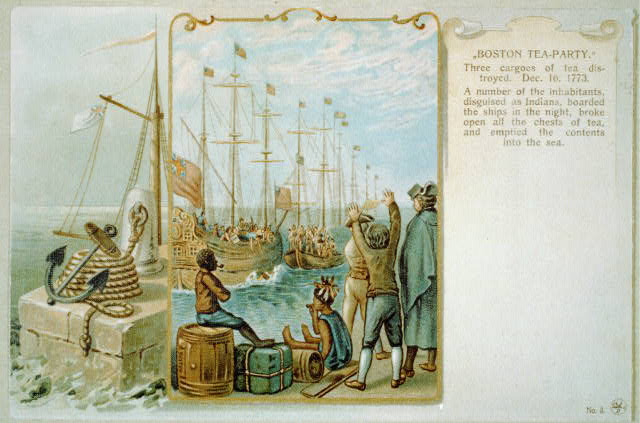
Digital ID: cph 3b53084   Source: color film copy transparency, Reproduction Number: LC-USZC4-1582 (color film copy transparency)  Repository: Library of Congress Prints and Photographs Division Washington, D.C. 20540 USA.Dec. 16, 1773, The colonial response to taxation without representation culminates in the Boston Tea Party. The Sons of Liberty dump 342 chests of tea into Boston harbor.IMAGE FILE
Digital ID: cph 3a45526   Source: digital file from b&w film copy neg. Reproduction Number: LC-USZ62-45328 (b&w film copy neg.)  Repository: Library of Congress Rare Book and Special Collections Division Washington, D.C. 20540 USA.Sept. 5, 1774, Delegates begin meeting for the First Continental Congress and agree to send grievances to King George III. Print shows session of the First Continental Congress, September 1774, in Carpenter's Hall, Philadelphia, Pennsylvania IMAGE FILE
Digital ID: cph 3c15251   Source: b&w film copy neg. Reproduction Number: LC-USZ62-115251 (b&w film copy neg.)April 19, 1775, Armed conflict between the colonists and British redcoats begins in Lexington and Concord, Massachusetts. IMAGE FILE
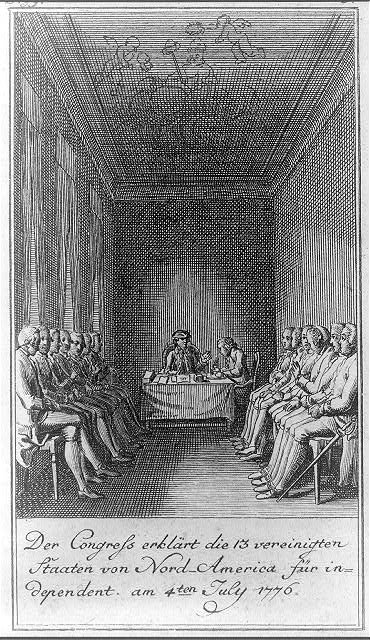
Digital ID: cph 3a27468,Source: digital file from b&w film copy neg. Reproduction Number: LC-USZ62-26670 (b&w film copy neg.)  Repository: Library of Congress Prints and Photographs Division Washington, D.C. 20540 USA.May 10, 1775, A Second Continental Congress begins meeting in Philadelphia. TITLE: Der Congress erklërt die 13 vereinigten Staaten von Nord-America für independent am 4ten July 1776 / D. Chodowiecki inv. et del. ; D. Berger sculpsit 1784. IMAGE FILE
Digital ID: cph 3g07216, Source: color film copy transparency  Reproduction Number: LC-USZC4-7216 (color film copy transparency) , LC-USZ62-14414 (b&w film copy neg.) , LC-USZCN4-174 (color film copy neg.)  Repository: Library of Congress Prints and Photographs Division Washington, D.C. 20540 USAJune 11, 1776, The Continental Congress appoints a five-man committee, including Thomas Jefferson, to draft a declaration of independence. IMAGE FILE
Digital ID: det 4a26291, Source: digital file from intermediary roll film, Reproduction Number: LC-D416-700 (b&w glass neg.), Repository: Library of Congress Prints and Photographs Division Washington, D.C. 20540 USA.June 28, 1776, The committee presents the declaration for debate and revision. title: Declaration of Independence in Congress IMAGE FILE
Digital ID: cph 3a42252   Source: digital file from b&w film, copy neg. Reproduction Number: LC-USZ62-41929 (b&w film copy neg.), Repository: Library of Congress Prints and Photographs Division Washington, D.C. 20540 USAJuly 4, 1776, The Continental Congress adopts the Declaration of Independence without dissent. Print shows the text with signatures of the Declaration of Independence within a wreath at the top of which are portraits in medallions of the first twelve presidents, IMAGE FILE
Works published prior to 1978 were copyright protected for a maximum of 75 years. See Circular 1 "COPYRIGHT BASICS" from the U.S. Copyright Office. Works published before 1923 are now in the public domain. (ALL OF THE PRECEDING IMAGES FALL INTO THIS CATAGORY).

RELATED: Keywords radio address, podcast, Monday, July 03, 2006 4th of July, Independence Day, 2006, Saturday, July 01, 2006 Presidential Podcast 07/01/06, Saturday, June 24, 2006 Presidential Podcast 06/24/06, Saturday, June 17, 2006 Presidential Podcast 06/17/06, Saturday, June 10, 2006 Presidential Podcast 06/10/06, Saturday, June 03, 2006 Presidential Podcast 06/03/06, Saturday, May 27, 2006 Presidential Podcast 05/27/06, Saturday, May 20, 2006, Presidential Podcast 05/20/06, Saturday, May 13, 2006 Presidential Podcast 05/13/06, Saturday, April 22, 2006 Presidential Podcast 04/22/06, Saturday, April 15, 2006 Presidential Podcast 04/15/06, Saturday, April 08, 2006 Presidential Podcast 04/08/06, Saturday, Saturday, April 01, 2006 Presidential Podcast 04/01/06, March 18, 2006 Presidential Podcast 03/18/06, Saturday, March 11, 2006 bush radio address 03/11/06 full audio, text transcript, Saturday, March 04, 2006 bush radio address 03/04/06 full audio, text transcript, Saturday, February 25, 2006 bush radio address 02/25/06 full audio, text transcript, Saturday, February 18, 2006 bush radio address 02/18/06 full audio, text transcript, Saturday, February 04, 2006 bush radio address 02/04/06 full audio, text transcript,

Monday, July 03, 2006

4th of July, Independence Day, 2006

Technorati Tags: and or and or and or and or and or

Independence Day, 2006

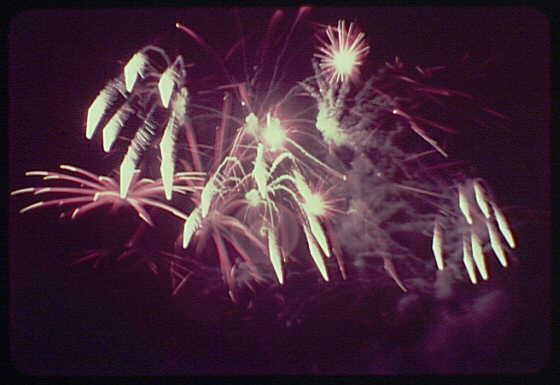
Credit Line: Library of Congress, Prints and Photographs Division, Gottscho-Schleisner Collection, Images in this collection have been placed in the public domain by the heirs of the photographers, REPRODUCTION NUMBER, LC-G605-CT-00488 DLC (color corrected film copy slideCredit Line: Library of Congress, Prints and Photographs Division, Gottscho-Schleisner Collection, Images in this collection have been placed in the public domain by the heirs of the photographers,
REPRODUCTION NUMBER, LC-G605-CT-00488 DLC (color corrected film copy slide

On July 4, 1776, our Nation's Founders declared "That these United Colonies are, and of Right, ought to be free and Independent States." This declaration marked a great milestone in the history of human freedom. On the 230th anniversary of the signing of the Declaration of Independence, we pay tribute to the courage and dedication of those who created this country, and we celebrate the values of liberty and equality that make our country strong.

The patriots of the Revolutionary War acted on the beliefs that "all men are created equal" and "that they are endowed by their Creator with certain unalienable Rights." By advancing these ideals, generations of Americans have unleashed the hope of freedom for people in every corner of the world.

As we celebrate our independence, Americans can take pride in our history and look to the future with confidence. We offer our gratitude to all the American patriots, past and present, who have sought to advance freedom and lay the foundations of peace. Because of their sacrifice, this country remains a beacon of hope for all who dream of liberty and a shining example to the world of what a free people can achieve. May God continue to bless the United States of America.

NOW, THEREFORE, I, GEORGE W. BUSH, President of the United States of America, by virtue of the authority vested in me by the Constitution and laws of the United States, do hereby proclaim July 4, 2006, as Independence Day. I call upon the people of the United States to observe with all due ceremony our Independence Day as a time to honor our Founders and their legacy of freedom and remember with thankfulness the sacrifice of our men and women in uniform.

IN WITNESS WHEREOF, I have hereunto set my hand this twenty-sixth day of June, in the year of our Lord two thousand six, and of the Independence of the United States of America the two hundred and thirtieth.

GEORGE W. BUSH

# # # For Immediate Release, Office of the Press Secretary, June 26, 2006

RELATED: Keywords radio address, podcast, Saturday, July 01, 2006 Presidential Podcast 07/01/06, Saturday, June 24, 2006 Presidential Podcast 06/24/06, Saturday, June 17, 2006 Presidential Podcast 06/17/06, Saturday, June 10, 2006 Presidential Podcast 06/10/06, Saturday, June 03, 2006 Presidential Podcast 06/03/06, Saturday, May 27, 2006 Presidential Podcast 05/27/06, Saturday, May 20, 2006, Presidential Podcast 05/20/06, Saturday, May 13, 2006 Presidential Podcast 05/13/06, Saturday, April 22, 2006 Presidential Podcast 04/22/06, Saturday, April 15, 2006 Presidential Podcast 04/15/06, Saturday, April 08, 2006 Presidential Podcast 04/08/06, Saturday, Saturday, April 01, 2006 Presidential Podcast 04/01/06, March 18, 2006 Presidential Podcast 03/18/06, Saturday, March 11, 2006 bush radio address 03/11/06 full audio, text transcript, Saturday, March 04, 2006 bush radio address 03/04/06 full audio, text transcript, Saturday, February 25, 2006 bush radio address 02/25/06 full audio, text transcript, Saturday, February 18, 2006 bush radio address 02/18/06 full audio, text transcript, Saturday, February 04, 2006 bush radio address 02/04/06 full audio, text transcript,