Monday, July 24, 2006

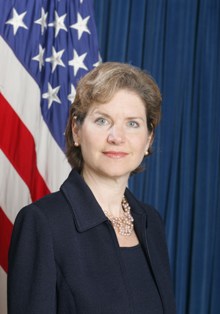
WTO Doha Development Agenda, Susan C. Schwab and Mike Johanns

Technorati Tags: and or and , or and , or , and , or and or and or and or and or , or , or ,

Ambassador Susan C. Schwab, United States Trade RepresentativeFacts on Global Reform, File is in PDF format.

Transcript of Press Availability on the Doha Development Agenda with Ambassador Susan C. Schwab and Mike Johanns, Secretary of Agriculture WTO Headquarters, Geneva, Switzerland 07/24/2006
Ambassador Schwab: Good morning everyone.

We are obviously very disappointed that the G-6 Ministers were not able to reach an agreement last night. The United States came to Geneva with the flexibility to offer more on domestic support and market access. We took seriously the admonition of the leaders of the G-8 Summit in St. Petersburg, but unfortunately the promises of flexibility and market access coming from St. Petersburg did not materialize in Geneva.

Unless we figure out how to move forward from here we will have missed a unique opportunity to help developing countries and to spur economic growth.

While the United States was prepared to do more, yesterday’s focus on the loopholes in market access, on the layers of loopholes, revealed that a number of developed and advanced developing countries were looking for ways to be less ambitious, to avoid making ambitious contributions.

But that doesn’t mean the United States is giving up. ‘Doha Lite’ has never been an option for the United States; it is still not an option. There was no package on the table yesterday that we could have recommended to the President or to the United States Congress.

That said, the United States remains committed to a successful Doha Development agreement. One that creates real market openings, that brings new economic opportunities, opens markets for all WTO member countries. We feel strongly that we need to avoid the temptation in the coming weeks and months as we sort out where we go from here. We feel strongly that we need to avoid the temptation of pulling anything off the table. We need to focus on how we move forward, how we make a success of the Doha round, how we achieve the promise of the Doha round without degenerating into a finger-pointing exercise.

Let me end my formal comments by extending our appreciation and thanks to Director-General Pascal Lamy for his tireless efforts. We look forward to working with him as we move forward to see the Doha Round realize its full potential.

Thank you.

Secretary Johanns: Let me, if I might, start my comments by also expressing my appreciation to Director-General Lamy. He has worked very, very hard through this process and diligently worked to try to close the gap.

We in the United States also appreciate the good work of the WTO, the World Trade Organization. We believe in it, we believe that it is key to the future of the world, and we are absolutely committed to its success.

I also want to indicate at the outset how much I appreciate the leadership of our President. It was our President that some weeks ago, actually some months ago, announced maybe to the surprise of the world, that he favored the complete elimination of trade-distorting subsidies. His commitment to ambition in this round has truly been an inspiration to me and to Susan.

I also want to express my appreciation to our Congress and to our commodity groups. In October we tabled a really historic, ambitious, bold offer. Just to remind everyone, we proposed cutting our Amber Box, which is the heart of our farm program, by 60 percent. It would have eliminated the possibility of the same farm program. It just wouldn’t fit. The cut was too dramatic. We also proposed cutting the Amber Box and the De Minimus Boxes, rather the Blue Box and the De Minimus Boxes. In the case of the Blue Box we went well beyond what was called for by the July framework. During the many weeks of very difficult negotiations they hung in there and stuck with us on this proposal.

Some weeks ago at a time when there was a transition in our government from Ambassador Portman to Ambassador Schwab, we felt that it was very important that we return to Geneva, all of us, to speak to our colleagues from around the world. We had a whirlwind trip those days that we were here. We spoke to you at that time. We met with Ministers from over 90 countries. It was a rather remarkable 72-hour period of time.

The issue that we raised during those discussions was an issue that we had had conversations about before, but we felt it was an issue that we revisit and give our colleagues from around the world the opportunity to offer their input. That issue was the level of ambition in this Doha round. We used words like ‘Doha Lite’ to try to describe a lesser result and ambition to describe a strong result. To the contrary, to the contrary our colleagues from around the world committed again to an ambitious Doha round.

Now any study that has ever been done relative to this round or to trade in general will tell you that the real gains will be made in market access. It’s not something we invented because we happened to think it up, it is something that has been studied, economically analyzed, and the future of this world depends upon our ability to wrestle the trade distortion out of our market access situation.

So we returned to the negotiating table with Ambassador Schwab, and my next thank you is to her because she maintained that strong level of ambition and commitment to get an ambitious result from the Doha round.

We said from the very beginning and we said over the last couple of days, look, we will be flexible. If we can see ambition in market access we can be ambitious, as we have been, with domestic support.

Well, let me just give you one example. I’ll kind of approach this from two different angles. Approach number one is developed countries, the EU proposal. We finally got down to some specifics. You all know that around the world a lot of beef is grown. We’re not the only country that grows beef. There was this talk about 800,000 tons of beef that would come in, and I must admit I was confused by it. I really couldn’t see it in what was being tabled. Well, as it came out it was pretty clear that beef was going to be a sensitive product so therefore there would be a TRQ for beef.

The current tariff for high quality beef in the EU is 80 percent. That blocks the market. There is no more effective trade distortion than that. To just simply block the market, to close the door. Under the proposal, the new tariff would be 61 percent. That is still a remarkable blocking of the market. It makes it impossible to compete. It makes it impossible to sell beef into that marketplace.

So the TRQ, we finally found out after discussion, for the whole world ladies and gentlemen, would allow in 160,000 tons of beef. That’s two percent of the market. That’s what we were getting. For the world. That wasn’t a bilateral discussion, this is a multilateral discussion.

We then went on to the discussion about developing countries and I said a few weeks ago when we were here I was worried about what was being proposed for developing countries. Now advanced developing countries are world class competitors. This would be China, this would be India, this would be Brazil, this would be other countries around the world that quite honestly can compete with anybody very effectively. Yet in the proposal that they tabled, it essentially blocked 95 to 98 percent of their market. Not our figures. That was an analysis done right here at the TWO.

So in the end, what we were faced with is this: we’ve got a very bold proposal already, we’ve announced our willingness to be flexible but we’re still not seeing the market access that is necessary for world trade. And again, let me just wrap up my comments and say this. Many countries will come before you today. The multilateral process is bigger than any one country, the United States included . It is a process that is designed to lift people out of poverty, to open up new markets, to increase trade flows so all have an opportunity for economic advancement.

I just rest my case by saying and asking the question, can anybody seriously argue, for example, that 160,000 tons of beef, two percent of the marketplace, is an increase in trade flow? Can anybody seriously argue that advanced developing countries literally arguing for 95 to 98 percent of their marketplace being protected in agriculture is going to result in an increase in trade flows? I think not.

But I agree with Susan. I strongly feel that even though today truly represents a failure, let’s be blunt about it, that this isn’t a time to pull offers off the table, to talk about take it or leave it. If you look at the history of the Uruguay round it stopped and started a number of times. We are committed to the multilateral process, we are committed to these negotiations, we are committed to the WTO, and we have a President who is committed to the elimination of trade distorting domestic support. We have a historic opportunity here.

It is very, very difficult for us today to sit here before you and recognize this is where we’re at, but we’re going to do everything we can to encourage this discussion to continue to occur. There’s too much at stake not to.

Question: Fishermen from Asia were having a press conference a half an hour ago and they said that the WTO is for the rich only and it works for the poverty of the poor, making the poor more poor, and that they would like to dismantle it. What is your reaction?

Ambassador Schwab: I think the WTO is and should continue to be a real friend of developing as well as developed countries. The WTO is a venue where developing countries, no matter how small, have the opportunity to come in and enforce their rights, require that other countries meet their obligations vis-à-vis that country. It is a forum where the dispute resolution process enables developing countries to make a case.

In the case of the Doha round negotiations, the large majority of developing countries would not have been asked to make any contributions whatsoever in terms of market access. In fact they would have been 100 percent beneficiaries of this round without being required to pay anything for this round. This as a development round is fine for the middle tier and certainly the least developed countries, so this is a wonderful organization for developing countries in that it promotes their rights, it promotes growth and economic development, and access for their goods in other markets in ways that no other institution in the world could help them, and I would note that the implications of trade generated growth are so much greater than anything that you can get in overseas development assistance. Any comparison you look at, the benefits to those farmers, to those fishermen, from trade far out-pays anything that an official aid agency could ever provide.

Question: My question would be about a possible timetable. Has there been any kind of timetable, any idea of when these talks could get restarted? Probably at the next ministerial of the WTO next year?

Ambassador Schwab: I think we should defer to the Director-General in terms of the schedule going forward. As Secretary Johanns noted, this is a serious failure that we find ourselves in and the question is how to regroup and how quickly could one regroup and move forward and in what manner. I think Pascal Lamy will address that today.

I think the members of the WTO need to stand ready, willing and able to engage in this process. I don’t think we can leave it entirely up to the Director-General. The Director-General shouldn’t be expected to do this on his own, shoulder this burden on his own. Hence our comment that it is within our power not to pull anything off the table, to make sure that we are positioned to move forward and generate more momentum when we have a sense of the best direction to go in. So I would defer to Pascal Lamy in terms of timing and pacing, but I think the key role for individual members of the WTO, particularly those of us in a leadership role, is to do everything we can through bilateral meetings, through small group meetings. There are a series of opportunities coming up and opportunities we can create for ourselves to help him, to help the Director-General move the process forward.

Question: Secretary Johanns, I hear you mention the TRQ on beef. As I understand it, the combined tariff cuts and TRQ on beef would give an extra 800,000 tons of access to the European market. I was surprised to hear you use that as an example because as I understand it the US doesn’t export beef to the EU because of the hormone ban.

Secondly, did you make any new offer on domestic support at all? Thanks.

Secretary Johanns: The hormone ban on beef, I would love to spend the next 15 minutes visiting with you about that. We absolutely want to ship beef to the European Union. The European Union uses a number of mechanisms, phyto-sanitary/sanitary mechanisms, in addition to their tariffs that really create challenges, and I’m being very diplomatic here, really create challenges in terms of our ability to sell products into their marketplace. But let there be no doubt about it. We want to sell beef to the European Union, we want to sell grains, we want to sell poultry, and yet we continue to struggle with them on phyto-sanitary/sanitary bans. We’ve, as you know, exercised our rights in the WTO process, I might add successfully, but we still struggle to find entry to that market.

I ask you to study that 800,000 ton figure very, very carefully because once I came to understand what they were promising, I have to tell you I was very surprised. What the TRQ actually promises is 160,000 tons worldwide. The way they get up to 800,000 tons is somebody did a study saying, but we may need additional beef. We’re not going to give it to you in a TRQ, we just may need it. So the study says that you will have the possibility of selling that into our marketplace.

Now there is no definition of market access that I know of that says that that’s the appropriate approach to bind an agreement between parties in a multilateral basis. So in effect what you end up with is a maybe on the vast majority and a binding on 160,000 tons that we get to share with the whole world, or the whole world gets to share is a better way of putting that. That’s two percent of the marketplace. That’s just really minuscule. That really isn’t opening at all, that isn’t market access even setting aside that phyto-sanitary/sanitary issue which again I think is very, very clear, we need to overcome to get the marketplace open in the first instance.

In terms of our flexibility, let me remind everyone again, there is one leader in the world who has called for the elimination of trade-distorting domestic support. You know where our President stands on this issue and he hasn’t been shy about repeating that statement. And like I said, I think he probably surprised a lot of people in the world.

We came here and expressed our willingness to be flexible. To be flexible on domestic support, to be flexible on market access. But in the end when we studied the market access proposals on the table there was no there there. There was no additional market access that we could grab a hold of and say we are making progress. In fact, speaking of ‘Doha Lite’, ‘Doha Lite’ got a lot lighter in the past 30 days. All of a sudden we came to realize that not only was there going to be substantial protection and barriers in developed countries, but in these advanced developing countries that are world class competitors to everybody, that they were basically arguing that 95 to 98 percent of their ag market should be protected. That they would have the ability to choose when, how and if they would do business. And that was the proposal.

Now again, if somebody can make a case to me that that somehow was market access that we could respond to, I’m all ears, but I didn’t see it. Just the facts, not indicting anybody, but the reality is the facts are that there was no there there on market access.

Question: I’m sorry. To be clear, you're saying you didn’t put anything new on the table?

Secretary Johanns: We did. We indicated our flexibility from the very first statement.

Question: But you didn’t make any new offer with any numbers yesterday?

Secretary Johanns: What we did in the opening yesterday is we said we are ready to be flexible. We have to see something in market access. And quite honestly, we didn’t see it. It wasn’t there. There just was nothing there that we could grab onto that allows us to take that step. There was just simply nothing there.

Ambassador Schwab: Let me add to that. We not only said we were prepared to do more in terms of cutting trade distorting subsidies along with obviously our commitment to eliminate export subsidies, we also indicated that we understood that other countries had some sensitivities that they would want to protect. And that we were even prepared to allow sensitive products, the scope of sensitivities, to be greater than that which had been in our position in October, but not to the extent of negating the fundamental market access purpose of this round.

Question: There is a general perception among the trade ministers who attended the meeting yesterday that your maximalist agenda on market access does not quite match with your minimalist agenda on the trade distorting domestic support because there was no clarity in terms of balance between what you are ready to reduce in trade distorting domestic support and what you in turn want in the market access. That’s just one issue.

The second issue is you keep mentioning about these layers of protection through the special products. Can you actually indicate as you indicated in the case of beef for the European Union, can you actually indicate what are the products that you Rae currently facing problems entering into markets like China or India? Given the low tariffs, you have a tariff of about five to ten percent on wheat; you have a tariff of zero percent on many dairy items. What exactly is it that you're facing in terms of your entry into the emerging economies? Because the general argument is you are not a competitive exporter in relation to Argentina or Brazil or Australia or Thailand.

Secretary Johanns: Ravi, let me take a first attempt at your question and let me again maybe study a little history in terms of our domestic support proposal.

Our farm programs by and large fit into a classification that you’re all very familiar with. We call it the Amber Box. That really is the majority of the US farm programs. They are slotted into that box.

When we were out there talking to our colleagues around the world about what they thought we should do in terms of our proposal, some said you’ve got to cut your Amber Box by 50 percent; some said you’ve got to cut your Amber Box by 55 percent. We listened to that very, very carefully. We consulted with Congress, our commodity groups, our President, and we decided that we should cut our programs by 60 percent in the Amber Box.

Now what’s the bottom line, ladies and gentlemen? That eliminates those programs. They don’t fit any more. Our farm program has just disappeared because there is no other way you can pigeon-hole our programs into any other area.

Go to the July framework. The July framework said that we should be at five percent of production on the Blue Box. We thought long and hard about that. We could have safely, confidently chosen to abide by that July framework and it would have been all the protection we needed. But the world was asking for leadership by the United States, and again, we debated that with our President and our Congress and our commodity groups, and we said you know what? We’re going to go beyond the July framework and we’re going to cut that to two and a half percent.

Now let me explain to you the significance of that. There was a lot of uneasiness that we might take our counter-cyclical program and slide it over to Blue Box. We could have done that had we chosen to keep it at five percent. We said to ourselves, the world needs greater leadership than that, and we literally cut it to a point where we can’t fit our counter-cyclical program into the Blue Box. Another piece of our program just disappeared.

People have raised the issue about the De Minimus Box. We don’t use a lot of De Minimus, we use some. But cost out the programs. They don’t fit into the De Minimus Box.

So in effect what we have said to our farmers in the United States is that programs that date back to the Great Depression, to the 1930s, will disappear. Will disappear.

Now if that isn’t dramatic I don’t know how you could possibly describe these programs.

Now by comparison we said look, from day one we said look, we know we’ve done something really dramatic, we know we’ve eliminated the possibility of our farm programs continuing in their form in the United States, we know that we are flying in the face of 75 years of history here with our farm programs, we have to have market access.

Meaningful flow of trade. We’re not asking for the world. We’re just asking that we be able to look at what we accomplish and see trade moving. Does anybody want to argue with me that trade is moving when 95 to 98 percent of a marketplace is protected? Anyone want to argue with me that trade is moving when what you really come down to with beef products is 160,000 ton TRQ for the whole world? Does anybody want to make that case? It’s not a case you can make.

Now in terms of specific products, here’s the problem with your analysis. That would be like the United States saying look, folks, we want a trade agreement that says we can deal with you when and if we choose to and we’ll decide under what circumstances we’ll deal with you. That’s in effect what this proposal is in terms of developing countries, whether it’s wheat or any other product.

Now Ravi, as you know, wheat’s probably a poor example because even though there have been tenders for wheat, the phyto-sanitary/sanitary requirements put in place for example by India have made it impossible for us to enter that market. We hope we can change that. We hope we can bring about a more sensible approach because phyto-sanitary/sanitary barriers can also be very very effective barriers to trade.

So the bottom line is we did submit a very very bold proposal. It stands as a bold proposal. The world acknowledged it as a bold proposal, but we even said from day one this is negotiation. We will be flexible. We announced it again during the course of this meeting. And I have to tell you, I have reached the conclusion, as I said, that in the last 30 days ‘Doha Lite’ got a lot more light in the market access area.

Question: Do you think, Ambassador Schwab, first do you think that disputes will increase in this meanwhile since countries have no other choice than to try to resolve their issues in the dispute settlement body?

And secondly, do you think now is the time to perhaps renew the attempt of the FTAA since this trade agreement will not be completed?

Ambassador Schwab: I think that it is probably inevitable that disputes will increase. I think that we all need to be mature and sensible in terms of how we approach the next several weeks and several months to make sure that the progress we have made in connection with the Doha Round isn’t lost and that we’re in a position to build on it going forward.

I think going to your second point, I think the critical issue going forward is before jumping to conclusions about this kind of approach and that kind of approach, the US remains fully committed to the multilateral trading system and to the World Trade Organization. We also have a very ambitious agenda in terms of bilateral and regional negotiations and we’ll see how that plays out.

For my part, over the next several months and weeks, and days actually, I intend and I know Secretary Johanns intends to be very active in terms of exploring options and seeing what we can do to move forward on a multilateral agenda. That means in my case travel, not yet confirmed but as early as next week. Next month I’ll be going to meet with the ASEAN Trade Ministers. There is a meeting of CAIRNS Group Trade Ministers scheduled in September. The APEC Summit, the APEC Ministers meeting in Vietnam in November. So there are a series of meetings and engagements that will punctuate these efforts to move the ball forward.

Thank you.

RELATED: Keyword, Susan C. Schwab, Saturday, April 29, 2006 Softwood Lumber Trade Dispute Resolved, Tuesday, April 18, 2006 President Nominates Rob Portman as OMB Director Susan Schwab for USTR (VIDEO),

Related: Keyword Agriculture, Thursday, December 29, 2005 USDA ASSISTANCE TO COMBAT WILDFIRES IN TEXAS AND OKLAHOMA, Thursday, December 02, 2004 Mike Johanns Secretary of Agriculture, Thursday, January 06, 2005 Michael Johanns Agriculture Nomination Hearing, Friday, January 21, 2005 SECRETARY OF AGRICULTURE MIKE JOHANNS, Sunday, February 20, 2005 USDA contributing $10.7 million to restore wetlands, Friday, February 25, 2005 USDA Raises FY 2005 Agricultural Export Forecast, Wednesday, March 02, 2005 S. J. RES. 4 bovine spongiform encephalopathy, Wednesday, March 02, 2005 USDA's Minimal-Risk Rule, Thursday, March 10, 2005 USDA KICKS OFF NATIONAL SCHOOL BREAKFAST WEEK, Sunday, March 20, 2005 Agriculture Secretary Mike Johanns, bovine spongiform encephalopathy (BSE), Tuesday, March 22, 2005 USDA REVISES STANDARDS FOR SWEET POTATOES, Tuesday, March 22, 2005 ARS Laboratory Will Focus on Egg Safety and Quality, Saturday, April 09, 2005 GRAIN INSPECTION ADVISORY COMMITTEE, Sunday, April 17, 2005 2010 Health Goals For E. Coli 0157, Thursday, April 21, 2005 Growth in biomass road to energy independence, Sunday, May 01, 2005 International Food Aid Conference VII, Sunday, May 08, 2005 Laser Shows if Fruit's Beauty is Only Skin Deep, Monday, May 23, 2005 Members And Alternates Named To National Peanut Board, Monday, May 23, 2005 Alternate Producer Member Named To Hass Avocado Board, Sunday, May 29, 2005 regarding over-fortified corn soy blend,

Press Briefing Tony Snow 07/24/06 (VIDEO)

Technorati Tags: and or and , or and , or , and , or and or and or and or and or , or , or ,

White House Press Secretary Tony Snow, Tuesday, May 16, 2006, fields questions during his first briefing after replacing Scott McClellan. White House photo by Paul Morse.Press Briefing by Tony Snow, FULL STREAMING VIDEO. file is real media format, running time is 35:04. James S. Brady Briefing Room.
Related: Keywords Press Briefing Scott McClellan, Tony Snow. Tuesday, July 18, 2006 Press Briefing Tony Snow 07/18/06 (VIDEO), Thursday, July 06, 2006 Press Briefing Tony Snow 07/06/06 (VIDEO), Thursday, June 29, 2006 Press Briefing Tony Snow 06/29/06 (VIDEO), Tuesday, June 06, 2006 Press Briefing Tony Snow 06/06/06 (VIDEO), Wednesday, May 31, 2006 Press Briefing Tony Snow 05/31/06 (VIDEO), Wednesday, May 17, 2006 Press Briefing Tony Snow 05/16/06 (VIDEO), Tuesday, May 02, 2006 Press Briefing Scott McClellan 05/02/06 (VIDEO), Tuesday, April 25, 2006 Press Briefing Scott McClellan 04/25/06 (VIDEO), Tuesday, April 11, 2006 Press Briefing Scott McClellan 04/10/06 (VIDEO), Wednesday, April 05, 2006 Press Briefing Scott McClellan 04/04/06 (VIDEO), Wednesday, March 29, 2006 Press Briefing Scott McClellan 03/28/06 (VIDEO), Friday, March 24, 2006 Press Briefing Scott McClellan 03/23/06 (VIDEO), Sunday, March 19, 2006 Press Briefing Scott McClellan 03/17/06 (VIDEO), Friday, March 17, 2006 Press Briefing Scott McClellan 03/15/06 (VIDEO), Wednesday, March 15, 2006 Press Briefing Scott McClellan 03/13/06 (VIDEO), Friday, March 10, 2006 Press Briefing Scott McClellan 03/09/06 (VIDEO), Tuesday, March 07, 2006 Press Briefing Scott McClellan 03/07/06 (VIDEO), Tuesday, February 28, 2006 Press Briefing Scott McClellan 02/27/06 (VIDEO), Friday, February 17, 2006 Press Briefing Scott McClellan 02/16/06 (VIDEO), Friday, February 17, 2006 Press Briefing Scott McClellan 02/14/06 (VIDEO), Tuesday, February 14, 2006 Press Briefing Scott McClellan 02/13/06 (VIDEO), Thursday, January 19, 2006 Press Briefing Scott McClellan 01/18/06 (VIDEO), Friday, December 16, 2005Press Briefing, Scott McClellan, Levee Reconstruction (VIDEO), Tuesday, December 06, 2005 Press Briefing Scott McClellan (VIDEO) 12/06/05,

Sunday, July 23, 2006

The Occult Life of Things

Technorati Tags: or and or and or and or and or , and ,

Pan-pipes thought to be imbued with the soul of the Sun-God Credit: Marcos Guerra, STRIPan-pipes thought to be imbued with the soul of the Sun-God Credit: Marcos Guerra, STRI, Smithsonian Tropical Research Institute
Take another look at your car, your fork and knife, your personal digital assistant.

Is it possible that "inanimate objects" have a life of their own? Fernando Santos-Granero, STRI Staff Scientist, is organizer of "The Occult Life of Things," a symposium at the International Congress of Americanists in Seville, Spain on 17 July, 2006. Natives of the Amazon region consider animals, plants and objects as subjectivities that have lives of their own and are essentially social beings.

This "animistTM" vision of the world goes hand in hand with a "perspectivistTM" vision in which all beings and things view 'self' as human and "other" as non-human. The focus of the symposium is an analysis of these occult lives; occult not only in the sense that the lives of things are supernatural, but also because the human essence of things is not normally visible.

The Yanesha of eastern Peru believe that pan pipes are animated by the Sun God, the Creator, explains Santos-Granero. Before playing the pipes, Yanesha men offer fermented manioc drinks, coca leaves or tobacco juice to "raise its spirit." When they play the flute, the life-giving force of the Sun God is broadcast to all nearby beings and things.

The symposium will gather linguists and anthropologists from Europe, South America, and the United States who are specialists on Native Amazonian societies. Participants will address three major aspects of the life of things.

The subjective aspect of objects. How do Amerindians mark the difference between animate and inanimate things? Do all things have a subjective dimension? How does the subjectivity of things manifest itself?

The social aspect of things. In what contexts does the relationship between people and things become inter-subjective? Do things have social or historical agency? Are the relationships between people and things conceived of as power relations?

The historical aspect of things. The high value as ritual objects, prestige goods, or family heirlooms, invests some things (e.g. magical stones, masks, flutes, feather headdresses) with a historical trajectory. Is it possible to reconstruct the social histories of highly valued objects? Can we write the biographies of things? How are new modern- things incorporated into native Amazonian animist and perspectivist ontologies? ###

The International Congress of Americanists was founded in 1875 as the Socit Amricaine de France, to contribute to ethnographic, linguistic and historical studies of the Americas, especially those which illuminate the times before Columbus discovered this New World.

Meetings are held every three years. The site of the meeting alternates between the Old and New World. Presenters represent the fields including Anthropology, Archaeology, Art, Law, Economics, Education, Philosophy, Geography, History, Linguistics, Sociology, Urban Studies and Human Rights.

The Smithsonian Tropical Research Institute (STRI), a unit of the Smithsonian Institution, headquartered in Panama City, Panama, furthers our understanding of tropical nature and its importance to human welfare, trains students to conduct research in the tropics and promotes conservation by increasing public awareness of the beauty and importance of tropical ecosystems.

Contact: Fernando Santos-Granero, santosf@si.edu15-07-212-8114, Smithsonian Tropical Research Institute, Smithsonian Institution, Smithsonian Tropical Research Institute, Apartado 2072, Balboa, Ancón, República de Panamá, Tel. 507.212.8216, FAX 507.212.8148, Email: kingb@tivoli.si.edu

RELATED: Keyword biology, Sunday, July 23, 2006 Why we could all do with a siesta, Sunday, July 16, 2006 Hope I die before I get old?, Sunday, July 09, 2006 People more likely to help others they think are 'like them!, Sunday, July 09, 2006 Jefferson Team Designs Program that Helps Elderly Live Longer, Sunday, July 02, 2006 Gabapentin cools hot flashes as well as estrogen, Sunday, June 25, 2006 Estrogen plays different role during stress in black and white teens, Sunday, June 25, 2006 Our grip on reality is slim, Sunday, May 21, 2006 Genome doesn't start with 'G', Sunday, May 07, 2006 Lying Is Exposed By Micro-Expressions We Can't Control, Sunday, April 30, 2006 Mothers often have inaccurate perceptions of their children's body weight, Sunday, April 16, 2006 Other people influence us and we don't even know it!, Tuesday, January 04, 2005 The Cassini-Huygens mission to Saturn, Sunday, March 20, 2005 Agriculture Secretary Mike Johanns, bovine spongiform encephalopathy (BSE), Thursday, March 24, 2005 Fish Oil Holds Promise in Alzheimer's Fight, Sunday, April 10, 2005 National Human Genome Research Institute (NHGRI), Friday, April 15, 2005 Study uncovers bacteria's worst enemy , Sunday, May 01, 2005 Yes, it is an exoplanet 2M1207 system, Friday, May 20, 2005 a polysaccharide called hyaluronan, Tuesday, May 24, 2005 pseudoneglect phenomenon, Friday, June 03, 2005 DOE JGI sequences DNA from extinct cave bear, Monday, June 06, 2005 From a Few Wild Ancestors, a Citrus Cornucopia, Tuesday, June 07, 2005 NHGRI Selects 13 More Organisms for Genome Sequencing, Sunday, July 24, 2005 Prehistoric Native Americans maize cultivation

Why we could all do with a siesta,

Technorati Tags: or and or and or and or and or , and or ,

The University of Manchester LogoWhy we could all do with a siesta, The Spaniards may have been right all along -- a siesta after a hearty lunch is natural, new research suggests.

Scientists at The University of Manchester have for the first time uncovered how brain cells or "neurons" that keep us alert become turned off after we eat.
The findings -- published in the scientific journal Neuron this week -- have implications for treating obesity and eating disorders as well as understanding levels of consciousness.

"It has been known for a while that people and animals can become sleepy and less active after a meal, but brain signals responsible for this were poorly understood," said Dr. Denis Burdakov, the lead researcher based in Manchester's Faculty of Life Sciences.

"We have pinpointed how glucose -- the sugar in food -- can stop brain cells from producing signals that keep us awake.

Dr. Burdakov's research has shown exactly how glucose blocks or "inhibits" neurons that make orexins -- tiny proteins that are vital for normal regulation of our state of consciousness.

"These cells are critical for responding to the ever-changing body-energy state with finely orchestrated changes in arousal, food seeking, hormone release and metabolic rate to ensure that the brain always has adequate glucose."

Malfunction of orexin neurons can lead to narcolepsy, where sufferers cannot stay awake, and obesity; there is also evidence that orexin neurons play a role in learning, reward-seeking and addiction.

"We have identified the pore in the membrane of orexin-producing cells that is responsible for the inhibiting effect of glucose.

"This previously unknown mechanism is so sensitive it can detect minute changes in glucose levels -- the type that occurs between meals for example.

"This may well provide an explanation for after-meal tiredness and why it is difficult to sleep when hungry.

"Now we know how glucose stops orexin neurons 'firing,' we have a better understanding of what may occur in disorders of sleep and body weight.

"This research perhaps sheds light on why our European friends are so fond of their siestas."

###, Contact: Aeron Haworth aeron.haworth@manchester.ac.uk 44-771-788-1563 University of Manchester

RELATED: Keyword biology, Sunday, July 23, 2006 'Thirst for Knowledge' May Be Opium Craving, Sunday, July 16, 2006 Hope I die before I get old?, Sunday, July 09, 2006 People more likely to help others they think are 'like them!, Sunday, July 09, 2006 Jefferson Team Designs Program that Helps Elderly Live Longer, Sunday, July 02, 2006 Gabapentin cools hot flashes as well as estrogen, Sunday, June 25, 2006 Estrogen plays different role during stress in black and white teens, Sunday, June 25, 2006 Our grip on reality is slim, Sunday, May 21, 2006 Genome doesn't start with 'G', Sunday, May 07, 2006 Lying Is Exposed By Micro-Expressions We Can't Control, Sunday, April 30, 2006 Mothers often have inaccurate perceptions of their children's body weight, Sunday, April 16, 2006 Other people influence us and we don't even know it!, Tuesday, January 04, 2005 The Cassini-Huygens mission to Saturn, Sunday, March 20, 2005 Agriculture Secretary Mike Johanns, bovine spongiform encephalopathy (BSE), Thursday, March 24, 2005 Fish Oil Holds Promise in Alzheimer's Fight, Sunday, April 10, 2005 National Human Genome Research Institute (NHGRI), Friday, April 15, 2005 Study uncovers bacteria's worst enemy , Sunday, May 01, 2005 Yes, it is an exoplanet 2M1207 system, Friday, May 20, 2005 a polysaccharide called hyaluronan, Tuesday, May 24, 2005 pseudoneglect phenomenon, Friday, June 03, 2005 DOE JGI sequences DNA from extinct cave bear, Monday, June 06, 2005 From a Few Wild Ancestors, a Citrus Cornucopia, Tuesday, June 07, 2005 NHGRI Selects 13 More Organisms for Genome Sequencing, Sunday, July 24, 2005 Prehistoric Native Americans maize cultivation

'Thirst for Knowledge' May Be Opium Craving

Technorati Tags: or and or and or and or and or , and or ,

University of Southern California LogoThe brain's reward for 'getting' a visual concept is a shot of natural opiates, say researchers at USC and NYU.
Neuroscientists have proposed a simple explanation for the pleasure of grasping a new concept: The brain is getting its fix.

The "click" of comprehension triggers a biochemical cascade that rewards the brain with a shot of natural opium-like substances, said Irving Biederman of the University of Southern California. He presents his theory in an invited article in the latest issue of American Scientist.

"While you're trying to understand a difficult theorem, it's not fun," said Biederman, professor of neuroscience in the USC College of Letters, Arts and Sciences.

"But once you get it, you just feel fabulous."

The brain's craving for a fix motivates humans to maximize the rate at which they absorb knowledge, he said.

"I think we're exquisitely tuned to this as if we're junkies, second by second."

Biederman hypothesized that knowledge addiction has strong evolutionary value because mate selection correlates closely with perceived intelligence.

Only more pressing material needs, such as hunger, can suspend the quest for knowledge, he added.

The same mechanism is involved in the aesthetic experience, Biederman said, providing a neurological explanation for the pleasure we derive from art.

"This account may provide a plausible and very simple mechanism for aesthetic and perceptual and cognitive curiosity."

Biederman's theory was inspired by a widely ignored 25-year-old finding that mu-opioid receptors - binding sites for natural opiates - increase in density along the ventral visual pathway, a part of the brain involved in image recognition and processing.

The receptors are tightly packed in the areas of the pathway linked to comprehension and interpretation of images, but sparse in areas where visual stimuli first hit the cortex.

Biederman's theory holds that the greater the neural activity in the areas rich in opioid receptors, the greater the pleasure.

In a series of functional magnetic resonance imaging trials with human volunteers exposed to a wide variety of images, Biederman's research group found that strongly preferred images prompted the greatest fMRI activity in more complex areas of the ventral visual pathway. (The data from the studies are being submitted for publication.)

Biederman also found that repeated viewing of an attractive image lessened both the rating of pleasure and the activity in the opioid-rich areas. In his article, he explains this familiar experience with a neural-network model termed "competitive learning."

In competitive learning (also known as "Neural Darwinism"), the first presentation of an image activates many neurons, some strongly and a greater number only weakly.

With repetition of the image, the connections to the strongly activated neurons grow in strength. But the strongly activated neurons inhibit their weakly activated neighbors, causing a net reduction in activity. This reduction in activity, Biederman's research shows, parallels the decline in the pleasure felt during repeated viewing.

"One advantage of competitive learning is that the inhibited neurons are now free to code for other stimulus patterns," Biederman writes.

This preference for novel concepts also has evolutionary value, he added.

"The system is essentially designed to maximize the rate at which you acquire new but interpretable [understandable] information. Once you have acquired the information, you best spend your time learning something else.

"There's this incredible selectivity that we show in real time. Without thinking about it, we pick out experiences that are richly interpretable but novel."

The theory, while currently tested only in the visual system, likely applies to other senses, Biederman said.

Edward Vessel, who was Biederman's graduate student at USC, is now a postdoctoral fellow at the Center for Neural Science at New York University. Vessel collaborated on the studies and co-authored the American Scientist article.

### Contact: USC Media Relations, (213) 740-2215

RELATED: Keyword biology, Sunday, July 16, 2006 Hope I die before I get old?, Sunday, July 09, 2006 People more likely to help others they think are 'like them!, Sunday, July 09, 2006 Jefferson Team Designs Program that Helps Elderly Live Longer, Sunday, July 02, 2006 Gabapentin cools hot flashes as well as estrogen, Sunday, June 25, 2006 Estrogen plays different role during stress in black and white teens, Sunday, June 25, 2006 Our grip on reality is slim, Sunday, May 21, 2006 Genome doesn't start with 'G', Sunday, May 07, 2006 Lying Is Exposed By Micro-Expressions We Can't Control, Sunday, April 30, 2006 Mothers often have inaccurate perceptions of their children's body weight, Sunday, April 16, 2006 Other people influence us and we don't even know it!, Tuesday, January 04, 2005 The Cassini-Huygens mission to Saturn, Sunday, March 20, 2005 Agriculture Secretary Mike Johanns, bovine spongiform encephalopathy (BSE), Thursday, March 24, 2005 Fish Oil Holds Promise in Alzheimer's Fight, Sunday, April 10, 2005 National Human Genome Research Institute (NHGRI), Friday, April 15, 2005 Study uncovers bacteria's worst enemy , Sunday, May 01, 2005 Yes, it is an exoplanet 2M1207 system, Friday, May 20, 2005 a polysaccharide called hyaluronan, Tuesday, May 24, 2005 pseudoneglect phenomenon, Friday, June 03, 2005 DOE JGI sequences DNA from extinct cave bear, Monday, June 06, 2005 From a Few Wild Ancestors, a Citrus Cornucopia, Tuesday, June 07, 2005 NHGRI Selects 13 More Organisms for Genome Sequencing, Sunday, July 24, 2005 Prehistoric Native Americans maize cultivation

Saturday, July 22, 2006

Condoleezza Rice, Middle East and Europe VIDEO, PODCAST, TEXT

Technorati Tags: and or and , or and or , or and ,, or , and ,

Washington, DC, July 21, 2006, Secretary of State Condoleezza Rice speaking at a special briefing on Middle East Peace, State Department Briefing Room, July 21, 2006 [State Department photo]Special Briefing on Travel to the Middle East and Europe, FULL STREAMING VIDEO, file is windows media format, running time is 36:58 PODCAST, file is mp3 in m3u format for streaming playback, running time is 23:03,
DOWNLOAD, file is mp3 format for PODCAST, running time is 23:03, Secretary Condoleezza Rice, Washington, DC, July 21, 2006, 1:34 p.m. EDT

SECRETARY RICE: Good afternoon. This Sunday, I will travel to Israel and the Palestinian territories where I will meet with Prime Minister Olmert and his leadership and with President Abbas and his team. I will also travel to Rome where I will meet with the Lebanon Core Group. The countries of the Lebanon Core Group form a key Contact Group that can help the Lebanese Government to address the political, economic and security challenges that it faces.

Today I want to speak briefly about what I seek to accomplish on this trip and then I'd happy to take your questions, of course. It is important to remember that the cause of the current violence with Hezbollah's illegal attack from Lebanese territory. It is unacceptable to have a situation where the decision of a terrorist group can drag an entire country, even an entire region, into violence.

In response to Hezbollah's outrageous provocation in an already tense region, the United States joined with the G-8 countries in an important declaration in St. Petersburg. Arab nations, led by Saudi Arabia, Egypt and Jordan have been critical of this provocation as well. The United Nations and the European Union have, of course, sent missions to the region. Today the United States renews its call for the immediate release of the abducted Israeli soldiers. And as Israel exercises the right of any sovereign nation to defend itself, we urge Israel's leaders do so with the greatest possible care to avoid harming innocent civilians and with care to protect civilian infrastructure.

We are working tirelessly to help ease the plight of all innocent people who are suffering from violence: Lebanese, Israeli and Palestinian. I was pleased to hear that the Israeli Government has responded positively to the proposal of the United States and other countries to open humanitarian corridors into Lebanon which will allow the international community to deliver much needed assistance to the Lebanese people.

At next week's meeting of the Core Group and in the weeks that follow, we will continue working with our partners to provide immediate humanitarian relief to the people of Lebanon that will be a focus of our efforts and the United States plans to contribute direct humanitarian assistance to Lebanon. We do seek an end to the current violence and we seek it urgently. More than that, we also seek to address the root causes of that violence so that a real and endurable peace can be established.

A ceasefire would be a false promise if it simply returns us to the status quo, allowing terrorists to launch attacks at the time and terms of their choosing and to threaten innocent people, Arab and Israeli, throughout the region. That would be a guarantee of future violence. Instead we must be more effective and more ambitious than that. We must work urgently to create the conditions for stability and lasting peace.

I have just come from New York where I met with Kofi Annan and received an assessment from the UN team that has just returned from the Middle East. The G-8 statement of July 16 and the UN Security Council Resolutions 425, 1559 and 1680 represent an international consensus that guides our diplomatic efforts to help Lebanon's young democracy make progress along three tracks: political, economic and security. The broad framework includes, of course, the deployment of the Lebanese armed forces to all parts of country and full international support for the efforts of the Lebanese Government to exhort its sovereign authority over all of its territory.

Lebanon will have a delegation, we expect, at the Core Group meeting and I am in constant consultations with Prime Minister Siniora about how best the international community can support his government. The goal of my trip is to work with our partners to help create conditions that can lead to a lasting and sustainable end to the violence. Yet as I prepare to depart for the Middle East, I know that there are no answers that are easy, nor are there any quick fixes. I fully expect that the diplomatic work for peace will be difficult, but President Bush and I are committed to that work.

Before I take your questions, let me say one more thing, I would like to thank and commend the personnel of the State Department, the Defense Department and other U.S. Government agencies who are helping to lead the successful and ongoing departure of our citizens from Lebanon. Despite the difficulty of moving people by sea and despite the need to take extensive security preparations, we have mounted in one week the largest operation of any one country. By tomorrow we expect to have helped more than 10,000 Americans to reach safety. This is one of the largest and most complex operations of its kind since World War II. Of course, more work remains to be done. But I am confident that the men and women of the U.S. Government are more than equal to that challenge. And now I'll take your questions.

Anne.

QUESTION: Madame Secretary, you said the United States and the world need to be more effective and ambitious than to seek a quick ceasefire. Can you be effective and ambitious in helping to guide a solution here if you're not talking to either Syria or Hezbollah?

SECRETARY RICE: First of all, Syria knows what it needs to do and Hezbollah is the source of the problem. The issue here is that in Resolution 1559 and ever since, the world has spoken to the need of Lebanon to be able to function as a sovereign government without the interference of foreign powers -- that's why Syrian forces were told to leave Lebanon -- the resolutions have insisted that Lebanon needs to be able -- the Government of Lebanon needs to be able to extend its authority over all of its territory. And you can't have a situation in which the south of Lebanon is a haven for unauthorized, armed groups that sit and fire rockets into Israel, plunging the entire country into chaos, when the Lebanese Government did not even know that this was going to be done.

Now the Lebanese Government has disavowed what happened. The Government of Siniora is a good and young democratic government, but the extremists of Hezbollah have put that government at risk and have brought misery to the region. Any ceasefire cannot allow that condition to remain, because I can guarantee you, if you simply look for a ceasefire that acknowledges and freezes the status quo ante, we will be back here in six months again or in five months or in nine months or in a year, trying to get another ceasefire because Hezbollah will have decided yet again to try and to use southern Lebanon as a sanctuary to fire against Israel.

So when I say that we really must have this time a commitment to what was understood in 1559 to be a need to get Lebanese forces south, to get control of that territory that -- so it couldn't be used in this way, that is, I think, the core of a political framework that would permit a sustainable ceasefire.

Yes.

QUESTION: Madame Secretary, are you concerned that it looks like Israel is going to be launching a ground invasion, a larger, perhaps, ground operation than we might have expected?

SECRETARY RICE: Well, I'm clearly not going to speculate on something that is just speculation. The Israelis have said that they have no desire to widen this conflict and I take them at their word that they have no desire to widen this conflict. There is a political framework and a political solution that could both stop the violence and leave Lebanon and the region in a much better place so that this doesn't happen again. And I think that's what we have to pursue.

And let me just say, when I say that an immediate ceasefire without political conditions does not make sense, I don't mean that this isn't urgent. It is indeed urgent.

Yes, Elise.

QUESTION: When you talk about supporting the Lebanese Government but also eliminating the threat posed by Hezbollah, Hezbollah is not only a security threat in the region. It's also a political party and it has ministers in the cabinet, members of parliament. How do you suppose that the political track will be worked out? Is this the end of Hezbollah in the country or do you see a future political role for Hezbollah when this is all worked out on the security front?

SECRETARY RICE: Clearly, Hezbollah in its political role did not act very responsibly. If indeed Hezbollah went without the authority of the Lebanese Government, violated every conceivable international law not to mention a number of international UN Security Council resolutions and didn't bother to tell the members of the Lebanese Government. So obviously they didn't act in a responsible way in their political cloak and I think that has to be said and it points to the problem that 1559 anticipated of having groups within the political process that have one foot in terror and one foot in politics. It's not sustainable over the long run. But I think the immediate problem is to get back into a political framework that can allow Lebanon to start to reassert its sovereignty.

Yes, John.

QUESTION: Madame Secretary, you've heard the voices saying you should have -- the last several days saying you should go to the region and why you chose now to announce this trip and to go? And secondly, would the United States be willing to contribute troops, that is, boots on the ground to an international peacekeeping force on the Lebanese border?

SECRETARY RICE: We are looking at what kind of international assistance force makes sense, but I do not think that it is anticipated that U.S. ground forces are expected for that force.

As to the timing of this, John, after all I could have gotten on a plane and rushed over and started shuttling and it wouldn't have been clear what I was shuttling to do. We have now had a series of discussions with our -- first at the G-8. I've been in constant contact with others, including with the Egyptians here a couple of days ago. We have been in contact with the Siniora Government. Of course I have been in constant contact with the Israeli Government and then I was just at the UN. I think we are beginning to see the outlines of a political framework that might allow the cessation of violence in a more sustainable way tied to 1559, tied to -- what is there in the G-8 statement. The elements are becoming quite clear. But I have no interest in diplomacy for the sake of returning Lebanon and Israel to the status quo ante. I think it would be a mistake.

What we're seeing here, in a sense, is the growing -- the birth pangs of a new Middle East and whatever we do we have to be certain that we're pushing forward to the new Middle East not going back to the old one.

James.

QUESTION: Madame Secretary, as you mentioned, a key element of Resolution 1559 calls for the dismantling of terrorist militia groups inside Lebanon by the sovereign authority of that government. What have you heard from your discussions with the Lebanese that would explain why they have made so little progress on that up to now and what do you think would change in the next week or two in the political framework that would suddenly allow them to make progress on that?

SECRETARY RICE: Well, clearly this is a young government that is -- that does not have the capacity to do everything that was anticipated in 1559; it's just the case. What we have to do is to help create a framework in which, first of all, the end to the violence would push forward the sovereignty of the Lebanese Government and the deployment of Lebanese forces southward with some kind of international assistance, perhaps significant international assistance. And then we have to continue to work with this government on the political front.

But what I said, James, is that -- in answer to Elise's question -- is that it is now clear why 1559 anticipates a circumstance in which you cannot have people with one foot in politics and one foot in terror, because that Hezbollah sitting within the Lebanese Government, as ministers within the Lebanese Government, would launch an attack without the knowledge of the Lebanese Government, that then plunged the Lebanese people into the circumstances that they are, unfortunately, now in, says why 1559 has wisdom. But we will work on a political framework to help the Lebanese to fulfill those terms.

Charlie.

QUESTION: Can you just characterize your discussions with the Lebanese, similar to the way you've done, say, with the Iraqis when you say this is a determined government that knows what it needs to do? Can you speak to what the Lebanese feel their mission is here vis-à-vis Hezbollah?

SECRETARY RICE: I believe that this is a very good government. This is a fine prime minister and he is in circumstances that are enormously difficult right now and he's showing great leadership of his people and great courage in leading his people in these very difficult times. It is a complicated political situation in Lebanon; that will surprise no one. And I'm not going to characterize my conversations with the prime minister about how we get out of these complex situations. I think he has a very strong interest in the humanitarian situation. We've been talking about that and indeed, we've been working with the Israelis to first get air and sea corridors opened, now to talk about further humanitarian corridors that might be open to get assistance to the Lebanese people and to begin to discuss a political framework that would allow the fulfillment of Resolution 1559. But I'm not going to characterize those discussions.

Yes, Charles -- Charlie.

QUESTION: Madame Secretary, can you talk about -- since you don't talk to Hezbollah or Syria, can you talk about any of your allies that you have been talking with and either have already met with or will meet with? Have there been any direct contacts with Hezbollah? Is there any indication to believe there's any diplomatic daylight there?

SECRETARY RICE: Well, first of all, with Syria, there have been all kinds of contacts. Obviously, any number of governments have been talking to the Syrians for quite a long time. The Syrians have to make a choice. Do they really wish to be associated with the circumstances that help extremism to grow in the region or are they going to be a part of what is clearly a consensus of the major Arab states in the region, that extremism is one of the problems here?

In this sense, I would just ask you to look back on what is being said by some of these Arab states. Everybody wants the violence to stop. There is no difference there. But this is different than times in the past, when there has been a reflexive response from the Arab states. This time, I think you're getting a very clear indication of where people think the problem is and Syria has to determine whether it's going to be a part of that consensus or not.

As to Hezbollah, as I said, Hezbollah is the source of the problem and this should be an arrangement between the Lebanese Government and the international community and Israel, because it is the Lebanese Government that is sovereign, not Hezbollah. This is not an arrangement -- and I want to just underscore that. 1559 is an obligation of the Lebanese Government, the international community, and its neighbors. Hezbollah, in this form, is a terrorist organization and I don't think we're talking about an arrangement between Hezbollah and the international community.

Robin.

QUESTION: The United States has deployed a force -- or there was an international force separating the Palestinians and the Israelis in 1982.

SECRETARY RICE: Lebanese .

QUESTION: No, the Palestinians were --

SECRETARY RICE: Oh, you mean the Palestinian camps in Lebanon?

QUESTION: Yes, yes.

SECRETARY RICE: I just wanted to make sure we were talking about Lebanon.

QUESTION: I was there then.

SECRETARY RICE: Yes.

QUESTION: Can you describe how the stabilization force might be different from what it was before. Would it have more muscle? There's talk about a Kosovo model. Can you give us any more meat on the bones of what's being discussed?

SECRETARY RICE: I discussed some of this in New York with Secretary General Annan. We are in discussions with our allies as well. Look, I think everybody understands that it has to be a force robust enough to do the job, to make sure that the conditions are -- in Southern Lebanon are such that the reason for the violence has been dealt with and that is that southern Lebanon is used as a platform by Hezbollah to attack Israel. That's going to take a robust force.

The questions about what kind of force it is, what its command structure is, is it a UN force, is it an international assistance force, those are the discussions that are going on and I think are going to go on over the next few days.

QUESTION: Can I just follow up?

SECRETARY RICE: Yeah.

QUESTION: Is there -- will Hezbollah have to be disarmed before the force is in place or will it have a mandate that includes disarming Hezbollah?

SECRETARY RICE: I think we have to discuss the mandate, first and foremost, with the Lebanese and with the Israelis, who have most stake here, and then with the international community. I'm not going to try to prejudge what the mandate's going to look like, but it's got to be robust and it's got to be capable of helping the Lebanese forces make certain that southern Lebanon is not a haven for these kinds of attacks.

Yeah, Sylvie.

QUESTION: Madame Secretary, aren't you concerned that the delay in halting the fighting and the loss of many civilian lives in Lebanon will hamper your efforts to win the heart and minds of the Arab world?

SECRETARY RICE: I'm concerned about civilian casualties because I'm concerned about civilian casualties. Nobody wants to see innocent civilians caught up in this kind of fighting. And it's why we are very determined to do more about the humanitarian situation. It's why we have talked so determinedly and so frequently with the Israelis about restraint in their operations. It's why we've worked to get the humanitarian corridors opened. This is a terrible thing for the Lebanese people. The unfortunate fact is that if we don't do this right, if we don't create political conditions that allow an end to the violence to also deal with the root cause, deal with the circumstances that produced this violence, then we're going to be back here in several months more.

Because what is different now than when Robin was there in 1982 is that you have a circumstance in which a young, democratic government, free now of Syrian forces, is trying to assert its authority over Lebanese territory and trying to be there for a good neighbor and a good contributor to international peace and stability. And those extremists want to strangle it in its crib. They are frightened by the prospect of a Lebanon that is no longer a source of instability, no longer so weak that people use its territory in this way, much as these extremists want to strangle other new governments, new democratic governments in the region.

So this is a different Middle East and it's a new Middle East and it's hard and we're going through a very violent time. I want the violence against civilians to stop because the violence against civilians needs to stop, but I know that unless the circumstances are dealt with, it's not going to last, any end to the violence isn't going to last.

You've got the last question.

QUESTION: Madame Secretary, can you tell us why you're not actually visiting any Arab countries? And is it true, as some of us have been told, that some of the Arab states didn't want to host you while the Israeli offensive was going on?

SECRETARY RICE: Look, I am going to go to a place where we can all meet and talk about what needs to move forward. What I won't do is go someplace and try to get a ceasefire that I know isn't going to last. We're just in a different circumstance and I think, frankly, people in the region understand that as well as people in Lebanon. Everybody is concerned about the toll on civilians and everybody is concerned about the toll on the young Lebanese Government. There is no doubt about that.

But everybody also needs to unite. Everybody -- people need to stand strong now, because the time has come not to just take a temporary solution that is going to fall apart within -- I can't tell you whether it will be hours or days or weeks or months of its having come into place. And so when I arranged my travel and arranged the decision to go now, I felt it was important to have done a lot of the consultations, I felt it was important to have the right group of people together. But I also felt that it was important to have come to a meeting of the minds of some of the elements that might actually provide a political framework for a stable peace.

Thank you very much. See you on the plane. Thank you.

(The briefing was concluded at 1:58 p.m.), 2006/705, Released on July 21, 2006

Related: Keywords State Department, Friday, July 21, 2006 State Department Daily Press Briefing, VIDEO, PODCAST, TEXT, 07/20/06, Thursday, July 20, 2006 Secretary Rice, Patriarch Nasrallah Sfeir, VIDEO, PODCAST, TEXT, Tuesday, July 18, 2006, Evacuation of U.S. Citizens from Lebanon VIDEO, PODCAST, TEXT, Monday, July 17, 2006 For U.S. Citizens Seeking Assistance in Lebanon, VIDEO, PODCAST, TEXT, Saturday, July 15, 2006 U.S. Embassy Information for American Citizens in Lebanon, Thursday, July 13, 2006, U.S.-India Civil Nuclear Cooperation Initiative, VIDEO, PODCAST, TEXT, Thursday, July 13, 2006 Condoleezza Rice, Carlos Gutierrez, Free Cuba, VIDEO, PODCAST, TEXT, Thursday, July 13, 2006 Condoleezza Rice, Pakistani Minister of Foreign Affairs Khurshid Mahmood, VIDEO, PODCAST, TEXT, Thursday, July 13, 2006 Condoleezza Rice, British Foreign Secretary, Margaret Beckett VIDEO, PODCAST, TEXT, Wednesday, July 05, 2006 Condeleeza Rice, Turkish Foreign Minister VIDEO, PODCAST, TEXT, Monday, June 26, 2006 Secretary Rice With Foreign Affairs Minister of Poland, VIDEO, PODCAST, TEXT, Monday, June 19, 2006 Secretary Condoleezza Rice, Foreign Minister Miguel Angel Moratinos, VIDEO, PODCAST, TEXT, Monday, June 19, 2006 Robert Zoellick Announces Departure VIDEO, PODCAST, TEXT, Friday, June 02, 2006 R. Nicholas Burns, Remarks in Vienna, Austria, Wednesday, May 31, 2006 Iran Statement by Condoleezza Rice (VIDEO), Thursday, May 18, 2006 Secretary Rice With Prime Minister John Howard (PODCAST), Wednesday, May 10, 2006 Secretary Rice, EU Secretary General Javier Solana on Iran, VIDEO, PODCAST, TEXT, Wednesday, May 03, 2006 Secretary Rice, James Wolfensohn, Gaza Disengagement (PODCAST), Thursday, April 27, 2006 Remarks at Stakeout Secretary Condoleezza Rice, Friday, April 21, 2006 Secretary Rice to Travel to Europe, Friday, April 21, 2006 The Face of the State Department (VIDEO), Thursday, April 13, 2006 Secretary Rice Holds Talks with Equatorial Guinean President, Tuesday, April 11, 2006 State Department Podcast, VIDEO and Text 04/10/06, Wednesday, April 05, 2006 State Department Podcast, VIDEO and Text 04/03/06, Thursday, March 30, 2006 State Department Podcast, VIDEO and Text 03/29/06, Monday, April 03, 2006 Secretary Rice With Foreign Secretary Straw, Baghdad, Friday, March 31, 2006 Rice in Berlin To Discuss Iran with P-5 plus 1, Friday, March 31, 2006 UNHCR Worker’s Death in Sudan Attack

Freedom Calendar 07/22/06 - 07/29/06

July 22, 1993, Death of Roscoe Robinson, first African-American four-star general in the U.S. Army; promoted in 1982 by President Ronald Reagan.

July 23, 1840, Birth of African-American Republican John Hyman; sold eight times as a slave, became U.S. Rep. from North Carolina (1875-77).

July 24, 1867, Republican Party established in South Carolina; at convention, 76 of 124 delegates were African-American.

July 25, 2001, California Republican Gaddi Vasquez nominated by President George W. Bush as first Hispanic to be Director of the Peace Corps.

July 26, 1990, President George H. W. Bush signs Americans with Disabilities Act, world’s first comprehensive civil rights law for people with disabilities.

July 27, 1960, At Republican National Convention, Vice President and eventual presidential nominee Richard Nixon insists on strong civil rights plank in platform.

July 28, 1866, Republican Congress authorizes formation of the Buffalo Soldiers, two regiments of African-American cavalrymen.

July 29, 1932, Birth of Nancy Kassebaum, U.S. Senator (R-KS) and daughter of 1936 Republican presidential nominee.

“No State shall make or enforce any law which shall abridge the privileges or immunities of citizens of the United States; nor shall any State deprive any person of life, liberty, or property, without due process of law; nor deny to any person within its jurisdiction the equal protection of the laws.”

From section 1 of the 14th Amendment, written in 1866 by Rep. John Bingham (R-OH), one of the founders of the Republican Party

SOURCE: Republican Freedom Calendar

Technorati Tags: and or and or and or and or and or or and or

Related: Keywords Freedom Calendar, Saturday, July 15, 2006 Freedom Calendar 07/15/06 - 07/22/06, Saturday, July 08, 2006 Freedom Calendar 07/08/06 - 07/15/06, Saturday, July 01, 2006 Freedom Calendar 07/01/06 - 07/08/06, Saturday, June 24, 2006 Freedom Calendar 06/24/06 - 07/01/06, Saturday, June 17, 2006 Freedom Calendar 06/17/06 - 06/24/06, Saturday, June 10, 2006 Freedom Calendar 06/10/06 - 06/17/06, Sunday, June 04, 2006 Freedom Calendar 06/03/06 - 06/10/06, Saturday, May 27, 2006 Freedom Calendar 05/27/06 - 06/03/06, Saturday, May 20, 2006 Freedom Calendar 05/20/06 - 05/27/06, Saturday, May 13, 2006 Freedom Calendar 05/13/06 - 05/20/06, Saturday, May 06, 2006 Freedom Calendar 05/06/06 - 05/13/06, Saturday, April 29, 2006 Saturday, April 22, 2006 Freedom Calendar 04/22/06 - 04/29/06, Saturday, April 15, 2006 Freedom Calendar 04/15/06 - 04/22/06, Saturday, April 08, 2006 Freedom Calendar 04/08/06 - 04/15/06, Saturday, April 01, 2006 Freedom Calendar 04/01/06 - 04/08/06, Saturday, March 25, 2006 Freedom Calendar 03/25/06 - 04/01/06, Saturday, March 18, 2006 Freedom Calendar 03/18/06 - 03/25/06, Saturday, March 11, 2006 Freedom Calendar 03/11/06 - 03/18/06, Saturday, March 04, 2006 Freedom Calendar 03/04/06 - 03/11/06, Saturday, February 25, 2006 Freedom Calendar 02/18/06 - 03/04/06, Saturday, February 18, 2006 Freedom Calendar 02/18/06 - 02/25/06,

Presidential Podcast 07/22/06

Technorati Tags: and or and or and or and or and or

Presidential Podcast 07/22/06 en Español

Click here to Subscribe to Our Republican National Convention Blog Podcast Channel with Odeo Subscribe to Our Odeo or Click here to Subscribe to Our Republican National Convention Blog Podcast Channel with Podnova podnova Podcast Channel and receive the weekly Presidential Radio Address in English and Spanish with select State Department Briefings. Featuring real audio and full text transcripts, More content Sources added often so stay tuned.

RELATED: Keywords radio address, podcast, Saturday, July 15, 2006 Presidential Podcast 07/15/06, Monday, July 10, 2006 Presidential Podcast 07/08/06, Saturday, July 01, 2006 Presidential Podcast 07/01/06, Saturday, June 24, 2006 Presidential Podcast 06/24/06, Saturday, June 17, 2006 Presidential Podcast 06/17/06, Saturday, June 10, 2006 Presidential Podcast 06/10/06, Saturday, June 03, 2006 Presidential Podcast 06/03/06, Saturday, May 27, 2006 Presidential Podcast 05/27/06, Saturday, May 20, 2006, Presidential Podcast 05/20/06, Saturday, May 13, 2006 Presidential Podcast 05/13/06, Saturday, April 22, 2006 Presidential Podcast 04/22/06, Saturday, April 15, 2006 Presidential Podcast 04/15/06, Saturday, April 08, 2006 Presidential Podcast 04/08/06, Saturday, Saturday, April 01, 2006 Presidential Podcast 04/01/06, March 18, 2006 Presidential Podcast 03/18/06, Saturday, March 11, 2006 bush radio address 03/11/06 full audio, text transcript, Saturday, March 04, 2006 bush radio address 03/04/06 full audio, text transcript, Saturday, February 25, 2006 bush radio address 02/25/06 full audio, text transcript, Saturday, February 18, 2006 bush radio address 02/18/06 full audio, text transcript, Saturday, February 04, 2006 bush radio address 02/04/06 full audio, text transcript,

bush radio address 07/22/06 full audio, text transcript

Technorati Tags: and or and or and or and or and or

President George W. Bush calls troops from his ranch in Crawford, Texas, Thanksgiving Day, Thursday, Nov. 24, 2005. White House photo by Eric Draper.bush radio address 07/22/06 full audio, text transcript. PODCAST and In Focus: The Road Map to Peace

President's Radio Address en Español
Click here to Subscribe to Our Republican National Convention Blog Podcast Channel with Odeo Subscribe to Our Odeo or Click here to Subscribe to Republican National Convention Blog's PODCAST with podnova podnova Podcast Channel and receive the weekly Presidential Radio Address in English and Spanish with select State Department Briefings. Featuring real audio and full text transcripts, More content Sources added often so stay tuned.

THE PRESIDENT: Good morning. This week I returned from Russia, where I met with world leaders at the G8 summit. The summit was an opportunity for important talks with these nations, and it brought progress on key issues. We had wide-ranging discussions on the global economy. We agreed on new steps to strengthen our collective security, including a United Nations Security Council resolution on North Korea. This resolution condemned North Korea's recent missile launches and it urged the North Korean regime to abandon its nuclear programs and return to the six-party talks.

Much of our time at the summit was spent discussing the situation in the Middle East, especially the recent violence in Israel and Lebanon. The recent crisis in the region was triggered by the kidnapping of Israeli soldiers by the terrorist group Hezbollah and the launch of rockets against Israeli cities. I believe sovereign nations have the right to defend their people from terrorist attack, and to take the necessary action to prevent those attacks.

We're also mindful of the cost to innocent civilians in Lebanon and in Israel, and we have called on Israel to continue to exercise the greatest possible care to protect innocent lives. Throughout this crisis I have spoken to leaders in the Middle East and around the world. Our efforts to resolve this dangerous situation are guided by an international framework that is already in place.

In 2004, the United Nations Security Council adopted Resolution 1559, which recognizes the sovereignty of Lebanon, calls for all foreign forces to withdraw from Lebanon, and calls for the disbanding and disarmament of all militias. Hezbollah defied the world's just demands by maintaining armed units in the southern region of Lebanon and attacking Israel in defiance of the democratically elected Lebanese government.

I've directed Secretary of State Rice to travel to the Middle East in the coming days to discuss the best ways to resolve this crisis with leaders in the region. Secretary Rice will make it clear that resolving the crisis demands confronting the terrorist group that launched the attacks and the nations that support it.

For many years, Syria has been a primary sponsor of Hezbollah and it has helped provide Hezbollah with shipments of Iranian made weapons. Iran's regime has also repeatedly defied the international community with its ambition for nuclear weapons and aid to terrorist groups. Their actions threaten the entire Middle East and stand in the way of resolving the current crisis and bringing lasting peace to this troubled region.

We're also concerned about the impact the current conflict is having on Lebanon's young democracy. This is a difficult and trying time for the people of Lebanon. Hezbollah's practice of hiding rockets in civilian neighborhoods, and its efforts to undermine the democratically elected government have shown it to be no friend of Lebanon. By its actions, Hezbollah has jeopardized Lebanon's tremendous advances and betrayed the Lebanese people.

Over the past week, nations like Saudi Arabia and Kuwait and the United Arab Emirates have stepped forward to offer humanitarian aid and assistance to the Lebanese government. America and our allies will join these efforts. We're also working to help American citizens who wish to leave Lebanon. American military personnel and embassy officials are working hard to ensure this operation proceeds smoothly and safely. We continue to pray for the safety of all people in Lebanon -- Americans, Lebanese, and citizens of other countries.

America remains committed to lasting peace in the Middle East. The United States and our partners will continue to seek a return to the road map for peace in the Middle East, which sets out the pathway to establishing a viable democratic Palestinian state that will live in peace with Israel. We will continue to support moderate leaders, like Palestinian Authority President Abbas. We will continue to call on Hamas to end its acts of terror. And now, more than ever, the Palestinians need leaders who are not compromised by terror and who will help the Palestinian people provide a future for their children based on regional peace and security.

In the long-term, this peace will come only by defeating the terrorist ideology of hatred and fear. The world's best hope for lasting security and stability across the Middle East is the establishment of free and just societies. America and our allies will act decisively because we know our security is at stake in this struggle and we know the cause of freedom will prevail.

Thank you for listening.

END For Immediate Release, Office of the Press Secretary, (Englewood, Colorado), July 22, 2006

Related: Keywords radio address, podcast, Saturday, July 15, 2006 bush radio address 07/15/06 full audio, text transcript, Saturday, July 08, 2006 bush radio address 07/08/06 full audio, text transcript, Saturday, July 01, 2006 bush radio address 07/01/06 full audio, text transcript, Saturday, June 24, 2006 bush radio address 06/24/06 full audio, text transcript, Saturday, June 17, 2006 bush radio address 06/17/06 full audio, text transcript, Saturday, June 10, 2006 bush radio address 06/10/06 full audio, text transcript, Monday, June 05, 2006 bush radio address 06/03/06 full audio, text transcript, Wednesday, May 31, 2006 bush radio address 05/27/06 full audio, text transcript, Saturday, May 20, 2006 bush radio address 05/20/06 full audio, text transcript, Saturday, May 13, 2006 bush radio address 05/13/06 full audio, text transcript, Saturday, May 06, 2006 bush radio address 05/06/06 full audio, text transcript, Saturday, April 29, 2006 bush radio address 04/29/06 full audio, text transcript, Saturday, April 22, 2006 bush radio address 04/22/06 full audio, text transcript, Saturday, April 15, 2006 bush radio address 04/15/06 full audio, text transcript, Saturday, April 08, 2006 bush radio address 04/08/06 full audio, text transcript, Saturday, April 01, 2006 bush radio address 04/01/06 full audio, text transcript, Saturday, March 25, 2006 bush radio address 03/25/06 full audio, text transcript, Saturday, March 18, 2006 bush radio address 03/18/06 full audio, text transcript, Saturday, March 11, 2006 bush radio address 03/11/06 full audio, text transcript,

Discurso Radial del Presidente a la Nación 07/22/06

Etiquetas De Technorati: , y , o y , o , o y o y

Presidente George W. Bush llama a tropas de su rancho en Crawford, Tejas, día de Thanksgiving, jueves, de noviembre el 24 de 2005.  Foto blanca de la casa de Eric Draper.forre el audio de la dirección de radio 07/22/06 por completo, transcripción del texto. PODCAST

Discurso Radial del Presidente. en Español
Chascar aquí para suscribir a nuestro canal republicano de Blog Podcast de la convención nacional con Odeo Suscribir a nuestro canal de Podcast de Odeo o del podnova Chascar aquí para suscribir a nuestro canal republicano de Blog Podcast de la convención nacional con Podnova y recibir la dirección de radio presidencial semanal en inglés y español con informes selectos del departamento del estado. Ofreciendo transcripciones audio y con texto completo verdaderas, más fuentes contentas agregaron a menudo así que la estancia templó.

EL PRESIDENTE: Buenos Días. Esta semana regresé de Rusia donde me reuní con líderes mundiales en la cumbre G-8. La cumbre fue una oportunidad para discusiones importantes con estas naciones - y trajo progreso sobre temas claves. Tuvimos discusiones de amplio alcance sobre la economía global. Acordamos nuevos pasos para fortalecer nuestra seguridad colectiva, incluyendo una resolución del Consejo de Seguridad de las Naciones Unidas sobre Corea del Norte. Esta resolución condenó los recientes lanzamientos de misiles por parte de Corea del Norte - y pidió que el régimen de Corea del Norte abandonara sus programas nucleares y volviera a las Conversaciones entre las Seis Partes.

Gran parte de nuestro tiempo en la cumbre se dedicó a discutir la situación en el Medio Oriente - especialmente la reciente violencia en Israel y Líbano. La crisis reciente en la región fue provocada por el secuestro de soldados israelitas por el grupo terrorista Hezbollah, y el lanzamiento de cohetes contra ciudades israelitas. Yo considero que las naciones soberanas tienen el derecho de defender a sus pueblos contra ataques terroristas y de tomar la acción necesaria para evitar esos ataques.

También somos conscientes del costo para los civiles inocentes en Líbano y en Israel. Y hemos pedido a Israel que siga ejerciendo el mayor cuidado posible para proteger vidas inocentes. Durante toda esta crisis he hablado con líderes en el Medio Oriente y en todo el mundo. Nuestros esfuerzos para resolver esta peligrosa situación son guiados por un marco internacional ya bien establecido.

En 2004, el Consejo de Seguridad de las Naciones Unidas adoptó la Resolución 1559, la cual reconoce la soberanía de Líbano, exige que toda fuerza extranjera se retire de Líbano y pide la disolución y el desarmamiento de todas las milicias. Hezbollah desafió las justas exigencias del mundo entero, manteniendo unidades armadas en la región del sur de Líbano - y atacando a Israel contra la voluntad del gobierno libanés elegido democráticamente.

Le he pedido a la Secretaria de Estado Rice que viaje al Medio Oriente en los próximos días para discutir con líderes de la región las mejores maneras de resolver esta crisis. La Secretaria Rice dejará muy en claro que resolver la crisis exige confrontar al grupo terrorista que lanzó los ataques - y las naciones que lo apoyan.

Por muchos años, Siria ha sido un patrocinador principal de Hezbollah - y ha ayudado a proporcionarle a Hezbollah envíos de armas fabricadas en Irán.

El régimen de Irán también ha desafiado en varias ocasiones a la comunidad internacional con su ambición por armas nucleares y con su ayuda a grupos terroristas. Sus acciones amenazan a todo el Medio Oriente y obstaculizan la resolución de la crisis actual así como el traer la paz duradera a esta región agitada.

También nos preocupa el impacto que tiene el conflicto actual sobre la joven democracia de Líbano. Este es un momento difícil para el pueblo de Líbano. La práctica que tiene Hezbollah de esconder cohetes en barrios de civiles, y sus esfuerzos por socavar el gobierno elegido democráticamente, han mostrado que no es ningún amigo de Líbano. Mediante sus acciones, Hezbollah ha puesto en peligro los tremendos logros de Líbano - y ha traicionado al pueblo libanés.

Durante la semana pasada, naciones como Arabia Saudita y Kuwait y los Emiratos Árabes Unidos han ofrecido ayuda humanitaria y asistencia al gobierno libanés. Estados Unidos y nuestros aliados nos uniremos a estos esfuerzos. También estamos trabajando para ayudar a ciudadanos estadounidenses que desean dejar Líbano. Personal militar estadounidense y oficiales de la embajada se están esforzando para que esta operación proceda sin problemas y con seguridad. Seguimos rezando por la seguridad de todas las personas en Líbano - estadounidenses, libaneses, y ciudadanos de otros países.

Estados Unidos sigue comprometido a una paz duradera en el Medio Oriente. Estados Unidos y nuestros socios seguiremos buscando un regreso al mapa trazado para la paz en el Medio Oriente, el cual presenta un camino para establecer un estado Palestino viable y democrático que vivirá en paz con Israel. Seguiremos apoyando a líderes moderados como el Presidente Abbas de la Autoridad Palestina. Seguiremos pidiendo a Hamas que termine con sus actos de terror. Y ahora más que nunca los Palestinos necesitan líderes que no se dejen amedrentar por el terror - y que ayudarán al pueblo palestino a ofrecer un futuro a sus hijos basado en la paz y la seguridad regionales.

A largo plazo, esta paz vendrá sólo al derrotar la ideología terrorista del odio y del miedo. La mejor esperanza que tiene el mundo para lograr seguridad duradera y estabilidad en el Medio Oriente es el establecimiento de sociedades libres y justas. Estados Unidos y nuestros aliados actuaremos decisivamente porque sabemos que nuestra seguridad está en juego en este conflicto - y sabemos que la causa de la libertad prevalecerá.

Gracias por escuchar.

###, Para su publicación inmediata, Oficina del Secretario de Prensa, 22 de julio de 2006

Relacionado: Dirección de radio de las palabras claves, podcast, Sábado 15 de julio de 2006 Discurso Radial del Presidente a la Nación 07/15/06 Lunes 10 de julio de 2006 Discurso Radial del Presidente a la Nación 07/08/06, Sábado 1 de julio de 2006 Discurso Radial del Presidente a la Nación 07/01/06, Sábado 24 de junio de 2006 Discurso Radial del Presidente a la Nación 06/24/06, Sábado 17 de junio de 2006 Discurso Radial del Presidente a la Nación 06/17/06, Sábado 10 de junio de 2006 Discurso Radial del Presidente a la Nación 06/10/06, Lunes 5 de junio de 2006 Discurso Radial del Presidente a la Nación 06/03/06, Miércoles 31 de mayo de 2006 Discurso Radial del Presidente a la Nación 05/27/06, Sábado 20 de mayo de 2006 Discurso Radial del Presidente a la Nación 05/20/06, Sábado 13 de mayo de 2006 Discurso Radial del Presidente a la Nación 05/13/06, Sábado 6 de mayo de 2006 Discurso Radial del Presidente a la Nación 05/06/06 , Sábado 29 de abril de 2006 Discurso Radial del Presidente a la Nación 04/29/06, Sábado, De Abril El 22 De 2006 Discurso Radial del Presidente a la Nación 04/22/06, Sábado, De Abril El 15 De 2006 Discurso Radial del Presidente a la Nación 04/15/06, Sábado, De Abril El 08 De 2006 Discurso Radial del Presidente a la Nación 04/08/06, Monday, April 03, 2006 Rice urge progreso en cuanto a gobierno en Iraq, Saturday, April 01, 2006 Discurso Radial del Presidente a la Nación 04/01/06, Lunes, De Marcha La 27 De 2006 Declaraciones Del Presidente Después De Reunión Sobre La Reforma Inmigratoria, sábado, de marcha la 25 de 2006 Discurso Radial del Presidente a la Nación 03/18/06,