Thursday, July 27, 2006

President Signs Voting Rights Act Reauthorization VIDEO

Technorati Tags: and or and or and or and or and or and or

President Bush Signs Voting Rights Act Reauthorization and Amendments Act of 2006, FULL STREAMING VIDEO, The South Lawn, 9:34 A.M. EDT. Fact Sheet: Voting Rights Act Reauthorization and Amendments Act of 2006 and In Focus: African-American History

President George W. Bush signs H.R. 9, the Fannie Lou Hamer, Rosa Parks, and Coretta Scott King Voting Rights Act Reauthorization and Amendments Act of 2006, on the South Lawn Thursday, July 27, 2006. White House photo by Paul Morse.THE PRESIDENT: Thank you. Good morning. Welcome. Thanks for being here on this special day. Please be seated. America began with a Declaration that all men are created equal.
This Declaration marked a tremendous advance in the story of freedom, yet it also contained a contradiction: Some of the same men who signed their names to this self-evident truth owned other men as property. By reauthorizing this act, Congress has reaffirmed its belief that all men are created equal; its belief that the new founding started by the signing of the bill by President Johnson is worthy of our great nation to continue. (Applause.)
President George W. Bush speaks during the signing of H.R. 9, the Fannie Lou Hamer, Rosa Parks, and Coretta Scott King Voting Rights Act Reauthorization and Amendments Act of 2006, on the South Lawn Thursday, July 27, 2006. I'm proud to be here with our Attorney General and members of my Cabinet, the leaders of the United States Senate and House of Representatives. I thank the bill sponsors, I thank the members of the Judiciary Committee.
I appreciate so very much representatives of the Hamer family who have joined us -- (applause) -- representatives of the Rosa and Raymond Parks Institute who have joined us -- (applause) -- and members of the King family, in particular Reverend Bernice King and Martin Luther King, thank you all for coming. (Applause.)
President George W. Bush talks with U.S. Representative Sheila Jackson Lee, D-Texas, during the signing of H.R. 9, the Fannie Lou Hamer, Rosa Parks, and Coretta Scott King Voting Rights Act Reauthorization and Amendments Act of 2006, on the South Lawn Thursday, July 27, 2006. White House photo by Paul Morse.I'm honored to be here with civil rights leaders like Dr. Dorothy Height -- (applause) -- Julian Bond, the Chairman of the NAACP -- (applause) -- Bruce Gordon, thank you Bruce -- (applause)
-- Reverend Lowery, it's good to see you again, sir -- (applause) -- fortunately I got the mic this time. (Laughter.) I'm proud to be here with Marc Morial. Thanks for coming Marc. (Applause.) Juanita Abernathy is with us today. Jesse Jackson, good to see you, Jesse. (Applause.) Al Sharpton -- (applause) -- Dr. Benjamin Hooks and Frances are with us. (Applause.)

A lot of other folks who care deeply about this issue. We welcome you here. It's good to welcome the mayor. Mr. Mayor, good to see you. Thanks for coming. Tony Williams. (Applause.) Everything is fine in the neighborhood, I appreciate it. (Laughter.) And the Mayor of Selma, Alabama, James Perkins, is with us. Mr. Mayor, proud you're here. (Applause.) Welcome, sir.

The right of ordinary men and women to determine their own political future lies at the heart of the American experiment, and it is a right that has been won by the sacrifice of patriots. The Declaration of Independence was born on the stand for liberty taken at Lexington and Concord. The amendments to our Constitution that outlawed slavery and guaranteed the right to vote came at the price of a terrible civil war.

The Voting Rights Act that broke the segregationist lock on the ballot box rose from the courage shown on a Selma bridge one Sunday afternoon in March of 1965. On that day, African Americans, including a member of the United States Congress, John Lewis -- (applause) -- marched across the Edmund Pettus Bridge in a protest intended to highlight the unfair practices that kept them off the voter rolls.

The brutal response showed America why a march was necessary. When the marchers reached the far side of the bridge, they were met by state troopers and civilian posse bearing billy clubs and whips -- weapons they did not hesitate to use. The images of policemen using night sticks on peaceful protestors were carried on television screens across the country, and they stung the conscience of a slumbering America.

One week after Selma, President Lyndon Johnson took to the airwaves to announce that he planned to submit legislation that would bring African Americans into the civic life of our nation. Five months after Selma, he signed the Voting Rights Act into law in the Rotunda of our nation's capitol. (Applause.) In a little more than a year after Selma, a newly enfranchised black community used their power at the ballot box to help defeat the sheriff who had sent men with whips and clubs to the Edmund Pettus Bridge on that bloody Sunday.

For some parts of our country, the Voting Rights Act marked the first appearance of African Americans on the voting rolls since Reconstruction. And in the primaries and elections that followed the signing of this act, many African Americans pulled the voting lever for the first time in their lives.

Eighty-one year old Willie Bolden was the grandson of slaves, and in the spring of 1966, he cast his first ballot in Alabama's Democratic primary. He told a reporter, "It felt good to me. It made me think I was sort of somebody." In the America promised by our founders, every citizen is a somebody, and every generation has a responsibility to add its own chapter to the unfolding story of freedom. (Applause.)

In four decades since the Voting Rights Act was first passed, we've made progress toward equality, yet the work for a more perfect union is never ending. We'll continue to build on the legal equality won by the civil rights movement to help ensure that every person enjoys the opportunity that this great land of liberty offers. And that means a decent education and a good school for every child, a chance to own their own home or business, and the hope that comes from knowing that you can rise in our society by hard work and God-given talents. (Applause.)

Today, we renew a bill that helped bring a community on the margins into the life of American democracy. My administration will vigorously enforce the provisions of this law, and we will defend it in court. (Applause.) This legislation is named in honor of three heroes of American history who devoted their lives to the struggle of civil rights: Fannie Lou Hamer, Rosa Parks, and Coretta Scott King. (Applause.) And in honor of their memory and their contributions to the cause of freedom, I am proud to sign the Voting Rights Act Reauthorization and Amendments Act of 2006. (Applause.)

(The act is signed.) (Applause.) END 9:42 A.M. EDT

For Immediate Release, Office of the Press Secretary, July 27, 2006

RELATED: Keyword, Black, Thursday, July 20, 2006 President Addresses NAACP Annual Convention (VIDEO), Tuesday, June 27, 2006 President Bush Celebrates Black Music Month (VIDEO), Sunday, June 25, 2006 Estrogen plays different role during stress in black and white teens, Friday, April 21, 2006 The Face of the State Department (VIDEO), Wednesday, March 22, 2006 Black in the White House (PODCAST), Sunday, March 12, 2006 'John Henryism' Health Outcomes in African Americans, Wednesday, March 01, 2006 Establishment of the African Burial Ground National Monument, Friday, February 24, 2006 President Celebrates African American History Month (VIDEO), Monday, January 30, 2006 African American History Month, 2006, Tuesday, January 17, 2006 Martin Luther King Let Freedom Ring Celebration (VIDEO), Sunday, January 01, 2006 Cultural differences may explain variations in home remedy use, Tuesday, December 20, 2005 Presidential Message: Kwanzaa 2005, Thursday, September 29, 2005 The Opelousas Massacre, Saturday, September 10, 2005 National Historically Black Colleges and Universities Week, 2005, Sunday, July 17, 2005 President Bush at Indiana Black Expo, Tuesday, June 07, 2005 President Celebrates Black Music Month at the White House, Thursday, June 02, 2005 Black Music Month, 2005, Thursday, May 12, 2005 black youth twice as likely to die from traumatic injury as white, Thursday, April 21, 2005 Black Network, Janice Rogers Brown,

President to nominate four and appoint one

Technorati Tags: or or and or and or

President George W. Bush today announced his intention to nominate four individuals and appoint one individual to serve in his Administration:

The President intends to nominate John Ray Correll, of Indiana, to be Director of the Office of Surface Mining Reclamation and Enforcement at the Department of the Interior. Mr. Correll currently serves as Deputy Assistant Secretary for Operations for the Mine Safety and Health Administration. Prior to this, he served as Director of Safety and Worker's Compensation for Cleveland-Cliffs, Incorporated. Earlier in his career, he served as Director of Safety, Health and Workers' Compensation for AMAX Coal Industries. He received his bachelor's degree from Indiana State University and his master's degree from the University of Indianapolis.

The President intends to nominate John H. Hill, of Indiana, to be Administrator of the Federal Motor Carrier Safety Administration. Mr. Hill currently serves as Assistant Administrator and Chief Safety Officer for the Federal Motor Carrier Safety Administration. During this time, he served as the Department Lead for Pandemic Influenza and the Secretary Representative concerning Hurricane Katrina at the Department of Transportation. Prior to this, he served as Major, Commercial Vehicle Enforcement Division Commander, for the Indiana State Police. Mr. Hill received his bachelor's degree from Taylor University.

The President intends to nominate the following individuals to be Members of the AMTRAK Reform Board, for five-year terms:

R. Hunter Biden, of Delaware
Donna R. McLean, of the District of Columbia

The President intends to appoint Norman Y. Mineta, of California, to be a Member of the AMTRAK Reform Board, for a five-year term beginning June 28, 2006.

# # # For Immediate Release, Office of the Press Secretary, May 16, 2006, Personnel Announcement

RELATED: Keywords announced his intention to nominate, Thursday, July 27, 2006 President to nominate four and appoint sixteen, Thursday, July 27, 2006 President to nominate eight, appoint one and designate one, Thursday, July 27, 2006 President to nominate seven and designate one, Thursday, July 27, 2006 President to nominate five and appoint four, Friday, May 12, 2006 President to nominate six and appoint two, Thursday, April 20, 2006 President to nominate four and appoint three, Thursday, Thursday, April 20, 2006 President to nominate four and appoint four, April 20, 2006 President to name four, Thursday, April 20, 2006 President to nominate Daniel L. Cooper, Thursday, April 20, 2006 President to nominate four, appoint sixteen and designate one, Friday, April 07, 2006 President to nominate one appoint five and designate one, Friday, April 07, 2006 President to nominate three and designate one, Friday, April 07, 2006 President to nominate three and appoint two, Friday, April 07, 2006 President to nominate one, Friday, April 07, 2006 President to nominate seven, appoint eight and designate one, Monday, March 06, 2006 President has nominated four and designated one, Monday, March 06, 2006 President names three individuals to serve in his Administration, Monday, March 06, 2006 4 Nominations Sent to the Senate,

President to nominate four and appoint sixteen

Technorati Tags: or or and or and or and or and or

President George W. Bush today announced his intention to nominate four individuals and appoint sixteen individuals to serve in his Administration:

The President intends to nominate Gayleatha Beatrice Brown, of New Jersey, to be Ambassador Extraordinary and Plenipotentiary of the United States of America to the Republic of Benin. Ms. Brown, a career member of the Senior Foreign Service, currently serves as Acting Deputy Chief of Mission in Pretoria, South Africa. Prior to this, she served as Consul General and United States Deputy Permanent Observer to the Council of Europe at the Consulate General of the United States of America in Strasbourg, France. Earlier in her career, she served as a Foreign Service Officer at Embassies in Cote d' Ivoire, France, Tanzania, and Zimbabwe. She also served at the Department of State in the Bureaus of Economic and Business Affairs, African Affairs, and European and Canadian Affairs. Ms. Brown received her bachelor's and master's degrees from Howard University.

The President intends to nominate Peter R. Coneway, of Texas, to be Ambassador Extraordinary and Plenipotentiary of the United States of America to Switzerland, and to concurrently serve as Ambassador Extraordinary and Plenipotentiary of the United States of America to the Principality of Liechtenstein. Mr. Coneway currently serves as Advisory Director for Goldman Sachs and Company, where he has worked for over 35 years. Formerly, he served as Chairman of M.D. Anderson Cancer Center Board of Visitors. Earlier in his career, he also served as the Vice Chairman of the Governor's Business Council. Mr. Coneway received his bachelor's degree from the University of Texas at Austin and his master's degree from Stanford University.

The President intends to nominate Christina B. Rocca, of Virginia, for the rank of Ambassador during her tenure of service as United States Representative to the Conference on Disarmament. Ms. Rocca currently serves as Senior Advisor for Policy Planning at the Department of State. Prior to this, Ms. Rocca served as Assistant Secretary of State for South Asian Affairs. Previously in her career, she served as a Professional Staff Member and Foreign Policy Advisor to Senator Sam Brownback. Ms. Rocca also was a Staff Operations Officer for the Central Intelligence Agency, where she worked for 15 years. She received her bachelor's degree from the University of London.

The President intends to nominate William H. Tobey, of Connecticut, to be Deputy Administrator for Defense Nuclear Nonproliferation in the National Nuclear Security Administration at the Department of Energy. Mr. Tobey currently serves as Director of Counterproliferation Strategy for the National Security Council. Prior to this, he worked for several investment banking firms. Earlier in his career, he served as Director of Defense Policy and Arms Control for the National Security Council. Mr. Tobey received his bachelor's degree from Northwestern University and his master's degree from Harvard University.

The President intends to appoint the following individuals to be Members of the President's National Security Telecommunications Advisory Committee:

Arthur E. Johnson, of Virginia
Walter B. McCormick, Jr., of Missouri

The President intends to appoint the following individuals to be Members of the Commission on Presidential Scholars:

Robert A. Gleason, Jr., of Pennsylvania
Richard R. Kilgust, of Texas

J. Bryan Pickens, of Texas

Linda O. Shaw, of North Carolina

Harvey W. Schiller, of New York

The President intends to appoint the following individuals to be Members of the Commission for the Preservation of America's Heritage Abroad:

Linda Leuchter Addison, of Texas, for the remainder of a three-year term expiring February 27, 2007
Ronald H. Bloom, of California, for the remainder of a three-year term expiring February 27, 2007

David A. Burke, of Connecticut, for the remainder of a thee-year term expiring February 27, 2007

Mordechai E. Gobioff, of New Jersey, for the remainder of a three-year term expiring February 27, 2007

Andrew M. Klein, of Maryland, for the remainder of a three-year term expiring February 27, 2007

Elizabeth May Stern, of New York, for the remainder of a three-year term expiring February 27, 2007

Robert Zarnegin, of California, for the remainder of a three-year term expiring February 27, 2007

Martin Berson Gold, of the District of Columbia (Recommended by the President Pro Tempore of the Senate), for the remainder of a three-year term expiring July 13, 2008

Harley Lippman, of New York (Recommended by the President Pro Tempore of the Senate), for the remainder of a three-year term expiring August 9, 2007

# # # For Immediate Release, Office of the Press Secretary, May 11, 2006, Personnel Announcement

RELATED: Keywords announced his intention to nominate, Thursday, July 27, 2006 President to nominate eight, appoint one and designate one, Thursday, July 27, 2006 President to nominate seven and designate one, Thursday, July 27, 2006 President to nominate five and appoint four, Friday, May 12, 2006 President to nominate six and appoint two, Thursday, April 20, 2006 President to nominate four and appoint three, Thursday, Thursday, April 20, 2006 President to nominate four and appoint four, April 20, 2006 President to name four, Thursday, April 20, 2006 President to nominate Daniel L. Cooper, Thursday, April 20, 2006 President to nominate four, appoint sixteen and designate one, Friday, April 07, 2006 President to nominate one appoint five and designate one, Friday, April 07, 2006 President to nominate three and designate one, Friday, April 07, 2006 President to nominate three and appoint two, Friday, April 07, 2006 President to nominate one, Friday, April 07, 2006 President to nominate seven, appoint eight and designate one, Monday, March 06, 2006 President has nominated four and designated one, Monday, March 06, 2006 President names three individuals to serve in his Administration, Monday, March 06, 2006 4 Nominations Sent to the Senate, Friday, March 03, 2006 4 Nominations Sent to the Senate, Friday, March 03, 2006 President to nominate one and appoint seven,

President to nominate eight, appoint one and designate one

Technorati Tags: or or and or and or and or and or and

President George W. Bush today announced his intention to nominate eight individuals, appoint one individual, and upon confirmation designate one individual to serve in his Administration:

The President intends to nominate Troy R. Justesen, of Utah, to be Assistant Secretary for Vocational and Adult Education at the Department of Education. Mr. Justesen currently serves as Deputy Assistant Secretary for Special Education and Rehabilitative Services. Prior to this, he served as Deputy Commissioner for the Rehabilitation Services Administration in the Office of Special Education and Rehabilitative Services. Earlier in his career, he served as Associate Director for the Domestic Policy Council at the White House. Mr. Justesen received his bachelor's and master's degrees from Utah State University. He went on to receive a doctoral degree from Vanderbilt University.

The President intends to nominate Eric Solomon, of New Jersey, to be Assistant Secretary of the Treasury for Tax Policy. Mr. Solomon currently serves as Acting Deputy Assistant Secretary for Tax Policy and Deputy Assistant Secretary for Regulatory Affairs at the Department of the Treasury. Prior to this, he was a Partner at Ernst & Young, LLP. Earlier in his career, he served as Assistant Chief Counsel (Corporate) at the Internal Revenue Service. Before joining the IRS, Mr. Solomon practiced tax law at Cadwalader, Wickersham, & Taft in New York, and was a partner at Drinker Biddle & Reath in Philadelphia. Mr. Solomon received his bachelor's degree from Princeton University and his JD from the University of Virginia. He went on to receive his master's degree from New York University.

The President intends to nominate W. Stuart Symington, IV, of Missouri, to be Ambassador Extraordinary and Plenipotentiary of the United States of America to the Republic of Djibouti. Mr. Symington, a career member of the Senior Foreign Service, currently serves as the State Department Representative for the faculty on the National Defense University's Joint Forces Staff College. Prior to this, he served as Deputy Director for the Office of West African Affairs at the Department of State. During this time, he served in Baghdad, Iraq as Acting Deputy Political Counselor. Earlier in his career, he served as Deputy Chief of Mission in Niamey, Niger. Mr. Symington received his bachelor's degree from Brown University and his JD from Columbia University.

The President intends to nominate Ellen C. Williams, of Kentucky, to be a Governor of the Board of Governors of the United States Postal Service, for the remainder of a nine-year term expiring December 8, 2007.

The President intends to nominate the following individuals to be Members of the National Council on Disability, for the remainder of three-year terms expiring September 17, 2007:

John R. Vaughn, of Florida, and upon confirmation designate Chairman.

Victoria Ray Carlson, of Iowa

Chad Colley, of Florida

Lisa Mattheiss, of Tennessee

The President intends to appoint Sean M. Healey, of Massachusetts, to be a Member of the President's Export Council.

# # # For Immediate Release, Office of the Press Secretary, May 8, 2006, Personnel Announcement

RELATED: Keywords announced his intention to nominate, Thursday, July 27, 2006 President to nominate seven and designate one, Thursday, July 27, 2006 President to nominate five and appoint four, Friday, May 12, 2006 President to nominate six and appoint two, Thursday, April 20, 2006 President to nominate four and appoint three, Thursday, Thursday, April 20, 2006 President to nominate four and appoint four, April 20, 2006 President to name four, Thursday, April 20, 2006 President to nominate Daniel L. Cooper, Thursday, April 20, 2006 President to nominate four, appoint sixteen and designate one, Friday, April 07, 2006 President to nominate one appoint five and designate one, Friday, April 07, 2006 President to nominate three and designate one, Friday, April 07, 2006 President to nominate three and appoint two, Friday, April 07, 2006 President to nominate one, Friday, April 07, 2006 President to nominate seven, appoint eight and designate one, Monday, March 06, 2006 President has nominated four and designated one, Monday, March 06, 2006 President names three individuals to serve in his Administration, Monday, March 06, 2006 4 Nominations Sent to the Senate, Friday, March 03, 2006 4 Nominations Sent to the Senate, Friday, March 03, 2006 President to nominate one and appoint seven,

President to nominate seven and designate one

Technorati Tags: or or and or and or and

President George W. Bush today announced his intention to nominate seven individuals and designate one individual to serve in his Administration:

The President intends to nominate Mark Myers, of Alaska, to be Director of the United States Geological Survey at the Department of the Interior. Dr. Myers most recently served as the State Geologist and State of Alaska Division of Oil and Gas Director. Prior to this, he served as the Senior Staff Geologist for Exploration at ARCO Alaska, Incorporated and Phillips Alaska, Incorporated. Earlier in his career, he was a Petroleum Geologist for the State of Alaska Division of Oil and Gas. Dr. Myers received his bachelor's and master's degrees from the University of Wisconsin. He later received his PhD from the University of Alaska.

The President intends to nominate the following individuals to be Members of the National Museum and Library Services Board:


Katherine M.B. Berger, of Virginia (Museum), for the remainder of a five-year term expiring December 6, 2010.
Karen Brosius, of South Carolina (Museum), for the remainder of a five-year term expiring December 6, 2006 and an additional five year term expiring December 6, 2011.

Ioannis N. Miaoulis, of Massachusetts (Museum), for the remainder of a five-year term expiring December 6, 2010.

Sandra Pickett, of Texas (Library), for the remainder of a five-year term expiring December 6, 2010.

Christina Orr-Cahall, of Florida (Museum), for the remainder of a five-year term expiring December 6, 2010.

Kevin Owen Starr, of California (Library), for the remainder of a five-year term expiring December 6, 2009.

The President intends to designate James Manning, of Virginia, to be Acting Assistant Secretary for Postsecondary Education at the Department of Education.

# # # For Immediate Release, Office of the Press Secretary, May 3, 2006, Personnel Announcement

RELATED: Keywords announced his intention to nominate, Thursday, July 27, 2006 President to nominate five and appoint four, Friday, May 12, 2006 President to nominate six and appoint two, Thursday, April 20, 2006 President to nominate four and appoint three, Thursday, Thursday, April 20, 2006 President to nominate four and appoint four, April 20, 2006 President to name four, Thursday, April 20, 2006 President to nominate Daniel L. Cooper, Thursday, April 20, 2006 President to nominate four, appoint sixteen and designate one, Friday, April 07, 2006 President to nominate one appoint five and designate one, Friday, April 07, 2006 President to nominate three and designate one, Friday, April 07, 2006 President to nominate three and appoint two, Friday, April 07, 2006 President to nominate one, Friday, April 07, 2006 President to nominate seven, appoint eight and designate one, Monday, March 06, 2006 President has nominated four and designated one, Monday, March 06, 2006 President names three individuals to serve in his Administration, Monday, March 06, 2006 4 Nominations Sent to the Senate, Friday, March 03, 2006 4 Nominations Sent to the Senate, Friday, March 03, 2006 President to nominate one and appoint seven,

President to nominate five and appoint four

Technorati Tags: or or and or and or and or and or

President George W. Bush today announced his intention to nominate five individuals and appoint four individuals to serve in his Administration:

The President intends to nominate Sheila C. Bair, of Kansas, to be Chairman of the Board of Directors of the Federal Deposit Insurance Corporation, for a five-year term, and Member, for the remainder of a six-year term expiring July 15, 2007 and an additional six-year term expiring July 15, 2013. Ms. Bair is currently the Dean's Professor of Financial Regulatory Policy for the Isenberg School of Management at the University of Massachusetts-Amherst. Prior to joining the University's faculty, she served as Assistant Secretary of the Treasury for Financial Institutions. Earlier in her career, she served as Consultant to the Chairman, Senior Vice President for Government Relations and Legislative Counsel at the New York Stock Exchange. Ms. Bair has also served as Commissioner and Acting Chairman of the Commodity Futures Trading Commission. She received her bachelor's degree and JD from the University of Kansas.

The President intends to nominate John M. R. Kneuer, of New Jersey, to be Assistant Secretary of Commerce for Communications and Information. Mr. Kneuer currently serves as Deputy Assistant Secretary for Communications and Information at the Department of Commerce. He also currently serves as Deputy Administrator for the National Telecommunications and Information Administration. Prior to this, he served as a Senior Associate at DLA Piper Rudnick, LLP. Earlier in his career, he served as Executive Director for Government Relations for the Industrial Telecommunications Association, Incorporated. Mr. Kneuer received his bachelor's degree and JD from The Catholic University of America.

The President intends to nominate Dawn M. Liberi, of New York, to be Ambassador Extraordinary and Plenipotentiary of the United States of America to the Islamic Republic of Mauritania. Ms. Liberi, a career member of the Senior Foreign Service, currently serves as Mission Director at the United States Agency for International Development in Iraq. Prior to this, she served as USAID Mission Director in Nigeria and Uganda. Earlier in her career, she served as the USAID Associate Assistant Administrator in the Global Bureau, Population, Health and Nutrition Office. Ms. Liberi received her bachelor's degree from Hampshire College and her master's degree from the University of California at Berkeley.

The President intends to nominate William B. Taylor, Jr., of Virginia, to be Ambassador Extraordinary and Plenipotentiary of the United States of America to Ukraine. Mr. Taylor, a career member of the Senior Executive Service, currently serves as Senior Consultant to the Coordinator of Reconstruction and Stabilization at the Department of State. Prior to this, he served as the United States Representative to the Quartet's Special Envoy for Disengagement in Jerusalem. Earlier in his career, he served as Director of the Iraq Reconstruction Management Office in Baghdad, Iraq. In addition, Mr. Taylor served in Kabul, Afghanistan as Coordinator of United States and International Assistance to Afghanistan and as Afghan Coordinator in the Bureau of South Asian Affairs at the Department of State. He also served as a Captain in the United States Army. Mr. Taylor received his bachelor's degree from the United States Military Academy at West Point and his master's degree from Harvard University.

The President intends to nominate Michael Wood, of the District of Columbia, to be Ambassador Extraordinary and Plenipotentiary of the United States of America to Sweden. Mr. Wood is currently Chairman of Redwood Investments, LLC, a company he founded in 2005. Prior to this, he served as Chief Executive Officer of Hanley Wood, LLC, a company he co-founded in 1976. Earlier in his career, he was the Advertising Sales Manager for the American Institute of Architects. Mr. Wood received his bachelor's degree from Yale University.

The President intends to appoint the following individuals to be Members of the Committee for Purchase from People who are Blind or Severely Disabled:

Perry E. Anthony, of Virginia (Department of Education)

Robert J. Henke, of Virginia (Department of Veterans Affairs)

Andrew D. Houghton, of California (Private Citizen Representing Severely Handicapped Employed in Nonprofit Agencies for other Severely Handicapped)

James House, of Maryland (Department of Agriculture)

# # # For Immediate Release, Office of the Press Secretary, May 1, 2006, Personnel Announcement

RELATED: Keywords announced his intention to nominate, Friday, May 12, 2006 President to nominate six and appoint two, Thursday, April 20, 2006 President to nominate four and appoint three, Thursday, Thursday, April 20, 2006 President to nominate four and appoint four, April 20, 2006 President to name four, Thursday, April 20, 2006 President to nominate Daniel L. Cooper, Thursday, April 20, 2006 President to nominate four, appoint sixteen and designate one, Friday, April 07, 2006 President to nominate one appoint five and designate one, Friday, April 07, 2006 President to nominate three and designate one, Friday, April 07, 2006 President to nominate three and appoint two, Friday, April 07, 2006 President to nominate one, Friday, April 07, 2006 President to nominate seven, appoint eight and designate one, Monday, March 06, 2006 President has nominated four and designated one, Monday, March 06, 2006 President names three individuals to serve in his Administration, Monday, March 06, 2006 4 Nominations Sent to the Senate, Friday, March 03, 2006 4 Nominations Sent to the Senate, Friday, March 03, 2006 President to nominate one and appoint seven,

Wednesday, July 26, 2006

Defense Department Press Briefing, VIDEO, 07/26/06

Technorati Tags: and or and , or and , or , and , or , and , or , and , or , and , or , and ,

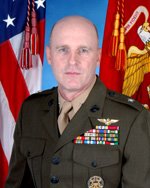
Brigadier General Carl B. Jensen, Commander, Expeditionary Strike Group THREEDefense Department Press Briefing - Marine Corps Brig. Gen. Carl Jensen, commander, Task Force 59 briefs the news media with an update on ongoing U.S. military assistance to the departure of American citizens from Lebanon and transportation of humanitarian assistance. 7/26/2006: WASHINGTON, DC: 21:03 min. Biography: Brig. Gen. Carl B. Jensen, USMC
Related: Keyword Iraq, Monday, June 26, 2006 Sheikh Mansur Interdiction gun camera footage (VIDEO), Wednesday, June 21, 2006 Military Working Dog's Best Friend (VIDEO), Monday, June 19, 2006 Female Sailors first to be deployed forward (PODCAST, Saturday, June 17, 2006 Maj. Gen. Caldwell missing soldiers 06/17/06 (VIDEO), Saturday, June 10, 2006 Maj. Gen. Caldwell, neutralization of terrorist Musab Al Zarqarwi (VIDEO), Friday, June 09, 2006 Gun Camera Footage of Zarqawi Elimination (VIDEO), Friday, June 09, 2006 the President on Death Zarqawi (VIDEO), Thursday, May 11, 2006 President Discusses NSA Surveillance Program (VIDEO, Monday, March 20, 2006 Third Anniversary of Beginning of Iraq Liberation (VIDEO), Tuesday, March 14, 2006 President Discusses Freedom and Democracy in Iraq, 03/13/05 VIDEO, Thursday, March 09, 2006 President Signs USA PATRIOT Act (VIDEO), Saturday, February 25, 2006 President Addresses American Legion, Discusses Global War on Terror (VIDEO), Wednesday, January 25, 2006 President Discusses War on Terror at K-State (VIDEO), Wednesday, January 04, 2006 President Discusses War on Terror Following Pentagon Briefing (VIDEO),

Press Briefing Tony Snow 07/26/06 (VIDEO)

Technorati Tags: and or and , or and , or , and , or and or and or and or and or , or , or ,

White House Press Secretary Tony Snow, Tuesday, May 16, 2006, fields questions during his first briefing after replacing Scott McClellan. White House photo by Paul Morse.Press Briefing by Tony Snow, FULL STREAMING VIDEO. file is real media format, running time is 31:23. James S. Brady Briefing Room. White House Press Secretary Tony Snow briefs the press and answers questions. 7/26/2006: WASHINGTON, DC: 31:23 min.
Related: Keywords Press Briefing Scott McClellan, Tony Snow. Monday, July 24, 2006 Press Briefing Tony Snow 07/24/06 (VIDEO), Tuesday, July 18, 2006 Press Briefing Tony Snow 07/18/06 (VIDEO), Thursday, July 06, 2006 Press Briefing Tony Snow 07/06/06 (VIDEO), Thursday, June 29, 2006 Press Briefing Tony Snow 06/29/06 (VIDEO), Tuesday, June 06, 2006 Press Briefing Tony Snow 06/06/06 (VIDEO), Wednesday, May 31, 2006 Press Briefing Tony Snow 05/31/06 (VIDEO), Wednesday, May 17, 2006 Press Briefing Tony Snow 05/16/06 (VIDEO), Tuesday, May 02, 2006 Press Briefing Scott McClellan 05/02/06 (VIDEO), Tuesday, April 25, 2006 Press Briefing Scott McClellan 04/25/06 (VIDEO), Tuesday, April 11, 2006 Press Briefing Scott McClellan 04/10/06 (VIDEO), Wednesday, April 05, 2006 Press Briefing Scott McClellan 04/04/06 (VIDEO), Wednesday, March 29, 2006 Press Briefing Scott McClellan 03/28/06 (VIDEO), Friday, March 24, 2006 Press Briefing Scott McClellan 03/23/06 (VIDEO), Sunday, March 19, 2006 Press Briefing Scott McClellan 03/17/06 (VIDEO), Friday, March 17, 2006 Press Briefing Scott McClellan 03/15/06 (VIDEO),

State Department Daily Press Briefing, VIDEO, PODCAST, TEXT, 07/26/06

Technorati Tags: and or and , or and or , or and ,, or , and , or

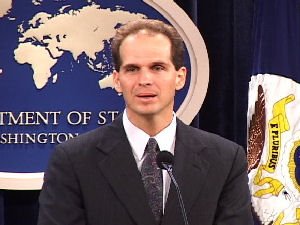
Tom Casey, Director, Office of Press Relations, Bureau of Public AffairsState Dept. Briefing with Tom Casey U.S. State Department spokesman Tom Casey briefs the press and answers questions.7/26/2006: WASHINGTON, DC: 30 min. FULL STREAMING VIDEO
Related: Keywords State Department, Tuesday, July 25, 2006 Condoleezza Rice With Israeli Foreign Minister Livni in Jerusalem, Saturday, July 22, 2006 Condoleezza Rice, Middle East and Europe VIDEO, PODCAST, TEXT, Friday, July 21, 2006 State Department Daily Press Briefing, VIDEO, PODCAST, TEXT, 07/20/06, Thursday, July 20, 2006 Secretary Rice, Patriarch Nasrallah Sfeir, VIDEO, PODCAST, TEXT, Tuesday, July 18, 2006, Evacuation of U.S. Citizens from Lebanon VIDEO, PODCAST, TEXT, Monday, July 17, 2006 For U.S. Citizens Seeking Assistance in Lebanon, VIDEO, PODCAST, TEXT, Saturday, July 15, 2006 U.S. Embassy Information for American Citizens in Lebanon, Thursday, July 13, 2006, U.S.-India Civil Nuclear Cooperation Initiative, VIDEO, PODCAST, TEXT, Thursday, July 13, 2006 Condoleezza Rice, Carlos Gutierrez, Free Cuba, VIDEO, PODCAST, TEXT, Thursday, July 13, 2006 Condoleezza Rice, Pakistani Minister of Foreign Affairs Khurshid Mahmood, VIDEO, PODCAST, TEXT, Thursday, July 13, 2006 Condoleezza Rice, British Foreign Secretary, Margaret Beckett VIDEO, PODCAST, TEXT, Wednesday, July 05, 2006 Condeleeza Rice, Turkish Foreign Minister VIDEO, PODCAST, TEXT,

Tuesday, July 25, 2006

Condoleezza Rice With Israeli Foreign Minister Livni in Jerusalem

Technorati Tags: and or and , or and or , or and ,, or , and ,

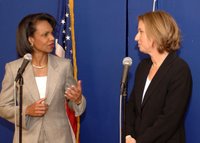
Secretary of State Condoleezza Rice With Israeli Foreign Minister Livni in Jerusalem, Secretary Condoleezza Rice, Jerusalem, July 24, 2006

Secretary Rice Meets With Foreign Minister Tzipi Livni. Jerusalem, July 24, 2006, Secretary Rice and Israeli Foreign Minister Tzipi Livni speak to the press in Jerusalem.  Photo: Matty Stern/U.S. Embassy Tel Aviv.Secretary Rice Meets With Foreign Minister Tzipi Livni. Jerusalem, July 24, 2006, Secretary Rice and Israeli Foreign Minister Tzipi Livni speak to the press in Jerusalem. Photo: Matty Stern/U.S. Embassy Tel Aviv.
FOREIGN MINISTER LIVINI: Allow me to welcome -- to warmly welcome Secretary Rice to Israel. This is a very important visit at the most difficult time. The free world is facing threats that seek to undermine our values and our stability. The goals of Hezbollah are to set the region in flame and to dictate the Israeli-Palestinian agenda.
We cannot and we will not let them succeed. The international community, the free world, led by the United States, has a common understanding not only of the threats but also of the ways to resolve the situation in Lebanon. It was established in Security Council Resolution 1559 and in the recent G-8 summit. The abducted soldiers must be released. Hezbollah must be disarmed and the Lebanese Government sovereignty must be exercised all over Lebanon, the Lebanese territory. I want to be clear, there is no conflict between Israel and between the people of Lebanon. But Israel has no higher responsibility than to defend its citizens.

This is now, I believe, a moment of truth not only to Israel or to the Lebanese Government, but also to the international community. There's a need for the international community to implement its decision and to assist the Lebanese Government and confront the Hezbollah and implement the international community's decision for the benefit and for the future for us all -- of us all. And with your permission, can I say a few words in Hebrew.

SECRETARY RICE: Of course.

FOREIGN MINISTER LIVINI: (Speaking in Hebrew)

SECRETARY RICE: I think they’d like to know what you said, but we’ll get the translation for them.

FOREIGN MINISTER LIVNI: (Inaudible) mainly to say that –

SECRETARY RICE: I know, I understand.

Let me first of all thank you very much for welcoming me here. We will have a discussion tonight of the difficult circumstances, the difficult conditions here in the Middle East. This is a difficult time for, of course, the Israeli people who face daily threats. It is a difficult time for the people of Lebanon. And it’s a difficult time for the Palestinian people.

If we have learned anything, it is that any peace is going to have to be based on enduring principles and not on temporary solutions. We will talk about how to get to an enduring cessation of violence, how to deal with the significant humanitarian problems that are currently facing the people of Lebanon. I think that everyone wants to see innocent civilians in better circumstances than they are currently, and we will talk about that.

But let me just say that the international community does indeed have a way forward. We stated this in the G-8 statement. It is there in Resolution 1559. Ultimately, a Middle East that is peaceful and democratic will be a Middle East in which peace is sustainable. And so thank you very much for having me here. We will discuss specific matters tonight. We have a program tomorrow.

I want to add one point which is that the people of America, President Bush and all of the people of America, of course, our prayers are with Prime Minister Sharon and with his family. We know that there has been a deterioration in his circumstances, but we pray for his full recovery.

Thank you.

2006/T19-2, Released on July 24, 2006

Related: Keywords State Department, Saturday, July 22, 2006 Condoleezza Rice, Middle East and Europe VIDEO, PODCAST, TEXT, Friday, July 21, 2006 State Department Daily Press Briefing, VIDEO, PODCAST, TEXT, 07/20/06, Thursday, July 20, 2006 Secretary Rice, Patriarch Nasrallah Sfeir, VIDEO, PODCAST, TEXT, Tuesday, July 18, 2006, Evacuation of U.S. Citizens from Lebanon VIDEO, PODCAST, TEXT, Monday, July 17, 2006 For U.S. Citizens Seeking Assistance in Lebanon, VIDEO, PODCAST, TEXT, Saturday, July 15, 2006 U.S. Embassy Information for American Citizens in Lebanon, Thursday, July 13, 2006, U.S.-India Civil Nuclear Cooperation Initiative, VIDEO, PODCAST, TEXT, Thursday, July 13, 2006 Condoleezza Rice, Carlos Gutierrez, Free Cuba, VIDEO, PODCAST, TEXT, Thursday, July 13, 2006 Condoleezza Rice, Pakistani Minister of Foreign Affairs Khurshid Mahmood, VIDEO, PODCAST, TEXT, Thursday, July 13, 2006 Condoleezza Rice, British Foreign Secretary, Margaret Beckett VIDEO, PODCAST, TEXT, Wednesday, July 05, 2006 Condeleeza Rice, Turkish Foreign Minister VIDEO, PODCAST, TEXT, Monday, June 26, 2006 Secretary Rice With Foreign Affairs Minister of Poland, VIDEO, PODCAST, TEXT, Monday, June 19, 2006 Secretary Condoleezza Rice, Foreign Minister Miguel Angel Moratinos, VIDEO, PODCAST, TEXT, Monday, June 19, 2006 Robert Zoellick Announces Departure VIDEO, PODCAST, TEXT, Friday, June 02, 2006 R. Nicholas Burns, Remarks in Vienna, Austria, Wednesday, May 31, 2006 Iran Statement by Condoleezza Rice (VIDEO), Thursday, May 18, 2006 Secretary Rice With Prime Minister John Howard (PODCAST), Wednesday, May 10, 2006 Secretary Rice, EU Secretary General Javier Solana on Iran, VIDEO, PODCAST, TEXT, Wednesday, May 03, 2006 Secretary Rice, James Wolfensohn, Gaza Disengagement (PODCAST), Thursday, April 27, 2006 Remarks at Stakeout Secretary Condoleezza Rice, Friday, April 21, 2006 Secretary Rice to Travel to Europe, Friday, April 21, 2006 The Face of the State Department (VIDEO), Thursday, April 13, 2006 Secretary Rice Holds Talks with Equatorial Guinean President, Tuesday, April 11, 2006 State Department Podcast, VIDEO and Text 04/10/06, Wednesday, April 05, 2006 State Department Podcast, VIDEO and Text 04/03/06, Thursday, March 30, 2006 State Department Podcast, VIDEO and Text 03/29/06, Monday, April 03, 2006 Secretary Rice With Foreign Secretary Straw, Baghdad, Friday, March 31, 2006 Rice in Berlin To Discuss Iran with P-5 plus 1, Friday, March 31, 2006 UNHCR Worker’s Death in Sudan Attack

President Bush, Prime Minister Maliki VIDEO

Technorati Tags: and or and or and or and or and or

In Focus: Renewal in Iraq
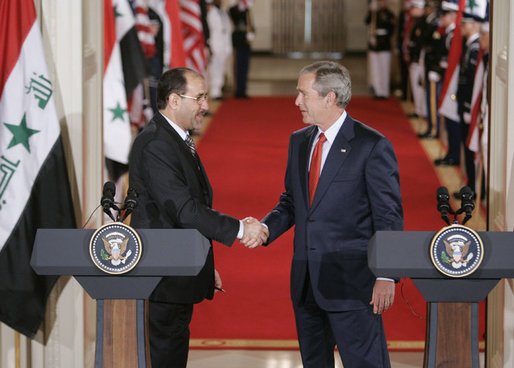
President Bush and Prime Minister Maliki of Iraq Participate in Press Availability, FULL STREAMIMG VIDEO, The East Room, 11:27 A.M. EDT, In Focus: Renewal in Iraq

PRESIDENT BUSH: Thank you all. Please be seated.
Mr. Prime Minister, welcome to the White House. I just had a very constructive meeting with the leader of a government that has been chosen by the Iraqi people in free and fair elections.
I appreciate your vision for a free Iraq, and I appreciate you briefing me on a strategy to reduce violence and to rebuild your country.
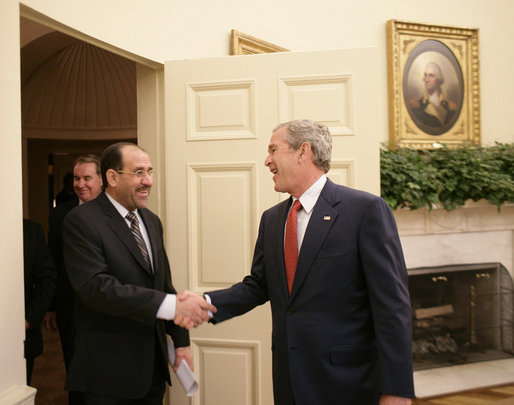
President George W. Bush welcomes Iraqi Prime Minister Nouri al-Maliki into the Oval Office of the White House Tuesday, July 25, 2006, where the two leaders talked about plans to expand the security presence in the neighborhoods of the Iraqi capital. White House photo by Eric Draper.You have a strong partner in the United States of America, and I'm honored to stand here with you, Mr. Prime Minister. It's a remarkable and historical moment, as far as I'm concerned,
to welcome the freely elected leader of Iraq to the White House.
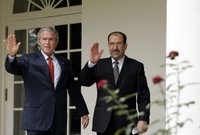
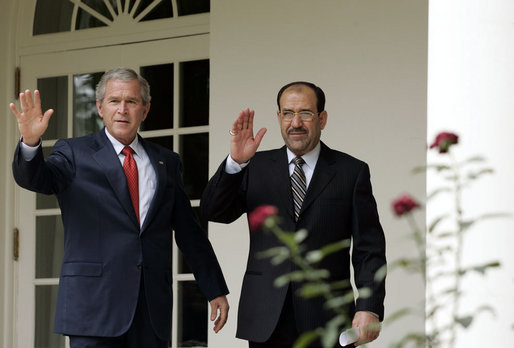
President George W. Bush and Iraqi Prime Minister Nouri al-Maliki walk along the colonnade of the Rose Garden after meeting in the Oval Office Tuesday, July 25, 2006. White House photo by Paul Morse.We discussed a lot of issues. The Prime Minister has laid out a comprehensive plan. That's what leaders do. They see problems, they address problems, and they lay out a plan to solve the problems.
The Prime Minister understands he's got challenges and he's identified priorities.

Our priority is to help this government succeed. It's in the national interest of the United States that a unity government, based upon a constitution that is advanced and modern, succeed. And that's what I told the Prime Minister. He comes wondering whether or not we're committed. He hears all kinds of stories here in the United States. And I assured him that this government stands with the Iraqi people. We're impressed by your courage, Mr. Prime Minister, and we're impressed by the courage of the Iraqi people. And we want to help you.

We talked about security in Baghdad. No question the terrorists and extremists are brutal. These are people that just kill innocent people to achieve an objective, which is to destabilize his government. The Prime Minister tells me that he and his government are not shaken by these actions. They're concerned about them, they're not shaken by them.

The Iraqi people want to succeed. They want to end this violence. Our strategy is to remain on the offense, including in Baghdad. Under the Prime Minister's leadership, coalition and Iraqi leaders are modifying their operational concept to bring greater security to the Iraqi capital. Coalition and Iraqi forces will secure individual neighborhoods, will ensure the existence of an Iraqi security presence in the neighborhoods, and gradually expand the security presence as Iraqi citizens help them root out those who instigate violence.

This plan will involve embedding more U.S. military police with Iraqi police units to make them more effective. The Prime Minister advised me that to support this plan, he and General Casey have agreed to deploy additional American troops and Iraqi security personnel in Baghdad in the coming weeks. These will come from other areas of the country. Our military commanders tell me that this deployment will better reflect the current conditions on the ground in Iraq.

We also agreed that Iraqi security forces need better tools to do their job. And so we'll work with them to equip them with greater mobility, fire power, and protection.

We still face challenges in Baghdad, yet we see progress elsewhere in Iraq. Iraqi security forces are growing in strength and capability, and recently, a key province in southern Iraq was transferred to full Iraqi civilian control. In the midst of all the violence in Baghdad, sometimes a -- success is obscured. And this transfer of a key province is a beginning of other provinces to be transferred to full Iraqi control. It's a sign of progress. No question it's tough in Baghdad, and no question it's tough in other parts of Iraq. But there are also places where progress is being made, and the Prime Minister and I talked about that progress.

The Prime Minister and I agreed to establish a joint committee to achieve Iraqi self-reliance. This new partnership will seek to ensure the smoothest and most effective assumption of security responsibility by Iraqi forces. Prime Minister Maliki was very clear this morning; he said he does not want American troops to leave his country until his government can protect the Iraqi people. And I assured him that America will not abandon the Iraqi people.

Tomorrow, the Prime Minister and I will travel to Fort Belvoir in Virginia to visit with American troops and their families so we can thank them for their courage and their sacrifice. And we in the United States need to recognize the enormous sacrifice of the Iraqi people. The people are suffering hardships. These terrorists and killers are trying to shake the will of the Iraqi people. But despite large casualties, both civilian and military, the Iraqi people continue to stand for public office, enlist in their security forces, and, through their actions, demonstrate every day that they want to raise their families and live their lives like other free people around the world. And I'm impressed by the courage of the Iraqi citizens, Mr. Prime Minister.

Citizens continue to believe in the future of their country and to subscribe to the notion upon which America is also founded, that the freedom of their country is worth fighting for. America is proud to be allied with such people. It's important the Iraqi people hear of our pride and our determination, Mr. Prime Minister.

We also discussed several new initiatives we're undertaking to create opportunity for the Iraqi people, and one of them is called the Iraqi Leaders Initiative. And starting next summer, 200 high school and university students from all regions of Iraq and all sectors of Iraqi society will come to America to study at local institutions and build personal friendships with the people of our country. This is going to be the largest program of its kind, and it will help build the next generation of leaders for a free and democratic Iraq.

The Prime Minister and I spent time talking about Lebanon, and we had a frank exchange of views on this situation. I listened closely to the Prime Minister, and I valued a chance to hear his perspective. I heard him on the seriousness of the humanitarian crisis in Lebanon, and the need to do more for the Lebanese people. I told him that Secretary Rice has announced greater humanitarian measures for Lebanon, to include $30 million in aid. America is concerned about the women and children who suffer in that country, concerned about the loss of innocent life. I reminded him and told him that Condi is over there working to establish corridors to ensure the delivery of humanitarian aid and central relief supplies.

I told him I support a sustainable cease-fire that will bring about an end to violence, and I talked about the importance of strengthening the Lebanese government and supporting the Lebanese people.

Prime Minister and I also discussed his proposal for an international compact for Iraq. The compact will outline Iraq's commitment to specific economic reforms and the international community's commitment to support those reforms. We expect the international compact will be signed later this year. And I told the Prime Minister that the United States will work to encourage other countries to support the compact, and for other countries that have made pledges to Iraq, to make good on their pledges.

In light of the recent violence in the Middle East, some are questioning whether democracy can take root in the region. I believe that the Iraqi people are showing us their answer. They're making enormous sacrifices to secure their freedom, and they've elected leaders who are making tough decisions.

And, Mr. Prime Minister, you're such a leader, and I welcome you to the White House. Thanks for coming.

PRIME MINISTER MALIKI: (As translated.) Thank you very much. In the name of God, the most merciful and the passionate. I would like to thank President George Bush. Mr. President, I would like to thank you for your invitation to come here and visit the United States of America. And I would like to thank you for the warm welcome that myself and my delegation received. And also I appreciate very much your interest in the situation in Iraq and the responsible spirit that has dominated our discussions today.

We have discussed with President Bush clearly and frankly all the current challenges, and the horizon and the future, and ways of cooperation between our two countries in order to build a democratic, united, flourishing Iraq that enjoys its full national sovereignty. We have agreed that building the security and military institutions in Iraq in terms of numbers, equipment, firearms, and as quickly as possible, represents the fundamental base in order to stabilize the country and to have security and defeat terrorism.

I reaffirmed to the President Iraq's need to the cooperation from the international community and your cooperation. And I have seen a great deal of understanding for this very vital issue from the President. I also expressed my appreciation to the role that's been played by the multinational forces and the exerted efforts to support us and to help us in building our security organizations, to allow our organizations to fully be in control of the security position and the security circumstances.

I agreed with the President to form a joint committee of experts and connections in order to achieve the self-sufficiency for the Iraqi forces. This will allow these forces to bear the responsibility of protecting security and confronting terrorism in our country. And in this field, we have achieved our first and initial success when our forces assumed the responsibility in the Muthanna governorate. This is a very important step, will be followed by similar steps in many other governorates in Iraq.

We are determined to defeat terrorism, and the security plan for Baghdad has entered the second phase and it's achieving its objectives in hunting the terrorist networks and eliminating it.

I have informed the President about the national reconciliation plan, which I have launched in order to attract more Iraqi forces which have not engaged in the political process yet. This initiative represents, in addition to building the Iraqi armed forces, one of the initiatives that will contribute to choking terrorism and defeating terrorism in Iraq.

On the economic sphere and the reconstruction of Iraq, I have seen support from President Bush to ensure the success of the international compact, which we hope that, through it, we'll be able to have the support of the world community in reconstructing Iraq and improving the services that the government is providing to its own Iraqi people. We hope that many other countries will participate and contribute in that conference that will be convened in the next few months in order to sign this international compact. I assured the President Iraq's readiness to make this conference a success and accept the mutual commitments between Iraq and those who will sign the compact. The President reaffirmed his administration's commitment to encourage as many countries as possible to support this compact.

I also discussed with the President the issue of Lebanon in all seriousness, in a way that matches the importance of the size of destruction that happened to the Lebanese people as a result of the military air and ground attacks. And I also emphasized the importance of immediate cease-fire, and call on the international community to support the Lebanese government and support the Lebanese people to overcome the damage and destruction that happened.

I also expressed to the President about Iraq's desire and Iraq's political leadership's desire to merge in the international community and its institutions, and to participate effectively in the various issues on the basis of mutual interest, and to be committed to the policy of not interfering or intervening in the domestic policies of other countries. I also reaffirmed the importance of approaching every issue through peaceful and diplomatic means to deal with the problems that exist in our region. These chronic problems require a great deal of wisdom and patience and perseverance in order to find the just and successful and fair solution.

Mr. President, I thank you once again for your kind invitation and for your very warm hospitality and generosity.

PRESIDENT BUSH: Two questions a side, starting with you, Tom.

Q Mr. President, and Mr. Prime Minister, why should one expect this new security crackdown in Baghdad to succeed when all previous ones have failed?

And, Mr. President, you've said before that withdrawal of U.S. troops would depend on conditions on the ground. What do conditions on the ground now in Baghdad suggest in terms of whether there can be a significant withdrawal of American forces by the end of the year?

PRESIDENT BUSH: I'll start -- do you want to start? Go ahead.

PRIME MINISTER MALIKI: Actually, the circumstances that the Baghdad security plans, or other plans related to Basra and other places are different in terms of circumstances from the previous plans. Today Iraq has a national unity government, that is basically composed of -- all elements of the Iraqi people are represented in this government. Iraq has a parliament; it has a constitution to face all these challenges. So what the Baghdad security plan gains in terms of support is support from all over the segments of the Iraqi population.

Secondly, by monitoring the reality on the ground, we will be able to ensure the success, especially what happens against the innocent people. The Baghdad security forces was able to eliminate many hot spots of crimes and troubles in Baghdad.

PRESIDENT BUSH: One of the things that's important is for -- and one of the reasons why you trust the commanders on the ground is because there needs to be flexibility. And I explained to the Prime Minister that I'll be making my decisions based upon the recommendations of General Casey. And, obviously, the violence in Baghdad is still terrible, and, therefore, there needs to be more troops. In other words, the commanders said, what more can we do; how best to address the conditions on the ground. And they have recommended, as a result of working with the Prime Minister, based upon his recommendation, that we increase the number of U.S. troops in Baghdad, alongside of Iraqi troops. And we're going to do that.

The second request that the Prime Minister made was that he needs more equipment for his troops. And General Dempsey, along with General Casey have reviewed his requests and his ideas. And I told the Prime Minister if this is what these generals recommend, it's what I support.

Conditions change inside a country, Tom. And the question is, are we going to be facile enough to change with -- will we be nimble enough; will we be able to deal with the circumstances on the ground? And the answer is, yes, we will.

Mr. Prime Minister, would you like to call on somebody? There you go.

Q I have two questions. One, President Bush. The first one: Is there an obvious change that could be made to the security status, particularly in Baghdad right now?

And the second question for you, Mr. Prime Minister. You said in a press conference in Baghdad that your visit to Washington, you will cross the T's and dot the I's, especially regarding the security needs. Did you cross the T's and dot the I's in your discussion with President Bush?

PRESIDENT BUSH: -- a lot of time talking about security, and I can understand why. Because there's -- there are people who are willing to destroy innocent life to achieve a political objective. And the Prime Minister is deeply concerned about the lives of his fellow citizens. And I appreciate that concern. I would be very worried if a Prime Minister came to talk about his country and did not mention, first and foremost, protecting people's lives. That's, after all, the most important responsibility of government.

And he believes, and I believe, that the -- there needs to be more forces inside Baghdad who are willing to hold people to account. In other words, if you find somebody who's kidnapping and murdering, the murderer ought to be held to account. It ought to be clear in society that that kind of behavior is not tolerated.

And that's the attitude of the Prime Minister. My attitude is, we shouldn't try to gauge whether or not someone is justified, or not; we ought to be saying that if you murder, you're responsible for your actions. And I think the Iraqi people appreciate that type of attitude.

And so we -- so we're not only talking about adjusting a Baghdad plan at the Prime Minister's request, to make it more effective, we're also talking about how to make the Iraqi army more effective. But the truth of the matter is, the Iraqi army is becoming a highly professional force that will help bring confidence to the people inside Iraq that the government has got the capacity to protect them.

PRIME MINISTER MALIKI: Thank you, Mr. President. Actually, successful acts and large issues has to be based on a clear vision. And through the serious discussion and the clear and the frank conversation that I had with President George Bush, that we are truly crossing the T's and dotting the I's in terms of enhancing the security and supporting the reconstruction. Through the discussion we were able to go through the details of the vision that will cover the future, because we are not talking here about a specific phase of the reconstruction, but we are facing the necessity of continuous work in order to make sure that the entire political experiment will succeed.

I believe with a great deal of confidence that I have reaffirmed through this, and I became convinced that, I have full confidence of victory and we will be highly capable of defeating terrorism in Iraq.

Q -- you had a frank exchange on the Middle East. How can you get Arab nations to apply pressure to stop the fighting in the Middle East, if allies like the Prime Minister won't condemn Hezbollah?

And, Mr. Prime Minister, what, exactly is your position on Hezbollah? Thank you.

PRESIDENT BUSH: The terrorists are afraid of democracies. And what you've witnessed in Israel, in my judgment, is the act of a terrorist organization trying to stop the advance of democracy in the region.

I assured the Prime Minister that I care deeply about the suffering that takes place, that we understand the anguish of leaders in the region who see innocent people losing their life. I also assured him that Condi Rice's mission is to help get humanitarian aid to the Lebanese people. She's working on not only air corridors, but sea corridors and land corridors, to get aid to the people. And the United States will participate, as will other nations.

I also talked about making sure that we adhere to U.N. Resolution 1559, which basically -- not basically -- strongly urges political parties not to be armed. A key part of our strategy is to support democracy. And so, not only do we support democracy in the Palestinian Territory, we also support the Lebanese democracy. I think the Prime Minister was pleased to hear my strong support for the Siniora government.

And so Condi goes with the following messages: We support the Siniora government; we care about the people; we will help to get aid to the people; and that we want a sustainable cease-fire. We don't want something that's short-term in duration. We want to address the root causes of the violence in the area, and therefore, our mission and our goal is to have a lasting peace -- not a temporary peace, but something that lasts.

And I believe that Iraq, in some ways, faces the same difficulty, and that is a new democracy is emerging and there are people who are willing to use terrorist techniques to stop it. That's what the murder is all about. People fear democracy if your vision is based upon kind of a totalitarian view of the world. And that's the ultimate challenge facing Iraq and Lebanon and the Palestinian Territories, and that is, will the free world, and the neighborhood, work in concert to help develop sustainable democracy?

And Iraq took a long step along that -- a big step on that path when they developed a constitution that was ratified by the Iraqi people. And it's a modern constitution, and it's a landmark moment in the history of freedom advancing in the Middle East.

I believe that deep in everybody's soul, Mr. Prime Minister, is a desire to be free. And when 12 million Iraqis went to the polls and said, I want to be free, it was an amazing moment. I know it seems like a long, long time ago that that happened. But it was a powerful statement about what is possible in terms of achieving peace.

PRIME MINISTER MALIKI: Thank you. Here, actually we're talking about the suffering of a people in a country. And we are not in the process of reviewing one issue or another, or any government position. The important thing here is what we are trying to do is to stop the killing and the destruction, and then we leave the room and the way for the international and diplomatic efforts and international organization to play the role to be there.

We are not here facing a situation only in Lebanon, but would be facing a variety of issues in different countries. I'm talking here about the approach that should be used in order to stop this process of promoting hatred, that has to be superior decisions coming from above in order to protect these experiments, particularly the democratic experiments that should be protected by those who are trying to oppose it.

Q Thank you very much, Mr. Prime Minister. General Abizaid said that the danger that Iraq is facing is the religious danger. Do you agree with his assessment? And do you see that is there any security plan that can really curb the religious violence?

(For President Bush) -- humanitarian aid to Lebanon. Yet there's also reports that your administration are speeding up delivery of laser-guided missiles to Israel and bunker-buster bombs. And do you see this -- if this is true, do you see it as contradictory? On one hand, you allow Israel to kill people, and civilian, in particular, and on the other hand, you're trying to aid the very people that have been suffering and killed as a result?

PRESIDENT BUSH: No, I don't see a contradiction in us honoring commitments we made prior to Hezbollah attacks into Israeli territory. And I -- like the Prime Minister, I'm concerned about loss of innocent life, and we will do everything we can to help move equipment -- I mean, food and medicines to help the people who have been displaced and the people who suffer.

PRIME MINISTER MALIKI: I do not reduce the risk and the danger of the religious feelings, especially through some of the organizations that are trying to promote this hatred. And there are -- some of the events are on the basis of religious divide, but I would like to assure the political and religious leaders and civil societies that the Iraqi parties, politicians, religious leaders are rising to their responsibility and are condemning those who are cooperating with al Qaeda and those who are trying to start a civil war.

The most important element in the security plan is to curb the religious violence, because we will not allow any Iraqis to use this background. This is one of the main objectives of the security plan. It is the policy of the government: There is no killing or discrimination against anyone. Everything is by law and everything based on the constitution and the law. The government responsibility is to protect all Iraqis, regardless of their ethnic or religious background. It's important to say that we are shedding the light against those who are calling for sectarian religious, because we feel that this is a great danger to Iraq. And, God willing, there will be no civil war in Iraq.

Thank you very much.

PRESIDENT BUSH: Thank you.

END 11:56 A.M. EDT, For Immediate Release, Office of the Press Secretary, July 25, 2006

Related: Keyword Iraq, Monday, June 26, 2006 President Bush Meets with Supporters of U.S. Military (VIDEO), Monday, June 26, 2006 Sheikh Mansur Interdiction gun camera footage (VIDEO), Wednesday, June 21, 2006 Military Working Dog's Best Friend (VIDEO), Monday, June 19, 2006 Female Sailors first to be deployed forward (PODCAST, Saturday, June 17, 2006 Maj. Gen. Caldwell missing soldiers 06/17/06 (VIDEO), Saturday, June 10, 2006 Maj. Gen. Caldwell, neutralization of terrorist Musab Al Zarqarwi (VIDEO), Friday, June 09, 2006 Gun Camera Footage of Zarqawi Elimination (VIDEO), Friday, June 09, 2006 the President on Death Zarqawi (VIDEO), Thursday, May 11, 2006 President Discusses NSA Surveillance Program (VIDEO, Monday, March 20, 2006 Third Anniversary of Beginning of Iraq Liberation (VIDEO), Tuesday, March 14, 2006 President Discusses Freedom and Democracy in Iraq, 03/13/05 VIDEO, Thursday, March 09, 2006 President Signs USA PATRIOT Act (VIDEO), Saturday, February 25, 2006 President Addresses American Legion, Discusses Global War on Terror (VIDEO), Wednesday, January 25, 2006 President Discusses War on Terror at K-State (VIDEO), Wednesday, January 04, 2006 President Discusses War on Terror Following Pentagon Briefing (VIDEO), Monday, December 19, 2005 President's Address to the Nation (VIDEO) 12/18/05, Thursday, December 15, 2005 President, McCain, Warner, Discusses Interrogation, Wednesday, December 14, 2005 Iraqi Elections, Victory in the War on Terror (VIDEO), Monday, December 12, 2005 President Discusses War on Terror and Upcoming Iraqi Elections (VIDEO),