Monday, August 14, 2006

Press Briefing Tony Snow 08/14/06 (VIDEO)

Technorati Tags: and or and , or and , or , and , or and or and or and or and or , or , or ,

White House Press Secretary Tony Snow, Tuesday, May 16, 2006, fields questions during his first briefing after replacing Scott McClellan. White House photo by Paul Morse.Press Briefing by Tony Snow, FULL STREAMING VIDEO. file is real media format, running time is 29:53. White House Conference Center Briefing Room.
White House Press Secretary Tony Snow briefs the press and answers questions. 8/14/2006: WASHINGTON, DC: 10:16 EDT.

MR. SNOW: Let me run you through a bit of what's going on with the President's day. Then we will get to questions. First, let me -- I'll run through the President's day.

He is meeting right now with the Secretary of Defense and the defense policy and programs team at the Pentagon, will have lunch with experts on Iraq. Those experts are Vali Nasr, professor of Middle East Politics at the Naval Post-Graduate School; Eric Davis, professor of Political Science at Rutgers University; Carole O'Leary, scholar-in-residence for the Middle East Initiative at American University; and Reuel Marc Gerecht, who is a resident fellow at the American Enterprise Institute.

After lunch, he will travel to the State Department, meeting with the Secretary of State and the foreign policy team; will deliver a statement on foreign policy from the State Department at approximately 3:30 p.m. And at 4:25 p.m., there will be the signing of HR 5683, to preserve the Mount Soledad Veterans Memorial in San Diego, California.

An update on the situation in Lebanon: Since the cease-fire this morning, there have been no rocket attacks, no defensive movements. There have been two minor military skirmishes between Israeli and Hezbollah forces.

Let me see what else we have here. In addition, there was a foreign leader call this morning at the behest -- it was initiated by Italian Prime Minister Romano Prodi, about the situation in Lebanon. The two of them welcomed the passage of the U.N. Security Council resolution -- that's 1701 -- and discussed how to ensure that the enhanced UNIFIL authorized by the resolution will succeed in its mission. The President thanked the Prime Minister for Italy's willingness to contribute troops to the international force, and the President stressed that Iran and Syria must halt their supply of weapons to Hezbollah and respect the sovereignty of Lebanon.

In addition, the U.S. Departments of Agriculture and Interior, at the top of the hour, will be announcing that routine surveillance has indicated the possible presence of an H5N1 avian influenza virus in wild mute swans in Michigan. However, this is not what we're accustomed to hearing about from Asia. At this point, they believe it is a strain of low pathogenicity, similar to strains that have been seen before in North America. It does not appear to be related to the highly pathogenic strain that has spread through birds in Asia, Europe, and Africa. For further information, I would direct you to the briefing by Interior and Agriculture Department officials who will be talking about that in just a few minutes.

I'm ready for questions. Terry.

Q As you look at this, the month-long war in the Mideast, who won?

MR. SNOW: I'm not sure -- right now what's won is diplomacy has won. There has been an attempt to make effective U.N. Security Council Resolution 1559, which called for the abolition of militias in the southern part of Lebanon, and also -- by the way, that would include Hezbollah or any other militias -- and also the cessation of attempts to arm such militias from abroad. That is now the focus of efforts by the United States, the United Nations, the international community.

At this point, we are hoping that the people of Lebanon will be the ultimate victors because they'll be able to have a government in which the democratic will of the people is expressed through the policies of that government, and they don't have to be worrying about Hezbollah having its own independent foreign policy or the ability to try to wage war and engage neighboring states.

Q Do you think that Hezbollah has been weakened? What is its strength --

MR. SNOW: I'm not going to give you a military assessment. I mean, it's pretty obvious that there's been some weakening; I'm not going to try to assess it. But by Israeli reckoning, more than 500 Hezbollah guerillas killed, certainly rocket capacity has degraded, and so on. But, again, it would be presumptuous of me to try to give you an on-the-ground military assessment. I will let the interested parties talk about that.

Brett.

Q Tony, the President has spoken many times about the support from Syria and Iran for Hezbollah. Is he confident now, under the terms of the cease-fire, that that support will somehow be interrupted?

MR. SNOW: Well, we're going to find out, aren't we? That really does have to be one of the things that -- one of the outcomes of this. I think, in part, it will require placing on the northern border of Lebanon somebody who is capable of handling security in such a way as to intercept, interrupt and, with any luck, stop the transport into Lebanon of arms from Iran and Syria.

It's folly to make predictions, but that is certainly the intention. It's one of the reasons why we're talking about the beefed up UNIFIL force. It's one of the reasons why the President was talking today with Prime Minister Prodi about ways to work forward -- to move forward, and it's why there have been ongoing discussions with some of our allies to build a much more robust force than UNIFIL has had in the past, or, for that matter, more robust than the capabilities, at least at present, of the Lebanese armed forces.

Q But northern border protection is not part of this cease-fire.

MR. SNOW: Well, it's -- one of the things in it is making effective the provisions of U.N. Security Council Resolution 1559, which does, in fact, specify that armaments should not be coming in from foreign governments.

Now, you're right. I don't want to be trying to prejudge what people are going to be doing, but it does seem that there's going to be some need to be able to prevent the influx of weapons into the country.

Martha.

Q Tony, you mentioned there were no defensive actions today after the cease-fire. What do you define as "defensive actions"? If Israel continues to go into areas after being attacked, is that a defensive action?

MR. SNOW: It appears at this point -- let me just put it this way -- nobody seems to have initiated any kind of movements, and I'll leave it at that for now.

Q Could you define what you mean by "defensive action", why you chose to use that language?

MR. SNOW: Because that was the language that was recited to me. (Laughter.)

Q Well, what does it mean?

MR. SNOW: That's a very good question. Why don't we -- I'll tell you what. We'll try to be more specific in terms of

-- let me be very precise. There have been no troop movements, apparently, on either side designed to change the military status quo that prevailed at 5:00 a.m. GMT, which is when the cease-fire took hold. And rather than getting myself into the sticky wicket of trying to define "defensive," because I have a feeling it's going to be one of those you-know-it-when-you-see-it deals, I can tell you that there have been two minor skirmishes and that is it today.

Helen.

Q I have two questions. Did the President call for the respect of sovereignty by both sides?

MR. SNOW: Respect of sovereignty?

Q You just mentioned Hezbollah.

MR SNOW: I think what happens here is that -- yes, the President has called for everybody to respect the sovereignty of the government of Lebanon. And one of the things that he's pointed out in the past is that when you've had a power vacuum in the South, which has been the case in the past, it has invited Hezbollah to go in and serve as a government within a government or state within a state. The Israelis have agreed to pull out as international forces move in, providing credible security for the people in southern Lebanon, and also, at the same time, providing some assurance that Hezbollah will not try to rearm again.

Q My second question: Why does the President want to modify the Geneva accords, conventions, to prevent inhumane, cruel treatment of detainees?

MR. SNOW: The President has never suggested modifying the Geneva conventions.

Q You mean that all these stories are wrong?

MR. SNOW: Well, the Geneva conventions, as has been construed -- there are two things you've got to keep in mind. Number one, the Geneva conventions always must be construed especially -- you're talking about Common Article Three?

Q Yes.

MR. SNOW: -- in manners that are consistent with the U.S. law. The second thing is this is a new situation because the Geneva conventions in the past have not been construed as applying to those who do not fight for duly constituted military forces. We will wait to see when we have a final decision on how to implement the Hamdan case. I think, at this point, what you're reacting to is things that you've seen, and I'll be happy to entertain more specific questions when we have a proffer.

Q Are these all speculative and not true?

MR. SNOW: No, it's all trying to figure out the proper way also. One of the difficulties in Common Article Three is that there's a great deal of vague language and rather than, "trying to change the Geneva accords," what we're trying to do is to interpret them.

Q Does the President have any concern about how Prime Minister Olmert's political standing has been affected by all of this? A lot of criticism within his own country and around the world.

MR. SNOW: No, but I think the President does understand what happens when you're in a period of war, which is that you're always going to take some political heat if you're trying to do what you think is right. And he certainly understands and appreciates the fact that there are going to be responses from people in any nation that is affected by war, and he certainly has a keen understanding and appreciation.

Q Prime Minister Olmert today said that Israel will continue to pursue Hezbollah leaders, "everywhere and any time." I mean, do you view that as in line with the cease-fire?

MR. SNOW: Well, I think what we ought to do is just to see what people do on the ground and we'll react to things going on on the ground.

Q Tony, could you characterize for us the President's, the administration's impressions of this cessation of hostilities so far? And also, is it still the case that no U.S. troops will be involved in this beefed up UNIFIL force?

MR. SNOW: As the President has said, at some point U.S. forces may be involved in kind of support or logistics, but --

Q But not UNIFIL --

MR. SNOW: No. It's probably a little premature to be taking a look at a cease-fire that's been in effect for nine-and-a-half hours, but I think the one thing we can say is that this is one of the things that the President and the Secretary of State have been pushing forward from July 12th on, which is to try to create conditions diplomatically that are going to provide some credible way of giving effect to U.N. Security Council Resolution 1559.

So that is why there's been a lot of conversation -- and as you saw, there was that diplomatic taffy pull as we tried to figure out how to get to the resolution that all sides would support, in which you would have a resolution that had clearly stated goals; that would define what we were talking about in terms of security and sovereignty for the government of Lebanon in the southern part of Lebanon; that would have an international commitment so that the armed forces, the Lebanese armed forces also would have the kind of support they need to effectively control the southern part of the country; and would not only restate the provisions of 1559, but also look forward on some of the other questions that have been raised. And there is language within the resolution to deal with some of the outstanding negotiation issues including that of prisoners.

Q So, no adjectives -- hopeful, optimistic?

MR. SNOW: It's been nine-and-a-half hours. I mean, it's what -- the one thing you want to do is, obviously, we want not only for the cease-fire to hold, but to set in train the kind of events that are going to get us to where we want to be, which is a freestanding, democratic government in Lebanon that no longer has to worry about provocations that are waged within it's borders by a militia that does not represent the people of Lebanon.

Q How soon do you expect the international force to start deploying in there, and who should be in it? I mean, you've talked about the United States' role -- who else? Who should be in it?

MR. SNOW: I'll let you ask the parties involved. That is a matter of ongoing discussion. I think the French and Italians have been on record as having some interest, but I would be loathe to try to tell you exactly who's going to be in it. My understanding is that a lot of these things ought to be worked out within the next couple of weeks. Deployment schedules we'll get to you as soon as we know about it.

Q And you're confident that what's on the ground now is going to hold while the international community sort of slowly ramps up into this --

MR. SNOW: I think -- no. Look, it's going to require good behavior on the part of Hezbollah, and we're going to have to see. We've had statements coming out that would indicate that people say that they're not going to abide by it, but so far they have. No rockets fired by Hezbollah today. And we hope that everybody will stay true to this cease-fire, and that the government of Lebanon, again, will be able to have the credibility.

But a piece of paper outlines the way forward, but a lot of times that still has to be conducted by people on the ground, the people also within Lebanon. The Lebanese government has a role to play; the governments of Syria and Iran have a role to play; Hezbollah has a role to play; the Israelis have a role to play. And we'll have to see how all those things work out in the hours, days, and weeks ahead.

Jim.

Q Tony, what does the President want to get out of today's meeting with these experts? And, if I may, I guess he's had several of these now -- have these meetings affected policy at least in terms of tactics? And how open today is he to hearing about ideas about changing tactics?

MR. SNOW: Well, number one, these meetings happen all the time and the meetings that we're going through today are meetings with the national security team. Tomorrow we'll have the Homeland Security and Counter-terror team. We'll have the economic advisors at the end of the week. He does that every summer.

Today's topics at the Department of Defense have to deal -- first, the conversation deals with transformation within the Department of Defense, which, as you know, has been a priority of the Secretary from the very beginning, and also some discussion of the Far East. The Iraq experts are being brought in today to help provide differing views and overviews of the situation, in particular taking a look at the roles, the politics, the outlooks, the culture of Sunni, Shia and Kurd forces within Iraq, but also to take a broader look at the region, see how everything pieces together.

I think it's safe to say what the President does in sessions like this is invite people to express very openly their candid views on things. And you're going to find people who have disagreements within this group of four about the situation, about who could play what role. But, having said that, they play a role in the sense that they add to the President's knowledge and understanding of the region; they introduce new ideas and they allow him to question closely people who spend the vast majority of their time studying issues that are of keen concern to him, and at this point, of the country.

Q Even dissenters?

MR. SNOW: Yes, absolutely. And, Helen, that's an important point. We do not in "Amen" choruses. What you do is you invite smart people in who have different points of view. At Camp David, we heard widely differing recommendations on how to proceed militarily within Iraq. And that is a very useful service. You don't want people who are simply saying exactly the same thing. You want to be able to take an issue, look at it from different angles, try to understand the arguments and the information that motivates those arguments. It gives the President just a much broader spectrum by which to view what's going on.

Q But does that affect the policy? And there's been a lot of -- there continues to be criticism of the efficacy of the plan to quell the violence, so is this part of a process of honing the tactics, changing the tactics?

MR. SNOW: Well, the tactical responsibilities still lie, for instance on military operations, with the generals on the ground. The President uses this to shape his thinking about issues. It's not as if somebody says, "you know, I heard something really good at lunch, let's change tactics." It doesn't quite operate in that way. But what does happen is that the President finds himself -- he wants to look at creative ways of looking at the situation, and I think it's useful, not merely for the President, but for everybody involved.

Since I'm here, I won't -- I'm not likely to be at the lunch, I may get there in time, but if not, I'm getting full readouts on the note-taking. Furthermore, read books of all the things that the people have put together. I think it's important for all of us to try to learn as much as possible, and this is part of the ongoing dialogue that the President has been inviting for quite some time.

Q Tony, while there's been a lot of welcoming by Democrats of the cease-fire, there's also been a lot of criticism of getting there. What's your response to some of the Democrats' criticism?

MR. SNOW: I need to have a specific criticism. I don't want to just be --

Q That the President didn't press hard enough from the beginning.

MR. SNOW: Well, it's a peculiar criticism, since the President was the first to talk about it within hours of the seizure of Israeli hostages on the 12th of July. And furthermore, at that juncture -- and I would invite you to go back and look at the press avail he did that day with Chancellor Merkel -- laid out the principles that ended up not only being the guiding principles, but the core principles of the United Nations resolution. Furthermore, the United States took a lead role in the diplomacy from the very beginning, and ended up working with the French and others to try to come to a resolution. And, in addition, on a welcome note, Secretary General Annan also, in the final hours, was playing a very constructive role, as well, making sure that the process moved forward in a way that achieved the goals that the President outlined at the very beginning.

So, I'm sorry, but it may be a handy criticism to say that the President is not engaged, but it simply doesn't fit the facts in this case.

Peter.

Q Is there any disappointment in the administration that Israel didn't do a better job of knocking out Hezbollah?

MR. SNOW: No. There's been a lot of speculation that the United States has been engaged in military coordination, cooperation with Israel, and it's not the case. And furthermore, the notion that we're sort of sitting back, saying, "get them, get them, get them; we're buying you time," that's not the way it worked. If you take a look at the diplomacy last week, we were pushing very hard to try to get a resolution wrapped up as quickly as possible. So the answer is, no.

Q Can you talk about the economic advisors event on Friday? And how is that going to be different from what he's done in past summers?

MR. SNOW: You know, I'll give you a fuller readout as it approaches, but it's going to be the same sort of thing he typically does, which is to take a look forward, how do we build on the strength and growth in the economy. But rather than give you a boiler plate answer, which is what I'm doing at this moment, I'll try to get you something that's a little more specific and useful.

Goyal, go ahead.

Q Two questions, yeah, one on Lebanon. Tony, what was accomplished? The terrorists are still there. Those soldiers who are still there. So many people died, and their supporters and their financials are still there. Nobody has been punished as far as this war is concerned. What was accomplished?

MR. SNOW: Well, number one, you've leaped to a whole lot of conclusions that I'm not sure are fully grounded in fact, Goyal. It will take some time to assess what was done. I guarantee you that some of the terrorists were punished. Furthermore, what you now have is a global emphasis on the roles of Iran and Syria in terms of helping foment violence within Lebanon, and also trying to foil the democratic aspirations of people in Lebanon, and also the Palestinian Authority, for that matter. That's an important advancement because it does make clear who's responsible not only on the ground, but regionally, for supporting the kind of violence that we have seen.

In addition, what you also have -- Secretary Annan pointed this out last week -- there have been no prior commitment to UNIFIL troops to say, okay, you need to make sure that the militias are not operating in the south. That's now crystal clear. That is absolutely part of the mandate of forces that are going to be there in the South.

You also have a commitment on the part of -- on all parties to make sure that the government of Lebanon has the ability to stand up and govern the entirety of its country and exercise sovereignty effectively. So I think what you've had is one of those clarifying moments where people really do realize all the factors that are in play, and now are working together to try to figure out a proper way and a diplomatic way and as peaceful a way as possible to move forward so we can get to democracy without further bloodshed and violence.

Q I have another one on --

MR. SNOW: If it's on India and Pakistan, I can't help you. But if you've got something -- what you need to do, if you've got an India-Pakistan --

Q -- terrorism and Britain --

MR. SNOW: Okay, that's fine. Go ahead.

Q I have been saying this for the last 10 years, and now I think all the front-page headlines in The New York Times, Washington Post, Chicago Tribune, and U.S. and British officials are also saying -- my question is, does still the President trust and still consider allies General Musharraf and Pakistan?

MR. SNOW: Well, the Pakistanis, as the British have pointed out, played a very important role in breaking this cell. And President Musharraf has certainly taken considerable risks in moving against terror, and we welcome all advancements in breaking into the terror network.

Q Cuba, the statement over the weekend, the photographic evidence that Fidel Castro is alive, if not totally well -- but he told his people, be prepared for adverse news. Would adverse news for Cuba be good news for the White House?

MR. SNOW: We'll have to find out. I mean, heaven knows. At least they came up -- first you had the cheesy photo shop picture; at least the second one was a little better.

Q Can you give us a sense of where the U.S. government right now thinks the threat level is for an attack on the United States, off of this plot? The terror threat came down one notch today, but the ringleader is still out there, other guys are still out there they haven't caught yet. What is the message here?

MR. SNOW: With all due respect, we never answer questions like that. We're just never going to provide operational information about the whereabouts, the tactics. But what I can repeat is the fact that we went from red back to orange, as have the Brits. So there has been some degradation at least of this particular threat.

Q So what does that mean? We're getting back to the whole question of what do the color codes mean. How are people supposed to react to that, getting on planes --

MR. SNOW: Well, as I said last week when it was red, it's safe to fly on airplanes. And I think hundreds of thousands, if not millions of people experienced that over the weekend. So it's still safe to fly on airplanes, but it's also important to be vigilant and look out for things that may be -- may seem to be a little bit fishy, and do what you can to play your role.

Q Does the President support the Republican candidate for Senate in Connecticut?

MR. SNOW: The President supports the democratic process in the state of Connecticut, and wishes them a successful election in November.

Q Wait a minute. I realize he supports democracy, but I'm wondering, does he actually support his own party's candidate?

MR. SNOW: I know that's not news --

Q Why aren't you committing -- why wouldn't the President commit support for the Republican candidate in that --

MR. SNOW: I don't know. Why do you ask? Is there something about the candidate that I should know about that would lead to judgments?

Q I'm just asking you --

MR. SNOW: No, that's just a --

Q -- it seems like a very natural thing, why wouldn't he support a member of his own party? Is it because he's well behind in the polls? Is it because the President likes Joe Lieberman? What's -- why not?

MR. SNOW: There may be -- there are a whole host of reasons the President -- I'm just not going to play.

Q It's not really a game --

MR. SNOW: It's not a game. It's not a game, but I'll -- okay, I'll tell you what. I'll refer you to the political office to give you the full judgments on that. I think you know the situation in Connecticut.

Q Could you clear up for us the situation regarding whether there was pressure from the U.S. on the British as to when the arrests should be made, or whether there was a disagreement as to when the arrests should be --

MR. SNOW: I'll refer you the Fran Townsend, who denied it all. I just -- I don't have any information beyond what Fran said over the weekend.

Q One other quick one.

MR. SNOW: Sure.

Q As far as security on the trains is concerned, we know that trains have been targeted in other countries by al Qaeda-type terrorists. I took Amtrak on Friday; there is no security whatsoever on our trains. Are we going to do anything about that?

MR. SNOW: I'll refer that to Homeland Security. I think they may have a different take on it.

Q Following on Keith's question, so we should not routinely assume that the President is supporting the Republican nominee --

MR. SNOW: I think there's some peculiar characteristics going on in the Republican Party with the President candidate, and why don't you wait and see what happens?

Q What are those characteristics?

MR. SNOW: I think I was asking you and you wouldn't play, so --

Q Are there any other states where there are peculiar characteristics, or is this one unique?

MR. SNOW: I think this one may be unique. But we'll find out. Look, I know what you're trying to do and it's great and it's great fun, but --

Q -- get an answer.

MR. SNOW: Yes, well, they know the answer.

Go ahead.

Q Back to Victoria's question, apparently, Amtrak has put in place some things, how passengers get tickets, but that is the only thing. As Victoria said, there are no metal or -- detectors. There are no security agents on the trains. And former Transportation Secretary Rodney Slater, last week, said that Amtrak is one of the vulnerabilities of this fight, as well as the port. So what next --

MR. SNOW: Rather than trying to get me to answer a question that I don't have the information on, I really would refer you to Homeland Security. I know that there have been efforts and they have been documented in the past for dealing with trains. I'm just -- A, I'm not going to go into operational detail, and B, honestly, April, I just -- I don't have the background to answer your questions.

Q We saw what happened in Madrid, and we saw what happened in --

MR. SNOW: There's always concern about terrorism. But in terms of the specifics of how we're handling the train situation, I'm just not briefed up. I can't -- I don't want to do you the disservice of dancing around it and trying to pretend I know something I don't know.

Q Can you ask Homeland --

MR. SNOW: Why don't you --

Q I will call, but your call will get through faster.

MR. SNOW: I'll facilitate the phone call if you have difficulty. I'll make sure yours just gets right through. (Laughter.)

Mike.

Q To follow up on Peter's question, is it worrisome or sobering that, given a month, Israel wasn't able to defeat, contain, degrade Hezbollah?

MR. SNOW: Again, I think you guys are trying to keep scorecards based on impressions. I don't know -- if you can tell me exactly what the situation in on the ground and precisely how Hezbollah has been affected, then you ought to ask the Israelis about that. That is an Israeli strategic question.

The concern of this administration, from the start, has been very clear: to try to lay the basis for dealing with the root cause, which is Hezbollah aggression, and also to put in place a force that is going to be able to deter and deal with that aggression in the future. But you are asking me to render judgment on a military operation in which we play no part, and therefore, it's simply inappropriate for me to be entertaining such questions. You can call the Israeli embassy or you can call the Israeli military and try to get their own judgments on this, but it is not something that is of germane concern for us.

Q No, it's just in the past you've said it was part of the global war on terror, and that's --

MR. SNOW: And it is part of the global war on terrorism. But what you're asking for is an operational assessment of what's been going on with the Israelis and Hezbollah. I think what you were asking me to do was to assess what you considered the military objectives on the part of Israel and how we would assess their success in meeting those goals. And my point is that's a question for them and not for me.

Q But, Tony, would you like to see Hezbollah degraded?

MR. SNOW: We would like to see Hezbollah stop committing acts of terror. We also would like to see Hezbollah take the political path rather than the terror path.

Q Don't you want to see them disarmed?

Q But not militarily degraded --

MR. SNOW: Disarmament is something that will be the responsibility of the sovereign government of Lebanon with the assistance of international forces. It is part of the resolution, as it was part of Resolution 1559. So the answer is, yes, we would like to see that happen. But it is not something that's going to happen overnight. It is going to take concerted action on the part of the government of Lebanon and also on the part of the forces that are there operating in conjunction with and in support of the Lebanese armed forces.

Q Tony, did the President have a chance to see "60 Minutes" last night, and/or do you have a reaction to the Iranian President's statement that their program is civil and it's this country that wants to make bombs out of --

MR. SNOW: Well, I think it's pretty clear that the international community disagrees, as having been expressed with the U.N. Security Council resolution, and also the P3 plus one, which we're also working in conjunction with the Iranians. What we have said is, if you want it to be civil, we're perfectly willing to support that; let's do it in a way that it can be verifiable and let's move forward.

Also, furthermore, if it's guaranteed -- we don't have any problem with the peaceful, civil use of nuclear energy in Iran. As a matter of fact, we've been encouraging it for a number of countries, to eliminate the global dependence on oil or the addiction to oil. Having said that, it is of sufficient concern to a number of countries, with the situation with centrifuges and some of the other things, that if the Iranians do, in fact, want to make it clear that they're interested in civil -- not only can they sit down at the table, not only can they stop the enrichment and reprocessing-related activities with regard to those centrifuges, but there will be willing support for Western nations to help them develop peaceful civil nuclear power. And in addition there are any number of other inducements -- economic, cultural, social, political, and otherwise. And we've made that clear to the Iranians, and we hope that President Ahmadinejad will take us up on it.

Q Do you think the President watched the interview?

MR. SNOW: I have no idea. I didn't ask him this morning.

Q Thank you.

MR. SNOW: Okay. Thank you.

END 10:46 EDT, For Immediate Release, Office of the Press Secretary, August 14, 2006

Related: Keywords Press Briefing Scott McClellan, Tony Snow. Wednesday, July 26, 2006 Press Briefing Tony Snow 07/26/06 (VIDEO), Monday, July 24, 2006 Press Briefing Tony Snow 07/24/06 (VIDEO), Tuesday, July 18, 2006 Press Briefing Tony Snow 07/18/06 (VIDEO), Thursday, July 06, 2006 Press Briefing Tony Snow 07/06/06 (VIDEO), Thursday, June 29, 2006 Press Briefing Tony Snow 06/29/06 (VIDEO), Tuesday, June 06, 2006 Press Briefing Tony Snow 06/06/06 (VIDEO), Wednesday, May 31, 2006 Press Briefing Tony Snow 05/31/06 (VIDEO), Wednesday, May 17, 2006 Press Briefing Tony Snow 05/16/06 (VIDEO), Tuesday, May 02, 2006 Press Briefing Scott McClellan 05/02/06 (VIDEO), Tuesday, April 25, 2006 Press Briefing Scott McClellan 04/25/06 (VIDEO), Tuesday, April 11, 2006 Press Briefing Scott McClellan 04/10/06 (VIDEO), Wednesday, April 05, 2006 Press Briefing Scott McClellan 04/04/06 (VIDEO), Wednesday, March 29, 2006 Press Briefing Scott McClellan 03/28/06 (VIDEO), Friday, March 24, 2006 Press Briefing Scott McClellan 03/23/06 (VIDEO), Sunday, March 19, 2006 Press Briefing Scott McClellan 03/17/06 (VIDEO), Friday, March 17, 2006 Press Briefing Scott McClellan 03/15/06 (VIDEO),

Sunday, August 13, 2006

Multiracial congregations offer different social ties

Technorati Tags: or and or and or and or and or , and ,

Downtown Houston, Since 1996, the Houston Area Survey graph tracking Houstonian's outlooks on the city's increasing ethnic diversity has featured a steadily rising line -- until this year.Downtown Houston, Since 1996, the Houston Area Survey graph tracking Houstonian's outlooks on the city's increasing ethnic diversity has featured a steadily rising line -- until this year.
Photo By Rice University Office of News and Media Relations, 402C Lovett Hall, MS-300, Houston, Texas 77005-2659, 713-348-6774

Multiracial congregations offer different social ties, 'Sixth Americans' may improve race relations

Multiracial congregations that are slowly forming across America have the potential to improve race relations outside the church as well as inside, according to Rice University sociologist Michael Emerson.

Although Sunday morning is sometimes labeled as "the most segregated hour of the week" because racial separation in Christian religious congregations remains the norm, multiracial congregations serve as bridge organizations that gather and facilitate cross-racial friendships, Emerson said.

He will discuss the findings from his new book, "People of the Dream: Multiracial Congregations in the United States," Aug. 12 at the American Sociological Association's annual meeting in Montreal, Quebec, Canada, during a session titled "Not Your Father's Weekly Worship: Studying Multicultural Religious Congregations." Emerson spent seven years collecting data about racially mixed churches.

"The social ties among people in multiracial congregations are dramatically different from those of other Americans," said Emerson, a professor of sociology at Rice. He noted, for example, that only 36 percent of members of multiracial congregations said all or most of their friends are the same race as they are; this is significantly lower than the 83 percent of same-race congregations and 70 percent of nonmembers of congregations who said they and all or most of their friends are the same race.

Attitudes toward other races are different in multiracial congregations also. Members told Emerson that they felt accepted and weren't stared at; they saw other interracial couples and didn't have any explaining to do -- they felt at home. "Whites in these congregations are more likely to support racial diversity and be more open to immigration," Emerson said. "They're also less likely to be upset if one of their children intermarries."

Worshipping together can be emotionally binding because relationships and identities are not only expressed but also produced, he said. Encountering other cultures' rituals, music, dress, language, greetings, gender roles and other differences can be difficult and even divisive. Some members will leave and seek the comfort of same-race congregations, but others will become what Emerson refers to as "Sixth Americans" - people who are members of one of the five standard racial groups (white, African-American, Asian, Hispanic or American-Indian) but cross boundaries and spend significant portions of their lives with other racial groups. "They avoid spending their time with members of just one racial group - they create a network that goes out to others," Emerson said.

His new book is based on data collected from more than 2,500 phone interviews, hundreds of written surveys and extensive visits to multiracial congregations. "One of the things we find in multicultural congregations is an incredible difference in the breadth and depth of racial ties," Emerson said.

He said that as a congregation starts to become multiracial, some original members may not be happy at first and will feel that they are losing something as the traditional service changes. "But then they have a conversion point, and they say they could never go back to an all-same-race church," Emerson said. "They see God in a bigger way and have friends that they never would have had."

Currently 93 percent of congregations in the U.S. are uniracial, which sociologists define as a membership comprised by 80 percent or more of one racial group. The transformation to a multiracial congregation is not an easy process, and difficulties and conflicts can occur if not enough attention is given to the unique dynamics that result from multiracial groups in the same organization. Misuse of power that favors certain spiritual and racial projects over others can result in the same racial inequality that the congregation is trying to avoid.

Emerson noted that both multiracial congregations and race relations must be understood as a series of steps. "Within a nation, equality will not be achieved, injustices will never fully be faced, and healing will not take place until diverse peoples can live with each other, in the same spaces," Emerson wrote in his book. "Sixth Americans in multiracial congregations may be "harbingers of what is to come for the future of race relations." ###

Contact: B.J. Almondbalmond@rice.edu 713-348-6770 Rice University

RELATED: Keyword biology, Sunday, August 06, 2006 Scientists develop artwork that changes to suit your mood, Sunday, August 06, 2006 Washington, DC getting a summertime air quality exam, Sunday, July 30, 2006 The World Map of Happiness, Sunday, July 23, 2006 The Occult Life of Things, Sunday, July 23, 2006 Why we could all do with a siesta, Sunday, July 16, 2006 Hope I die before I get old?, Sunday, July 09, 2006 People more likely to help others they think are 'like them!, Sunday, July 09, 2006 Jefferson Team Designs Program that Helps Elderly Live Longer, Sunday, July 02, 2006 Gabapentin cools hot flashes as well as estrogen, Sunday, June 25, 2006 Estrogen plays different role during stress in black and white teens, Sunday, June 25, 2006 Our grip on reality is slim, Sunday, May 21, 2006 Genome doesn't start with 'G', Sunday, May 07, 2006 Lying Is Exposed By Micro-Expressions We Can't Control, Sunday, April 30, 2006 Mothers often have inaccurate perceptions of their children's body weight, Sunday, April 16, 2006 Other people influence us and we don't even know it!, Tuesday, January 04, 2005 The Cassini-Huygens mission to Saturn, Sunday, March 20, 2005 Agriculture Secretary Mike Johanns, bovine spongiform encephalopathy (BSE), Thursday, March 24, 2005 Fish Oil Holds Promise in Alzheimer's Fight, Sunday, April 10, 2005 National Human Genome Research Institute (NHGRI), Friday, April 15, 2005 Study uncovers bacteria's worst enemy ,

religious garment defines a new generation of women

Technorati Tags: or and or and or and or and or , and ,

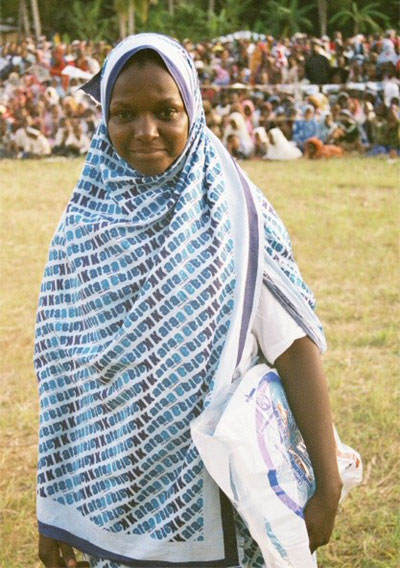
Photo of a young mother draped with a Kataa Malaria hijab, smiling after receiving a net. Source: Chris Thomas/USAIDResearchers explore how religious garment defines a new generation of women.

Photo of a young mother draped with a Kataa Malaria hijab, smiling after receiving a net. Source: Chris Thomas/USAID.
There's no argument that the hijab, a scarf that covers the head, hair, neck and ears, is a religious symbol that visibly separates young Muslim American women from their contemporary peers. But many who wear it say the covering is a boundary that's helping them carve out their own place in the Western world, yet it also bridges them with their family's traditions and values. The findings are from a paper by Rhys Williams, professor of sociology at the University of Cincinnati, and Gira Vashi, a research assistant at the University of Illinois, Chicago. Their paper, titled "Hijab and American Muslim Women: Creating the Space for Autonomous Selves," will be presented at 8:30 a.m. Sunday, Aug. 13, at the 101st annual meeting of the American Sociological Association in Montreal, Canada.

"There are multiple meanings to the hijab as a religious and social symbol; it often serves well those who wear it," states the paper. "It provides a clear identity marker at a life-course transitional time, and it provides culturally legitimate space for young women who are formulating new Muslim American identities and lives."

The research comes from the larger Youth and Religion Project – led by Williams and Stephen Warner, professor of sociology at the University of Illinois in Chicago. The sociologists started the project in 1999, conducting interviews and focus groups with Chicago area college-age students who represented an array of cultures and religious groups. The researchers' intent was to find out the young people's motivation in joining the organizations – how they utilized the organizations and how they benefited – which has been rarely studied, according to Williams.

Many of the 20 or so Muslim women who participated in the interviews and focus groups were from Indian or Pakistani families, while others were ethnically Arab. In these interviews, Williams says the hijab was an issue that was consistently raised as the women aimed to clarify how they identified with wearing the traditional religious garment (not always a practice by their own mothers), which can be perceived as oppressive in an American "equal rights" society, since there's no particular dress providing such obvious distinction among Muslim men.

"In almost every discussion of Islam, gender or family that we heard in the course of this research, Muslim speakers (both men and women) went out of their way to claim ' in Islam, men and women have equal rights,' or 'men and women are different, but that does not mean unequal,'" the researchers write.

Instead, the authors say the distinctive covering allowed the women to show their families that they hadn't lost their traditions and values, plus, the hijab symbolized modesty and moral purity in an American culture they perceive to be overemphasizing materialism, individualism and sexual openness. Furthermore, college-age Muslims reported that Muslim men also wear modest dress, though nothing as obvious as hijab. "Hijab is becoming the catch-all symbol for Muslim identity, and for issues related to Islam's place in America," the paper states.

Williams adds that in embracing American culture, these college educated women are enjoying lives that their mothers never dreamed of – attending college, driving a car, consulting with their Palm Pilots and Blackberries and planning successful careers. "I think that in many ways when they wore hijab, they were signaling to their parents and friends that they hadn't lost themselves, that they hadn't become too Westernized," Williams says. "And in some ways I think it gave them the freedom to be quite autonomous, because it signalized their piety."

Williams adds that as the research project evolved, what he found particularly interesting among Muslims and Hindus is how they're fashioning a religious identity as a way of keeping a foot in both worlds. "It's a way of keeping a fidelity and faithfulness to their family and to their family's traditions and to their faith, but at the same time working with that faith as a way of fitting in here in the United States. It is interesting to see how often the decision to wear hijab is represented as their free choice." ###

The paper will be published in the forthcoming academic journal, Society of Religion, in spring 2007. The study is supported by Lilly Endowment, Inc., as part of the Youth and Religion Project. Williams also acknowledges support from the Charles Phelps Taft Research Center at the University of Cincinnati for providing a one-year fellowship that led to completion of the article.

Contact: Dawn Fuller dawn.fuller@uc.edu, 513-556-1823 University of Cincinnati

RELATED: Keyword biology, Sunday, August 06, 2006 Scientists develop artwork that changes to suit your mood, Sunday, August 06, 2006 Washington, DC getting a summertime air quality exam, Sunday, July 30, 2006 The World Map of Happiness, Sunday, July 23, 2006 The Occult Life of Things, Sunday, July 23, 2006 Why we could all do with a siesta, Sunday, July 16, 2006 Hope I die before I get old?, Sunday, July 09, 2006 People more likely to help others they think are 'like them!, Sunday, July 09, 2006 Jefferson Team Designs Program that Helps Elderly Live Longer, Sunday, July 02, 2006 Gabapentin cools hot flashes as well as estrogen, Sunday, June 25, 2006 Estrogen plays different role during stress in black and white teens, Sunday, June 25, 2006 Our grip on reality is slim, Sunday, May 21, 2006 Genome doesn't start with 'G', Sunday, May 07, 2006 Lying Is Exposed By Micro-Expressions We Can't Control, Sunday, April 30, 2006 Mothers often have inaccurate perceptions of their children's body weight, Sunday, April 16, 2006 Other people influence us and we don't even know it!, Tuesday, January 04, 2005 The Cassini-Huygens mission to Saturn, Sunday, March 20, 2005 Agriculture Secretary Mike Johanns, bovine spongiform encephalopathy (BSE), Thursday, March 24, 2005 Fish Oil Holds Promise in Alzheimer's Fight, Sunday, April 10, 2005 National Human Genome Research Institute (NHGRI), Friday, April 15, 2005 Study uncovers bacteria's worst enemy ,

Saturday, August 12, 2006

Email Subscriptions

Get Republican National Convention Blog Delivered to Your inbox Daily

Enter your email address:

Delivered by FeedBurner

UN Adopts Resolution on Lebanon (VIDEO)

Technorati Tags: and or and , or and or , or and ,, or , and , or , and , or , and , or ,

Remarks Following Meeting of the United Nations Security Council, FULL STREAMING VIDEO, Secretary Condoleezza Rice, New York, New York, August 11, 2006

Secretary Rice speaks during  news conference outside the UN Security Council at the United Nations in New York, Aug. 11, 2006. [© AP/WWP]Secretary Rice speaks during news conference outside the UN Security Council at the United Nations in New York, Aug. 11, 2006. [© AP/WWP]
SECRETARY RICE: I am pleased with the outcome, the Resolution. Obviously, this is a first step and there’s a lot more to do, and I look forward to working with my colleagues. Again, I want to thank the members of the international community who worked so hard, particularly Secretary General Annan, also my colleague Philippe Douste-Blazy, the French Foreign Minister, and also the governments of Lebanon and Israel for their work. We will now endeavor to work very hard. This is a first step, but it’s a good first step.

Thank you very much.

2006/T20-5, Released on August 12, 2006

UN Security Council Adopts Resolution on Lebanon, Explanation of Vote on UN Security Council Resolution on Israel-Lebanon

Secretary Condoleezza Rice, New York, New York, August 11, 2006 (As Prepared)
Secretary Rice votes on resolution about Lebanon during UN Security Council meeting at the United Nations in New York, Aug. 11, 2006. [© AP/WWP]Secretary Rice votes on resolution about Lebanon during UN Security Council meeting at the United Nations in New York, Aug. 11, 2006. [© AP/WWP]
Mr. President, Mr. Secretary General, fellow members of the Security Council:

I am pleased to join all of you today to support this important resolution. We have been brought to this day by the good faith and hard work of so many in the international community. I especially want to thank Secretary General Annan, as well as Foreign Minister Douste-Blazy and the French government.

Of course, we owe the fullest gratitude to Prime Minister Sinoira of Lebanon and Prime Minister Olmert of Israel. These democratic leaders have served their people courageously throughout this extremely trying and tumultuous time.
With the passage of this resolution, the international community has helped to open a path to lasting peace between Lebanon and Israel that will end the suffering and violence of the past month.

The status quo that precipitated this conflict was unstable. Since the conflict began, we have sought an immediate end to the fighting. But we have also insisted that a durable ceasefire requires a decisive change from the status quo that produced this war.

Today’s resolution lays the foundation to achieve that goal. With this resolution, a new - stronger - Lebanon can emerge with the world’s help. Now the hard, urgent work of implementation begins.

Today’s resolution accomplishes three important objectives. First, it puts in place a full cessation of hostilities, while insisting on the unconditional release of the abducted Israeli soldiers. Hezbollah must immediately cease its attacks on Israel - and Israel must halt its offensive military operations in Lebanon, while reserving the right of any sovereign state to defend itself.

In addition to respecting this resolution’s call for a full cessation of hostilities, we believe that all parties should also take action to protect civilians, as was called for in the four principles of the 1996 Understanding. We urge the governments of Lebanon and Israel to commit to ending large-scale violence. Hezbollah now faces a clear choice between war and peace, and the world will help to ensure that their choice is the right one.

Second, this resolution will help the democratic government of Lebanon to expand its sovereign authority, as called for in Resolution 1559. It will do so by creating a new international force that builds on the current UN force in Lebanon - UNIFIL.

Though it will bear the same name, this will not be the same force. It will be an enhanced UNIFIL.

As the government of Lebanon has requested, this new force will have an expanded mandate, a greater scope of operations, better equipment, and much larger numbers - a target of 15,000 soldiers, a seven-fold increase in its current strength.

The Lebanese Armed Forces, together with this new stabilization force, will deploy to the south of the country to protect the Lebanese people and to ensure that no armed groups like Hezbollah can threaten stability. As this deployment occurs, Israel will withdraw behind the Blue Line. Today’s resolution makes very clear that these are parallel processes. It also calls for the opening of Lebanese harbors and airports, which we expect will be for verifiably civilian purposes.

With the deployment and withdrawal, a full ceasefire will go into effect. And the Council has said it intends to adopt another resolution with further measures to help that ceasefire become permanent. We look forward to the Secretary General’s proposals to fully implement Resolutions 1559 and 1680, including the question of disarmament.

To further strengthen Lebanon’s democracy, the international community is imposing a binding embargo on all weapons heading into the country without the government’s consent. Today, we call upon every state, especially Iran and Syria, to respect the sovereignty of the Lebanese government and the will of international community.

Finally, this resolution clearly lays out the political principles to secure a lasting peace: No foreign forces, no weapons, and no authority in Lebanon other than that of the independent Lebanese government, which must have complete sovereign authority over its entire country.

These principles represent a long-standing international consensus that was first expressed in UN Resolution 425 - then affirmed in the Taif Accords, and reaffirmed in Resolutions 1559 and 1680. On July 16, the G-8 leaders endorsed the same political conditions in St. Petersburg, and ten days later, the Lebanon Core Group supported these principles at the Rome Conference.

This resolution also offers a way forward to implement Resolution 1680, which addresses the delineation of the Lebanese border, including Sheb’a farms. At the same time, we must ensure Israel’s security and respect the underlying framework to achieve a comprehensive, just, and lasting peace in the region, in accordance with UN Resolution 242.

Fellow Council members: Today in no way marks the end of our common efforts. In many respects, the hard work of diplomacy is only just beginning. Though it is our hope that this resolution will lead to the cessation of large-scale hostilities, no one should expect an immediate end to all acts of violence. The conditions of a lasting peace must be nurtured over time, with the goodwill of the Lebanese and Israeli governments, and with the sustained commitment of the international community.

Our most pressing challenge now is to help the thousands of displaced people within Lebanon to return to their homes and rebuild their lives. The reconstruction of Lebanon will be led by the government of Lebanon, but it will demand the generosity of the entire international community.

For our part, the United States will continue working with the governments of Lebanon and Israel to ease the suffering of the Lebanese people. We have already committed substantial resources to the humanitarian efforts in Lebanon and Israel, and in the critical days and weeks following a cessation of hostilities, we plan to do even more, beginning now by increasing our immediate assistance to $50 million.

The United States will coordinate closely with other major donors, with the international financial institutions, and with all who are committed to Lebanon's future. We will also encourage the active involvement of the private sector in Lebanon’s reconstruction. Through our common efforts, we must help the people of Lebanon to emerge from this conflict more prosperous than ever.

Fellow Council members: The past month has been marked by overwhelming suffering, and heartache, and loss - both in Lebanon and in Israel. And this resolution is refreshingly clear about how this tragedy began: Six years after Israel withdrew completely from Lebanon, a terrorist group - Hezbollah - crossed an international boundary, captured and killed Israeli soldiers, and began firing thousands of rockets into Israeli cities.

Hezbollah and its sponsors have also brought devastation upon the people of Lebanon, dragging them into a war they did not choose, and exploiting them as human shields.

The people of the Middle East have lived for too long at the mercy of extremists. It is time to build a more hopeful future. And this resolution shows us the way. It is now the solemn responsibility of the international community to help the people of Lebanon and Israel to transform this tragedy into opportunity - an opportunity to overcome old patterns of violence, and to build a new foundation for stable and sustainable peace.

We have embarked upon an ambitious course. Yet it is the right course. It is the only realistic and effective course. And we must see it through - for it is the only way to help the people of Lebanon and the people of Israel to secure the lasting peace they both desire … and both deserve.

Thank you.

Released on August 11, 2006

Related: Keywords State Department, Friday, August 11, 2006 International Initiative to Combat Kleptocracy VIDEO, PODCAST, TEXT, Thursday, August 10, 2006 State Department Daily Press Briefing, VIDEO, PODCAST, TEXT, 08/10/06, Wednesday, August 09, 2006 Media Stakeout Minister Tarek Mitri Lebanon (VIDEO), Wednesday, August 09, 2006 Media Stakeout Ambassador Dan Gillerman Israel (VIDEO), Wednesday, August 09, 2006 Media Stakeout Ambassador John Bolton (VIDEO), Tuesday, August 08, 2006 Lebanon - Stakeout by Ambassador de La Sablière VIDEO, PODCAST, TEXT, Monday, August 07, 2006 Condoleezza Rice on Mid East Cease-Fire (VIDEO), Friday, August 04, 2006 Condoleezza Rice to the People of Cuba VIDEO, PODCAST, TEXT, Wednesday, July 26, 2006 State Department Daily Press Briefing, VIDEO, PODCAST, TEXT, 07/26/06, Tuesday, July 25, 2006 Condoleezza Rice With Israeli Foreign Minister Livni in Jerusalem, Saturday, July 22, 2006 Condoleezza Rice, Middle East and Europe VIDEO, PODCAST, TEXT, Friday, July 21, 2006 State Department Daily Press Briefing, VIDEO, PODCAST, TEXT, 07/20/06, Thursday, July 20, 2006 Secretary Rice, Patriarch Nasrallah Sfeir, VIDEO, PODCAST, TEXT, Tuesday, July 18, 2006, Evacuation of U.S. Citizens from Lebanon VIDEO, PODCAST, TEXT, Monday, July 17, 2006 For U.S. Citizens Seeking Assistance in Lebanon, VIDEO, PODCAST, TEXT, Saturday, July 15, 2006 U.S. Embassy Information for American Citizens in Lebanon,

Freedom Calendar 08/12/06 - 08/19/06

August 12, 1982, Hispanic Republican Faith Evans, first woman in nation to serve as U.S. Marshal, sworn in following appointment by President Ronald Reagan.

August 13, 1818, Birth of Lucy Stone, Republican anti-slavery and women’s rights activist; founder of American Woman Suffrage Association in 1869.

August 14, 1996, Pacific Research Institute President Sally Pipes, addressing Republican National Convention on future of civil rights movement, calls for government which 'treats all its citizens equally under the law'.

August 15, 1988, President Ronald Reagan addresses Republican National Convention: 'Our Party speaks for human freedom, for the sweep of liberties that are at the core of our existence'.

August 16, 1817, Birth of Republican anti-slavery and civil rights activist U.S. Rep. Henry Davis (R-MD).

August 17, 1937, Republicans organize opposition to former Ku Klux Klansman and Democrat U.S. Senator Hugo Black, appointed to U.S. Supreme Court by FDR; his Klan background was hidden until after confirmation.

August 18, 1920, Republican-authored 19th Amendment, giving women the vote, becomes part of Constitution; 26 of the 36 states to ratify had Republican-controlled legislatures.

August 19, 1862, Republican newspaper editor Horace Greeley writes Prayer of Twenty Millions, calling on President Lincoln to declare emancipation.

"For 150 years, Republicans have worked to secure the civil rights of African-Americans, Hispanics, Asian-Americans, and every individual from every background and walk of life. We believe that every person contributes to America's rich cultural heritage. Americans of all races and creeds share the Republican commitment to creating job opportunities for all, giving children equal access to a quality education, and strengthening families and faith. This is the Republican agenda; this is the American agenda."

U.S. Rep. Dennis Hastert (R-IL) Speaker of the House

SOURCE: Republican Freedom Calendar

Technorati Tags: and or and or and or and or and or or and or

Related: Keywords Freedom Calendar, Saturday, August 05, 2006 Freedom Calendar 08/05/06 - 08/12/06, Saturday, July 29, 2006 Freedom Calendar 07/29/06 - 08/05/06, Saturday, July 22, 2006 Freedom Calendar 07/22/06 - 07/29/06, Saturday, July 15, 2006 Freedom Calendar 07/15/06 - 07/22/06, Saturday, July 08, 2006 Freedom Calendar 07/08/06 - 07/15/06, Saturday, July 01, 2006 Freedom Calendar 07/01/06 - 07/08/06, Saturday, June 24, 2006 Freedom Calendar 06/24/06 - 07/01/06, Saturday, June 17, 2006 Freedom Calendar 06/17/06 - 06/24/06, Saturday, June 10, 2006 Freedom Calendar 06/10/06 - 06/17/06, Sunday, June 04, 2006 Freedom Calendar 06/03/06 - 06/10/06, Saturday, May 27, 2006 Freedom Calendar 05/27/06 - 06/03/06, Saturday, May 20, 2006 Freedom Calendar 05/20/06 - 05/27/06, Saturday, May 13, 2006 Freedom Calendar 05/13/06 - 05/20/06, Saturday, May 06, 2006 Freedom Calendar 05/06/06 - 05/13/06, Saturday, April 29, 2006 Saturday, April 22, 2006 Freedom Calendar 04/22/06 - 04/29/06, Saturday, April 15, 2006 Freedom Calendar 04/15/06 - 04/22/06,

Presidential Podcast 08/12/06

Technorati Tags: and or and or and or and or and

Presidential Podcast 08/12/06 en Español

Click here to Subscribe to Our Republican National Convention Blog Podcast Channel with Odeo Subscribe to Our Odeo or Click here to Subscribe to Our Republican National Convention Blog Podcast Channel with Podnova podnova Podcast Channel and receive the weekly Presidential Radio Address in English and Spanish with select State Department Briefings. Featuring real audio and full text transcripts, More content Sources added often so stay tuned.

RELATED: Keywords radio address, podcast, Saturday, August 05, 2006 Presidential Podcast 08/05/06, Saturday, July 29, 2006 Presidential Podcast 07/29/06, Saturday, July 15, 2006 Presidential Podcast 07/15/06, Monday, July 10, 2006 Presidential Podcast 07/08/06, Saturday, July 01, 2006 Presidential Podcast 07/01/06, Saturday, June 24, 2006 Presidential Podcast 06/24/06, Saturday, June 17, 2006 Presidential Podcast 06/17/06, Saturday, June 10, 2006 Presidential Podcast 06/10/06, Saturday, June 03, 2006 Presidential Podcast 06/03/06, Saturday, May 27, 2006 Presidential Podcast 05/27/06, Saturday, May 20, 2006, Presidential Podcast 05/20/06, Saturday, May 13, 2006 Presidential Podcast 05/13/06, Saturday, April 22, 2006 Presidential Podcast 04/22/06, Saturday, April 15, 2006 Presidential Podcast 04/15/06, Saturday, April 08, 2006 Presidential Podcast 04/08/06, Saturday, Saturday, April 01, 2006 Presidential Podcast 04/01/06, March 18, 2006 Presidential Podcast 03/18/06, Saturday, March 11, 2006 bush radio address 03/11/06 full audio, text transcript, Saturday, March 04, 2006 bush radio address 03/04/06 full audio, text transcript,

bush radio address 08/12/06 full audio, text transcript

Technorati Tags: and or and or and or and or and

President George W. Bush calls troops from his ranch in Crawford, Texas, Thanksgiving Day, Thursday, Nov. 24, 2005. White House photo by Eric Draper.bush radio address 08/12/06 full audio, text transcript. PODCAST and In Focus: Homeland Security

President's Radio Address en Español
Click here to Subscribe to Our Republican National Convention Blog Podcast Channel with Odeo Subscribe to Our Odeo or Click here to Subscribe to Republican National Convention Blog's PODCAST with podnova podnova Podcast Channel and receive the weekly Presidential Radio Address in English and Spanish with select State Department Briefings. Featuring real audio and full text transcripts, More content Sources added often so stay tuned.

THE PRESIDENT: Good morning. This week, America received a stark reminder that terrorists are still plotting attacks to kill our people. Beginning on Wednesday night, authorities in Great Britain arrested more than 20 individuals who we believe were plotting to detonate liquid explosives aboard flights from the United Kingdom to the United States. If these terrorists had succeeded, they could have caused death on a massive scale. The plot appears to have been carefully planned and well-advanced. They planned to bring the components of their explosives on board in their carry-on luggage, disguised as bottled drinks and electronic devices.

We believe that this week's arrests have significantly disrupted the threat. Yet we cannot be sure that the threat has been eliminated. So as a precaution, on Thursday, the federal government took several steps to increase security at our airports and aboard our planes.

First, the Department of Homeland Security has raised our Nation's threat warning to Code Red -- the highest level -- for flights from Great Britain to America, in coordination with British authorities. Second, we've raised the threat warning for all domestic and international flights landing in the United States to Code Orange -- the second highest level. We also have sent additional federal air marshals to Great Britain to provide extra protection aboard flights from the United Kingdom to the United States.

This plot is further evidence that the terrorists we face are sophisticated, and constantly changing their tactics. On September the 11th, 2001, they used box cutters to hijack airplanes and kill thousands of innocent people. This time, we believe they planned to use liquid explosives to blow up planes in mid-air. In response, we've adjusted our security precautions by temporarily banning most liquids as carry-on items on planes. I know many of you will be traveling during this busy summer vacation season, and I ask for your patience, cooperation, and vigilance in the coming days. The inconveniences you will face are for your protection, and they will give us time to adjust our screening procedures to meet the current threat.

I'm grateful for the outstanding work of intelligence and law enforcement officers in the United Kingdom and in our country. This week's arrests were the culmination of hard work, cooperation, and information-sharing across different agencies and different governments. We're dealing with a new enemy that uses new means of attack and new methods to communicate. This week's events demonstrate the vital importance of ensuring that our intelligence and law enforcement personnel have all the tools they need to track down the terrorists, and prevent attacks on our country.

Because of the measures we've taken to protect the American people, our Nation is safer than it was prior to September the 11th. Still, we must never make the mistake of thinking the danger of terrorism has passed. This week's experience reminds us of a hard fact: The terrorists have to succeed only once to achieve their goal of mass murder, while we have to succeed every time to stop them. Unfortunately, some have suggested recently that the terrorist threat is being used for partisan political advantage. We can have legitimate disagreements about the best way to fight the terrorists, yet there should be no disagreement about the dangers we face.

America is fighting a tough war against an enemy whose ruthlessness is clear for all to see. The terrorists attempt to bring down airplanes full of innocent men, women, and children. They kill civilians and American servicemen in Iraq and Afghanistan, and they deliberately hide behind civilians in Lebanon. They are seeking to spread their totalitarian ideology. They're seeking to take over countries like Afghanistan and Iraq so they can establish safe havens from which to attack free nations. These killers need to know that America, Great Britain, and our allies are determined to defend ourselves and advance the cause of liberty. With patience, courage, and untiring resolve, we will defend our freedom, and we will win the war on terror.

Thank you for listening.

END For Immediate Release, Office of the Press Secretary, August 12, 2006

Related: Keywords radio address, podcast, Saturday, August 05, 2006 bush radio address 08/05/06 full audio, text transcript, Saturday, July 29, 2006 bush radio address 07/29/06 full audio, text transcript, Saturday, July 22, 2006 bush radio address 07/22/06 full audio, text transcript, Saturday, July 15, 2006 bush radio address 07/15/06 full audio, text transcript, Saturday, July 08, 2006 bush radio address 07/08/06 full audio, text transcript, Saturday, July 01, 2006 bush radio address 07/01/06 full audio, text transcript, Saturday, June 24, 2006 bush radio address 06/24/06 full audio, text transcript, Saturday, June 17, 2006 bush radio address 06/17/06 full audio, text transcript, Saturday, June 10, 2006 bush radio address 06/10/06 full audio, text transcript, Monday, June 05, 2006 bush radio address 06/03/06 full audio, text transcript, Wednesday, May 31, 2006 bush radio address 05/27/06 full audio, text transcript, Saturday, May 20, 2006 bush radio address 05/20/06 full audio, text transcript, Saturday, May 13, 2006 bush radio address 05/13/06 full audio, text transcript, Saturday, May 06, 2006 bush radio address 05/06/06 full audio, text transcript,

Discurso Radial del Presidente a la Nación 08/12/06

Etiquetas De Technorati: , y , o y , o , o y o

Presidente George W. Bush llama a tropas de su rancho en Crawford, Tejas, día de Thanksgiving, jueves, de noviembre el 24 de 2005.  Foto blanca de la casa de Eric Draper.forre el audio de la dirección de radio 08/12/06 por completo, transcripción del texto. PODCAST

Discurso Radial del Presidente. en Español
Chascar aquí para suscribir a nuestro canal republicano de Blog Podcast de la convención nacional con Odeo Suscribir a nuestro canal de Podcast de Odeo o del podnova Chascar aquí para suscribir a nuestro canal republicano de Blog Podcast de la convención nacional con Podnova y recibir la dirección de radio presidencial semanal en inglés y español con informes selectos del departamento del estado. Ofreciendo transcripciones audio y con texto completo verdaderas, más fuentes contentas agregaron a menudo así que la estancia templó.

EL PRESIDENTE: Buenos Días. Esta semana Estados Unidos recibió un recordatorio duro de que terroristas aún están tramando ataques para asesinar a nuestra gente. Comenzando el miércoles en la noche, las autoridades en Gran Bretaña detuvieron a más de 20 personas que creemos estaban tramando detonar explosivos líquidas a bordo de vuelos del Reino Unido a los Estados Unidos.

De haber logrado su propósito estos terroristas, habrían causado muertes en una escala masiva. Su complot parece haber estado bien planeado y bien avanzado. Pensaban llevar a bordo los componentes de explosivos en su equipaje de mano - disfrazados como bebidas embotelladas y aparatos electrónicos.

Consideramos que las detenciones de esta semana han desmantelado la amenaza de manera significativa. Sin embargo no podemos confiar que la amenaza ha sido eliminada. Por lo tanto, como precaución, el gobierno federal tomó varias medidas este jueves para aumentar la seguridad en nuestros aeropuertos y a bordo de nuestros aviones.

Primero, el Departamento de Seguridad del Territorio Nacional ha elevado la alerta de seguridad de nuestra Nación a Código Rojo - el nivel más alto posible - para vuelos de Gran Bretaña a Estados Unidos, en coordinación con las autoridades británicas. Segundo, hemos elevado la alerta de seguridad para todos los vuelos domésticos e internacionales que aterricen en Estados Unidos a Código Naranja - el segundo nivel más alto. También hemos enviado inspectores aéreos federales adicionales a Gran Bretaña para ofrecer mayor protección a bordo de vuelos del Reino Unido a los Estados Unidos.

Este complot es evidencia adicional de que los terroristas que enfrentamos son sofisticados - y que constantemente cambian sus tácticas. El 11 de septiembre, 2001, usaron corta-cartones para secuestrar aviones y matar a miles de personas inocentes. Esta vez, planearon usar explosivos líquidos para hacer explotar aviones en el aire. Como respuesta, hemos ajustado nuestras precauciones de seguridad temporalmente prohibiendo que la mayoría de los líquidos sean llevados a bordo como equipaje de mano. Yo sé que muchos de ustedes estarán viajando durante esta temporada agitada de vacaciones de verano - y les pido su paciencia, cooperación y vigilancia en los días venideros. Las incomodidades que pasarán son para su protección - y nos darán tiempo de ajustar nuestros procedimientos de inspección para enfrentar la actual amenaza.

Agradezco la excelente labor de los oficiales de inteligencia y de las autoridades policiales en el Reino Unido y en nuestro país. Las detenciones de esta semana fueron la culminación de un gran esfuerzo, cooperación y el intercambio de información entre distintas agencias y distintos gobiernos. La clave para poner al descubierto este complot fue la buena inteligencia. Estamos lidiando con un nuevo enemigo que usa nuevos métodos para atacar y para comunicar. Los eventos de esta semana demuestran la importancia vital de asegurar que nuestro personal de inteligencia y nuestras autoridades policiales tengan todas las herramientas que necesiten para rastrear a los terroristas - y detener los ataques contra nuestro país.

En vista de las medidas que hemos tomado para proteger al pueblo estadounidense, nuestra Nación está más segura de lo que fue antes del 11 de septiembre. Sin embargo, nunca debemos cometer el error de pensar que el peligro del terrorismo ha pasado. La experiencia de esta semana nos recuerda un hecho muy duro: los terroristas sólo tienen que tener éxito una sola vez para lograr su objetivo de una masacre - mientras que nosotros tenemos que tener éxito cada vez a fin de detenerlos. Desafortunadamente, algunos han sugerido recientemente que la amenaza terrorista está siendo usada para ventaja política partidaria. Podemos tener desacuerdos legítimos sobre la mejor manera de combatir a los terroristas - pero no debe haber desacuerdo sobre los peligros que enfrentamos.

Estados Unidos está librando una guerra dura contra un enemigo claramente despiadado. Los terroristas se esfuerzan por destruir aviones llenos de hombres, mujeres y niños inocentes... matan a civiles y a miembros de las fuerzas armadas estadounidenses en Irak y Afganistán... y se esconden deliberadamente detrás de civiles en Líbano. Están buscando diseminar una ideología totalitaria. Están buscando hacerse cargo de países como Afganistán e Irak para poder establecer refugios seguros desde donde atacar a naciones libres. Estos asesinos necesitan saber que Estados Unidos, Gran Bretaña y nuestros aliados estamos comprometidos a defendernos y avanzar la causa de la libertad. Como su Comandante en Jefe, no descansaré hasta que todos los involucrados en este o cualquier otro complot terrorista sean llevados a justicia. Con paciencia, coraje y una determinación inquebrantable, defenderemos nuestra libertad - y ganaremos la guerra contra el terror.

Gracias por escuchar.

### Para su publicación inmediata, Oficina del Secretario de Prensa, 12 de agosto de 2006

Relacionado: Dirección de radio de las palabras claves, podcast, Sábado 5 de agosto de 2006 Discurso Radial del Presidente a la Nación 08/05/06, Sábado 29 de julio de 2006 Discurso Radial del Presidente a la Nación 07/29/06, Sábado 22 de julio de 2006 , Sábado 15 de julio de 2006 Discurso Radial del Presidente a la Nación 07/15/06 Lunes 10 de julio de 2006 Discurso Radial del Presidente a la Nación 07/08/06, Sábado 1 de julio de 2006 Discurso Radial del Presidente a la Nación 07/01/06, Sábado 24 de junio de 2006 Discurso Radial del Presidente a la Nación 06/24/06, Sábado 17 de junio de 2006 Discurso Radial del Presidente a la Nación 06/17/06, Sábado 10 de junio de 2006 Discurso Radial del Presidente a la Nación 06/10/06, Lunes 5 de junio de 2006 Discurso Radial del Presidente a la Nación 06/03/06, Miércoles 31 de mayo de 2006 Discurso Radial del Presidente a la Nación 05/27/06, Sábado 20 de mayo de 2006 Discurso Radial del Presidente a la Nación 05/20/06, Sábado 13 de mayo de 2006 Discurso Radial del Presidente a la Nación 05/13/06, Sábado 6 de mayo de 2006 Discurso Radial del Presidente a la Nación 05/06/06 , Sábado 29 de abril de 2006 Discurso Radial del Presidente a la Nación 04/29/06,