Wednesday, August 16, 2006

Middle East Update 08/16/06 VIDEO, PODCAST, TEXT

Technorati Tags: and or and , or and or , or and ,, or , and , or , and , or , and , or , and

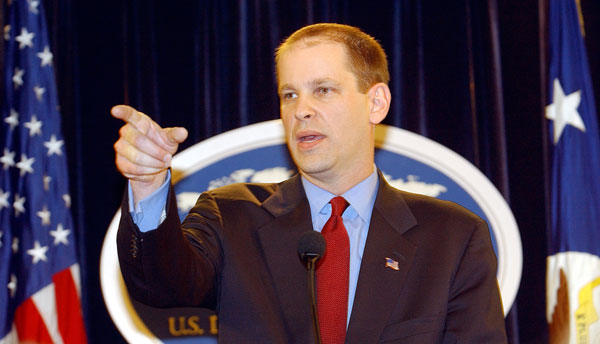
David Welch, Assistant Secretary of State for Near Eastern AffairsMiddle East Update, David Welch, Assistant Secretary of State for Near Eastern Affairs, FULL STREAMING VIDEO, file is windows media format PODCAST, file is mp3 in m3u format for streaming playback,
DOWNLOAD, file is mp3 format for PODCAST, Washington, DC, August 15, 2006.

MODERATOR: Good morning. Welcome to the Foreign Press Center. We're happy today to have with us David Welch, the Assistant Secretary for Near Eastern Affairs in the Department of State, to do a Middle East update. We have with us, also, New York Foreign Press Center via DVC. I'll ask you all to turn your phones off and to identify yourselves when you ask your questions and what your affiliation is. Because I know there are a lot of people here today, we're going to just start right away.

David, please.

ASSISTANT SECRETARY WELCH: Thank you, Duncan. Hello, everybody. Nice to see you all. And I propose we should go right to questions and answers. I mean, I could make an opening statement, but there are a lot of you and I am sure that you have quite a number of questions, so I'd like to use this time to maximum advantage.

Joyce.

QUESTION: Yes, Joyce Karam with Al Hayat newspaper. What do you think should be done to make Syria stop rearming Hezbollah?

ASSISTANT SECRETARY WELCH: Well, thank you for asking this question. One of the most important aspects of the resolution passed by the Security Council a few days ago, Resolution Number 1701, is a call for all countries to observe an arms embargo on any weapons transfers into Lebanon except for things that are going to the Government of Lebanon and authorized security institutions. That requirement would apply to any country, including Syria and Iran. We think that one of the most important achievements in this resolution is this call for observation of an arms embargo and its administration not just by Lebanon, but also by the international community. So you can be sure that we'll be paying very close attention to any such transfers that are going into Lebanon, since it's now a matter of an international obligation that countries should avoid doing this.

If you step back from this resolution just a moment, though, let's look at the problem that we saw here. One aspect of it is you have a state within a state, a militia that has been armed, as we see, with potent weaponry. It had to have gotten that from someplace. We think that one of the vulnerabilities in this situation, which existed in the past, was the irresponsibility of some countries in allowing these weapons to come into Lebanon, to go to a terrorist organization like Hezbollah, which then used them against the interests of the people in the state of Lebanon. So closing off that possibility is a very important achievement. Now the hard work comes in implementing this aspect and the other aspects of the resolution.

MODERATOR: Nadia, Al-Arabija.

QUESTION: Thank you. Nadia Bilbassy Charters with Al-Arabija.

ASSISTANT SECRETARY WELCH: Hi.

QUESTION: Hi. Thank you for addressing us. I just wanted to ask you, since the major military battles is over now, the ceasefire seems to be holding, if you look back and people talk about losers and winners, some want to criticize the U.S. diplomacy and say you are the biggest loser, because you stand isolated in the Arab and Muslim world. If you would look back in retrospect, would you think that you have failed in your effort to call for a ceasefire and you betrayed the Lebanese Government, the very government that you're trying to support in the beginning?

ASSISTANT SECRETARY WELCH: Well, come as no surprise that I don't agree with the premise. Look, we called for a cessation of hostilities to build for a ceasefire on a more permanent basis. What the United States didn't want to see was a simple and easy solution such as a declaration that we want a ceasefire right now. What we wanted to see was an effort to put in place rules, restrictions so that this situation does not happen again. This has been a very disturbed border for a long time. Unlike Israel's borders with others of its neighbors, you don't have a peace treaty between Lebanon and Israel, so the amount of confidence on each side is not very high. And regrettably, there have been actors who have chosen, for one reason or another, to try and disrupt this situation, take advantage of the climate and the context that existed in the region and use it to their political advantage.

So I think what we have achieved here in bringing a cessation of hostilities, which so far is holding, is architecture for enhanced competence and security for the future. Now I'm, of course, practical and our diplomacy has had this element of practicality from the very start. That is this is not going to be simple to do. It isn't good enough simply to have a situation where everybody comes back and they can do exactly the same thing as before.

So what has been achieved now? There will be the deployment of the Lebanese army into the south of Lebanon. You might say that's a natural thing for a country to do that is to deploy its army to its own borders. But if you know the history of Lebanon, this actually has not happened before. So that's first and most important.

Second, the international community has decided that it should supplement, enhance the international forces that are present there already to provide additional confidence and security along the border and in other areas potentially. That force is now being shaped by the United Nations to increase the UNIFIL that is already there with increased equipment and capabilities so that it can discharge these new tasks. Third, the international community and Lebanon and Israel have agreed that there has to be a new security environment. What does that consist of? There can be no armed groups present in the area of operations of this force. There's going to be an arms embargo except, of course, for the legitimate use of the Lebanese Government.

Third, no foreign fighters should be present in this area. And fourth, there should be respect for the blue line between the parties. So if these elements are put in place with confidence, rigor and discipline by Lebanon, by Israel, by the international community and observed by outside nations, then I think we return to a situation not like the one before, but to one in which everybody else can have a lot more confidence and security.

QUESTION: Mr. Secretary, Umit Enginsoy with Turkish NTV. Mr. Secretary, Turkey said yesterday that it would wait for a second UN Security Council resolution before making an ultimate decision of whether or not to send troops to the Lebanon peacekeeping force. Now do you think a second resolution is necessary or do you think the Turks are dragging their feet or, in general, what's the U.S. position on the potential Turkish contribution to the force? Thanks.

ASSISTANT SECRETARY WELCH: We consider that the first most important step to be taken now for implementation of this resolution is that the parties observe a cessation of hostilities. Second, the United Nations rapidly should form the new elements to be added to the existing UNIFIL forces so that those are prepared as quickly as possible to deploy into Lebanon to help UNIFIL do its job pursuant to this new resolution. Third, we believe that responsible countries, including Turkey, might want to consider participation. This is a decision for each country to make on the basis of its national interests and its own foreign policy guidelines. Our experience in working with Turkey on these issues has been a good one and we have great confidence in the ability of the Turkish military. That said, it's a subject for Turkey to decide as it looks at this situation.

The present resolution, sir, authorizes the composition of a new and enhanced UNIFIL. A second resolution is out there as a possibility should it be necessary to have an additional mandate for the United Nations activity. But presently there's sufficient legal authority under international law to do what is necessary to make the new force.

QUESTION: Yes. Hisham Melham, An Nahar newspaper in Beirut. Mr. Secretary, the President has said repeatedly that the United States should deal with the root causes of the problem, and by the root causes he was not talking about the Arab-Israel conflict. He was talking essentially about Hezbollah, as a phenomena, of a state within a state. Now, do you think that root causes would have been solved if Hezbollah, let's say, withdrew north of the Litani and yet maintained its military structure, control and command and whatever in the rest of the country? Given the fact that the Lebanese Government is saying publicly that they are unwilling or unable to disarm Hezbollah and that they would have to do that through negotiation. Yesterday, Nasrallah said essentially he's not interested in this issue and that Hezbollah remains the "protector" of the homeland.

It seems to me that probably a year from now we will be talking about the need to disarm Hezbollah, one way or the other. And therefore it seems to me that Hezbollah could claim we withdrew north of the Litani to fight for another day and the root causes, the way the President of the United States has defined them, will not have been resolved.

ASSISTANT SECRETARY WELCH: Hisham, we believe that the best protection for Lebanon and its people is offered by a fully sovereign government that controls all that goes on within its own country. The existence of a state within a state, an armed political party that acts outside the rules of normal statecraft is unacceptable to the international community and I would argue to the Lebanese people.

Now, there are obligations in Resolution 1559 and even before that in the Taif agreement, for example, that bind Lebanon to try and control events within Lebanon. This resolution offers greater international support for that to be achieved. But at the end of the day, implied in your question is a recognition of the reality: It is Lebanon that is responsible for determining its own future in this regard. We stand ready to help. By passing this resolution 15 to 0, unanimously in the Security Council, the world's voice has been made crystal clear. That in returning to the status quo, one aspect of that, is to assist Lebanon in completing this process of disarmament. Begun back in Taif as part of ending the Lebanese civil war, but unfortunately not yet completed. That has to begin, of course, in the south where the so-called resistance has exposed the Lebanese people and the Lebanese state to very grievous damage from an action that they took out of their own self-interest, not in the interest of the Lebanese people.

Now we have a situation where the steps can be taken to begin to correct this; first and most importantly in the south, but proceeding outward from there.

QUESTION: David -- I'm sorry -- Mr. Secretary, Taif has been --

ASSISTANT SECRETARY WELCH: That is my name (laughter), Hisham.

QUESTION: You agreed upon, more than 15 years ago, 1559 two years ago --

ASSISTANT SECRETARY WELCH: Mm-hmm.

QUESTION: -- and you know the Byzantine nature of Lebanese politics, the influence of the Syrians and the Iranians today, both the duo of Bashar al-Asad and Ahmadi-Nejad claiming victory over the rebels in Lebanon. And what I'm trying to say is that -- are you going to, let's say, link aid to Lebanon, to rebuilding Lebanon, the donors' conference, let's say, with practical measures on the ground that the Lebanese Government should deliver on the issue of Hezbollah, dealing with it squarely and not again postponing it indefinitely?

ASSISTANT SECRETARY WELCH: Well, let me say this about the speeches that have been made recently about this issue. I think it's a sad situation when leaders of other countries can stand on this rubble and proclaim their vision of the interests of Lebanon's people. You know, this is not the price the people of Lebanon should pay so that they can exercise their political punditry. I don't -- we don't believe in making assistance for humanitarian purposes or reconstruction conditional. But there is the reality that people cannot help unless there is confidence and will on the part of all Lebanese to correct the situation that has existed.

So to that degree, yes, the Government of Lebanon and the people of Lebanon have a common responsibility to provide an environment where international support can help. Otherwise, if there is an element of lawlessness, if people don't observe the cessation of hostilities on the Lebanese side, it won't be possible to lend that support. That's just a practical reality.

MODERATOR: Barry.

QUESTION: Barry Schweid, Associated Press. Could you give us an idea of the schedule, or if it's not all that formal, the planning for the U.S. assistance, the $10 million, and could you give us some idea how many countries -- and if you can specify which, that would be even better -- are lined up now to be part of this peacekeeping force? When might it gel, when might it be deployed?

ASSISTANT SECRETARY WELCH: Okay. Those are two big questions, there, Barry, if I might just start with the humanitarian reconstruction assistance portion of that first. As you know, the United States has already been devoting humanitarian assistance resources to Lebanon. We did that from the outset of this crisis and we are continuing that effort today. We are planning to marshal significant new additional resources in support of Lebanon. I can't make any announcements now with respect to that because we haven't completed our own deliberative process, but the United States will, once again, assume a leadership role in providing help.

QUESTION: And military training? I meant specifically --

ASSISTANT SECRETARY WELCH: I include that kind of support in my answer. Other countries have come forward and declared that -- their pledge to the same ends, as you saw, that there were some of those declarations at the Rome conference. Now the Government of Sweden, I think, is considering hosting a humanitarian relief conference at the end of the month. I would imagine you will see broad international support for that and broad attendance. We will, of course, go ourselves. Then following that, we're looking at ideas such as how to bring forward the conference on Lebanon that we had been hoping to hold even prior to this conference -- to this crisis. I don't know that there's a fixed date for that yet, but I don't think that it will be long before we look at that possibility as well. The purpose of that second event would be to support reconstruction assistance.

What was the second part of your question?

QUESTION: (Off-mike.)

ASSISTANT SECRETARY WELCH: Ah, the force formation. Well, there are UNIFIL forces available right now, which could deploy in support of a Lebanese army. But the UN is on a fast track to try and supplement and enhance those forces and they are meeting every day in preparation for that. We'll be sending a team, a senior interagency team up there to the United Nations tomorrow and Thursday to work with the Department of Peacekeeping to help in shaping the new and enhanced UNIFIL.

QUESTION: Ron Baygents, Kuwait News Agency. Mr. Welch, what could you say to counter the apparently widespread perception even in the mainstream U.S. media -- I was listening to things even this morning that the Iranians are basically demonstrating their power and their muscularity, they are showing that they can, in fact, supply Hezbollah, which can kill Israelis, with virtual impunity, meaning they have not been disarmed and some believe are, in fact, rearming even now. And then the idea that they are active in Iraq with the Shia militias and also are expected to formally reject the UN nuclear resolution by the end of the month. How do you counter this image that they are quite confident in standing up to the United States? Thank you.

ASSISTANT SECRETARY WELCH: Well, I think the only antidote to that kind of disturbance, interference and obstructionism is to see an expansion of opportunity and hope and support for fledgling democracies like that of Lebanon. Look, the Lebanese people don't need all this advice and interference from outside, such as that coming from Iran. That message, by the way, what's it got at its core? It's got an element that -- a disturbing tendency to violence. It's got a disturbing usurpation of the rights of the people concerned. I mean, did anyone ever ask the citizens of Lebanon would they or would they not prefer to see this conflict launched by a state within a state? No one ever asked their permission. And now others are seeking to take advantage of that and glorify this on the ruins and destruction that has occurred with such tremendous loss of life on all sides. That is not a message that is going to succeed in the long term. So I think that's one reason why we see these leaders out there giving their speeches now while, you know, the smoke is still clearing so that they can take advantage of what they perceive to -- as some element of support, while that smoke is still there because it won't last.

QUESTION: Christoph von Marschall from the German Daily Der Tagesspiegel. I would ask you to help me to get the facts right before we talk about interpretation because there's always two different things. If got that right that right that in this UN resolution there is no explicit clause allowed (ph) on disarmament of Hezbollah and how it will be enforced, there is no Chapter 7 enforcement for the mandate for the international troops and there is no control of the border between Syria and Lebanon? And if this is true, I understand why Hezbollah shouldn't claim victory. Can the United States claim a diplomatic victory if it's (inaudible) right? And please correct me if I'm wrong.

ASSISTANT SECRETARY WELCH: Okay. So let me just make sure I have them in order: disarmament, Chapter 7 --

QUESTION: Enforcement and the Syria-Lebanon border -- international control on that.

ASSISTANT SECRETARY WELCH: Well, one good place in checking the facts would be to read the resolution. On disarmament, it says several things. It talks about supporting the completion of the disarmament process in Lebanon a number of ways. First, it says there can be no armed groups in the area of operations of the new force. I mean, to me that is disarmament. Second, it talks about the Secretary General presenting proposals in implementation of 1559 on how to assist the Government of Lebanon in the process of disarming the militias that are there. Third, it puts new controls into effect to prevent rearmament, like an arms embargo.

Chapter 7 you ask about -- this is not a Chapter 7 resolution. This is a resolution adopted under Chapter 6, but it contains all the elements of a Chapter 7-like resolution -- considers the situation a threat to international peace and security. It talks about authorizing -- deciding to authorize a new and enhanced force which has the ability use all the means necessary to achieve its objectives. Third, there are controls on the borders. This is, of course, the responsibility of the Government of Lebanon in the first instance, but it offers the assistance of the international community to broaden their ability to achieve the control of their frontier and of their seaports and their airport. So I would argue that all three of those elements are, you know, well addressed in the resolution.

Look, the resolution is a decision of the international community. To translate that into facts on the ground, a lot of work has to happen. That work is underway now. I think with goodwill, with good political support and the kind we saw in the 15-0 vote, this can be done. But it's still to be done, not done yet.

QUESTION: Mohamed El-Settouhi, Nile Egyptian Television. Are you, in a way, disappointed with the results of the world or in other words the apparent failure of the Israeli army to destroy the military capabilities of Hezbollah? And the other thing, are you willing now to engage Syria with regard to the situation in Lebanon because the Administration has been criticized repeatedly for the failure to engage Iran and Syria?

ASSISTANT SECRETARY WELCH: Look, it's not a fair question to ask anyone are you disappointed in the results of the war? That's like asking, you know, have you stopped beating your wife. We don’t like wars. No one likes a war. This one was not launched by us, by Israel. It was launched by one party. For whatever their reasons, they decided to undertake this action with, I believe, grievous consequences to themselves and certainly, a lot of damage to Lebanon, the Lebanese people, citizens of Northern Israel and at great cost to the international community.

We are determined to try and turn what has been a tragedy into change. Change is built on the fundamentals of restoring stability and security in this area, as I described them. So it’s not a question of, are we disappointed in the results. We are determined to make a difference here.

What was the second part of your question?

QUESTION: Are you going to engage Syria and (inaudible)?

ASSISTANT SECRETARY WELCH: We work with the Government of Lebanon. We consider that the Government of Lebanon can and should step up to its responsibilities as a government. Frankly, we didn’t see much value in engaging the Syrians until they can prove that they’re a positive and constructive force in Lebanon and there’s a long way to go in that respect.

MODERATOR: Al Jazeera.

QUESTION: Mohammad Alami, Al Jazeera. Sir, Secretary Rice talked earlier before the war or during the first few days about, this is the new Middle East. Can you tell us, sir, what’s new today in the Middle East?

Two, I am sure you’re aware of the tremendous anger at United States in the Arab and Muslim worlds because of the perception Washington provided weapons, diplomatic cover to Israel. What are you going to do about that specifically?

And three, can I just have your take on who won, who lost in this war? In the Israeli media, they’re talking about the -- Israel’s failure to achieve its goals, but the President is talking about the defeat of Hezbollah.

ASSISTANT SECRETARY WELCH: We have always considered that to bring change in the Middle East is not going to be an easy or quick process. You know, unfortunately, the Middle East sometimes gets obscured by a conflict here or there. These are -- what happens in this case is, I believe, very, very important and I don’t mean to make light of that. But let’s remember that most of the Middle East is peaceful. And I think sometimes, we generalize too easily about the whole region because of a certain set of conflicts.

I think solutions are built by tackling each problem on its merits and dealing with it. There are enemies to this process of bringing hope, opportunity and greater freedom throughout the region. Unfortunately, sometimes, those people use violence, even terror, to pursue their means. I think in the long run, theirs is a negative message because most people don’t want to have that kind of future. Does new policies of countries, including perhaps even my own, engender a popular reaction? Yes, they do. And we are conscious of that. Look, we would -- we do not believe that people should make decisions in the heat of the moment based on passions that sometimes, if left unbridled, will lead to worse outcomes.

The United States has been a leader for peace in this region for several decades. We have a lot of achievements to our record. The fact that Lebanon today has an elected democratic parliament, that it is free of Syrian forces, that it has a government that enjoys the respect of the international community, even as people attack it from within and from outside, is partly due to American effort and leadership.

Would we have preferred to not see this crisis? Absolutely right, sir. You know, we take no joy in seeing the loss of life and the destruction of property that has occurred on both sides of that border. And no one is a winner from that. But let’s go back and take a look at what motivates our interest here. We are interested in the future of Lebanon. There is no country that is more supportive of the interests of the Lebanese people than the United States. And I believe that Lebanon can and will emerge stronger from these events. As it does so, the United States will be working side by side with it to achieve those goals.

MODERATOR: Shmuel Rosner.

QUESTION: Hello, Shmuel Rosner with Haaretz Daily. Mr. Secretary, it was published that in your discussions in Jerusalem, you suggested to the Israeli Government to withdraw from the Shebaa Farms. Can you elaborate on that and talk a little bit about the future of this disputed area?

ASSISTANT SECRETARY WELCH: Well, a lot was published about what we did and did not do.

QUESTION: How much of it was true?

ASSISTANT SECRETARY WELCH: Some of it was true and some of it was not true. And there are facts and there are non-facts and with all due respect to the journalistic community, I would recommend that you not believe everything you read in the press, including your own press.

MODERATOR: Khaled.

QUESTION: Hello, Mr. Welch. Khaled Dawoud, Al-Ahram newspaper and Egypt Television. I have two questions, please sir. Just to follow up on the issue of, you know, deploying the -- or monitoring the border between Lebanon and as the President said yesterday, and also monitoring the ports, where in the resolution does it say that the enhanced UN force, or UNIFIL force, will take this responsibility? I mean, maybe this will cause problems with Syria.

And my second question that the President himself and you apparently continue on blaming Hezbollah for starting this conflict, and my question is so do you think that the Israeli reaction is justified with all -- I mean, many other countries, including the United Nations Secretary General, some UN organizations, human rights groups said this is a violation of humanitarian law. And the President yesterday said that he's sorry that some people died in this conflict -- over one thousand people. Does this yet quantify the sum?

Thank you very much, sir.

ASSISTANT SECRETARY WELCH: The resolution mentions in a number of places ways in which the UNIFIL, when it's been enhanced and has changed, can support Lebanon in protecting Lebanon. But I think, Khaled, the most important protection for Lebanon would be if Syria and Iran themselves observed the terms of the resolution. This resolution calls for countries not to introduce weapons into Lebanon and, therefore, quite apart from what the Government of Lebanon does or UNIFIL does, they have a responsibility under this decision.

I have said before to you and to others that there is no acceptable loss of innocent life. I don't think we're here in the business of quantifying what are acceptable numbers of civilian casualties, whether those are Israelis, whether they are Lebanese or others. It's regrettable and we are deeply sorry that there has been loss of life in this situation on all sides. And that just strengthens our determination, first, to bring it to an end and to bring it to an end in such a manner that it doesn’t happen again.

QUESTION: You know, when you talked about --

ASSISTANT SECRETARY WELCH: Well, what would you like, to sit up here with a balance? I mean, look, I’m not going to get into that game, Khaled. I mean, I don’t think it would be satisfying to any of the families concerned to hear that their loved ones are weighed in that regard.

QUESTION: Omar Abdel-Razek, BBC Arabic. Mr. Secretary, I would like to ask you first about the political discourse of this Administration. When the President yesterday declared Lebanon as a third front in the war of terror the United States is engaged in now and when you consider this kind of war, the late war between Israel and Hezbollah as a war between the forces defending freedom versus forces defending terror, do you consider this area a reliable evaluation for the situation in the Middle East? Everybody knows that Hezbollah and Hamas are not al-Qaida. And also, does it mean that anybody will disagree, even the populars in the street -- the population of the Middle East will disagree with the American Administration, will be classified automatically as defending terror? Thank you.

ASSISTANT SECRETARY WELCH: Well, I don’t believe that if we say that conducting violence against innocent civilians is terrorism, that that means that we are against entire categories of people just because they may have views about the conflicts that lay behind this violence.

Look, we view Hamas and Hezbollah as terrorist organizations. That was true before this conflict and it is true today. If they were to change their policies, we might have a different view about them. But they do conduct terrorist operations and they are responsible for the consequences. I think that this view is widely shared within the international community. And you know, setting aside the popular passions that you describe, I think one reason that you have a decision on the part of the Security Council like the one we saw just a few days ago, 15-0, I will remind you, all members of the Security Council voting the same way, is that most people agree that this kind of thing should not happen. There is no cause that justifies it.

MODERATOR: Hanan.

QUESTION: Hanan El-Badry, Rose El-Youseff, (inaudible) daily newspaper. Are you calling for a peace conference like Madrid ’91? And I would like to know, did you originally contact some Arab countries regarding that matter like Egypt and Saudi Arabia? And are you planning to go to the -- to go back to the region very soon? This is my first question.

The second one, regarding the public diplomacy, I was talking with one of our editors today and he told me, is it the time for the Americans to kiss the public diplomacy goodbye?

ASSISTANT SECRETARY WELCH: Well, I think what I’m doing here today is public diplomacy, so I guess you have the answer to your second question.

We believe that what is -- this crisis has distracted us from effort that we should be undertaking to address the key conflicts in the area. This is, again, one of our concerns particularly with respect to Lebanon. One of the ways that we tried to help Lebanon was by the process laid out in Resolution 1559 which would correct the situation inside the country. That’s why we supported the national dialogue that the Government of Lebanon launched a few months ago to try and address some of these remaining problems. We see an opportunity now for that process to continue and to be completed. The international community can help, I think. We look forward to the proposals the Secretary General may make in the coming days on how to address, for example, the disarmament provisions of Taif and 1559, and we shall see what support we and the international community can provide to that process.

In terms of addressing the broader issue of peace between Arabs and Israelis, and in particular, the Palestinian question, I -- we are not going to slack off in our efforts there. We believe that we should redouble our attention to this. This is a time for renewed interest in the situation between Israelis and Palestinians. We would prefer that there be a government on the Palestinian Authority side that subscribes to the principles of the peace process. When and if they do, then we're prepared to work with them and I'm sure the Government of Israel would be too.

QUESTION: (Inaudible.)

MODERATOR: We have very little time, so --

QUESTION: (Inaudible.)

MODERATOR: I don't want to do follow-ups if I can help it. Sorry. We just have too many people who haven't (inaudible). This lady back here has been waiting a long time.

QUESTION: (Inaudible.)

MODERATOR: There are a lot of people here today. We have a lot of different --

QUESTION: Hello. My name is Olivia Schoeller from the German newspaper Berliner Zeitung. And I was just wondering, what does the U.S. Government think why Hezbollah kidnapped these two soldiers? What is your interpretation of the reason why this happened?

ASSISTANT SECRETARY WELCH: I'm not sure. We haven't asked them and they haven't told us.

QUESTION: What do you think -- I mean, you've -- you must talk about their --

ASSISTANT SECRETARY WELCH: Well, all that I could offer would be speculation, perhaps you would consider it informed, perhaps you might not. What I do know is that they made a big mistake and they paid dearly for it.

MODERATOR: Mounzer's been waiting patiently in the front here.

QUESTION: I appreciate it. The standing -- Mounzer Sleiman with Al-Mustaqbal Al-Arabi. The standing of United States in the region in the Arab world and Islamic world is better after this crisis than before or not? And the other question, because this question you have not answered directly, if I may say, yet, the other thing is how many shipment of cluster bombs has been approved by this Administration to the Israelis and how many in the pipe?

ASSISTANT SECRETARY WELCH: I didn't get that question, so you're right, I didn't answer it.

Is our standing better or worse?

QUESTION: (Inaudible.)

ASSISTANT SECRETARY WELCH: Listen, I'm not running a popularity contest here. Our job is to try and improve the situation. We didn't start this crisis and we tried to bring it to an end in such a way that protects the security of all concerned. The decision that came out of the Security Council would not have happened without the leadership of the United States. It is a substantial decision. It provides an opportunity for Lebanese to help protect their future. We intend to be right there to help them do that.

In the end, results speak for themselves and we'll have to see whether the blurred and negative vision of those who want to intervene with violence is the kind of message that will succeed in the Middle East. As some have said, if that's the new Middle East that they are preaching, then we want no part of it; quite the contrary. The United States is going to lead against that tendency. And I'm convinced because I know this area well; I've lived there for quite a number of years. I know many people from across the region. I believe that the great overwhelming majority of folks do not want that negative message. They don't believe in a future of violence and hatred. They seek one of peace and freedom. In that, they'll have no stronger partner than us.

MODERATOR: Last question. No follow-ups. We have too many --last question.

QUESTION: (Inaudible.) Lambros --

MODERATOR: It's true, sorry. It wasn't a follow up. It wasn't a follow up. Go ahead, please.

QUESTION: Lambros Papantoniou, Greek correspondent, Eleftheros Typos, Greek Daily. Mr. Secretary, why you didn't want to send U.S. troops in that country (inaudible) in the framework of the international force to be deployed for peace? "The U.S. reject many, many times." Why?

ASSISTANT SECRETARY WELCH: Well, let me be clear, we participate in peacekeeping operations in quite a number of places. But traditionally, the United States has not participated in UN peacekeeping operations. We do so at a fairly modest level, generally speaking. We prefer to command our own forces when they're in these situations, so the type of mandate makes a difference to us.

Second, we want to see a peacekeeping operation in Lebanon that can do a good job with protecting the security and stability of the area. And our own history in Lebanon has not been altogether a happy one, so one would have to weigh these decisions very carefully in the case of the United States. We believe that other countries can play a very good role in this area and we encourage their participation.

QUESTION: Yet why has the U.S. insisted that European forces must be deployed, including Greece and Turkey? In the meantime, why not forces from Latin America, Japan, China, et cetera?

ASSISTANT SECRETARY WELCH: Sir, we have no objection to any of those that you list. Our only criteria is who can help and do an effective job. And I think European forces are quite credible in that regard, including some of the ones you mentioned.

MODERATOR: One -- the very last question here from Lebanon.

QUESTION: The question has not been answered here.

ASSISTANT SECRETARY WELCH: It won't be the only question I don't answer today. (Laughter.) Go ahead, please.

QUESTION: Okay. Mayssa Zeidan from Al-Mustaqbal newspaper and Futures (ph) in Lebanon. I just want to ask you -- you said President Bush (inaudible) first this crisis began, said that Syria and Iran should (ph) (inaudible) accounted. This crisis end, the Lebanese people saw their Prime Minister crying over a destroying country while they saw the Iranian leader and the Syrian leader victorious and, you know, they -- dancing in their cities by this victory. Maybe the Lebanese people deserve to know what does it mean when the superpowers in the world say Syria and Iran should held accountable for what happened. Can you please?

ASSISTANT SECRETARY WELCH: Well, first of all, I think the Lebanese people deserve some credit for their strength throughout this situation and the Government of Lebanon also deserves some credit. And Prime Minister Siniora is an effective advocate for the interests of all Lebanese and he deserves our support and our respect for that. I find it terrible that the President of Iran who seeks to have his nation respected in the international community should take advantage of this tragedy in the manner that he is doing. As for the President of Syria, you can make your own judgment about the quality of his discourse throughout this crisis and his recent speech. It's, once again, a signal of how little they add to the solution of these conflicts. Instead they're trying to pile on popular emotion and anger at a time of tragedy for their own selfish advantage. What good that will do, I think history will judge.

MODERATOR: Thank you very much.

ASSISTANT SECRETARY WELCH: Thank you.

Related: Keywords State Department, Tuesday, August 15, 2006 Media Stakeout Ambassador John Bolton 08/15/06 (VIDEO), Tuesday, August 15, 2006 State Department Daily Press Briefing, VIDEO, PODCAST, TEXT, 08/14/06, Thursday, August 10, 2006 State Department Daily Press Briefing, VIDEO, PODCAST, TEXT, 08/10/06, Saturday, August 12, 2006 UN Adopts Resolution on Lebanon (VIDEO), Friday, August 11, 2006 International Initiative to Combat Kleptocracy VIDEO, PODCAST, TEXT, Thursday, August 10, 2006 State Department Daily Press Briefing, VIDEO, PODCAST, TEXT, 08/10/06, Wednesday, August 09, 2006 Media Stakeout Minister Tarek Mitri Lebanon (VIDEO), Wednesday, August 09, 2006 Media Stakeout Ambassador Dan Gillerman Israel (VIDEO), Wednesday, August 09, 2006 Media Stakeout Ambassador John Bolton (VIDEO), Tuesday, August 08, 2006 Lebanon - Stakeout by Ambassador de La Sablière VIDEO, PODCAST, TEXT, Monday, August 07, 2006 Condoleezza Rice on Mid East Cease-Fire (VIDEO), Friday, August 04, 2006 Condoleezza Rice to the People of Cuba VIDEO, PODCAST, TEXT, Wednesday, July 26, 2006 State Department Daily Press Briefing, VIDEO, PODCAST, TEXT, 07/26/06, Tuesday, July 25, 2006 Condoleezza Rice With Israeli Foreign Minister Livni in Jerusalem, Saturday, July 22, 2006 Condoleezza Rice, Middle East and Europe VIDEO, PODCAST, TEXT, Friday, July 21, 2006 State Department Daily Press Briefing, VIDEO, PODCAST, TEXT, 07/20/06, Thursday, July 20, 2006 Secretary Rice, Patriarch Nasrallah Sfeir, VIDEO, PODCAST, TEXT, Tuesday, July 18, 2006, Evacuation of U.S. Citizens from Lebanon VIDEO, PODCAST, TEXT,

President Meets with Defense Policy Team (VIDEO)

Technorati Tags: and or and or and or and or and

President Meets with Secretary of Defense and Defense Policy and Programs Team, FULL STREAMING VIDEO, The Pentagon, In Focus: Defense en Español, 9:27 A.M. EDT.

President George W. Bush talks with the press during a meeting with Vice President Dick Cheney, Defense Secretary Donald Rumsfeld and the Defense Policy and Programs Team at the Pentagon Monday, Aug. 14, 2006. White House photo by Eric Draper.President George W. Bush talks with the press during a meeting with Vice President Dick Cheney, Defense Secretary Donald Rumsfeld and the Defense Policy and Programs Team at the Pentagon,
Monday, Aug. 14, 2006. White House photo by Eric Draper.

THE PRESIDENT: Mr. Secretary, thanks for having me. The National Security Team from the White House was anxious to come over and get a briefing from you. We've got a lot to discuss. It's very important for the American people to know that we're constantly thinking about how to secure the homeland, protect our interests and use all assets available to do our jobs.

I appreciate very much you and your team providing the very important briefing. We live in troubled times, but I'm confident in our capacity to not only protect the homeland, but I'm confident in our capacity to leave behind a better world. And one reason I feel so confident is because we've got a fantastic military. It's been an honor to travel the country, to meet those who wear the uniform. We're a blessed nation to have men and women who are willing to volunteer during these difficult times.

And so Mr. Secretary, thanks for the briefing; I'm looking forward to it. And thank you all for giving us your insights and -- thank you.

END 9:29 A.M. EDT, For Immediate Release, Office of the Press Secretary, August 14, 2006

RELATED: Keywords radio address, podcast, Saturday, August 12, 2006 Presidential Podcast 08/12/06, Saturday, August 05, 2006 Presidential Podcast 08/05/06, Saturday, July 29, 2006 Presidential Podcast 07/29/06, Saturday, July 15, 2006 Presidential Podcast 07/15/06, Monday, July 10, 2006 Presidential Podcast 07/08/06, Saturday, July 01, 2006 Presidential Podcast 07/01/06, Saturday, June 24, 2006 Presidential Podcast 06/24/06, Saturday, June 17, 2006 Presidential Podcast 06/17/06, Saturday, June 10, 2006 Presidential Podcast 06/10/06, Saturday, June 03, 2006 Presidential Podcast 06/03/06, Saturday, May 27, 2006 Presidential Podcast 05/27/06, Saturday, May 20, 2006, Presidential Podcast 05/20/06, Saturday, May 13, 2006 Presidential Podcast 05/13/06, Saturday, April 22, 2006 Presidential Podcast 04/22/06, Saturday, April 15, 2006 Presidential Podcast 04/15/06, Saturday, April 08, 2006 Presidential Podcast 04/08/06, Saturday, Saturday, April 01, 2006 Presidential Podcast 04/01/06, March 18, 2006 Presidential Podcast 03/18/06, Saturday, March 11, 2006 bush radio address 03/11/06 full audio, text transcript,

President Bush Meets with Counterterrorism Team (VIDEO)

Technorati Tags: and or and or and or and or and

President Bush Meets with Counterterrorism Team, FULL STREAMING VIDEO, National Counterterrorism Center, McLean, Virginia, 12:00 P.M. EDT. In Focus: National Security,

President George W. Bush addresses the media at the National Counterterrorism Center in McLean, Va., Aug. 15, 2006. Standing with President Bush are, from left: White House Homeland Security Advisor Frances Townsend; Director of National Intelligence John Negroponte; CIA Director Michael Hayden; and Director of the National Counterterrorism Center Vice Admiral John Scott Redd. White House photo by Paul Morse.President George W. Bush addresses the media at the National Counterterrorism Center in McLean, Va., Aug. 15, 2006. Standing with President Bush are, from left: White House Homeland Security Advisor Frances Townsend;
Director of National Intelligence John Negroponte; CIA Director Michael Hayden; and Director of the National Counterterrorism Center Vice Admiral John Scott Redd. White House photo by Paul Morse.

THE PRESIDENT: It's been my honor to be here at the NCTC. A couple of observations: One, that of the work being done here by some really fine Americans because from different agencies in our government, America is safer than it has been. But it's not yet safe. The enemy has got an advantage when it comes to attacking our homeland - they've got to be right one time, and we've got to be right a hundred percent of the time to protect the American people.

I'm proud to report that there's a lot of good folks that are working hard to see to it that we're right a hundred percent of the time. And I want to thank all the people in this building and around our government who spend an incredible amount of time and energy and effort to do a very difficult job, and that's to protect the American people.

Recently we saw the fruits of their labor in conjunction with their counterparts in Great Britain. Because of the good work in Great Britain and because of the help of the people there at NCTC, we disrupted a terror plot, a plot where people were willing to kill innocent life to achieve political objectives. And that plot is -- and this building and the work going on here really is indicative of the challenge we face, not only this week, but this year and the years to come, because the United States of America is engaged in a war against a extremist group of folks bound together by an ideology, willing to use terror to achieve their objectives.

Our most solemn duty in the federal government is to protect the American people, and I will assure the American people that we're doing everything in our power to protect you. And we've got some good assets, and the best asset we have is the people, people represented right here in this building.

So I've come to listen and learn and to look at reforms that have been put in place. And I've also come to thank the good people who work here and elsewhere in our government for doing what they are doing.

Thank you very much. (Applause.)

END 12:05 P.M. EDT, For Immediate Release, Office of the Press Secretary, August 15, 2006

RELATED: Keywords radio address, podcast, Saturday, August 12, 2006 Presidential Podcast 08/12/06, Saturday, August 05, 2006 Presidential Podcast 08/05/06, Saturday, July 29, 2006 Presidential Podcast 07/29/06, Saturday, July 15, 2006 Presidential Podcast 07/15/06, Monday, July 10, 2006 Presidential Podcast 07/08/06, Saturday, July 01, 2006 Presidential Podcast 07/01/06, Saturday, June 24, 2006 Presidential Podcast 06/24/06, Saturday, June 17, 2006 Presidential Podcast 06/17/06, Saturday, June 10, 2006 Presidential Podcast 06/10/06, Saturday, June 03, 2006 Presidential Podcast 06/03/06, Saturday, May 27, 2006 Presidential Podcast 05/27/06, Saturday, May 20, 2006, Presidential Podcast 05/20/06, Saturday, May 13, 2006 Presidential Podcast 05/13/06, Saturday, April 22, 2006 Presidential Podcast 04/22/06, Saturday, April 15, 2006 Presidential Podcast 04/15/06, Saturday, April 08, 2006 Presidential Podcast 04/08/06, Saturday, Saturday, April 01, 2006 Presidential Podcast 04/01/06, March 18, 2006 Presidential Podcast 03/18/06, Saturday, March 11, 2006 bush radio address 03/11/06 full audio, text transcript,

Tuesday, August 15, 2006

Media Stakeout Ambassador John Bolton 08/15/06 (VIDEO)

Technorati Tags: and or and , or and or , or and ,, or , and , or , and , or , and , or ,

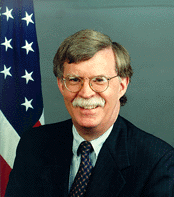
John R. Bolton Ambassador Permanent U.S. Representative to the United NationsMedia Stakeout: Informal comments to the Media by the Permanent Representative of the United States of America, Ambassador John Bolton, on the situation in the Middle East. 15 August 06, [Webcast: Archived Video - file is real media format, running time is 8:26] FULL STREAMING VIDEO Biography, John R. Bolton Ambassador Permanent U.S. Representative to the United Nations
Related: Keywords State Department, Tuesday, August 15, 2006 State Department Daily Press Briefing, VIDEO, PODCAST, TEXT, 08/14/06, Thursday, August 10, 2006 State Department Daily Press Briefing, VIDEO, PODCAST, TEXT, 08/10/06, Saturday, August 12, 2006 UN Adopts Resolution on Lebanon (VIDEO), Friday, August 11, 2006 International Initiative to Combat Kleptocracy VIDEO, PODCAST, TEXT, Thursday, August 10, 2006 State Department Daily Press Briefing, VIDEO, PODCAST, TEXT, 08/10/06, Wednesday, August 09, 2006 Media Stakeout Minister Tarek Mitri Lebanon (VIDEO), Wednesday, August 09, 2006 Media Stakeout Ambassador Dan Gillerman Israel (VIDEO), Wednesday, August 09, 2006 Media Stakeout Ambassador John Bolton (VIDEO), Tuesday, August 08, 2006 Lebanon - Stakeout by Ambassador de La Sablière VIDEO, PODCAST, TEXT, Monday, August 07, 2006 Condoleezza Rice on Mid East Cease-Fire (VIDEO), Friday, August 04, 2006 Condoleezza Rice to the People of Cuba VIDEO, PODCAST, TEXT, Wednesday, July 26, 2006 State Department Daily Press Briefing, VIDEO, PODCAST, TEXT, 07/26/06, Tuesday, July 25, 2006 Condoleezza Rice With Israeli Foreign Minister Livni in Jerusalem, Saturday, July 22, 2006 Condoleezza Rice, Middle East and Europe VIDEO, PODCAST, TEXT, Friday, July 21, 2006 State Department Daily Press Briefing, VIDEO, PODCAST, TEXT, 07/20/06, Thursday, July 20, 2006 Secretary Rice, Patriarch Nasrallah Sfeir, VIDEO, PODCAST, TEXT, Tuesday, July 18, 2006, Evacuation of U.S. Citizens from Lebanon VIDEO, PODCAST, TEXT,

State Department Daily Press Briefing, VIDEO, PODCAST, TEXT, 08/14/06

Technorati Tags: and or and , or and or , or and ,, or , and , or , and , or , and , or , and

Daily Press Briefing, Spokesman Sean McCormack, FULL STREAMING VIDEO, file is windows media format, running time is 30:37 PODCAST, file is mp3 in m3u format for streaming playback, running time is 30:37, DOWNLOAD, file is mp3 format for PODCAST, running time is 30:37, Washington, DC, August 14, 2006

Department Spokesman Sean McCormack (shown during the  Daily Press Briefing) was sworn in as Assistant Secretary for Public Affairs and Department Spokesman on June 2, 2005. Immediately prior to returning to the State Department, Mr. McCormack served as Special Assistant to the President, Spokesman for the National Security Council, and Deputy White House Press Secretary for Foreign Policy. State Department Photo by Michael Gross.Department Spokesman Sean McCormack (shown during the Daily Press Briefing) was sworn in as Assistant Secretary for Public Affairs and Department Spokesman on June 2, 2005.
Immediately prior to returning to the State Department, Mr. McCormack served as Special Assistant to the President, Spokesman for the National Security Council, and Deputy White House Press Secretary for Foreign Policy. State Department Photo by Michael Gross. TRANSCRIPT:, 12:00 p.m. EDT.

MR. MCCORMACK: Good afternoon. How are you?

QUESTION: Good.

MR. MCCORMACK: Good. I don't have any opening statements. You all know the President will be over here just a little bit later this afternoon. He's going to have some briefings, going to cover the War on Terror, counter-proliferation, public diplomacy, transformational diplomacy, foreign assistance reform, and the Middle East. And then --

QUESTION: In how many minutes?

MR. MCCORMACK: Excuse me?

QUESTION: Over how many minutes?

MR. MCCORMACK: It's going to be over a couple of hours. He's going to have --

QUESTION: Could you say it slower one more time, the issues?

MR. MCCORMACK: Sure, yeah, three separate briefings. First one is War on Terror, counter-proliferation, and public diplomacy, those subjects grouped together. Transformational diplomacy and foreign assistance reform, grouped together, and then the Middle East, and then he will come out and talk to the pool and have some remarks.

QUESTION: Okay.

QUESTION: Will the Secretary accompany him in the remarks?

MR. MCCORMACK: I think they'll work that out. She'll be there, obviously. I don't know what speaking role she'll have, if any.

QUESTION: On the pool?

MR. MCCORMACK: What's that?

QUESTION: On the pool?

MR. MCCORMACK: It's a White House event. It's going to be the White House pool. It's a pretty small space up there.

QUESTION: Is she going to be in all three of these?

MR. MCCORMACK: Yes, yeah, she'll be in all three of those.

QUESTION: But there will be a changing cast?

MR. MCCORMACK: That's right; there will be a rotating cast of characters actually doing the briefings, yeah.

QUESTION: Okay.

MR. MCCORMACK: Well, okay. Lead off, Barry.

QUESTION: Yeah, you want to -- have anything to say about how things are going so far in the ceasefire?

MR. MCCORMACK: I think you guys --

QUESTION: It's awful early, but go ahead.

MR. MCCORMACK: Right, yeah, you guys have all reported on that. Thus far, the large-scale violence has ended. Thus far, the parties seem to be largely complying with the terms of the resolution. And if we all do our work, as the Secretary has said, over time, this will lay the foundation for a durable, lasting cessation of violence and ceasefire and a much more stable strategic situation along that border area, along that northern Israeli border, Barry.

QUESTION: All right. Now if I read it right, I thought -- I think Hezbollah is saying that as long as Israel occupies Lebanese territory --

MR. MCCORMACK: Right.

QUESTION: You know, they'll -- prepared to do what's necessary to end it. So there is an overlap, maybe a couple of weeks, maybe three weeks until the force is in place?

MR. MCCORMACK: I don't have a timeline for you, Barry. We're pushing for this force to be generated as quickly as possible. I would expect that there would be a force-planning contributors conference up at the UN very, very soon and we, obviously, want to see that force generated as quickly as possible.

QUESTION: I don't know if you want to be the one to tick off some of the volunteers, but --

MR. MCCORMACK: No, I'll let them speak for themselves.

QUESTION: But along those lines, Sean, weren't -- those meetings were supposed to start already on Saturday, so there have been some discussions?

MR. MCCORMACK: There's already -- there's a rolling start to this. For example, John Hillen, our Assistant Secretary for Political and Military Affairs, has already been up to the UN a couple of times over the past week to help them with their planning in terms of defining what size force you need, what functions will this force need to do, what sort of combat power will they need. So there has been some planning going on. There have, as I mentioned over the past week, been some countries that have expressed an interest now in going in there. And I think now that they have a look at the resolution, they'll have a better idea of whether or not they'll be able to follow through on that interest. And I would hope that very quickly, we would see countries coming forward and saying that they will participate in the force.

QUESTION: What would you consider a very quick timeframe? I mean, there are logistical issues even after the planning.

MR. MCCORMACK: Right.

QUESTION: So what do you --

MR. MCCORMACK: I don't -- I'm not going to set a specific timeline. It just needs to get done as quickly as possible.

QUESTION: So you see them in -- within how long?

MR. MCCORMACK: As quickly as possible.

Yeah.

QUESTION: In terms of the prisoners, I know the Italian Foreign Minister is in Beirut and met with Nabih Berri and apparently, Nabih Berri announced that he would no longer -- didn't want to be involved and he was going to be the mediator and not -- and he no longer wants to be involved. Is that not a very good start to the --

MR. MCCORMACK: We obviously want to see those prisoners, those Israeli hostages returned as quickly as possible, safe to their families. I think that that was the feeling expressed by the resolution as well.

QUESTION: What's your understanding of the process for that to take place?

MR. MCCORMACK: The process for that is not something the United States is involved in, but in only to the extent that we would want very much to see those prisoners, those hostages released at the earliest possible moment. And we would certainly expect that the Government of Lebanon would do everything it could to affect their release and return to Israel.

Joel.

QUESTION: Sean, following this ceasefire is there any regard to what happens to these Hezbollah guerillas? Is that to be integrated in with the Lebanese army?

MR. MCCORMACK: I don't think -- you know, again, Joel, the -- how the Lebanese army functions is going to be a decision for the Lebanese Government and the Lebanese people. Hopefully, we won't have to live with such a term Hezbollah "guerilla" for much longer, because Resolution 1559 actually calls upon the Lebanese Government to disarm Hezbollah so that you don't have these militias -- we would say terrorist groups -- operating outside of the control of the central government.

QUESTION: Sean, following up on that --

MR. MCCORMACK: Yeah, sure.

QUESTION: -- does that mean that the United States is prepared to accept Hezbollah as a political entity of they disarm --

MR. MCCORMACK: Again, that's not the situation we find ourselves. Hezbollah has to make a choice. They have to make the choice between whether or not they are going to be in a political camp or whether or not they are going to be a terrorist group. You can't have one foot in each camp. And how the Lebanese people decide to organize themselves politically is up to them. But you can't have the current situation. It is a contradiction that needs to be resolved. The way it gets resolved is by the Lebanese people. And you posed the question -- you would face a fundamentally different situation whereby you have a group of people who are not committed to terrorism. That is not in fact the case. It is the case now that you have a group that is committed to the use of terror, and they have to make a choice and the Lebanese people have to make that same choice.

QUESTION: But surely you don't want to see the same thing happen as happened in the Palestinian territories where they -- the people did choose the group --

MR. MCCORMACK: Again, we've gone over this territory before. They didn't run -- Hamas did not run on the platform of we're going to send your 16-year-old kids to blow up Israeli citizens. They run on the platform of we're going to clean up your government.

Now, again, we've gone over this before. It is unusual that there -- just as there was the beginnings of some potentially positive ferment within the Palestinian political system, you had the most radical, violent elements of Hamas staged that attack on the Israeli guard post and capturing an Israeli soldier. They knew the effect that that would have on the political process within Palestinian areas. So we certainly want to get back to the point where you can even have the hope of getting back on the roadmap, some sort of positive political process. And the way you do that is you have these groups recognize the right of Israel to exist, abide by the international obligations that have been outlined for them. That's certainly what we hope to -- we would hope to get back to that point.

Secretary Rice, when she went to the region, sent that message to President Abbas. And we certainly stand with President Abbas. We believe that he is a -- somebody who is interested in peace and has a positive vision for the Palestinian people.

QUESTION: Sean, one final one. What is your understanding of how soon the Lebanese army would go down? We don't know about the international force yet, but the Lebanese army conceivably will be moving in concert with those troops or --

MR. MCCORMACK: I think that those movements have to be coordinated and that it's envisioned that the international force would be supporting the Lebanese army. And I think we all understand that the Lebanese army at this point is not a force that can really exert that kind of positive control over southern Lebanon. So I would expect that those movements would be coordinated. That's going to be part of the function of this international force working with the Lebanese Government to coordinate those movements. You also have to figure in the Israeli military to this equation as well, so there's a lot of complicated, complex coordination that needs to be done. We're going to do everything that we can to help facilitate that and I would expect the UN would be deeply involved as well.

QUESTION: I have one more. Is there any clarification that France is going to take the lead in the force?

MR. MCCORMACK: I don't know that they've said that in public. I think that they're -- I think the expectation is that they would play a significant role in the force.

QUESTION: To follow up on that part of your answer --

MR. MCCORMACK: Yeah, sure.

QUESTION: Did I understand correctly you don't assume the Lebanese army move to southern Lebanon until the international force moves there?

MR. MCCORMACK: I said only, Charlie, that those movements would have to be coordinated with the international force. I would expect that those movements would be done in concert, Charlie. I don't have a timeline for either of those right now, but those things would have to be done together. I think the understanding, when the resolution was passed, is that the international force would be going down in support of the Lebanese army because it didn't have the wherewithal, at this point, to fulfill the mandate of the resolution.

QUESTION: But in the meantime, and you're hoping for -- you know, a force getting down there as soon as possible, but in the meantime, Israel keeps troops in Lebanon?

MR. MCCORMACK: Right.

QUESTION: And Israel -- you know, is prepared to shoot if provoked. Does the Administration have any problem with the -- because it could be the thing that stimulates or sets off a Hezbollah attack. Does the U.S. have any problem with Israeli troops hanging in there for another couple of weeks until the force takes over?

MR. MCCORMACK: Well, the -- well, two things. One, we want the force generated as quickly as possible and -- because that triggers a number of things. It triggers a deploying of the international force and in parallel with that deployment, the withdrawal of Israeli forces. And that's an important point, that they get done in parallel. So there's a rough equivalence there in terms of international forces, Lebanese forces coming into an area and what Israeli forces are leaving an area. So that's the first thing.

Second of all, Barry, you want to -- the terms of the resolution are very clear. It talks about what is incumbent upon the Government of Lebanon and Hezbollah to do. Hezbollah needs to cease all activities, all military kinds of activities, whether that's launching rockets or launching attacks. The resolution calls on Israel to stop all offensive military operations. There's nothing in this resolution that calls upon Israel to abrogate its rights to self-defense.

QUESTION: Okay. That answers it.

MR. MCCORMACK: Lambros.

QUESTION: It was -- New York Times reported today on the front page, "When Israel began Counterattack on Hezbollah one month ago, the U.S. Administration backed Israel's plan to destroy the militia."

MR. MCCORMACK: Where is this, Lambros?

QUESTION: In New York Times, front page, and "to destroy the militia (inaudible) targets resisting efforts by France, and now they’re alleged call for a ceasefire immediately." Could you please comment on that?

MR. MCCORMACK: On what part of it, what part of it?

QUESTION: The question is if it's true that you're trying -- you are resisting efforts by France and other allies to call a ceasefire.

MR. MCCORMACK: We have plowed this ground so many times, I think we're clear from the very beginnings of it. President Bush, Secretary Rice, when they were in Germany, as well as in Russia, made very clear that we wanted an end to the violence as quickly as possible, but we wanted an end to the violence that would be durable. You had to have an end to the violence that would be -- that would last beyond -- you know, two days, three weeks, six years. And that's what this resolution -- what we have the potential for.

Joel, do you have one on this topic or is it a different topic?

QUESTION: No, it's referring back to the earlier topic. Do you think Iran is still running this particular show and they have till August 31st? Of course, you bring them as well as --

MR. MCCORMACK: That's a different topic, Joel.

QUESTION: Well -- but are they still running the show? Because currently, Iran and Hezbollah are now using media tactics. You had Mike Wallace with President Ahmadi-Nejad yesterday and also, apparently he's making nice, saying he now has a personal blog, that's Ahmadi-Nejad.

MR. MCCORMACK: Right. Look, you know, I don't even know where to begin with all of that. But certainly, Iran continues to be a state sponsor of terror. Iran is very clearly a sponsor of Hezbollah, give them political diplomatic as well as material support. But I think it's fair to say as -- if this resolution and when this resolution is fully implemented, this is a strategic setback for Iran. This is a strategic setback for Syria, because you will have a strengthened, democratic Lebanon. You will have a more stable area along that border. You will not have Hezbollah roaming freely in the south of Lebanon. Iran and Syria will not have had the ability to re-arm Hezbollah. So I think that very clearly that when this resolution is fully implemented and when you have 1559 implemented, even further, that would represent a setback to Iran.

Kirit.

QUESTION: One on Iran.

QUESTION: Eh--

MR. MCCORMACK: Sure.

QUESTION: I was going to ask -- a few days ago, maybe it was you. It probably was you. Saw no rainbow, no prospect of Iran complying with either its own August 21st deadline, and the UN August -- end of August deadline for stopping its uranium enrichment. Has anything changed? Is there a glimmer of --

MR. MCCORMACK: Not going to try to assess, Barry. That would require getting into the decision-making processes of the Iranian regime into which I don't have great -- we don't have great insight. We would hope that they take up the opportunity that's been given to them. Thus far, they -- we have received no official word through Mr. Solana that they have decided to take up the world on that offer. And what happens next is that they face sanctions under a Chapter 7 resolution.

QUESTION: That has to be planned, doesn't it?

MR. MCCORMACK: Excuse me?

QUESTION: If there are sanctions, you have to have planning --

MR. MCCORMACK: Well, there are --

QUESTION: -- meetings.

MR. MCCORMACK: Well, there are steps that individual states can take. There are states that we can take collectively under the rubric of the UN Security Council resolution and that, of course, would entail discussions, you know, up in New York and in capitals on what a next resolution would entail and exactly what sanctions would be enacted under that resolution.

QUESTION: Last thing.

MR. MCCORMACK: Mm-hmm.

QUESTION: If I can go back to Lebanon?

MR. MCCORMACK: Sure.

QUESTION: The usual question -- has the Secretary been in touch with anybody of late?

MR. MCCORMACK: No phone calls today, Barry.

QUESTION: Okay, thanks.

MR. MCCORMACK: Elise.

QUESTION: Also on Iran and the resolution. Given the fact that you're -- on the whole Hezbollah issue and talking about an arms embargo because Iran's one of the main suppliers of Hezbollah, is there any effort to expand the action against Iran or at the UN Security Council to include some of the activities of arming Hezbollah, anything like that? Like not just dealing solely with the nuclear issue but other concerns that you have on Iran?

MR. MCCORMACK: Well, 1701 talks about -- calls upon all the states not to -- not try to export arms into Lebanon without the explicit permission of the Lebanese Government and it calls upon the Lebanese Government not to permit such arms in. So clearly that puts a crimp in the Iran-Hezbollah operating style if it is fully implemented.

Kirit.

QUESTION: If I could ask something about the Lebanon resolution?

MR. MCCORMACK: Sure.

QUESTION: Can you help define for us what exactly would be a non-offensive action by Israel? What would be a defensive action?

MR. MCCORMACK: I'm not going to try get into the military definitions. I think that in its most simple form it calls upon Israel not to continue on with ground offensives, not continue actively trying to go after and take more Lebanese territory from -- in the kinds of operations that they were engaged in. In terms of a defensive action, I think that there were some reports of some skirmishes. The Israel Government said that their soldiers were threatened by armed Hezbollah militants. They took actions. I haven't heard any dispute with that characterization at this point.

QUESTION: With regard to aerial attacks and so on, how would that fit into offensive verses defensive?

MR. MCCORMACK: Again, you know, what this resolution calls upon is for an end to large-scale violence of the kind that we had seen before. But again, like I said, it doesn't abrogate Israel's right to defend itself.

Dave.

QUESTION: You got into a little winners and losers there with Joel's question. There's a widespread impression in the Middle East that the conflict has elevated Nasrallah's status, practically a hero across the Arab world. There's also some suggestion, certainly by many analysts, that because of Hezbollah's showing on the field that the United States had to settle for less than it wanted with the resolution.

MR. MCCORMACK: How so less than we wanted?

QUESTION: Well, less of an international force, just an augmentation of UNIFIL, for instance, which is sort of --

MR. MCCORMACK: Well, what we have is the version of UNIFIL with an "S" on its chest as opposed to the Clark Kent* version of UNIFIL. No, in fairness, that -- the previous UNIFIL had a weak mandate, relatively weak mandate. This is an enhanced UNIFIL. This is just a different -- it's just -- it may have the same name, but it is -- you know, it is a completely different organization in terms of its size, its abilities, and its mandate.

In terms of Nasrallah, I haven't seen him pop his head out from whatever cave or basement he happens to be hiding in. And in terms of -- you know, the feelings throughout the Middle East, look, it's an emotional time. But I expect that at the end of the day, that the people of the region will look at a Lebanon -- once this resolution is implemented, they will see a Lebanon that is -- that has enhanced democratic institutions, that has a strong prime minister in Prime Minister Siniora, that is committed to implementing these resolutions, that is committed to a more peaceful, stable, democratic Lebanon that will see Hezbollah out of business in the south of Lebanon. And they will also see an international community coming together to stop -- to call for the end of re-supplying of Hezbollah.

And just look at the statements. Look at Secretary General Annan's statement right before the vote this past Friday, in which he singled out Hezbollah as the group responsible for starting this current crisis. So once, I think, the emotions settle from what has been -- you know, very clearly, an emotional time in the Middle East, I think that people will start to look at the facts, and I think that the facts will show that this is -- that this will be a changed, strategic environment in that small part of the world.

Yeah.

QUESTION: Talking about change of the strategic environment in that part of the world, do you seem to miss -- after you're mentioning that this has been -- this war in south Lebanon has been representing a setback for some countries, but what about it being a fact that has changed the equation that Israel cannot depend on its military might in the area to -- for launching more wars and conquering -- and other countries? And do you -- does the United States have any more positive attitude toward the Arab call for new efforts for -- to bring peace to the Middle East and for the United States to convince Israel to come back to the peace negotiations?

MR. MCCORMACK: Well, I will leave it to other states in the region to make their own assessments about Israel's military capabilities and factor that into their decision-making. And as for what level of degradation Israel -- the Israeli military inflicted upon Hezbollah and its fortifications in the south, again, I'll leave it to the Israeli military to describe what it is that they think that they have accomplished. It's not for me to say. I'm not a military man. I'm not here to provide military analysis.

As for peace in the Middle East, of course; I don't think that there has been an Administration that has been more dedicated to trying to resolve differences between the Israeli Government and the Palestinians and to try to -- and for the first time, Barry, since the establishment of the State of Israel, you actually have Palestinians now with their own territory, after the Israeli withdrawal from Gaza. Our hope had been that that might have led the parties to be able to move further down the roadmap. That didn't happen. Hamas won an election.

And you said that -- well, what will the U.S. do -- and this is paraphrasing -- do to get Israel back to the peace table? Well, there is a partner for peace in Israel. It's the Israeli Government. Unfortunately, on the other side of the table, there isn't a partner for peace in the form of the Palestinian Government led by Hamas. They haven't met the most basic requirements agreed upon across the international community, and I think if you talk to Arab leaders, I think that they would say the same thing, that this government has not met the most basic requirements to start discussing peace negotiations to even get back into the roadmap. So we would very much hope for the day when we could get into a serious discussion of the roadmap, how to move forward to a final settlement. And before that time, we're going to do everything that we can to work with those people who do want to bring peace to the region; work with the Israeli Government, work with President Abbas.

QUESTION: It is sad when the Arab countries and Arab people are seeing now, that the Middle East peace process is being shrunk to only Palestinian-Israeli conflict. The Arab summit of Beirut a few years ago and now the Arab delegation at the United Nations have been calling for a comprehensive peace to settle the whole conflict of the Middle East between Israel and all the Arab -- other Arab countries. We're not talking here about only the Palestinians and the Israelis, so is there a movement or is there a thought -- kind of thinking, a school in this Administration that is going to take this goal more seriously?

MR. MCCORMACK: I guess I would differ with the interpretation that we haven't taken it seriously; of course we have. Just look at the fact that there are Arab governments that have taken the steps themselves to make peace with Israel. You look at Egypt; you look at Jordan. There are states, and it is certainly up to individual -- Israel's individual neighbors to take the steps that they feel necessary and feel that they can to make peace with Israel. That is their choice. They can. Right now today, they could. They could take those steps. But very often, you hear that -- hear from them that they -- you need to address the Israeli-Palestinian conflict before they would feel comfortable doing that. That's why I focused on that aspect of it. But there's nothing -- there wouldn't be anything stopping another -- any of Israel's neighbor from establishing diplomatic relations with them.

Yeah.

QUESTION: Do you have any comment on the reports that Hassan Nasrallah has been hiding out in the Iranian embassy in Beirut for the last --

MR. MCCORMACK: I don't know where he's been hiding.

Yes.

QUESTION: What's your take on the pictures that have emerged from Fidel Castro and his brother?

MR. MCCORMACK: I've seen them. That's all I would say about it, yeah.

QUESTION: And the situation in Cuba, how is it now, the situation in Cuba, do you know?

MR. MCCORMACK: Well, the Cuban people still won’t live under a dictatorship.

QUESTION: Is there any change in American policy because of what -- or any --

MR. MCCORMACK: No.

Yeah.

QUESTION: I want to go back to Iran, terrorism, and on Sri Lanka. On terrorism, as far as this plot which was discovered by the British -- against U.S. and British interest or airlines, this is not the norm. I understand that I was told that -- by the writers and commentators and all that, this had been going on for some time and British knew about it for the last whole year. My question is that if they had ever briefed the U.S., if U.S. knew that something like this is going -- under investigation and another -- and second, during Ambassador Richard Boucher's visit to (inaudible) and to Bangladesh and Pakistan -- I mean Bangladesh and India, if he -- if this issue came ever during his visit or talks between any of the leaders in the area?

MR. MCCORMACK: On the second, we'll try to get you an answer, Goyal. I don't know. I haven't talked to Richard.

On the first, there have been people that have addressed that question in public, including Fran Townsend who's the President's Homeland Security adviser. So I would leave it to those more directly involved to answer those questions.

QUESTION: Just to follow one more. A lot of press reports and all the major newspapers are blaming or talking, or naming Pakistan's hand. Where do you see any --

MR. MCCORMACK: Again, Goyal, I'll leave it to others that have been more directly involved in this plot, and foiling this plot to talk about those things.

QUESTION: Finally, on Sri Lanka, fighting terror and killing still going on again. Do we see any end to -- any resolution, UN resolution or any kind of, again, ceasefire?

MR. MCCORMACK: We, Goyal, we would very much hope that the parties could get back to a ceasefire. We have been working towards that end. We are very much concerned by the situation there and we would hope we could get back to the point of a ceasefire, then from there move on to something, a more lasting settlement.

Kirit.

QUESTION: Today, the new passports are being rolled out with the electronic chip inside them. Are you guys confident that all security concerns have been addressed?

MR. MCCORMACK: Well, in terms of -- we'll try to get you more information on the passports. I know that there's been a lot of discussion about -- one aspect of the security features of these passports. But I have to tell you, there were a number of overlapping, redundant security features to the passports, so that is just one aspect of it. And I am told the information contained on that chip is no more extensive than you would find on the inside flap written down on that passport.

QUESTION: So you're not concerned about the ability to alter that information, using outside devices or --

MR. MCCORMACK: Well, again, we will get you another -- get you more briefings on this, and people can go in as much depth as they possibly can in describing the security features of it, but there are overlapping security features to these passports. So it's not just -- it doesn't rest -- there's no single point failure here on these passports.

Okay, thanks.

(The briefing was concluded at 12:30 p.m.), DPB # 136

--------------------------------------------------------------------------------
* Clark Kent: Comic book character; Superman disguised himself as a human without super powers, named Clark Kent. Released on August 14, 2006

Related: Keywords State Department, Thursday, August 10, 2006 State Department Daily Press Briefing, VIDEO, PODCAST, TEXT, 08/10/06, Saturday, August 12, 2006 UN Adopts Resolution on Lebanon (VIDEO), Friday, August 11, 2006 International Initiative to Combat Kleptocracy VIDEO, PODCAST, TEXT, Thursday, August 10, 2006 State Department Daily Press Briefing, VIDEO, PODCAST, TEXT, 08/10/06, Wednesday, August 09, 2006 Media Stakeout Minister Tarek Mitri Lebanon (VIDEO), Wednesday, August 09, 2006 Media Stakeout Ambassador Dan Gillerman Israel (VIDEO), Wednesday, August 09, 2006 Media Stakeout Ambassador John Bolton (VIDEO), Tuesday, August 08, 2006 Lebanon - Stakeout by Ambassador de La Sablière VIDEO, PODCAST, TEXT, Monday, August 07, 2006 Condoleezza Rice on Mid East Cease-Fire (VIDEO), Friday, August 04, 2006 Condoleezza Rice to the People of Cuba VIDEO, PODCAST, TEXT, Wednesday, July 26, 2006 State Department Daily Press Briefing, VIDEO, PODCAST, TEXT, 07/26/06, Tuesday, July 25, 2006 Condoleezza Rice With Israeli Foreign Minister Livni in Jerusalem, Saturday, July 22, 2006 Condoleezza Rice, Middle East and Europe VIDEO, PODCAST, TEXT, Friday, July 21, 2006 State Department Daily Press Briefing, VIDEO, PODCAST, TEXT, 07/20/06, Thursday, July 20, 2006 Secretary Rice, Patriarch Nasrallah Sfeir, VIDEO, PODCAST, TEXT, Tuesday, July 18, 2006, Evacuation of U.S. Citizens from Lebanon VIDEO, PODCAST, TEXT, Monday, July 17, 2006 For U.S. Citizens Seeking Assistance in Lebanon, VIDEO, PODCAST, TEXT, Saturday, July 15, 2006 U.S. Embassy Information for American Citizens in Lebanon,
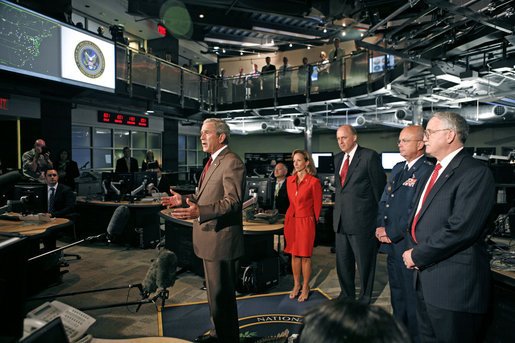
President Bush, Foreign Policy, State Department VIDEO, PODCAST, TEXT

Technorati Tags: and or and , or and or , or and ,, or , and , or , and , or , and , or ,

Remarks by President Bush on Foreign Policy, FULL STREAMING VIDEO, file is windows media format, running time is 27:52 PODCAST, file is mp3 in m3u format for streaming playback, running time is 27:52, DOWNLOAD, file is mp3 format for PODCAST, running time is 27:52, Washington, DC, August 14,, 2006, 3:40 P.M. EDT.

President George W. Bush addresses the media from the U.S. State Department after a series of meetings today discussing America's foreign policy Monday, August, 14, 2006. 'Friday's U.N. Security Council resolution on Lebanon is an important step forward that will help bring an end to the violence,' said the President. 'The resolution calls for a robust international force to deploy to the southern part of the country to help Lebanon's legitimate armed forces restore the sovereignty of its democratic government over all Lebanese territory.' White House photo by Eric DraperPresident George W. Bush addresses the media from the U.S. State Department after a series of meetings today discussing America's foreign policy Monday, August, 14, 2006.
"Friday's U.N. Security Council resolution on Lebanon is an important step forward that will help bring an end to the violence," said the President. "The resolution calls for a robust international force to deploy to the southern part of the country to help Lebanon's legitimate armed forces restore the sovereignty of its democratic government over all Lebanese territory." White House photo by Eric Draper.

THE PRESIDENT: Good afternoon. Today I met with members of my national security team, both here at the State Department and at the Pentagon. I want to, first of all, thank the leadership of Secretary Condi Rice and Secretary Don Rumsfeld.

During those discussions we talked about the need to transform our military to meet the threats of the 21st century. We discussed the global war on terror. We discussed the situation on the ground in three fronts of the global war on terror -- in Lebanon, and Iraq, and Afghanistan.

Friday's U.N. Security Council resolution on Lebanon is an important step forward that will help bring an end to the violence. The resolution calls for a robust international force to deploy to the southern part of the country to help Lebanon's legitimate armed forces restore the sovereignty of its democratic government over all Lebanese territory. As well, the resolution is intended to stop Hezbollah from acting as a state within the state.

We're now working with our international partners to turn the words of this resolution into action. We must help people in both Lebanon and Israel return to their homes and begin rebuilding their lives without fear of renewed violence and terror.

America recognizes that civilians in Lebanon and Israel have suffered from the current violence, and we recognize that responsibility for this suffering lies with Hezbollah. It was an unprovoked attack by Hezbollah on Israel that started this conflict. Hezbollah terrorists targeted Israeli civilians with daily rocket attacks. Hezbollah terrorists used Lebanese civilians as human shields, sacrificing the innocent in an effort to protect themselves from Israeli response.

Responsibility for the suffering of the Lebanese people also lies with Hezbollah's state sponsors, Iran and Syria. The regime in Iran provides Hezbollah with financial support, weapons, and training. Iran has made clear that it seeks the destruction of Israel. We can only imagine how much more dangerous this conflict would be if Iran had the nuclear weapon it seeks.

Syria is another state sponsor of Hezbollah. Syria allows Iranian weapons to pass through its territory into Lebanon. Syria permits Hezbollah's leaders to operate out of Damascus and gives political support to Hezbollah's cause. Syria supports Hezbollah because it wants to undermine Lebanon's democratic government and regain its position of dominance in the country. That would be a great tragedy for the Lebanese people and for the cause of peace in the Middle East.

Hezbollah and its foreign sponsors also seek to undermine the prospects for peace in the Middle East. Hezbollah terrorists kidnapped two Israeli soldiers, Hamas kidnapped another Israeli soldier for a reason. Hezbollah and Hamas reject the vision of two democratic states, Israel and Palestine, living side-by-side in peace and security. Both groups want to disrupt the progress being made toward that vision by Prime Minister Olmert and President Abbas and others in the region. We must not allow terrorists to prevent elected leaders from working together toward a comprehensive peace agreement in the Middle East.

The conflict in Lebanon is part of a broader struggle between freedom and terror that is unfolding across the region. For decades, American policy sought to achieve peace in the Middle East by promoting stability in the Middle East. Yet the lack of freedom in the region meant anger and resentment grew, radicalism thrived and terrorists found willing recruits. We saw the consequences on September the 11th, 2001, when terrorists brought death and destruction to our country, killing nearly 3,000 of our citizens.

So we've launched a forward strategy of freedom in the broader Middle East. And that strategy has helped bring hope to millions and fostered the birth of young democracies from Baghdad to Beirut. Forces of terror see the changes that are taking place in their midst. They understand that the advance of liberty, the freedom to worship, the freedom to dissent, and the protection of human rights would be a defeat for their hateful ideology. But they also know that young democracies are fragile and that this may be their last and best opportunity to stop freedom's advance and steer newly free nation to the path of radical extremism. So the terrorists are striking back with all of the destructive power that they can muster. It's no coincidence that two nations that are building free societies in the heart of the Middle East, Lebanon and Iraq, are also the scenes of the most violent terrorist activity.

Some say that America caused the current instability in the Middle East by pursuing a forward strategy of freedom, yet history shows otherwise. We didn't talk much about freedom or the freedom agenda in the Middle East before September the 11th, 2001; or before al Qaeda first attacked the World Trade Center and blew up our embassies in Kenya and Tanzania in the 1990s; or before Hezbollah killed hundreds of Americans in Beirut and Islamic radicals held American hostages in Iran in the 1980s. History is clear: The freedom agenda did not create the terrorists or their ideology. But the freedom agenda will help defeat them both.

Some say that the violence and instability we see today means that the people of this troubled region are not ready for democracy. I disagree. Over the past five years, people across the Middle East have bravely defied the car bombers and assassins to show the world that they want to live in liberty. We see the universal desire for liberty in the 12 million Iraqis who faced down the terrorists to cast their ballots, and elected a free government under a democratic constitution. We see the universal desire for liberty in 8 million Afghans who lined up to vote for the first democratic government in the long history of their country. We see the universal desire for liberty in the Lebanese people who took to the streets to demand their freedom and helped drive Syrian forces out of their country.

The problem in the Middle East today is not that people lack the desire for freedom. The problem is that young democracies that they have established are still vulnerable to terrorists and their sponsors. One vulnerability is that many of the new democratic governments in the region have not yet established effective control over all their territory.

In both Lebanon and Iraq, elected governments are contending with rogue armed groups that are seeking to undermine and destabilize them. In Lebanon, Hezbollah declared war on Lebanon's neighbor, Israel, without the knowledge of the elected government in Beirut. In Iraq, al Qaeda and death squads engage in brutal violence to undermine the unity government. And in both these countries, Iran is backing armed groups in the hope of stopping democracy from taking hold.

The message of this administration is clear: America will stay on the offense against al Qaeda. Iran must stop its support for terror. And the leaders of these armed groups must make a choice: If they want to participate in the political life of their countries, they must disarm. Elected leaders cannot have one foot in the camp of democracy and one foot in the camp of terror.

The Middle East is at a pivotal moment in its history. The death and destruction we see shows how determined the extremists are to stop just and modern societies from emerging in the region. Yet millions of people in Lebanon, Iraq, and Afghanistan, and elsewhere are equally determined to live in peace and freedom. They have tired of the false promises and grand illusions of radical extremists. They reject the hateful vision of the terrorists, and they dream of a better future for their children and their grandchildren. We're determined to help them achieve that dream.

America's actions have never been guided by territorial ambition. We seek to advance the cause of freedom in the Middle East because we know the security of the region and our own security depend on it. We know that free nations are America's best partners for peace and the only true anchors for stability. So we'll continue to support reformers inside and outside governments who are working to build the institutions of liberty. We'll continue to confront terrorist organizations and their sponsors who destroy innocent lives. We'll continue to work for the day when a democratic Israel and a democratic Palestine are neighbors in a peaceful and secure Middle East.

The way forward is going to be difficult. It will require more sacrifice. But we can be confident of the outcome because we know and understand the unstoppable power of freedom. In a Middle East that grows in freedom and democracy, people will have a chance to raise their families and live in peace and build a better future. In a Middle East that grows in freedom and democracy, the terrorists will lose their recruits and lose their sponsors, and lose safe havens from which to launch new attacks. In a Middle East that grows in freedom and democracy, there will be no room for tyranny and terror, and that will make America and other free nations more secure.

Now I'll be glad to answer a couple of questions. Deb.

QUESTION: Mr. President, both sides are claiming victory in a conflict that's killed more than 900 people. Who won, and do you think the cease-fire will hold?

THE PRESIDENT: We certainly hope the cease-fire holds because it is step one of making sure that Lebanon's democracy is strengthened. Lebanon can't be a strong democracy when there's a state within a state, and that's Hezbollah.

As I mentioned in my remarks, Hezbollah attacked Israel without any knowledge of the Siniora government. You can't run a government, you can't have a democracy if you've got a armed faction within your country. Hezbollah attacked Israel. Hezbollah started the crisis, and Hezbollah suffered a defeat in this crisis. And the reason why is, is that first, there is a new -- there's going to be a new power in the south of Lebanon, and that's going to be a Lebanese force with a robust international force to help them seize control of the country, that part of the country.

Secondly, when people take a look-see, take a step back, and realize how this started, they'll understand this was Hezbollah's activities. This was Hezbollah's choice to make.

I believe that Israel is serious about upholding the cessation of hostilities. The reason I believe that is I talked to the Prime Minister of Israel about it. And I know the Siniora government is anxious that the hostilities stop and the country begin to rebuild.

I can't speak for Hezbollah. They're a terrorist organization. They're not a state. They act independently of, evidently, the Lebanese government, and they do receive help from the outside.

Andrea.

QUESTION: Thank you, Mr. President --

THE PRESIDENT: Good to see you. Thanks for breaking in with us --

QUESTION: Thank you. Despite what you've just said, there is a perception, a global perception, certainly in the Arab media and in many Western media, as well, that Hezbollah is really a winner here because they have proven that they could, as a guerrilla force, withstand the Israeli army. They have been the sole source of humanitarian aid to many of the Lebanese people in the south. So they've improved their position politically within Lebanon, and militarily, and globally. They've gotten an aura of being able to stand up for so long against Israel. How do you combat that, and the perception that we settled for less than we originally wanted in the U.N. resolution, a less robust force? And what actions can the United States or this international force take if Iran, for instance, tries to rearm Hezbollah?

THE PRESIDENT: Yes. First of all, if I were Hezbollah I'd be claiming victory, too. But the people around the region and the world need to take a step back and recognize that Hezbollah's action created a very strong reaction that, unfortunately, caused some people to lose their life, innocent people to lose their life. But on the other hand, it was Hezbollah that caused the destruction.

People have got to understand -- and it will take time, Andrea, it will take time for people to see the truth -- that Hezbollah hides behind innocent civilians as they attack. What's really interesting is a mind-set -- is the mind-sets of this crisis. Israel, when they aimed at a target and killed innocent citizens, were upset. Their society was aggrieved. When Hezbollah's rockets killed innocent Israelis they celebrated. I think when people really take a look at the type of mentality that celebrates the loss of innocent life, they'll reject that type of mentality.

And so, Hezbollah, of course, has got a fantastic propaganda machine and they're claiming victories and -- but how can you claim victory when at one time you were a state within a state, safe within southern Lebanon, and now you're going to be replaced by a Lebanese army and an international force? And that's what we're now working on, is to get the international force in southern Lebanon.

None of this would have happened, by the way, had we -- had 1559, Resolution 1559 been fully implemented. Now is the time to get it implemented. And it's going to take a lot of work. No question about it. And no question that it's a different kind of war than people are used to seeing. We're fighting the same kind of war. We don't fight the armies of nation states; we fight terrorists who kill innocent people to achieve political objectives. And it's a hard fight, and requires different tactics. And it requires solid will from those of us who understand the stakes.

The world got to see -- got to see what it means to confront terrorism. I mean, it's the challenge of the 21st century. The fight against terror, a group of ideologues, by the way, who use terror to achieve an objective -- this is the challenge. And that's why, in my remarks, I spoke about the need for those of us who understand the blessings of liberty to help liberty prevail in the Middle East. And the fundamental question is, can it? And my answer is, absolutely, it can. I believe that universal -- that freedom is a universal value. And by that I mean people want to be free. One way to put it is, I believe mothers around the world want to raise their children in a peaceful world. That's what I believe.

And I believe that people want to be free to express themselves, and free to worship the way they want to. And if you believe that, then you've got to have hope that, ultimately, freedom will prevail. But it's incredibly hard work, because there are terrorists who kill innocent people to stop the advance of liberty. And that's the challenge of the 21st century.

And the fundamental question for this country is, do we understand the stakes and the challenge, and are we willing to support reformers and young democracies, and are we willing to confront terror and those who sponsor them? And this administration is willing to do so. And that's what we're doing.

And you asked about Iran? What did you say about them? My answer was too long to remember the third part of your multipart question.

QUESTION: I'm sorry. How can the international force or the United States, if necessary, prevent Iran from resupplying Hezbollah?

THE PRESIDENT: The first step is -- and part of the mandate in the U.N. resolution was to secure Syria's borders. Iran is able to ship weapons to Hezbollah through Syria. Secondly is to deal -- is to help seal off the ports around Lebanon. In other words, there's -- part of the mandate and part of the mission of the troops, the UNIFIL troops will be to seal off the Syrian border.

But, as well, there's a diplomatic mission that needs to be accomplished. The world must now recognize that it's Iranian sponsorship of Hezbollah that exacerbated the situation in the Middle East. People are greatly concerned about the loss of innocent life, as are the Americans -- American people. We care deeply about that, the fact that innocents lost their life. But it's very important to remember how this all happened. And Hezbollah has been emboldened because of its state sponsors.

I know they claim they didn't have anything to do with it, but sophisticated weaponry ended up in the hands of Hezbollah fighters, and many assume, and many believe that that weaponry came from Iran through Syria.

And so the task is more than just helping the Siniora government; the task is also -- and the task is not just America's alone, the task is the world's. And that is to continually remind the Iranians of their obligations, their obligations not to develop a nuclear weapons program, their obligations not to foster terrorism and promote terrorism.

And we'll continue working with our partners to do that, just that.

Yes, Michael.

QUESTION: Thank you, Mr. President. Until the other day, few Americans thought about liquid explosives when they got on a plane. What are the other emerging or evolving threats to the homeland that are most on your mind? That is, what else needs to be hardened as convincingly as cockpits have been hardened?

THE PRESIDENT: Michael, we will take the actions that are necessary based upon the intelligence we gather. And obviously, if we find out that terrorist groups are planning and plotting against our citizens -- or any other citizens, for that matter -- we will notify the proper authorities and the people themselves of actions that we're taking.

Uncovering this terrorist plot was accomplished through the hard and good work of British authorities, as well as our folks. And the coordination was very strong, and the cooperation, interagency and with the Brits, was really good. And I congratulate the Blair government and the hardworking folks in Great Britain. And, by the way, they're still analyzing, they're still dealing with potential threats. And I want to thank our folks, too. It was a really good effort.

But my point to you is that if we find out or if we believe that the terrorists will strike using a certain type of weapon or tactic, we will take the necessary precautions, just like we did when it came to liquids on airplanes.

Okay. Yes.

QUESTION: The U.N. resolution says that Israel must stop all offensive action. What do you view as defensive action? If Hezbollah --

THE PRESIDENT: Somebody shoots at an Israeli soldier.

QUESTION: They can respond in what way?

THE PRESIDENT: Absolutely.

QUESTION: Any way Israel responds to that, if they start another ground offensive, that is all defensive?

THE PRESIDENT: I'm not going to -- I keep getting asked a lot about Israel's military decisions, and we don't advise Israel on its military options. But, as far as I'm concerned, if somebody shoots at an Israeli soldier, tries to kill a soldier from Israel, that Israel has the right to defend herself, has a right to try to suppress that kind of fire. And that's how I read the resolution. That's how Ms. Rice reads the resolution.

Yes, Bill.

QUESTION: Mr. President, to much of the rest of the world, the United States appeared to tolerate the bloodshed and ongoing fighting for a long time before assertively stepping in, and in the process, perhaps earned the further enmity of a lot of people in the rest of the world, particularly the Arab and Muslim world. What is your thought about that?

THE PRESIDENT: My thought is that, first of all, we, from the beginning, urged caution on both sides so that innocent life would be protected. And, secondly, I think most leaders around the world would give Condoleeza Rice and her team great credit for finally getting a U.N. resolution passed. We were working hard on a U.N. resolution pretty quickly, and it can be a painful process, diplomacy can be a painful process. And it took a while to get the resolution done. But most objective observers would give the United States credit for helping to lead the effort to get a resolution that addressed the root cause of the problem. Of course, we could have got a resolution right off the bat that didn't address the root cause. Everybody would have felt better for a quick period of time, and then the balance would have erupted again.

And our hope is that this series of resolutions that gets passed gets after the root cause. We want peace, Bill. We're not interested in process. What we want is results. And so -- look, America gets accused of all kinds of things. I understand that. But if people analyze the facts, they were to find two things: One, we urged caution, and two, secondly, that we worked on a diplomatic process that we believe has got the best chance of achieving a long-term objective, which is peace.

Final question, then I got to go.

QUESTION: Mr. President, four days later, now do you believe that the U.K. terror plot was developed by al Qaeda leaders? Do you believe that there are terror cells operating within the U.S.? Along with Michael's question, what do you say to critics who say there are giant loopholes in homeland security?

THE PRESIDENT: Well, first I would say that -- I don't know the loophole question. Maybe you can give me some specific loopholes. But it sounded like to me Homeland Security did a good job, along with intelligence services and FBI in working with the British to shut down a major plot that could have killed Americans.

First part of the question? That's what happens when you get 60.

QUESTION: Do you believe the terror plot was developed by al Qaeda leaders?

THE PRESIDENT: We certainly -- I stand by the statements that initially came out of Chertoff, which was, it sure looks like it. It looks like something al Qaeda would do. But before we actually claim al Qaeda, we want to make sure that we have -- we could prove it to you. Of course, the minute I say it's al Qaeda, then you're going to step up and say, prove it. So, therefore, I'm not going to say it until we have absolute proof. But it looks like the kind of thing al Qaeda would do, and --

QUESTION: As far as terrorist cells inside the U.S.?

THE PRESIDENT: Any time we get a hint that there might be a terrorist cell in the United States, we move on it. And we're listening, we're looking, and one thing that's important is for us to make sure that those people who are trying to disrupt terrorist cells in the United States have the tools necessary to do so within the Constitution of the United States.

One of the things we better make sure is we better not call upon the federal government and people on the front lines of fighting terror to do their job and disrupt cells without giving people the necessary tools to disrupt terrorist plots before they strike. And that's what we're doing here in this government.

And that's why the Terrorist Surveillance Program exists, a program that some in Washington would like to dismantle. That's why we passed the Patriot Act, to give our folks the tools necessary to be able to defend America. The lessons of the past week is that there's still a war on terror going on and there's still individuals that would like to kill innocent Americans to achieve political objectives. That's the lesson. And the lesson for those of us in Washington, D.C. is to set aside politics and give our people the tools necessary to protect the American people.

Thank you.

END 4:08 EDT, White House Press Release, Office of the Press Secretary, Washington, DC, August 14, 2006

Related: Keywords State Department, Saturday, August 12, 2006 UN Adopts Resolution on Lebanon (VIDEO), Friday, August 11, 2006 International Initiative to Combat Kleptocracy VIDEO, PODCAST, TEXT, Thursday, August 10, 2006 State Department Daily Press Briefing, VIDEO, PODCAST, TEXT, 08/10/06, Wednesday, August 09, 2006 Media Stakeout Minister Tarek Mitri Lebanon (VIDEO), Wednesday, August 09, 2006 Media Stakeout Ambassador Dan Gillerman Israel (VIDEO), Wednesday, August 09, 2006 Media Stakeout Ambassador John Bolton (VIDEO), Tuesday, August 08, 2006 Lebanon - Stakeout by Ambassador de La Sablière VIDEO, PODCAST, TEXT, Monday, August 07, 2006 Condoleezza Rice on Mid East Cease-Fire (VIDEO), Friday, August 04, 2006 Condoleezza Rice to the People of Cuba VIDEO, PODCAST, TEXT, Wednesday, July 26, 2006 State Department Daily Press Briefing, VIDEO, PODCAST, TEXT, 07/26/06, Tuesday, July 25, 2006 Condoleezza Rice With Israeli Foreign Minister Livni in Jerusalem, Saturday, July 22, 2006 Condoleezza Rice, Middle East and Europe VIDEO, PODCAST, TEXT, Friday, July 21, 2006 State Department Daily Press Briefing, VIDEO, PODCAST, TEXT, 07/20/06, Thursday, July 20, 2006 Secretary Rice, Patriarch Nasrallah Sfeir, VIDEO, PODCAST, TEXT, Tuesday, July 18, 2006, Evacuation of U.S. Citizens from Lebanon VIDEO, PODCAST, TEXT, Monday, July 17, 2006 For U.S. Citizens Seeking Assistance in Lebanon, VIDEO, PODCAST, TEXT, Saturday, July 15, 2006 U.S. Embassy Information for American Citizens in Lebanon,