Wednesday, September 20, 2006

Mahmoud Ahmadinejad Iran UN (VIDEO)

Address by His Excellency Dr. Mahmoud Ahmadi-Nej ad, President of the Islamic Republic of Iran, before the 61 st Session of the General assembly, FULL STREAMING VIDEO, [ Arabic Language Video ] New York, 19 September 2006

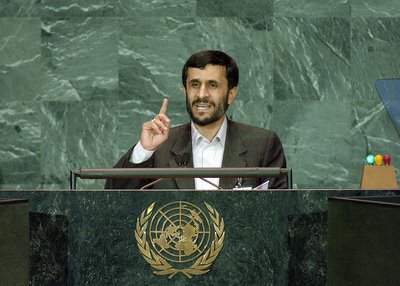
President of Iran Addresses General Debate   Mahmoud Ahmadinejad, President of the Islamic Republic of Iran, addresses the general debate of the sixtieth session of the General Assembly, today at UN Headquarters. The general debate focuses on the follow-up to the 2005 World Summit. Location: United Nations, New York, Date: 17 September 2005, Photo # 92922  UN Photo/Paulo Filgueiras.President of Iran Addresses General Debate
Mahmoud Ahmadinejad, President of the Islamic Republic of Iran, addresses the general debate of the sixtieth session of the General Assembly,
today at UN Headquarters. The general debate focuses on the follow-up to the 2005 World Summit. Location: United Nations, New York, Date: 17 September 2005, Photo # 92922 UN Photo/Paulo Filgueiras.

Madam President, Distinguished Heads of State and Government, Distinguished Heads of Delegation, Excellencies, Ladies and Gentlemen

I praise the Merciful, All-Knowing and Almighty God for blessing me with
another opportunity to address this Assembly on behalf of the great nation of Iran and to bring a number of issues to the attention of the international community.

I also praise the Almighty for the increasing vigilance of peoples across the
globe, their courageous presence in different international settings, and the brave expression of their views and aspirations regarding global issues.

Today, humanity passionately craves commitment to the Truth, devotion to
God, quest for Justice and respect for the dignity of human beings. Rejection of domination and aggression, defense of the oppressed,and longing for peace constitute the legitimate demand of the peoples of the world, particularly the new generations and the spirited youth, who aspire a world free from decadence, aggression and injustice, and replete with love and compassion. The youth have a right to seek justice and the Truth; and they have a right to build their own future on the foundations of love, compassion and tranquility. And, I praise the Almighty for this immense blessing. FULL TEXT IN PDF FORMAT

Technorati Tags: and or and , or and or , or and , or ,

Related: Keywords State Department, Tuesday, September 19, 2006 Media Stakeout Ambassador John Bolton 09/18/06 (VIDEO), Tuesday, September 19, 2006 Kristen Silverberg On-the-Record Briefing (VIDEO), Monday, September 18, 2006 Annual Report on International Religious Freedom (VIDEO), Wednesday, September 13, 2006State Department Daily Press Briefing, VIDEO, PODCAST, TEXT, 09/12/06, Monday, September 04, 2006 Media Stakeout Ambassador John Bolton 09/01/06 (VIDEO), Monday, September 04, 2006 Condoleezza Rice American Legion Convention VIDEO, PODCAST, TEXT, Thursday, August 31, 2006 United Nations Daily Press Briefing 08/31/06 (VIDEO), Monday, August 28, 2006Media Stakeout Ambassador John Bolton 08/28/06 (VIDEO), Wednesday, August 23, 2006 Iranian Response to the P5+1 Package, Tuesday, August 22, 2006 Media Stakeout Ambassador John Bolton 08/22/06 (VIDEO), Tuesday, August 22, 2006 Media Stakeout Ambassador John Bolton 08/15/06 (VIDEO), Friday, August 18, 2006 State Department Daily Press Briefing, VIDEO, PODCAST, TEXT, 08/17/06, Thursday, August 17, 2006 Media Stakeout Ambassador Anne Woods Patterson Sudan VIDEO, Wednesday, August 16, 2006 Middle East Update 08/16/06 VIDEO, PODCAST, TEXT, Tuesday, August 15, 2006 Media Stakeout Ambassador John Bolton 08/15/06 (VIDEO), Tuesday, August 15, 2006 State Department Daily Press Briefing, VIDEO, PODCAST, TEXT, 08/14/06, Thursday, August 10, 2006 State Department Daily Press Briefing, VIDEO, PODCAST, TEXT, 08/10/06,

Tuesday, September 19, 2006

President Bush Addresses United Nations (VIDEO)

President Bush Addresses United Nations General Assembly, FULL STREAMING VIDEO, United Nations, New York, New York, 12:15 P.M. EDT Fact Sheet: Address to the UN General Assembly: A More Hopeful World Beyond Terror and Extremism

Mrs. Laura Bush is greeted on the floor of the New York Stock Exchange Monday, Sept. 18, 2006. Mrs. Bush visited the exchange with a delegation of entrepreneurs from around the world to participate in the close of trading and to ring the Closing Bell. White House photo by Shealah Craighead Mrs. Laura Bush is greeted on the floor of the New York Stock Exchange Monday, Sept. 18, 2006. Mrs. Bush visited the exchange with a delegation of entrepreneurs from around the world
to participate in the close of trading and to ring the Closing Bell. White House photo by Shealah Craighead

THE PRESIDENT: Mr. Secretary General, Madam President, distinguished delegates, and ladies and gentlemen: I want to thank you for the privilege of speaking to this General Assembly.

Last week, America and the world marked the fifth anniversary of the attacks that filled another September morning with death and suffering. On that terrible day, extremists killed nearly 3,000 innocent people, including citizens of dozens of nations represented right here in this chamber. Since then, the enemies of humanity have continued their campaign of murder. Al Qaeda and those inspired by its extremist ideology have attacked more than two dozen nations. And recently a different group of extremists deliberately provoked a terrible conflict in Lebanon. At the start of the 21st century, it is clear that the world is engaged in a great ideological struggle, between extremists who use terror as a weapon to create fear, and moderate people who work for peace.

Five years ago, I stood at this podium and called on the community of nations to defend civilization and build a more hopeful future. This is still the great challenge of our time; it is the calling of our generation. This morning, I want to speak about the more hopeful world that is within our reach, a world beyond terror, where ordinary men and women are free to determine their own destiny, where the voices of moderation are empowered, and where the extremists are marginalized by the peaceful majority. This world can be ours if we seek it and if we work together.

The principles of this world beyond terror can be found in the very first sentence of the Universal Declaration of Human Rights. This document declares that the "equal and inalienable rights of all members of the human family is the foundation of freedom and justice and peace in the world." One of the authors of this document was a Lebanese diplomat named Charles Malik, who would go on to become President of this Assembly. Mr. Malik insisted that these principles apply equally to all people, of all regions, of all religions, including the men and women of the Arab world that was his home.

In the nearly six decades since that document was approved, we have seen the forces of freedom and moderation transform entire continents. Sixty years after a terrible war, Europe is now whole, free, and at peace -- and Asia has seen freedom progress and hundreds of millions of people lifted out of desperate poverty. The words of the Universal Declaration are as true today as they were when they were written. As liberty flourishes, nations grow in tolerance and hope and peace. And we're seeing that bright future begin to take root in the broader Middle East.

Some of the changes in the Middle East have been dramatic, and we see the results in this chamber. Five years ago, Afghanistan was ruled by the brutal Taliban regime, and its seat in this body was contested. Now this seat is held by the freely elected government of Afghanistan, which is represented today by President Karzai. Five years ago, Iraq's seat in this body was held by a dictator who killed his citizens, invaded his neighbors, and showed his contempt for the world by defying more than a dozen U.N. Security Council resolutions. Now Iraq's seat is held by a democratic government that embodies the aspirations of the Iraq people, who's represented today by President Talabani. With these changes, more than 50 million people have been given a voice in this chamber for the first time in decades.

Some of the changes in the Middle East are happening gradually, but they are real. Algeria has held its first competitive presidential election, and the military remained neutral. The United Arab Emirates recently announced that half of the seats in its Federal National Council will be chosen by elections. Kuwait held elections in which women were allowed to vote and run for office for the first time. Citizens have voted in municipal elections in Saudi Arabia, in parliamentary elections in Jordan and Bahrain, and in multiparty presidential elections in Yemen and Egypt. These are important steps, and the governments should continue to move forward with other reforms that show they trust their people. Every nation that travels the road to freedom moves at a different pace, and the democracies they build will reflect their own culture and traditions. But the destination is the same: A free society where people live at peace with each other and at peace with the world.

Some have argued that the democratic changes we're seeing in the Middle East are destabilizing the region. This argument rests on a false assumption, that the Middle East was stable to begin with. The reality is that the stability we thought we saw in the Middle East was a mirage. For decades, millions of men and women in the region have been trapped in oppression and hopelessness. And these conditions left a generation disillusioned, and made this region a breeding ground for extremism.

Imagine what it's like to be a young person living in a country that is not moving toward reform. You're 21 years old, and while your peers in other parts of the world are casting their ballots for the first time, you are powerless to change the course of your government. While your peers in other parts of the world have received educations that prepare them for the opportunities of a global economy, you have been fed propaganda and conspiracy theories that blame others for your country's shortcomings. And everywhere you turn, you hear extremists who tell you that you can escape your misery and regain your dignity through violence and terror and martyrdom. For many across the broader Middle East, this is the dismal choice presented every day.

Every civilized nation, including those in the Muslim world, must support those in the region who are offering a more hopeful alternative. We know that when people have a voice in their future, they are less likely to blow themselves up in suicide attacks. We know that when leaders are accountable to their people, they are more likely to seek national greatness in the achievements of their citizens, rather than in terror and conquest. So we must stand with democratic leaders and moderate reformers across the broader Middle East. We must give them voice to the hopes of decent men and women who want for their children the same things we want for ours. We must seek stability through a free and just Middle East where the extremists are marginalized by millions of citizens in control of their own destinies.

Today, I'd like to speak directly to the people across the broader Middle East: My country desires peace. Extremists in your midst spread propaganda claiming that the West is engaged in a war against Islam. This propaganda is false, and its purpose is to confuse you and justify acts of terror. We respect Islam, but we will protect our people from those who pervert Islam to sow death and destruction. Our goal is to help you build a more tolerant and hopeful society that honors people of all faiths and promote the peace.

To the people of Iraq: Nearly 12 million of you braved the car bombers and assassins last December to vote in free elections. The world saw you hold up purple ink-stained fingers, and your courage filled us with admiration. You've stood firm in the face of horrendous acts of terror and sectarian violence -- and we will not abandon you in your struggle to build a free nation. America and our coalition partners will continue to stand with the democratic government you elected. We will continue to help you secure the international assistance and investment you need to create jobs and opportunity, working with the United Nations and through the International Compact with Iraq endorsed here in New York yesterday. We will continue to train those of you who stepped forward to fight the enemies of freedom. We will not yield the future of your country to terrorists and extremists. In return, your leaders must rise to the challenges your country is facing, and make difficult choices to bring security and prosperity. Working together, we will help your democracy succeed, so it can become a beacon of hope for millions in the Muslim world.

To the people of Afghanistan: Together, we overthrew the Taliban regime that brought misery into your lives and harbored terrorists who brought death to the citizens of many nations. Since then, we have watched you choose your leaders in free elections and build a democratic government. You can be proud of these achievements. We respect your courage, and your determination to live in peace and freedom. We will continue to stand with you to defend your democratic gains. Today forces from more than 40 countries, including members of the NATO Alliance, are bravely serving side-by-side with you against the extremists who want to bring down the free government you've established. We'll help you defeat these enemies and build a free Afghanistan that will never again oppress you, or be a safe haven for terrorists.

To the people of Lebanon: Last year, you inspired the world when you came out into the streets to demand your independence from Syrian dominance. You drove Syrian forces from your country and you reestablished democracy. Since then, you have been tested by the fighting that began with Hezbollah's unprovoked attacks on Israel. Many of you have seen your homes and communities caught in crossfire. We see your suffering, and the world is helping you to rebuild your country, and helping you deal with the armed extremists who are undermining your democracy by acting as a state within a state. The United Nations has passed a good resolution that has authorized an international force, led by France and Italy, to help you restore Lebanese sovereignty over Lebanese soil. For many years, Lebanon was a model of democracy and pluralism and openness in the region -- and it will be again.

To the people of Iran: The United States respects you; we your country. We admire your rich history, your vibrant culture, and your many contributions to civilization. You deserve an opportunity to determine your own future, an economy that rewards your intelligence and your talents, and a society that allows you to fulfill your tremendous potential. The greatest obstacle to this future is that your rulers have chosen to deny you liberty and to use your nation's resources to fund terrorism, and fuel extremism, and pursue nuclear weapons. The United Nations has passed a clear resolution requiring that the regime in Tehran meet its international obligations. Iran must abandon its nuclear weapons ambitions. Despite what the regime tells you, we have no objection to Iran's pursuit of a truly peaceful nuclear power program. We're working toward a diplomatic solution to this crisis. And as we do, we look to the day when you can live in freedom -- and America and Iran can be good friends and close partners in the cause of peace.

To the people of Syria: Your land is home to a great people with a proud tradition of learning and commerce. Today your rulers have allowed your country to become a crossroad for terrorism. In your midst, Hamas and Hezbollah are working to destabilize the region, and your government is turning your country into a tool of Iran. This is increasing your country's isolation from the world. Your government must choose a better way forward by ending its support for terror, and living in peace with your neighbors, and opening the way to a better life for you and your families.

To the people of Darfur: You have suffered unspeakable violence, and my nation has called these atrocities what they are -- genocide. For the last two years, America joined with the international community to provide emergency food aid and support for an African Union peacekeeping force. Yet your suffering continues. The world must step forward to provide additional humanitarian aid -- and we must strengthen the African Union force that has done good work, but is not strong enough to protect you. The Security Council has approved a resolution that would transform the African Union force into a blue-helmeted force that is larger and more robust. To increase its strength and effectiveness, NATO nations should provide logistics and other support. The regime in Khartoum is stopping the deployment of this force. If the Sudanese government does not approve this peacekeeping force quickly, the United Nations must act. Your lives and the credibility of the United Nations is at stake. So today I'm announcing that I'm naming a Presidential Special Envoy -- former USAID Administrator Andrew Natsios -- to lead America's efforts to resolve the outstanding disputes and help bring peace to your land.

The world must also stand up for peace in the Holy Land. I'm committed to two democratic states -- Israel and Palestine -- living side-by-side in peace and security. I'm committed to a Palestinian state that has territorial integrity and will live peacefully with the Jewish state of Israel. This is the vision set forth in the road map -- and helping the parties reach this goal is one of the great objectives of my presidency. The Palestinian people have suffered from decades of corruption and violence and the daily humiliation of occupation. Israeli citizens have endured brutal acts of terrorism and constant fear of attack since the birth of their nation. Many brave men and women have made the commitment to peace. Yet extremists in the region are stirring up hatred and trying to prevent these moderate voices from prevailing.

This struggle is unfolding in the Palestinian territories. Earlier this year, the Palestinian people voted in a free election. The leaders of Hamas campaigned on a platform of ending corruption and improving the lives of the Palestinian people, and they prevailed. The world is waiting to see whether the Hamas government will follow through on its promises, or pursue an extremist agenda. And the world has sent a clear message to the leaders of Hamas: Serve the interests of the Palestinian people. Abandon terror, recognize Israel's right to exist, honor agreements, and work for peace.

President Abbas is committed to peace, and to his people's aspirations for a state of their own. Prime Minister Olmert is committed to peace, and has said he intends to meet with President Abbas to make real progress on the outstanding issues between them. I believe peace can be achieved, and that a democratic Palestinian state is possible. I hear from leaders in the region who want to help. I've directed Secretary of State Rice to lead a diplomatic effort to engage moderate leaders across the region, to help the Palestinians reform their security services, and support Israeli and Palestinian leaders in their efforts to come together to resolve their differences. Prime Minister Blair has indicated that his country will work with partners in Europe to help strengthen the governing institutions of the Palestinian administration. We welcome his initiative. Countries like Saudi Arabia and Jordan and Egypt have made clear they're willing to contribute the diplomatic and financial assistance necessary to help these efforts succeed. I'm optimistic that by supporting the forces of democracy and moderation, we can help Israelis and Palestinians build a more hopeful future and achieve the peace in a Holy Land we all want.

Freedom, by its nature, cannot be imposed -- it must be chosen. From Beirut to Baghdad, people are making the choice for freedom. And the nations gathered in this chamber must make a choice, as well: Will we support the moderates and reformers who are working for change across the Middle East -- or will we yield the future to the terrorists and extremists? America has made its choice: We will stand with the moderates and reformers.

Recently a courageous group of Arab and Muslim intellectuals wrote me a letter. In it, they said this: "The shore of reform is the only one on which any lights appear, even though the journey demands courage and patience and perseverance." The United Nations was created to make that journey possible. Together we must support the dreams of good and decent people who are working to transform a troubled region -- and by doing so, we will advance the high ideals on which this institution was founded.

Thank you for your time. God bless.

END 12:35 P.M. EDT, For Immediate Release, September 19, 2006

Technorati Tags: and or and or and or and or and

RELATED: Keywords radio address, podcast, Saturday, September 16, 2006 Presidential Podcast 09/16/06, Saturday, September 09, 2006 Presidential Podcast 09/09/06, Saturday, September 02, 2006 Presidential Podcast 09/02/06, Saturday, August 26, 2006 Presidential Podcast 08/26/06, Saturday, August 19, 2006 bush radio address 08/26/06 full audio, text transcript, Saturday, August 12, 2006 Presidential Podcast 08/12/06, Saturday, August 05, 2006 Presidential Podcast 08/05/06, Saturday, July 29, 2006 Presidential Podcast 07/29/06, Saturday, July 15, 2006 Presidential Podcast 07/15/06, Monday, July 10, 2006 Presidential Podcast 07/08/06, Saturday, July 01, 2006 Presidential Podcast 07/01/06, Saturday, June 24, 2006 Presidential Podcast 06/24/06, Saturday, June 17, 2006 Presidential Podcast 06/17/06, Saturday, June 10, 2006 Presidential Podcast 06/10/06, Saturday, June 03, 2006 Presidential Podcast 06/03/06, Saturday, May 27, 2006 Presidential Podcast 05/27/06, Saturday, May 20, 2006, Presidential Podcast 05/20/06, Saturday, May 13, 2006 Presidential Podcast 05/13/06, Saturday, April 22, 2006 Presidential Podcast 04/22/06, Saturday, April 15, 2006 Presidential Podcast 04/15/06, Saturday, April 08, 2006 Presidential Podcast 04/08/06, Saturday, Saturday, April 01, 2006 Presidential Podcast 04/01/06, March 18, 2006 Presidential Podcast 03/18/06,

Media Stakeout Ambassador John Bolton 09/18/06 (VIDEO)

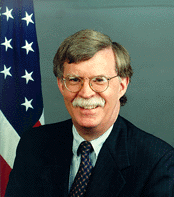
John R. Bolton Ambassador Permanent U.S. Representative to the United NationsMedia Stakeout: Informal comments to the Media by the Permanent Representative of the United States of America, Ambassador John Bolton, on non-proliferation and the situation in Sudan and other matters. 01 September 18, [Webcast: Archived Video - file is real media format, running time is 11:51] FULL STREAMING VIDEO.
Biography, John R. Bolton Ambassador Permanent U.S. Representative to the United Nations

Technorati Tags: and or and , or and or , or and , or ,

Related: Keywords State Department, Tuesday, September 19, 2006 Kristen Silverberg On-the-Record Briefing (VIDEO), Monday, September 18, 2006 Annual Report on International Religious Freedom (VIDEO), Wednesday, September 13, 2006State Department Daily Press Briefing, VIDEO, PODCAST, TEXT, 09/12/06, Monday, September 04, 2006 Media Stakeout Ambassador John Bolton 09/01/06 (VIDEO), Monday, September 04, 2006 Condoleezza Rice American Legion Convention VIDEO, PODCAST, TEXT, Thursday, August 31, 2006 United Nations Daily Press Briefing 08/31/06 (VIDEO), Monday, August 28, 2006Media Stakeout Ambassador John Bolton 08/28/06 (VIDEO), Wednesday, August 23, 2006 Iranian Response to the P5+1 Package, Tuesday, August 22, 2006 Media Stakeout Ambassador John Bolton 08/22/06 (VIDEO), Tuesday, August 22, 2006 Media Stakeout Ambassador John Bolton 08/15/06 (VIDEO), Friday, August 18, 2006 State Department Daily Press Briefing, VIDEO, PODCAST, TEXT, 08/17/06, Thursday, August 17, 2006 Media Stakeout Ambassador Anne Woods Patterson Sudan VIDEO, Wednesday, August 16, 2006 Middle East Update 08/16/06 VIDEO, PODCAST, TEXT, Tuesday, August 15, 2006 Media Stakeout Ambassador John Bolton 08/15/06 (VIDEO), Tuesday, August 15, 2006 State Department Daily Press Briefing, VIDEO, PODCAST, TEXT, 08/14/06, Thursday, August 10, 2006 State Department Daily Press Briefing, VIDEO, PODCAST, TEXT, 08/10/06,

Kristen Silverberg On-the-Record Briefing (VIDEO)

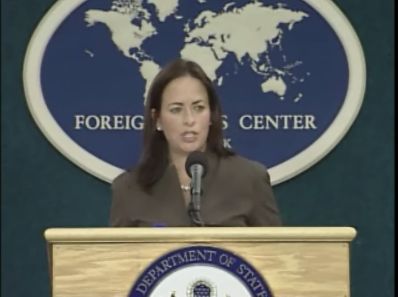
On-the-Record Briefing on the Upcoming United Nations General Assembly (UNGA), Kristen Silverberg, Assistant Secretary for International Organizations Affairs FULL STREAMING VIBEO
Washington, DC, September 15, 2006 (12:55 p.m. EDT)

MR. CASEY: Good afternoon, everybody. Glad to be here with you. As you all know, Secretary Rice will be headed on up to New York this weekend to participate in activities at the United Nations General Assembly to talk to you a little bit, both about some of the major themes and activities at the Assembly and also cover some of the multilateral events that the Secretary will be participating in while she's up there. We've got Assistant Secretary of State for International Organization Affairs Kristen Silverberg here. Let me turn the podium over to you, Kristen.

ASSISTANT SECRETARY SILVERBERG: Thank you. Good afternoon, everyone. Glad to talk to you today about next week's events at the opening of the 61st General Assembly. As you know, the annual opening of the General Assembly is an exciting time for us here at the Department because along with President Bush, Secretary Rice, and really most of the senior officials at the Department convene in New York to have meetings with our key counterparts and we cover really the range of foreign policy issues.

This year President Bush will attend, of course, along with 64 other heads of state and 170 foreign ministers. He will address the General Assembly on the 19th and we're looking forward to that. This year we expect a particular focus on events in the Middle East on Darfur and on President Bush's democracy agenda.

You will get more scheduling information later, but I'd like to walk through some of the key multilateral events and then I'm happy to take questions about next week. On Monday, September 18th at 3 p.m., the Secretary will attend the Iraq Compact Conference hosted by the Secretary General. Member states will review Iraq's progress in making reforms. And then later in the week, she'll see President Talabani for a private meeting for further discussions.

On Tuesday, September 19th, she will have a number of opportunities to focus on the international community's efforts to address Iran's nuclear ambitions. She'll first attend President Bush's meeting with President Chiraq and his meeting with Secretary General Kofi Annan. And then at 8 p.m., the Secretary will have a dinner with the P-5 foreign ministers as well as Germany and Italy.

On Wednesday, September 20th at 12:30, the Secretary will attend a meeting of the Quartet to discuss the Middle East peace process. At 2:30 she will meet with foreign ministers of the Gulf Cooperation Council to discuss a range of regional, economic and security issues. At 4 p.m., she'll meet with a Kosovo Contact Group for a discussion of Special Envoy Ahtisaari's efforts to reach a status agreement this year.

On Thursday, September 21st at 11 a.m., Secretary Rice will meet with NATO foreign ministers to discuss the situation in Afghanistan and to prepare for NATO's November summit.

On Friday, September 22nd, at 4 p.m., the Secretary will attend an event on countering trafficking and wildlife. This is, I think, a very interesting event around a partnership to promote wildlife conservation around the world by better enforcing laws against trafficking. And then at 5:30, she'll meet with her P-5 counterparts to discuss a range of issues. At 7:00 she'll attend a dinner of G-8 foreign ministers and political directors.

Then finally on Monday, September 25th at 2:00 p.m., Secretary Rice will meet with members of the Caribbean Community to discuss a range of issues. I'd like to mention one other event, time to be decided, that's of particular importance to President Bush and Secretary Rice. In light of the continuing grave humanitarian situation in Darfur and in light of the UN's -- the decision of the UN Security Council to deploy a peacekeeping operation to Darfur, Secretary Rice and some of her key counterparts, including the Danish Foreign Minister, have made a decision to call together a meeting of key partners. At that meeting, they will commit all of our governments to take steps to end the violence.

With that.

QUESTION: (Off-Mike.)

ASSISTANT SECRETARY SILVERBERG: We haven't decided on it. We're still working on the time with trying to reconcile minister schedules, so we'll keep you posted.

QUESTION: Can I ask something about that? Are you including China in that meeting, or what kind of pressure are you putting on China?

ASSISTANT SECRETARY SILVERBERG: We -- all of the details about the meeting are still being discussed. The purpose of the meeting, as I said, is to call attention to the situation on the ground to talk about next steps, about first how we can deploy the UN peacekeeping operation as soon as possible, how we can deal with the humanitarian situation, how we can strengthen AMIS, the existing African force, and how we can recommit all of our governments to take collection action, the full international community, to end the violence.

Any other questions?

QUESTION: How about a meeting on North Korea?

ASSISTANT SECRETARY SILVERBERG: They -- that will come up at a number of meetings, including her P-5 discussions. But yes, she will be having discussions on North Korea.

QUESTION: Separately from the ones that you’ve announced here?

ASSISTANT SECRETARY SILVERBERG: Yes. I haven’t covered her entire schedule. As I said, you’ll get more detail later. I’m just covering some of the key multilateral issues, but there are events to discuss North Korea on her schedule.

QUESTION: Do you expect a meeting of the five parties out of the six parties minus North Korea? Is that --

ASSISTANT SECRETARY SILVERBERG: I think we’ll come back to you with more details about the North Korea discussions but, yes, this will be an active part of her schedule.

Yes.

QUESTION: Will you have any particular talks regarding the new UNIFIL force and enlargement for Lebanon?

ASSISTANT SECRETARY SILVERBERG: Yes. This is a topic both for her meeting with the Secretary General, Secretary General Annan; it’s for her discussions with our Security Council partners. This remains a real focus. You know that we’ve made some serious progress in Lebanon both deployment of the LAF -- we’re very grateful for the widespread interest by many troop-contributing countries participating in the force. We think that’s great news, and we’re grateful for a lot of the special contributions to maritime security, airport security, and other things. But really, there is a lot to do in terms of understanding more, how we’re going to keep the borders controlled, how we’re going to prevent rearmament. So that’s going to be a topic for the Secretary.

Yes.

QUESTION: You talked about a lot of meetings she’s going to have, but can you kind of flush out what she hopes to accomplish when she’s up there on some of these issues. I mean at the end of the day after these meetings, what are some of the key things that you’d like to see in terms of these issues?

ASSISTANT SECRETARY SILVERBERG: Well, let me give you an example, which is obviously going to be top of the agenda, Iran’s nuclear ambitions. You know, it’s our view that Iran, between years of negotiations with the EU following the IAEA Board of Governors’ clear statement that Iran needs to suspend, a PRST from the Security Council, a resolution from the Security Council that Iran has had ample opportunity to make the decision in favor of cooperation and instead of isolation and confrontation. They haven’t done that. So we think the Security Council needs to move forward as soon as possible.

So one of the things she’ll be dealing with her P-5 counterparts is how we can take steps in the Council on an urgent basis to help address this issue.

Yes.

QUESTION: Javier Solana said today that he thinks that he’s making real progress with Iran.

ASSISTANT SECRETARY SILVERBERG: We think -- one of the things that we worked on with the Security Council resolution is how can we create a clear and verifiable requirement for Iran. So the Council resolution doesn't have a complicated series of steps Iran has to take. It has a very simple, verifiable requirement that Iran suspend its enrichment. They haven't done that. They didn't do it by the deadline. And so it's our view that the Council needs to act as soon as possible. Obviously, if they do it, that's a different circumstance and we'll talk about it then.

Yes.

QUESTION: The Middle East is going to occupy the main focus of your efforts at the United Nations. I wonder if it will cover dealing with the plight of the people under occupation, Israeli occupation in Golan -- the Golan city and Golan Heights and in the Palestinian territories. And if you are going to do that at least on a humanitarian base or level, would the plight and suffering of the Palestinians -- you are carrying your kids, written on their bodies, "I am hungry every day," because of the embargo of transferring money to these people --

ASSISTANT SECRETARY SILVERBERG: I think -- thank you. I think that the -- there's no question that the Middle East peace process will be a topic of discussion. As I said, the Secretary will be meeting with the Quartet. And so that'll be an issue that's discussed in that context. It'll also come up in a number of her bilateral meetings and of course, the humanitarian situation is a big part of those discussions.

The Quartet has laid out a series of principles that a government and a partner for peace needs to sign onto. Those -- all of the Quartet members remain committed to those principles. And so I think you'll see those principles reaffirmed and also, the Secretary will talk with other Quartet members about status in the peace process.

QUESTION: Should we expect a (inaudible) on the peace process efforts of --

ASSISTANT SECRETARY SILVERBERG: I'm sorry, what's that?

QUESTION: Should we anticipate that after all these meetings at the United Nations, that there will be a new invigoration of efforts, American efforts, to push the peace process forward for the Middle East?

ASSISTANT SECRETARY SILVERBERG: I hope the meetings will move the ball. I mean, that's the reason the Secretary has them. And so yes, I think that is our hope that we see progress.

Yes.

QUESTION: President Bush just said a few minutes ago that he is frustrated with the United Nations. He thinks a lot of Americans are frustrated in the context of Darfur and elsewhere. Do you share that frustration? And in a general sense, why does the United States need the United Nations at this point?

ASSISTANT SECRETARY SILVERBERG: I think there are some reasons for frustration. The President mentioned one earlier today. I could add the UN reform process, which is our effort really to make sure that we have a UN that meets the highest ethical standards that spends member-state resources effectively. That hasn’t moved as quickly as we think it should. We think a lot of the reforms we were proposing and others were proposing are long overdue, and they really need to take those steps as soon as possible.

They -- we value the United Nations for a lot of reasons. We value our partnerships in the Security Council, and we’ve seen them take some effective action on Lebanon with regard to Syria, of course, Iran, North Korea. We value UN humanitarian and development programs. The World Food Program is a fabulous organization that feeds people around the globe and does it in a cost-effective way. So we still continue to support the United Nations. We want it to be a valuable partner in our efforts to bring democracy to alleviate poverty, to help address disease. But to do that, we really need a UN that’s prepared, first, to enforce its own judgments; and second, to make member-state resources -- to put them to the most effective use.

QUESTION: Can I follow up on that?

ASSISTANT SECRETARY SILVERBERG: Sure.

QUESTION: Particularly on the UN Security Council, I mean, you have two countries that are permanent members, Russia, and to a greater extent right now with Darfur, China, that are preventing you from moving ahead on some of the key issues that you want to advance, such as sanctions on Iran or putting pressure on the Sudanese Government to allow this UN force. So how effective can the UN Security Council be when you have two members that at every turn the United States is facing opposition every step of the way?

ASSISTANT SECRETARY SILVERBERG: Well, we’ve had disagreements within the Security Council since 1945. It’s not new. And it’s, I think, to be expected in light of the difficulty of some of these issues. But this last period with the Council has been one of the most active and potentially constructive of the Security Council's period.

As I rattled off some of the important things they've done between Darfur -- we expect a decision to soon to add Burma to the Security Council agenda, North Korea and others. But of course the Security Council has to be able to follow up on its decisions. And one of the Security Council decisions was that if Iran failed to fully suspend, it would take further action, including the adoption of sanctions. And so we expect the Council to do that.

QUESTION: It's on Darfur.

ASSISTANT SECRETRY SILVERBERG: Yes.

QUESTION: The President implied an hour ago that it may be possible for a UN force to go into Darfur without the consent of the Sudanese Government. Did I hear that right?

ASSISTANT SECRETRY SILVERBERG: You did. That's absolutely the case. It's absolutely the case under the terms of the resolution. This was a U.S. red line. We insisted on -- that there be no language in the resolution that required the explicit endorsement of the Sudanese Government. Obviously we would like their cooperation and support. We think that the likelihood of ending the violence is much better if we have support and cooperation from the Government of Sudan, but it's not required.

QUESTION: A follow-up.

ASSISTANT SECRETRY SILVERBERG: Yeah, go ahead.

QUESTION: I notice that the Secretary is going to meet with some small Caribbean countries.

ASSISTANT SECRETRY SILVERBERG: Mm-hmm.

QUESTION: And she's not planning to meet with large Latin American countries. Does she now want to sit in the same room with President Chavez of Venezuela?

ASSISTANT SECRETRY SILVERBERG: I think she -- well, she does see some large Latin American countries and I'd have to recap. But she certainly sees -- we obviously have a couple on the Council -- Peru and Argentina. And I'd have to look back at her schedule to see others. But she's -- no, she's not scheduled to meet with President Chavez.

Yes.

QUESTION: I'd like to go back to the Darfur question because no country is going to send troops to a UN force if it doesn't have Sudan's consent. So I want to know what you guys are doing to get China on board to push the Sudanese government and also what the U.S. plans to bring to the table at this meeting. There's been a lot of meetings to highlight the plight, but what are you bringing to the table to help the AMIS force continue?

ASSISTANT SECRETRY SILVERBERG: We have worked closely with the Chinese Government on encouraging them to press the Government of Sudan and they've done that. The Government of China fully supports -- we have a disagreement about the terms of the resolution, but they believe we need a UN peacekeeping mission. They've said that to the Government of Sudan. Obviously we'd like them to be more active in making the case, but you're right there. That's required and we've asked them to do it.

We have -- we briefed a couple of weeks ago with Jendayi Frazer on the contents of her discussions with President Bashir. Those are continuing, so we're continuing to work with the Government of Sudan to encourage their cooperation and consent. And one of the things the ministers will talk about in this meeting is ways that we can work with the Government of Sudan to get their consent and also what are other steps we can take both to strengthen AMIS and to ensure that we're reducing the violence.

QUESTION: But is the U.S. bringing anything to the table? I mean, there's been talk -- President Bush talked about a NATO overlay months and months ago.

ASSISTANT SECRETRY SILVERBERG: Yeah. I think we'll have more to talk about after the meeting next week. But yes, we expect this meeting to move the ball.

Yes.

QUESTION: Are one of the specific goals of the Darfur meeting to look at how you can proceed if Sudan does not accept? Is that going to be one of the main focus?

ASSISTANT SECRETRY SILVERBERG: Well, remember that the Security Council resolution provided a lot of things that are done outside the UN peacekeeping mission, including steps to immediately strengthen AMIS, both to use UN resources to help strengthen logistics capability and communications and other things with the AMIS force. So we're continuing to move on all of those issues while we press for deployment of the UN force. So it's a several-pronged effort.

QUESTION: Are you going to be looking as well as troop commitments in that meeting to see who can contribute troops, what kind of fire power they could have? Because if they’re going in without the Sudanese Government’s consent, then they’re going to need fire power, air support, better logistical support too.

ASSISTANT SECRETARY SILVERBERG: This won’t be a meeting on troop generation. That’s usually done lower than ministerial level, but we’ve -- that’s something the UN Department of Peacekeeping Operations has been actively engaged in for months and with our help.

QUESTION: So how far are you along in terms of troops?

ASSISTANT SECRETARY SILVERBERG: I think we have -- following adoption of the resolution, the DPKO was able to have more concrete conversations with a lot of countries about their willingness to contribute troops, and we think the troops are out there. But as we’ve discussed, there are a number of issues including, will they go into a permissive environment, a semi-permissive environment, or a hostile environment.

QUESTION: So what’s the figure you have now?

ASSISTANT SECRETARY SILVERBERG: They -- honestly, I don’t have it with me and I'd have to go back and check.

Yes.

QUESTION: Where on your agenda is the whole topic of non-state actors, meaning terrorists? Is that high in priority?

ASSISTANT SECRETARY SILVERBERG: I think that’s a really interesting issue that’s come up in a number of Security Council discussions recently. And obviously, the debate about Hezbollah was an important one. This is central to Secretary Rice’s transformational diplomacy agenda, is how do you deal with the transformation of foreign policy to something that happens between capitals, between -- at the head of state level and something that actually involves both constructive and unconstructive non-state actors, meaning terrorist groups to one extreme and civil society groups on the other extreme.

One interesting thing on this line is that the President will be having an event at UNGA to talk about the role of NGOs in building democracy, and that’s the positive side of the non-state actor. And of course, we continue to focus on this on a challenge for some of our Security Council resolutions.

Yes.

QUESTION: The term of General Secretary of the UN is ending soon.

ASSISTANT SECRETARY SILVERBERG: Yes.

QUESTION: Does -- the U.S. has already made up their mind whom they want support or from which state groups they might a support a candidate and -- it has to be a subject in this General Assembly, too.

ASSISTANT SECRETARY SILVERBERG: I think it will be a subject of discussion with the Secretary and her counterparts. We have not endorsed a candidate. It’s our view that we want somebody who is going to be, first, strongly committed to effective and sound management of the United Nations. This isn’t a talk-shop anymore. It’s not just a political organization in New York. It’s an organization that has more than 70,000 peacekeepers deployed. It has development and humanitarian programs all over the world. So we want somebody who’s going to be a good manager and committed to continued reform of the United Nations. We also want somebody who’s going to be -- share our values. First, the importance of promoting democracy around the world, a commitment to human rights is also important.

We’ve said that we’re happy to look at someone from any region including Asia. So we’re very open-minded about the region from which the person comes.

QUESTION: Two follow-ups on this. You say that the person will have to share your values of democracy, human rights. Does that mean that the person will be from a country that is a democracy? Is that your preference?

ASSISTANT SECRETRY SILVERBERG: We haven't said that we'll insist on a person from a democracy. What we want -- remember that the Secretary General serves in his or her personal capacity. He doesn't represent a national government, and so the important thing is that we have a leader who's going to help make the UN an effective organization in supporting democracy promotion efforts and in defending human rights. This is something we've had some real concerns about the UN on recently. And this goes back to the question about frustration with the UN.

You'll remember that last year we had a thorough debate with the highest levels of attention about the Human Rights Council and our efforts to replace the Commission on Human Rights with a stronger and more effective body. And we've been disappointed, really profoundly disappointed, by the quality of the resolutions that are coming out of the human rights council. We think they have an unconstructive focus on Israel, and that they really need to turn their attention to some of the key human rights problems in the world: North Korea, Burma, and other places. And so this is something that we think as an important agenda item going forward.

QUESTION: And just one more on that Asia issue. Obviously you've said for a long time that you would look for the best candidate, no matter where they come from. But then the President in a roundtable with reporters before the G-8 Summit actually said explicitly that his understanding is that it's Asia's turn next. And that was sort of seen by many as an indication that perhaps your opinion might be changing and it might be, you know, going with Asia. Is that a sort of good direction that --

ASSISTANT SECRETRY SILVERBERG: I think we'd be very enthusiastic about a strong Asian candidate who met our criteria. And the President I think was reflecting a -- I think the President was reflecting conventional wisdom that this will be an Asian. But it's long-standing U.S. policy dating back for many, many years that we don't -- we don't sign on to the concept of regional rotation. We don't think this automatically rotates between regions. But if there's an Asian candidate who's the strongest candidate and meets our criteria, then we are obviously prepared to support that person.

QUESTION: Is (inaudible) a person at this point?

ASSISTANT SECRETRY SILVERBERG: Again, we haven't endorsed any candidate.

QUESTION: No, I'm not asking about an endorsement, but potentially is there someone who may --

ASSISTANT SECRETRY SILVERBERG: We haven't spoken publicly about the qualifications of any of the existing candidates.

QUESTION: But have you any --

QUESTION: A (inaudible) with the South Korean candidate upfront. Is that who you would be supporting?

ASSISTANT SECRETRY SILVERBERG: Again, we don't address that (laughter) good, though. (Laughter.)

QUESTION: Well, when you say that you want someone who is strongly committed to improving the management and effectiveness of the UN and its budget, I mean, certainly UN officials that were embroiled in the kind of scandals and conflicts that caused you to launch this major reform effort certainly would not be in the running in your case.

ASSISTANT SECRETRY SILVERBERG: Again, we don't want to talk about any specific candidates and we're unlikely to at any point. So -- but yes, we do want somebody who we can be assured is going to hold the UN to the highest ethical standards.

QUESTION: Do you have any signs that Asian countries have unanimous support for one candidate, whoever that might be? I mean, eight years ago that was a failure that they couldn't present their candidate and support it and it was (inaudible). So do you have any sign that this has changed at this time, they come and they end up with one candidate and not two or three?

ASSISTANT SECRETRY SILVERBERG: There is not a consensus Asian candidate right now and I don't see signs of one emerging, honestly right now. There are five Asian candidates and they all enjoy some support, so we don't expect a consensus.

Yes.

QUESTION: Can you give us a little more idea about the major reform initiatives that you're carrying with you. Are you going to be focusing on in there, and what kind -- and what level of differences do you have with other countries about them?

ASSISTANT SECRETRY SILVERBERG: Well, one of the things that's been the hardest for us to achieve is what we refer to as mandate review. Namely, we think that the UN needs to periodically review its programs and activities to make sure, first, that they're still serving an important purpose; that the purpose isn't outdated. That they're doing it effectively, that they're using resources effectively, that there's not an overlap between programs. Of the 9,000-odd UN mandates, none of them get this periodic review. They -- for the most part, the General Assembly just automatically reauthorizes without any scrutiny and we think that that's led really to proliferation of programs to a lot of duplication and overlap.

And so one of the things we'd like to see the UN do is institute a regular process of reviewing its existing programs to make sure they still make sense.

Yes.

QUESTION: About the P-5+1 dinner. Why Italy is joining this dinner and not Canada and Japan as they did in previous meetings?

ASSISTANT SECRETRY SILVERBERG: You know, I'd have to get back to you on that. Tom, you don't --

MR. CASEY: No, there's a couple a factors involved, but I'll get back to you on that.

QUESTION: Okay and also another question. On the G-8 meeting on Friday, what will it be about?

ASSISTANT SECRETRY SILVERBERG: It's really likely to cover a range of issues. I think it's going to be a kind of far-reaching discussion of really all of the priority issues I listed earlier.

Yes.

QUESTION: Is the Iranian President coming up to New York? Have you issued a visa?

ASSISTANT SECRETRY SILVERBERG: A visa application has been submitted. We haven't responded to it yet. It's still being considered according to our normal procedures, so we'll get back to you as soon as there's a final decision.

QUESTION: But you don't have a precedent for denying a head of state a visa to address the UN General Assembly, do you?

ASSISTANT SECRETRY SILVERBERG: I'm not sure whether we ever have. I can say that the U.S. takes its Headquarters Agreement responsibilities very seriously, and so we always make sure that we've adhered to it. But I'd have to check whether we've -- I don't know whether we've ever denied one or not.

Yes. And I think we should make this the last question.

MR. CASEY: Yeah.

ASSISTANT SECRETARY SILVERBERG: Yes, last question.

QUESTION: What's the U.S. position on Venezuela as non-permanent member?

ASSISTANT SECRETRY SILVERBERG: Well, you know that this year there is a contested seat in Latin America for the non-permanent seat on the Security Council and the two candidates are Guatemala and Venezuela and it's probably no great surprise that we don't think Venezuela would be the best partner on the Security Council. They've opposed our terrorism efforts, they've supported Iran's nuclear ambitions, they’re demagogue a lot at international meetings and don't behave with seriousness. And at the same time, Guatemala we think is a good country with a lot to contribute. They participate in peacekeeping missions, they represent the small countries of the UN which should have their turn on the Security Council and so anyway we've made that point, I think before publicly.

Anyway, thank you all very much.

2006/829, Released on September 15, 2006

Technorati Tags: and or and , or and or ,

Related: Keywords State Department, Monday, September 18, 2006 Annual Report on International Religious Freedom (VIDEO), Wednesday, September 13, 2006State Department Daily Press Briefing, VIDEO, PODCAST, TEXT, 09/12/06, Monday, September 04, 2006 Media Stakeout Ambassador John Bolton 09/01/06 (VIDEO), Monday, September 04, 2006 Condoleezza Rice American Legion Convention VIDEO, PODCAST, TEXT, Thursday, August 31, 2006 United Nations Daily Press Briefing 08/31/06 (VIDEO), Monday, August 28, 2006Media Stakeout Ambassador John Bolton 08/28/06 (VIDEO), Wednesday, August 23, 2006 Iranian Response to the P5+1 Package, Tuesday, August 22, 2006 Media Stakeout Ambassador John Bolton 08/22/06 (VIDEO), Tuesday, August 22, 2006 Media Stakeout Ambassador John Bolton 08/15/06 (VIDEO), Friday, August 18, 2006 State Department Daily Press Briefing, VIDEO, PODCAST, TEXT, 08/17/06, Thursday, August 17, 2006 Media Stakeout Ambassador Anne Woods Patterson Sudan VIDEO, Wednesday, August 16, 2006 Middle East Update 08/16/06 VIDEO, PODCAST, TEXT, Tuesday, August 15, 2006 Media Stakeout Ambassador John Bolton 08/15/06 (VIDEO), Tuesday, August 15, 2006 State Department Daily Press Briefing, VIDEO, PODCAST, TEXT, 08/14/06, Thursday, August 10, 2006 State Department Daily Press Briefing, VIDEO, PODCAST, TEXT, 08/10/06, Saturday, August 12, 2006 UN Adopts Resolution on Lebanon (VIDEO), Friday, August 11, 2006 International Initiative to Combat Kleptocracy VIDEO, PODCAST, TEXT,

Monday, September 18, 2006

Conference on Global Literacy

President and Mrs. Bush Attend White House Conference on Global Literacy, New York Public Library, New York, New York 12:10 P.M. EDT White House Conference on Global Literacy

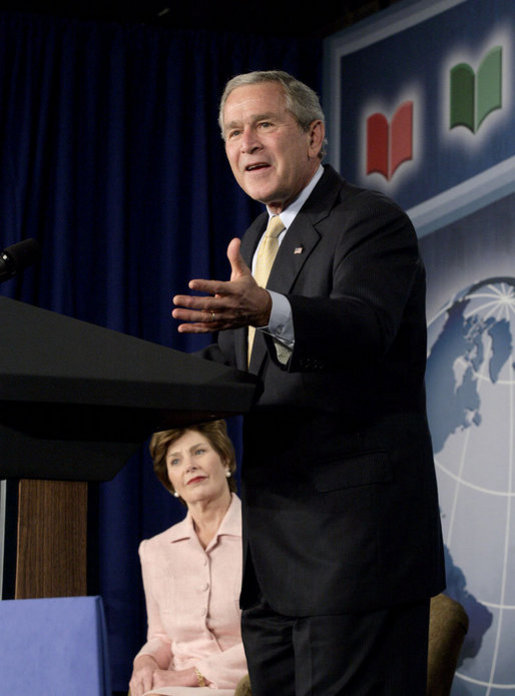
President George W. Bush and Laura Bush attend the White House Conference on Global Literacy at The New York Public Library in New York City Monday, September 18, 2006. The conference encourages international involvement and new partnerships to support literacy efforts. It highlights several UNESCO programs. White House photo by Eric Draper.President George W. Bush and Laura Bush attend the White House Conference on Global Literacy at The New York Public Library in New York City Monday, September 18, 2006.
The conference encourages international involvement and new partnerships to support literacy efforts. It highlights several UNESCO programs. White House photo by Eric Draper.
President George W. Bush and Laura Bush attend the White House Conference on Global Literacy at The New York Public Library in New York City Monday, September 18, 2006. The conference encourages international involvement and new partnerships to support literacy efforts. It highlights several UNESCO programs. White House photo by Eric Draper.President George W. Bush and Laura Bush attend the White House Conference on Global Literacy at The New York Public Library in New York City Monday, September 18, 2006. The conference encourages international involvement and new partnerships to support literacy efforts. It highlights several UNESCO programs.
White House photo by Eric Draper.

MRS. BUSH: Thank you all so much. Thank you very much. Thanks a lot. (Applause.) Have a seat, everyone. Thank you all very much. Thanks, everybody. You all can have a seat. I want to thank all the terrific panelists today for sharing your experiences and your expertise. I want to thank everyone in this room for your commitment to literacy.

Today, we heard about the three most important benefits of reading: Literacy instruction for women improves educational opportunities for their children -- women who can read are advocates for their children's education; literacy helps adults make informed decisions to protect their health and the health of their children; and literacy helps adults -- women and men -- learn the basic financial skills that generate income, that foster independence, and that boost local economies. If more countries invest in literacy programs like the ones we've heard about today, the benefits of reading can be enjoyed by every country. The leaders of every government must commit themselves to this cause.

Now I'd like to introduce a leader I know is dedicated to improving literacy and education: Ladies and gentleman, my husband, President George Bush. (Applause.)

THE PRESIDENT: Thank you all. Thank you for attending this important conference. I look around the room and see some familiar faces -- my mother. (Laughter.) How are you doing? It's good to see you. My mother-in-law. (Laughter.) Both of these ladies have instilled a great passion for literacy not only in Laura and me, but for others around our country. Thank you all for coming. Laura, thank you for your leadership.

Laura believes strongly in the power of literacy to change societies. And that's really what we're here to talk about. The capacity of -- the simple act of teaching a child to read, or an adult to read has the capacity to transform nations and yield the peace we all want.

So I want to thank you for being here. I particularly want to thank the First Ladies who are here, and the ministers from different governments around the world. We're really proud you've taken time to join us here today.

As you probably can tell, our government takes this initiative seriously. After all, we've got the Secretary of State, Condoleezza Rice, and the Secretary of Education, Margaret Spellings, both here. It should say to people loud and clear that, when you combine the resources of the Department of Education and the State Department, that we're serious about helping global literacy. And then we've added Randy Tobias, who's the head of USAID. He's the fellow who's got the responsibility of handing out some money -- (laughter) -- which is what we're doing, because we believe strongly in this initiative. So I want to thank you all for taking time out of your busy schedules to send a clear message to folks.

I want to thank Mr. Matsuura of UNESCO. Thank you, very much, for serving. Thanks for leading this vital organization. We want to work with you. And I see you're sitting next to one of my great friends -- the Ambassador, Karen Hughes, is here, as well.

I want to thank Paul LeClerc of the -- of this fantastic library. Isn't this a wonderful place to meet? Obviously, it makes sense to meet in a library if you're going to talk about literacy. It's really one of the most special spots here in New York. And I also want to thank Catie Marron for allowing us to use this facility. She's the chairman of the board, and Paul, of course, is the president and CEO of the New York Public Library.

I want to thank those who have participated in panels. I had the honor of meeting some of the panelists and the panel leaders. I met Gerri Elliot, who is a corporate vice president of Microsoft. The reason I bring up Gerri Elliot is because, in America we believe that there is a combined responsibility to help. We believe government has got a vital role, but we also believe corporate America and our citizens have got a vital role to play in helping others benefit from learning how to read. And so I want to thank Gerri for setting such a good example.

I call upon others in our country to understand the importance of this initiative and to step forth. After all, a literacy initiative will help spread prosperity and peace. And that's really why we're here at the UNGA. I've been looking forward to coming here. As you know, it's an annual event. Every year I get to come. It gives me a chance to meet with fellow leaders, and it gives me a chance to clearly explain, the goals of this country are to help those who feel hopeless; the goals of this country are to spread liberty; the goals of this country is to enhance prosperity and peace.

You can't have prosperity unless people can read. It's just as simple as that. You know, one of things that we have committed ourselves to in America is to help eradicate persistent poverty. But there is a direct link between illiteracy and persistent poverty. Oftentimes when we're talking about prosperity and helping this world become a more prosperous place, we tend to focus only on trade. And no question, good trade agreements and tearing down the barriers that prevent the free flow of goods will help enhance prosperity. But you can't be a prosperous nation if you don't have people who can read.

I mean, think about it, it's pretty clear; in order to be an informed consumer you have to read. In order to be able to take advantages of jobs that may come to your country as a result of expanding economic opportunity, you've got to read. In order to be a productive worker, you have to be able to read the manual. And so part of this initiative, part of the practical application of this initiative is to encourage prosperity by enhancing people's capacity to read. And I want to thank you for your focus on that important issue.

I also strongly believe that those of us who have the benefits of living in free society must help others realize the benefits of liberty. I believe that. I believe that's part of America's responsibility in the world. I realize we can't impose our vision of government, nor should we try. But we believe here in America in the universality of freedom. We don't believe freedom belongs only to the United States of America; we believe that liberty is universal in its applications. We also believe strongly that as the world becomes more free, we'll see peace. That's what we believe. And we're going to act on those beliefs.

But one thing that's for certain: It is very hard to have free societies if the citizens cannot read. Think about that. It's much harder for a society to realize the universal blessings of liberty if your citizens can't read the newspaper in order to be able to make informed choices and decisions about what may be taking place in a country. You can't realize the blessings of liberty if you can't read a ballot, or if you can't read what others are saying about the future of your country.

I am deeply concerned about the spread of radicalism, and I know you are, as well. We long for the days when people don't feel comfortable or empowered to take innocent life to achieve an objective. One reason radicals are able to recruit young men, for example, to become suicide bombers, is because of hopelessness. One way to defeat hopelessness is through literacy, is to giving people the fantastic hope that comes by being able to read and realize dreams.

So this literacy initiative is vital as far as the United States of America is concerned, and we want to help. That's what I'm here to say. I want to thank you for being here and let you know that we want to lend our help.

I know Laura talked about our initiative on the continent of Africa. It is a firm, real, dedicated commitment to helping folks become literate. We share -- we have that same sense of commitment in more places than Africa. For example, in our own neighborhood, we are deeply concerned about illiteracy, and we believe it's in our national interest to help folks become literate in Central and South America.

One of the most, I guess, heartwarming literacy initiatives that I have witnessed as President was the Women's Teacher Training Institute in Kabul. I know there's some people from Afghanistan here, and I want to thank you for your courage and your bravery. I don't know if you know what the institute has been doing, but think back to the days prior to liberation when women really weren't let out of the house. Young girls couldn't go to school. There was an underground teacher movement because of the great passion teachers feel for -- feel for their students. And so after the liberation of the country, we have worked with that institute to teach trainers -- teach teachers how to teach, in the knowledge that when they leave the institute, they'll then go to the village.

It's kind of this cascading movement of skill so that people can fulfill their compassion, fulfill their dreams about a more literate Afghanistan. This young democracy will survive. And one of the reasons it will survive is because of the committed effort by a lot of folks, not just the United States, but by people around the world to help the brave educational entrepreneurs that recognize hope and peace come about as a result of education.

We -- a lot of times you hear a lot of words -- people are pretty good talkers in this society of ours. People step up and make promises and kind of flowery statements. I want it to be said that our government is doing more than just talking, that our government is willing to act. We've doubled the development assistance since I've been the President. We have set forth what's called the Millennium Challenge Account. We said we were going to help people, particularly those who fight corruption, those who believe in markets, but equally importantly, those who invest in the education and health of their citizens.

We believe strongly that this world must confront the pandemic of HIV/AIDS, and believe that to whom much is given, much is required in order to solve disease and poverty -- a lot of it brought about because -- a lot of that poverty brought about because of illiteracy.

And so one thing I'd like to take away from today is, one, we're committed. We believe that the United States of America must not isolate ourselves from the problems of the world. We believe we have an opportunity to help you solve problems of the world.

There is nothing more hopeful, there's no greater gift than to teach a person to read. When I was the governor of Texas, I remember an African American woman walking up to me, and we were talking about the importance of teaching every child to read -- not just a few, but every child to read. We believe in America that reading shouldn't be the right of just a few people, it ought to be -- it's universal, as well. And the woman walked up to me, and she said, "Mr. Governor," she said, "I want you to understand how people in my community feel." She said, "Reading is the new civil right." I feel the same way about global literacy. Reading will yield the peace we want.

So thanks for coming. God bless. (Applause.)

END 12:22 P.M. EDT, For Immediate Release, Office of the Press Secretary, September 18, 2006

Technorati Tags: and or and or and or and or and

RELATED: Keywords radio address, podcast, Saturday, September 16, 2006 Presidential Podcast 09/16/06, Saturday, September 09, 2006 Presidential Podcast 09/09/06, Saturday, September 02, 2006 Presidential Podcast 09/02/06, Saturday, August 26, 2006 Presidential Podcast 08/26/06, Saturday, August 19, 2006 bush radio address 08/26/06 full audio, text transcript, Saturday, August 12, 2006 Presidential Podcast 08/12/06, Saturday, August 05, 2006 Presidential Podcast 08/05/06, Saturday, July 29, 2006 Presidential Podcast 07/29/06, Saturday, July 15, 2006 Presidential Podcast 07/15/06, Monday, July 10, 2006 Presidential Podcast 07/08/06, Saturday, July 01, 2006 Presidential Podcast 07/01/06, Saturday, June 24, 2006 Presidential Podcast 06/24/06, Saturday, June 17, 2006 Presidential Podcast 06/17/06, Saturday, June 10, 2006 Presidential Podcast 06/10/06, Saturday, June 03, 2006 Presidential Podcast 06/03/06, Saturday, May 27, 2006 Presidential Podcast 05/27/06, Saturday, May 20, 2006, Presidential Podcast 05/20/06, Saturday, May 13, 2006 Presidential Podcast 05/13/06, Saturday, April 22, 2006 Presidential Podcast 04/22/06, Saturday, April 15, 2006 Presidential Podcast 04/15/06, Saturday, April 08, 2006 Presidential Podcast 04/08/06, Saturday, Saturday, April 01, 2006 Presidential Podcast 04/01/06, March 18, 2006 Presidential Podcast 03/18/06,

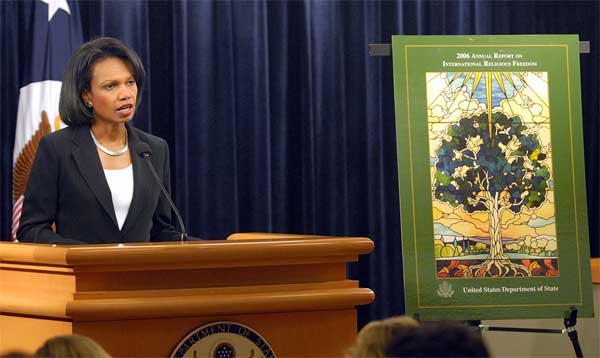
Annual Report on International Religious Freedom (VIDEO)

Secretary Condoleezza Rice Remarks on the U.S. Department of State's Annual Report on International Religious Freedom FULL STREAMING VIDEO

Washington, DC, September 15, 2006, Secretary Rice speaks to the press about the U.S. Department of State's Annual Report on International Religious Freedom. State Department photo by Michael GrossWashington, DC, September 15, 2006, Secretary Rice speaks to the press about the U.S. Department of State's Annual Report
on International Religious Freedom. State Department photo by Michael Gross.

Secretary Condoleezza Rice, Washington, DC, September 15, 2006, (10:07 a.m. EDT)

SECRETARY RICE: Good morning. Today, I have transmitted to Congress the 8th Annual Report on International Religious Freedom. We hope that this report which is also available at the State Department's website will serve as a resource for all in the United States and in the international community who share our concerns about religious freedom. We also hope that it will serve as a source of encouragement to those whose plight is documented in the report and whose right to believe and practice and worship as they choose is still denied by their governments.

Five years ago this week, the American people observed a national day of prayer and remembrance for those who died in the terrorist attacks. We gathered in the National Cathedral and in houses of worship all across the country and indeed across the world to draw strength and solace from one another and from our faiths. We came together, Muslims and Jews, and Christians, Sikhs, Hindu, Buddhists, people of every faith united in grief, united in resolve, and united in conviction that the power of compassion and love is stronger than the forces of hate.

On Monday we marked the fifth-year anniversary of September 11th with a ceremony at the State Department to remember the more than 90 countries that lost citizens in those attacks. Some victims were in the United States on business, others were visiting relatives. It was a stark reminder that the entire world was affected by these brutal and horrific attacks, and the entire world is threatened by the extremist ideology of hate and bigotry and religious intolerance.

Indeed, September 11th has made us more aware of our own religious diversity in the United States and how important it is. The events of that day make this report all the more important, and they renew our determination to honor the highest ideals that we have always affirmed throughout our history, the ideals of a democratic society that protects and respects religious differences. Religious freedom is deeply rooted in our principles and our history as a nation. And it is now integral to our efforts to combat terrorism and the ideology of hatred that fuels it.

In today's world, our goal of fostering religious freedom and tolerance beyond our borders is an essential component even of national security. Through our bilateral relationships, our work in international fora and our many ongoing discussions on this issue with people around the world, the United States seeks to promote religious freedom and tolerance and build a more peaceful world for the peoples of all faiths.

It is now my pleasure to introduce Ambassador Hanford, who leads the State Department’s work in religious freedom and tolerance. And Ambassador Hanford will provide additional details about the report and will answer your questions.

Thank you very much. 2006/824 Released on September 15, 2006

Technorati Tags: and or and , or and or ,

Related: Keywords State Department, Wednesday, September 13, 2006
State Department Daily Press Briefing, VIDEO, PODCAST, TEXT, 09/12/06, Monday, September 04, 2006 Media Stakeout Ambassador John Bolton 09/01/06 (VIDEO), Monday, September 04, 2006 Condoleezza Rice American Legion Convention VIDEO, PODCAST, TEXT, Thursday, August 31, 2006 United Nations Daily Press Briefing 08/31/06 (VIDEO), Monday, August 28, 2006Media Stakeout Ambassador John Bolton 08/28/06 (VIDEO), Wednesday, August 23, 2006 Iranian Response to the P5+1 Package, Tuesday, August 22, 2006 Media Stakeout Ambassador John Bolton 08/22/06 (VIDEO), Tuesday, August 22, 2006 Media Stakeout Ambassador John Bolton 08/15/06 (VIDEO), Friday, August 18, 2006 State Department Daily Press Briefing, VIDEO, PODCAST, TEXT, 08/17/06, Thursday, August 17, 2006 Media Stakeout Ambassador Anne Woods Patterson Sudan VIDEO, Wednesday, August 16, 2006 Middle East Update 08/16/06 VIDEO, PODCAST, TEXT, Tuesday, August 15, 2006 Media Stakeout Ambassador John Bolton 08/15/06 (VIDEO), Tuesday, August 15, 2006 State Department Daily Press Briefing, VIDEO, PODCAST, TEXT, 08/14/06, Thursday, August 10, 2006 State Department Daily Press Briefing, VIDEO, PODCAST, TEXT, 08/10/06, Saturday, August 12, 2006 UN Adopts Resolution on Lebanon (VIDEO), Friday, August 11, 2006 International Initiative to Combat Kleptocracy VIDEO, PODCAST, TEXT, Thursday, August 10, 2006 State Department Daily Press Briefing, VIDEO, PODCAST, TEXT, 08/10/06,

Sunday, September 17, 2006

Rodent's bizarre traits deepen mystery of genetics, evolution

WEST LAFAYETTE, Ind. - A shadowy rodent has potential to shed light on human genetics and the mysteries of evolution.

Caption: Picture of a vole, Credit: Purdue News Service, Usage Restrictions: None, Related news release: RODENT'S BIZARRE TRAITS DEEPEN MYSTERY OF GENETICS, EVOLUTIONCaption: Picture of a vole, Credit: Purdue News Service, Usage Restrictions: None, Related news release: RODENT'S BIZARRE TRAITS DEEPEN MYSTERY OF GENETICS, EVOLUTION, High Resolution Image
Purdue University research has shown that the vole, a mouselike rodent, is not only the fastest evolving mammal, but also harbors a number of puzzling genetic traits that challenge current scientific understanding.

"Nobody has posters of voles on their wall," said J. Andrew DeWoody, associate professor of genetics in the Department of Forestry and Natural Resources, whose study appears this month in the journal Genetica. "But when it comes down to it, voles deserve more attention."

Small rodents often confused for mice, except with shorter tails and beady eyes, voles live throughout the Northern Hemisphere and are often considered agricultural pests because they eat vegetation. Nevertheless, voles are an "evolutionary enigma" with many bizarre traits, DeWoody said. Understanding the basis for these traits could lead to better understanding of the same phenomena in human genetics and genetic disorders, and could have implications for gene therapy, he said.

The study focuses on 60 species within the vole genus Microtus, which has evolved in the last 500,000 to 2 million years. This means voles are evolving 60-100 times faster than the average vertebrate in terms of creating different species. Within the genus (the level of taxonomic classification above species), the number of chromosomes in voles ranges from 17-64. DeWoody said that this is an unusual finding, since species within a single genus often have the same chromosome number.

Among the vole's other bizarre genetic traits:

In one species, the X chromosome, one of the two sex-determining chromosomes (the other being the Y), contains about 20 percent of the entire genome. Sex chromosomes normally contain much less genetic information.

In another species, females possess large portions of the Y (male) chromosome.

In yet another species, males and females have different chromosome numbers, which is uncommon in animals.

A final "counterintuitive oddity" is that despite genetic variation, all voles look alike, said DeWoody's former graduate student and study co-author Deb Triant.

"All voles look very similar, and many species are completely indistinguishable," DeWoody said.

In one particular instance, DeWoody was unable to differentiate between two species even after close examination and analysis of their cranial structure; only genetic tests could reveal the difference.

Nevertheless, voles are perfectly adept at recognizing those of their own species.

"I have seen absolutely no evidence of mating between different species," Triant said. "We don't know how they do this, but scent and behavior probably play a role."

DeWoody said, "The vole is a great a model system that could be used to study lots of natural phenomena that could impact humans."

His research focuses on the mitochondrial genome, the set of DNA within the cellular compartment responsible for generating energy (the mitochondria). Some of Triant's additional work explores the unique ability of vole's mitochondrial DNA to insert itself within DNA in the cell nucleus. The nuclear genome, as it is known, contains the vast majority of a cell's DNA and is responsible for controlling cellular function and development.

"Deb's work in this area could potentially have some basic science impact on gene delivery mechanisms, such as those used in gene therapy," DeWoody said.

In this relatively new therapy, treatment involves the insertion of a gene into human patients' cells in order to counter some illness or disease like hemophilia. However, it is often difficult to insert the desired gene in the "correct" location, or a location where it does what it is supposed to do. A better understanding of the unusual prevalence of this activity in voles, and the manner in which it happens, could have important human implications.

DeWoody's research was funded by the National Science Foundation and the U.S. Department of Agriculture. DeWoody hopes to continue his work on vole genetics at some point in the future. ###

Writer: Douglas M Main, 765-496-2050, dmain@purdue.edu
Sources: J. Andrew DeWoody, 765-496-6109, dewoody@purdue.edu
Deb Triant, 765.496-6868, dtriant@purdue.edu
Ag Communications: (765) 494-2722; Beth Forbes, forbes@purdue.edu
Agriculture News Page

To the News Service home page

Technorati Tags: or and or and or and or

RELATED: Keyword biology, Sunday, September 10, 2006 chemicals produced from ethanol feedstocks could boost biorefinery, Sunday, September 03, 2006 Atmospheric Ozone Shows Signs of Recovery, Sunday, August 27, 2006 Population Growth, Environmental Degradation, Sunday, August 13, 2006 religious garment defines a new generation of women, Sunday, August 13, 2006 Multiracial congregations offer different social ties, Sunday, August 06, 2006 Scientists develop artwork that changes to suit your mood, Sunday, August 06, 2006 Washington, DC getting a summertime air quality exam, Sunday, July 30, 2006 The World Map of Happiness, Sunday, July 23, 2006 The Occult Life of Things, Sunday, July 23, 2006 Why we could all do with a siesta, Sunday, July 16, 2006 Hope I die before I get old?, Sunday, July 09, 2006 People more likely to help others they think are 'like them!, Sunday, July 09, 2006 Jefferson Team Designs Program that Helps Elderly Live Longer, Sunday, July 02, 2006 Gabapentin cools hot flashes as well as estrogen, Sunday, June 25, 2006 Estrogen plays different role during stress in black and white teens, Sunday, June 25, 2006 Our grip on reality is slim, Sunday, May 21, 2006 Genome doesn't start with 'G', Sunday, May 07, 2006 Lying Is Exposed By Micro-Expressions We Can't Control, Sunday, April 30, 2006 Mothers often have inaccurate perceptions of their children's body weight, Sunday, April 16, 2006 Other people influence us and we don't even know it!, Tuesday, January 04, 2005 The Cassini-Huygens mission to Saturn, Sunday, March 20, 2005 Agriculture Secretary Mike Johanns, bovine spongiform encephalopathy (BSE), Thursday, March 24, 2005 Fish Oil Holds Promise in Alzheimer's Fight,