


Newsweek Report of Quran's Desecration Called Erroneous, Pentagon says report is wrong, magazine expresses regret
By Merle D. Kellerhals, Jr. Washington File Staff Writer
Washington -- Newsweek magazine apologized May 15 for an erroneous news report alleging that interrogators at the U.S. detention center at the Guantanamo Bay Naval Base had desecrated the Islamic holy book the Quran.
"We regret that we got any part of our story wrong, and extend our sympathies to victims of the violence and to the U.S. soldiers caught in the midst," Newsweek Editor Mark Whitaker wrote in a note to readers in the magazine's current issue that went on newsstands May 15 in Washington.
U.S. military officials said May 12 that investigations into desecration charges from detainees at Guantanamo were not credible.
At least 15 people died and more than 100 others were injured in rioting between protesters and local security forces across Afghanistan, Pakistan, and other areas of the Middle East following publication of the magazine story May 9.
The White House reacted strongly to the Newsweek apology May 16, saying the newsmagazine should retract the story.
“This was a report based on a single anonymous source that could not substantiate the allegation that was made,” White House spokesman Scott McClellan said. “The report has had serious consequences. People have lost their lives. The image of the United States abroad has been damaged."
McClellan called it puzzling that “while Newsweek now acknowledges that they got the facts wrong, they refuse to retract the story.”
Pentagon spokesman Lawrence Di Rita, principal deputy assistant secretary of defense for public affairs, told Newsweek that its original story was wrong following an extensive internal U.S. military investigation at Guantanamo Bay.
Secretary of State Condoleezza Rice said May 12 before a U.S. Senate committee that "disrespect for the holy Quran is not now, nor has it ever been, nor will it ever be, tolerated by the United States. We honor the sacred books of all the world's great religions. Disrespect for the holy Quran is abhorrent to us all."
Whitaker expressed regret for the violence over the brief news item that appeared in the magazine's "Periscope" section.
"I've expressed regret for the loss of life and the violence that put American troops in harm's way," Whitaker said May 15 in a news report.
Whitaker said the news story had been based on an anonymous source -- a "senior U.S. government official." That unnamed source, Whitaker said, now says he is not sure if the information he provided is true. The magazine, which did not verify the Quran allegation with anyone else, has not identified its confidential source.
The magazine’s editor says Newsweek adheres as often as possible to a policy of identifying its news sources, but some sources will not speak on the record, particularly when it involves sensitive information. The U.S. news media have been evaluating and debating the use of anonymous news sources in stories over the past year, in part to address concerns by readers that news stories are not perceived as factual.
An expert in media law and ethics at the University of Minnesota says this situation illustrates several important aspects of reporting news from unnamed sources.
First, the Newsweek story was reported without direct attribution, and second, use of unnamed sources carries a certain risk for a news organization's reputation, says Professor Jane Kirtley, who is the Silha Professor of Media Ethics and Law at the University of Minnesota's School of Journalism and Mass Communication.
And she said that, in using news sources without attribution, journalists and their organizations assume the risk of becoming the source of the information in the minds of readers -- which is usually not intended. An added factor is whether or not the source has a hidden agenda in providing the information to the news media, she said.
Finally, she said understanding the impact of a news report can be doubly troubling when the news spreads across multiple cultures as has occurred in the Newsweek case.
Pentagon spokesman Bryan Whitman said Newsweek’s report about the alleged desecration of the Quran “is demonstrably false and there have thus far been no credible allegations” of such an act.
He called Newsweek’s report irresponsible, saying it “had significant consequences that reverberated throughout Muslim communities around the world." He said the magazine "hid behind anonymous sources, which by their own admission do not withstand scrutiny. Unfortunately, they cannot retract the damage that they have done to this nation or those who were viciously attacked by those false allegations."
General Richard B. Myers, chairman of the Joint Chiefs of Staff, said military investigators "have found no credible allegations of willful Quran desecration." He said Army General Bantz J. Craddock, commander of U.S. Southern Command, was in Guantanamo Bay investigating the allegations, but no interrogation logs reviewed so far have confirmed such an incident.
Joint Task Force Guantanamo said in a statement issued May 11 its members "are sensitive to the religious beliefs and practices of the detainees in U.S. custody." The U.S. military investigation into the allegations by Newsweek began May 10.
The Newsweek item that triggered the violence and deaths across South Asia and the Middle East alleged that an upcoming U.S. Southern Command report was expected to contain a reference about desecration of the Quran. Whitaker said the source for the Newsweek report now says he "could no longer be sure" that the desecration allegations were true.
National Security Advisor Stephen Hadley said in an interview May 15 on CNN's "Late Edition" news show "if it turns out to be true, obviously we will take action against those responsible."
SOURCE: usinfo.state.gov Created:16 May 2005 Updated: 16 May 2005
Monday, May 16, 2005
Newsweek Report of Quran's Desecration Erroneous,
0
comments
||
||

Renewable Fuels and Clean Diesel Technologies
Fact Sheet: Developing Renewable Fuels and Clean Diesel Technologies
Today's Presidential Action
Today, President Bush Delivered Remarks On Energy Policy In West Point, Virginia, At A Production Facility For Biodiesel. The President stressed the need to promote greater energy independence through the use of renewable energy sources like biodiesel and ethanol and new technologies like clean diesel.
The President Has Called On The Senate To Pass An Energy Bill To Reduce Our Dependence On Foreign Sources Of Energy, And Fuel Our Growing Economy. Since taking office, the President has stressed the need for a fiscally responsible energy bill that will increase domestic production, diversify our energy supply, modernize our energy infrastructure, and improve energy efficiency and conservation.
Background: Moving Towards Greater Energy Independence Through Biodiesel And Clean Diesel Technologies
Homegrown Energy Sources Like Biodiesel Can Improve Our Energy Security. Farm products and food waste like soybeans and recycled cooking grease can produce biodiesel, a clean-burning automotive fuel. Biodiesel delivers economic benefits by supporting American farmers, not foreign oil producers, and it produces less pollution.
Use Of Biodiesel Is Increasing. In the last five years, sales of biodiesel have jumped 60-fold to 30 million gallons per year. It is now the fuel of choice of 500 major automotive fleets including the Department of Defense and the State of Virginia.
Biodiesel And Ethanol Can Help Meet America's Fuel Needs. A recent study by Oak Ridge National Laboratory projected that biofuels, such as biodiesel and ethanol, could eventually meet about 30 percent of America's transportation fuel needs. Biodiesel can be used blended in any amount in standard diesel engines with no modifications, and ethanol made from corn and other farm materials can be mixed with gasoline to produce an efficient, clean burning fuel.
President Bush's Policies Encourage The Use Of Renewable Fuels Like Biodiesel And Ethanol.
The President Approved Tax Credits For Biodiesel And Ethanol. President Bush signed into law a 50-cent-per-gallon tax credit for producers of biodiesel. He also signed into law a bill that extended federal tax credits for ethanol through 2007.
President Bush Also Supports A Flexible, Cost Effective Renewable Fuel Standard. A national Renewable Fuel Standard will expand the use of biodiesel and ethanol, creating new markets for farm products and greater energy security. Advanced technologies under development could make it possible to produce renewable ethanol from agricultural and industrial waste at a cost competitive with today's gas prices.
Hybrid And Clean Diesel Vehicles Can Reduce Our Demand For Foreign Oil. Energy efficient hybrid and clean diesel vehicles offer the same features consumers desire, but travel much further on a gallon of fuel than conventional vehicles.
The President Has Proposed Extending Tax Credits To Clean Diesel Vehicles. The President's 2006 Budget includes $2.5 billion over 10 years in tax incentives to consumers for the purchase of hybrid cars and trucks, and as proposed by the President in April, clean diesel vehicles.
New Clean Diesel Rules Will Reduce Pollution. The Bush Administration's Clean Diesel rules will reduce air pollution from diesel engines by more than 90 percent, and reduce the sulfur content of diesel fuel by more than 95 percent, helping all Americans breathe easier.
# # # For Immediate Release Office of the Press Secretary May 16, 2005
1 comments
||
||
Nominations Sent to the Senate 05/16/05
Nominations Sent to the Senate
Larry Miles Dinger, of Iowa, a Career Member of the Senior Foreign Service, Class of Counselor, to be Ambassador Extraordinary and Plenipotentiary of the United States of America to the Republic of the Fiji Islands, and to serve concurrently and without additional compensation as Ambassador Extraordinary and Plenipotentiary of the United States of America to the Republic of Nauru, the Kingdom of Tonga, Tuvalu, and the Republic of Kiribati.
Eric S. Edelman, of Virginia, to be Under Secretary of Defense for Policy, vice Douglas Jay Feith.
Janice B. Gardner, of Virginia, to be Assistant Secretary for Intelligence and Analysis. (New Position).
Michael E. Hess, of New York, to be an Assistant Administrator of the United States Agency for International Development, vice Roger P. Winter, resigned.
Terence Patrick McCulley, of Oregon, a Career Member of the Senior Foreign Service, Class of Counselor, to be Ambassador Extraordinary and Plenipotentiary of the United States of America to the Republic of Mali.
Victoria Nuland, of Connecticut, a Career Member of the Senior Foreign Service, Class of Minister-Counselor, to be United States Permanent Representative on the Council of the North Atlantic Treaty Organization, with the rank and status of Ambassador Extraordinary and Plenipotentiary.
Sandra L. Pack, of Maryland, to be an Assistant Secretary of the Treasury, vice Teresa M. Ressel, resigned.
Daniel R. Stanley, of Kansas, to be an Assistant Secretary of Defense, vice Powell A. Moore.
Paul A. Trivelli, of Virginia, a Career Member of the Senior Foreign Service, Class of Counselor, to be Ambassador Extraordinary and Plenipotentiary of the United States of America to the Republic of Nicaragua.
Ann Louise Wagner, of Missouri, to be Ambassador Extraordinary and Plenipotentiary of the United States of America to Luxembourg.
# # # For Immediate Release Office of the Press Secretary May 16, 2005
0
comments
||
||
NOAA 2005 ATLANTIC HURRICANE SEASON OUTLOOK
NOAA ISSUES 2005 ATLANTIC HURRICANE SEASON OUTLOOK, Another Above Normal Season Expected
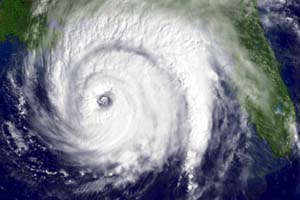 | May 16, 2005 — NOAA hurricane forecasters are predicting another above-normal hurricane season on the heels of last year's destructive and historic hurricane season. "NOAA's prediction for the 2005 Atlantic hurricane season is for 12 to15 tropical storms, |
hurricane2005outlook, NOAA's Atlantic hurricane outlook reflects an expected continuation of above-average activity that began in 1995. Since that time all but two Atlantic hurricane seasons have been above-normal. Hurricane season starts on June 1 and ends November 30. (Click NOAA image for larger view of 2005 Atlantic hurricane season outlook. Please credit “NOAA.”)
"Impacts from hurricanes, tropical storms and their remnants do not stop at the coast," states retired Brig. Gen. David L. Johnson, director of the NOAA National Weather Service. "As we kick off National Hurricane Preparedness Week and look at another highly active season, preparation plans should consider that these storms carry severe weather, such as tornadoes and flooding, while moving inland."
Although it's too soon to predict where and when a storm may hit land, NOAA still cautions the public to be prepared.
"Last year's hurricane season provided a reminder that planning and preparation for a hurricane do make a difference. Residents in hurricane vulnerable areas who had a plan, and took individual responsibility for acting on those plans, faired far better than those who did not," said Max Mayfield, director of the NOAA National Hurricane Center.
An update to the Atlantic hurricane outlook will be issued in early August just prior to the season's historical peak from late August through October. (Click NOAA image for larger view of the conditions that will make the 2005 Atlantic hurricane season above average. Please credit “NOAA.”)
In contrast to the Atlantic, a below-normal hurricane season is expected in the Eastern and Central Pacific. NOAA's outlook for the Eastern Pacific hurricane season, also released today, calls for 11-15 tropical storms, with six to eight becoming hurricanes of which two to four may become major hurricanes. Two or three tropical cyclones are projected for the Central Pacific.
The 2005 Atlantic hurricane outlook is a joint product of scientists at the NOAA Climate Prediction Center, Hurricane Research Division and National Hurricane Center. NOAA meteorologists use a suite of sophisticated numerical models and high-tech tools to forecast tropical storms and hurricanes. Scientists rely on information gathered by NOAA and the U.S. Air Force Reserve personnel who fly directly into the storms in hurricane hunter aircraft; NOAA, NASA and the U.S. Department of Defense satellites; NOAA data buoys, weather radars and partners among the international meteorological services.
NOAA, an agency of the U.S. Department of Commerce, is dedicated to enhancing economic security and national safety through the prediction and research of weather and climate-related events and providing environmental stewardship of the nation's coastal and marine resources.
0
comments
||
||
White House, Newsweek, Korans in the toilets?
Press Gaggle with Scott McClellan, Virginia BioDiesel Refinery, West Point, Virginia 11:23 A.M. EDT
Q -- (inaudible) -- what's the White House --
MR. McCLELLAN: Well, I find it puzzling that Newsweek now acknowledges that the facts were wrong, and they refuse to offer a retraction. There is a certain journalistic standard that should be met, and in this case it was not met. The report was not accurate, and it was based on a single anonymous source who cannot personally substantiate the report, so the -- so they cannot verify the accuracy of the report.
Q Scott, is the White House demanding a retraction --
MR. McCLELLAN: No, I'm just saying --
Q -- or are you satisfied with the statement Newsweek has made --
MR. McCLELLAN: No, I'm just saying that I find it puzzling that the reporter got it wrong, yet said they're not retracting the story.
Q -- a retraction, or --
MR. McCLELLAN: Actually, if you look at the comments from the editor in this morning's papers he said, we're not retracting the story, we don't know the facts. I don't think that's a standard that we're talking about here.
Q So, Scott, you find it puzzling, but you're not asking for a retraction?
MR. McCLELLAN: That's correct.
Q Why would you not ask --
MR. McCLELLAN: I mean, it's -- this report has had serious consequences. It has caused damage to the image of the United States abroad. It has -- people have lost their lives. It has certainly caused damage to the credibility of the media, as well, and Newsweek, itself.
Q Can you 100 percent say for sure that it is wrong, that there were no incidents of American interrogators putting Korans in the toilets?
MR. McCLELLAN: I know of no such incidents. And the Department of Defense said last week that they could find no credible evidence of it either. They have looked into it. And obviously, we would take something like that very, seriously, because we've made it clear that that is simply not -- that does not represent the values of the United States of America. The United States of America values the religious freedom of all. And, in fact, at Guantanamo, we have made sure that the detainees are able to worship freely, and that they are provided copies of the holy Koran.
Q Has the President expressed his personal views on this?
MR. McCLELLAN: I'm going to stop in a minute, the President is starting to speak. I think I'm expressing our views.
END 11:25 A.M. EDT For Immediate Release, Office of the Press Secretary, May 16, 2005
0
comments
||
||
Terrorism, New Search Engine Seeks Hidden Vulnerabilities
In War on Terrorism, New Search Engine Seeks Hidden Vulnerabilities
 | BUFFALO, N.Y. -- As part of an effort to anticipate -- and thwart -- the plans of potential terrorists, the Federal Aviation Administration is supporting the development of a new search engine by University at Buffalo researchers that is designed to detect "hidden" information that can be gleaned from public Web sites. |
The UB team recently completed an initial prototype system, designed explicitly to enable searches for "hidden" information within the 9/11 Commission Report.
The system permits users to find the best trail of evidence through many documents that connects two or more apparently unrelated concepts.
Funded by the FAA, as well as by the National Science Foundation specifically for anti-terrorism applications, the UB project is based on Unintended Information Revelation, or UIR, a search technique designed to uncover hidden information.
The premise of UIR is that pieces of information that by themselves appear to be innocent may be linked together to reveal inadvertently highly sensitive data.
The need for such a tool arose after 9/11 when the FAA started focusing on information being disseminated on its Web site.
"It couldn't tell if it was possible to infer things that the FAA doesn't want others to infer by putting together data from this page and that page and that page," said Rohini Srihari, Ph.D., UB professor of computer science and engineering, who is developing the new search engine with her colleagues in the Center of Excellence in Document Analysis and Recognition in the UB School of Engineering and Applied Sciences.
Existing search engines process individual documents based on the number of times a key word appears in a single document, she explained.
In contrast, UIR is based on the construction of concept chain graphs that search for the best path connecting two concepts within a multitude of documents.
"A concept chain graph will show you what's common between two seemingly unconnected things," Srihari said.
The UIR is designed to detect automatically the "hidden" revelation of sensitive information.
At the same time, Srihari's NSF research is geared toward developing the core algorithms that expose hidden paths in trails of numerous documents that may have been generated by different individuals or organizations.
While a single Web site or document may not reveal malicious intentions, a concept chain graph may reveal such intentions "hidden" among numerous documents.
"With regular searches, the input is a set of key words," Srihari explained. "The search produces a ranked list of documents, any one of which could satisfy the query.
"UIR, on the other hand, is a composite query, not a keyword query. It is designed to find the best path, the best chain of associations between two or more ideas. It returns to you an evidence trail that says 'This is how these pieces are connected.'"
To develop the method, the UB researchers used the chapters of the 9/11 Commission Report to establish concept ontologies -- lists of terms of interest in the specific domains relevant to the researchers: aviation, security and anti-terrorism issues.
According to Srihari, the key was coming up with a sophisticated content representation method for processing, or mining, text.
"UIR is an example of text mining, going across documents and uncovering things that are not apparent to the user," she said.
One search the UB researchers used to test their prototype involved exploring the chapters in the 9/11 Commission Report for connections between the three terms that they knew had a connection: "Hamburg," "San Diego" and "imam" (a Muslim leader).
Srihari explained that the model generated by the system on the basis of the 9/11 corpus found that terrorists Binal Shibh and Mohamed Atta shared apartments in Hamburg, Germany; Atta and Nawaf al Hazmi were hijackers involved in the 9/11 attacks and Hazmi found an apartment in San Diego with the help of Anwar Aulaq, an imam named at a mosque in San Diego.
"The concept chains show you what may be of interest, but the real intelligence here is gleaned from looking for patterns of interest," said Srihari. "Once a pattern of interest is identified, then you can ask, 'Are there more patterns like this?'"
A more robust prototype is expected to be delivered to FAA for evaluation by the end of the year.
Eventually, the UB search tool may also be used for other applications, such as helping biomedical researchers conduct more effective investigations into the connections between genes, proteins and disease.
Sudarshan Lamkhede, Anmol Bhasin and Wei Dai, graduate students, in the UB Department of Computer Science and Engineering, and Nick Schwartzmeyer, a graduate student in the Department of Linguistics in the College of Arts and Sciences, are working with Srihari on the project.
SOURCE: The University at Buffalo is a premier research-intensive public university, the largest and most comprehensive campus in the State University of New York.
Release date: Friday, May 13, 2005 Contact: Ellen Goldbaum, goldbaum@buffalo.edu Phone: 716-645-5000 ext 1415 Fax: 716-645-3765
0
comments
||
||
Secretary of State Condoleezza Rice, Iraq
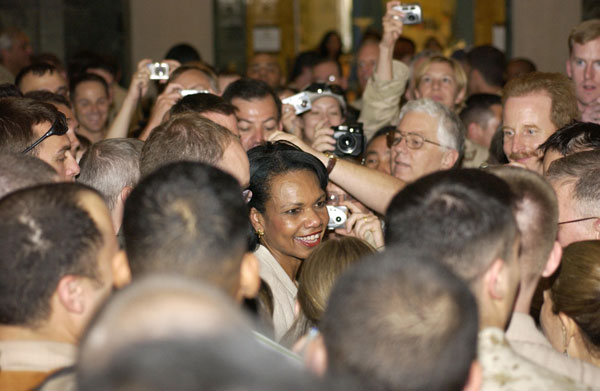 | Secretary Rice Visits With Diplomats and Troops Baghdad, Iraq May 15, 2005 During a surprise visit to Iraq on May 15, Secretary Rice is surrounded by diplomats and troops in service in Iraq. Photo courtesy SSgt Jeromy Cross, USAF/Combat Camera Iraq. Released on May 15, 2005 |
Remarks by Secretary Rice, 2005/05/15: Interview with Nick Watt of ABC, 2005/05/15: Remarks with Jawad Kadhom of Al Iraqiyah, 2005/05/15: Remarks with Kurdistan Democratic Party Leader Massoud Barzani, 2005/05/15: Interview with Richard Engle of NBC2005/05/15: Remarks in Irbil, Iraq, 2005/05/15: Remarks at American Embassy Baghdad
Secretary of State Condoleezza Rice Travel to Iraq, May 15, 2005
0
comments
||
||
President Discusses Biodiesel and Alternative Fuel Sources
President Discusses Biodiesel and Alternative Fuel Sources Virginia BioDiesel Refinery West Point, Virginia 11:25 A.M. EDT
THE PRESIDENT: Thank you all. (Applause.) Please be seated. Thanks for coming. Thanks for the warm welcome, and thank you for giving me a chance to get out of Washington. (Laughter.) I'm proud to be the first sitting President to visit this part of Virginia. (Applause.) They tell me George Washington came -- (laughter) -- before he was President. I thought it was time for another George W. to stop by. (Applause.)
I appreciate the folks here at Virginia BioDiesel for showing me around. You know, I love the innovative spirit of our entrepreneurs in this country. And the folks here have got incredible vision and they're willing to take risk to innovate. What I think is interesting is they have combined farming and modern science, and by doing so, you're using one of the world's oldest industries to power some of the world's newest technologies. After all, they're taking soybeans and converting it to fuel and putting it into brand-new Caterpillar engines. (Applause.)
Biodiesel is one of our nation's most promising alternative fuel sources. And by developing biodiesel, you're making this country less dependent on foreign sources of oil. (Applause.) As my friend, George Allen said, that's the reason I have come. I want to talk about the need for this country to have a comprehensive energy strategy. I appreciate George's leadership, and I appreciate his friendship. You've got a fine United States Senator in Senator George Allen. (Applause.)
And today I took a helicopter down from the White House with our Secretary of Agriculture, Mike Johanns. Mike, thank you for coming. Mike is from the state of Nebraska. (Applause.) For those of you involved with agriculture, he knows something about it, you'll be happy to hear. He was raised on a dairy farm. He's a good man, and I really appreciate he and his lovely wife. He was the governor of Nebraska when I called him; he quit and he came to Washington. And I want to thank you for serving our country, Michael. Thank you very much. (Applause.)
I want to thank the members of the congressional delegation who have joined us -- Congressman Bobby Scott, Congresswoman Jo Ann Davis, Congressman Eric Cantor, Congressman Randy Forbes, Congresswoman Thelma Drake. She brought her husband, Ted, with her. Thank you all for serving. I enjoy working with you all. (Applause.)
I want to thank a member of the statehouse who is here, State Senator Walter Stosch is with us today -- Walter, thank you for coming. The Mayor is here from the city of West Point, Andy Conklin. I want to thank you, Mr. Mayor, for joining us. I like to tell mayors -- they never ask for my advice, I give it anyway when I see them -- and that is fill the potholes. (Laughter and applause.)
I want to thank the Administrator John Budesky for joining us. I want to thank all the state and local officials. I want to thank you all for coming, as well. It's such a beautiful day to be outside, isn't it?
I want to thank Douglas Faulkner, who is the managing member of the Virginia BioDiesel Refinery. Thank you, Douglas, for -- there he is right there. (Applause.) Douglas has brought a lot of his family here. He brought his father Norman, and brother Norman -- the Norman boys. (Laughter.) Thank Allen Schaeffer, as well. And I want to thank the folks who lent the equipment for this event.
One of the things that is really important for government is to make sure that the environment is such that the entrepreneurial spirit remains strong. Ever since I've been elected, I tell people that the role of government is not to try to create wealth, but an environment in which people are willing to take risks. That's the role of government. And across our nation, small businesses like Virginia BioDiesel are taking risks and are developing innovative products. As a matter of fact, small businesses create most of the new jobs in America. I don't know if you know that or not, but 70 percent of new jobs in this country are created by small businesses and entrepreneurs. And I'm pleased to report that the small business sector of America is strong today. As a matter of fact, over the last two years we have added 3.5 million new jobs. More Americans are working today than ever in our nation's history. (Applause.)
The national unemployment rate is down to 5.2 percent. That's below the average rate of the 1970s, 1980s and 1990s. And the unemployment rate in the great Commonwealth of Virginia is 3.3 percent. (Applause.) And over the next years, we've got to continue to build on this progress. To make sure our families are strong and businesses are strong, and our farmers can stay in business, we have got to keep taxes low -- and we will. (Applause.) As a matter of fact, for the sake of our family farmers and for the sake of our entrepreneurs, we'll make sure the death tax stays on the path to extinction. (Applause.) We'll continue to cut needless regulations, and I'm going to continue to work with Congress to stop the spread of junk lawsuits. (Applause.)
We're going to be wise with your money. We've got a simple motto in my office, when it comes to spending your money. One, we understand it's your money, and not the government's money. And secondly, we're going to work to ensure that every taxpayer dollar is spent wisely, or not at all. (Applause.) We'll continue to open up foreign markets to America's crops and products, and ensure a level playing field for American farmers and producers and workers.
And to guarantee Americans have a secure and dignified retirement -- if you're getting your check, you don't have anything to worry about on this issue. You need to worry about your children and your grandchildren when it comes to Social Security. To make sure we have a retirement system that works for a future generation of Americans, Congress must work with me to strengthen and save Social Security for a generation to come. (Applause.)
And to keep creating jobs and to keep this economy growing, it is important for our country to understand we need an affordable, reliable supply of energy. And that starts with pursuing policies to make prices reasonable at the pump. Today's gasoline prices and diesel prices are making it harder for our families to meet their budgets. These prices are making it more expensive for farmers to produce their crop, more difficult for businesses to create jobs.
Americans are concerned about high prices at the pump, and they're really concerned as they start making their travel plans, and I understand that. I wish I could just wave a magic wand and lower the price at the pump; I'd do that. That's not how it works. You see, the high prices we face today have been decades in the making. Four years ago I laid out a comprehensive energy strategy to address our energy challenges. Yet Congress hasn't passed energy legislation. For the sake of the American consumers, it is time to confront our problems now, and not pass them on to future Congresses and future generations.
The increase in the price of crude oil is largely responsible for the higher gas prices and diesel prices that you're paying at the pump. For many years, most of the crude oil refined into gasoline in America came from home, came from domestic oil fields. In 1985, 75 percent of the crude oil used in U.S. refineries came from American sources; only about 25 percent came from abroad. Over the past few decades we've seen a dramatic change in our energy equation. American gasoline consumption has increased by about a third, while our crude production has dropped and oil imports have risen dramatically.
The result today -- the result is that today only 35 percent -- only 35 percent -- of the crude oil used in U.S. refineries comes from here at home; 65 percent comes from foreign countries, like Saudi Arabia and Mexico and Canada and Venezuela. You see, we're growing more dependent on foreign oil. Because we haven't had an energy strategy, we're becoming more dependent on countries outside our borders to provide us with the energy needed to refine gasoline. To compound the problem, countries with rapidly growing economies, like India and China, are competing for more of the world oil supply. And that drives up the price of oil, and that makes prices at the pump even higher for American families and businesses and farmers.
Our dependence on foreign oil is like a foreign tax on the American Dream, and that tax is growing every year. My administration is doing all we can to help ease the problem in the short run. We're encouraging oil-producing countries to maximize their production so that more crude oil is on the market, which will help take the pressure off price. We'll make sure that consumers here at home are treated fairly, there's not going to be any price-gouging here in America. But to solve the problem in the long run, we must address the root causes of high gasoline prices. We need to take four steps toward one vital goal, and that is to make America less dependent on foreign sources of oil. (Applause.)
We must be better conservers. We must produce and refine more crude oil here in America. We must help countries like India and China to reduce their demand for crude oil. And we've got to develop new fuels like biodiesel and ethanol as alternatives to diesel and gasoline. (Applause.)
Americans have been waiting long enough for a strategy. It is time to deliver an effective, common-sense energy strategy for the 21st strategy. And that's what I want to talk to you about today. The first step toward making America less dependent on foreign oil is to improve fuel conservation and efficiency. My administration is leading research into new technologies that reduce gas consumption while maintaining performance, such as lightweight auto parts and more efficient batteries.
We're raising fuel economy standards for sport utility vehicles and vans and pickup trucks, starting with model year 2005. When these reasonable increases in mileage standards take full effect, they will save American drivers about 340,000 barrels of gasoline a day. That's more gas than you consume every day in the entire state of Virginia.
To improve fuel efficiency, we're also taking advantage of more efficient engine technologies. Hybrid vehicles are powered by a combination of internal combustion engine and an electric motor. Hybrid cars and trucks can travel twice as far on a gallon of fuel as gasoline-only vehicles. And they produce lower emissions.
To help more consumers conserve gas and protect the environment, my budget next year proposes that every American who purchases a hybrid vehicle receive a tax credit of up to $4,000. (Applause.)
Diesel engine technology has also progressed dramatically in the past few decades. Many Americans remember the diesel cars of the 1970s -- they made a lot of noise and they spewed a lot of black smoke. Advances in technology and new rules issued by my administration have allowed us to leave those days of diesel behind. Our clean diesel rules will reduce air pollution from diesel engines by about 90 percent, and reduce the sulfur content of diesel fuel by more than 95 percent.
Today I saw a diesel-powered truck that can get up to 30 percent better fuel economy than gasoline-powered vehicles, without the harmful emissions of past diesels. I mean, the fellow got in the truck and cranked it up, and another man got on the ladder, and he put the white handkerchief by the emissions port, and the white handkerchief remained white. In other words, technology is changing the world. Our engines are becoming cleaner.
Consumers around the world are taking advantage of clean diesel technology. About half of newly registered passenger cars in Western Europe are now equipped with diesel engines. Yet in America, fewer than 1 percent of the cars on the road use diesel. According to the Department of Energy, if diesel vehicles made up 20 percent of our fleet in 15 years, we would save 350,000 barrels of oil a day. That's about a quarter of what we import every day from Venezuela.
To help more Americans benefit from a new generation of diesel technology, I have proposed making owners of clean diesel vehicles eligible for the same tax credit as owners of hybrid vehicles. America leads the world in technology. We need to use that technology to lead the world in fuel efficiency. (Applause.)
The second step toward making America less dependent on foreign oil is to produce and refine more crude oil here at home, in environmentally sensitive ways. By far the most promising site for oil in America is the Arctic National Wildlife Refuge in Alaska. I want you all to hear the facts about what we're talking about. Technology now makes it possible to reach the oil reserves in ANWR by drilling on just 2,000 acres of the 19 million acres. Technology has advanced to the point where you can take a small portion -- 2,000 acres -- of this vast track of land and explore for oil in an environmentally sensitive way.
As a matter of fact, developing this tiny area could yield up to about a million barrels of oil a day. And thanks to technology, we can reach that oil with almost no impact on land or wildlife. To make this country less dependent on foreign -- foreign oil, Congress needs to authorize pro-growth, pro-job, pro-environment exploration of ANWR. (Applause.)
As we produce more of our own oil, we need to improve our ability to refine it into gasoline. There has not been a single new refinery built in America since 1976. Here in Virginia, you have only one oil refinery, the Yorktown refinery. And that was built in the 1950s. To meet our growing demand for gasoline, America now imports more than a million barrels of fully refined gasoline every day. That means about one of every nine gallons of gas you get in your pump is refined in a foreign country. To help secure our gasoline supply and lower prices at the pump, we need to encourage existing refineries like Yorktown to expand their capacity. So the Environmental Protection Agency is simplifying rules and regulations for refinery expansion. And they will do so and maintain strict environmental safeguards at the same time.
We also need to build new refineries. So I've directed federal agencies to work with states to encourage the construction of new refineries on closed military facilities, and to simplify the permitting process for these new refineries. By promoting reasonable regulations, we can refine more gasoline for more American consumers. And that means we're less dependent on foreign sources of energy.
The third step toward making America less dependent on foreign oil is to ensure that other nations use technology to reduce their own demand for crude oil. It's in our interest -- it's in our economic interest and our national interest to help countries like India and China become more efficient users of oil, because that would help take the pressure off global oil supply, take the pressure off prices here at home. At the G8 meeting in July, I'm going to ask other world leaders to join America in helping developing countries find practical ways to use clean energy technology, to be more efficient about how they use energy. You see, when the global demand for oil is lower, Americans will be better off at the gas pump.
The final step toward making America less dependent on foreign oil is to develop new alternatives to gasoline and diesel. Here at Virginia BioDiesel, you are using Virginia soybean oil to produce a clean-burning fuel. Other biodiesel refiners are making fuel from waste products like recycled cooking grease. Biodiesel can be used in any vehicle that runs on regular diesel, and delivers critical environmental and economic benefits.
Biodiesel burns more completely and produces less air pollution than gasoline or regular diesel. Biodiesel also reduces engine wear, and produces almost no sulfur emissions, which makes it a good choice for cities and states working to meet strict air quality standards. And every time we use home-grown biodiesel, we support American farmers, not foreign oil producers. (Applause.)
More Americans are realizing the benefits of biodiesel every year. In 1999, biodiesel producers sold about 500,000 gallons of fuel for the year. Last year, biodiesel sales totaled 30 million gallons. That's a sixtyfold increase in five years. (Applause.) More than 500 operators of major vehicle fleets now use biodiesel, including the Department of Defense and the National Park Service and James Madison University. The County of Arlington, Virginia, has converted its fleet of school buses to biodiesel. And Harrisonburg is using biodiesel in its city transit buses.
In the past three years, more than 300 public fueling stations have started offering biodiesel. You're beginning to see a new industry evolve. (Applause.) And as more Americans choose biodiesel over petroleum fuel, they can be proud in knowing they're helping to make this country less dependent on foreign oil. (Applause.)
Another important alternative fuel is ethanol. Ethanol comes from corn, and it can be mixed with gasoline to produce a clean, efficient fuel. In low concentrations, ethanol can be used in any vehicle. And with minor modifications, vehicles can run on fuel blend that includes 85 percent ethanol and only 15 percent gasoline.
Like biodiesel, ethanol helps communities to meet clean air standards, farmers to find new markets for their products, and America to replace foreign crude oil with a renewable source grown right here in the nation's heartland. (Applause.) Together, ethanol and biodiesel present a tremendous opportunity to diversify our supply of fuel for cars and buses and trucks and heavy-duty vehicles.
A recent study by Oak Ridge National Laboratory projected that biofuels, such as ethanol and biodiesel, could provide about a fifth of America's transportation fuel within 25 years. And that would be good for our kids and our grandkids. (Applause.) So there are some things we can do to bring that prospect closer to reality. We have extended federal tax credits for ethanol through 2007, and last year I signed into law a 50-cent-per-gallon tax credit for producers of biodiesel. (Applause.)
There's ways government can help. Congress needs to get me a bill that continues to help diversify away from crude oil. (Applause.) My administration supports a flexible, cost-effective renewable fuel standard. Its proposal would require fuel producers to include a certain percentage of ethanol and biodiesel in their fuel. And to expand the potential of ethanol and biodiesel even more, I proposed $84 million in my 2006 budget for ongoing research. (Applause.) I think it makes sense. I think it's a good use of taxpayers' money to continue to stay on the leading edge of change. And in this case, by staying on the leading edge of change, we become less dependent on foreign sources of oil. (Applause.)
My administration is also supporting another of America's most promising alternative fuels -- hydrogen. When hydrogen is used in a fuel cell, it can power a car that requires no gas and emit pure water instead of exhaust fumes. We've already dedicated $1.2 billion to hydrogen fuel cell research. I've asked Congress for an additional $500 million over five years to get hydrogen cars into the dealership lot. With a bold investment now, we can replace a hydrocarbon economy with a hydrogen economy, and make possible for today's children to take their driver's test in a completely pollution-free car. (Applause.)
As we make America less dependent on foreign oil, we're pursuing a comprehensive strategy to address other energy challenges facing our nation. Along with high gas prices, many families and small businesses are confronting rising electricity bills. Summer air-conditioning costs are going to make it even more expensive for our homes and office buildings. To help consumers save on their power bills, we'll continue expanding efforts to conserve electricity. We're funding research into energy-efficient technologies for our homes, such as highly-efficient windows and appliances.
To ensure the electricity is delivered efficiently, Congress must make reliability standards for electric utilities mandatory, not optional. (Applause.) We've got modern interstate grids for our phone lines and highways. It is time to put practical law in place so we can have modern electricity grids, as well. (Applause.) All this modernization of our electricity grid is contained in the electricity title in the energy bill I submitted to the United States Congress.
To power our growing economy, we also need to generate more electricity. Electricity comes from three principal sources -- coal and natural gas and nuclear power. To ensure that electricity is affordable and reliable, America must improve our use of all three. Coal is our nation's most abundant energy resource, and it provides about half of your electricity here in Virginia. As a matter of fact, we got coal reserves that will last us for 250 more years. But coal presents an environmental challenge. We know that. So I've asked Congress to provide more than $2 billion over 10 years for a coal research initiative, a program that will promote new technologies to remove virtually all pollutants from coal-fired power plants.
My Clear Skies Initiative will also result in tens of billions of dollars in clean coal investments by private companies. It will help communities across the state meet stricter air quality standards. To help Virginia clean your air and keep your coal, Congress needs to get the Clear Skills bill to my desk this year. (Applause.)
Improving our electricity supply also means making better use of natural gas. It's an important power source for our farmers and manufacturers and homeowners. We need to increase environmentally responsible production of natural gas from federal lands. To further increase our natural gas supply, Congress needs to make clear federal authority to choose sites for new receiving terminals for liquified natural gas. In other words, we're getting a lot of natural gas from overseas that gets liquified, and we got to be able to de-liquify it so we can get it into your homes. And we need more terminals, and Congress needs to give us the authority to site those terminals in order to get you more natural gas. (Applause.)
I don't know if you realize this, but here in Virginia, you get about a third of your electricity from nuclear energy. Yet America has not ordered a nuclear power plant since the 1970s. France, by contrast, has built 58 plants in the same period. And today, France gets more than 78 percent of its electricity from nuclear power. In order to make sure you get electricity at reasonable prices, and in order to make sure our air remains clean, it is time for us to start building some nuclear power plants in America. (Applause.)
Technology has made it so I can say to you I am confident we can build safe nuclear power plants for you. Last month I directed the Department of Energy to work with Congress to reduce uncertainty in the nuclear power plant licensing process. We're also working to provide other incentives to encourage new plant construction, such as federal insurance to protect the builders of the first four new plants against lawsuits and bureaucratic obstacles and other delays beyond their control. A secure energy future for this country must include safe and clean nuclear power.
Many of the initiatives I've discussed today -- and I recognize this is a comprehensive plan, but that's what we need in America; we need a comprehensive plan. And many of these initiatives are contained in the energy bill before the Congress. I want to thank the House for passing the energy bill last month. And now it's time for the United States Senate to act. (Applause.) You don't have to worry about George Allen. He'll take the lead. (Applause.)
For the past four years, Americans have seen the cost of delaying a national energy policy. You've seen firsthand what it means when the nation's capital gets locked down with too much politics and not enough action on behalf of the American people. You've seen it through rising power bills; you've seen it through blackouts and high prices at the pump. Four years of debate is enough. It is time for the House and the Senate to come together and to get a good energy bill to my desk by August, and I'll sign it into law. (Applause.)
I've set big goals for our nation's energy policy, and I am confident our nation can meet those goals. Americans have a long history of overcoming problems through determination and through technology. Not long ago the prospect of running a car on fuel made from soybean oil seemed pretty unlikely. I imagine 30 years ago a politician saying, vote for me and I'll see to it that your car can run on soybean oil, wouldn't get very far. (Laughter.) Here we are, standing in front of a refinery that makes it. (Applause.)
We've got a lot of innovators in America, just like the folks here at Virginia BioDiesel. No doubt in my mind the innovative spirit of this country is going to make certain that our children and grandchildren will grow up in a more secure America, an America less dependent on foreign sources of oil. And the first place to start is for the United States Congress to pass that bill, based upon a comprehensive strategy that's going to work on behalf of this country.
I want to thank you for giving me a chance to come and share my thoughts with you. God bless you all. (Applause.)
END 11:59 A.M. EDT For Immediate Release Office of the Press Secretary May 16, 2005
0
comments
||
||
Sunday, May 15, 2005
Disabling gene defuses rheumatoid arthritis
Disabling gene defuses rheumatoid arthritis in mice By Michael Purdy Embargoed until 1 p.m. EDT Sunday, May 15
Scientists studying mice have identified a gene that allows immune cells known as neutrophils to protect themselves from the inflammatory chemicals they secrete.
Researchers at Washington University School of Medicine in St. Louis showed that knocking the gene out in mice prevented the development of an arthritis-like disorder by making the neutrophils victims of their own damaging secretions.
The newly identified role for the gene, Foxo3a, may open a new window for treating arthritic conditions caused by immune dysfunction. Currently, most treatments in development for these disorders focus either on preventing wayward immune cells from attacking the joints or on reducing the ability of these cells to open fire. The new results suggest it may be just as helpful to let these cells kill themselves and each other.
"We already know a great deal about Foxo3a from studies of its role in some cancers, and hopefully that puts us in a good position to devise ways to manipulate its activity," says senior author Stanford Peng, M.D., Ph.D., assistant professor of medicine and of pathology and immunology. "If the human version of this gene functions in a similar fashion, modifying its activity may be a useful approach for arthritis therapy even when the disease is already well underway."
Peng and colleagues will publish their results in the June issue of Nature Medicine.
Rheumatoid arthritis, the most prevalent autoimmune form of arthritis, afflicts approximately 2.1 million Americans or about 1 percent of the population. Women are two to three times more likely to develop the disorder than men. Symptoms often occur in episodic bursts and may include morning stiffness, fatigue and joint and muscle pain. In severe cases, rheumatoid arthritis can damage cartilage, tendons, ligaments and bone, leading to joint deformity and instability.
Rheumatoid arthritis has long been recognized as a condition that involves defensive cells from the body's immune system mistakenly attacking healthy joint tissues. Scientists once thought the cells that were most active in these attacks were adaptive immune cells including T cells. Most of these cells are like guided missiles: they get a fix on a specific target, pursue it and attack it.
"Classically, everyone thought that the T cells somehow recognized something specific in the joint like collagen or some other protein and attacked it," Peng explains. "In recent years, though, it's become more accepted that rheumatoid arthritis is also the result of a less specific but still harmful inflammation generated by cells from the other branch of the immune system, the innate immune system."
Innate immune cells such as neutrophils respond rapidly to invaders and normally comprise the body's frontline defenses against bacterial infection.
Peng became interested in Foxo3a because of prior studies his research team had conducted on a related gene, Foxj1. Both genes belong to the forkhead family of genes, which regulates the activity of other genes and has been connected to cancer and longevity. Last year Peng found that knocking out Foxj1 produced a lupus-like condition in mice.
Foxj1 and Foxo3a are thought to play similar roles in immune T cells. To get a better sense for Foxo3a's activities, Peng's group created a line of mice where Foxo3a had been disabled and studied the effects this change had on T cells.
As a follow-up, Peng decided to inject the new line of mice with antibodies that normally induce a condition like rheumatoid arthritis. But the mice remained healthy even after the injections.
"It was a surprise finding," Peng says. "We really didn't expect to see this kind of response."
Further study revealed that neutrophils in the mice were killing themselves through a cellular self-destruct process known as apoptosis. Damaged or highly stressed cells can pull their own plug in this or a similar manner to prevent themselves from becoming cancerous.
"It seems that evolution has somehow provided protective mechanisms for innate immune cells when they go into the hazardous inflammatory environments they create," Peng notes. "They need ways to keep themselves alive, and Foxo3a is one of those ways."
Peng's group is currently trying to discern more details of Foxo3a's activities in neutrophils, including the pathways the gene activates to block apoptosis. They will also be looking for drugs that inhibit Foxo3a and testing them in the mice as potential anti-arthritis drugs.
Jonsson H, Allen P, Peng SL. "Inflammatory arthritis requires Foxo3a to prevent Fas ligand-induced neutrophil apoptosis." Nature Medicine, June 2005.
Funding from Washington University School of Medicine, the National Institutes of Health, the Arthritis Foundation, and the Lupus Research Institute supported this research.
WSOURCE: Washington University School of Medicine's full-time and volunteer faculty physicians also are the medical staff of Barnes-Jewish and St. Louis Children's hospitals. The School of Medicine is one of the leading medical research, teaching and patient care institutions in the nation, currently ranked third in the nation by U.S. News & World Report. Through its affiliations with Barnes-Jewish and St. Louis Children's hospitals, the School of Medicine is linked to BJC HealthCare.
0
comments
||
||
National Asian and Pacific Islander HIV/AIDS Awareness Day
Statement by Dr. Kenneth Moritsugu Deputy Surgeon General U.S. Department of Health and Human Services Regarding National Asian and Pacific Islander HIV/AIDS Awareness Day, May 19, 2005
The Department of Health and Human Services (HHS) is pleased to support the first annual National Asian and Pacific Islander (API) HIV/AIDS Awareness Day, which will take place on May 19, 2005. This observance was created to raise awareness about the devastating impact of HIV/AIDS in API communities.
HHS has developed a number of resources to support this effort, including a Web site (omhrc.gov/hivaidsobservances/api) which provides information on HIV/AIDS, as well as a media tool kit to help local groups organize and publicize their own API Awareness Day events. The site also links to the Banyan Tree Project (banyantreeproject.org), a national effort to eliminate HIV/AIDS-related discrimination and stigma in API communities.
As an Asian American physician, I am keenly aware of the danger that HIV/AIDS poses to the API community. HIV/AIDS is a growing problem -- the number of APIs living with AIDS in the United States has increased by more than 10 percent in each of the last five years. Like many other minorities, APIs may face cultural, economic, and language barriers that make HIV prevention, care, and treatment efforts more difficult. API HIV/AIDS Awareness Day challenges us to eliminate these barriers.
To meet that challenge, HHS is enlarging the scope of the fight against HIV/AIDS by:
- Ensuring that federal resources get to where they are needed;
- Mobilizing community leaders, including civic, faith, and public health officials;
- Promoting abstinence for those who are not in committed, monogamous relationships, and encouraging young people to delay their first sexual activity;
- Encouraging those who engage in high-risk behaviors to use condoms correctly and consistently;
- Promoting HIV testing as a routine part of medical care;
- Working to improve health literacy, so that all Americans can effectively access, understand, and use health-related information and services; and Advancing medical research on the treatment of HIV/AIDS.
National Asian and Pacific Islander HIV/AIDS Awareness Day is an opportunity to educate, motivate, and mobilize people nationwide to fight HIV/AIDS. For more information about HIV/AIDS, contact the Centers for Disease Control and Prevention’s National AIDS Hotline at 1–800–342–AIDS (2437).
### SOURCE: United States Department of Health and Human Services
News Release FOR IMMEDIATE RELEASE Friday, May 13, 2005 Contact: HHS Press Office(202) 690-6343
0
comments
||
||
Luis Posada Carriles
Extradition Request from Venezuela for Luis Posada Carriles (Taken Question)
Question: The Venezuelan government reportedly claims that it sent the United States a request for the provisional arrest of Cuban exile Luis Posada Carriles? Can you confirm that claim?
Answer: It is not our usual practice to comment on extradition matters. However, since the Venezuelan government made its announcement, in this case, we can confirm the receipt of a request, which we will process in accordance with the normal procedures applicable to such requests. I refer you to the Department of Justice for additional information.
2005/512 Released on May 13, 2005
Taken Question Office of the Spokesman Washington, DC May 13, 2005 Question Taken At the May 13, 2005 Daily Press Briefing
0
comments
||
||
UNESCO Conference on Preserving Kosovo’s Cultural Heritage
U.S. Pledges $1,000,000 to UNESCO Conference on Preserving Kosovo’s Cultural Heritage
The United States today pledged one million dollars to the United Nations Educational, Science and Cultural Organization (UNESCO) Donors Conference for the Protection and Preservation of Cultural Heritage in Kosovo. The conference, which is being held in Paris, was organized jointly by UNESCO, the UN Interim Administrative Mission in Kosovo, the Council of Europe, and the European Commission.
Surveys carried out by UNESCO and the Council of Europe have designated several monuments in Kosovo for preservation and reconstruction projects. These projects span the religious, ethnic and historical spectrum, including historical sites of the Serbian Orthodox Church, Islamic facilities from the Ottoman period, and secular sites of historical and cultural significance. The United States hopes that its contribution to this international effort to repair damage caused by ethnic conflict and the passage of time will help the people of Kosovo overcome internal divisions and move toward greater integration into Europe with confidence and optimism.
This pledge represents a large increase in U.S. assistance and reflects a continued commitment to cultural preservation in Kosovo. Since 2000, the U.S. Mission in Pristina has contributed nearly $100,000 to various cultural heritage projects, including monument preservation, restoration of historic manuscripts, and a joint project with the Kosovo Ministry of Culture to develop an inventory system for the management of cultural heritage sites.
SOURCE: state.gov 2005/511 Released on May 13, 2005 Media Note Office of the Spokesman Washington, DC May 13, 2005
0
comments
||
||
On Respect for the Holy Koran Secretary Condoleezza Rice
On Respect for the Holy Koran Secretary Condoleezza Rice, Remarks before the Senate Appropriations Subcommittee on State, Foreign Operations and Related Programs May 12, 2005 (2:20 p.m. EDT)
Mr. Chairman, before I begin my actual testimony, I want to speak directly to Muslims in America and throughout the world. Disrespect for the Holy Koran is not now, nor has it ever been, nor will it ever be, tolerated by the United States. We honor the sacred books of all the world's great religions. Disrespect for the Holy Koran is abhorrent to us all.
There have been recent allegations about disrespect for the Holy Koran by interrogators at Guantanamo Bay and that has deeply offended many people. Our military authorities are investigating these allegations fully. If they are proven true, we will take appropriate action. Respect for the religious freedom of all individuals is one of the founding principles of the United States. The protection of a person's right to worship freely and without harassment is a principle that the government and the people of the United States take very seriously. Guaranteeing religious rights is of great personal importance to the President and to me.
During the past few days, we have heard from our Muslim friends around the world about their concerns on this matter. We understand and we share their concerns. Sadly, some people have lost their lives in violent demonstrations. I am asking that all our friends around the world reject incitement to violence by those who would mischaracterize our intentions.
Thank you very much, Mr. Chairman, and members of the committee. SOURCE: state.gov 2005/509 Released on May 12, 2005
0
comments
||
||
James B. Letten
Nomination Sent to the Senate
James B. Letten, of Louisiana, to be United States Attorney For the Eastern District of Louisiana for the Term of Four Years, Vice Eddie J. Jordan, Jr., Resigned.
Immediate Release Office of the Press Secretary May 13, 2005
0
comments
||
||
President to nominate eight and designate one 05/15/05
President George W. Bush today announced his intention to nominate eight individuals and designate one individual to serve in his Administration:
The President intends to nominate Larry Miles Dinger, of Iowa, to be Ambassador Extraordinary and Plenipotentiary of the United States of America to the Republic of the Fiji Islands and to serve concurrently and without additional compensation as Ambassador Extraordinary and Plenipotentiary of the United States of America to the Republic of Nauru, the Kingdom of Tonga, the Republic of Kiribati, and Tuvalu. A career member of the Senior Foreign Service, Ambassador Dinger currently serves as the State Department's Senior Advisor to the Naval War College in Newport, Rhode Island. He previously served as Chief of Mission in the Federated States of Micronesia. He has also served as Deputy Chief of Mission in Kathmandu. Earlier in his career, Ambassador Dinger served as Deputy Chief of Mission and Charge d'Affaires in Fiji. He earned his bachelor's degree from Macalester College, his J.D. from Harvard University and his master's degree from the National Defense University.
The President intends to nominate Terence Patrick McCulley, of Oregon, to be Ambassador Extraordinary and Plenipotentiary of the United States of America to the Republic of Mali. A career member of the Senior Foreign Service, Mr. McCulley currently serves as Deputy Coordinator for Iraq Assistance in the Bureau of Near Eastern Affairs at the Department of State. He previously served as Deputy Chief of Mission at the United States Embassy in Tunisia. Mr. McCulley previously served in the same capacity in Dakar and Lome. Earlier in his career, he served as Officer-in-Charge of Zairian Affairs in the Office of Central African Affairs at the Department of State. Mr. McCulley earned his bachelor's degree from the University of Oregon.
The President intends to nominate Paul A. Trivelli, of Virginia, to be Ambassador Extraordinary and Plenipotentiary of the United States of America to the Republic of Nicaragua. A career member of the Senior Foreign Service, Mr. Trivelli currently serves as Director of the Office of Policy Planning and Coordination for the Bureau of Western Hemisphere Affairs at the Department of State. He previously served as Director of the Office of Central American Affairs at the Department of State. Earlier in his career, Mr. Trivelli served as Deputy Chief of Mission in Tegucigalpa. He earned his bachelor's degree from Williams College and his master's degree from the University of Denver.
The President intends to nominate Anne Wagner, of Missouri, to be Ambassador Extraordinary and Plenipotentiary of the United States of America to the Grand Duchy of Luxembourg. Ms. Wagner currently serves as Chairman of the Missouri Republican Party in Jefferson City, Missouri and as Republican Committeewoman in Lafayette Township, Missouri. She previously served as Co-Chairman of the Republican National Committee. Earlier in her career, Ms. Wagner worked in the private sector with Ralston Purina Company and Hallmark Cards, Inc., two Missouri-based companies. She earned her bachelor's degree from the University of Missouri-Columbia.
The President intends to nominate Michael E. Hess, of New York, to be Assistant Administrator (Bureau for Democracy, Conflict and Humanitarian Response) at the United States Agency for International Development. Mr. Hess currently serves as Vice President for Audit and Risk Review at Citigroup, Incorporated, where he previously served as Vice President of Banking. Having been in Active Duty and the Reserves for the United States Army, Mr. Hess was called back to Active Duty in Iraq and served as Deputy Chief of Staff for the Coalition Provisional Authority and as Humanitarian Coordinator for the Office of Reconstruction and Humanitarian Assistance. He previously served as Chief of the Liaison Office at the Kosovo Forces Headquarters and as Special Assistant to the Chief of Staff in the Office of the High Representative in Bosnia. Mr. Hess earned his bachelor's degree from the United States Military Academy, his first master's degree from Columbia University and his second master's degree from New York Un
The President intends to nominate Janice B. Gardner, of Virginia, to be Assistant Secretary for Intelligence and Analysis at the Department of the Treasury. Ms. Gardner currently serves as Deputy Assistant Secretary for Intelligence and Analysis at the Department of the Treasury. She previously served as Senior Intelligence Liaison Officer at the Department of the Treasury. Earlier in her career, Ms. Gardner served as Deputy Director of the Foreign Broadcast Information Service. She earned her bachelor's degree from Wake Forest University and her master's degree from American University.
The President intends to nominate Victoria Nuland, of Connecticut, to be the United States Permanent Representative on the Council of the North Atlantic Treaty Organization, with the rank and status of Ambassador Extraordinary and Plenipotentiary. A Senior Career Foreign Service Officer, Ms. Nuland most recently served as Principal Deputy National Security Advisor to the Vice President. Prior to this position, Ms. Nuland served as the United States Deputy Permanent Representative to the North Atlantic Treaty Organization in Brussels, Belgium. Earlier in her career, she served as Deputy to the Ambassador-At-Large for the New Independent States of the former Soviet Union at the Department of State. She earned her bachelor's degree from Brown University.
The President intends to nominate Daniel R. Stanley, of Kansas, to be Assistant Secretary of Defense for Legislative Affairs. Having served in the United States Navy for over twenty-five years, Commander Stanley currently serves as Acting Assistant Secretary of Defense and Principal Deputy Assistant Secretary of Defense for Legislative Affairs. He previously served as Deputy Assistant Secretary of Defense for Senate Affairs. Earlier in his career, Commander Stanley served as Principal Deputy Assistant Secretary of the Army for Manpower and Reserve Affairs. He earned his bachelor's degree from Empire State College.
The President intends to designate Gordon England, of Texas, to be Acting Deputy Secretary of Defense.
# # # For Immediate Release Office of the Press Secretary May 13, 2005 Personnel Announcement
0
comments
||
||
Saturday, May 14, 2005
Advisory Committee to the White House Conference on Aging
President George W. Bush today announced his intention to select twenty-two individuals to serve in his Administration:
The President intends to select the following individuals to be Members of the Advisory Committee to the White House Conference on Aging, for the Life of the Conference:
Rodolfo Arredondo of Texas.
Lupo Carlota of Tennessee.
Kathleen Correa of New Mexico.
Joseph F. Coughlin of Massachusetts.
Anthony M. DiLeo of Louisiana.
Peggye Dilworth-Anderson of North Carolina.
T. Bella Dinh-Zarr of Texas.
Margaret Lynn Duggar of Florida.
Katherine Freund of Maine.
F. Michael Gloth, III of Maryland.
Carolyn Gray of the District of Columbia.
Carole Green of Florida.
Cynthia Hughes Harris of Florida.
Edward Martinez of California.
Melvina McCabe of New Mexico.
Michael McLendon of Georgia.
Lawrence Polivka of Florida.
Isadore Rosenfeld of New York.
William J. Scanlon of Virginia.
Sandra Schlicker of the District of Columbia.
Joanne Schwartzberg of Illinois.
William J. Turenne, Sr. of Virginia.
# # # For Immediate Release Office of the Press Secretary May 13, 2005 Personnel Announcement
0
comments
||
||
Department of Defense Appropriations Act, 2005
Memorandum for the Director of OMB
SUBJECT: Assignment of Function to Submit a Report to the Congress
By the authority vested in me as President by the Constitution and the laws of the United States, including section 301 of title 3, United States Code, the function of the President of providing to the Congress a report under section 9012 of the Department of Defense Appropriations Act, 2005 (Public Law 108 287) is assigned to the Director of the Office of Management and Budget.
You are authorized and directed to publish this memorandum in the Federal Register.
GEORGE W. BUSH
# # # For Immediate Release Office of the Press Secretary May 13, 2005
0
comments
||
||
National Transportation Week, 2005
National Defense Transportation Day and National Transportation Week, 2005
A Proclamation by the President of the United States of America
We rely on the men and women of our transportation industry to ensure efficient, secure, and reliable travel for our citizens and to keep our economy growing. On National Defense Transportation Day and during National Transportation Week, we recognize those who maintain and support our transportation system.
Our transportation system is vital to our national security. It is used to deploy troops around the world and to deliver crucial equipment and supplies in the field. Each day Americans also rely on our transportation system to reach their travel destinations and to transport billions of tons of freight across our country. My Administration has taken important steps to protect our Nation's bridges, tunnels, highways, waterways, rail lines, pipelines, and airports to help keep our citizens safe and our economy running smoothly.
Transportation professionals keep our country moving and support our citizens as they conduct business, tour our great Nation, and reunite with family and friends. The strong work ethic and professionalism of transportation employees help increase efficiency and production across our Nation and advance American prosperity. Their efforts reflect the values that make our country strong and help ensure that our transportation infrastructure will continue to benefit Americans for generations to come.
To recognize the men and women who work in the transportation industry and who contribute to our Nation's well being and defense, the Congress, by joint resolution approved May 16, 1957, as amended (36 U.S.C. 120), has designated the third Friday in May each year as "National Defense Transportation Day," and, by joint resolution approved May 14, 1962, as amended (36 U.S.C. 133), declared that the week during which that Friday falls be designated as "National Transportation Week."
NOW, THEREFORE, I, GEORGE W. BUSH, President of the United States of America, do hereby proclaim Friday, May 20, 2005, as National Defense Transportation Day and May 15 through May 21, 2005, as National Transportation Week. I encourage all Americans to learn how our modern transportation system contributes to the security of our citizens and the prosperity of our country and to celebrate these observances with appropriate ceremonies and activities.
IN WITNESS WHEREOF, I have hereunto set my hand this thirteenth day of May, in the year of our Lord two thousand five, and of the Independence of the United States of America the two hundred and twenty ninth.
GEORGE W. BUSH
# # # For Immediate Release Office of the Press Secretary May 13, 2005
0
comments
||
||
cry 'HAVOC' and let slip the dogs of war
cry 'HAVOC' and let slip the dogs of war
 | PhotoID: 2005512162243 Submitted by: MCLB Barstow, Operation/Exercise/Event: K9 unit Caption: Rek, military working dog, shows his teeth and barks as a sign of aggression. Before each training session, dog handlers aggravate their animals to, "get them in the mood."Photo by: Cpl. Jeremy Gadrow |
SOURCE: Official Website for the United States Marine Corps A high & low resolution version of this photo is attached below
doglowresolution.jpg
doghighresolution.jpg
0
comments
||
||
Freedom Calendar 05/14/05 - 05/21/05
May 14, 1971, Republican Senators Jacob Javits (NY) and Charles Percy (IL) appoint the first female pages in U.S. Senate.
May 15, 1999, Death of Judge John Minor Wisdom of U.S. Court of Appeals, renowned author of landmark civil rights decisions; appointed by President Dwight Eisenhower to key Fifth Circuit covering Southern states.
May 16, 1860, U.S. Rep. David Wilmot (R-PA), anti-slavery leader and Republican Party co-founder, delivers keynote address at Republican National Convention nominating Abraham Lincoln.
May 17, 1954, Chief Justice Earl Warren, three-term Republican Governor (CA) and Republican vice presidential nominee in 1948, wins unanimous support of Supreme Court for school desegregation in Brown v. Board of Education.
May 18, 1896, Republican Justice John Marshall Harlan, dissenting from Supreme Court’s notorious Plessy v. Ferguson “separate but equal” decision, declares: “Our Constitution is color-blind, and neither knows nor tolerates classes among citizens”.
May 19, 1870, African-American John Langston, law professor and future Republican Congressman from Virginia, delivers influential speech supporting President Ulysses Grant’s civil rights policies.
May 20, 1868, Republican National Convention marks debut of African-American politicians on national stage; two – Pinckney Pinchback and James Harris – attend as delegates, and several serve as presidential electors.
May 21, 1919, Republican House passes constitutional amendment granting women the vote with 85% of Republicans in favor, but only 54% of Democrats; in Senate, 80% of Republicans would vote yes, but almost half of Democrats no.
“Much can be done by law towards putting women on a footing of complete and entire equal rights with man — including the right to vote, the right to hold and use property, and the right to enter any profession she desires on the same terms as the man...Women should have free access to every field of labor which they care to enter, and when their work is as valuable as that of a man it should be paid as highly.”
SOURCE: 2005 Republican Freedom Calendar Theodore Roosevelt 26th President of the United States
0
comments
||
||
bush radio address 05/14/05 full audio, text transcript
bush radio address 05/14/05 full audio, text transcript
President's Radio Address
THE PRESIDENT: Good morning. I'm pleased to report that we see new signs that the pro-growth policies we have pursued during the past four years are having a positive effect on our economy. We added 274,000 new jobs in April -- and we have added nearly 3.5 million jobs over the past two years. Unemployment is down to 5.2 percent, below the average rate of the 1970s, 1980s, and 1990s. We have seen steady job gains during each of the past 23 months, and today more Americans are working than at any time in our history.
There are other good reasons for optimism. The economy grew at a solid rate of 3.6 percent over the past four quarters, and economists expect strong growth for the rest of 2005. Manufacturing activity is enjoying its longest period of growth in 16 years. Inflation and mortgage rates remain low -- and we have more homeowners in America than ever before.
These positive signs are a tribute to the effort and enterprise of America's workers and entrepreneurs. But we have more to do. So next week, I will focus on three priorities that will strengthen the long-term economic security of our nation.
On Monday, I will travel to West Point, Virginia, to highlight the benefits of biodiesel, an alternative fuel that will help our country achieve greater energy independence. We'll also discuss our need for a comprehensive national energy strategy that reduces our dependence on foreign oil. This strategy will encourage more efficient technologies, make the most of our existing resources, help global energy consumers like China and India reduce their own use of hydrocarbons, encourage conservation, and develop promising new sources of energy such as hydrogen, ethanol and biodiesel.
I applaud the House for passing an energy bill that is largely consistent with these goals. Now the Senate must act. Congress needs to get a good energy bill to my desk by the August recess so I can sign it into law.
On Tuesday I will welcome our newest United States Trade Representative, former Congressman Rob Portman. Ambassador Portman understands that expanding trade is vital for American workers and consumers. He will make sure we vigorously enforce the trade laws on the books, while also working to continue opening foreign markets to American crops and products. The Central America Free Trade Agreement would help us achieve these goals. This agreement would help the new democracies in our hemisphere deliver better jobs and higher labor standards to their workers, and it would create a more level playing field for American goods and services. Congress needs to pass this important legislation.
Finally, on Thursday, I will travel to Milwaukee, Wisconsin, to discuss with young people the importance of acting now to strengthen Social Security. The Social Security safety net has a hole in it for younger workers. For the sake of our children and grandchildren, we need to make Social Security permanently solvent. And we need to make the system a better deal for younger workers, by allowing them to put some of their payroll taxes, if they so choose, into a voluntary personal retirement account. Because this money will be saved and invested, workers will have the opportunity to earn a higher rate of return on their money than anything the current Social Security system can now give them.
The American economy is the envy of the world. For the sake of our nation's hardworking families, we must work together to achieve long-term economic security, so that we can continue to spread prosperity and hope throughout America and the world.
Thank you for listening.
END For Immediate Release Office of the Press Secretary May 14, 2005
0
comments
||
||
Friday, May 13, 2005
Secretary Condoleezza Rice, Bolton Nomination
Foreign Relations Committee Vote on the Bolton Nomination , Secretary Condoleezza Rice Washington, DC May 12, 2005
I am pleased that the Foreign Relations Committee has voted to send John Bolton’s nomination as Ambassador to the United Nations to the full Senate for consideration. I recommended John for this critical position because he has the skill and dedication necessary to advance the President’s reform agenda at the United Nations. I have believed from the outset that he is the right man for this challenging assignment and I hope the Senate will now move quickly to confirm him so that he can begin his work at the United Nations.
SOURCE: state.gov 2005/510 Released on May 12, 2005
0
comments
||
||
Deputy Secretary Zoellick (CAFTA-DR)
Deputy Secretary Zoellick To Speak on U.S.-Central America-Dominican Republic Free Trade Agreement
Deputy Secretary of State Robert B. Zoellick will deliver a speech on the U.S.-Central America-Dominican Republic Free Trade Agreement (CAFTA-DR) at noon, Monday, May 16 at the Heritage Foundation in Washington, DC.
Entitled “From Crisis to Commerce: CAFTA and Democracy in our Neighborhood,” Deputy Secretary Zoellick's speech will look back two decades to when Central America was enveloped in violence and civil war, and the United States was helping people in the region establish democratic governments. Now, after 20 years of democratic reform, six nations are seeking to sign a free trade agreement with the United States. The Deputy Secretary will discuss how CAFTA-DR will promote economic growth, rising incomes, and freedom in a region of strategic interest to the United States.
Members of the press wishing to cover Deputy Secretary Zoellick’s speech should contact Chris Kennedy at the Heritage Foundation at (202) 675-1761. The Heritage Foundation is located at 214 Massachusetts Ave. NE, Washington, DC.
SOURCE: state.gov 2005/506 Released on May 12, 2005 Notice to the Press Office of the Spokesman Washington, DC May 12, 2005
0
comments
||
||
Machine-Readable Passport Requirements
Machine-Readable Passport Requirements To Take Effect at U.S. Borders on June 26, 2005
The Department of Homeland Security today announced that as of June 26, 2005, all persons traveling under the auspices of the Visa Waiver Program (VWP) must present a machine-readable passport (MRP) to travel to the United States without a visa.
The Immigration and Nationality Act originally set October 1, 2003 as the date by which Visa Waiver Program travelers were required to present a machine-readable passport for visa-free travel to the United States. Twenty-three of the 27 Visa Waiver Program countries requested and were granted a postponement to October 26, 2004 of this requirement. The countries not requesting this postponement were Andorra, Brunei, Liechtenstein, and Slovenia. Nationals of those four countries have been required to present a machine-readable passport for visa-free travel since October 1, 2003. Belgian nationals traveling under the auspices of the Visa Waiver Program have been required to present a machine-readable passport since May 15, 2003.
For a limited period that started on October 26, 2004, the Department of Homeland Security has provided immigration inspectors at U.S. borders and ports of entry the authority to grant a one-time entry at no charge for Visa Waiver travelers arriving without a machine-readable passport. This limited period will end on June 26, 2005. Starting on that date, transportation carriers will be fined $3,300 per violation for transporting any Visa Waiver traveler to the U.S. without a machine-readable passport.
The Department of State has been working closely with Visa Waiver Program countries to communicate information about the machine-readable passport requirement to their citizens. Since October 26, 2004, Department of Homeland Security Customs and Border Protection officers have been notifying Visa Waiver travelers entering the United States with a letter explaining the machine-readable passport requirements.
Machine-readable passports include two optical-character, typeface lines at the bottom of the biographic page of the passport that, when read, deters fraud and helps confirm the passport holder’s identity quickly. A sample image of a machine-readable passport may be found at travel.state.gov/visa/.
Visa Waiver travelers who are not in possession of machine-readable passport may also apply for a nonimmigrant visa at a U.S. embassy or consulate abroad if seeking entry for business or tourist visits to the United States. Information on the Visa Waiver Program and how to apply for a U.S. visa is available at travel.state.gov and unitedstatesvisas.gov.
The machine-readable passport requirements do not affect the separate deadline requiring Visa Waiver Program country passports issued on or after October 26, 2005, to contain biometrics in order to be used for visa-free travel to the United States.
2005/507 Released on May 12, 2005 Media Note Office of the Spokesman Washington, DC May 12, 2005
0
comments
||
||
Assistant Secretary Rocca’s Travel to Nepal
Assistant Secretary Rocca’s Travel to Nepal
Question: Please provide an update on Assistant Secretary Rocca’s trip to Nepal.
Answer: Assistant Secretary of State for South Asian Affairs Christina Rocca completed a productive trip to Nepal today. During her visit, she met with King Gyanendra, senior government officials, leaders of political parties, and civil society groups. The Assistant Secretary urged the King to release all political detainees and to restore civil liberties, including freedom of the press, as part of his commitment to restore democracy. She also called on the King and political party leaders to reconcile and find a way forward to confront the brutal Maoist insurgency.
2005/503 Released on May 11, 2005 Taken Question Office of the Spokesman Washington, DC May 11, 2005 Question Taken from the May 11, 2005 Daily Press Briefing
0
comments
||
||


