Saturday, September 24, 2005

President Jewish Coalition 20th Anniversary (VIDEO)

President's Remarks at Republican Jewish Coalition 20th Anniversary, FULL STREAMING VIDEO, Andrew W. Mellon Auditorium, Washington, D.C. 12:00 P.M. EDT

President George W. Bush addresses an audience, Wednesday, Sept. 21, 2005 at the Republican Jewish Coalition's 20th Anniversary Celebration in Washington. White House photo by Paul MorsePresident George W. Bush addresses an audience, Wednesday, Sept. 21, 2005 at the Republican Jewish Coalition's 20th Anniversary Celebration in Washington. White House photo by Paul Morse
THE PRESIDENT: Thank you all. Please be seated. (Applause.) Thanks for the warm welcome. Thank you. Thanks for the warm welcome. I'm honored to join you in celebrating the 20th anniversary of the Republican Jewish Coalition. The RJC has been a powerful voice for the values of limited government, free enterprise, and a strong national defense. I want to thank you for your patriotism; I want to thank you for the devotion to our country. Because of your efforts, I really believe America is a stronger and better place. (Applause.)

I'm particularly pleased to be invited to help pay tribute to one of the founders of this organization, Max Fisher. (Applause.) He was a trusted advisor to many presidents, starting with Ike. He has been a friend of my family's. I was honored to count him as a wise counselor. I'm honored to know his wife, Marjorie, who is with us today. Max Fisher was a man of generosity and accomplishment, a patriotic American, a friend of Israel, and a champion for peace. And he's going to be greatly missed. (Applause.)

As well, we mourn the passing of a great hero for freedom, Simon Wiesenthal. Simon Wiesenthal was a survivor and a witness, who served -- who seared the horror of the Holocaust in the collective memory of the world. He's one of these leaders that refused to back down. He spoke with clarity. He insisted that we remember the lessons of the crime. He insisted that we remember that hatred prepares the way for violence, and the failure to expose and confront intolerance can lead to atrocities beyond imagining. As we saw in the recent desecration of the synagogues in Gaza, the ancient hatred of anti-Semitism still burns in the hearts of men. And the best way we can honor Simon Wiesenthal's memory is to expose and confront anti-Semitism wherever it is found. (Applause.) By condemning this hatred at home and abroad, we stand with the victims of the Shoah and declare to the world: Never again. (Applause.)

I want to thank my friend, Sam Fox. I appreciate your friendship, you and Marilyn. I want to thank you for your leadership. I want to thank Matt Brooks. (Applause.) A smattering of applause out there for old Matty. (Laughter.)

I see some of the members of my administration here. I thank you all for coming. (Applause.) Don't linger too long, get back to work. (Laughter.) I appreciate the members of the United States Congress who are with us. I see senators and congressmen -- thank you all for coming. I know we got -- (applause.) We've got some statehouse folks here.

I think my friend Haley Barbour is here. He was looking for a meal -- he told me that on the plane yesterday. (Laughter.) Anyway, he's doing a fine job as the Governor of Mississippi. (Applause.) Governor Romney is here with us today. I appreciate him being here. (Applause.) Lieutenant Governor Michael Steele is with us -- Michael -- from Maryland. Thank you for coming. (Applause.) Lieutenant Governor Brian Dubie from Vermont is with us. Brian, thank you for being here. (Applause.)

How about your Master of Ceremonies? Good to see you, Ari. Thanks for coming. How's the kid? (Applause.) Huh? Good. Good man and a good friend, Ari Fleischer.

I want to thank my friend, Lew Eisenberg, for being one of the chairmen of the luncheon; and Elliott Broidy. Appreciate you all taking this assignment on. (Applause.) You're honoring good people today. Bernie Marcus -- I appreciate the spirit of your corporation, Bernie. Or your -- your corporation during these tough times. It's remarkable. And I want to thank you for the outpouring of compassion you and your folks have shown.

Shelly Adelson -- congratulations, Shelly. It's good to see you. (Applause.) And of course, the man who is doing a fantastic job at the RNC, Ken Mehlman. (Applause.) I appreciate the fact that the Israeli Ambassador to the United States is with us today. He's a good man -- Danny Ayalon. Good to see you, Danny. (Applause.)

When I first came here, I looked around, I thought it might have been the ex-ambassadors club. (Laughter.) Former Ambassadors Bernstein, Price, and Sembler are with us. Thank you all for serving our nation, proud you're here. (Applause.)

We are a strong and resilient nation. I've seen that strength and I've seen that resiliency firsthand. One of the things that I hope you take comfort in knowing is that throughout our history, we've been challenged a lot, and every time we've been challenged, we have emerged a stronger and better nation. (Applause.) There is no challenge to man or nature that our citizens cannot overcome.

And we're facing some challenges these days. At this moment, our fellow citizens along the Gulf Coast are recovering from one of the worst natural disasters in this country's history. Hurricane Katrina caused immense destruction -- you cannot imagine what that countryside looks like down there. This storm swept away homes, it destroyed entire communities, it uprooted lives. And today, we've got another hurricane -- headed for Texas and Louisiana. I spoke to Governor Perry, I spoke to Governor Blanco yesterday about the preparations being made for this storm. Federal, state, and local governments are coordinating their efforts to get ready. Mandatory evacuations have been ordered for New Orleans and Galveston. I urge the citizens to listen carefully to the instructions provided by state and local authorities, and follow them. We hope and pray that Hurricane Rita will not be a devastating storm, but we got to be ready for the worst.

The scenes we witnessed in the past three weeks in Alabama and Mississippi and Louisiana have touched our hearts, and moved this nation to action. I'm not talking about just government, I'm talking about the whole country. (Applause.) There has been an amazing outpouring of support all across America, and it's sent a clear message to the victims of Hurricane Katrina: This nation cares about you -- you're not alone.

I made a pledge to the people of Alabama and Mississippi and Louisiana that we're going to stay as long as it takes. We'll do our job to help you recover. People need to hear that loud and clear. (Applause.) And I outlined our strategy for reconstruction on the Gulf Coast -- it rests on three commitments.

First, we're going to help meet the immediate needs of those whose lives were turned upside down. You got to understand, thousands of people had to leave their homes, and left all their possessions behind, and went to shelters all throughout America. We have a duty to help them. So far we've mailed checks to 600,000 -- 600,000 evacuee families to help them pay for food and clothing and other essentials. We helped them register for other aid that will be available because of laws on the books.

Second, we're going to help the citizens get their lives back together. We've got housing assistance going to evacuees. We understand they can't live forever in shelters -- we've got a strategy to help them go from shelter to apartment, or shelter to home. We've sent doctors and nurses to the region to help.

You know, an amazing thing that's happened is a lot of states have accepted the families -- the kids of these families into their schools. What a fantastic gesture of compassion and decency. In our own state of Texas, school district after school district has said, if you have a child that's school age, bring them to us, we'll help educate them. The federal government has an obligation to reimburse those school districts, and I'm going to work with Congress to make sure we fulfill that obligation. (Applause.)

And third, we're going to help ensure that the communities emerge stronger and better. The storm caused huge suffering, as I told you, but it's an opportunity to bring new life to neighborhoods that were suffering before the storm. So I've proposed some interesting ideas, and I want the United States Congress to listen carefully to these ideas. First, I believe we ought to create Gulf Opportunity Zones up and down the devastated areas to provide tax incentives and tax breaks to get business and jobs back in that area as quickly as possible. (Applause.)

If you want to grow something, you shouldn't tax it. If you want to encourage small business growth, we ought to incent it to grow in that part of the world. (Applause.) Somebody said the other day, well, that's a tax break. That region is going to have zero income anyway. There's nothing there, in many parts of it. It makes sense to provide economic incentive, create economic incentives for jobs to exist. We want people heading back there for good, decent, good-paying jobs. (Applause.)

I've proposed Worker Recovery Accounts to help evacuees be prepared for the jobs that are going to exist in that part of the world. Listen, there's going to be a construction boom down there. We want people from that part of the world being prepared to take on those jobs. And so these Worker Recovery Accounts will help with job training.

I believe in urban homesteading. That says we're going to identify federal property and provide lots for low-income citizens that they'll have for free, so long as they build a house on there with a mortgage or with the help of a charitable organization like Habitat For Humanity.

We've got a fantastic chance as we rebuild. See, when those streets are open, we want them to be lined with businesses, including businesses owned by minorities. When those houses are rebuilt, we want more owners and less renters. When reconstruction is complete, we ought to look back at Hurricane Katrina and say that this country grew not only in prosperity, but in character, as well. (Applause.)

There's a federal role to play, and we'll play it. We'll do our duty. But there's also a state role, and a local role. I believe as the vision of New Orleans emerges, it ought to be planned by people from New Orleans. And as the vision of that Gulf Coast of Mississippi emerges, it ought to be planned by the people in Mississippi. And we're going to help them. We'll help them make right choices. But we've got to remember that perhaps the greatest engine for change and growth will be the private sector. So as Congress thinks through its strategy, let's encourage the private sector to come in and help build those jobs and rebuild those lives. (Applause.)

We'll make sure your money is spent wisely. We're going to make sure we make tough choices and set priorities here in Washington, D.C. And we're going to make sure that the money is spent honestly by sending a team of inspector generals [sic] down there to review all expenditures. That's what the people of this country expect, and that's exactly what we're going to do. (Applause.)

The American people have got a role to play in this effort. And since this storm, our nation's armies of compassions [sic] have rallied and have come to the aid of people who are in desperate need of help. Our charities, and houses of worship, and idealistic men and women across this country have opened up their homes, their wallets, and their hearts -- there's been an amazing, amazing outpouring of help. And the Jewish community of this country has been on the forefront of the efforts.

At Tulane University, the Director of the Chabad, Rabbi Rivkin, brought teams of students to New Orleans, and southern Mississippi, and other communities hit by the storm. He called in folks to help. He didn't say, head away from the storm; he said, let's take it right to the middle of the storm area to help people. They helped rescue stranded people; they distributed bottled water and self-heating kosher meals; they cleaned up and helped salvage homes; they provided spiritual support for those who lost loved ones. And one of those rescued from New Orleans put it this way: In the days after Katrina hit, Chabad saved lives." (Applause.)

Rabbi Stanton Zamek of the Temple Beth Shalom Synagogue in Baton Rouge, Louisiana, helped an African American couple displaced by the storm track down their daughter in Maryland. When Rabbi Zamek called the daughter, he told her, "We have your parents." She screamed out, "Thank you, Jesus!" (Laughter.) He didn't have the heart to tell her she was thanking the wrong rabbi. (Laughter and applause.)

Jewish organizations have thus far raised $17 million to help the victims of Katrina. (Applause.) Our citizens are answering the call of the Prophet Isaiah: "If you give what you have to the hungry, and fill the needs of those who suffer, then your light will rise in the darkness, and your darkness will be like the brightest time of day." People are hearing that call all across the country. And there's more work to be done. I urge you to continue to pay attention to the folks down there by contributing to the Red Cross, or the Salvation Army, or the United Jewish Communities, or B'nai B'rith International, or the American Jewish Committee. (Applause.)

It's important. We got a lot of work to do. But when it's all said and done, people are going to realize that this country can respond to crises and help a neighbor in need. This country has got enormous heart and enormous compassion. After it's all said and done, because of the compassionate outpouring of our people, the country's heart, collective heart, is going to be stronger and better.

You know, something we -- I've been thinking a lot about how America has responded, and it's clear to me that Americans value human life, and value every person as important. And that stands in stark contrast, by the way, to the terrorists we have to deal with. You see, we look at the destruction caused by Katrina, and our hearts break. They're the kind of people who look at Katrina and wish they had caused it. We're in a war against these people. It's a war on terror. These are evil men who target the suffering. They killed 3,000 people on September the 11th, 2001. And they've continued to kill. See, sometimes we forget about the evil deeds of these people. They've killed in Madrid, and Istanbul, and Baghdad, and Bali, and London, and Sharm el-Sheikh, and Jerusalem, and Tel Aviv. Around the world they continue to kill.

They have a strategy. They want to achieve certain objectives. They want to break our will. They want the United States of America and other freedom-loving nations to retreat from the world. Why? Because they want safe haven. They want to topple government. Just think Taliban in Afghanistan. That's their vision. And we can't let them do that. We have a solemn duty as a United States government to protect the American people from harm. (Applause.)

We have a solemn duty to remember there are generations coming behind us. We have a solemn duty to stay on the offense against these people, to defeat them in other lands so we don't have to face them here at home. And we have a solemn duty to lay the foundation of peace for generations to come. (Applause.)

Iraq is the central battlefront in the war on terror. It's not the only place we're fighting the terrorists, but it's the central front right now. You see, the terrorists want to turn that country into what Afghanistan was. Imagine a place like Iraq, where they've got safe haven to plot and train. That's what they want. That's why they're pouring in there. That's why they're going into the country. That's why they're trying to create instability. They got a powerful weapon -- these car bombs that end up on our TV screens. They got the capacity to affect our conscience because we value every life. Every person matters to the United States -- people of the United States of America. It doesn't matter whether it's a -- living in Iraq, or right here at home, we care, deeply. And they know that. And they're trying to get us out of there, is what they're trying to do, for a strategic objective. They want to be able to continue their war against freedom-loving people, with Iraq as the base.

We got our own strategy. We got a strategy for victory. Our troops -- we've got incredibly brave troops -- are hunting these people down and bringing them to justice. We're training the Iraqis so they can fight -- take the fight to the enemy alongside of us. Our motto is this -- it's important for you to understand -- as Iraqis stand up, we stand down. That means as they become more and more capable. It's up to them to take the fight to the enemy, with our help. It's up to them to be on the front lines of dealing with these people.

We're also going to defeat the enemy because they have no vision for the future that's positive. You can't be successful in convincing people to follow you if your vision is so dark and so dim as that of the terrorists. They have nothing to offer except violence.

We've got something to offer, and that's freedom. And freedom is powerful. I believe this -- (applause.) I believe this. At the heart of my belief is, one, there's an Almighty; and two, that freedom is a gift from the Almighty God to each man and woman in this world. That's what I believe. (Applause.) Freedom is not exclusively American; freedom is universal. And last January, the people of Iraq showed the universality of that freedom. It seems like a decade ago, doesn't it, since those 8.5 million people went to vote, but it wasn't all that long ago. And a lot of people around the world didn't believe that there was this great desire to be free. And yet, 8.5 million people showed up to the polls. They said, we want to be free. We want something other than the dark vision of these cold-blooded killers, people who kill our children, and kill police, and kill aid workers, and try to kill coalition forces.

And now the people have come together in difficult circumstances, and written a constitution. And it's a good constitution. It's a constitution written with compromise, not with guns. It's a constitution where they're trying to overcome years of brutality because of a tyrant. And then the people are going to go to the polls again and vote for a government. No matter how many car bombs there are, these terrorists cannot stop the march of freedom in Iraq. (Applause.)

But that march of freedom is not contained to Iraq only. I don't know if you paid attention to it the other day, this past weekend, but the Afghan people went to the polls again. They had a successful presidential election; now they voted for the parliament. It's amazing progress in a country that not all that long ago was a safe haven for Osama bin Laden and his plotters, that plotted the September the 11th attacks.

But freedom isn't -- the march of freedom isn't contained in Afghanistan alone. We saw the march of freedom take place in Lebanon, Kyrgyzstan, Ukraine, and Georgia. These examples of freedom are inspiring others. Freedom is universal; people want to live in freedom, and the more the world becomes free, those who live in darkness will demand the light of freedom. And as freedom advances, we're laying the foundation of peace for our children and our grandchildren. (Applause.) Thank you all. Thank you. Thank you.

This isn't easy work. I see the members of Congress are still here, halfway through the speech. (Laughter.) I want to remind you it's not easy, what we're doing. But it's necessary. It's the calling of our time. It's an opportunity to say, we've done our duty. It's an opportunity to say we made this country safer, and we made the world better.

I got a partner in peace in Ariel Sharon. I've been impressed by his leadership. Sam mentioned the time when the RJC flew four governors -- and I happened to be one -- to the Holy Land. And we went to a briefing by the government of Israel then, and one of the Cabinet members was Ariel Sharon. And after the briefing he introduced himself. He said, would you like to go on a helicopter ride and take a look at the West Bank. I said, "Are you flying?" No -- (laughter.) I said, you bet.

It's interesting how history works, isn't it? In 1998, fall of 1998, the future President of the United States and the future Prime Minister of Israel were flying across the -- across that country, with him describing to me how to keep Israel secure. A couple of lessons I took away from there -- is, one, you know, how tiny the country is. You know, a guy from Texas, we got a lot of space there -- there's not a lot of space there. How vulnerable Israel can be. I also came away with the strong impression about how strong the people there -- not only want to defend themselves, but how much they love democracy, that democracy is a critical part of their existence.

Ariel Sharon has shown great leadership, and he made a tough and courageous decision. He decided to withdraw from Gaza. I'll never forget when he came and told me that. My immediate reaction was, this is a bold step for peace, Mr. Prime Minister, and I support you. (Applause.) He saw it, and I think I did, too, at the time, that such a decision would really force the world to recognize that only true peace will come when we defeat terrorism and establish democracy.

And so now there's an opportunity. And the opportunity rests with the Palestinian people to show that they can govern themselves in a peaceful way.

The policy of this government is to streamline the security forces so there's only one authority with security forces, and that's the authority that campaigned based upon a peace platform. The policy of this government is to help entrepreneurship flourish, to help small businesses start. The Arab world needs to help right now. They need to step in and help the peaceful democratic forces within the Palestinian -- within Gaza, to thwart those whose stated objective is the destruction of Israel.

The United States of America is firmly committed to defending the security and the well-being of our ally, Israel. (Applause.) And we'll work with our friends in the region and throughout the world to achieve the peace that all want. My hope is that someday there will be two democratic states, Israel and Palestine, living side-by-side in peace. (Applause.)

These are historic times, and they're challenging, but I've got to tell you, I've got great hope, too, for the future. You know, in our response to terror and tragedy, we have seen how great suffering can awaken an even greater love -- and we've been reminded there is no evil from which our Creator cannot draw forth greater good. You know, the attacks of September the 11th really causes us to be more determined than ever to defend our way of life. And it also gave us an opportunity to advance the cause of freedom that were previously unthinkable. And out of the horror of Katrina is going to come a rebirth for parts of our country that -- that will mean people down there will be able to live with greater hope and prosperity -- the hope of prosperity -- than ever before.

It's such an honor to be the President of a country that not only deals with our adversity, but is able to create good out of the adversity we face. And the reason why we're able to is we've got a indomitable spirit, and we've got a land full of people that are incredibly generous and strong and compassionate. And I appreciate being in a room full of such people.

I want to thank you for your friendship, thank you for the love of America. May God bless you all.

END 12:42 P.M. EDT, For Immediate Release, Office of the Press Secretary, September 21, 2005

more at more at
or and or and or and

Freedom Calendar 09/24/05 - 10/01/05

September 24, 1957, Sparking criticism from Democrats such as Senators John Kennedy and Lyndon Johnson, President Dwight Eisenhower deploys U.S. troops to Little Rock, AR to force Democrat Governor Orval Faubus to integrate public schools.

September 25, 1981, Republican Sandra Day O’ Connor, nominated by President Ronald Reagan, is sworn in as first woman to serve on U.S. Supreme Court.

September 26, 1860, The Wide-Awakes, Republican campaign group, serenades abolitionists and suffragists Susan B. Anthony and Elizabeth Cady Stanton to thank them for their support.

September 27, 1804, Birth of anti-slavery U.S. Rep. and Lt. Governor John Goodrich, first Chairman of Massachusetts Republican Party.

September 28, 1868, Democrats in Opelousas, Louisiana murder nearly 300 African-Americans who tried to prevent an assault against a Republican newspaper editor.

September 29, 1963, Gov. George Wallace (D-AL) defies order by U.S. District Judge Frank Johnson, appointed by President Dwight Eisenhower, to integrate Tuskegee High School.

September 30, 1953, Earl Warren, California’s three-term Republican Governor and 1948 Republican vice presidential nominee, nominated to be Chief Justice; wrote landmark decision in Brown v. Board of Education.

October 1, 1973, Richard Cavazos promoted by President Richard Nixon to be first Hispanic Brigadier General in U.S. Army; in 1982, President Ronald Reagan made him first Hispanic four–star General.

“If we remain poor and dependent, the riches of other men will not avail us. If we are ignorant, the intelligence of other men will do but little for us. If we are foolish, the wisdom of other men will not guide us. If we are wasteful of time and money, the economy of other men will only make our destitution the more disgraceful and hurtful.”

Frederick Douglass, Republican Civil Rights Activist

SOURCE:
2005 Republican Freedom Calendar more at or and or and or and

bush radio address 09/24/05 full audio, text transcript

bush radio address 09/24/05 full audio, text transcript

President's Radio Address

THE PRESIDENT: Good morning. This weekend I will visit U.S. Northern Command in Colorado where we're monitoring Hurricane Rita. As the hurricane continues along its destructive path, the American people can know courageous and dedicated men and women are responding to our citizens in need. We are marshaling resources of the federal government to save lives and property, and bring comfort to those who have evacuated because of this storm.

Over the past week, federal, state and local governments have been closely coordinating their efforts for Hurricane Rita. The Department of Homeland Security and FEMA prepositioned food, water, ice, and emergency response teams, and helped with the evacuations in Texas and Louisiana. Military assets were also prepositioned so they could be deployed immediately after the storm passes.

At this moment, the following Navy ships are in the region: the Iwo Jima, the Shreveport, the Tortuga, the Grapple, the Patuxent, and the Comfort. The Texas National Guard has activated its Guardsmen, nearly 3,500 so far, with more on call if they are needed. Coast Guard cutters, aircraft and helicopters are in place, ready to rescue, evacuate, and relocate civilians trapped by the storm. And additional Coast Guard air crews and aircraft are now arriving from around the country.

We've also organized and identified civilian volunteers, including more than 200 doctors and more than 400 registered nurses. The American Red Cross is prepared to deliver hundreds of thousands of meals a day. Our government is taking every step possible to protect life and bring comfort to those affected.

As we respond to Hurricane Rita, we're continuing our efforts to help the citizens of the Gulf Coast recover from Hurricane Katrina, a storm that has caused unprecedented destruction across an entire region. The recovery of Louisiana, Alabama and Mississippi is a commitment of the American people, and in this effort, all Americans have a role to play. In the recovery effort, the federal government has a vital role, and we'll do our duty. We'll help rebuild roads, bridges, schools, water systems and other infrastructure in the disaster zone. We will cut through red tape in Washington so we can speed the work of rebuilding and get the Gulf Coast region back on its feet.

In the recovery effort, state and local leaders will play a vital role in laying out their plans and vision for the future of their communities. Earlier this week, I met with community leaders and local officials in the region to hear their ideas on rebuilding and recovery. I told them that the vision of a revitalized New Orleans should come from the people of New Orleans, and the vision of a new Gulf Coast of Louisiana, Mississippi and Alabama should come from the people of those states. We will do everything we can to guide the recovery effort, and help them realize their vision so that communities along the Gulf Coast are better and stronger than before the storm.

In the recovery effort, the private sector will play a vital role. To rebuild lives and communities, we need to encourage small business growth in that region, with immediate tax relief and other incentives for job-creating investment. Private enterprise is the engine for creating new jobs in America and it will be the engine that drives the recovery of the Gulf Coast.

In the recovery effort, the American people will play a vital role. This week, Laura visited Texas to thank leaders of faith-based groups who've rallied to help their Louisiana neighbors in desperate need. Charities and houses of worship and idealistic men and women across America have opened up their homes, their wallets and their hearts to the victims of Katrina. And with the arrival of another violent storm, our neighbors in the Gulf Coast will need continued help. Our fellow citizens in the affected areas can know they can count on the good hearts of the American people.

The past three weeks have tested our nation and revealed the strength and resilience of our people. Americans have the determination and the will to overcome any challenge from man or nature. The courageous spirit of America will carry us through any storm, and the compassionate soul of our nation will help us rebuild. Thank you for listening.

END For Immediate Release, Office of the Press Secretary, September 24, 2005

more at
and and or and or and

Friday, September 23, 2005

President Briefing in Mississippi (VIDEO)

Hey crooksandliars readers, looking for some real RED meat? Find it here in our latest post The Opelousas Massacre Tell your friends

President's Remarks at Governor's Commission Briefing in Mississippi, FULL STREAMING VIDEO, Gulfport, Mississippi 11:35 A.M. CDT

President George W. Bush speaks during a meeting with local officials and business leaders, including Mississippi Governor Haley Barbour, right, in Gulfport, Miss., Tuesday, Sept. 20, 2005. White House photo by Eric DraperPresident George W. Bush speaks during a meeting with local officials and business leaders, including Mississippi Governor Haley Barbour, right, in Gulfport, Miss., Tuesday, Sept. 20, 2005. White House photo by Eric Draper
THE PRESIDENT: Thank you all. Please be seated. Thanks. Well, thanks for having me -- again. A couple of things, observations: Every time I come back here I see progress. You know, sometimes when you're so close to the situation it's hard to really see noticeable change. But this part of the country is changing. And it's -- you're moving forward. I don't know if you know that or not, but flying in or driving in, there's something different from the first time I was here.

Now, what wasn't different is this Mississippi spirit is strong. It was noticeable -- (applause.) There is a can-do attitude in the midst of all the trauma and pain, one thing I noticed on my first trip was, "we can do this." And now I'm seeing it being done. "We can do this" means a lot of things. It meant, like Larry Darden, who's there -- Jerry, stand up for a minute. Larry Darden rescued 20 people out of flood waters. (Applause.) He represents kind of the heroic action that took place when the storm hit. I met him out at the airport. He said, "I never thought I'd get to see a President." (Laughter.) I said, "I never thought I'd get to meet a fellow who saved 20 lives."

And that can-do spirit is -- these county commissioners -- we call them county commissioners -- county supervisors and mayors who are dealing with unbelievable trauma, and, you know, they're right there on a front line of trying to comfort people who hurt. And, yet, amidst all that agony and pain they're going through was this comforting spirit. The can-do spirit is, you know, seeing progress being made. And inside this tent there's a can-do spirit of taking a horrible situation and making this part of the world better. And so I'm impressed.

And I think that when Haley said, well, we've got to make sure that people take a look down here to invest, the first thing they're going to look at is not the tax code, but the character of the people, which will give you a great advantage. (Applause.)

My pledge is -- let me step back. I really appreciate this commission. I think it's really important for Mississippi folks to chart your path. And I know Gene Taylor feels that way, and I know the senators feel that way. It's just -- you really don't want the federal government telling you how to rebuild. What you want is the federal government to help you rebuild. You want a partner, not somebody who is going tell you what the strategy ought to be.

I also appreciate Haley saying that the state of Mississippi and this commission will take into account what the local folks think. Their input is going to be vital. I mean, you've got yourself some mayors and some supervisors who were elected by the people; you need to listen to them, because they're going to be listening to the people. (Applause.)

A couple of recovery items -- one, I spent some time -- quality time at the Chevron plant in Pascagoula, and I want to thank Roland for being here. By the way, you talk about a dedicated group of people who are working huge hours and long hours, not only to get that plant up and running, but to help the community. It was an impressive display of compassion and hard work, and thanks for having me.

But I did hear from the mayors and the county supervisors, and there was a level of frustration, as there should have been. You know, you hear one thing about debris removal, and nothing is happening. Well, I got back and I called them in, and I said, look, part of the recovery, we've got to help these folks have a sensible plan to start removing debris. We worked with Haley, the mayors tell me -- I'm a little cautious about laying it out there -- but the mayors tell me there is a plan now in place that is logical and that -- where people will begin to see concrete results when it comes to removing this debris.

We've got people looking at the infrastructure. One of the questions I asked in Washington, D.C., as the principle party responsible for rebuilding the infrastructure, is, have you got your assessment teams out there? You know, looking at these bridges requires more than just, you know, writing a check. It requires the Coast Guard to look at the spans; it requires the -- I think you've got a role in parts on the state highways.

I mean, we're trying to help get this recovery going by plowing through the paperwork requirements as fast as possible, so that we can reduce the frustration to you. (Applause.) And Haley is right, we have a responsibility by law to help rebuild the infrastructure. You can't rebuild a part of the world without your infrastructure in place, and we know that. And so we look forward to working with you to get this infrastructure up and running.

On the other hand, as Jim Barksdale said, if you don't have a plan, if you don't have a plan of action, the recovery and the rebuilding will be haphazard. So I want to applaud this commission. In my speech the other night, I made it clear to the country that we expect local folks to come up with the vision. We want the Mississippi people to lay out the Mississippi vision about what this important part of the world is going to look like. And that's exactly what this commission is all about.

When they told me that Haley and Barksdale had invited me to come, I was thrilled, because I think it's really smart and really important to bring capable people together to delegate tasks, to think anew, obviously to utilize that which worked in the past to your advantage, but be willing to think anew, because you've got a fantastic opportunity. We'll get the debris removed, we'll get your water systems up and running as quickly as possible, we'll get your bridges built, but the vision that you detail as a result of this commission is going to be the blueprint for the future.

And so I really appreciate all the citizens who have agreed to take time out of your busy schedules to help plot the strategy for the future. It's really important, it's really important. And there's no doubt in my mind that out of the rubble and out of those huge heaps of timber that used to be homes, a better Mississippi will emerge. (Applause.)

At any rate, we look forward to working with you. Let me put it another way: We look forward to hearing your vision, so we can more better do our job. That's what I'm telling you.

And so thanks for taking this on. Good luck. Think bold. (Applause.)

END 11:42 A.M. CDT, For Immediate Release, Office of the Press Secretary, September 20, 2005

more at
and or and or and

IRS Hurricane Katrina Tax Relief

IRS Updates Hurricane Katrina Tax Relief Guidelines for, Taxpayers in Four States, Relief Workers and Others Impacted. IR-2005-109, Sept. 21, 2005

WASHINGTON — With recovery efforts well underway from Hurricane Katrina, the Internal Revenue Service announced today additional details to help ensure that those impacted by the storm get the tax relief to which they are entitled. Notice 2005-73, also released today, has full details regarding the relief.

Taxpayers affected by the hurricane may be eligible for tax relief, regardless of where they live. Deadlines for affected taxpayers to file any returns, pay any taxes and perform other time-sensitive acts have been postponed to Jan. 3, 2006.

In the hardest-hit areas — those designated by FEMA as “individual assistance areas” — the tax relief will be automatic, and taxpayers won’t need to do anything to get the extensions and other relief available. In areas where FEMA has determined damage is more isolated — designated as “public assistance areas” — or for other taxpayers outside the impacted area, people will need to identify themselves as hurricane victims when filing with the IRS.

The IRS will also work with any taxpayer who resides elsewhere but whose books, records or tax professional are located in the areas affected by Hurricane Katrina.

To help identify as many affected taxpayers as possible, the IRS encourages all taxpayers affected by Hurricane Katrina to write “Hurricane Katrina” in red ink at the top of their forms or any other documents filed with the IRS. Taxpayers who need to alert the IRS or have other Katrina-related questions can also call the special IRS disaster hotline at 1-866-562-5227.

The IRS will abate interest and any late filing, late payment or failure to deposit penalties that would otherwise apply. This relief includes the Sept. 15 due date for estimated taxes and for calendar-year corporate returns with automatic extensions; the Oct. 17 deadline for individuals who received a second extension for filing their individual income tax returns; the Oct. 31 deadline for filing quarterly federal employment and excise tax returns; and employment and excise deposits due on or before Jan. 3, 2006. In addition, any disaster-area taxpayer who receives a penalty notice from the IRS should call the number on the notice to receive penalty abatement.

The postponement of deadlines, interest suspension and waiver of penalties apply to any tax return, tax payment or tax deposit with an original or extended due date falling on or after Aug. 29, 2005. In Florida, where Katrina hit first, the date is on or after Aug. 24, 2005.

Where taxpayers live can affect whether they need to identify themselves as Katrina victims when filing with the IRS. For the hardest-hit counties and parishes — those disaster areas designated by FEMA as qualifying for “individual assistance” — taxpayers with addresses in those areas do not need to contact the IRS to get the extensions and other relief available. In areas where damage is less widespread — the FEMA disaster areas qualifying for “public assistance” — taxpayers should identify themselves as hurricane victims when filing forms and responding to IRS notices and contacts to ensure that they receive the relief to which they are entitled.

This is consistent with the procedures the IRS generally follows for disasters.

Areas covered by the Katrina tax relief and whether the relief is automatic or is based on taxpayer’s self-identification are:

Louisiana
Taxpayers will receive automatic relief in 31 Louisiana parishes designated for individual assistance: Acadia, Ascension, Assumption, Calcasieu, Cameron, East Baton Rouge, East Feliciana, Iberia, Iberville, Jefferson, Jefferson Davis, Lafayette, Lafourche, Livingston, Orleans, Pointe Coupee, Plaquemines, St. Bernard, St. Charles, St. Helena, St. James, St. John, St. Mary, St. Martin, St. Tammany, Tangipahoa, Terrebonne, Vermilion, Washington, West Baton Rouge and West Feliciana.

Taxpayers will receive tax relief if they identify themselves as being impacted by Hurricane Katrina and they live in these 33 Louisiana parishes designated for public assistance: Allen, Avoyelles, Beauregard, Bienville, Bossier, Caddo, Caldwell, Catahoula, Claiborne, Concordia, Desoto, East Carroll, Evangeline, Franklin, Grant, Jackson, LaSalle, Lincoln, Madison, Morehouse, Natchitoches, Ouachita, Rapides, Red River, Richland, Sabine, St. Landry, Tensas, Union, Vernon, Webster, West Carroll and Winn.

Mississippi
Taxpayers will receive automatic relief in 47 Mississippi counties designated for individual assistance: Adams, Amite, Attala, Claiborne, Choctow, Clarke, Copiah, Covington, Franklin, Forrest, George, Greene, Hancock, Harrison, Hinds, Jackson, Jasper, Jefferson, Jefferson Davis, Jones, Kemper, Lamar, Lauderdale, Lawrence, Leake, Lincoln, Lowndes, Madison, Marion, Neshoba, Newton, Noxubee, Oktibbeha, Pearl River, Perry, Pike, Rankin, Scott, Simpson, Smith, Stone, Walthall, Warren, Wayne, Wilkinson, Winston and Yazoo.

Taxpayers will receive tax relief if they identify themselves as being impacted by Hurricane Katrina and they live in these 35 Mississippi counties designated for public assistance: Alcorn, Benton, Bolivar, Calhoun, Carroll, Chickasaw, Clay, Coahoma, DeSoto, Grenada, Holmes, Humphreys, Issaquena, Itawamba, Lafayette, Leflore, Lee, Marshall, Monroe, Montgomery, Panola, Pontotoc, Prentiss, Quitman, Sharkey, Sunflower, Tallahatchie, Tate, Tippah, Tishomingo, Tunica, Union, Washington, Webster and Yalobusha.

Alabama
Taxpayers will receive automatic relief in 10 Alabama counties designated for individual assistance: Baldwin, Choctaw, Clarke, Greene, Hale, Mobile, Pickens, Sumter, Tuscaloosa and Washington.

Taxpayers will receive tax relief if they identify themselves as being impacted by Hurricane Katrina and they live in these 12 counties eligible for public assistance: Bibb, Colbert, Cullman, Jefferson, Lamar, Lauderdale, Marengo, Marion, Monroe, Perry, Wilcox and Winston.

Florida
Taxpayers will receive tax relief if they identify themselves as being impacted by Hurricane Katrina and they live in these 11 Florida counties designated for public assistance: Monroe, Broward, Miami-Dade, Bay, Collier, Escambia, Franklin, Gulf, Okaloosa, Santa Rosa and Walton.

Relief Workers
All workers assisting in the relief activities in the covered disaster areas are eligible for relief whether or not they are affiliated with a recognized government or philanthropic organization. These people should also mark their appropriate forms with “Hurricane Katrina” written in red ink.

Others Affected by Katrina
The IRS will work with any taxpayer who resides elsewhere but whose books, records or tax professional are located in the areas affected by Hurricane Katrina. These taxpayers will need to identify themselves as hurricane victims when filling out their forms by marking “Hurricane Katrina” in red ink.

Previously, the IRS announced a suspension of many compliance activities for 60 days in the affected areas. Based on updated information regarding the impact of the hurricane, the IRS will provide relief from compliance activities until Jan. 3, 2006, in the hardest-hit areas, specifically those designated by FEMA for “individual assistance.” Compliance activities in areas declared by FEMA for “public assistance” will be suspended for those taxpayers who identify themselves as impacted by the disaster. Taxpayers with questions in these areas can contact the IRS.

As the recovery continues from Hurricane Katrina, the IRS assures individuals, businesses and tax practitioners that it will continue monitoring the situation and resolve other potential tax administration issues as they arise. Source:
IRS

Links:
Map showing areas of individual and public assistance areas:
Louisiana (PDF, 815KB)
Mississippi (PDF, 680KB)
Alabama (PDF, 429KB)
Florida (PDF, 975KB)
Notice 2005-73 (PDF 25KB, 12 pages)
Revenue Procedure 2005-27 (PDF 670KB, 72 pages)
Tax Relief: Presidentially Declared Disaster Areas
Hurricane Katrina: Information on Charitable Giving, Tax-Relief Issues

more at
and or and or and

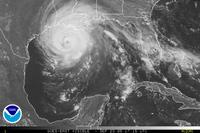
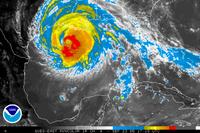
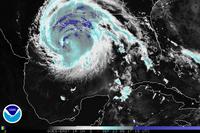
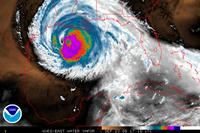
Rita Latest REAL TIME Loops and Images

Satellite Services Division - Tropical Atlantic Satellite Imagery

Visible Image LoopIR Image Loop ch.4IR Image Loop ch.2Water Vapor Image LoopEnhanced RGB Image Loop
WASHINGTON , DC -- The Department of Homeland Security's Federal Emergency Management Agency is warning residents in Texas and Louisiana to pay close attention to directions being given by state and local officials and to heed those warnings of evacuation or recommended preparedness measures.

"Hurricane Rita is currently a category 4 storm and like any hurricane, the track can be unpredictable. We have already seen a shift overnight in its track and residents within the entire zone of possible impact should be listening very closely to local and state officials," said Acting FEMA Director R. David Paulison. "If you are told to evacuate, please obey these instructions. And as you prepare for evacuation or have been told to shelter in place, you need to have a minimum of 72 hours of food, water and other supplies for you and your family.

"Federal officials are working very closely with the states of Texas and Louisiana and have commodities, rescue personnel and other assets moving into place today," Paulison said. "However, I cannot caution enough the need for individuals to prepare themselves and their families. First responders will not be able to reach impacted areas until the conditions are safe enough to respond."

Release Date: September 22, 2005Release Number: HQ-05-289

» En Español


more at
or and or and

Thursday, September 22, 2005

Able Danger and Intelligence (VIDEO)

Able Danger and Intelligence Information Sharing FULL STREAMING VIDEO

NOTICE OF COMMITTEE HEARING RESCHEDULED -- Wed., September 21, 2005 at 9:30 a.m.

The hearing on “Able Danger and Intelligence Information Sharing” scheduled by the Senate Committee on the Judiciary for Wednesday, September 14, 2005 at 9:30 a.m. in Room 226 of the Senate Dirksen Office Building has been rescheduled to take place on Wednesday, September 21, 2005 at 9:30 a.m.

By order of the Chairman, Witness List, Hearing before the Senate Judiciary Committee on:

“Able Danger and Intelligence Information Sharing”

Wednesday, September 21, 2005 9:30 a.m. Senate Dirksen Building, Room 226

PANEL I

The Honorable Curt Weldon, United States Representative [R-PA, 7th District]

PANEL II

Mark Zaid, Esq., Attorney at Law, Washington, DC

Erik Kleinsmith, former Army Major and Chief of Intelligence of the Land Information Warfare Analysis LIWA, Project Manager for Intelligence Analytical Training, Lockheed Martin. Newington, VA

PANEL III

Gary Bald, Executive Assistant Director, National Security Branch, Federal Bureau of Investigation, United States Department of Justice, Washington, DC

William Dugan, Acting Assistant to the Secretary of Defense for Intelligence Oversight, United States Department of Defense, Washington, DC

more at or and or and and

FEMA Hurricane Rita (REAL TIME LOOP)

FEMA Continues to Prioritize Preparations for Hurricane Rita

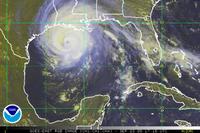
Latest NOAA infrared satellite image of RitaWASHINGTON, D.C. -- The Department of Homeland Security’s Federal Emergency Management Agency continues to closely monitor the progress of Hurricane Rita and is making continuous preparations for the storm.
FEMA again reminds residents in the Gulf Coast states to pay close attention to Hurricane Rita and to listen to local officials and follow their instructions.

“Hurricane Rita is a very strong and dangerous storm. Residents in the Gulf Coast region need to pay particular attention to this storm and follow the instructions of their local emergency officials,” said Acting FEMA Director R. David Paulison. “FEMA is pre-positioning rescue personnel and commodities in Texas and we are working very closely with all of our federal, state, and local partners."

Hurricane, Tropical Storm Real Time Loop AtlanticThis loop intended for informational purposes only! For Emergency situations, please refer to your local Emergency Management Office. Hurricane, Tropical Storm Real Time Loop Gulf

more at
or and or

Judiciary votes 13-5 to OK Roberts (VIDEO)

All 10 Republicans plus 3 Democrats, Patrick Leahy of Vermont, Russell Feingold and Herb Kohl of Wisconsin, voted to pass the Roberts nomination to the full Senate.

Senate Judiciary Committee Meeting Regarding Roberts Nomination, FULL STREAMING VIDEO, /Pending Business, Thursday - September 22, 2005 09:30 AM, Washington, D.C.

Yea:
Arlen Specter (R) CHAIRMAN, PENNSYLVANIA
Orrin G. Hatch (R) UTAH
Charles E. Grassley (R) IOWA
Jon Kyl(R) ARIZONA
Mike DeWine (R) OHIO
Jeff Sessions (R) ALABAMA
Lindsey Graham (R) SOUTH CAROLINA
John Cornyn (R) TEXAS
Sam Brownback (R) KANSAS
Tom Coburn (R) OKLAHOMA
Patrick J. Leahy (D) RANKING DEMOCRATIC MEMBER, VERMONT
Herbert Kohl (D) WISCONSIN
Russell D. Feingold (D) WISCONSIN

Nea:

Edward M. Kennedy (D) MASSACHUSETTS
Joseph R. Biden, Jr.(D) DELAWARE
Dianne Feinstein (D) CALIFORNIA
Charles E. Schumer (D) NEW YORK
Richard J. Durbin (D) ILLINOIS

Full committee meets to vote on the nomination of John Roberts Jr. to chief justice of the United States and Timothy Flanigan to be deputy attorney general; and to markup S.1088, the "Streamlined Procedures Act of 2005"; the "Personal Data Privacy and Security Act of 2005"; S.751, the "Notification of Risk to Personal Data Act"; S.1326, the "Notification of Risk to Personal Data Act"; S.155, the "Gang Prevention and Effective Deterrence Act of 2005"; S.1086, A Bill to Improve the National Program to Register and Monitor Individuals Who Commit Crimes Against Children or Sex Offenses; S.956, "Jetseta Gage Prevention and Deterrence of Crimes Against Children Act of 2005."

Location: 226 Dirksen Senate Office Building. Contact: 202-224-5225

more at
or and or and to

Wednesday, September 21, 2005

Hurricane Rita (REAL TIME LOOP)

Latest NOAA infrared satellite image of RitaThe Department of Homeland Security's Federal Emergency Management Agency is closely monitoring the progress of Hurricane Rita and making continuous preparations for the storm.
FEMA again reminds residents in Florida and the Gulf Coast states to pay close attention to Hurricane Rita and to listen to local officials and follow their instructions.

Hurricane, Tropical Storm Real Time LoopThis loop intended for informational purposes only! For Emergency situations, please refer to your local Emergency Management Office

more at
or and or

Leahy, YES on Roberts

Statement Of Senator Patrick Leahy, Ranking Member, Senate Judiciary Committee, On The Nomination Of Judge John Roberts, To Be Chief Justice Of The United States, Senate Floor, September 21, 2005

This week, as we celebrate our Constitution’s 218th anniversary, we are nearing the exercise of one of the Senate’s most solemn constitutional responsibilities. Few decisions the Senate faces are as consequential and enduring as when the Senate decides whether to confirm, by giving its consent, to the nomination of a Justice, and even more so when the nomination is for Chief Justice of the United States.

The Supreme Court is different from the lower courts. The Supreme Court is the only federal court required by the Constitution itself. Indeed, the Chief Justice is the only member of the court expressly named in the Constitution. All other courts are bound by the decisions of the Supreme Court -- its decisions are final. Only the Supreme Court can modify or overrule its precedents. Its power is enormous and the role of the Chief Justice is to lead not only that all-powerful court, but the entire third branch of government. We have had 43 Presidents. We have had only 16 Chief Justices, each being appointed for life.

Senator Byrd, whose passionate advocacy established the Constitution Day commemoration, describes the Constitution as the soul of our Nation. The Senate’s advice and consent responsibilities are at the core of this body’s vital role in our Republic.

This week we commemorate our Constitution in a time of great challenges, and we are reminded again how resilient our Constitution is in empowering our Nation to meet each era’s challenges. The carefully calibrated checks and balances within our Constitution are essential to that. No branch of government is intended to be the rubber stamp of another branch.

Each day Americans are fighting and dying in Iraq. Hundreds of thousands of Americans have been displaced by disasters here at home. Four years after 9/11, with public confidence shattered, we must embark on a review of why we are still not prepared to respond to a terrorist attack or foreseen natural disasters. The cost of energy -- gas and home heating fuels – continues to climb to all-time highs, adding to the cost of most other goods. The Bush Administration is suspending environmental and worker protections. Poverty and the disparities of opportunity between races and classes continue their insidious rise each year. After recent years of budget surpluses, the country’s budget deficits are at previously unheard of levels -- between $300 billion and $400 billion a year. Our natural debt is at $8 trillion dollars – a profligate amount that can be paid off only by our children and grandchildren.

Americans need to know that their constitutional rights will be protected, that their government is on their side and that their courts will be a place of refuge, stability, independence and justice.

The nomination of Judge John Roberts to be Chief Justice of the United States presents a close question and one that each Senator must carefully weigh and decide. This is a question that holds serious consequences for all Americans, today and for generations to come. I have approached this nomination with an open mind, as I do with all judicial nominations.

There is no entitlement to confirmation for lifetime appointments on any court for any nomination by a president, Democratic or Republican.

I have served in the Senate for three decades and on the Judiciary Committee for most of that time. I take my constitutional responsibility with respect to advice and consent seriously. I am one vote out of 100, but I recognize that those 100 of us privileged to serve in the Senate are entrusted with protecting the rights of 280 million of our fellow citizens. We stand in their shoes. We, and the President, are the only Americans with a voice in the choice of Chief Justice.

With this vote, I do not intend to lend my support to an effort by this President to move the Supreme Court and the law radically to the right. Above all, balance and moderation on the Court are crucial. I want all Americans to know that the Supreme Court will protect their rights and will respect the authority of Congress to act in their interest.

I want a Supreme Court that acts in its finest tradition as a source of justice. The Supreme Court must be an institution where the Bill of Rights and human dignity are honored.

I have voted for the vast majority of President Ford’s, President Carter’s, President Reagan’s, President George H.W. Bush’s, President Clinton’s, and President George W. Bush’s judicial nominees.

I have drawn the line only at those of President Bush’s nominees who were among the most ideologically extreme and who came to us in the mold of activists. Unfortunately, the President has opted not to seek moderate candidates. Instead, he has insisted on nominating several extreme choices and has politicized the process to a greater extent than I have seen in my 31 years in the Senate.

I have not reflexively opposed Republican nominees or conservative judicial nominees nominated by Republican presidents. In fact I recommended a Republican to President Clinton to fill Vermont’s seat on the Second Circuit, Judge Fred Parker, and I recommended another Republican, Judge Peter Hall, to President Bush to fill that seat after Judger Parker’s death.

I voted for President Reagan’s nominations of Justice Sandra Day O’Connor and Justice Anthony Kennedy, and for President Bush’s nomination of Justice Souter.

Regrettably, this President has said that he approached this matter as if fulfilling a campaign pledge to appoint someone in the mold of Justice Thomas and Justice Scalia. I voted against confirmation of Justice Thomas. I voted for Justice Scalia and now question that vote. If I thought that Judge Roberts would easily reject precedent in the manner of Justice Thomas or would use his position on the Supreme Court as a bulwark for activism in the manner of Justice Scalia, I would not hesitate to vote no.

If I were convinced that he would undercut fundamental rights of privacy or equal protection, this would not even be a close question.

I want to vote for a Chief Justice of the United States who I am confident has a judicial philosophy that appreciates the vital role of the judiciary in protecting the rights and liberties of all Americans. Chief Justice Marshall understood the essential function of the judiciary as a check on presidential power. Under his leadership the Constitution’s guarantee of an independent judiciary and the bedrock principle of judicial review became realities. Chief Justice Roger Taney, a brilliant lawyer by all standards, led the court in a different and destructive direction.

He authored the Dred Scott decision which propelled the States toward civil war by relying only on technical reasoning and an unjust holding that denied African Americans constitutional standing as “persons.” Chief Justice Earl Warren, by contrast, led the Supreme Court and the Nation in a crowning achievement when he forged the unanimous decision in Brown v. Board of Education and breathed life into the equal protection guarantee of the 14th Amendment.

The President asked that this nomination be handled with fairness and dignity, and the Judiciary Committee has met those standards. The Committee held a hearing on the merits. I worked with the Chairman to expedite the Committee’s consideration of the nomination of John Roberts to the Supreme Court out of respect to Justice O’Connor and the work of the Court.

Fewer than 36 hours after the announcement of the passing of Chief Justice Rehnquist and during the horrific aftermath in the week following Hurricane Katrina, the President withdrew that July 19 nomination to be Associate Justice. Thereafter, the White House sent us this alternative nomination, for Judge John Roberts to become the Chief Justice of the United States, and I cooperated with Chairman Specter in an accelerated consideration of the nomination.

I was extremely disappointed by the lack of cooperation from the Administration. Although we started off well with some early efforts at consultation after Justice O’Connor’s retirement announcement in early July, that consultation never resulted in any meaningful discussions. It was truncated after a bipartisan meeting with Senate leaders at the White House. The President never shared his thinking with us or his plans, as is the nature of true consultation. His naming of Judge Roberts as his choice to replace Justice O’Connor came as a surprise, not as a result of meaningful consultation.

He then preemptively announced that he had decided to withdraw that nomination and, instead, nominated Judge Roberts to succeed Chief Justice Rehnquist. He did so at 8 a.m. on the Monday morning following the announcement on the previous Saturday night of the Chief’s passing.

There could and should have been consultation with the Senate on the nomination of someone to succeed Chief Justice Rehnquist and to serve as the 17th Chief Justice of the United States. There was none. I learned about the President’s decision shortly before his televised announcement Monday morning.

The Bush Administration committed another disservice to this nomination -- and, especially, this nominee -- by withholding information that has traditionally been shared with the Senate. The Bush Administration treated Senators’ requests for information with little respect. Instead, for the first time in my memory, they grafted exceptions from the Freedom of Information Act to limit their response to Senators’ requests for information. They stonewalled entirely the narrowly tailored request for work papers from 16 significant cases John Roberts handled when he was the principal deputy to Kenneth Starr at the Solicitor General’s office during the President’s father’s administration. The precedent from Chief Justice Rehnquist’s hearing and others of course goes the other way.

Previous Presidents had paid the appropriate respect to the Senate and especially to the constitutional process by working with the Committee to provide such materials. Accordingly, I would certainly understand if a Senator were to vote against the President’s nomination on this basis alone.

Some Republican Senators also disserved the confirmation process by urging the nominee not to answer questions or reveal his judicial philosophy during the course of this hearing. There was one notable exception from that Republican chorus, the chairman. I appreciate his commitment to the role of the Senate and taking his duty to advise and consent as seriously as it deserves to be taken. Regrettably, the nominee seemed to take the advice of some Republicans to heart in many of his answers.

Finally, Judge Roberts disserved himself by following the script that he had developed while serving in the Reagan Administration. He and this Administration rejected the spirit of Attorney General Jackson’s opinion that, with respect to Senate consideration of nominations, no person should be submitted “whose entire history will not stand light.”

The nominee took a narrow judicial ethics rule correctly limiting what a judge or judicial nominee should say about a particular case and turned it into a broad excuse from comments on any issue that might ever arise in a case.

He apparently rejected the Supreme Court’s holding in 2002 in Republican Party of Minnesota v. White, in which Justice Scalia held that a state canon limiting judicial candidates from announcing their views on legal and political issues was unconstitutional.

By contrast, several of the public witnesses who appeared last Thursday were extraordinarily helpful in underscoring what is at stake for all Americans with this decision. No one who heard Congressman John Lewis, Wade Henderson and Judge Nathaniel Jones can doubt the fundamental importance of our refusal to retreat from our Nation’s commitment to civil rights.

The testimony of Coach Roderick Jackson and Beverly Jones reminded us how courageous Americans are still in opening doors and righting wrongs through our courts. The testimony of Marie Anne Talman of MALDEF reflected what is at stake when alien children are denied education and benefits that should be available to every child in America.

It was a dignified and fair process. I commend Chairman Specter and those Members of the Committee on both sides of the aisle who did not prejudge the matter and who did not seek to politicize the process.

The hearings did provide the committee with some information. I was encouraged by Judge Roberts’s answer to my question about providing the fifth vote needed to stay an execution when four other Justices vote to review a capital case. That has not always been the practice of late and he was right to recognize the illogic, if not the injustice of having the necessary votes to review the case but lacking the necessary vote to allow that review to take place especially where a life hangs in the balance.

I hope that the nominee will take up our suggestion to allow greater access to the Supreme Court’s proceedings by authorizing their televising.

Likewise, I will work with him and with Chairman Specter and Senator Grassley to increase transparency in the work of the increasingly important FISA court.

I would also urge him to consider ways to decentralize the power accumulated to the Chief Justice so that the Judicial Conference, Circuit courts and others can do more. I encourage him to reform the recusal procedures and conflict of interest protections at all levels of the judiciary but, in particular, with regard to the Supreme Court itself. Perhaps what many have said were his own missteps in connection with his interviewing for this nomination during his consideration of the Hamdan case will inspire him to greater efforts in this important regard.

As a young man Judge Roberts clerked for Judge Henry Friendly on the United States Court of Appeals for the Second Circuit. The Second Circuit has been the home to a number of leading judicial lights and certainly Henry Friendly was among them. I hope that he is faithful to Judge Friendly’s fairness and thoughtfulness.

I made no secret of my concerns about this nomination. In advance of the hearing I met twice with Judge Roberts and for nearly three hours in all, raised my concerns. I provided him additional opportunities to respond during the hearing.

I told him I was concerned that he would not act as an effective check on the abuse of presidential power.

Judge Roberts’s work in the Reagan and Bush Justice Departments as well as his formative period in the Reagan White House seem to have led him to a philosophy of significant deference to presidential authority. It is exhibited most recently in his decisions in the Hamdan, Acree and Chao cases, among others. Maybe this deference was a principal basis on which this President chose him.

Throughout this process, I learned that Judge Roberts and I share admiration for Justice Robert Jackson. Justice Jackson’s protection of fundamental rights, including unpopular speech under the First Amendment, and his willingness to serve as a check on presidential authority are among the finest actions by any Justice in our history. When Judge Roberts testified about his respect for Justice Jackson, I hoped that it was a signal he was sending and I posed that question to him. I accept his assurance that he will act as an independent check on the President, in the mold of Justice Jackson, and that when he joins the Supreme Court he will no longer heavily defer to presidential authority. It is one of the crucial roles of the courts, and I take him at his word that he will do so.

This is a fundamental question. We know that we are in a period in which the Executive has a complicit and compliant Republican Congress that refuses to serve as a check or balance. Without the courts to fulfill that constitutional role, excess will continue, and the balance will be tilted.

The other dimension of the fundamental balance of constitutional powers involves appropriate deference to congressional action taken by the people’s elected representatives.

The manner and techniques Judge Roberts has used while in the Executive, private practice and while briefly on the D.C. Circuit show him to require an unrealistic exactitude in drafting laws that no collective body could meet.

I wish he had served in Congress or worked for a time in Congress so that he would have a deeper understanding of the legislative process. I hope that his experience during the hearing and the many questions from Senators on both sides of the aisle have helped increase his appreciation for congressional authority and its importance.

The current activism of the Supreme Court must be curtailed. That should not be part of Chief Justice Rehnquist’s legacy that John Roberts seeks to continue.

Congress acts to protect the interests of Americans through the Commerce Clause, spending powers and the 14th Amendment. That needs to be respected. I am encouraged by his assurances that he will respect congressional authority. My reading of his dissent from the denial of rehearing en banc of the Rancho Viejo v. Norton case, the case in which he made the “hapless toad” reference is that he urged rehearing to “afford the opportunity to consider alternative grounds for sustaining application of the Act.” In addition, his steadfast reliance on the Supreme Court’s recent Raich decision as significant precedent contravening further implications from Lopez and Morrison was intended to reassure us that he will not join the assault on congressional authority pursuant to the Commerce Clause. I heard him and rely on him to be true to the impression that he created.

As a lawyer John Roberts had been significantly involved in the development of Supreme Court authority limiting the authority of Congress pursuant to its constitutional spending powers. He argued before the Supreme Court in the 80s, 90s, and this decade in a series of cases – South Dakota v. Dole, Wilder v. Virginia Hospital Association, Suter v. Artist M., and Gonzaga University v. Doe – in which he called for narrowing Congress’s spending powers and limiting the ability of individuals to sue to compel the protections Congress required under federal law.

His briefs in Gonzaga adopted the extreme view that a spending power enactment was a contract between the state and federal governments and that the intended beneficiaries of those programs had no rights to sue to enforce the commitments, even when states were violating the law and the federal government was not effectively enforcing it.

At the hearing, he took pains to assure me and Senator Feinstein, among others, that as Chief Justice he would not continue to urge additional restrictions and would respect congressional authority.

To do otherwise would greatly undermine Congress’s ability to serve the interests of Americans and protect the environment, ensure equal justice, and provide health care and other basic benefits. I think he knows that now.

From the initial questioning by Chairman Specter throughout the testimony of the nominee, many Senators asked about the fundamental reproductive rights of women that are part of the recognized right of privacy. Judge Roberts testified that he now recognizes Roe v. Wade and Planned Parenthood v. Casey as established precedents of the Supreme Court entitled to respect.

He testified that he interprets the liberty protected by the due process clause of the 14th Amendment as the constitutional bedrock of the right of privacy, which is both substantive and procedural. Here, too, within the overly strict confines of his own self-imposed constraints on his answers, he consciously created the impression that he will not be a judicial activist on this essential point. He left me with the understanding that he would not seek to overrule or undercut the right of a woman to choose. I trust that he is a person of honor and integrity and that he will act accordingly.

As Chief Justice John Roberts will not be only an appointee of a Republican administration or a legal advocate for a narrow interest. As Chief Justice he must check the abuse of presidential power. As Chief Justice he must support congressional efforts to serve the interests of all Americans. As Chief Justice he must work to ensure that the federal courts, and the Supreme Court in particular, are halls of justice where Americans like Beverly Jones, Roderick Jackson and Christine Franklin can seek and find redress for grievances, meaningful remedies for the violation of their rights and protection of their fundamental interests.

Justice White wrote in the Franklin v. Gwinnett County Public School case: “From the earliest years of the Republic, the Court has recognized the power of the Judiciary to award appropriate remedies to redress injuries actionable in court.” As Chief Justice of the United States, John Roberts must ensure that the Supreme Court and all federal courts never “abdicate our historic judicial authority to award appropriate relief in cases brought in our court system.”

Supreme Court Justices decide what cases to decide. They consciously shape the direction of the law by choosing which cases to hear as well as how they are to be decided. We know he believes in the rule of law. But court decisions, especially Supreme Court decisions, are not mechanical applications of neutral principles. If there were, all judges would always reach the same results for the same reasons. They do not. Legal decisions are not mechanical. They are matters of judgment and, often, matters of justice. As Chief Justice, John Roberts is responsible for the way in which the judicial branch administers justice for all Americans. He must know in his core that the words engraved in the Vermont marble on the Supreme Court building are not just “Under Law” but “Equal Justice under Law.” It is not just the rule of law that he must serve, but the cause of justice under our great charter.

I heard days of testimony and hours of meetings with Judge Roberts. Would I have liked more information? Of course -- I always want more. Is a no vote the easier and more popular one?

Of course again, especially with my constituency. But in my judgment, in my experience, but especially in my conscience I find it is better to vote yes than no. Ultimately my Vermont roots have always told me to go with my conscience and they do so today.

Judge Roberts is a man of integrity. I can only take him at his word that he does not have an ideological agenda. For me, a vote to confirm requires faith that the words he spoke to us have meaning. I can only take him at his word that he will steer the court to serve as an appropriate check on potential abuses of presidential power.

I respect those who have come to different conclusions, and I readily acknowledge the unknowable at this moment, that perhaps they are right and I am wrong. Only time will tell.

All of us will vote this month but only later will we know if Judge Roberts proves to be the kind of Chief Justice he says he would be, if he truly will be “his own man.” I hope and trust that he will be.

# # # # #

more at
or and or and to

Statement on H.R. 804 and H.R. 3669

Statement on H.R. 804 and H.R. 3669

On September 20, 2005, the President has signed into law:

H.R. 804, which excludes Federal financial assistance for flood mitigation activities from being considered income when determining eligibility for, or benefit levels under, any Federal income assistance or resource-tested program.

H.R. 3669, the "National Flood Insurance Program Enhanced Borrowing Authority Act of 2005," which temporarily increases the Federal Emergency Management Agency's borrowing authority for carrying out the National Flood Insurance Program.

# # # For Immediate Release, Office of the Press Secretary, September 20, 2005

more at
or and or and

President, Prime Minister of Thailand (VIDEO)

President Welcomes Prime Minister of Thailand to the White House, The Oval Office, 2:52 P.M. EDT

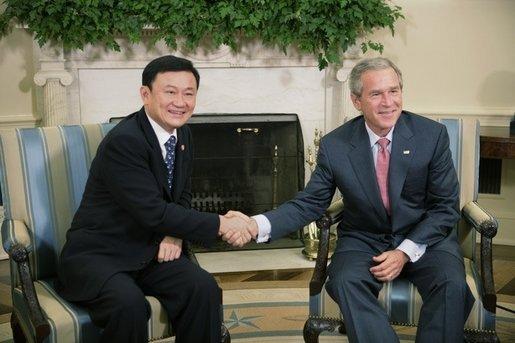
President George W. Bush shakes hands with Thailand's Prime Minister Thaksin Shinawatra, during a visit to the Oval Office at the White House, Monday, Sept. 19, 2005 in Washington. White House photo by Eric DraperPresident George W. Bush shakes hands with Thailand's Prime Minister Thaksin Shinawatra, during a visit to the Oval Office at the White House, Monday, Sept. 19, 2005 in Washington. White House photo by Eric Draper
PRESIDENT BUSH: It's been my honor to welcome the Prime Minister of Thailand back to the -- to Washington. Thank you for coming, Mr. Prime Minister. Laura and I were just talking the other evening about what a wonderful visit we had to your country when you hosted APEC. It's reminded me -- a thing about that visit reminded me of our close friendship. The Prime Minister is a person who believes in markets and free enterprise and freedom. And I'm really, really pleased he's here.

We had a -- we talked about a lot of subjects. One subject that I'm particularly interested in is avian flu, and the need for our countries to work together. Thailand is a leader in putting systems in place that will track the virus as it attacks different birds and watch it very carefully to make sure that there's no bird-to-human transmission in his country. He's willing to work in the neighborhood, for which I'm grateful. All of us need to be mindful of this potentially devastating disease. And we've got a good friend and a very thoughtful leader when it comes to that subject.

We talked about North Korea, we talked about the neighborhood, we talked about our economies. We would like to get a free trade agreement concluded here as quickly as possible, and the Prime Minister made that very clear to me.

All in all, it was a very good visit, covering a lot of subjects, and I'm not surprised, because I'm visiting with a good friend. So, welcome, Mr. Prime Minister.

PRIME MINISTER THAKSIN: Thank you, Mr. President. It's my pleasure to visit Washington, D.C. again. It's my third time to come to -- and this trip I have been -- discussed with the President about the bilateral and also the regional issues, and Asia, as well. And we had a very good visit.

I committed to President Bush that we are pressing ahead with the FTA, and also we will work closely with U.S. by drafting the plan of action in the cooperation between our two countries, and also with the third country, as well, with the two countries we would like to work together with, in helping or in working with other countries.

I also want to welcome the President to meet with the ASEAN seven during APEC meeting in November in Korea.

PRESIDENT BUSH: Finally, I do want to thank the Prime Minister and His Majesty for sending relief supplies to our folks that have been affected by Hurricane Katrina. This good country has just come through a tsunami, and they're on their way to recovery. And yet they were able to, through their -- because of their generous hearts, ship help. And so thanks very much, and please thank His Majesty for his generous contribution to the folks down there.

Thank you.

END 2:56 P.M. EDT, For Immediate Release, Office of the Press Secretary, September 19, 2005

more at
or and or and