Tuesday, October 03, 2006

State Department Daily Press Briefing, VIDEO, TEXT, 10/02/06

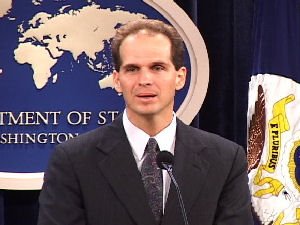
Tom Casey, Director, Office of Press Relations, Bureau of Public AffairsState Dept. Briefing with Tom Casey U.S. State Department spokesman Tom Casey briefs the press and answers questions.10/02/2006: WASHINGTON, DC: 25:20 min. FULL STREAMING VIDEO.
TRANSCRIPT: 12:50 p.m. EDT.

MR. CASEY: Afternoon, everybody. Welcome. Don't have any opening statements or announcements for you. So let's go right to your questions.

Sue.

QUESTION: Javier Solana said he's going to be talking today to Larijani. I just wondered what your -- what the prospects were you thought for them for a successful outcome of that discussion. The Secretary had some fairly negative comments in her overnight briefing.

MR. CASEY: Well, I think the Secretary has addressed this on her briefing on the way over to Saudi Arabia, and I don't think I really have much of an update for you from that point. Clearly, as Mr. Solana has said recently as well, time is running out. And certainly one of the things that came out of the Secretary's call with her P-5+1 colleagues over the weekend was a continued commitment on the part of all the P-5+1 to Resolution 1696.

And certainly while we very much have encouraged and supported Mr. Solana's efforts to try to get the Iranians to agree to a suspension and to be able to then start negotiations to move in a positive direction, certainly nothing that Mr. Solana has said to the P-5+1 or to us individually indicates that the Iranians, in fact, have made that decision. So certainly the ball's in their court. We'd very much like to see them agree to this so that we could move forward with negotiations and hopefully have a resolution to this crisis without having to move towards sanctions. But again, I think the P-5+1 is firm in saying that if the Iranians are unwilling to do so that that's the direction we will in fact be moving in.

QUESTION: So is that what you picked up over the weekend in the discussions with Mr. Solana, that you're all on the same page on this? Are China and Russia still on board in the same way as they were when they voted in favor of the resolution?

MR. CASEY: Again, everyone agreed to the terms of 1696, and there has been no change in that. And again, we have been engaging in conversations among the political directors of the P-5+1 to talk about the shape and scope of what that resolution would look like, and those conversations are continuing. Certainly, I would expect they'd be accelerated if we, in fact, get a definitive answer from the Iranians that is not a decision to comply with the terms of 1696 and engage in a suspension.
QUESTION: Are you expecting a definitive answer or are you just expecting this to --

MR. CASEY: Well, again, I think it's clear that time is limited. The Secretary said that and we've said that previously. It's now more than a month since the deadline in Resolution 1696 passed. Certainly I think Mr. Solana has said that it's getting towards the end of the time that he would expect for the Iranians to be able to make a definitive -- give a definitive answer and choose the path that we'd all like to see them move on, which is a suspension. But if they don't, again, I think we'll probably wind up moving fairly quickly down the road towards a sanctions resolution.

QUESTION: Just one more. The head of the Russian security -- national security council is going to meet with Larijani. Is that part of a -- is that a coordinated effort?

MR. CASEY: Certainly we're in touch with all of the P-5+1 members, but the Russians certainly have a longstanding relationship with the Iranians and I'd certainly expect that in any meetings they'd have that they would again convey the wishes of the P-5+1 that Iran actually take up this opportunity, decide to suspend, do so in a verifiable way so that negotiations can begin. The channel, or the formal channel, for communications between the P-5+1 and the Iranians remains Mr. Solana with Mr. Larijani, but that certainly doesn't exclude any other parties having conversations whether with Mr. Larijani or other officials in the Iranian Government.

QUESTION: So once Mr. Solana has finished his conversation with the Iranians today, if he doesn't manage to get some kind of solution, do you see his job as being over as being your sort of negotiator with the Iranians?

MR. CASEY: Well, I think first of all Mr. Solana has been engaged in all of the conversations with the P-5+1. I certainly think we value his efforts and his activities. I would expect he'd remain part of the conversation and then discussions on this issue. What other discussions he might or might not have with the Iranians, that's something we'll just have to wait and see.

QUESTION: But once he's finished these talks today, if nothing comes out of them, that, as far as you're concerned, is the end of the sort of P-5+1 discussions?

MR. CASEY: Well, again, at any point in time the Iranians can, in effect, call a time out in the Security Council process by agreeing to suspend enrichment activities, do so in a verifiable way, and then we could move to negotiations. Again, the goal here is not imposing sanctions. The goal here is changing Iranian behavior. If Iran wishes to take up this offer after we've started down the sanctions path, that's something that certainly we would welcome and like to see happen. But again, what I can't predict for you is what particular kinds of discussions or other kinds of activities outside of that process might go on and what Mr. Solana's role might be in that.

Yeah.

QUESTION: Change the topic? Is that okay?

MR. CASEY: Okay, sure.

QUESTION: The Georgia-Russia spy standoff seems to have been partially resolved, but President Putin has talked about what he called the destructive policies of the United States in Georgia. Do you have any comment on that?

MR. CASEY: Well, I haven't seen President Putin's comments. Certainly though we welcome the actions that the Government of Georgia took to return the four Russians that were arrested last week and we very much appreciate the role that was played by the Chairman-in-Office of the OSCE to facilitate that transfer, and encourage the Government of Russia and the Government of Georgia to continue to take steps to deescalate the tensions in the days and weeks ahead.

Certainly, our position on these issues has been clear and remains so. We certainly reaffirm our support for Georgia's territorial integrity within its internationally recognized borders. And as always, we continue to call for the peaceful resolution of the conflicts in Abkhazia and South Ossetia.

The U.S. role in any situation like this is to simply do that, to try and call for a peaceful resolution of differences between neighbors. We certainly want to see Georgia have good relations with Russia, and Russia have good relations with Georgia. There is a great deal of history there. They are neighboring states, and they -- we certainly want to have -- see them have positive relations. And that's the role that we have been playing in this is encouraging them to work out these differences.

QUESTION: Did you see the meetings over the weekend between Mr. Putin and the leaders of Abkhazia and South Ossetia as being an unhelpful step?

MR. CASEY: Well, again, what we see as important is that there be a resolution of these differences and in a way that recognizes the territorial integrity of Georgia. Any conversations that help promote that effort are obviously positive. Any ones that don't would not be helpful.

But again, I think the important thing here is when it comes to relations between these two countries, our goal is to see them work cooperatively with one another in a way that's respectful of each other's rights and in a way that allows for a peaceful resolution of differences.

Yeah.

QUESTION: Tom, would you say that the release of the Russians by the Georgians came at the encouragement of the United States?

MR. CASEY: Well, David, obviously it’s up to the Georgian Government to talk about the reasoning behind their decisions. Certainly, again, our counsel to both Georgian Government officials as well Russian Government officials is that they work with one another to peacefully resolve their differences.

QUESTION: What has been the degree of direct U.S. contact with both? I understand, for instance, that President Bush may have talked to President Putin about this. I know that's a White House business but --

MR. CASEY: Yeah.

QUESTION: -- if you could --

MR. CASEY: I don't have any information about Presidential activities. Obviously, we've been engaged throughout this with our friends in Georgia and our friends in Russia. The Secretary did speak with both President Saakashvili as well as Foreign Minister Lavrov over the course of the last few days. That's part of our effort simply to encourage them to work out these differences and to be able to do so in a way that leads to a peaceful resolution of conflict.

Michel.

QUESTION: Secretary Rice said yesterday that she wants Saudi's involvement in the stabilization of Iraq and Lebanon through resources and political support. How do you think that the Saudis can be more helpful on these issues?

MR. CASEY: Well, I think what the Secretary is referring to is the effort that she is making to engage with moderate states in the region, not only Saudi Arabia but also Egypt, the members of the GCC, Golf Cooperation Council, to be able to encourage them to do what they can to help the government of Iraq as it deals with the many challenges that are before it. That's certainly something that is not exclusive to Saudi Arabia but includes the other governments of the region. It's part of what we discussed in the Iraq compact meeting at the UN and part of our continuing efforts to see that not only the United States and members of the international community more broadly, but that Iraq's neighbors do what it can to assist the government of Prime Minister Maliki to be able to carry out some of the difficult tasks before them. That includes helping not only with the political development of the country but also with its economic development, with spurring investment, with helping economic reform and reconstruction. Certainly it also involves doing whatever we can as individual states to assist them in terms of gaining control of the security situation as well.

Yeah, Kirit.

QUESTION: On Thailand, this interim Prime Minister has now been formally appointed. Do you have any comment on his appointment and his ability to lead the country?

MR. CASEY: Well, a little bit. First of all, in naming Prime Minister Surayud the council did fulfill a pledge that it made to its people as well as to the international community to name an interim prime minister within two weeks of taking power. And we hope that the new Prime Minister as well as those in his cabinet will work with a broad spectrum of Thai society, and we hope this does facilitate an early return to democratic rule.

One thing, as you know, that we've been concerned about are the restrictions that have been placed on political activity and freedom of expression. My understanding is the interim constitution that he will be working under provides guarantees for basic civil liberties and basic rights of the people, and that that is something we very much want to see carried out and we want to make sure that that interim government lives up to the letter of that interim constitution.

QUESTION: The U.S. Ambassador to Thailand was the first foreign diplomat to meet with this new Prime Minister. Doesn't that seem like some sort of approval for the coup that took place two weeks ago?

MR. CASEY: Well, no. And in fact, part of what Ambassador Boyce's meeting with the new Prime Minister did was to continue to reiterate our concerns about the coup itself and the importance of this interim government taking the steps that it's pledged to take to bring about a return to democracy as soon as possible. And I think it's appropriate and important that that message be conveyed directly from our Ambassador to the head of this new government, because we are serious about seeing this process move forward and seeing a return to democracy in Thailand as quickly as possible.

Sue.

QUESTION: On Zambia.

MR. CASEY: Okay.

QUESTION: On Thailand?

MR. CASEY: You want to stick with Thailand?

QUESTION: Yeah, one more. Do you have anything new on Cobra Gold and whether that's going to go ahead and the exercises --

MR. CASEY: No, I don't. That's something that's still under consideration but no final decisions have been made.

QUESTION: Okay.

MR. CASEY: We're going to go to Zambia.

QUESTION: Yeah, Zambia.

MR. CASEY: Okay.

QUESTION: The opposition challenger, Michael Sata, in the Zambian election claims that there was vote-rigging and there were various protests overnight. Banks and businesses are still closed in Zambia. I wondered whether you were able to ascertain whether the election was free and fair, and whether you had any comments on what has happened since the election.

MR. CASEY: Well, first of all, my understanding is they're still working on producing the results. I think something on the order of 135 of 150 constituencies have had reports in, so the results of the election are not final.

From what we have seen, certainly the voting appeared to us to be peaceful and transparent. And while there were some minor localized problems that were reported, the electoral commission of Zambia and their efforts at running this election have generally gotten positive reviews from a number international observers that were there. And for our part what we want to do is encourage all people an all members of the political establishment there to respect the democratic results. And certainly we look forward to being able to work with the next government of that country.

So at this point certainly what we'd like to see is a final tally be produced. And if there are -- as in any election, if there are charges of irregularities, if there are any problems, certainly they should be looked into an investigated by the competent authorities. But in the process of doing so, we definitely do urge calm and urge people to respectfully proceed with any concerns they have within the rule of law.

QUESTION: So would you be urging Michael Sata, then, to encourage his supporters to show restraint and wait until the results come out?

MR. CASEY: Well, I think we would encourage all parties to refrain from violence under any circumstances. There are legal channels for pursuing any problems or disputes within the Zambian system.

Again, the at least initial reporting that we have from international observers is that the Zambian Electoral Commission has, in fact, done a good job of running these elections. And I would certainly hope that if there are charges that need to be investigated, that any parties involved or any parties that have concerns would bring them to the appropriate authorities and let that process move forward in a peaceful way.

QUESTION: Thanks.

MR. CASEY: Sure.

David.

QUESTION: Still on Africa.

MR. CASEY: Okay.

QUESTION: Sudan. Has there been any change in the situation in terms of travel restrictions on U.S. diplomats and the visa for Andrew Natsios?

MR. CASEY: Well, first of all, in the case of Mr. Natsios, as you know our Special Envoy Andrew Natsios was over at the White House today, had a meeting with the President to talk about his mission. And we think it's very important that he has been named and that he's in a position to help carry out the President's policy to try and help bring peace in Darfur.

He does intend to travel somewhere around the middle of the month, and certainly we anticipate a positive response from the government of Sudan in terms of permitting him the opportunity to travel.

QUESTION: Including inside the country? I mean does he have the visa yet?

MR. CASEY: He has not applied as of yet.

QUESTION: Okay. So what about the restrictions in terms of diplomats in --

MR. CASEY: Well, again, there's been a lot of discussion about that. As far as I know, we are still able to have freedom of movement for our diplomatic officials there. If we have any updates on that issue, I'll let you know.

QUESTION: Do you have any more details on the USAID contract or grant or whatever it was that was granted for southern Sudan to help with infrastructure development?

MR. CASEY: No, I don't, Sue. I'm sorry, I'm not sure if that was something you asked about last week.

QUESTION: No, I didn’t.

MR. CASEY: I don't. If you want, we can try and find out something for you.

QUESTION: Can I just go back on the -- I'm confused because on Friday Sean mentioned this restriction within 25 kilometers of Khartoum, and now you're saying that there's freedom of movement.

MR. CASEY: It's something that's been -- that, you know, has been -- remarks that have been made by President Bashir and others to the best of my knowledge no physical restrictions on our current diplomatic staff in Khartoum have been implemented. I'm not saying that's the end of the story, I'm just saying that at this point I don't have anything that sort of amplifies on those remarks.

QUESTION: But have any U.S. Embassy staff members been to Darfur or outside of that 25K perimeter?

MR. CASEY: My understanding is they have. But I can check for you if you want.

QUESTION: They have?

MR. CASEY: Yeah.

Sure, let's go back here.

QUESTION: On Japan, new Prime Minister Abe is expected to hold talks with China and South Korea later this week. What hopes does the U.S. have for the resumption of high level talks between Japan and its neighbors?

MR. CASEY: Well, certainly, we want to see all parties in the region have good relations with one another. We definitely want to see Japan have positive relations with all its neighbors including Korea and China. But this is really a matter for those countries to work out and to discuss on their own.

There are certainly many issues on the agenda for them. We believe one of the things that we very much appreciate and value is the work that all three of those countries have done with us in terms of trying to support a resolution of the North Korean nuclear issue. And that's simply one of the ways in which they are all cooperating together with each other, as well as with us, to do something that's in the interest of the broader international community. But certainly it's a matter for the Japanese Government, the governments of South Korea and China to work out, but we do encourage those contacts and hope that they will continue to work on a positive relationship.

Yeah, let's go here.

QUESTION: On Japan real quick. Shinzo Abe has said in his latest speech that he foresees a more muscular military role, including possible changes to the Constitution. How would the U.S. feel about such a development?

MR. CASEY: We'd feel it would be a matter for the Japanese people to work out among themselves. Obviously anything involving decisions affecting the constitution of Japan are for the Japanese people to make. There is a lot of history there, and there are certainly a lot of issues for people to consider, but that really is a Japanese internal matter.

QUESTION: (Inaudible) the deployment of -- they've already started the PAC-3 Patriot missile system?

MR. CASEY: Can't tell you how a decision that hasn't been made might affect another one. It's hypothetical.

Let's go back here.

QUESTION: Can we jump over to the Palestinian territories for a little bit?

MR. CASEY: Sure.

QUESTION: In I think April, Secretary Rice was asked if the cutting of aid to the Palestinian -- direct aid to the Palestinian Authority would create a -- or destabilize the situation in the Gaza Strip. With the recent violence, I was wondering if there's a reconsideration of that statement.

MR. CASEY: Well, I think our policy with respect to the territories has been clear. I also think that it's important to remember that while the United States and the rest of the international community has not been providing direct support to the Hamas-led government that there has been a tremendous effort to provide for the humanitarian needs of the Palestinian people, that the United States has dedicated over $450 million to that effect this year, and other donors are making other support for the Palestinian people through a variety of different means.

The Quartet statement that just came out after the meeting with the Quartet members at the United Nations talked about a number of other things, including a continuation of the temporary fund to support the Palestinian people. It also encouraged Israel to consider taking the tax revenues that it has received and put it into that mechanism so that there can be additional support given to the Palestinian people while, again, not providing assistance to the Hamas-led government.

So I think the international community has done quite a bit to help fulfill the needs of the Palestinian people, and it's something that we are going to continue to work on. It's certainly one of the issues as we look forward to her meetings with President Abbas that will be coming up later in the week. But again, I think we have made efforts to ensure that even while we are maintaining our principles of the Quartet with respect to the Palestinian Authority government that we are doing quite a bit to support the Palestinian people and also doing what we can to work with the President Abbas and those elements of the government under his control to be able to deal with some of the challenges that are faced in the territories.

QUESTION: Do you know out of the $450 million pledged how much has been disbursed in the last six months?

MR. CASEY: My understanding is that that money is all in this fiscal year, the fiscal year -- last fiscal year now since the fiscal year began. So my assumption is that all of those funds have at least been allocated in one form or another. Whether they've actually been spent at this point I would not think so, but as far as I know they've all been allocated.

QUESTION: And what is being done in a sense right now to try to alleviate some of the pressure that is in Gaza for all these civil servants that have not been paid for seven months?

MR. CASEY: Well, again, I think one of the issues that are being confronted there is the problem that the Hamas-led government has faced in trying to not just win an election but trying to govern. And as we've said, the Hamas-led government needs to be able to govern responsibly. Part of the responsibility is seeing to the needs of your people and making sure that you have the funds available to be able to pay your employees.

Again, what we have done is assured ourselves to the best of our ability that we are able to contribute to some of the basic needs of the Palestinian people in terms of meeting their basic humanitarian considerations. That includes providing medicine. That includes, where appropriate, providing food. But at this point, it is frankly up to the Palestinian Authority government to determine how to govern and these are choices that it's going to have to make, how it handles issues with its own employees, how it handles pay for them. These are the kinds of decisions that any government authority is going to have to deal with.

David.

QUESTION: Over the weekend, the Serbian parliament approved a constitution that declares Kosovo basically to be irrevocably part of Serbia and that would seem to preclude any other kind of solution in this diplomatic process that's now underway. I wonder if you have any response to that.

MR. CASEY: Well, David, I don't think we've had a chance to look at the specific language that was passed and certainly I think we want to do that before we respond specifically to this issue. However, I think the position of the United States and the international community as a whole is quite clear. What we are supporting is a final status process for Kosovo that will ultimately involve an agreement between the parties that is acceptable to all. That's something that Martti Ahtisaari and his team are working very closely on. Frank Wisner, who is our advisor and envoy to that process, continues to be engaged. But neither party is going to unilaterally decide this. This is going to be something that's going to have to be worked out among them through this negotiated process that was mandated under the original UN Security Council resolution -- I believe it's 1244, that was in effect at the time of the conflict in Kosovo.

QUESTION: You don't accept this as a fait accompli then, what they've done constitutionally?

MR. CASEY: Well, again, the international community has made it clear how this issue of Kosovo's final status will be resolved, and that's through a negotiated process and the one currently being led by Mr. Ahtisaari.

David.

QUESTION: Since the Congress went into recess and Ambassador Bolton's position is still not finalized, what's the status there and what's the situation? What's the process moving forward without that?

MR. CASEY: Well, first of all, Ambassador Bolton remains the UN Permanent Representative -- the U.S. Permanent Representative to the United Nations. We think he's doing a terrific job. He has led the U.S. delegation there at a time of tremendous activity, including on some of the critical issues before us, including Iran, including Iraq, including North Korea. The list goes on. He's certainly been an active proponent of UN reform, which is a key priority for us because we want to see the UN be able to effectively handle all of the many issues that are before it.

We fully expect that if given an up-or-down vote on the Senate floor that Ambassador Bolton will receive the advice and consent of the Senate. We certainly hope that will happen. Congress will reconvene, as I understand it, in mid-November and we'd hope that they would bring him up for a vote at that time. But our basic position hasn't changed: We think he's the right man for the job, we believe he's the best person that we can have up in New York right now at a difficult time, and we certainly hope that his service will be able to continue up there and we look for the Senate to be able to take up his nomination again when they return.

Thank you, guys.

(The briefing was concluded at 1:10 p.m.), DPB # 159, Released on October 2, 2006

Technorati Tags: and or and , or and or , or and , or ,

Related: Keywords State Department, Thursday, September 21, 2006
State Department Daily Press Briefing, VIDEO, PODCAST, TEXT, 09/21/06 Wednesday, September 20, 2006 Mahmoud Ahmadinejad Iran UN (VIDEO), Tuesday, September 19, 2006 Media Stakeout Ambassador John Bolton 09/18/06 (VIDEO), Tuesday, September 19, 2006 Kristen Silverberg On-the-Record Briefing (VIDEO), Monday, September 18, 2006 Annual Report on International Religious Freedom (VIDEO), Wednesday, September 13, 2006State Department Daily Press Briefing, VIDEO, PODCAST, TEXT, 09/12/06, Monday, September 04, 2006 Media Stakeout Ambassador John Bolton 09/01/06 (VIDEO), Monday, September 04, 2006 Condoleezza Rice American Legion Convention VIDEO, PODCAST, TEXT, Thursday, August 31, 2006 United Nations Daily Press Briefing 08/31/06 (VIDEO), Monday, August 28, 2006Media Stakeout Ambassador John Bolton 08/28/06 (VIDEO), Wednesday, August 23, 2006 Iranian Response to the P5+1 Package, Tuesday, August 22, 2006 Media Stakeout Ambassador John Bolton 08/22/06 (VIDEO), Tuesday, August 22, 2006 Media Stakeout Ambassador John Bolton 08/15/06 (VIDEO), Friday, August 18, 2006 State Department Daily Press Briefing, VIDEO, PODCAST, TEXT, 08/17/06, Thursday, August 17, 2006 Media Stakeout Ambassador Anne Woods Patterson Sudan VIDEO, Wednesday, August 16, 2006 Middle East Update 08/16/06 VIDEO, PODCAST, TEXT,

Press Briefing Tony Snow 10/02/06 (VIDEO)

White House Press Secretary Tony Snow, Tuesday, May 16, 2006, fields questions during his first briefing after replacing Scott McClellan. White House photo by Paul Morse.Press Briefing by Tony Snow, FULL STREAMING VIDEO. file is real media format, running time is 35:58. White House Conference Center Briefing Room.
White House Press Secretary Tony Snow briefs the press and answers questions. 10/02/2006: WASHINGTON, DC: 12:35 EDT.

MR. SNOW: All right, hello. Sorry for the delay, I will explain that momentarily.

The President's schedule today, let's see, normal briefings in the morning. He had a wildfire briefing about 9:00 a.m. He met with the Special Envoy for Sudan at 9:25 a.m. Then a meeting with the Prime Minister of Turkey, which actually went an hour over -- I'll read that out in a moment. An elm tree planting on the north grounds. He'll depart the White House in a bit and attend a Heller for Congress reception in Reno, Nevada, later today, and spend the night in Stockton, California.

Tomorrow the President will sign S. 260, Partners for Fish and Wildlife Act. The sponsor is Senator Jim Inhofe, of Oklahoma; the House version, sponsored by Richard Pombo, of California.

The President also had a phone call this morning, from 7:39 a.m. to 7:56 a.m. -- that would be 17 minutes -- with Russian President Putin. He called President Putin to discuss a range of issues -- the President did place the call. They agreed on the need to maintain the united position of pressuring Iran to abandon its nuclear weapons program, and they also discussed recent tensions in Russian-Georgian relations.

As far as the meeting with Prime Minister Erdogan, Turkey is a very important and valued strategic ally and partner and the two leaders have a close working relationship and a good personal relationship. They talked about a lot of things, including EU accession, which the Turks want, as well as Iran, Iraq, Syria, Lebanon, Israel, the Palestinian Authority, Darfur -- I think I've covered the ground, but they covered a lot of stuff.

And with that, I'll take questions.

Q Tony, is the administration satisfied with the way the House Republican leadership is dealing with the Foley matter? And what did you mean when you said there have been scandals, more than simply naughty emails on the Hill?

MR. SNOW: No, no, I said there's a lot of gossip, as you know. Gossip flows freely about members, and rather than retelling it, I was simply citing a fact of life. I believe maybe even some has come to your attention once or twice, Tom.

But having said that, look, this is an awful and disturbing story. And anybody who sends children, young people to Capitol Hill for the privilege of becoming pages ought to be assured that their sons or daughters can learn about the noblest traditions of American politics and not about something else.

I am told that Speaker Hastert will be doing interviews today and he will be able to go through that. So as far as answering particular questions about who knew what, when or what they knew or how they're going to deal with it, I'll refer those questions to the Speaker.

Q But has the President heard any explanation from the Speaker, or anyone in the senior leadership, as to why they did not act earlier? And why, for example, no FBI investigation before this, when most of this was known months ago?

MR. SNOW: The FBI at this point is still trying to figure out -- considering a preliminary investigation to find out whether any laws were broken. As far as who, what, when, where why, I think what you need is the facts. We have impressionistic stories; we need to find out what it is that people knew at various times. And, again, I'll refer you to Speaker Hastert for that.

Q But there is a risk that by taking this wait-and-see approach that it leaves an impression that the White House thinks that the conduct of the Speaker and other leaders was sufficient.

MR. SNOW: Well, we don't know what the conduct was, and we don't know what they knew. So what we're not going to do is to leap to judgment without finding out what the deal is. I mean, I called over to the Speaker's office -- the question is, what exactly did they have. And the Speaker has turned over emails and documents to the Justice Department, which they are reviewing. And not having seen the documents, I'm just unwilling to try to characterize what he knew or when, and, again, I think the appropriate person to answer that is the guy who knows, which is the Speaker. He's coming out today.

But let's make it clear, when you have allegations of this sort, for any parent, and for most decent people, they're horrifying. There's no excuse for that. But now the question is, how did they do it -- I mean, what did they know about it, and what sort of measures will the House of Representatives be taking, and if there are legal steps, one presumes that the proper and duly constituted legal authorities will follow through on them.

Q But even on a gut level, if the Speaker was aware that there were overly friendly emails, are you satisfied that he allowed Representative Foley to continue to work in areas like the Missing and Exploited Children?

MR. SNOW: Again, I've got to find out what he knew. There have been characterizations of what "overly friendly" means, and I think rather than getting myself into the position of second-guessing, I really would rather know. Now it may be that at some point we'll come up and --

Q Did the President know -

Q But, Tony --

MR. SNOW: No, the President does not have --

Q But Tony --

MR. SNOW: Let me just finish answering the question. Not having seen it, it places us in a peculiar situation. I think people are trying to put us in a box, and say, you know what, unless you come out and you condemn Denny Hastert, you're saying that this behavior is acceptable. It's not. Let's get that part clear. Let's also be clear that people who have the privilege of working in government ought to hold themselves to higher standards. The House is responsible for enforcing its standards. That has always been the case. And Denny Hastert will come forth, he'll tell you what he knew, and I think everybody will be in a better position to render judgment at that point.

Q Tony, do you think Americans should be confident sending young people to Capitol Hill, given what you do know? And I know you don't know everything, but surely there's been some communication. And it's these overly friendly emails, which have been out --

MR. SNOW: I think --

Q How can Americans feel confident that they can send their young people to the Hill, if that's what happened?

MR. SNOW: Look, I agree, Martha. You're not getting me to --

Q But I mean more so the investigation, or people saying, it's okay, they were just "overly friendly emails," even though he asked for a picture.

MR. SNOW: I think -- you know what, I think people need to find out what the -- first, Representative Foley has resigned. Second, the House is going to have to figure out how to respond to this. Third, you're absolutely right, the American people need confidence that this sort of thing is not tolerated, and that affirmative steps will be taken to make sure it doesn't happen again. That's a Capitol Hill matter right now. For those of us working in the White House, we're horrified when we hear stories like this.

Q Is that the President's view?

MR. SNOW: Yes, absolutely.

Q But if the House leadership essentially dismissed something like overly friendly emails and didn't investigate further, that's acceptable?

MR. SNOW: As I said, let's see what the documentary trail is. You're asking me an impressionistic question. Until I have more data -- no, and I'm serious, because --

Q Do you know anything from the Speaker, does the White House have any --

MR. SNOW: I had a brief conversation today with the Speaker's office, and I was told the Speaker will answer the questions. Wait until the Speaker answers the question and come back.

Q But did you get them answered? Because we're not going to be able to come back today and talk to you.

MR. SNOW: You can -- well, no, I'll be on the road today. Let me put it this way -- let me just be clear, once again. I thought I was clear, but I'll be clear again. Young men and women who are sent to Capitol Hill -- let me repeat myself -- for the privilege of serving in our government ought to be exposed to the noblest traditions of American government, and not to the kind of behavior that was outlined in the emails, period, exclamation point. Put the exclamation point before the period, just for emphasis.

Q -- sending overly friendly emails.

Q Should that have not happened in the Republican leadership so much earlier? If you're calling this horrifying, these allegations are horrifying, and it comes out now -- it seems that there is somebody who dropped the ball in there, whether you know who, what, when, where and why, exactly now. Somebody is --

MR. SNOW: Then you've drawn that conclusion.

Q Tony, what does the President know? What does he know about the emails? Has he spoken to the Speaker, actually spoken to Hastert?

MR. SNOW: I do not believe he's spoken to the Speaker -- look, the House has to clean up the mess, to the extent that there's a mess. The President is not responsible for going back and conducting his own personal investigation on this. The House has an obligation, and House members, I think, are talking pretty vociferously about this on both sides of the aisle.

Let's figure out what the facts are, let's figure out what people are doing. I know everybody wants a rush -- to come in with a conclusion, a rock'em, sock'em conclusion. The behavior was reprehensible. I don't know how much further I can go. I know that you want me to come out and have a definitive statement, but I think as reporters, you understand that perhaps before one draws a definitive conclusion about how one ought to talk about the Speaker, Republican leadership, we need to see the documents. I haven't seen the documents; to the best of my knowledge the President hasn't. Speaker Hastert will be available, he'll be able to answer the questions.

Q Did Mr. Rove or the political arm know about this?

MR. SNOW: No.

Q Should voters, in the election a month from now, hold the Republican Party accountable for not just one, but four members of the senior leadership in the House resigning in the last year?

MR. SNOW: I'm going to let voters decide that.

Q I've --

MR. SNOW: I'm sorry, Goyal, is this on this topic? Okay, let's exhaust all this, and then we'll go.

Q Tony, the Republicans are facing this scandal, plus the administration is having to cope with these new allegations about the mishandling of the Iraq war that have come out in Woodward's book. Is there any concern in the White House that a sort of perfect storm is starting to build as you -- only weeks before the midterm elections --

MR. SNOW: No. I think a lot of people want to fabricate a perfect storm. Mark Foley has got to answer for his behavior, right? Now this does not affect every Republican in the United States of America, just as bad behavior on the parts of Democrats in ages past has not been a reflection of their entire party. These are things that happen, and they need to be addressed and the individuals responsible. If you try to paint it with a broad brush, I think you run the risk of tarring respectable people who are living decent lives and serving their country well.

As for the Woodward book, you tried to slip a fastball past there, but the fact is that there have been plenty of disputations about the book, and we'll let people draw their judgments there.

But I'll tell you this. This is an administration that believes in maintaining high ethical standards, and believes that we ought to be setting an example, and, at the same time, also has been pursuing an enemy in Iraq and around the world since September 11, 2001, and has absolutely no intention of standing down.

As for many of the statements, Condi Rice has come up to dispute some, Andy Card has been out. A number of other players have come out -- the First Lady's office. And you know what? You've got a lot of juicy gossip in the book, and people will have all the time they want to go through it. But the fundamental question about whether the President is "in denial" -- flat wrong, absolutely wrong.

Q When will the President come out and actually say that?

MR. SNOW: Why does the President -- he's not going to come out and say, oh, by the way, I'm not in denial. How stupid is that, to have a President coming out and say, I'm sorry, I'm not beating my wife anymore?

When you're faced with charges that are either, in some cases baseless or out of context, you don't dignify them with a response because you dig a hole for yourself. Come on, you know better than that.

Q On the Woodward book, you dealt with it a lot on Friday, but Democrats are focusing on this meeting in July 2001, allegedly between the CIA director and Secretary -- now-Secretary Rice. Are there other meetings about the terrorist threat that happened that did not get to the 9/11 Commission? That is the question.

MR. SNOW: Well, they're, first, taking a look at the documents right now. And, secondly, I think you may be hearing from some people in the meeting who are -- Condi Rice has already disputed the account, and I think others in the meeting may be prepared to dispute it as well. What appeared in the book simply does not comport with their recollection.

Okay, go ahead.

Q Tony, going back to the myth that you're disputing, myth number three, back to that question -- how can you dispute it, when in August 2001 there's a document that was declassified by this administration, "bin Laden determined to strike in the U.S. and" --

MR. SNOW: Oh, you're talking about the PDB.

Q Yes, I am.

MR. SNOW: You're talking about the PDB that was discussed ad nauseam before the 9/11 Commission and had a general characterization as some of the things bin Laden may do. It is something that the administration obviously pays attention to.

Let me make a simple point, April, which is that administrations -- and I've said this about the prior administration -- if somebody presents you with a compelling piece of evidence that says American lives are going to be at risk, you don't sit around and say, oh, it's inconvenient, I'm going to ignore it.

Condi Rice, I think, was pretty vociferous on that point yesterday. And it's grossly irresponsible to assume that anybody in a position of power and a position of responsibility is going to look askance at such things. As you know, you can go back and look at the PDB, and it is something that talked in general terms about something that may happen.

Q Tony, I'm sorry, this is not general. It says, "Nevertheless, FBI information since that time indicates patterns of suspicious activity in this country consistent with preparations for hijackings or other types of attacks, including recent surveillance of federal buildings in New York." Is that --

MR. SNOW: Understood.

Q -- just vague?

MR. SNOW: No. But it also does not say that people -- if you recall, April, before September 11, 2001, when somebody mentioned hijackings it meant taking a plane, taking it to another place and trying to hold up people for ransom. It did not mean flying an airliner into a building and killing 3,000 people.

I am not going to sit up here and tell you everything this administration or prior administrations may or may not have done. But the second-guessing game gets a little bit silly when, once again -- and what I'd have you do is go back and read through all the 9/11 Commission stuff, because a lot of people are trying to grandstand, rather than realize that people --

Q But, Tony, it's not silly when you're talking about people's lives, thousands of lives were lost --

MR. SNOW: Absolutely.

Q -- and it was a month before, there was a lot of chatter leading up to 9/11. And some people want to know why was it not placed as a high priority to move -- to make a movement so that even if it was vague, as far as hijackings, you could have at least been looking at the airports in some kind of way, or the Transportation Administration could have been doing something in relation to this possible hijacking.

MR. SNOW: I appreciate the second-guessing. The fact is that this administration realizes that the preparations this country had made before September 11th were inadequate. It happened. And it happened as a result of people who were trying their best to secure the country having not been apprised of all the facts -- in the Clinton years, and in the Bush years, and in years before. This is not a threat that simply materialized a month before September 11th.

As a matter of fact, the videotape that came out the other day had bin Laden and his guys -- Mohammed Atta and others -- posing for the cameras in the year 2000, before the election of George W. Bush. And the 9/11 Commission, itself, says that the attacks were years in planning.

Please, feel free to second guess. Everybody feels horrible about September 11th, but the other thing that's important is to understand in the wake of September 11th we learned to take the terror threat with utmost seriousness and we need to continue to do so today.

Q But, Tony -- and this is my last question -- I understand you keep talking about the Clinton administration, but let's talk about August 6, 2001, this administration, this PDB. Let's talk about why it was not placed at a high level. Why not?

MR. SNOW: It's a presidential decision brief, for heaven's sake, it goes before the President. What higher level do you have? Members of Congress --

Q Well, why wasn't it acted upon?

MR. SNOW: Precisely what piece of actionable intelligence is there?

Q Department of Transportation, you could have gone the gambit, CIA, FBI, you've could have done a little bit more.

MR. SNOW: Okay. Again, thank you for the second-guessing.

Q I just want to follow up. My question -- mine's not second-guessing of September 11th, it's about the 9/11 Commission. Now you have commissioners outraged, they say that they didn't know about this meeting. You're saying that the meeting did take place --

MR. SNOW: The meeting did take place.

Q -- but it's out of context in the book?

MR. SNOW: Yes. And I will --

Q And is there a reason why, I guess, the 9/11 Commission didn't know about the meeting? That's the bottom-line question.

MR. SNOW: The answer is, I don't know. And people are taking a look at all the documents to find out what was reported and what was not to the 9/11 Commission. As a matter of fact, there's a trip to the Archives right now to try to sort through all that.

Q If there were other meetings, will you let us know about those, if they didn't get to the 9/11 Commission as well?

MR. SNOW: "Other meetings" regarding what? The fact is that this is a meeting, as I've just told you, was mischaracterized, at least in the opinion of people who attended it. Therefore, they are not likely to be able to come up with other mischaracterized meetings. This is an administration that went to extraordinary lengths and went through two different commission hearings -- actually three different commissions that have been involved in the matter of global terror, and will continue to do so.

And we would also encourage people to look forward, as well as back, because right now there seems to be a lot of attention to going back and looking at old meetings that began after January 20, 2001, and to realize, as the President has been stressing, is that there is an ongoing terrorist threat, and we need to take it seriously. It is not something that has gone away, and the President remains committed to it.

Helen, I've jumped past you several times, it's your turn.

Q That's all right. It's in the context of the book, but is Henry Kissinger a regular advisor to the President? And did he tell the President to stick it out, and that any withdrawal would be like eating peanuts?

MR. SNOW: No. As a matter of fact, Henry did not talk to Bob Woodward. I spoke with Henry on Friday. So there are some second- or third hand recollections. Dr. Kissinger appears fairly -- he appears from time to time. I don't want to say "fairly regularly," but he's been in the White House, as have Jim Baker and Lee Hamilton and any number of people, in contrast to those who say the administration sort of puts on blinders and puts wax in its ears. Dr. Kissinger comes in quite often -- it's when he disagrees with the administration on policy. He told me, what's the purpose of coming here when I already agree.

But he is somebody whose counsel is valued, but he is not a surrogate for anybody in the administration, nor are the advisors that have come in at various junctures, whether they be scholars or military experts, or people from Iraq, or various sectarian groups. They've all been in, and they all help the President try to shape, in as comprehensive a way, his view of what's going on, on the ground, so that he can be most effective in trying to move forward.

Q Did he urge the President to stay the course?

MR. SNOW: The President -- no, stay the -- I'll tell you what --

Q Stick it out, I think were his words.

MR. SNOW: No, I didn't ask him about the phrase. I'll tell you what he told me, and I'll just repeat it that way. He said that he supports the overall thrust and direction of the administration policy.

I think what -- he had a line in an op-ed piece which ended up being quoted, but -- what was it -- "Victory is the only exit strategy," I think. I'm paraphrasing. That was an op-ed piece that he wrote, and that is his view. But then, again, victory was the only exit strategy after the Civil War, and after World War I, and World War II. Typically, in a time of war, that is the exit strategy. That's when you know it's over and you can move forward.

Q I wanted to return to Tom's first question. What you said exactly was, "There have been other scandals, as you know, that have been more than simply naughty emails." And my question is, do you think that "simply naughty" in any way describes or captures --

MR. SNOW: No, I really don't. You're right. That may sound a little bit too glib. I think I've already said -- I've used the words "horrifying," "appalling," "disturbing," fill in the blanks. It's absolutely inappropriate.

And thank you for that, because I'd only get socked with that later in the day. Go ahead, Goyal.

Q Two questions. One, there's another book General Musharraf has written, it's now President had a hand on (inaudible) and said there is a lot of stuff about 9/11 and also (inaudible), including the famous one that U.S. --

MR. SNOW: All right, Goyal, I'm just going to stop you. We haven't read the book yet. We did hear about it in the press conference, but I don't think the President is going to be doing book reviews on President Musharraf. He is satisfied that President Musharraf is a very important ally in the war on terror. They're continuing to work together.

And also the President is working both with President Musharraf and President Karzai to make sure that they can address problems along the Afghan-Pakistan border.

Q Second on, as President talking human rights in Iran. There's a story here, horrible story, and hundreds of people --

MR. SNOW: Which paper is that?

Q India Globe.

MR. SNOW: Oh, okay. Yes.

Q Hundreds of people watching on the streets of Iran. The eight-year-old boy, he stole a piece of bread, and his hands were -- he was crushed by a heavy truck, and hundreds are watching. And this is a time for the Muslims, a holiday that's giving and loving. I mean, talking about human rights in Iran, can you answer how President can answer this eight-year-old boy was crushed under the truck and hundreds are watching there?

Q Secretary Rumsfeld said today -- or yesterday, that he got a call from the President, and I'm curious. Obviously, there is a lot about this in the news, but what specifically prompted the President to make the call?

And, secondly, with all this stuff with Andy Card discussing the possibility of his tenure, did the President talk to Secretary Rumsfeld at all during that time, late '04 and into '05, about any of this stuff, any of these concerns that were being raised?

MR. SNOW: You know, I -- look, they talk regularly. Did they put their feet up on the table and say, Don, a lot of people want you to resign, or want me to fire you -- I don't know if they had that conversation.

What the President does know is that there has been a lot of speculation prompted by the Woodward book. But you can't -- look, Don Rumsfeld is a guy who has ruffled feathers because he has been, in many ways, one of the most transformational leaders at the Department of Defense in a very long time.

The constant complaint inside the building has been, the generals always prepare to fight the last war. Don Rumsfeld began by trying to transform separate military services that, in previous times, have been loathe to work together at all times. And he stressed interoperability and joint operations. He beefed up special operations. He ruffled a lot of feathers.

And, as a result -- again, I'll defer to Martha, my expert on this, but there are certainly a lot of people in the building who are very unhappy with what he's tried to do. The people who are not unhappy -- and when he came in he started talking about something that, at that juncture, was relatively unknown. It was called asymmetrical warfare, which is exactly what we're facing in Iraq today and generally in the war on terror.

So I think what the President simply wanted to do is, given all the press attention and everything that's been going on, to say, Don, I still have faith in you, and I support you.

Q Tony --

Q -- according to Card, was raising the possibility of moving Rumsfeld out in November '04 because he was trying to transform the Army? I think it had something to do with Iraq more specifically.

MR. SNOW: I'm not -- I'll let Andy answer the characterizations. I'm not sure he's characterized it -- what Andy was doing -- and there had also been suggestions, as you know, of replacing "the entire National Security team." You do that sort of thing at the end of a term.

What you want to find out -- you want to make sure that everybody has got fresh legs for a second term. And the President, you know, took a cold look at it, and still supports Don Rumsfeld.

Q Did Karl Rove run afoul of any White House ethics policies when he went to a basketball game with Jack Abramoff?

MR. SNOW: According to Karl -- and, again, we're still looking through all this -- he paid for any and all tickets. If you pay for a ticket, and you have a pre-existing social relationship, as everybody in this room knows, the pre-existing social relationship rules. But as I said on Friday, we are looking very carefully through all of it.

I don't want to be presumptuous about doing it -- the laws are actually fairly complex in sorting through this stuff, and the Office of Legal Counsel and others have taken a good, hard look.

Q But even if he paid for it, he was using one of the most powerful lobbyists in Washington like a valet service -- here, I'll go get you some tickets. I mean, is that permissible?

MR. SNOW: Again, what the characterization -- he was using it as a "valet service" -- that's colorful, that's good, that's really good.

Q That's why people read my column. (Laughter.)

Q Tony, much has been made about President Bush's relationship with Prince Bandar, who was the former Ambassador of Saudi Arabia, in the book, specifically saying that it was his father who recruited him to act as some sort of advisor, quoting the President, telling him, "I don't have" --

MR. SNOW: You mean, President Bush 41, who had recruited Bandar to be an advisor?

Q Yes, that's what Woodward alleges, saying that Bush said, "I don't have the foggiest idea about what I think about international foreign policy; my dad told me before I make up my mind, go and talk to Bandar." What is the relationship, what -- does that sound accurate? Is that true that he acted as some sort of advisor?

MR. SNOW: Prince Bandar, for a considerable period of time, was the Saudi Ambassador to the United States, and would obviously be somebody with whom one would have a conversation, and to that extent, would be an advisor just as Prince Turki, who is now the Ambassador to the United States, and would be considered an advisor as well. We had the Ambassador of Turkey in today. We have ambassadors in all the time. So it's not unusual at an ambassadorial level to do that.

But, again, the quote has been cobbled together in such a way as to make it sound like the President just fell off the turnip truck, and this is a President who has been deeply engaged, and very smart about the people he's dealing with, and also tries to be just as realistic in his assessments of foreign heads of state and others in trying to form judgments, not merely of their positions and their history, but also their character. You may recall last week the President said before the meeting with Presidents Musharraf and Karzai, he wanted to see the body language; he wanted to see how the two men were interacting, so he could form a judgment about how they best could work together, or how they better could work together. So just to give you a little more context on the way the President approaches these things.

Q Can I follow up on what you were answering to Brett's question earlier?

MR. SNOW: Yes.

Q You said you had gone back to the Archives --

MR. SNOW: No, somebody -- I was told that over at State they're looking -- they're going to take a look at the Archives and find out what was provided and whatnot.

Q And then what will happen to the information you may or may not be able to recover?

MR. SNOW: I don't know. I don't even know what the information is -- let me put it this way --

Q Let me finish. Can you say that if you do recover some information, that you'll make it public?

MR. SNOW: Yes. And, furthermore, if somebody comes out and says, I was in the meeting and it's baloney, and I was in the meeting and it's baloney, and I was in the meeting and it's baloney, that will also be made public.

Q And can I --

Q Tony?

MR. SNOW: I'm sorry, I'm cutting her off. I'll get to you, Les.

Q I wanted to follow up with one other thing. You were talking about having to try to make the highest ethical standards in the executive branch. In the past couple of weeks, you know that individual overseers -- whether it's IGs or the House Government Reform Committee -- have indicated that in four, at least four separate executive departments there have been problems with conflicts of interest in grant-making. My question is, is the White House, is the Chief of Staff concerned enough about the performance in the executive branch that this is a maybe endemic problem, that there needs to be some more oversight at the White House level of what the executive branch is doing?

MR. SNOW: I don't know, but I doubt it. Les.

Q Tony, two questions. Nearly a thousand people inside and around a Catholic church in Harford County, Maryland, on Saturday for the funeral of Petty Officer David Roddy, who was killed in action in Iraq, which funeral was threatened by potential disrupters from Kansas, who never showed up. And my question: Does Petty Officer Roddy's Commander-in-Chief commend those many who attended carrying U.S. flags as a dissuasive to those who threatened to disrupt?

MR. SNOW: The President is not going to get into jostling over a funeral. The President instead --

Q He's concerned about this, of course.

MR. SNOW: Let me finish, because it's the kind of question that is wonderful and delicious, but he's not going to get into traveling bands from Kansas trying to attend a funeral in Harford County, Maryland.

What he does believe is that the men and women who are serving this country right now on a voluntary basis are second-to-none. And the sacrifices that they make merely going into the theater of battle are absolutely -- they're awesome to contemplate. And those who give the ultimate measure are people who deserve to be remembered, and remembered not only fondly but admiringly. And, furthermore, those who have been injured in battle have their own fight, in some cases, that will last the rest of their lives. He feels for them, he visits them, he cares about them. And I think that's the appropriate context. And I think it's probably more respectful to the servicemen who died than trying to talk about a political fight.

Q Does the President support Republican Congressman Todd Akin adding language to the National Defense Authorization Act, which guarantees the end of current regulations in the Navy and Air Force, which, in Akin's words, "prevented chaplains from praying according to their faith and conscience"?

MR. SNOW: The President has made his comments clear on freedom of faith.

Q Thank you, Tony. Last time, President Bush and South Korean President Moo-hyun Roh had summit talks -- (inaudible) --

MR. SNOW: That wasn't my reading of the meeting. As a matter of fact, President Roh had said that there had been some action taken against North Korea, which was breaking news, in the conversation afterward. And I was in the meeting, and it was -- it was a meeting where the two were cordial and working together. President Roh, during the balance of his time in office, has a lot of important concerns, probably chief among them trying to make sure that North Korea does not nuclearize the Peninsula.

Sarah.

Q Tony, there might be a runoff election in Brazil. Does the President have any favorite candidate?

MR. SNOW: If the President doesn't endorse a Republican primary, he's certainly not going to endorse in -- (laughter.)

Q Tony, given the scandals in Congress and possible ties between Abramoff and the White House, as well as the focus now on the strategy behind the Iraq war, what are the chances of any kind of domestic agenda being carried out at all, either in Congress or at the White House?

MR. SNOW: Okay, let me address, first, the scandal. You've got one person who behaved badly. There are 434 others in Congress.

Q -- close to the Abramoff scandal.

MR. SNOW: The Abramoff scandal is what? Jack Abramoff ripped off a bunch of people, he's breaking rocks for breaking the law, and he apparently got nothing out of it. So to my -- no, to the extent that there are data available, the data indicate that Jack Abramoff, when he was trying to make contact with the White House -- and lobbyists do that, you know -- he got nothing out of it. Now, as you also know, the vast bulk of lobbying in this town goes elsewhere.

So what you're trying to do is draw a conclusion: Jack Abramoff, evil; talked to the White House, therefore White House evil. I'm not accepting the premise, because this is somebody who was well known to many people in Republican circles, who had made phone calls, who had asked for things, and he didn't get them.

Q Excuse me, first of all, an assistant to Mr. Rove apparently got something out of this.

MR. SNOW: Well, there are -- we are taking a look. As I said, we're taking a very careful look at what was in the House report. And without my trying to play junior lawyer here, when the people have finished taking a good hard look at it all, we'll let you know what they found out. That's an important concern, and it's worth looking into.

Q My question was on the domestic agenda and whether or not that's been blown out of the water.

MR. SNOW: I'm sorry, what?

Q My question was on the domestic agenda, and whether it's been blown out of the water --

MR. SNOW: No, and I'll tell you why. The domestic agenda -- you know what's interesting right now is that there seems to be an attempt to substitute the politics of personality for the politics of ideas. And there are important ideas right now at work in America about whether or not you want high taxes or low taxes; whether you think that more extensive government programs are better than less extensive government programs; how you want to -- what the proper conduct of the war is. Those are things that people are going to be concerned about, as well. And instead what you get is, again, trying to go through and say, man, Abramoff really disappointed us, he didn't get anything. Let's keep trying for it.

Well, you know what? This is a town where there are constant --

Q He got hard time.

MR. SNOW: Yes, he got hard time.

So the point here is that the President feels confident in a domestic agenda for the simple reason that there is important business: extending tax cuts, dealing with entitlements.

One of the things that the President strongly believes in is making life easier for his successor, whoever that may be, by tackling hard issues that everybody knows needs to be addressed -- hard issues such as Social Security and Medicare, because they're going to bankrupt the country. So the President wants to go ahead and deal with it so that the future President doesn't have to deal with the political heartache, and at the same time, can move ahead on a more satisfactory basis to deal with other issues.

So the answer is absolutely we think we can move forward with the domestic agenda.

Q Excuse me, though, with respect to taxes, the trifecta bill would repeal or at least reduce the estate tax -- minimum wage, which is tied with that, as well as extenders, as far as it's being reported, that is not going anywhere after the recess. Are you predicting that it will?

MR. SNOW: I am telling you that there are two more years in this administration after the new Congress has been seated, and in those two years, the President intends to be aggressive.

Q But I'm asking about the lame duck session.

MR. SNOW: That's not the way you framed the question. You asked about the President's domestic agenda, and I gave you an answer that deals with all of it. As far as the lame duck session, we're going to have to see what Congress is of an attitude to do.

Q Really quickly. On today's meeting with the Turkish Prime Minister, did the President and the Prime Minister discuss the PKK and Turkey's recent comments that they may cross into Iraq and strike PKK --

MR. SNOW: They did not talk specifically about that. They did talk about the organization formerly known as PKK. It's got a new name now, I've forgotten what it is.

Q Kongra-Gel.

MR. SNOW: Thank you. Our Turkish reporter does know -- and they talked about the fact that it appears that some of the PKK offices are going to be getting shut down within Iraq, and so they did have an extensive conversation, but they did not talk specifically about what you mentioned.

Q About cross border --

MR. SNOW: That's correct. That's correct.

Q At this meeting of the Turkish Prime Minister and President Bush -- how to accelerate Turkey's accession to the European Union?

MR. SNOW: Don't know. That is a matter, as you know, for the European Union. The Prime Minister pointed out they're working through stage one, that has to deal with certain applications. They're moving on to stage two, and working through various things they need to work through with European officials, and the United States is going to support them.

Q Thanks, Tony.

MR. SNOW: All right. Thank you.

END 1:12 P.M. EDT

Technorati Tags: and or and , or and , or , and , or and or and or and or and or , or , or ,

Related: Keywords Press Briefing Scott McClellan, Tony Snow. Wednesday, August 23, 2006 White House Press Briefing by Dana Perino 08/23/06 VIDEO, Monday, August 14, 2006 Press Briefing Tony Snow 08/14/06 (VIDEO), Wednesday, July 26, 2006 Press Briefing Tony Snow 07/26/06 (VIDEO), Monday, July 24, 2006 Press Briefing Tony Snow 07/24/06 (VIDEO), Tuesday, July 18, 2006 Press Briefing Tony Snow 07/18/06 (VIDEO), Thursday, July 06, 2006 Press Briefing Tony Snow 07/06/06 (VIDEO), Thursday, June 29, 2006 Press Briefing Tony Snow 06/29/06 (VIDEO), Tuesday, June 06, 2006 Press Briefing Tony Snow 06/06/06 (VIDEO), Wednesday, May 31, 2006 Press Briefing Tony Snow 05/31/06 (VIDEO), Wednesday, May 17, 2006 Press Briefing Tony Snow 05/16/06 (VIDEO), Tuesday, May 02, 2006 Press Briefing Scott McClellan 05/02/06 (VIDEO), Tuesday, April 25, 2006 Press Briefing Scott McClellan 04/25/06 (VIDEO), Tuesday, April 11, 2006 Press Briefing Scott McClellan 04/10/06 (VIDEO), Wednesday, April 05, 2006 Press Briefing Scott McClellan 04/04/06 (VIDEO), Wednesday, March 29, 2006 Press Briefing Scott McClellan 03/28/06 (VIDEO), Friday, March 24, 2006 Press Briefing Scott McClellan 03/23/06 (VIDEO), Sunday, March 19, 2006 Press Briefing Scott McClellan 03/17/06 (VIDEO), Friday, March 17, 2006 Press Briefing Scott McClellan 03/15/06 (VIDEO),

Monday, October 02, 2006

Mark Foley Original Documents [Explicit]

"I hereby resign as the representative of the 16th Congressional District of Florida, effective today." Mark Foley's one-sentence statement faxed to Gov. Jeb Bush at 3:41 p.m, September 29, 2006.

Speaker of the House J. Dennis Hastert (R-IL)Speaker Hastert Letter to U.S. Attorney General Alberto Gonzales, October 1, 2006, (Washington, D.C.) Speaker of the House J. Dennis Hastert (R-IL) today sent the following letter to U.S. Attorney General Alberto Gonzales: Dear Mr. Attorney General:
Former Representative Mark Foley resigned from the House of Representatives on Friday, September 29, 2006, after improper and illicit communications between Mr. Foley and former House pages were made public. While the House of Representatives on that day voted to refer this matter to the Committee on Standards of Official Conduct for investigation, they do not have jurisdiction over federal law or over him upon his resignation from office.

As Speaker of the House, I hereby request that the Department of Justice conduct an investigation of Mr. Foley’s conduct with current and former House pages to determine to what extent any of his actions violated federal law.
This United States Congress image is in the public domain. This may be because it is an official Congressional portrait, because it was taken by an official employee of the Congress, or because it has been released into the public domain and posted on the official websites of a member of Congress. As a work of the U.S. federal government, the image is in the public domain.This United States Congress image is in the public domain. This may be because it is an official Congressional portrait, because it was taken by an official employee of the Congress, or because it has been released into the public domain and posted on the official websites of a member of Congress. As a work of the U.S. federal government, the image is in the public domain. This is a file from the Wikimedia Commons. The description on its description page there is shown below
As I am sure you are aware, there are two different and distinct communications at issue here. First, Mr. Foley sent an email to a former page of Representative Alexander in the fall of 2005. (e-mail 1), (e-mail 2), (e-mail 3)(PDF), (e-mail 4)(PDF), (e-mail 5), (e-mail 6)This email was determined to be “over friendly” by Representative Alexander’s office but was not sexual in nature. Second, based on media reports, there is a different set of communications which were sexually explicit instant messages (Foley's Instant Messages: Full Text [Explicit]) which Mr. Foley reportedly sent another former page or pages.(More Foley Instant Messages: Excerpts [Explicit]) These communications, of which no one in the House Leadership was aware to my knowledge, reportedly were sent sometime in 2003.

According to an Editor’s Note that appeared on the St. Petersburg Times’ website yesterday, the Times was given a set of emails from Mr. Foley to Representative Alexander’s former page in November of 2005. (See “A Note From the Editors” located at blogs.tampabay.com/buzz/, visited on September 30, 2006). The editors state that they viewed this exchange as “friendly chit chat” and decided not to publish it after hearing an explanation from Representative Foley. Acting on this same communication, the Chairman of the House Page Board and the then Clerk of the House confronted Mr. Foley, demanded he cease all contact with the former page as his parents had requested, and believed they had privately resolved the situation as the parents had requested.

Unlike the first communication, the second communication was a set of instant messages that contained sexually explicit statements and were reportedly generated three years ago. Last week, ABC News first reported these sexually explicit instant messages which led to Representative Foley’s resignation. These sexually explicit communications warrant a criminal referral in two respects. Initially, since the communications involve interstate communications, there should be a complete investigation and prosecution of any federal laws that have been violated. In addition, since the communications appear to have existed for three years, there should be an investigation into the extent there are persons who knew or had possession of these messages but did not report them to the appropriate authorities. It is important to know who may have had the communications and why they were not given to prosecutors before now.

Therefore, I also request that the Department undertake an investigation into who had specific knowledge of the content of any sexually explicit communications between Mr. Foley and any former or current House pages and what actions such individuals took, if any, to provide them to law enforcement. I request that the scope of your investigation include any and all individuals who may have been aware of this matter—be they Members of Congress, employees of the House of Representatives, or anyone outside the Congress.

[10:20 P.M. - MOTION TO REFER PRIVILEGED RESOLUTION - Mr. Boehner moved to refer the privileged resolution to the Committee on Standards of Official Conduct and the Chair recognized Mr. Boehner under the one-hour rule. Subsequently, Mr. Boehner moved the previous question on the motion to refer and by voice vote,
the Chair announced that the ayes had prevailed. Ms. Pelosi demanded a recorded vote on ordering the previous question on the motion to refer.

PRIVILEGED RESOLUTION SUBMITTED - Ms. Pelosi rose to a point of personal privilege and sent to the desk a privileged resolution.

10:40 P.M. - on ordering the previous question on the motion to refer the resolution Agreed to by recorded vote: 410 - 0 (Roll no. 513).]

Your attention to this serious matter is appreciated. I am also sending to the Department of Law Enforcement for the State of Florida a request to investigate whether or not any state laws were violated by Mr. Foley or anyone else with respect to this matter

Sincerely, J. Dennis Hastert, Speaker

A FEW Relevant Bills sponsored by Congressman Mark Foley
  • Child Modeling Exploitation Prevention Act (Introduced in House)[H.R.1142.IH]
  • Child Fingerprints Safekeeping Act of 2006 (Introduced in House)[H.R.5773.IH]
  • Child Predator Act of 2005 (Introduced in House)[H.R.1355.IH]
  • Protecting Our Children from Violence Act of 2005 (Introduced in House)[H.R.1223.IH]
LINKS: Technorati Tags: and or and , or and , or , and , or , and or

RELATED: Keywords, Alberto R. Gonzales, Friday, August 18, 2006 Statement on the Terrorist Surveillance Program, Thursday, August 17, 2006 ACLU v. NSA, FULL TEXT, Thursday, August 10, 2006 Chertoff, Gonzales, United Kingdom, liquid explosives (VIDEO), Friday, June 23, 2006 Seven Florida Men Charged with Conspiring to Support al Qaeda (VIDEO), Thursday, April 27, 2006 Operation Falcon II (VIDEO), Thursday, January 26, 2006 Gonzales to Lead U.S. Delegation to Honduras Inauguration, Wednesday, January 04, 2006 Jack Abramoff Press Release and VIDEO, Wednesday, November 23, 2005 Attorney General Gonzales on Jose Padilla (VIDEO), Wednesday, July 06, 2005 ATTORNEY GENERAL GONZALES TRAVELS TO BAGHDAD, Sunday, April 24, 2005 DRAM CONSPIRACY, Monday, April 18, 2005 Operation FALCON, Friday, March 11, 2005 ALBERTO R. GONZALES ON THE AL-MOAYAD AND ZAYED CONVICTIONS, Friday, February 25, 2005 Alberto R. Gonzales priorities of Justice, Friday, February 04, 2005 Confirmation Alberto R. Gonzales Attorney General, Wednesday, January 05, 2005 Judiciary Committee Alberto R. Gonzales, Wednesday, November 10, 2004 The Honorable Alberto R. Gonzales,

Sunday, October 01, 2006

Cosmic Contraceptive?

Stellar birth control in the early universe

Caption: Extremely massive black holes in the centers of galaxies may serve as 'cosmic contraceptives' in the early Universe, suppressing the birth of new stars. The blue beam of light in this Hubble Space Telescope image of the nearby galaxy M87 emanates from a black hole which has a mass exceeding a billion times that of the Sun. Credit: NASA and the Hubble Heritage Team (STScI/AURA), Usage Restrictions: with credit given.Extremely massive black holes in the centers of galaxies may serve as 'cosmic contraceptives' in the early Universe, suppressing the birth of new stars.
The blue beam of light in this Hubble Space Telescope image of the nearby galaxy M87 emanates from a black hole which has a mass exceeding a billion times that of the Sun. Credit: NASA and the Hubble Heritage Team (STScI/AURA), Usage Restrictions: with credit given.

New Haven, Conn. -- An international team of astronomers based at Yale and Leiden University in The Netherlands found that "old stars" dominated many large galaxies in the early universe, raising the new question of why these galaxies progressed into "adulthood" so early in the life of the universe.

Every year only a handful of new stars are born out of the gas that fills the space between the stars in galaxies like the Milky Way. To account for the large number of stars in the Universe today, about 400 billion in the Milky Way alone, it was thought that the "stellar birth rate" must have been much higher in the past.

Surprisingly, in this study appearing in the October 2 issue of Astrophysical Journal, astronomers using the 8.1m Gemini telescope in Chile report that many of the largest galaxies in the Universe had a very low stellar birth rate even when the Universe was only about 20 percent of its present age.

"Our new results imply that the stars in many large galaxies were born when the Universe was in its infancy, in the first few billion years after the Big Bang," said team leader Mariska Kriek, a PhD student from Leiden University and Yale. "The results confirm what some astronomers had suspected -- galaxies seem to have some method of 'birth control' that is very effective."

These new findings add to growing evidence that in big galaxies the formation of new stars was significantly suppressed after an initial period of vigorous activity. "These galaxies had a very violent early youth, but rose into stable adulthood well before many galaxies like the Milky Way were even in kindergarten," said Kriek."

The astronomers used the uniquely powerful Gemini Near Infrared Spectrograph, to analyze the light of distant galaxies simultaneously over many different wavelengths. They studied 20 galaxies so distant that their light had been traveling for nearly 11 billion years, or 80 percent of the age of the Universe.

"The unexpected finding is what was not found -- we expected to see a prominent signal from ionized Hydrogen, the tell-tale signature of star birth. Remarkably, for nine of the twenty galaxies that we observed, this signature is not seen at all," said Pieter van Dokkum, associate professor of astronomy and physics at Yale University. "It gives a firm limit on the stellar birth rate in these objects."

One suggestion is that enormous black holes in the centers of large galaxies may be responsible for suppressing star formation. When material spirals into a black hole, huge amounts of energy are released and are rapidly injected into the galaxy's gas. This energy injection may dilute the gas sufficiently to prevent future star birth.

"Evidence for the presence of these black holes is seen in several of the galaxies studied, lending support to the idea that black holes serve as cosmic contraceptives in the young Universe," said van Dokkum. ###

The research was funded by the Netherlands Foundation for Research, the Leids Kerkhoven-Bosscha Fonds, the National Science Foundation, and NASA. Other authors on the paper were Ryan Quadri, Eric Gawiser, David Herrera, Danilo Marchesini and C. Megan Urry from Yale; Marijn Franx, Edward N. Taylor and Stijn Wuyts from Leiden; Garth D. Illingworth, University of California, Santa Cruz; Ivo Labbe, Carnegie Observatories, Pasadena, CA; Paulina Lira, Universidad de Chile; Hans-Walter Rix, Max-Planck-Institute fur Astronomie; Gregory Rudnick, National Optical Astronomy Observatory, Tucson, AZ and Sune Toft, European Southern Observatory, Munchen, Germany.

Citation: Astrophysical Journal: (October 1, 2006

Contact: Janet Rettig Emanuel janet.emanuel@yale.edu 203-432-2157 Yale University

Technorati Tags: or and or and or and or and or and or and or

RELATED: Keyword, Supernova, Sunday, August 20, 2006 observations shake up galactic formation theories, Sunday, July 09, 2006 Supernova leaves behind mysterious object, Sunday, June 11, 2006 Massive-star supernovae found to be major space dust factories, Sunday, April 23, 2006 DEADLY ASTRONOMICAL EVENT NOT LIKELY TO HAPPEN IN OUR GALAXY,