Thursday, May 10, 2007

President Asks for Time, Resources for Iraq Security Plan to Succeed VIDEO

President Bush Participates in Briefings at U.S. Department of Defense The Pentagon, FULL STREAMING VIDEO, In Focus: Defense, 12:06 P.M. EDT. PODCAST OF THIS ARTICLE

President George W. Bush addresses reporters following his meeting with Secretary of Defense Robert Gates and members of the Joint Chiefs of Staff Thursday, May 10, 2007, at the Pentagon in Arlington,Va., discussing the needs of our military in Iraq and Afghanistan and the latest developments in implementing the new Baghdad security plan. White House photo by Eric Draper.THE PRESIDENT: Good morning. I've just completed a meeting with Secretary Gates and General Pace and the members of the Joint Chiefs. I appreciate your hospitality. I really enjoy coming to the Defense Department to sit at the same table with these distinguished Americans. These folks are good, strategic thinkers. They're smart, they're capable, and we're lucky they wear the uniform.
I spent time discussing with them the needs of our military personnel as they carry out vital missions. The Joint Chiefs shared with me the latest developments and updated me on the troop rotations as they implement our new Baghdad security plan. They report that the three additional Iraqi brigades promised by the government are in place and are conducting operations in the Baghdad area. Three additional American brigades totally about 12,000 troops have taken up positions and are also conducting operations.

The Chiefs told me that the fourth American brigade of reinforcements has just entered Baghdad and its surrounding towns, and that the commanders expect the fifth American brigade to be in place by the middle of June. So it's going to be another month before all the additional troops that General Petraeus has requested are on the ground and carrying out their missions in Iraq.

American reinforcements in Baghdad, along with the Iraqi security forces, are now living and working with the Iraqi people in neighborhood posts called joint security stations. These stations are a place from which American and Iraqi forces act against terrorists and insurgents and death squads. And they patrol streets to build trust and increase local cooperation. In other words, there's active engagement by Iraqi forces and coalition forces in neighborhoods throughout Baghdad and the area.

And what happens with increased presence, there's increased confidence, and with increased confidence becomes increased information, information that forces can use to go after extremists, to bring down sectarian violence that plague the capital city of that country. The level of sectarian violence is an important indicator of whether or not the strategy that we have implemented is working. Since our operation began, the number of sectarian murders has dropped substantially.

As we have surged our forces, al Qaeda is responding with their own surge. Al Qaeda is ratcheting up its campaign of high-profile attacks, including deadly suicide bombings carried out by foreign terrorists. America responded, along with coalition forces, to help this young democracy, and a brutal enemy has responded, as well. These attacks are part of a calculated campaign to reignite sectarian violence in Baghdad, and to convince the people here in America that the effort can't succeed. We're also seeing high levels of violence because our forces are entering areas where terrorists and militia once has sanctuary. As they continue to do so, our commanders have made clear that our troops will face more fighting and increased risks in the weeks and months ahead.

As we help Iraqis bring security to their own country, we're also working with Iraqi leaders to secure greater international support for their young democracy. And last week, Secretary Rice attended an international meeting on Iraq and Egypt, and she briefed me and she briefed Secretary Gates -- there he is right there.

The meeting included representatives from Iraq's neighbors, as well as Egypt and Bahrain, and G8 countries, and the Arab League, and the Organization of the Islamic Conference, and the five permanent members of the U.N. Security Council. It was a robust international meeting where Iraqi leaders expressed their determination to meet a series of benchmarks they have set for political progress. In other words, they have not only told me that they're going to meet benchmarks, they've not only told Secretary Gates that they intend to meet benchmarks, but they've also told the international community they intend to do so.

These benchmarks include adoption of a national oil law and preparations for provincial elections and progress on a new de-Baathification policy and a review of the Iraqi constitution.

The nations assembled in Egypt pledged to support Iraq in these efforts. In other words, the Iraqis said, we need help, and these nations pledged support. It's a very positive development. They're going to help Iraq secure its borders. They've said they will help stem the flow of terrorists into their country. They agreed to support the international compact established by Iraq and the United Nations so that Iraq can reform and rebuild its economy.

For Iraqi leaders to succeed in all these efforts their people must have security. That's why I made the decision I made. That's why we sent additional troops into Baghdad. But we need to give General Petraeus's plan time to work. There's a debate waging in Washington here about how long we're going to be there -- we haven't even got all our troops there. I still find it interesting that General Petraeus was given a unanimous confirmation vote by the United States Senate after he made clear his plan, and before the plan has been fully implemented some in Washington are saying, you need to leave. My attitude is, General Petraeus's plan ought to be given a chance to work, and we need to give the troops under his command the resources they need to prevail.

I met with congressional leaders to discuss the way forward last week. I fully understand Republicans and Democrats have disagreements. We should be able to agree that the consequences of failure in Iraq would be disastrous for our country. And they would be disastrous for our country. We should be able to agree that we have a responsibility to provide our men and women on the front lines with the resources and flexibility they need to do the job we've asked them to do.

I believe that leaders of goodwill can deliver to our troops, and we've got to deliver it soon. Time is running out, because the longer we wait, the more strain we're going to put on the military. All Americans know the goodness and character of the U.S. Armed Forces. They are risking their lives each day to fight our enemies and to keep our people safe. Their families are making tremendous sacrifices on behalf of our country. It's important for the people who wear the uniform and their families to know that as the Commander-in-Chief, I'm proud of the sacrifices they have made, and the American people honor their service to our country.

And now I'll be glad to answer a couple of questions. Jennifer, why don't you kick it off.

Q Thank you, sir. With some Republicans saying they need to see measurable progress by September, are you willing to reevaluate troop levels then, based on what General Petraeus says? And, also, are you willing to accept any consequences for benchmarks in the war funding bill?

THE PRESIDENT: You know, I meet with a lot of people on the subject of Iraq. And I should; there's a lot of opinions on both sides of the aisle about this issue. My message to the members of Congress is, whatever your beliefs may be, let's make sure our troops get funded, and let's make sure politicians don't tell our commanders how to conduct operations; let's don't hamstring our people in the field. That's my message.

Their message to me has been, you know, don't you think the Iraqi government ought to do more? They recognize what I recognize, and these gentlemen up here particularly recognize, that without political progress it's going to be hard to achieve a military victory in Iraq. In other words, the military can provide security so a political process can go forward.

The two questions you asked, one was about General Petraeus's report to -- around September about what's taking place in Baghdad. My attitude toward Congress is, why don't you wait and see what he says? Fund the troops, and let him come back and report to the American people. General Petraeus picked this date; he believes that there will be enough progress one way or the other to be able to report to the American people, to give an objective assessment about what he sees regarding the Baghdad security plan.

It's at that point in time that I'm confident that the Secretary and the Joint Chiefs will take a look at what David Petraeus says and make recommendations about troop levels, based upon the conditions on the ground, which stands in stark contrast to members of Congress who say, we're going to determine troop levels based upon politics, or the latest opinion poll, or how we can get our members elected.

And the second part of your question was about benchmarks. Look, let me talk about this recent effort by Congress to fund our troops. The idea that the House of Representatives put forward is one that we will fund our troops by piecemeal. Secretary Gates was very strong about why that's a bad idea. And the American people must understand that if you fund our troops every two months, you're in a -- put in a position where we have to delay certain procurement, or that military contracts must be delayed -- there's a lot of uncertainty in funding when it comes to two-month cycles. So we reject that idea. It won't work.

I find it odd that the Congress is -- I find it ironic that the Congress is ready to fully fund unrelated domestic spending items, and only one-half of the money requested for our troops. They provide 100 percent of the money for the special interest projects that don't have anything to do with fighting the war on terror, and 50 percent of the money to go to those who wear our uniform. They got it wrong. They ought to provide 100 percent of the money for people who wear the uniform, and leave these special pork projects out of the bill. And so I'll veto the bill if it's this haphazard piecemeal funding. And I made that clear.

One message I have heard from people from both parties is that the idea of benchmarks makes sense. And I agree. It makes sense to have benchmarks as a part of our discussion on how to go forward. And so I've empowered Josh Bolten to find common ground on benchmarks, and he will continue to have dialogue with both Republicans and Democrats.

You know, this bill -- I believe we can get a good supplemental and I hope it's as quick as possible. The first blush is a bad supplemental coming out of the House. Nevertheless, there is -- the Senate will have a say and then there will be a conference committee, and hopefully we can move a good bill forward as quickly as possible. These gentlemen will tell you that the longer we wait, the more it hurts our military and the families.

Toby.

Q Mr. President, with Prime Minister Tony Blair stepping down, are you concerned that British policy on Iraq could change significantly?

THE PRESIDENT: First of all, I'll miss Tony Blair. He is a political figure who is capable of thinking over the horizon. He's a long-term thinker. I have found him to be a man who's kept his word -- which sometimes is rare in the political circles I run in. When Tony Blair tells you something, as we say in Texas, you can take it to the bank. We've got a relationship such that we can have really good discussions. So I'm going to miss him. He's a remarkable person and I consider him a good friend.

I obviously look forward to meeting with his successor. I believe that the relationship between Great Britain and America is a vital relationship. It is a relationship that has stood the test of time, and when America and Great Britain work together, we can accomplish important objectives. We share common values. We share a great history. And so I look forward to working with Gordon Brown, who I presume is going to be the -- maybe I shouldn't say -- I shouldn't predict who is going to be in, but the punditry suggests it will be him.

I have had a meeting with him and found him to be an open and engaging person. It's amazing how people make all kinds of characterizations about people in the political process, and I found him to be a easy-to-talk-to, good thinker.

Q What do you think he'll do on Iraq? Do you --

THE PRESIDENT: I think -- look, I believe he understands the consequences of failure. The interesting thing about the Iraq debate, by the way, is I don't hear a lot of discussions about what happens if we fail. I hear a lot of discussions about maybe we can make good political progress based upon this issue, or let's just make sure that we constantly achieve -- make political hay based upon Iraq. I hear a lot of that. But there needs to be a serious discussion about what happens if we create a vacuum into which radical movements flow.

If you're worried about Iran, then it's really important that people understand the consequences of us leaving before the job is done. I am deeply concerned about what would happen in the Middle East should America's credibility be diminished as a result of us not keeping our word, as a result of us abandoning millions of people who are anxious to live in a stable, secure, free society. I worry about the signal it would send to al Qaeda. As I told you earlier, and as David Petraeus said -- let me put it in his words -- al Qaeda is public enemy number one in Iraq. Al Qaeda also should be viewed as public enemy number one in America.

And why do I say that? Well, al Qaeda attacked us once and killed thousands of citizens on our soil. I believe they want to attack us again. I believe failure in Iraq would only embolden al Qaeda further. I know that vacuums in the Middle East are likely to be filled by radicals and extremists, who, at the very minimum, would share a common enemy, the United States, and some of our strongest allies.

And so it's vital we succeed. The debate in Washington is, how fast can we withdraw, amongst some. The debate ought to be, what do we need to do to make sure that we not only don't fail, but succeed.

And so I believe Gordon Brown understands the consequence of failure. But I'm looking forward to working with him. I'm looking forward to working with the new President of France. I'm looking forward to working with a lot of people in Europe to not only achieve success in Iraq, but also achieve success in Afghanistan, another theater in the war on terror.

Let's see here -- Roger. Yes, Rog. I call him, "Rog."

Q Thank you, Mr. President. Good afternoon. You just mentioned the new leader of France, and I was going to ask you about him. Have you talked to him? Are you recruiting him as a part of the coalition? Any messages for him? And you sent Mr. Cheney to the Mideast to visit with the other neighbors. What specifically are the requests you are making of them?

THE PRESIDENT: Sure. First of all, Presidents don't recruit; the people elect a leader with whom I will work. And I had a -- I did talk to President-elect Sarkozy. I think it was at about 8:03 p.m. Paris time. He won at 8:00 p.m., and I called him shortly thereafter. And I'm so grateful he took my phone call. I had met with him before when he came over here, and found him to be a very engaging, energetic, smart, capable person. We will have our differences, and we will have our agreements. And I'm looking forward to working with him.

Vice President Cheney is in the Middle East. His first message to the Iraqis was that they have got to speed up their clock, that -- I agree with General Petraeus's assessment that there are two clocks, one ticking here in Washington, and one ticking there. And they must understand that we are very serious when it comes to them passing law that enables his country to more likely reconcile. And then he'll be traveling to talk to other friends in the area.

One of the questions that many ask is, do we understand the Iranian issue well? Do we understand the consequences of Iran having a nuclear weapon, which it looks like they want to try achieve -- to get. And the answer is, absolutely. And they'll find a stalwart friend in dealing with extremism in that vital part of the world. And the Vice President will lay out our strategy of convincing others to join us on this Iranian issue. He will point out to them that we have worked hard to convince not only the EU3 to join with the United States in sending a clear message, but also now Russia and China, and that we do have a diplomatic front. And we've got to continue to work together. We've got to work to keep it together, to send a focused, concerted message.

He will also remind people that success in Iraq will be important for dealing with Iran; that if we were to listen to some of the voices in Congress and withdraw before the job was done, it would embolden Iran. In other words, there are strategic consequences to what is being said here in Washington, D.C. about the Iraqi issue.

And so he's got to -- it's a vital trip, and I really appreciate him going. And it looked like he had a good stop yesterday. I haven't talked to him, but it looks like he's -- it looks like he had a good day yesterday and I'm looking forward -- he'll check in.

Mark.

Q Mr. President, in your meeting with some moderate Republicans this week, in particular Representative LaHood, who, afterwards, said, "The way forward after September, if the report is not good, is going to be difficult" --

THE PRESIDENT: Yes.

Q -- those are his words -- are you perhaps facing an ultimatum on the war this fall with Congress?

THE PRESIDENT: You know, first of all, I appreciate the members coming down to the White House. We had a good exchange. It gave me a chance to share with them my feelings about the Iraqi issue. I spent time talking to them about what it meant to fail, and what it means when we succeed. They expressed their opinions. They're obviously concerned about the Iraq war. But so are a lot of other people.

I remind people -- I reminded them that last fall, late fall -- I had been one of these people that get endlessly polled -- you know, these surveys and the pollsters calling people all the time, it looks like -- and if they had asked my opinion, I'd have said, I disapprove of what was going on in Iraq. You could have put me down as part of the disapproval process -- and, therefore, had put a plan in place that would more likely cause me to approve of what's going on in Iraq. That's why I made the decision I made.

I explained to them why I made the decision I made. And I said, look, David Petraeus has got a plan, and members of Congress -- some members of Congress won't let him implement the plan. That doesn't make any sense, on the one had, for us to send him out with the unanimous confirmation by the Senate, and then to deny him the troops and/or the funds necessary to get the job done. And I reminded them that we ought the give David Petraeus a chance.

I did explain to them that General Petraeus has said he's going to come back and report to the Secretary and the Joint Chiefs and the White House and the Congress about whether or not the strategy that he thinks could work, is working. And at that point in time, we will respond accordingly.

As I told people, that decisions about the posture in Iraq needs to be based upon conditions on the ground. And no better person to report about the conditions on the ground than somebody who was there, and that would be General Petraeus. And at that point in time, upon the recommendation of the Secretary and the Joint Chiefs and General Petraeus, we will respond to what he says. So I said, why don't we wait and see what happens? Let's give this plan a chance to work. Let's stop playing politics. It's one thing to have a good, honest debate about the way forward in Iraq; it's another thing to put our troops right in the middle of that debate.

These troops deserve the money necessary to do the job. And our commanders need the flexibility necessary to do the job. And I believe this cause is necessary and it's noble. That's why I put those young men and women out there in the first place. It's necessary for the peace and security of our country. It's noble to have such amazing citizens volunteer to go into harm's way. And our Congress needs to support him. It's one thing to have a political debate or a debate about strategies; it's another thing to make sure that money gets sent to them on a timely basis. I repeat: This idea of funding our troops every two months is not -- is not adequate, and I, frankly, don't think it's right. They need to give these troops what they -- what the military has asked for them.

We can debate Iraq -- and should. There should be no debate about making sure that money gets there on a timely basis so our kids can do the job we've asked them to do.

I want to thank you all for your time.

END 12:30 P.M. EDT, For Immediate Release, Office of the Press Secretary, May 10, 2007

Technorati Tags: and or and

Wednesday, May 09, 2007

Mitt Romney Zeitgeist

Mitt Romney Zeitgeist Campaign 2008 as Posted and un-edited. Updated 24/7. This series will spotlight the republican candidates in real time and we hope with an unbiased view. The parameters are the widest possible to return the most meaningful results. The experiment is ment to capture the Zeitgeist and therefor the true nature of the race. Let the games begin mittromney.com/


More Flickr photos of Mitt Romney

Mitt Romney Blue Sticker (Bumper)

Mitt Romney Blue Sticker (Bumper)

Show you want to see Mitt Romney as the next Republican president in 2008 with one of our buttons, t-shirts, stickers or other gift items.


Technorati Tags:

Tuesday, May 08, 2007

Eighth Pacific Island Conference of Leaders VIDEO

Secretary Rice poses with Pacific Island Leaders at Eighth Pacific Island Conference of Leaders. State Department photo by Michael Gross
Eighth Pacific Island Conference of Leaders FULL STREAMING VIDEO, PODCAST OF THIS ARTICLE. SECRETARY RICE: Good morning. Thank you for traveling so far. I'm very pleased to be here to welcome you and we're really honored to have so many heads of state and senior officials from the Pacific present with us today. I would like to first thank President Note, who is, after all, the chairman of the Pacific Island Conference of Leaders, and thank you for all of the work in putting this together and working with us. I'd also like to acknowledge our hosts and Dr. Charles Morrison from the East-West Center. Thanks for bringing this great event to our nation's capital.

Finally, let me welcome a few of America's Pacific Island leaders. Governor Linda Lingle is here. Linda, thank you so much for being here. I can remember visiting you in your great state. It's great to have you with us today. Governor Camacho from Guam, Lieutenant Governor Sunia from American Samoa, and Representative Tenorio representing the Commonwealth of the Northern Marianas. So thank you all.

The presence of all of these leaders from American -- from one American state and three U.S. territories illustrates the fact that the United States has a special kinship with our Pacific neighbors. We also have long-term ties with our friends in the Marshall Islands, Micronesia, and Palau.

There's another connection and one of great pride for us. A great many citizens from the Marshall Islands, Micronesia, and Palau volunteer and serve in the United States Armed Forces and many have given their lives in the defense of freedom. In this sacrifice, they join their fellow volunteers from Guam, American Samoa, and the Northern Marianas, Hawaii, and other states in protecting our shared freedoms. The United States is grateful for their service.

Our ties with the other independent countries of the South Pacific go back centuries to days when Nantucket whaling boats sought safe harbor in Fiji and Tonga and continuing through the island campaigns of World War II. As the countries of the Pacific became independent over the past four decades, we were proud to establish formal diplomatic relations and to join the world in welcoming each of your countries into the United Nations.

This meeting is a key event in what we are calling the year of the Pacific. You will hear this phrase many times this week, but it encapsulates our efforts to expand our engagement with your countries and to reaffirm America's historic role in the Pacific. Maintaining security and stability in the Pacific region is crucial to the interest of every country and every territory represented in this room, including the United States. Many of your countries face growing political, environmental, and economic challenges and these are often compounded by other more long-term transnational threats. They pose profound threats to the Pacific Islands.

In response to these challenges, we are working together to chart a comprehensive approach, promoting opportunity and prosperity, good governance and the rule of law, greater peace and security. You will hear more about our plans throughout the day. We also plan to highlight the potential economic benefits to the region that will result from the relocation of U.S. forces from Okinawa to Guam.

I stress this comprehensive approach for an important reason, because we all know and share the conviction that democracy plays a key role in fostering political and economic development. Like many of you, the United States is deeply concerned about the unlawful overthrow of the freely-elected government in Fiji. We are very pleased that Pacific countries have spoken with one voice through the Pacific Islands Forum in calling for the speedy return of democracy to Fiji. The Pacific cannot devolve into an area where strong men unilaterally decide the fates of their country and destabilize democratic foundations of their neighbors.

Let me close by thanking each of you for traveling to this important meeting. I hope that today’s events will give us an opportunity to broaden and deepen our friendships as we work together to build a brighter, more democratic, and more prosperous future for all of our citizens.

Thank you very much for joining us and I now have the honor of turning over the podium to President Note.

2007/377

Secretary Condoleezza Rice, Loy Henderson Conference Room, Washington, DC, May 7, 2007

Technorati Tags: and or and , or and or , or and ,, or ,

Monday, May 07, 2007

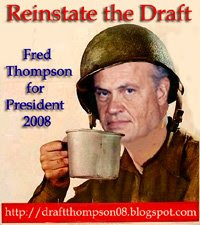
Fred Thompson Zeitgeist

Fred Thompson Zeitgeist Campaign 2008 as Posted and un-edited. Updated 24/7. This series will spotlight the republican candidates in real time and we hope with an unbiased view. The parameters are the widest possible to return the most meaningful results. The experiment is ment to capture the Zeitgeist and therefor the true nature of the race. Let the games begin fred08.com/


More Flickr photos of Fred Thompson
The Blogosphere

We Will Fight To Restore Our Party...Even If It Means a Draft
News for bloggers who support Fred Thompson for President

Technorati Tags:

Sunday, May 06, 2007

Put a tree in your tank

Fuel from fiber -- pretreatment can put corn stalks, trees in your car's tank
BOSTON -- "Put a tree in your tank." Fuel companies aren't touting that slogan. At least not yet.

But thanks to research done in part by Bruce Dale, Michigan State University professor of chemical engineering and materials science, making fuels from poplar trees and corn stalks is becoming more efficient and cost-effective.

Current ethanol production is primarily from the starch in kernels of field corn. NREL researchers in the DOE Biofuels Program are developing technology to also produce ethanol from the fibrous material (cellulose and hemicellulose) in the corn stalks and husks or other agricultural or forestry residues. Credit: Gretz, Warren. Courtesy of DOE/NRELDale is internationally known for his 30 years of research on making ethanol from plant biomass – the stems, leaves, stalks and trunks of plants and trees usually discarded as waste after a crop is harvested. He's developed a patented pretreatment process for biomass, ammonia fiber expansion (AFEX), which makes the breakdown of cellulose – the most difficult part of making ethanol from plant biomass – more efficient.
Dale and other members of the Biomass Refining Consortium for Applied Fundamentals and Innovation will discuss AFEX and other biomass pretreatment technologies during a presentation today at BIO2007, the annual international convention of the Biotechnology Industry Organization. The consortium is a group of scientists studying biomass refining.

"In time, we can expect to completely replace gasoline and diesel with cellulose-derived biofuels that are cheaper, better for the environment and much better for national security than petroleum-derived fuels," Dale said. ###

Contact: Bruce Dale bdale@egr.msu.edu 517-896-7264 Michigan State University, Contact: Jamie DePolo, Office of Biobased Technologies: (609) 354-8403, cell phone, depolo@msu.edu

This research is supported by the U.S. Department of Agriculture, the U.S. Department of Energy, Natural Resources Canada and the Michigan Agricultural Experiment Station at MSU.

Technorati Tags: and or and or and or and or and or and

Creating corn for cars

Current ethanol production is primarily from the starch in kernels of field corn. NREL researchers in the DOE Biofuels Program are developing technology to also produce ethanol from the fibrous material (cellulose and hemicellulose) in the corn stalks and husks or other agricultural or forestry residues. Credit: Gretz, Warren, Courtesy of DOE/NRELBOSTON -- A new variety of corn developed and patented by Michigan State University scientists could turn corn leaves and stalks into products that are just as valuable as the golden kernels.

Right now, most U.S. ethanol is made from corn kernels. This is because breaking down the cellulose in corn leaves and stalks into sugars that can be fermented into ethanol is difficult and expensive.
"We've developed two generations of Spartan Corn," said Mariam Sticklen, MSU professor of crop and soil sciences. "Both corn varieties contain the enzymes necessary to break down cellulose and hemicellulose into simple sugars in their leaves. This will allow for more cost-effective, efficient production of ethanol."

Sticklen will co-chair a panel on energy crops for biofuels today at BIO2007, the annual international convention of the Biotechnology Industry Organization.

"In the future, corn growers will be able to sell their corn stalks and leaves as well as their corn grain for ethanol production," Sticklen said. "What is now a waste product will become an economically viable commodity." ###

Contact: Mariam Sticklen stickle1@msu.edu 517-230-2929 Michigan State University, Contact: Jamie DePolo, Office of Biobased Technologies: (609) 354-8403 (cell phone), depolo@msu.edu

This research is supported by Edenspace Systems Corp., the U.S. Department of Energy, the Consortium for Plant Biotechnology Research, the Corn Marketing Program of Michigan and the MSU Research Excellence Program.

(Editor’s note: Mariam Sticklen can be reached May 6-9 at BIO2007 on her cell phone at (517) 230-2929. Jamie DePolo can be reached on her cell phone at (609) 354-8403.)

Technorati Tags: and or and or and or and or and or and

Saturday, May 05, 2007

Freedom Calendar 05/05/07 - 05/12/07

May 5, 1983, Hispanic Republican Patricia Diaz Dennis appointed by President Ronald Reagan as first Hispanic woman on National Labor Relations Board; later served as FCC Commissioner under Reagan and as Regent of Texas State University under Gov. George W. Bush.

May 6, 1960, President Dwight Eisenhower signs Republicans’ Civil Rights Act of 1960, overcoming 125-hour, around-the-clock filibuster by 18 Senate Democrats.

May 7, 1990, President George H. W. Bush proclaims first Asian/Pacific American Heritage Month.

May 8, 2003, Speaker Dennis Hastert, Senate Majority Leader Bill Frist, and other Republican leaders gather at Frederick Douglass National Historic Site, announce $1 million restoration effort.

May 9, 2001, President George W. Bush nominates Miguel Estrada to be first Hispanic to serve on U.S. Court of Appeals for D.C. Circuit; Democrats in Senate successfully filibuster nomination.

May 10, 1866, U.S. House passes Republicans’ 14th Amendment guaranteeing due process and equal protection of the laws to all citizens; 100% of Democrats vote no.

May 11, 1949, Birth of African-American Republican and sharecropper’s daughter Janice Rogers Brown, nominated by President George W. Bush as Judge of the U.S. Court of Appeals.

May 12, 1850, Birth of U.S. Senator Henry Cabot Lodge (R-MA), whose 1890 Federal Elections Bill enforcing African-American voting rights passed House on party-line vote but was defeated in Senate by a Democrat filibuster.

“A healthy republican government must rest upon individuals, not upon classes or sections. As soon as it becomes government by a class or by a section, it departs from the old American ideal.”

Theodore Roosevelt, 26th President of the United States

Technorati Tags: and or and or and or and or and or or and or

Presidential Podcast 05/05/07

Presidential Podcast 05/05/07 en Español. In Focus: Defense, Subscribe to the Republican National Convention Blog Podcast Subscribe to Our Podcast feed or online Click here to Subscribe to Our Republican National Convention Blog Podcast Channel with Podnova podnova Podcast Channel and receive the weekly Presidential Radio Address in English and Spanish with select State Department Briefings. Featuring full audio and text transcripts, More content Sources added often so stay tuned.

Technorati Tags: and or and

Bush radio address 05/05/07 full audio, text transcript

President George W. Bush calls troops from his ranch in Crawford, Texas, Thanksgiving Day, Thursday, Nov. 24, 2005. White House photo by Eric Draper.bush radio address 05/05/07 full audio, text transcript. President's Radio Address en Español. In Focus: Defense
Subscribe to the Republican National Convention Blog Podcast Subscribe to Our Podcast feed or online Click here to Subscribe to Republican National Convention Blog's PODCAST with podnova podnova Podcast Channel and receive the weekly Presidential Radio Address in English and Spanish with select State Department Briefings. Featuring real audio and full text transcripts, More content Sources added often so stay tuned.

THE PRESIDENT: Good morning. At this hour, America's brave men and women in uniform are engaging our enemies around the world. And in this time of war, our elected officials have no higher responsibility than to provide these troops with the funds and flexibility they need to prevail.

On Wednesday, I met with congressional leaders from both parties here at the White House. We discussed ways to pass a responsible emergency war spending bill that will fully fund our troops as quickly as possible. It was a positive meeting. Democratic leaders assured me they are committed to funding our troops, and I told them I'm committed to working with members of both parties to do just that.

I've appointed three senior members of my White House staff to negotiate with Congress on this vital legislation: my Chief of Staff Josh Bolten, National Security Advisor Steve Hadley, and Budget Director Rob Portman. By working together, I believe we can pass a good bill quickly and give our troops the resources and flexibility they need.
Earlier this week, I vetoed the bill Congress sent me because it set a fixed date to begin to pull out of Iraq, imposed unworkable conditions on our military commanders, and included billions of dollars in spending unrelated to the war. And on Wednesday, the House voted to sustain my veto by a wide margin.

I recognize that many Democratic leaders saw this bill as an opportunity to make a statement about their opposition to the war. In a democracy, we should debate our differences openly and honestly. But now it is time to give our troops the resources they are waiting for.

Our troops are now carrying out a new strategy in Iraq under the leadership of a new commander -- General David Petraeus. He's an expert in counter-insurgency warfare. The goal of the new strategy he is implementing is to help the Iraqis secure their capital, so they can make progress toward reconciliation and build a free nation that respects the rights of its people, upholds the rule of law, and fights extremists alongside the United States in the war on terror. This strategy is still in its early stages, and Congress needs to give General Petraeus' plan a chance to work.

I know that Republicans and Democrats will not agree on every issue in this war. But the consequences of failure in Iraq are clear. If we were to leave Iraq before the government can defend itself, there would be a security vacuum in the country. Extremists from all factions could compete to fill that vacuum, causing sectarian killing to multiply on a horrific scale.

If radicals and terrorists emerge from this battle with control of Iraq, they would have control of a nation with massive oil reserves, which they could use to fund their dangerous ambitions and spread their influence. The al Qaeda terrorists who behead captives or order suicide bombings would not be satisfied to see America defeated and gone from Iraq. They would be emboldened by their victory, protected by their new sanctuary, eager to impose their hateful vision on surrounding countries, and eager to harm Americans.

No responsible leader in Washington has an interest in letting that happen. I call on Congress to work with my Administration and quickly craft a responsible war spending bill. We must provide our men and women in uniform with the resources and support they deserve. I'm confident that leaders of goodwill can deliver this important result.

Thank you for listening.

END For Immediate Release, Office of the Press Secretary, May 5, 2007

Technorati Tags: and or and

Discurso Radial del Presidente a la Nación 05/05/07

Presidente George W. Bush llama a tropas de su rancho en Crawford, Tejas, día de Thanksgiving, jueves, de noviembre el 24 de 2005.  Foto blanca de la casa de Eric Draper.forre el audio de la dirección de radio 05/05/07 por completo, transcripción del texto. (nota de los redactores: ninguna lengua española mp3 lanzó esta semana, apesadumbrada) PODCAST
Chascar aquí para suscribir a nuestro canal republicano de Blog Podcast de la convención nacional con Odeo Suscribir a nuestro canal de Podcast de Odeo o del podnova Chascar aquí para suscribir a nuestro canal republicano de Blog Podcast de la convención nacional con Podnova y recibir la dirección de radio presidencial semanal en inglés y español con informes selectos del departamento del estado. Ofreciendo transcripciones audio y con texto completo verdaderas, más fuentes contentas agregaron a menudo así que la estancia templó.

Buenos Días. En este momento, valientes hombres y mujeres estadounidenses en uniforme están luchando contra nuestros enemigos en todo el mundo. Y en este tiempo de guerra, nuestros oficiales electos no tienen mayor responsabilidad que la de proporcionarle a estas tropas los fondos y la flexibilidad que necesitan para prevalecer.

El miércoles me reuní aquí en la Casa Blanca con líderes de ambos partidos del Congreso. Discutimos maneras de aprobar un proyecto de ley responsable para gastos de guerra de emergencia que financiaría completamente nuestras tropas - lo más pronto posible.

Fue una reunión positiva. Los líderes demócratas me aseguraron que están comprometidos a financiar nuestras tropas - y yo les dije que estoy comprometido a trabajar con miembros de ambos partidos precisamente para lograr eso. He nombrado a tres miembros de alto rango entre mi personal en la Casa Blanca para negociar con el Congreso sobre esta legislación de vital importancia.. Josh Bolten, mi Jefe de Gabinete, Steve Hadley, Asesor para Seguridad Nacional y Rob Portman, Director del Presupuesto. Trabajando juntos creo que podemos aprobar un buen proyecto de ley sin demoras - y dar a nuestras tropas los recursos y la flexibilidad que necesitan.

A principios de esta semana, puse mi veto al proyecto de ley que el Congreso me envió porque estipulaba una fecha fija para comenzar a retirarnos de Irak. imponía condiciones impracticables sobre nuestros comandantes militares, e incluía miles de millones de dólares en gastos que no tienen nada que ver con la guerra. Y el miércoles, la Cámara de Representantes votó para apoyar mi veto por un amplio margen.

Reconozco que muchos líderes demócratas vieron este proyecto de ley como una oportunidad para hacer una declaración sobre su oposición a la guerra. En una democracia debemos debatir nuestras diferencias abierta y honestamente. Pero ahora es tiempo de dar a nuestras tropas los recursos que esperan.

Nuestras tropas están llevando a cabo una nueva estrategia en Irak, bajo el liderazgo de un nuevo comandante, el General David Petraeus. Él es un experto en guerra de contra-insurgencia. El objetivo de la nueva estrategia que él está implementando es ayudar a que los iraquíes protejan su ciudad capital para poder progresar hacia la reconciliación - y crear una nación libre que respete los derechos de su pueblo, mantenga el imperio de la ley y luche contra extremistas al lado de Estados Unidos en la guerra contra el terror. Esta estrategia aún está en sus etapas iniciales - y el Congreso tiene que darle al plan del General Petraeus una oportunidad para que funcione.

Yo sé que los Republicanos y los Demócratas no estarán de acuerdo en todos y cada uno de los temas de esta guerra. Pero las consecuencias de un fracaso en Irak son claras. Si salimos de Irak antes de que el gobierno se pueda defender, habría un vacío de seguridad en el país. Los extremistas de todas las facciones podrían competir para llenar ese vacío - causando que las matanzas sectarias se multipliquen en una escala horrorosa.

Si los radicales y los terroristas salen de esta batalla con control de Irak, tendrían control de una nación con masivas reservas de petróleo - que podrían usar para financiar sus ambiciones peligrosas y extender su influencia. Los terroristas de al Qaeda que decapitan cautivos u ordenan explosiones suicidas no estarían satisfechos con ver a Estados Unidos derrotado y fuera de Irak. Se verían alentados por su victoria, protegidos por su nuevo santuario, ansiosos de imponer su visión odiosa en los países vecinos - y ansiosos de hacer daño a los estadounidenses.

Ningún líder responsable en Washington tiene interés en dejar que esto suceda. Le pido al Congreso que trabaje con mi Administración y rápidamente elaboren un responsable proyecto de ley para gastos de guerra. Debemos ofrecer a nuestros hombres y mujeres en uniforme los recursos y el apoyo que merecen. Yo confío que los líderes de buena volunta puedan hacer llegar este importante resultado.

Gracias por escuchar.

### Para su publicación inmediata, Oficina del Secretario de Prensa, 5 de mayo de 2007

Etiquetas De Technorati: , y

Friday, May 04, 2007

White House Deputy Press Secretary Dana Perino’s husband jailed for leash law violation.

D.C. no dogs allowed
Property Sign, uploaded by easement.
White House Deputy Press Secretary Dana Perino’s husband jailed for leash law violation.

Last November, Ms. Perino’s husband, British businessman Peter McMahon, was walking their dog Henry, unleashed, in Lincoln Park, 10 short blocks east of the Capitol.
According to the original complaint, obtained by Yeas & Nays examiner.com, Park Police Officer Stephen Smith asked Mr. McMahon to “gain control” of Henry, an 8-year-old Vizsla, and “put him on a leash.”

Mr. McMahon replied that he didn’t have a leash, so Smith issued a violation which carries a $25 fine. “Why don’t you go chase down some squirrels,” Mr. McMahon allegedly asked the officer.

According to representatives of the Park Police and D.C. Superior Court, you have 15 days to pay such a fine, request a court date, or a warrant can be issued for your arrest.

Sources familiar with the case say Mr. McMahon tried to pay the fine, but the ticket didn't note an address where it should be sent. Mr. McMahon found an address for the Park Police and mailed his payment which is alleged to have arrived late.

In early April, when Mr. McMahon returned from business overseas he found that Smith had requested a warrant for his arrest, which a judge had issued.

On April 12, McMahon went to the Park Police headquarters to pay the fine in person, he was thrown in jail for the day.

Ms. Perino and her husband have declined comment.

Photo Credit: Property Sign, uploaded by easement Concept: dcist.com
Story Credit: Yeas & Nays examiner.com

Technorati Tags: and or and , or and

White House Press Briefing by Dana Perino 05/04/07 VIDEO

Dana M. Perino, Vidcap from White House BriefingPress Briefing by Dana Perino, White House Conference Center Briefing Room, FULL STREAMING VIDEO, Dana M. Perino Biography, 12:27 P.M. EDT. PODCAST OF THIS ARTICLE

MS. PERINO: Hello, good afternoon. A few announcements, and then we'll go to questions -- for Friday.
MS. PERINO: Hello, good afternoon. A few announcements, and then we'll go to questions -- for Friday. The Iraq Neighbors Conference just concluded in Egypt, and I'd like to echo a few of the things that Secretary Rice discussed in her press conference. These things are something that the President has talked about since he launched the new strategy on January 10th, and that is the importance of not only a political, economic and military surge, but a diplomatic surge, as well.

The first is that the Iraqi government spoke to its own responsibilities to foster national reconciliation and to create an Iraq for all Iraqis. Second, the neighbors spoke to their desire to foster an environment in which that national reconciliation can take place, particularly taking responsibilities concerning borders and concerning energy, and noting that it is, of course, in their interest that Iraq be stable and secure.

Third, the international community took its place alongside Iraq and its neighbors to commit, as it did yesterday through the International Compact, to a set of obligations as Iraqis move forward on their obligations, but also to continue the process to foster international support for the democratically elected government and Prime Minister Maliki.

And I'd also like to point out what Iraq Foreign Minister Zebari said in this morning's Washington Post. These are his words: Those calling for withdrawal may think it is the least painful option, but its benefits would be short-lived. The fate of the region and the world is linked with ours. Leaving a broken Iraq in the Middle East would offer international terrorism a haven and ensure a legacy of chaos for future generations. Furthermore, the sacrifices of all the young men and women who stood up here would have been in vain. Iraqis, for all of our determination and courage, cannot succeed alone.

Turning to everyone's much anticipated visit of the Queen. On Monday, President George W. Bush and Mrs. Laura Bush are honored to host Her Majesty Queen Elizabeth II of Great Britain, and His Royal Highness The Prince Philip, Duke of Edinburgh, on Monday, May 7th, 2007.

What's with the phones today? Everyone has got their phones on?

The visit is an occasion to celebrate these enduring bonds between these countries. And you'll recall, the President and Mrs. Bush visited England in November of 2003. They welcome a chance to return that hospitality, which, as the Queen noted at the time, has been extended to no fewer than seven of the President's predecessors.

And this is Her Majesty's first visit to the United States in 16 years. For the visit, Her Majesty Queen Elizabeth II of Great Britain, and her husband will stay at the President's Guest House, which is, as you know, called the Blair House.

The arrival ceremony is May 7, 2007 -- that's this coming Monday -- on the South Lawn of the White House. We'll have approximately 7,000 guests that will attend the arrival ceremony, including the American and British delegations, British Embassy staff, state dinner guests, members of Congress, Cabinet members, White House staff and their guests, State Department staff, and students.

And just a note on the state dinner. It will take place in the State Dining Room on the State Floor of the White House, following a reception in the East Room on the State Floor. One hundred thirty-four guests will be seated in the State Dining Room, including a diverse representation of guests from around the country. And a member of the Bush administration will serve as the table host at each of the 13 tables. The attire for the state dinner is white tie, and this is the first white-tie event that the President and Mrs. Bush have hosted.

Q I didn't get my invitation.

Q It's in the mail. (Laughter.)

MS. PERINO: It's in the mail.

And I just have one more thing I'd like to mention. I'd like to just clear up something. And you might find it a little strange, but I feel compelled to do it because I attended the speech on Wednesday, when the President addressed the American General Contractors Association. And in the Q&A the President was asked a question in which he talked about how some people choose to listen to politicians in Washington, and others choose to listen to commanders on the ground.

It's been reported that the President said, "I'm 'the' commander guy." He did not. What I recalled was that he said "I'm 'a' commander guy," meaning that he's one of the people that listens to the commanders on the groung. But I saw in our transcript that our stenographers put out that we wrote 'the' commander guy, and then it's been reported that way in many places. So I asked the stenographers to take another listen last night; they did and they said that I was right -- which I love to hear. (Laughter.) He did say 'a' commander guy.

Q Does he consider himself over the other commanders?

MS. PERINO: He is the Commander-in-Chief, but the context of what the President was saying is that when it comes to making decisions about Iraq or war policy, that the President listens to commanders on the ground, not politicians in Washington. And we will send out a correction of that transcript so that the record is clear. And I'm sure none of you will be tempted to misuse it in the future.

Jennifer.

Q Is there any disappointment here at the White House that there was a missed opportunity for the Iranian Foreign Minister and Secretary Rice to meet?

MS. PERINO: I saw Secretary Rice's press conference, and I didn't see her think of it that way. This was a -- the meeting that the Secretary went to was a meeting about Iraq. It was for all the neighbors around -- I think it was 60 countries that participated -- to talk about Iraq. Secretary Rice said she was prepared, as she was to talk to the Foreign Minister of Syria, at the direction of the President, but that opportunity didn't happen. But that's okay. Ambassador Crocker did have a moment to speak with his counterpart.

So I think overall for the meeting that took place in Sharm el Sheikh, we're very satisfied. But there's follow-up to do, and as you know, the President has asked Vice President Cheney to travel to the region and he leaves on Tuesday.

Q So the President doesn't feel that there might have been, or that there should have been the effort on Secretary Rice's part to take the initiative and make something happen? Was it on the Iranian side to make this meeting happen if it were going to?

MS. PERINO: There was never on the -- a meeting with the Iranians was never on the agenda. What we had said is that if they had a chance to see each other and talk, that that would have been appropriate. And as directed by the President, the Secretary did meet with her Syrian counterpart yesterday. The Iranians know what they need to do in the region.

And I think that the communique that has just been released, that they agreed to a set of 19 issues. If you have a chance to read through that, I think that would be a good thing. The Iranians would do well to read it, as well. And I think that everyone can agree that a stable Iraq that can govern, sustain and defend itself is not only good for Iraqis, but for the region, and especially for the long-term interests of this country.

Q If I could just ask one more question on that. So the President directed her to meet with her Syrian counterpart, but did not give the same sort of direction concerning -- to Iran. Can you say why?

MS. PERINO: There was a specific request by the Iraqis for Secretary Rice to try to talk with Syria and Iran. The Secretary called back to the President. I think that the President said, if you have this opportunity, these are the things that you should talk about. That's what Secretary Rice did, in terms of foreign fighters coming into Iraq from those borders. If the opportunity would have presented itself to meet with the Iranians, as well, I think that the Secretary would have been pleased to talk with them. It didn't. But that doesn't mean that we didn't have any contact with them, because, as I said, Ambassador Crocker met with his counterpart. He said it was brief, but they did have a conversation.

Helen.

Q Does this new surge in diplomacy mean an end to unilateralism?

MS. PERINO: I don't know who -- who are you accusing of being unilateralist?

Q The President -- our foreign policy has been unilateral from the beginning of this war.

MS. PERINO: No, Helen, in fact, I would point you back to -- in the Baker-Hamilton report they suggested a neighbors conference. It was one of the things the President talked about when he announced a surge on January 10th. And we're pleased that the first meeting took place in March, and now the second meeting has happened. And what has to happen now is -- it's just as important that there be good follow-through, and that's why the Vice President is going to the region next week.

Q Why?

MS. PERINO: Why is he going to the region next week?

Q Of all people.

MS. PERINO: Of all people. Look, it's important for us to continue to talk with our friends and allies in the region. There are many challenges --

Q Who is he going to talk to?

MS. PERINO: We have the list of all the countries that he's going to; I don't have it in front of me. But we obviously appreciate very much the support that Iraq was shown by the neighbors in the region. It's important that Vice President Cheney follow up on that. We have challenges in the region, and it's important that everyone be working together in order to help solve them. And it's also important that we continue to consistently strengthen, work to strengthen our bilateral relationships in the region, as well.

Q What does the President think of Senator Clinton's attempt to impose a sunset on the war resolution?

MS. PERINO: Well, we were slightly confused and disappointed when yesterday -- it was only a few hours after Josh Bolten had met with the Republican and Democratic leadership that the congressional leaders had designated to talk about the Iraq war supplemental bill in a spirit of bipartisanship and moving forward in order to get the troops what they need.

Look, I think that there's going to be many attempts to try to put a surrender date on the calendar. The President is not going to accept one. And I think that a little bit of last night, what you saw was a little bit of presidential politics. And we might see more of it, but the President has a principled stand that he's not going to change.

Q Has he actually expressed his views about this to you?

MS. PERINO: No, I have not seen the President today. But I talked to some folks yesterday afternoon.

Q How difficult is it going to be to replace J.D. Crouch?

MS. PERINO: Well, we'd all like to think of ourselves as irreplaceable. But obviously J.D. Crouch has been a fantastic member of this administration. He's a fine public servant. He's a very good colleague to work with, as well. I will tell you, from personal experience, this is a gentleman who gets here before dawn and leaves well after dark. And he always would find it in his day, once in a while, to let you know that he either noticed something that you did well, or point out something that he could help you with, so in that regard, a very good colleague. The President will miss him greatly.

But we are not short on people in the administration who can fill positions like that, and Steve Hadley is going to work to do that.

Q But now you're also looking for a replacement for Meghan O'Sullivan, you're looking for a war czar. How is this going to --

MS. PERINO: I don't think it's unusual. I mean, I've not been in other administrations, but I don't think it's unusual at this point in a second term in an administration that some people who have served for many years have decided to move on. And that happens in the corporate world, as well --

Q But in the middle of a war, at a critical time, when General Petraeus is trying to implement this new strategy --

MS. PERINO: I'm confident we'll be able to find people to fill those positions and that they will serve very well.

Q Do you expect it to be fairly quickly, then, since J.D. Crouch has made this known for months that he --

MS. PERINO: I'm not going to put a timetable on it, how's that?

Jim.

Q Dana, a Newsweek article reports that a couple of months ago Karl Rove was involved in some meetings where Justice Department officials were preparing for testimony. Did the meeting happen? Was Mr. Rove there? And was it appropriate for him to be there?

MS. PERINO: I'm so confused by this, because Kyle -- in the first batch of documents that went out on March 13th, Kyle Sampson's documents included a meeting -- an announcement about a meeting that happened early in March. I'm not going to tell you who the participants are of internal White House meetings, but I will tell you, it is not at all unusual, nor is it inappropriate, for people at the White House to meet with members of the administration before they are going up to testify in front of Congress. And at the urging of the White House -- we were asking the Justice Department to be fully responsive to the Congress so that we could help get them the answers that they need.

Q You don't think it creates an appearance of everybody getting their story straight?

MS. PERINO: What I think is that -- what it appears is that anytime Karl Rove's name is mentioned is that there's some sort of nefarious action. I will tell you that, having worked on that issue intimately, and the whole time we were in Latin America, we were urging the Justice Department to be responsive to the Congress. That is not unusual, and we would have done that with any agency.

Q Yes, but there was a sense at the time that the Justice Department, I believe from the podium it was suggested often that the Justice Department needs to get its -- all of its story in line, straight, and get it in, settled up to the Hill, but that it was the Justice Department's problem to solve, which would be different than having meetings at the White House to talk about any kind of strategy about how you're going to testify.

MS. PERINO: Urging members of the administration to make sure that they're responsive to members of Congress is not at all inappropriate. In fact, I think we would be remiss if we hadn't done so.

Q That's not what I'm saying. I'm saying that there were meetings at the White House about coordinating a strategy for how to deal with it. That's not exactly the kind of --

MS. PERINO: Look, I was at that meeting, and I will tell you that the way you're describing it, in terms of coordinating some sort of message, was not the case. It was encouraging them to make sure that all the information got out quickly so that the members of Congress could have what they needed so that we could move on from that story.

Q You were there?

MS. PERINO: I was there.

Q Was Karl there?

MS. PERINO: I'm not going to comment on anybody else; I will speak for myself.

Mark.

Q Dana, were you able to find out if the President watched the Republican debate last evening and what he thought of it?

MS. PERINO: He did not.

Q He did not?

MS. PERINO: He did not.

Peter, you had one?

Q Yes, why didn't he watch it? (Laughter.)

MS. PERINO: Why didn't he watch it? I don't know what else he was doing. I didn't ask -- I didn't ask a follow-up.

Q Does the President have the authority to continue the war in Iraq if Congress were to deauthorize it? Does he need congressional authorization to continue, in the White House view?

MS. PERINO: Since I'm not a lawyer, I'm going to decline to answer now, but let me consult with them and I'll get back to you. I just don't want to say one way or the other and guess.

Mark.

Q Yes, can I follow up on that?

Q It's been done before.

MS. PERINO: Not by me.

Go ahead, Mark.

Q Can I follow up on the discussions on the Hill? Can you describe for us the difference between good benchmarks and bad benchmarks, ones that the President would not accept?

MS. PERINO: Well, I think what we should point back to are the benchmarks that the President laid out and that Secretary Rice laid out in her letter back in January, and I think those are the things that we're looking for. The ones that are -- ones that come top of mind are of course, we talk a lot about it, the oil law. This is one where we would spread the wealth of the entire country across the country so that everyone could feel that they were benefiting from being a part of the society. That's one of them.

Another one is de-Baathification, to allow people who used to work in the lower levels of the Saddam Hussein government to be able to work again. I think that's critically important. All of us could understand why that would make sense. And then also the third one that comes to mind are the regional elections.

Q I guess I wasn't being clear. What I meant is, good enforcement mechanisms versus bad enforcement mechanisms for benchmarks.

MS. PERINO: Well, I'm not going to talk about those types of things here from the podium. I've given my word that I will not talk about any specific discussions that are ongoing between Josh Bolten and members of Congress and their staffs. And while they continue to work on that, I think that it's prudent for me not to comment any further on weighing things one way or the other.

Q Not even to talk about mechanisms that would require U.S. troops to redeploy elsewhere?

MS. PERINO: I'm going to allow all of those discussions to take place in the Congress, and then when we have something more to announce, we'll let you know.

Goyal. Goyal, then I'll get to Wendell. Go ahead, Goyal.

Q Two quick questions, one on Iraq. If the Iranians missed the opportunity to greet and meet Dr. Rice at that meeting, that means Iranians are not serious about giving up their nuclear weapons program, and also not giving up their support for the terrorists in Afghanistan and Iraq.

MS. PERINO: I think you're conflating a couple of issues. You can ask the Iranians why they didn't talk with Secretary Rice there.

Q What can you make out of this?

MS. PERINO: Sorry?

Q What can you make out of this?

MS. PERINO: I think you'll have to ask the Iranians. I think the Iranians know what the international community -- not just the United States, but the international community, the Permanent Five plus one, has a path for Iran to have a nuclear program, a civilian nuclear program. They know how to get back to the talks, and that would be to suspend their enrichment and reprocessing activities, and until they do so, we're not going to talk to them.

Q Second, also as far as immigration is concerned, there have been again, so many demonstrations and all that, also some beatings and all that went in Los Angeles. My question is, how serious is this immigration President is taking on? Who is to blame that not going through, Democrats, or Republicans, or --

MS. PERINO: I'm not going to place blame at anyone's feet. This is a very complicated legislation. Members of our White House and across the administration are working with members on Capitol Hill. I think there's a lot of goodwill to get this bill done. There should be a vote towards the end of this month, and we are working towards that. And we are very confident that we'll be able to get something done.

Wendell.

Q Why does the President oppose broadening the hate crimes law to cover gays and lesbians?

MS. PERINO: I think the President -- the statement of administration policy that we put out was very clear, in that the opposition goes more to a federalism issue. The President believes that every single person deserves to be treated with dignity and respect, that violence against anyone is unacceptable and abhorrent. So I think I would encourage you to look at the statement of administration policy that says that we would oppose it solely on the grounds that it would federalize law enforcement of crimes already being addressed in the states.

Q But he found it necessary, if you will, to take specific action when people are attacked because of race, and this is another attack on a person because of a characteristic, and not something the person is doing. You have a segment of the population that you decided needed protecting, and not this one, at least not federally?

MS. PERINO: As I understand it, the state laws address these issues in terms of all acts of violence covered all people. And so I think that the President is going to leave it in the states' hands. And that's what he said.

Q So why should there be a special case for black people then?

MS. PERINO: I'm not a lawyer. All I know is what we said in our statement of administration policy. I take your point. I'll see if I can get you some more on it.

Olivier.

Q Dana, can you confirm there are going to be top-level Russia-U.S. talks on the missile defense dispute? And what does the President want to get out of those?

MS. PERINO: Do you have a date? I don't know.

Q I don't have a date. It was breaking five minutes before you came in here, and I don't know it was formally announced or not, but --

MS. PERINO: No, sorry, I was walking across the street, and I'll ask Gordon to get back to you.

Q In that case, let me ask about Saudi Arabia's apparent -- they've now clarified that the reason that they turned down a meeting with Maliki is that they worry about his policies. Is this part of the follow-up by the Vice President? Is he going to Saudi Arabia specifically to try to get them to meet with Maliki and soften their --

MS. PERINO: I think that I'll let the Vice President and the Saudis have their conversations privately, and to the extent that he wants to read those out, I'm sure he'll provide information to you. No smirking, please. (Laughter.)

Q It was a rueful grin, it wasn't a smirk. (Laughter.)

MS. PERINO: You'll be on the trip, and you'll have an opportunity to ask him yourself.

Ann.

Q The organizer of the Cinco de Mayo festival in Virginia says she's canceled the event because the U.S. federal immigration officials called and she fears they will use the festival as a chance to come and try to arrest -- Does the President fear that any of the Cinco de Mayo festivals -- does he think the federal officials should use this occasion to crack down on illegal immigrants?

MS. PERINO: I've not heard of that being a policy. I can't vouch for the accuracy of whether or not federal officials did call to say something like that. I think the President believes that anyone who is here illegally should come out of the shadows. And one of the ways we want to do that is have new legislation to be able to handle that.

I'm going to have to refer you to the Department of Homeland Security and the Immigration and Customs Enforcement Office for more on that to find out if they actually did make such a call.

Roger.

Q You mentioned a moment ago about a vote in the Senate on immigration -- a vote toward the end of the month. Was that referring to the Senate's version or --

MS. PERINO: I think it is that the Senate has said that they want to have a vote by the end of the month. But what shape that bill takes I'm not going to comment specifically on. I'll let them do that from there.

Victoria.

Q Why does the President believe that the phone companies should get blanket immunity from lawsuits?

MS. PERINO: I saw the Justice Department commented on that yesterday and I'd refer you to them, since they are handling that law. This is in the FISA Modernization Act, and I'm not an expert on it. I would have to -- let me refer you to them so that I just don't get out of my lane. Anything else? No?

Then I'll just do Lester. One question, Lester, and then we'll be done. (Laughter.) I'll do one from you and one from Mark, and that's it.

Q Just two.

MS. PERINO: I'm fast Dana today.

Q Oooh. (Laughter.)

Q -- three and four on the front row.

MS. PERINO: Go ahead. I want to go home. (Laughter.)

Q Four hundred years ago, Jamestown, Virginia was settled by people whose first assignment from the King of England and the Virginia Company was to spread the gospel of Jesus Christ. The President did not recognize that in his proclamation regarding the anniversary. And my question: Does he plan to recognize the historic influence of Christianity when he travels to Jamestown on the 13th?

MS. PERINO: It's a little too early to preview those remarks, but when those come through staffing I'll call you.

Q And just one other --

MS. PERINO: Very fast.

Q The Media Research Center had deplored Time Magazine's leaving President Bush out of their 100 most influential people list. And my question: Does the President regret being left out of a list that includes Rosie O'Donnell, Osama bin Laden, and Al Gore?

MS. PERINO: No, but the feeling is mutual. (Laughter.)

Go ahead, Mark.

Q One more on Iraq. Is the President willing to sign a bill that does not fund the war all the way through October, or will he accept something shorter than that?

MS. PERINO: I've seen some reporting about a short-term supplemental. We have said in the past that we think that that would not be a workable idea. I'm going to refrain from jumping on any possible kernel that's coming out about -- in terms of ideas that people have of how do we get to a clean bill that the President can sign that would fund the troops. But I think we've made comments in the past that we think funding for only two months is probably not the best idea, but I'm going to let Josh Bolten have those conversations.

Thank you.

END 12:44 P.M. EDT. For Immediate Release, Office of the Press Secretary, May 4, 2007

Technorati Tags: and or and , or and , or , and , or and or

Thursday, May 03, 2007

GOP PRESIDENTIAL DEBATE

UPDATE 06/05/07 Republican presidential Debate MANCHESTER, New Hampshire 06/05/07 tv Listings, polls, candidate info. updated in real time.

Republican presidential debate 05/15/07 VIDEO

UPDATE: 05/15/07 TONIGHTS DEBATE INFORMATION HERE Republican presidential debate Columbia, S.C 05/15/07

FINAL GOP PRESIDENTIAL DEBATE BEFORE “SUPER-TUESDAY” TO BE HELD AT REAGAN LIBRARY, The 10 Republican candidates will take part in the party's first presidential debate tonight. The debate will be taking place at the Ronald Reagan Library. Tonight's debate will air live on MSNBC and ON C-SPAN RADIO From Ronald Reagan Library at 8:00 p.m. ET Link to interactive round at The Politico
The Ronald Reagan Presidential Library Foundation will also host the final GOP presidential debate before the 2008 “Super-Tuesday” primary in California and several other key states. Mrs. Ronald Reagan has extend invitations to the front-runner GOP Presidential
candidates to return to the Reagan Library for this final debate, which will be held on Wednesday, January 30, 2008.

The event will give voters one last opportunity to hear the GOP front-runner candidates discuss their positions in a debate format before casting their votes in the February 5, 2008 primary. This will serve as a follow-up to the first debate of the full field of GOP Presidential candidates that will be held at the Reagan Library on May 3, 2007.

“Ronnie always believed that debates are a great way for voters to hear candidates discuss the issues,” said former first lady Nancy Reagan. “He would be so pleased that his Presidential Library is serving such an important role in the election process.”

“What better way to determine who will carry on in the tradition of Ronald Reagan than two strategically timed debates held at the Reagan Presidential Library,” said Frederick J. Ryan, Jr., chairman of the board of trustees of the Ronald Reagan Presidential Library Foundation. “The first debate in May will provide a chance to introduce the full field of Republican Presidential candidates to the American voter. The final debate will allow the top contenders to make their case for the Republican nomination as primary voters in California and several other states head for the polls.”

Details of this debate will be announced at a later date.

Located in Simi Valley, California, the Ronald Reagan Presidential Library houses over 55 million pages of Gubernatorial, Presidential and personal papers, an extraordinary collection of photographs and film, and over 100,000 gifts and artifacts chronicling the lives of Ronald and Nancy Reagan. Home to Air Force One 27000, it now also serves as the final resting place of America’s 40th President. # # #

FOR IMMEDIATE RELEASE: Media Contacts: Melissa Giller (805) 522-2977

Technorati Tags: and or and or and or and or and or or and or

Wednesday, May 02, 2007

President Bush and Laura On American Idol Video


President Bush and Laura, thanked 'American Idol' viewers for raising $70 million during last week's charity special, =Idol Gives Back.' The money will help impoverished children living in the United States and Africa.

"We thank 'American Idol' viewers who have shown the good heart of America, We thank all the celebrities who participated, including Bono, and all the contestants who sang their hearts out for these children."

"Say Laura, you think I ought to sing something?"

"I don't know darling, they've already seen you dance,"
President George W. Bush welcomes nine of the top 10 American Idol finalists to the Oval Office at the White House Friday, July 28, 2006. The popular FOX television program, which originated in 2002, uses audience participation to determine the best “undiscovered” young singer in the nation. Top row from left to right are Jamecia Bennett, mother of performer Paris Bennett, Ace Young, American Idol winner Taylor Hicks, Katherine McPhee, Bucky Covington, bottom row from left to right, Kellie Pickler, Paris Bennett, Lisa Tucker, Mandisa Hundley and Chris Daughtry. White House photo by Eric Draper.President George W. Bush welcomes nine of the top 10 American Idol finalists to the Oval Office at the White House Friday, July 28, 2006. The popular FOX television program, which originated in 2002,
uses audience participation to determine the best “undiscovered” young singer in the nation. Top row from left to right are Jamecia Bennett, mother of performer Paris Bennett, Ace Young, American Idol winner Taylor Hicks, Katherine McPhee, Bucky Covington, bottom row from left to right, Kellie Pickler, Paris Bennett, Lisa Tucker, Mandisa Hundley and Chris Daughtry. White House photo by Eric Draper.

Technorati Tags: and or and