Wednesday, September 09, 2009

President Obama Congress Health Care Reform LIVE PODCAST VIDEO TEXT 09/09/09

SEPTEMBER 9, 2009, 8:00 PM ET. President Obama Addresses a Joint Session of Congress. Washington, D.C.

PODCAST FILES VBR MP3 FORMAT 24 mb Ogg Vorbis FORMAT 19 mb
In his address to a joint session of Congress, Presidend Obama is expected to give a detailed account of his health care plan. Following the address, Rep. Charles Boustany (R-LA) will deliver the Republican reply. Afterwards, we'll get viewer reaction to the speech.

LIVE C-SPAN FEED in Windows Media format.
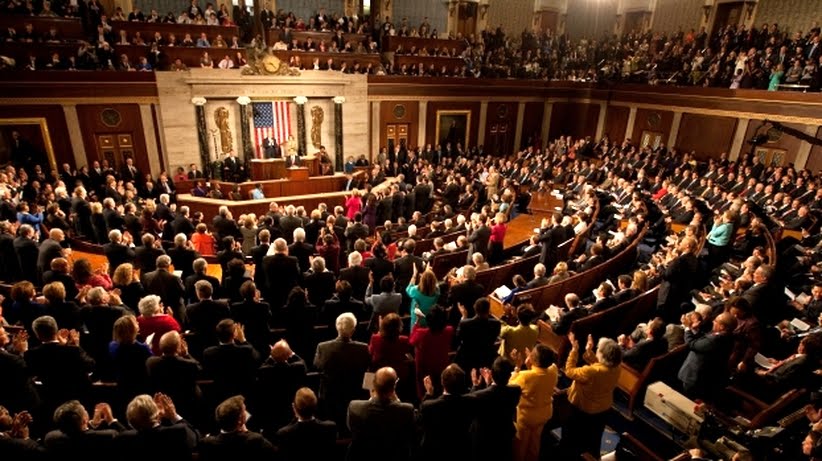
The President's first address to Congress

The President's first address to Congress in February. White House Photo.


Obama’s Health Care Speech to Congress FULL TEXT TRANSCRIPT

Following is the prepared text of President Obama’s speech to Congress on the need to overhaul health care in the United States, as released by the White House.

Madame Speaker, Vice President Biden, Members of Congress, and the American people:

When I spoke here last winter, this nation was facing the worst economic crisis since the Great Depression. We were losing an average of 700,000 jobs per month. Credit was frozen. And our financial system was on the verge of collapse.

As any American who is still looking for work or a way to pay their bills will tell you, we are by no means out of the woods. A full and vibrant recovery is many months away. And I will not let up until those Americans who seek jobs can find them; until those businesses that seek capital and credit can thrive; until all responsible homeowners can stay in their homes. That is our ultimate goal. But thanks to the bold and decisive action we have taken since January, I can stand here with confidence and say that we have pulled this economy back from the brink.

I want to thank the members of this body for your efforts and your support in these last several months, and especially those who have taken the difficult votes that have put us on a path to recovery. I also want to thank the American people for their patience and resolve during this trying time for our nation.

But we did not come here just to clean up crises. We came to build a future. So tonight, I return to speak to all of you about an issue that is central to that future – and that is the issue of health care.

I am not the first President to take up this cause, but I am determined to be the last. It has now been nearly a century since Theodore Roosevelt first called for health care reform. And ever since, nearly every President and Congress, whether Democrat or Republican, has attempted to meet this challenge in some way. A bill for comprehensive health reform was first introduced by John Dingell Sr. in 1943. Sixty-five years later, his son continues to introduce that same bill at the beginning of each session.

Our collective failure to meet this challenge – year after year, decade after decade – has led us to a breaking point. Everyone understands the extraordinary hardships that are placed on the uninsured, who live every day just one accident or illness away from bankruptcy. These are not primarily people on welfare. These are middle-class Americans. Some can't get insurance on the job. Others are self-employed, and can't afford it, since buying insurance on your own costs you three times as much as the coverage you get from your employer. Many other Americans who are willing and able to pay are still denied insurance due to previous illnesses or conditions that insurance companies decide are too risky or expensive to cover.

We are the only advanced democracy on Earth – the only wealthy nation – that allows such hardships for millions of its people. There are now more than thirty million American citizens who cannot get coverage. In just a two year period, one in every three Americans goes without health care coverage at some point. And every day, 14,000 Americans lose their coverage. In other words, it can happen to anyone.

But the problem that plagues the health care system is not just a problem of the uninsured. Those who do have insurance have never had less security and stability than they do today. More and more Americans worry that if you move, lose your job, or change your job, you'll lose your health insurance too. More and more Americans pay their premiums, only to discover that their insurance company has dropped their coverage when they get sick, or won't pay the full cost of care. It happens every day.

One man from Illinois lost his coverage in the middle of chemotherapy because his insurer found that he hadn't reported gallstones that he didn't even know about. They delayed his treatment, and he died because of it. Another woman from Texas was about to get a double mastectomy when her insurance company canceled her policy because she forgot to declare a case of acne. By the time she had her insurance reinstated, her breast cancer more than doubled in size. That is heart-breaking, it is wrong, and no one should be treated that way in the United States of America.

Then there's the problem of rising costs. We spend one-and-a-half times more per person on health care than any other country, but we aren't any healthier for it. This is one of the reasons that insurance premiums have gone up three times faster than wages. It's why so many employers – especially small businesses – are forcing their employees to pay more for insurance, or are dropping their coverage entirely. It's why so many aspiring entrepreneurs cannot afford to open a business in the first place, and why American businesses that compete internationally – like our automakers – are at a huge disadvantage. And it's why those of us with health insurance are also paying a hidden and growing tax for those without it – about $1000 per year that pays for somebody else's emergency room and charitable care.

Finally, our health care system is placing an unsustainable burden on taxpayers. When health care costs grow at the rate they have, it puts greater pressure on programs like Medicare and Medicaid. If we do nothing to slow these skyrocketing costs, we will eventually be spending more on Medicare and Medicaid than every other government program combined. Put simply, our health care problem is our deficit problem. Nothing else even comes close.

These are the facts. Nobody disputes them. We know we must reform this system. The question is how.

There are those on the left who believe that the only way to fix the system is through a single-payer system like Canada's, where we would severely restrict the private insurance market and have the government provide coverage for everyone. On the right, there are those who argue that we should end the employer-based system and leave individuals to buy health insurance on their own.

I have to say that there are arguments to be made for both approaches. But either one would represent a radical shift that would disrupt the health care most people currently have. Since health care represents one-sixth of our economy, I believe it makes more sense to build on what works and fix what doesn't, rather than try to build an entirely new system from scratch. And that is precisely what those of you in Congress have tried to do over the past several months.

During that time, we have seen Washington at its best and its worst.

We have seen many in this chamber work tirelessly for the better part of this year to offer thoughtful ideas about how to achieve reform. Of the five committees asked to develop bills, four have completed their work, and the Senate Finance Committee announced today that it will move forward next week. That has never happened before. Our overall efforts have been supported by an unprecedented coalition of doctors and nurses; hospitals, seniors' groups and even drug companies – many of whom opposed reform in the past. And there is agreement in this chamber on about eighty percent of what needs to be done, putting us closer to the goal of reform than we have ever been.

But what we have also seen in these last months is the same partisan spectacle that only hardens the disdain many Americans have toward their own government. Instead of honest debate, we have seen scare tactics. Some have dug into unyielding ideological camps that offer no hope of compromise. Too many have used this as an opportunity to score short-term political points, even if it robs the country of our opportunity to solve a long-term challenge. And out of this blizzard of charges and counter-charges, confusion has reigned.

Well the time for bickering is over. The time for games has passed. Now is the season for action. Now is when we must bring the best ideas of both parties together, and show the American people that we can still do what we were sent here to do. Now is the time to deliver on health care.

The plan I'm announcing tonight would meet three basic goals:

It will provide more security and stability to those who have health insurance. It will provide insurance to those who don't. And it will slow the growth of health care costs for our families, our businesses, and our government. It's a plan that asks everyone to take responsibility for meeting this challenge – not just government and insurance companies, but employers and individuals. And it's a plan that incorporates ideas from Senators and Congressmen; from Democrats and Republicans – and yes, from some of my opponents in both the primary and general election.

Here are the details that every American needs to know about this plan:

First, if you are among the hundreds of millions of Americans who already have health insurance through your job, Medicare, Medicaid, or the VA, nothing in this plan will require you or your employer to change the coverage or the doctor you have. Let me repeat this: nothing in our plan requires you to change what you have.

What this plan will do is to make the insurance you have work better for you. Under this plan, it will be against the law for insurance companies to deny you coverage because of a pre-existing condition. As soon as I sign this bill, it will be against the law for insurance companies to drop your coverage when you get sick or water it down when you need it most. They will no longer be able to place some arbitrary cap on the amount of coverage you can receive in a given year or a lifetime. We will place a limit on how much you can be charged for out-of-pocket expenses, because in the United States of America, no one should go broke because they get sick. And insurance companies will be required to cover, with no extra charge, routine checkups and preventive care, like mammograms and colonoscopies – because there's no reason we shouldn't be catching diseases like breast cancer and colon cancer before they get worse. That makes sense, it saves money, and it saves lives.

That's what Americans who have health insurance can expect from this plan – more security and stability.

Now, if you're one of the tens of millions of Americans who don't currently have health insurance, the second part of this plan will finally offer you quality, affordable choices. If you lose your job or change your job, you will be able to get coverage. If you strike out on your own and start a small business, you will be able to get coverage. We will do this by creating a new insurance exchange – a marketplace where individuals and small businesses will be able to shop for health insurance at competitive prices. Insurance companies will have an incentive to participate in this exchange because it lets them compete for millions of new customers. As one big group, these customers will have greater leverage to bargain with the insurance companies for better prices and quality coverage. This is how large companies and government employees get affordable insurance. It's how everyone in this Congress gets affordable insurance. And it's time to give every American the same opportunity that we've given ourselves.

For those individuals and small businesses who still cannot afford the lower-priced insurance available in the exchange, we will provide tax credits, the size of which will be based on your need. And all insurance companies that want access to this new marketplace will have to abide by the consumer protections I already mentioned. This exchange will take effect in four years, which will give us time to do it right. In the meantime, for those Americans who can't get insurance today because they have pre-existing medical conditions, we will immediately offer low-cost coverage that will protect you against financial ruin if you become seriously ill. This was a good idea when Senator John McCain proposed it in the campaign, it's a good idea now, and we should embrace it.

Now, even if we provide these affordable options, there may be those – particularly the young and healthy – who still want to take the risk and go without coverage. There may still be companies that refuse to do right by their workers. The problem is, such irresponsible behavior costs all the rest of us money. If there are affordable options and people still don't sign up for health insurance, it means we pay for those people's expensive emergency room visits. If some businesses don't provide workers health care, it forces the rest of us to pick up the tab when their workers get sick, and gives those businesses an unfair advantage over their competitors. And unless everybody does their part, many of the insurance reforms we seek – especially requiring insurance companies to cover pre-existing conditions – just can't be achieved.

That's why under my plan, individuals will be required to carry basic health insurance – just as most states require you to carry auto insurance. Likewise, businesses will be required to either offer their workers health care, or chip in to help cover the cost of their workers. There will be a hardship waiver for those individuals who still cannot afford coverage, and 95% of all small businesses, because of their size and narrow profit margin, would be exempt from these requirements. But we cannot have large businesses and individuals who can afford coverage game the system by avoiding responsibility to themselves or their employees. Improving our health care system only works if everybody does their part.

While there remain some significant details to be ironed out, I believe a broad consensus exists for the aspects of the plan I just outlined: consumer protections for those with insurance, an exchange that allows individuals and small businesses to purchase affordable coverage, and a requirement that people who can afford insurance get insurance.

And I have no doubt that these reforms would greatly benefit Americans from all walks of life, as well as the economy as a whole. Still, given all the misinformation that's been spread over the past few months, I realize that many Americans have grown nervous about reform. So tonight I'd like to address some of the key controversies that are still out there.

Some of people's concerns have grown out of bogus claims spread by those whose only agenda is to kill reform at any cost. The best example is the claim, made not just by radio and cable talk show hosts, but prominent politicians, that we plan to set up panels of bureaucrats with the power to kill off senior citizens. Such a charge would be laughable if it weren't so cynical and irresponsible. It is a lie, plain and simple.

There are also those who claim that our reform effort will insure illegal immigrants. This, too, is false – the reforms I'm proposing would not apply to those who are here illegally. And one more misunderstanding I want to clear up – under our plan, no federal dollars will be used to fund abortions, and federal conscience laws will remain in place.

My health care proposal has also been attacked by some who oppose reform as a "government takeover" of the entire health care system. As proof, critics point to a provision in our plan that allows the uninsured and small businesses to choose a publicly-sponsored insurance option, administered by the government just like Medicaid or Medicare.

So let me set the record straight. My guiding principle is, and always has been, that consumers do better when there is choice and competition. Unfortunately, in 34 states, 75% of the insurance market is controlled by five or fewer companies. In Alabama, almost 90% is controlled by just one company. Without competition, the price of insurance goes up and the quality goes down. And it makes it easier for insurance companies to treat their customers badly – by cherry-picking the healthiest individuals and trying to drop the sickest; by overcharging small businesses who have no leverage; and by jacking up rates.

Insurance executives don't do this because they are bad people. They do it because it's profitable. As one former insurance executive testified before Congress, insurance companies are not only encouraged to find reasons to drop the seriously ill; they are rewarded for it. All of this is in service of meeting what this former executive called "Wall Street's relentless profit expectations."

Now, I have no interest in putting insurance companies out of business. They provide a legitimate service, and employ a lot of our friends and neighbors. I just want to hold them accountable. The insurance reforms that I've already mentioned would do just that. But an additional step we can take to keep insurance companies honest is by making a not-for-profit public option available in the insurance exchange. Let me be clear – it would only be an option for those who don't have insurance. No one would be forced to choose it, and it would not impact those of you who already have insurance. In fact, based on Congressional Budget Office estimates, we believe that less than 5% of Americans would sign up.

Despite all this, the insurance companies and their allies don't like this idea. They argue that these private companies can't fairly compete with the government. And they'd be right if taxpayers were subsidizing this public insurance option. But they won't be. I have insisted that like any private insurance company, the public insurance option would have to be self-sufficient and rely on the premiums it collects. But by avoiding some of the overhead that gets eaten up at private companies by profits, excessive administrative costs and executive salaries, it could provide a good deal for consumers. It would also keep pressure on private insurers to keep their policies affordable and treat their customers better, the same way public colleges and universities provide additional choice and competition to students without in any way inhibiting a vibrant system of private colleges and universities.

It's worth noting that a strong majority of Americans still favor a public insurance option of the sort I've proposed tonight. But its impact shouldn't be exaggerated – by the left, the right, or the media. It is only one part of my plan, and should not be used as a handy excuse for the usual Washington ideological battles. To my progressive friends, I would remind you that for decades, the driving idea behind reform has been to end insurance company abuses and make coverage affordable for those without it. The public option is only a means to that end – and we should remain open to other ideas that accomplish our ultimate goal. And to my Republican friends, I say that rather than making wild claims about a government takeover of health care, we should work together to address any legitimate concerns you may have.

For example, some have suggested that that the public option go into effect only in those markets where insurance companies are not providing affordable policies. Others propose a co-op or another non-profit entity to administer the plan. These are all constructive ideas worth exploring. But I will not back down on the basic principle that if Americans can't find affordable coverage, we will provide you with a choice. And I will make sure that no government bureaucrat or insurance company bureaucrat gets between you and the care that you need.

Finally, let me discuss an issue that is a great concern to me, to members of this chamber, and to the public – and that is how we pay for this plan.

Here's what you need to know. First, I will not sign a plan that adds one dime to our deficits – either now or in the future. Period. And to prove that I'm serious, there will be a provision in this plan that requires us to come forward with more spending cuts if the savings we promised don't materialize. Part of the reason I faced a trillion dollar deficit when I walked in the door of the White House is because too many initiatives over the last decade were not paid for – from the Iraq War to tax breaks for the wealthy. I will not make that same mistake with health care.

Second, we've estimated that most of this plan can be paid for by finding savings within the existing health care system – a system that is currently full of waste and abuse. Right now, too much of the hard-earned savings and tax dollars we spend on health care doesn't make us healthier. That's not my judgment – it's the judgment of medical professionals across this country. And this is also true when it comes to Medicare and Medicaid.

In fact, I want to speak directly to America's seniors for a moment, because Medicare is another issue that's been subjected to demagoguery and distortion during the course of this debate.

More than four decades ago, this nation stood up for the principle that after a lifetime of hard work, our seniors should not be left to struggle with a pile of medical bills in their later years. That is how Medicare was born. And it remains a sacred trust that must be passed down from one generation to the next. That is why not a dollar of the Medicare trust fund will be used to pay for this plan.

The only thing this plan would eliminate is the hundreds of billions of dollars in waste and fraud, as well as unwarranted subsidies in Medicare that go to insurance companies – subsidies that do everything to pad their profits and nothing to improve your care. And we will also create an independent commission of doctors and medical experts charged with identifying more waste in the years ahead.

These steps will ensure that you – America's seniors – get the benefits you've been promised. They will ensure that Medicare is there for future generations. And we can use some of the savings to fill the gap in coverage that forces too many seniors to pay thousands of dollars a year out of their own pocket for prescription drugs. That's what this plan will do for you. So don't pay attention to those scary stories about how your benefits will be cut – especially since some of the same folks who are spreading these tall tales have fought against Medicare in the past, and just this year supported a budget that would have essentially turned Medicare into a privatized voucher program. That will never happen on my watch. I will protect Medicare.

Now, because Medicare is such a big part of the health care system, making the program more efficient can help usher in changes in the way we deliver health care that can reduce costs for everybody. We have long known that some places, like the Intermountain Healthcare in Utah or the Geisinger Health System in rural Pennsylvania, offer high-quality care at costs below average. The commission can help encourage the adoption of these common-sense best practices by doctors and medical professionals throughout the system – everything from reducing hospital infection rates to encouraging better coordination between teams of doctors.

Reducing the waste and inefficiency in Medicare and Medicaid will pay for most of this plan. Much of the rest would be paid for with revenues from the very same drug and insurance companies that stand to benefit from tens of millions of new customers. This reform will charge insurance companies a fee for their most expensive policies, which will encourage them to provide greater value for the money – an idea which has the support of Democratic and Republican experts. And according to these same experts, this modest change could help hold down the cost of health care for all of us in the long-run.

Finally, many in this chamber – particularly on the Republican side of the aisle – have long insisted that reforming our medical malpractice laws can help bring down the cost of health care. I don't believe malpractice reform is a silver bullet, but I have talked to enough doctors to know that defensive medicine may be contributing to unnecessary costs. So I am proposing that we move forward on a range of ideas about how to put patient safety first and let doctors focus on practicing medicine. I know that the Bush Administration considered authorizing demonstration projects in individual states to test these issues. It's a good idea, and I am directing my Secretary of Health and Human Services to move forward on this initiative today.

Add it all up, and the plan I'm proposing will cost around $900 billion over ten years – less than we have spent on the Iraq and Afghanistan wars, and less than the tax cuts for the wealthiest few Americans that Congress passed at the beginning of the previous administration. Most of these costs will be paid for with money already being spent – but spent badly – in the existing health care system. The plan will not add to our deficit. The middle-class will realize greater security, not higher taxes. And if we are able to slow the growth of health care costs by just one-tenth of one percent each year, it will actually reduce the deficit by $4 trillion over the long term.

This is the plan I'm proposing. It's a plan that incorporates ideas from many of the people in this room tonight – Democrats and Republicans. And I will continue to seek common ground in the weeks ahead. If you come to me with a serious set of proposals, I will be there to listen. My door is always open.

But know this: I will not waste time with those who have made the calculation that it's better politics to kill this plan than improve it. I will not stand by while the special interests use the same old tactics to keep things exactly the way they are. If you misrepresent what's in the plan, we will call you out. And I will not accept the status quo as a solution. Not this time. Not now.

Everyone in this room knows what will happen if we do nothing. Our deficit will grow. More families will go bankrupt. More businesses will close. More Americans will lose their coverage when they are sick and need it most. And more will die as a result. We know these things to be true.

That is why we cannot fail. Because there are too many Americans counting on us to succeed – the ones who suffer silently, and the ones who shared their stories with us at town hall meetings, in emails, and in letters.

I received one of those letters a few days ago. It was from our beloved friend and colleague, Ted Kennedy. He had written it back in May, shortly after he was told that his illness was terminal. He asked that it be delivered upon his death.

In it, he spoke about what a happy time his last months were, thanks to the love and support of family and friends, his wife, Vicki, and his children, who are here tonight . And he expressed confidence that this would be the year that health care reform – "that great unfinished business of our society," he called it – would finally pass. He repeated the truth that health care is decisive for our future prosperity, but he also reminded me that "it concerns more than material things." "What we face," he wrote, "is above all a moral issue; at stake are not just the details of policy, but fundamental principles of social justice and the character of our country."

I've thought about that phrase quite a bit in recent days – the character of our country. One of the unique and wonderful things about America has always been our self-reliance, our rugged individualism, our fierce defense of freedom and our healthy skepticism of government. And figuring out the appropriate size and role of government has always been a source of rigorous and sometimes angry debate.

For some of Ted Kennedy's critics, his brand of liberalism represented an affront to American liberty. In their mind, his passion for universal health care was nothing more than a passion for big government.

But those of us who knew Teddy and worked with him here – people of both parties – know that what drove him was something more. His friend, Orrin Hatch, knows that. They worked together to provide children with health insurance. His friend John McCain knows that. They worked together on a Patient's Bill of Rights. His friend Chuck Grassley knows that. They worked together to provide health care to children with disabilities.

On issues like these, Ted Kennedy's passion was born not of some rigid ideology, but of his own experience. It was the experience of having two children stricken with cancer. He never forgot the sheer terror and helplessness that any parent feels when a child is badly sick; and he was able to imagine what it must be like for those without insurance; what it would be like to have to say to a wife or a child or an aging parent – there is something that could make you better, but I just can't afford it.

That large-heartedness – that concern and regard for the plight of others – is not a partisan feeling. It is not a Republican or a Democratic feeling. It, too, is part of the American character. Our ability to stand in other people's shoes. A recognition that we are all in this together; that when fortune turns against one of us, others are there to lend a helping hand. A belief that in this country, hard work and responsibility should be rewarded by some measure of security and fair play; and an acknowledgement that sometimes government has to step in to help deliver on that promise.

This has always been the history of our progress. In 1933, when over half of our seniors could not support themselves and millions had seen their savings wiped away, there were those who argued that Social Security would lead to socialism. But the men and women of Congress stood fast, and we are all the better for it. In 1965, when some argued that Medicare represented a government takeover of health care, members of Congress, Democrats and Republicans, did not back down. They joined together so that all of us could enter our golden years with some basic peace of mind.

You see, our predecessors understood that government could not, and should not, solve every problem. They understood that there are instances when the gains in security from government action are not worth the added constraints on our freedom. But they also understood that the danger of too much government is matched by the perils of too little; that without the leavening hand of wise policy, markets can crash, monopolies can stifle competition, and the vulnerable can be exploited. And they knew that when any government measure, no matter how carefully crafted or beneficial, is subject to scorn; when any efforts to help people in need are attacked as un-American; when facts and reason are thrown overboard and only timidity passes for wisdom, and we can no longer even engage in a civil conversation with each other over the things that truly matter – that at that point we don't merely lose our capacity to solve big challenges. We lose something essential about ourselves.

What was true then remains true today. I understand how difficult this health care debate has been. I know that many in this country are deeply skeptical that government is looking out for them. I understand that the politically safe move would be to kick the can further down the road – to defer reform one more year, or one more election, or one more term.

But that's not what the moment calls for. That's not what we came here to do. We did not come to fear the future. We came here to shape it. I still believe we can act even when it's hard. I still believe we can replace acrimony with civility, and gridlock with progress. I still believe we can do great things, and that here and now we will meet history's test.

Because that is who we are. That is our calling. That is our character. Thank you, God Bless You, and may God Bless the United States of America.

Monday, September 07, 2009

President Barack Obama Back to School Event 09/08/09 LIVE VIDEO PODCAST TEXT

Presidential Podium

Arlington, Virginia September 8, 2009

The President's Message LIVE 09/08/09
  • We have posted the President's prepared remarks below.
When
  • Tuesday, September 8th, at 12:00 PM (EDT)
How to Watch
  • The President's message will be streamed live on this page with feeds from WhiteHouse.gov/live and the LIVE C-SPAN FEED
  • Downloadable video and mp3 for PODCAST of the speech Obama Back school Enemt download in MP3 format 8.69 MB Obama Back school Enemtdowonload in Ogg Vorbis format 6.36 MB
  • For school districts hoping to access the satellite feed, it will be available beginning at 11:00 AM (EDT) using the following coordinates: Galaxy 28/Transponder 17, Slot C (9 MHz), Uplink Frequency 14344.5 Horizontal, Downlink Frequency 12044.5 Vertical
Download President Barack Obama Back to School Event in .mp4 format (203 MB)

The President: Hello everyone – how’s everybody doing today? I’m here with students at Wakefield High School in Arlington, Virginia. And we’ve got students tuning in from all across America, kindergarten through twelfth grade. I’m glad you all could join us today.
I know that for many of you, today is the first day of school. And for those of you in kindergarten, or starting middle or high school, it’s your first day in a new school, so it’s understandable if you’re a little nervous. I imagine there are some seniors out there who are feeling pretty good right now, with just one more year to go. And no matter what grade you’re in, some of you are probably wishing it were still summer, and you could’ve stayed in bed just a little longer this morning.

I know that feeling. When I was young, my family lived in Indonesia for a few years, and my mother didn’t have the money to send me where all the American kids went to school. So she decided to teach me extra lessons herself, Monday through Friday – at 4:30 in the morning.

Now I wasn’t too happy about getting up that early. A lot of times, I’d fall asleep right there at the kitchen table. But whenever I’d complain, my mother would just give me one of those looks and say, "This is no picnic for me either, buster."

So I know some of you are still adjusting to being back at school. But I’m here today because I have something important to discuss with you. I’m here because I want to talk with you about your education and what’s expected of all of you in this new school year.

Now I’ve given a lot of speeches about education. And I’ve talked a lot about responsibility.

I’ve talked about your teachers’ responsibility for inspiring you, and pushing you to learn.

I’ve talked about your parents’ responsibility for making sure you stay on track, and get your homework done, and don’t spend every waking hour in front of the TV or with that Xbox.

I’ve talked a lot about your government’s responsibility for setting high standards, supporting teachers and principals, and turning around schools that aren’t working where students aren’t getting the opportunities they deserve.

But at the end of the day, we can have the most dedicated teachers, the most supportive parents, and the best schools in the world – and none of it will matter unless all of you fulfill your responsibilities. Unless you show up to those schools; pay attention to those teachers; listen to your parents, grandparents and other adults; and put in the hard work it takes to succeed.

And that’s what I want to focus on today: the responsibility each of you has for your education. I want to start with the responsibility you have to yourself.

Every single one of you has something you’re good at. Every single one of you has something to offer. And you have a responsibility to yourself to discover what that is. That’s the opportunity an education can provide.

Maybe you could be a good writer – maybe even good enough to write a book or articles in a newspaper – but you might not know it until you write a paper for your English class. Maybe you could be an innovator or an inventor – maybe even good enough to come up with the next iPhone or a new medicine or vaccine – but you might not know it until you do a project for your science class. Maybe you could be a mayor or a Senator or a Supreme Court Justice, but you might not know that until you join student government or the debate team.

And no matter what you want to do with your life – I guarantee that you’ll need an education to do it. You want to be a doctor, or a teacher, or a police officer? You want to be a nurse or an architect, a lawyer or a member of our military? You’re going to need a good education for every single one of those careers. You can’t drop out of school and just drop into a good job. You’ve got to work for it and train for it and learn for it.

And this isn’t just important for your own life and your own future. What you make of your education will decide nothing less than the future of this country. What you’re learning in school today will determine whether we as a nation can meet our greatest challenges in the future.

You’ll need the knowledge and problem-solving skills you learn in science and math to cure diseases like cancer and AIDS, and to develop new energy technologies and protect our environment. You’ll need the insights and critical thinking skills you gain in history and social studies to fight poverty and homelessness, crime and discrimination, and make our nation more fair and more free. You’ll need the creativity and ingenuity you develop in all your classes to build new companies that will create new jobs and boost our economy.

We need every single one of you to develop your talents, skills and intellect so you can help solve our most difficult problems. If you don’t do that – if you quit on school – you’re not just quitting on yourself, you’re quitting on your country.

Now I know it’s not always easy to do well in school. I know a lot of you have challenges in your lives right now that can make it hard to focus on your schoolwork.

I get it. I know what that’s like. My father left my family when I was two years old, and I was raised by a single mother who struggled at times to pay the bills and wasn’t always able to give us things the other kids had. There were times when I missed having a father in my life. There were times when I was lonely and felt like I didn’t fit in.

So I wasn’t always as focused as I should have been. I did some things I’m not proud of, and got in more trouble than I should have. And my life could have easily taken a turn for the worse.

But I was fortunate. I got a lot of second chances and had the opportunity to go to college, and law school, and follow my dreams. My wife, our First Lady Michelle Obama, has a similar story. Neither of her parents had gone to college, and they didn’t have much. But they worked hard, and she worked hard, so that she could go to the best schools in this country.

Some of you might not have those advantages. Maybe you don’t have adults in your life who give you the support that you need. Maybe someone in your family has lost their job, and there’s not enough money to go around. Maybe you live in a neighborhood where you don’t feel safe, or have friends who are pressuring you to do things you know aren’t right.

But at the end of the day, the circumstances of your life – what you look like, where you come from, how much money you have, what you’ve got going on at home – that’s no excuse for neglecting your homework or having a bad attitude. That’s no excuse for talking back to your teacher, or cutting class, or dropping out of school. That’s no excuse for not trying.

Where you are right now doesn’t have to determine where you’ll end up. No one’s written your destiny for you. Here in America, you write your own destiny. You make your own future.

That’s what young people like you are doing every day, all across America.

Young people like Jazmin Perez, from Roma, Texas. Jazmin didn’t speak English when she first started school. Hardly anyone in her hometown went to college, and neither of her parents had gone either. But she worked hard, earned good grades, got a scholarship to Brown University, and is now in graduate school, studying public health, on her way to being Dr. Jazmin Perez.

I’m thinking about Andoni Schultz, from Los Altos, California, who’s fought brain cancer since he was three. He’s endured all sorts of treatments and surgeries, one of which affected his memory, so it took him much longer – hundreds of extra hours – to do his schoolwork. But he never fell behind, and he’s headed to college this fall.

And then there’s Shantell Steve, from my hometown of Chicago, Illinois. Even when bouncing from foster home to foster home in the toughest neighborhoods, she managed to get a job at a local health center; start a program to keep young people out of gangs; and she’s on track to graduate high school with honors and go on to college.

Jazmin, Andoni and Shantell aren’t any different from any of you. They faced challenges in their lives just like you do. But they refused to give up. They chose to take responsibility for their education and set goals for themselves. And I expect all of you to do the same.

That’s why today, I’m calling on each of you to set your own goals for your education – and to do everything you can to meet them. Your goal can be something as simple as doing all your homework, paying attention in class, or spending time each day reading a book. Maybe you’ll decide to get involved in an extracurricular activity, or volunteer in your community. Maybe you’ll decide to stand up for kids who are being teased or bullied because of who they are or how they look, because you believe, like I do, that all kids deserve a safe environment to study and learn. Maybe you’ll decide to take better care of yourself so you can be more ready to learn. And along those lines, I hope you’ll all wash your hands a lot, and stay home from school when you don’t feel well, so we can keep people from getting the flu this fall and winter.

Whatever you resolve to do, I want you to commit to it. I want you to really work at it.

I know that sometimes, you get the sense from TV that you can be rich and successful without any hard work -- that your ticket to success is through rapping or basketball or being a reality TV star, when chances are, you’re not going to be any of those things.

But the truth is, being successful is hard. You won’t love every subject you study. You won’t click with every teacher. Not every homework assignment will seem completely relevant to your life right this minute. And you won’t necessarily succeed at everything the first time you try.

That’s OK. Some of the most successful people in the world are the ones who’ve had the most failures. JK Rowling’s first Harry Potter book was rejected twelve times before it was finally published. Michael Jordan was cut from his high school basketball team, and he lost hundreds of games and missed thousands of shots during his career. But he once said, "I have failed over and over and over again in my life. And that is why I succeed."

These people succeeded because they understand that you can’t let your failures define you – you have to let them teach you. You have to let them show you what to do differently next time. If you get in trouble, that doesn’t mean you’re a troublemaker, it means you need to try harder to behave. If you get a bad grade, that doesn’t mean you’re stupid, it just means you need to spend more time studying.

No one’s born being good at things, you become good at things through hard work. You’re not a varsity athlete the first time you play a new sport. You don’t hit every note the first time you sing a song. You’ve got to practice. It’s the same with your schoolwork. You might have to do a math problem a few times before you get it right, or read something a few times before you understand it, or do a few drafts of a paper before it’s good enough to hand in.

Don’t be afraid to ask questions. Don’t be afraid to ask for help when you need it. I do that every day. Asking for help isn’t a sign of weakness, it’s a sign of strength. It shows you have the courage to admit when you don’t know something, and to learn something new. So find an adult you trust – a parent, grandparent or teacher; a coach or counselor – and ask them to help you stay on track to meet your goals.

And even when you’re struggling, even when you’re discouraged, and you feel like other people have given up on you – don’t ever give up on yourself. Because when you give up on yourself, you give up on your country.

The story of America isn’t about people who quit when things got tough. It’s about people who kept going, who tried harder, who loved their country too much to do anything less than their best.

It’s the story of students who sat where you sit 250 years ago, and went on to wage a revolution and found this nation. Students who sat where you sit 75 years ago who overcame a Depression and won a world war; who fought for civil rights and put a man on the moon. Students who sat where you sit 20 years ago who founded Google, Twitter and Facebook and changed the way we communicate with each other.

So today, I want to ask you, what’s your contribution going to be? What problems are you going to solve? What discoveries will you make? What will a president who comes here in twenty or fifty or one hundred years say about what all of you did for this country?

Your families, your teachers, and I are doing everything we can to make sure you have the education you need to answer these questions. I’m working hard to fix up your classrooms and get you the books, equipment and computers you need to learn. But you’ve got to do your part too. So I expect you to get serious this year. I expect you to put your best effort into everything you do. I expect great things from each of you. So don’t let us down – don’t let your family or your country or yourself down. Make us all proud. I know you can do it.

Thank you, God bless you, and God bless America.

Saturday, September 05, 2009

President Barack Obama Weekly Address 09/05/09 PODCAST VIDEO TEXT


Remarks of President Barack Obama Weekly Address Saturday, Sepyember 05, 2009 Washington, DC PODCAST OF THIS ARTICLE Download MP3 5.83 mb MP4 VIDEO (114 MB)

As we spend time with family and friends this Labor Day weekend, many of us will also be thinking about the state of working America. Yesterday, we received a report showing that job losses have slowed dramatically compared to just a few months ago. Earlier in the week, we learned that the manufacturing sector has posted its first gains in eighteen months, and that many of the banks that borrowed money at the height of the financial crisis are now returning it to taxpayers with interest.
President Barack Obama Weekly Address 09/05/09These are only the most recent signs that the economy is turning around, though these signs are little comfort to those who’ve experienced the pain of losing a job in the previous month, or in the previous two years of this recession.
That’s why it is so important that we remain focused on speeding our economic recovery. Throughout America today, tens of thousands of recovery projects are underway, repairing our nation’s roads, bridges, ports and waterways; renovating schools; and developing renewable energy. We’re putting Americans back to work doing to the work America needs done – and mostly in private sector jobs.

But even as we take aggressive steps to put people back to work, it is also important that we keep faith with men and women looking back on a lifetime of labor; hard-working Americans who deserve to know that their efforts have resulted in a secure future, including a secure retirement. For this recession has not only led to the loss of jobs, but also the loss of savings. The drop in home values, for example, has also meant a drop in the value of the largest single investment most families have. And the decline in the financial markets has led to a decline in the value of 401(k)s and other sources of savings and retirement security. As a result, over the past two years, the American people have lost about $2 trillion in retirement savings.

This carries a painful toll. I’ve heard from so many who’ve had to put off retirement, or come out of retirement, to make ends meet. I’ve heard from seniors who worked hard their whole lives but now, in their golden years, are unsure of where to turn to pay the bills, afford the prescriptions, or keep the home in which they raised a family. And having too little in savings not only leaves people financially ill-prepared for retirement, but also for whatever challenges life brings. It places in jeopardy so many dreams, from owning a home to attending college.

The fact is, even before this recession hit, the savings rate was essentially zero, while borrowing had risen and credit card debt had increased. Many were simply struggling to stay afloat as incomes were stagnant – or falling – and jobs were scarce; that’s important to remember. But there were also those who spent beyond their means. And more broadly, tens of millions of families have been, for a variety of reasons, unable to put away enough money for a secure retirement. Half of America’s workforce doesn’t have access to a retirement plan at work. And fewer than 10 percent of those without workplace retirement plans have one of their own.

We cannot continue on this course. And we certainly cannot go back to an economy based on inflated profits and maxed-out credit cards; the cycles of speculative booms and painful busts; a system that put the interests of the short-term ahead of the needs of long-term. We have to revive this economy and rebuild it stronger than before. And making sure that folks have the opportunity and incentive to save – for a home or college, for retirement or a rainy day – is essential to that effort. If you work hard and meet your responsibilities, this country is going to honor our collective responsibility to you: to ensure that you can save and secure your retirement. That is why we are announcing several common-sense changes that will help families put away money for the future.

First, we’re going to make it easier for small businesses to do what large businesses do: allow workers to automatically enroll in a 401(k) or an individual retirement account. We know that automatic enrollment has made a big difference in participation rates by making it simpler for workers to save – and that’s why we’re going to expand it to more people.

Second, we’ll make it easier for people to save their federal tax refunds, which 100 million families receive. Today, if you have a retirement account, you can have your refund deposited directly into your account. With this change, we’ll make it easier for those without retirement plans to save their refunds as well. You’ll be able to check a box on your tax return to receive your refund as a savings bond.

Third, we’ll make it possible for employees to put payments for unused vacation and sick days into their retirement plan if they wish. Right now, most workers don’t have that option.

And fourth, the IRS and the Treasury Department are creating a plain-English, easy-to-follow guide, as well as a website, to help folks navigate what are often very complicated waters, especially for workers changing jobs who often are unsure how best to continue saving for retirement. Because the rules ought to be written to encourage people to save – instead of discouraging them.

We’ll also build on these steps by working with Congress. As part of my budget, I’ve proposed ensuring that nearly every American has access to a retirement savings account through his or her job. This plan would make it possible for workers to automatically enroll in IRAs through payroll contributions. And the budget simplifies and expands a tax credit for millions of families, matching half of a family’s savings up to $1,000 per year and depositing the tax credit directly into a retirement account.

This is a difficult time for our country. But I am confident that we can meet the challenges we face and leave behind something better; that we are ready to take responsibility for our future once again – as individuals and as a nation. I hope that all of you have the chance to enjoy this Labor Day weekend with family and friends. But my larger hope and expectation is that next Labor Day, the economic storms we’re weathering now will have given way to brighter and more prosperous times.

Thank you.

Congressman John Kline Weekly Republican Address 09/05/09 VIDEO TEXT


Congressman John Kline Weekly Republican Address 09/05/09 FULL TEXT TRANSCRIPT

Hello, I’m Congressman John Kline from Minnesota’s Second Congressional District. I serve as the Senior Republican on the U.S. House Education and Labor Committee, a panel that represents the intersection between families, jobs and health care.

I’ve spent a lot of time these last few weeks meeting with workers, small business owners, health care professionals, and hardworking families from rural and suburban Minnesota. What I hear from them is what my colleagues are hearing from Americans all across this great nation – a sense of uncertainty about the health care legislation moving through Congress like a runaway freight train.
Congressman John Kline

Congressman John Kline
They ask: What will happen to my coverage, and my choice of doctors? Will I have to stand in line to receive treatment? Or get approval from someone in Washington before getting a knee replacement or filling a prescription for the latest diabetes medication?
Access to quality care and the comfort of a familiar physician isn’t the only thing on my constituents’ minds. With trillion dollar price tags becoming almost commonplace in Democrat-controlled Washington, American families are worried about what all this spending means for their jobs - and their children - and their children’s children.

One report from the National Federation of Independent Business Research Foundation estimated that a national health care mandate would eliminate 1.6 million jobs over a five-year period. To add insult to injury, two out of three of those jobs would be shed from the small businesses that drive our economy.

If you think that’s frightening, I'm sorry to say it could get even worse. Using a model developed by Dr. Christina Romer, the head of President Obama’s Council of Economic Advisers, it is estimated that 4.7 million jobs could be lost as a result of health-related taxes most businesses simply cannot afford to pay.

No wonder Americans are scared. Health care reform is being imposed upon them, rather than developed with them, and the potential costs are far too high. And, sadly, monetary costs are only part of the picture.

Many are concerned that Democrats’ plans may cost patients the right to see their family doctor or have any input into a life-altering - if not life-saving medical treatment. They also fear -- and rightly so -- that it may cost them their jobs – a devastating prospect in an economy that has already lost 6.7 million jobs since this recession began.

Democrats have crafted this legislation behind closed doors, creating a partisan blueprint that – at last count – clocked in at more than 1,000 pages. It’s complicated, it’s convoluted and it’s quite simply not going to work.

It’s time to press the ‘reset’ button.

Health care reform doesn’t have to be a partisan battle. It doesn’t have to take away coverage from Americans who like what they have. It doesn't have to put federal bureaucrats in charge of what procedure is covered and what medication is not.

Our goal must be to fix what’s broken in our health care system while preserving those features that work well. We can drive down costs without sacrificing quality. We can expand coverage without orchestrating a government takeover. And we can do all of these things without squeezing small businesses and destroying more jobs at a time when our economy needs them most.

In June, Republicans introduced a plan that would do exactly that. Our plan is designed to make health care more affordable, reduce the number of uninsured Americans, and increase quality at a price our country can afford.

We’ll make sure Americans who like their health care coverage can keep it – a stark contrast with the Democrats’ plan, which the Congressional Budget Office has said will shift millions of Americans out of their current coverage.

Unfortunately, Democrats have rejected our overtures and decided to go it alone. But it doesn’t have to be that way. It could be, and should be, a bipartisan solution.

It’s not too late to start over. It’s not too late to do better. This Labor Day, the folks running Washington should honor American workers by hitting the ‘reset’ button on health care reform and stopping the government takeover that threatens American jobs. I’m Congressman John Kline, and I want to thank you for listening. ###

Thursday, September 03, 2009

Health Care Bill of Rights for Seniors VIDEO


America’s senior citizens deserve access to quality health care and coverage that will not bankrupt them. Republicans believe that reforms to America’s health care system are necessary, but that reform should first do no harm, especially to our seniors.

That’s why Republicans are calling for a Seniors’ Health Care Bill Of Rights that will:
  • PROTECT MEDICARE AND NOT CUT IT IN THE NAME OF HEALTH CARE REFORM: President Obama and Congressional Democrats are promoting a government-run health care experiment that will cut over $500 billion from Medicare to be used to pay for their plan. Medicare should not be raided to pay for another entitlement
  • PROHIBIT GOVERNMENT FROM GETTING BETWEEN SENIORS AND THEIR DOCTORS: The Democrats’ government-run health care experiment will give patients less power to control their own medical decisions, and create government boards that would decide what treatments would or wouldn’t be funded. Republicans believe in patient-centered reforms that put the priorities of seniors before government.
  • PROHIBIT EFFORTS TO RATION HEALTH CARE BASED ON AGE: The Democrats’ government-run health care experiment would set up a “comparative effectiveness research commission” where health care treatment decisions could be limited based on a patient’s age. Republicans believe that health care decisions are best left up to seniors and their doctors.
  • PREVENT GOVERNMENT FROM INTERFERING WITH END-OF-LIFE CARE DISCUSSIONS: The Democrats’ government-run health care experiment would have seniors meet with a doctor to discuss end-of-life care that could mean limiting treatment. Republicans believe that government should not interfere with end-of-life care discussions between a patient and a doctor.
  • ENSURE SENIORS CAN KEEP THEIR CURRENT COVERAGE: As Democrats continue to propose steep cuts to Medicare in order to pay for their government-run health care experiment, these cuts threaten millions of seniors with being forced from their current Medicare Advantage plans. Republicans believe that seniors should not be targeted by a government-run health care bill and forced out of their current Medicare coverage.
  • PROTECT VETERANS BY PRESERVING TRICARE AND OTHER BENEFIT PROGRAMS FOR MILITARY FAMILIES: Democrats recently proposed raising veterans’ costs for the Tricare For Life program that many veterans rely on for treatment. Republicans oppose increasing the burden on our veterans and believe America should honor our promises to them.

Statement of U.S. Rep. Judy Biggert on White House Address Planned for Classrooms Across America

U.S. Representative Judy Biggert (R-IL-13th)

U.S. Representative Judy Biggert (R-IL-13th)
Washington, DC – U.S. Representative Judy Biggert (R-IL-13th) today issued the following statement regarding the President’s upcoming speech, and accompanying classroom activities and lesson plans, to be broadcast into classrooms around the country on September 8th:

“It’s important to teach our children about the value of learning and setting goals for their future. However, as a former school board president, I also believe strongly in local control when it comes to creating curriculum and guiding our children in the classroom.
That’s why I share the concerns raised by parents in my district about the President’s plans to address our students next week in public classrooms around the country.

“There simply hasn’t been any open discussion or transparency of what our kids will be asked to view and study. Many parents don’t even know that their child may be evaluated academically on how well they absorb an elected official’s remarks. In this case, the Administration’s suggested classroom activities for the speech include reading books about President Obama and asking students what President Obama is inspiring them to do.

“With no opportunity to review the text of the President’s remarks, it’s little wonder why parents and educators are concerned that the Administration could be sending kids a thinly-veiled political lesson rather than simply encouraging students to fulfill their potential. Already, I’ve heard from parents who feel compelled to keep their children at home. This is exactly why the federal government rightfully steers away from dictating educational agendas to local schools.

“I think parents, educators, and -- most importantly -- students would be better served if the White House gave the public ample opportunity to review the speech in advance, and left the lesson plans to the teachers. The American President is an important role model for students, but parents should be able to rest assured that when they send their son or daughter to school, no one will be telling them which political leaders to follow. That’s why I join my colleagues on the House Education and Labor Committee in calling on the White House to simply release this speech and let parents make an informed decision about what material is appropriate for their children and how best to participate in their children’s lessons at home.”

Editor’s Note – On September 2, 2009, House Education and Labor Committee Ranking Member John Kline (MN-02) and GOP Policy Committee Chair Thaddeus McCotter (MI-11) sent a letter to President Obama calling for full public disclosure of the planned remarks and any supplemental materials or activities that the White House is encouraging school leaders and students to complete. For more information or to read the text of the letter, click here. To view the Department of Education’s suggested classroom activities for the day of the speech, click here. ###

9/3/2009 12:00:00 AM, Zachary Cikanek, (202) 225-3515

Washington, DC Office, 1034 Longworth House Office Building, Washington, DC 20515. Phone: 202-225-3515. Fax: 202-225-9420.

District Office, 6262 South Route 83, Suite 305, Willowbrook, IL 60527. Phone: 630-655-2052. Fax: 630-655-1061

Tuesday, September 01, 2009

The Senate Doctors Show from Omaha, Nebraska


The Senate Doctors Show, from Omaha, Nebraska 09/01/09

Tuesday, September 1, 2009, Senator John Barrasso, M.D., and Senator Tom Coburn, M.D., visited Omaha, Nebraska to answer questions as Congress debates health care reform. Republicans are working for health care reform that gives all Americans access to health insurance and empowers patients and their doctors instead of Washington bureaucrats.
Senate Doctors Show Uninsured PieSenator John Barrasso, M.D., and Senator Tom Coburn, M.D., are seeking your questions as Congress debates health care reform. We want you to be a part of this important debate. Send us your questions and comments by e-mail, Facebook, YouTube, or Twitter.
Senators Barrasso and Coburn will respond to some of them in future episodes, which air every Tuesday and Thursday at 5 pm EST.

Senate Doctors Show - Republican.Senate.Gov

Sunday, August 30, 2009

the Empowering Patients First Act.Short Summary

Empowering Patients First Act

A Solution from the Republican Study Committee for Access to Affordable, Quality Health Care for All Americans.

#1: Access to Coverage for All Americans Makes the purchase of health care financially feasible for all – Extends the income tax deduction (above the line) on health care premiums to those who purchase coverage in the non-group / individual market. And, there is an advanceable, refundable tax credit (on a sliding scale) for low-income individuals to purchase coverage in the non-group / individual market.

Covers pre-existing conditions – Grants states incentives to establish high-risk / reinsurance pools. Federal block grants for qualified pools are expanded.

Protects employer-sponsored insurance – Individuals can be automatically enrolled in an employer-sponsored plan. Small businesses are given tax incentives for adoption of auto-enrollment.

Shines sunlight on health plans – Establishes health plan and provider portals in each state, and these portals act to supply greater information, rather than acting as a purchasing mechanism.

#2: Coverage Is Truly Owned by the Patient.

Grants greater choice and portability – Gives patients the power to own and control their own health care coverage by allowing for a defined contribution in employer-sponsored plans. This also gives employers more flexibility in the benefits offered.

Expands the individual market – Creates pooling mechanisms, such as association health plans and individual membership accounts. Individuals are also allowed to shop for health insurance across state lines.

Reforms the safety net – Medicaid and SCHIP beneficiaries are given the option of a voucher to purchase private insurance. And states must cover 90% of those below 200% of the federal poverty level before they can expand eligibility levels under Medicaid and SCHIP.

#3: Improve the Health Care Delivery Structure

Institutes doctor-led quality measures – Nothing suggested by the Council for Comparative Effectiveness Research can be finalized unless done in consultation with and approved by medical specialty societies. It also establishes performance-based quality measures endorsed by the Physician Consortium for Performance Improvement (PCPI) and physician specialty organizations.

Reimburses physicians to ensure continuity of care – Rebases the Sustainable Growth Rate (SGR) and establishes two separate conversion factors (baskets) for primary care and all other services. Promotes healthier lifestyles – Allows for employers to offer discounts for healthy habits through wellness and prevention programs.

Pillar #4: Rein in Out-of-Control Costs
.
Reforms the medical liability system – Establishes administrative health care tribunals, also known as health courts, in each state, and adds affirmative defense through provider-established best practice measures. It also encourages the speedy resolution of claims and caps non-economic damages.

Pays for the plan – The cost of the plan is completely offset through decreasing defensive medicine, savings from health care efficiencies (reduce DSH payments), ferreting out waste, fraud, and abuse, plus an annual one-percent non-defense discretionary spending step down.

RELATED

Saturday, August 29, 2009

President Barack Obama Weekly Address 08/29/09 PODCAST VIDEO TEXT


Remarks of President Barack Obama Weekly Address Saturday, August 29, 2009 Washington, DC PODCAST OF THIS ARTICLE Download MP3 4.51 mb MP4 VIDEO (90 MB)

This weekend marks the fourth anniversary of Hurricane Katrina’s devastation of the Gulf Coast. As we remember all that was lost, we must take stock of the work being done on recovery, while preparing for future disasters. And that is what I want to speak with you about today.

None of us can forget how we felt when those winds battered the shore, the floodwaters began to rise, and Americans were stranded on rooftops and in stadiums. Over a thousand people would lose their lives. Over a million people were displaced. Whole neighborhoods of a great American city were left in ruins. Communities across the Gulf Coast were forever changed. And many Americans questioned whether government could fulfill its responsibility to respond in a crisis, or contribute to a recovery that covered parts of four states.
President Barack Obama Weekly Address 08/29/09Since taking office in January, my Administration has focused on helping citizens finish the work of rebuilding their lives and communities, while taking steps to prevent similar catastrophes going forward.
Our approach is simple: government must keep its responsibility to the people, so that Americans have the opportunity to take responsibility for their future.

That is the work that we are doing. To date, eleven members of my Cabinet have visited the Gulf Coast, and I’m looking forward to going to New Orleans later this year. To complete a complex recovery that addresses nearly every sector of society, we have prioritized coordination among different federal agencies, and with state and local governments. No more turf wars – all of us need to move forward together, because there is much more work to be done.

I have also made it clear that we will not tolerate red tape that stands in the way of progress, or the waste that can drive up the bill. Government must be a partner – not an opponent – in getting things done. That is why we have put in place innovative review and dispute resolution programs to expedite recovery efforts, and have freed up hundreds of millions of dollars of federal assistance that had not been distributed. This is allowing us to move forward with stalled projects across the Gulf Coast – building and improving schools; investing in public health and safety; and repairing broken roads, bridges and homes. And this effort has been dramatically amplified by the Recovery Act, which has put thousands of Gulf Coast residents to work.

As we complete this effort, we see countless stories of citizens holding up their end of the bargain. In New Orleans, hundreds of kids just started the school year at Langston Hughes elementary, the first school built from scratch since Katrina. The St. Bernard Project has drawn together volunteers to rebuild hundreds of homes, where people can live with dignity and security. To cite just one hopeful indicator, New Orleans is the fastest growing city in America, as many who had been displaced are now coming home.

As we rebuild and recover, we must also learn the lessons of Katrina, so that our nation is more protected and resilient in the face of disaster. That means continuing to rebuild hundreds of miles of levees and floodwalls around New Orleans, and working to strengthen the wetlands and barrier islands that are the Gulf Coast’s first line of defense. In Washington, that means a focus on competence and accountability – and I’m proud that my FEMA Administrator has 25 years of experience in disaster management in Florida, a state that has known its share of hurricanes. And across the country, that means improving coordination among different agencies, modernizing our emergency communications, and helping families plan for a crisis.

On this anniversary, we are focused on the threat from hurricanes. But we must also be prepared for a broad range of dangers – from wildfires and earthquakes, to terrorist attacks and pandemic disease. In particular, my Administration is working aggressively with state and local governments – and with partners around the world – to prepare for the risk posed by the H1N1 virus. To learn more about the simple steps that you can take to keep you and your family safe from all of these dangers, please visit www.ready.gov.

So on this day, we commemorate a tragedy that befell our people. But we also remember that with every tragedy comes the chance of renewal. It is a quintessentially American notion – that adversity can give birth to hope, and that the lessons of the past hold the key to a better future. From the streets of New Orleans to the Mississippi Coast, folks are beginning the next chapter in their American stories. And together, we can ensure that the legacy of a terrible storm is a country that is safer and more prepared for the challenges that may come. Thank you.

Senator Mike Enzi Weekly Republican Address 08/29/09 VIDEO TEXT


Senator Mike Enzi Weekly Republican Address 08/29/09 FULL TEXT TRANSCRIPT

Hello, I’m Mike Enzi, from the State of Wyoming and the Ranking Member of the Senate’s Health Committee.

Before I begin my remarks I want to acknowledge the loss of a great leader this week - one who’s influenced policy for almost half a century. Senator Ted Kennedy has been a tireless champion on a wide range of important issues and his voice will be missed in the Senate. Our thoughts and prayers are with him and his family at this time.
Senator Mike Enzi Weekly Republican AddressI would now like to take a few minutes to speak with you about the current health care reform debate in America. Across the country, people are concerned about the reform bills Democrats have proposed. I heard a lot of frustration and anger as I traveled across my home state this last few weeks.
I know my colleagues in the Senate have also heard loud and clear the worries so many Americans have about the changes to their health care being considered.

People in Wyoming and across the country are anxious about what Washington has in mind.

This is one of the most important debates of our lifetime.

If Congress and the administration mess this up, each and every one of us will pay for the mistakes, as will generations to come.

We need health care reform - but more importantly, we need to get it right. We need reforms that will actually lower health care costs for working Americans and we need to make sure we do not increase the deficit and add to the record debt we’re already passing on to our children and grandchildren.

The bills introduced by Congressional Democrats fail to meet these standards.

According to the non-partisan and independent Congressional Budget Office, the House and Senate bills will actually drive up heath care costs. The Congressional Budget Office also says that the Democrats’ bill will significantly increase our nation's deficit.

Take a minute to think about that.

The Democrats are trying to rush a bill through the process that will actually make our nation’s finances sicker without saving you money. The American people are growing increasingly concerned about out of control spending in Washington that’s leaving us with trillions of dollars of debt.

These bills also raid Medicare. This will result in cutting hundreds of billions of dollars from the elderly to create new government programs. Savings from Medicare should only be used to strengthen Medicare.

The bills would expand comparative effectiveness research that would be used to limit or deny care based on age or disability of patients. Republican amendments in the HELP Committee would have protected Americans by prohibiting the rationing of their health care. The Democrats showed their true intent by voting every amendment down and leaving these unacceptable provisions in the bill. This intrusion of a Washington bureaucrat in the relationship between a doctor and a patient is not the kind of reform that Americans are seeking.

People across America are telling Congress that current health care bills are the wrong approach and that there should be a course correction on health care reform. They’ve said we need to scrap these flawed bills and take the time to develop the real solutions that the American people want and need.

We need to enact common sense reform that will actually cut costs.

More and better choices of competing health plans should be available, so you can find the plan that meets your needs at a price you can afford.

It’s important that we help small businesses provide affordable coverage for their workers. One way to do this is to give small businesses the power to band together across the country and use their combined negotiating power to find quality, affordable insurance plans.

We should also reform our current tax system, which drives up costs and makes it difficult for individuals to purchase insurance on their own. Everyone should get a health care tax advantage or no one should.

We need to reform our flawed medical liability system and eliminate junk lawsuits against doctors and hospitals. Unnecessary lawsuits cause extra costs and drive up health care costs.

We need to incentivize healthy lifestyle and push for a greater awareness of the importance of prevention rather than increasing sick care.

And, we need to provide patients with more and better information about the price and quality of their health care services, so they can make the right choices for their families.

America is a country of choices. We’re a nation of people who want the ability to choose what will best fit our families’ needs and it should be that way with health care too. These are the kinds of health care reforms that the American people want to see, and that’s the kind of change I hear that people want as I travel across Wyoming. A government monopoly just doesn’t serve us best.

I hope the President and the Democratic-controlled Congress will reject the go-it-alone path that they are currently on. If they do, we’ll have a chance to truly work on a real bill that will address those critical issues. Then we can bring about the reform necessary to decrease health care costs and increase access to affordable, quality health care for all Americans.

Friday, August 28, 2009

Senate Republican Doctors Health Care Reform Episode 12 VIDEO


The Senate Doctors Show, Episode 12, 08/25/09

Senate Doctors Show Uninsured PieSenator John Barrasso, M.D., and Senator Tom Coburn, M.D., are seeking your questions as Congress debates health care reform. We want you to be a part of this important debate. Send us your questions and comments by e-mail, Facebook, YouTube, or Twitter.
Senators Barrasso and Coburn will respond to some of them in future episodes, which air every Tuesday and Thursday at 5 pm EST.

Senate Doctors Show - Republican.Senate.Gov

Wednesday, August 26, 2009

George H.W. Bush, the 41st president on the death of Senator Edward Kennedy

George H.W. Bush Senator Edward Kennedy"Barbara and I were deeply saddened to learn Ted Kennedy lost his valiant battle with cancer. While we didn’t see eye-to-eye on many political issues through the years, I always respected his steadfast public service - so much so, in fact, that I invited him to my library in 2003 to receive the Bush Award for Excellence in Public Service,
Ted Kennedy was a seminal figure in the United States Senate - a leader who answered the call to duty for some 47 years, and whose death closes a remarkable chapter in that body’s history.

Barbara and I - and all Bushes - send our heartfelt condolences to Victoria, Ted's kids, and the entire Kennedy family."

George W Bush the 43d President on the death of Senator Kennedy

George W Bush Senator Kennedy"Laura and I are saddened by the death of Senator Ted Kennedy. We extend our condolences and prayers to Senator Kennedy’s wife, Vicki, and all of their family.

Ted Kennedy spent more than half his life in the United States Senate. He was a man of passion who advocated fiercely for his convictions.
I was pleased to work with Senator Kennedy on legislation to raise standards in public schools, reform immigration, and ensure dignity and fair treatment for Americans suffering from mental illness.

In a life filled with trials, Ted Kennedy never gave in to self-pity or despair. He maintained his optimistic spirit, his sense of humor, and his faith in his fellow citizens. He loved his family and his country – and he served them until the end. He will be deeply missed."

Monday, August 24, 2009

Seniors’ Health Care Bill Of Rights VIDEO

  • PROTECT MEDICARE AND NOT CUT IT IN THE NAME OF HEALTH CARE REFORM: President Obama and Congressional Democrats are promoting a government-run health care experiment that will cut over $500 billion from Medicare to be used to pay for their plan. Medicare should not be raided to pay for another entitlement.
  • PROHIBIT GOVERNMENT FROM GETTING BETWEEN SENIORS AND THEIR DOCTORS: The Democrats’ government-run health care experiment will give patients less power to control their own medical decisions, and create government boards that would decide what treatments would or wouldn’t be funded. Republicans believe in patient-centered reforms that put the priorities of seniors before government.
  • PROHIBIT EFFORTS TO RATION HEALTH CARE BASED ON AGE: The Democrats’ government-run health care experiment would set up a “comparative effectiveness research commission” where health care treatment decisions could be limited based on a patient’s age. Republicans believe that health care decisions are best left up to seniors and their doctors.
  • PREVENT GOVERNMENT FROM INTERFERING WITH END-OF-LIFE CARE DISCUSSIONS: The Democrats’ government-run health care experiment would have seniors meet with a doctor to discuss end-of-life care that could mean limiting treatment. Republicans believe that government should not interfere with end-of-life care discussions between a patient and a doctor.
  • ENSURE SENIORS CAN KEEP THEIR CURRENT COVERAGE: As Democrats continue to propose steep cuts to Medicare in order to pay for their government-run health care experiment, these cuts threaten millions of seniors with being forced from their current Medicare Advantage plans. Republicans believe that seniors should not be targeted by a government-run health care bill and forced out of their current Medicare coverage.
  • PROTECT VETERANS BY PRESERVING TRICARE AND OTHER BENEFIT PROGRAMS FOR MILITARY FAMILIES: Democrats recently proposed raising veterans’ costs for the Tricare For Life program that many veterans rely on for treatment. Republicans oppose increasing the burden on our veterans and believe America should honor our promises to them.
RELATED: RNC Chairman Michael Steele’s Op-Ed In the Washington Post.

Republican National Committee | 310 First Street | Washington, D. C. 20003. p/202.863.8500 | f/202.863.8820 | e/info@gop.com