Friday, November 04, 2005

President Bush Meets with President Kirchner of Argentina

President Bush Meets with President Kirchner of Argentina, Hermitage Hotel, Mar del Plata, Argentina 11:02 A.M. (Local)

President George W. Bush and President Nestor Carlos Kirchner of Argentina shake hands after their meeting Friday morning, Nov. 4, 2005, at the Hermitage Hotel in Mar del Plata, Argentina. White House photo by Eric DraperPresident George W. Bush and President Nestor Carlos Kirchner of Argentina shake hands after their meeting Friday morning, Nov. 4, 2005, at the Hermitage Hotel in Mar del Plata, Argentina. White House photo by Eric Draper
PRESIDENT KIRCHNER: (As translated.) We have had an eventful meeting with the President of the United States. We have considered issues related to our bilateral relations between Argentina and the U.S. We have considered the situation in the region. We have listened to each other and what we have to say about domestic matters in our respective countries and how our countries are doing at the moment. I think we have been quite candid in our dialogue and we have spoken quite clearly with the President of the United States.

And as President of the Argentine Republic, I am pleased to have had this meeting, during which we have been able to convey to the President of the United States our thoughts on a wide variety of issues.

So in a nutshell, that's what we have dealt with, and I would now like to give the floor to the President of the U.S.

PRESIDENT BUSH: Thank you for your hospitality. Laura and I thank you and the Senator for such a warm welcome. This is my first trip to Argentina -- I hope it is not my last trip -- however, this is not our first meeting. This is our third meeting and every time we have met, I have come away impressed by your candor, your passion for the people of this beautiful land.

And as we discussed -- the first time we met until now, the economy has changed in quite dramatic fashion, thanks to wise decisions you have made. So congratulations for dealing with a difficult circumstance and making decisions that have improved the lives of your people.

Needless to say, the President was quite firm in his belief that the IMF ought to have a different attitude toward Argentina. He has been an outspoken person for reform. I listened very carefully to his point of views. I was pleased that the United States was helpful during the early part of his term at the IMF, and I suggested that his record is such now that he can take his case to the IMF with a much stronger hand. And so I appreciate the conversation there and I appreciate your candor.

I also want to thank you, Mr. President, for sending the White Helmets. These were people that came down, health specialists to help some of our folks deal with the devastation caused by Hurricanes Katrina and Rita. It was a gesture of grand friendship. And the American people are grateful. The American people are grateful for the contributions Argentines have made to our country. I mean, we've got all kinds of people in America -- Ginobili -- I don't know if you've heard of Manu Ginobili -- (laughter). He made a vital contribution to the basketball team from the state in which I live. But he's also a good ambassador for your country and people of Argentine heritage have contributed mightily to America and we're grateful for that.

We had a good discussion about a range of issues, as the President said. Argentina and the United States have a lot in common. We both believe in rule of law. We both believe in minority rights. We both believe in free press. We both believe in free religion. We both understand that institutions are important for the embetterment of the people, democratic institutions. At times, those institutions have been under assault in our two countries, and it's important as leaders of our countries -- elected leaders -- to stand up and defend those institutions.

And so, Mr. President, thank you for that dialogue and thank you for that discussion. The President reminded me that U.S. involvement in the neighborhood can be constructive and positive, and I agree. And I reminded him that the best involvement that can happen is when countries make wise decisions to attract investment; that there be consistency in law, which he agrees with; that contracts be honored; that when a person makes an investment, that there is not certainty of success, but certainty that the rules won't change; that when a government fights corruption, that government sends a signal to investors, large and small, that this is a good place to take risk.

I also reminded the President we wouldn't be having this discussion if our respective economies weren't strong. And the United States economy is strong. It's healthy. We've overcome some serious challenges recently. But the investor climate in the United States, the willingness for people to invest is good. And the fact that Argentina is picking up additional direct foreign investment is positive, it shows that the country is making wise decisions.

We're going to talk about jobs later on, and that's an important subject. We discussed the need to make sure education systems were strong and vibrant, in order to make sure people can take advantage of opportunities when they arise.

I was pleased that the President was talking about a very ambitious education program, in terms of increasing expenditures, the percentage of GDP by, I think he said 2010, to be a significant increase. And that's wise. That's called leadership. And it seems like to me that at this summit, that if you believe in the values we discussed and if you understand how to make rational decisions, we ought to share those concepts with other countries. And that's why I'm glad to be down here. This is an opportunity to positively affirm our belief in democracy, in human rights and human dignity.

And so I want to thank you for being a good host. It's not easy to host all these countries. It's particularly not easy to host, perhaps, me. (Laughter.) But thank you for doing it; you're doing a fine job. (Laughter.) I'm looking forward to it. I'm looking forward to our meetings, I'm looking forward to this evening's cultural event and dinner. And I've been looking forward to our discussion; it was a good one.

Mr. President, thank you very much. It's an honor to be here. (Applause.)

PRESIDENT KIRCHNER: (As translated.) Thank you very much for being here. Again, we had a very clear, open, candid meeting. We clearly expressed our own thoughts. And as President of Argentina, I'm leaving this meeting feeling very satisfied because it wasn't a meeting looking for nice words, but to speak the truth, and each of us did just that. Thank you very much for being here.

END 11:14 A.M. (Local), For Immediate Release, Office of the Press Secretary, November 4, 2005
nore at:
or and or

Related: Friday, November 04, 2005
President's Remarks to the Travel Pool at Summit of the Americas in Argentina, Wednesday, October 05, 2005 President to Attend Summit of the Americas, Monday, June 06, 2005 President Discusses Trade, CAFTA, Friday, February 25, 2005 North American Natural Gas Vision

President's Remarks to the Travel Pool at Summit of the Americas in Argentina

President's Remarks to the Travel Pool at Summit of the Americas in Argentina, Sheraton Hotel, Mar del Plata, Argentina 12:35 P.M. (Local)

President George W. Bush meets with the traveling press pool Friday, Nov. 4, 2005, at the Sheraton Mar del Plata in Mar del Plata, Argentina. The President thanked the media for coming and said he was pleased to be in Argentina. White House photo by Eric DraperPresident George W. Bush meets with the traveling press pool Friday, Nov. 4, 2005, at the Sheraton Mar del Plata in Mar del Plata, Argentina. The President thanked the media for coming and said he was pleased to be in Argentina. White House photo by Eric Draper
THE PRESIDENT: Thank you all for coming. I'll answer a couple of questions in a second. I do want to say how pleased I am to be here in Argentina, advancing an agenda that is based upon my belief and our country's belief that there are certain universal values.

One of those values is that free societies are important to the progress of men and women; but free societies also require institutions that are solid and sound, institutions such as the right to worship freely, the right to write, say what you want in the press freely, the right to campaign and express your opinions freely. It's very important that there be solid rule of law and independent judiciary.

And so I'm pleased to be down here. It's a good place to spend Laura's birthday, which is today. I don't know if you knew that -- no, I know you did, okay -- but anyway, don't bring it up when you see her. (Laughter.)

But it's -- I just had a meeting earlier with the Central American countries -- young democracies, struggling to succeed, making good progress toward making sure institutions are well-rooted. I say Central American, plus Dominican Republic. And we talked about how pleased we were that we got the free trade agreement through, at least through the United States Congress. Most of the countries have ratified it. We're looking forward to implementing the trade agreement.

I had a good visit with President Kirchner. You know, Argentina is an amazing country. It's a vast land, with a lot of natural resources. And he's done a very good job of helping to -- helping this economy of theirs, and their financial picture improve. And I congratulated him on it. We talked -- well, you heard him, I won't repeat what we talked about. We talked about a lot of subjects. It was a good, honest discussion.

And, finally, I just met with our friends from the Andean nations. Good, young democracies, again struggling to fight narco-trafficking, and they were very interested in making sure that we didn't forget them, and that we continued to pursue a free trade agreement. That was the main topic of discussion. All those countries recognize the importance of having a free trade agreement with the United States, and I assured them that our negotiators are negotiating in good faith, and will continue to negotiate in good faith.

That's what I've done so far today. Nedra.

Q Hi, Mr. President. Thank you. Did Karl Rove tell you the truth about his role in the CIA leak case? And do you owe the American people an apology for your administration's assertations that Karl Rove and Scooter Libby weren't involved?

THE PRESIDENT: We're going through a very serious investigation. And I will -- have told you before that I'm not going to discuss the investigation until it's completed. And we have got a -- my obligation is to set an agenda, and I've done that. And the agenda is fighting and winning the war on terror, and keeping the economic vitality and growth alive, dealing with the energy problem, nominating people to the Supreme Court that adhere to the philosophy that I can depend on -- Judge Alito being such a person. I noticed today that they've got a date. I'm disappointed in the date, but happy they do have a firm date for his confirmation hearing. We've got to recover from the hurricanes. So I've got a lot to do, and will continue to focus on the people's business.

Steve.

Q You've taken a beating in recent weeks, sir. What are you going to do for a fresh start? Are there going to be any staff changes? Would it help if the special prosecutor would wrap up his probe quickly?

THE PRESIDENT: Well, again, you're trying to get me to comment on the investigation, which I'm not going to do. And I hope you understand that. It's a serious investigation, and it's an important investigation. But it's not yet over.

I think it's important for the American people to know that I understand my job is to set clear goals and deal with the problems we face. Now, look, we've got an ongoing war on terror. And my administration is working with friends and allies to find these terrorists and bring them to justice before they strike us again. We're fighting the terrorists in Iraq. And, as you know, we've got a two-pronged strategy, an important strategy, that one -- on the one hand, has a political solution to it, on the other hand has a security solution to it. And we're working hard to achieve those objectives. We're laying what I have called the foundation for peace, because democratic nations don't war; democratic nations will be allies with each other in fighting off an ideology that is dark and grim in its vision, and is willing to use murder as its tool.

Elisabeth.

Q Okay, this is not a question about the investigation, but it's about Karl.

THE PRESIDENT: It sounds like one, though.

Q Are there discussions in the White House about whether or not Karl will remain in his job?

THE PRESIDENT: Elisabeth, the investigation on Karl, as you know, is not complete. And, therefore, I will not comment upon -- about him and/or the investigation. Again, I understand the anxiety and angst by the press corps to talk about this. On the other hand, it is a serious investigation and we take it seriously and we're cooperating to the extent that the special prosecutor wants us to cooperate.

Q The American people, though -- sir, the American people, though, are beginning to question your honesty, according to the polls, 58 percent. And your approval rating is at an all-time low, primarily because, it seems, of this investigation. They are wondering whether you can keep on track and whether to believe you, sir.

THE PRESIDENT: Well, no, I understand there is a preoccupation by polls and by some. I think this may be -- I think we've got -- this is maybe the fourth or fifth consecutive semi-press conference -- press conference or semi-press conference that I've been asked about polls. The way you earn credibility with the American people is to declare an agenda that everybody can understand, an agenda that relates to their lives, and get the job done. And the agenda that I'm working on now is one that is important to the American people.

First of all, it's to protect our country; it's to understand that we're at war with a radical ideology that wants to inflict harm on America and, at the same time, use that harm they inflict to achieve territorial ambition. I've talked a lot recently about the Zawahiri letter to Zarqawi, which is a clear statement of purpose by these terrorists. It should be viewed for what it is: an open warning to the free world that this is a very vital war and we need to win it. So I spend a lot of time talking about that -- and more than talking about it, acting on it.

Secondly, you know, our economy has shown amazing resilience in the face of natural disaster, as well as rising energy prices. But we've got to have policies in place that make it possible for the economy to continue to grow. You know, we're down here talking about trade -- it's hard to trade with somebody if they're broke. And I've told our partners that we've got good economic growth now. But what we need to do is to work with Congress to make sure that we deal with the energy crisis -- what can we do to deal with the energy crisis? Well, we can expand refinery capacity in the United States. I mean, it should be apparent to the members of Congress that when the Katrina hit there was massive disruptions of our own capacity to make gasoline, which put us in a precarious position for the consumers -- which would affect the economy, by the way.

And so we'll be talking to Congress about a further energy initiative to make sure we've got economic growth. We've obviously got work to do with Katrina and Rita, the damage from those hurricanes.

And I mentioned the Supreme Court. This is a very vital issue for the United States Senate and for the country. Sam Alito, Jr., is an incredibly intelligent, well qualified person who should be on the Court. I told the leadership I thought it would be best to have the hearings before Christmas. They didn't feel like they could get the job done. I talked to Chairman Specter, and the reason why, at least he explained to me, that he couldn't get the hearings done before Christmas is because Alito had written so many opinions and he wanted to make sure he had time to read them. And they made that decision. Fortunately, there is a firm date and we look forward to working on that date.

And, finally, an issue that is of concern to the American people is the border, is border security. I signed an appropriations bill for border security and during that signature ceremony talked about our strategy to use technology and border patrol and wise policies to do our job, which is to prevent people from illegally -- not only people, but, by the way, contraband, guns and drugs -- from coming into our country illegally. And so that's the agenda before us, and that's the agenda that I will continue to work on.

One more. Yes, Matt.

Q Mr. President, you're likely to cross paths with Venezuelan President Hugo Chavez at this summit. How should Americans think about this President, who has said many hostile things about you and your administration? Do you think of him as another Castro? And if you see him this afternoon, do you have any words for him?

THE PRESIDENT: Well, I will, of course, be polite. That's what the American people expect their President to do, is to be a polite person. And I will -- if I run across him, I will do just that. My attitude toward any leader -- toward leaders, and I judge leaders based upon their willingness to protect institutions that will -- for a viable democratic society. And to the extent that any leader undermines the free press, we will speak out. To the extent that any leader makes it difficult to worship freely, we will make our positions known. To the extent that the judiciary is not an independent organization -- in other words, to the extent that there's not proper checks and balances, we will express our positions.

And there's ways to do so. We can do so through our embassies, we can do so in forums -- not necessarily singling out a particular country or person, but talking on the positive about how important it is to have checks and balances in society, about how important it is to have these institutions so that a single person cannot become the ruler of all people. I will remind people today at this important summit that -- as we talk about poverty and minority rights, which is of concern to many countries here, that one -- such concerns are our concerns, and that if you're interested in minority rights, the best way to allow minorities to have rights is in a democratic society, where the people actually make the decisions for government.

And so it's a -- I think this is a good forum and a good opportunity to express -- for me to express our country's values. But they're not American values, I keep telling you, these are universal values that are true. That's why my meeting with President Kirchner was -- one of the reasons it was so positive is because Argentina shares the same values that America shares. They've been through some difficult experiences and making sure that those values are rooted in their societies. Of course I've reminded others, we went through difficult experiences in the past. And we had a Constitution that said everybody is free, but they weren't.

And so it's a -- so what I'll search for in the world, as I think about world leaders, is that commitment, firm commitment to values and institutions that make democracy viable.

Thank you all very much, thanks.

END 12:47 P.M. (Local), For Immediate Release, Office of the Press Secretary, November 4, 2005

nore at:
or and or and or and

Related: Wednesday, October 05, 2005
President to Attend Summit of the Americas, Monday, June 06, 2005 President Discusses Trade, CAFTA, Friday, February 25, 2005 North American Natural Gas Vision
Thursday, November 03, 2005

National Alzheimer's Disease Awareness Month

National Alzheimer's Disease Awareness Month, 2005, A Proclamation by the President of the United States of America

National Alzheimer's Disease Awareness Month is an opportunity to recognize the strength of family members, doctors, nurses, volunteers, and others who provide care for those living with this devastating disease. During this month, we also reaffirm our commitment to victims of this disease. We hope to enhance the quality of life for Alzheimer's patients and improve prevention and treatment.

Approximately 4.5 million Americans are affected by Alzheimer's disease. The disease gradually destroys parts of the brain that control memory, learning, communication, and reason. As it progresses, individuals may also experience changes in behavior and personality, leading to severely impaired cognitive abilities and the need for full-time care and assistance. Age remains the greatest risk factor -- the National Institute on Aging estimates that the percentage of people who develop Alzheimer's disease doubles for each 5-year age group beyond 65. Alzheimer's affects nearly half of those over 85.

While there is no known cure or certain treatment, researchers are learning more about what causes this tragic disease and how to control its symptoms. My Administration remains committed to funding medical research programs to help prevent, treat, and find a cure for Alzheimer's disease. The National Institute on Aging has begun new initiatives to improve development and testing of medicines that may slow progression of the disease. The Department of Veterans Affairs is supporting research through its Geriatric Research, Education and Clinical Centers, and the Administration on Aging is working to improve home and community-based services for Alzheimer's patients. By working together, we can learn more about treatment options and bring greater comfort to those afflicted with this disease.

Our Nation is grateful for the scientists, researchers, and health care professionals who are dedicated to treating Alzheimer's patients and finding a cure. We are also grateful for the hard work and compassionate spirit of family members and caregivers. Their efforts reflect the character and spirit of America.

NOW, THEREFORE, I, GEORGE W. BUSH, President of the United States of America, by virtue of the authority vested in me by the Constitution and laws of the United States, do hereby proclaim November 2005 as National Alzheimer's Disease Awareness Month. I call upon all Americans to observe this month with appropriate programs and activities.

IN WITNESS WHEREOF, I have hereunto set my hand this third day of November, in the year of our Lord two thousand five, and of the Independence of the United States of America the two hundred and thirtieth.

GEORGE W. BUSH

# # # For Immediate Release, Office of the Press Secretary, November 3, 2005

more at
or

National Hospice Month, 2005

National Hospice Month, 2005, A Proclamation by the President of the United States of America

The great strength of America lies in the hearts and souls of our citizens. During National Hospice Month, we recognize hospice caregivers who are building a more compassionate society, where life is valued and those in need can count on the love and support of others. We also recognize the courage and strength of terminally ill patients and their families.

When we help those who hurt and those in pain, we become part of our Nation's armies of compassion. Hospice programs provide an option for individuals with terminal illnesses to be cared for as they choose in their final days, often in their own homes and surrounded by the love of their families. The doctors, nurses, counselors, volunteers, and others who provide hospice care throughout our country bring comfort to those most in need every day, treating terminally ill patients with the dignity and respect they deserve. By dedicating themselves to the care of those approaching the end of life, they demonstrate great love.

The compassion reflected in hospice care is one of the reasons America has the best health care system in the world. Our whole Nation is grateful for the good work of our dedicated medical professionals and hospice caregivers. By taking the time to care for others, they are making America a better place.

NOW, THEREFORE, I, GEORGE W. BUSH, President of the United States of America, by virtue of the authority vested in me by the Constitution and laws of the United States, do hereby proclaim November 2005 as National Hospice Month. I encourage all our citizens to observe this month with appropriate programs and activities. I also ask Americans to recognize our health care professionals and volunteers for their contributions to helping those facing terminal illness receive quality care.

IN WITNESS WHEREOF, I have hereunto set my hand this second day of November, in the year of our Lord two thousand five, and of the Independence of the United States of America the two hundred and thirtieth.

GEORGE W. BUSH

# # # For Immediate Release,vOffice of the Press Secretary, November 2, 2005

more at
or

National Family Caregivers Month 2005

National Family Caregivers Month, 2005, A Proclamation by the President of the United States of America

Each November, as Americans reflect on our many blessings, we observe National Family Caregivers Month and give thanks for the selfless service of family caregivers on behalf of their loved ones in need. The tireless devotion of these Americans brings comfort and peace of mind to our Nation's elderly and to those who are chronically ill or disabled.

Family caregivers play an important role in communities across the United States. They provide most of the homecare services in our country and work hard to meet the emotional and physical needs of the family members and friends for whom they care. Through the National Family Caregiver Support Program, my Administration continues to encourage States and local agencies on aging to partner with faith-based, community, and tribal organizations. These partnerships can offer family caregivers the important information, counseling, training, respite care, and support services they need.

This November, enrollment begins under the new Medicare prescription drug benefit, which offers more affordable access to prescription drugs, better health care choices, and extra help to low-income seniors and beneficiaries with disabilities. This new coverage will help family caregivers, who often inform or make medical decisions for those they care for, by ensuring that their loved ones receive the best health care available.

Every day, family caregivers sacrifice their own needs to offer their loved ones the opportunity to live with dignity and independence in familiar surroundings. Their love, selflessness, and devotion inspire us all and demonstrate the compassionate spirit of America.

NOW, THEREFORE, I, GEORGE W. BUSH, President of the United States of America, by virtue of the authority vested in me by the Constitution and laws of the United States, do hereby proclaim November 2005 as National Family Caregivers Month. I encourage all Americans to honor and support those who serve as caregivers to their family members, friends, and neighbors in need.

IN WITNESS WHEREOF, I have hereunto set my hand this second day of November, in the year of our Lord two thousand five, and of the Independence of the United States of America the two hundred and thirtieth.

GEORGE W. BUSH

# # # For Immediate Release, Office of the Press Secretary, November 2, 2005

more at
or

National Diabetes Month, 2005

National Diabetes Month, 2005, A Proclamation by the President of the United States of America

Americans of all ages and backgrounds live with diabetes. Nearly 21 million of our citizens have this disease, and researchers estimate that more than 6 million of these individuals have not been diagnosed and are unaware they have it. National Diabetes Month is an opportunity to educate citizens about diabetes and what they can do to help prevent and treat this disease.

Type 1 diabetes, once known as juvenile diabetes, destroys insulin-producing cells and usually strikes children and teenagers. Nearly 95 percent of all diabetics suffer from type 2 diabetes, a condition in which the body fails to produce or to use insulin properly. Type 2 diabetes typically occurs in inactive or obese adults or individuals with a family history of the disease and now increasingly appears in inactive or overweight children. Because of a lack of insulin, diabetics face potential blindness, nontraumatic amputations, kidney disease, and increased risk of heart disease and stroke.

Studies have shown that minor weight loss and daily exercise can help prevent and reduce the effects of diabetes. I encourage all Americans to follow the new dietary guidelines released by the Department of Health and Human Services earlier this year that emphasize the importance of nutritious foods and regular physical activity. In addition to taking steps toward a healthier lifestyle, Americans should consult their doctors for preventive screenings to detect diabetes in its earliest stages. Under the Medicare Prescription Drug, Improvement, and Modernization Act of 2003, these screenings are now covered for Medicare beneficiaries. These simple tests can save lives and help prevent this potentially life-threatening illness.

My Administration remains committed to fighting diabetes through research and prevention, and we will continue to support the National Institutes of Health (NIH) and others in their efforts to combat this disease. This year, the NIH dedicated more than $1 billion to diabetes research. The Centers for Disease Control and Prevention (CDC) and the NIH are also sponsoring the National Diabetes Education Program, which has helped to inform more than 180 million Americans in the last 3 years about healthy choices and the risk factors of diabetes.

During National Diabetes Month and throughout the year, we pay tribute to the doctors, nurses, scientists, researchers, and all those dedicated to the fight against diabetes. I urge the millions of Americans living with this disease and all citizens to lead healthy lives and to motivate others to do the same. By working together to prevent this disease, we can improve the quality of life for more Americans.

NOW, THEREFORE, I, GEORGE W. BUSH, President of the United States of America, by virtue of the authority vested in me by the Constitution and laws of the United States, do hereby proclaim November 2005 as National Diabetes Month. I call upon all Americans to learn more about the risk factors and symptoms associated with diabetes and to observe this month with appropriate programs and activities.

IN WITNESS WHEREOF, I have hereunto set my hand this second day of November, in the year of our Lord two thousand five, and of the Independence of the United States of America the two hundred and thirtieth.

GEORGE W. BUSH

# # # For Immediate Release, Office of the Press Secretary, November 2, 2005

more at
or

National American Indian Heritage Month

National American Indian Heritage Month, 2005, A Proclamation by the President of the United States of America

National American Indian Heritage Month honors the many contributions and accomplishments of American Indians and Alaska Natives. During November, we remember the legacy of the first Americans and celebrate their vibrant and living traditions.

The American Indian experience is central to the American story, and my Administration is committed to helping Native American cultures across the United States continue to flourish. One of the most important ways to ensure a successful future is through education. Over the past 4 years, my Administration has provided more than $1 billion for the construction and renovation of Bureau of Indian Affairs schools. We also offer direct assistance for educator and counselor training to help make sure every classroom has a qualified teacher and every child has the tools he or she needs to succeed. As we work with tribal leaders to provide students with a superior education that respects the unique culture and traditions of the community, we can help ensure every child has the opportunity to realize their dreams.

To enhance energy opportunities and strengthen tribal economies, my Administration is working to ease the regulatory barriers associated with tribal energy development. In August, I signed the Energy Policy Act of 2005, allocating $2 billion in the form of grants, loans, and loan guarantees for exploration, development, and production of energy. This legislation will help ensure that latest energy technologies are being used throughout our country.

Since the earliest days of our Republic, Native Americans have played a vital role in our country's freedom and security. From the Revolutionary War scouts to the Code Talkers of World War II, Native Americans have served in all branches of America's Armed Forces. Today, that proud tradition continues, with Native Americans bravely defending our country in Operations Enduring Freedom and Iraqi Freedom and helping to spread liberty around the world. America is grateful to all our service men and women who serve and sacrifice in the defense of freedom.

Our young country is home to an ancient, noble, and enduring native culture, and my Administration recognizes the defining principles of tribal sovereignty and the right to self-determination. By working together, government to government, on important education, economic, and energy initiatives, we can strengthen America and build a future of hope and promise for all Native Americans. This month, we pay tribute to the American Indians and Alaska Natives who continue to shape our Nation. I encourage all citizens to learn more about the rich heritage of Native Americans.

NOW, THEREFORE, I, GEORGE W. BUSH, President of the United States of America, by virtue of the authority vested in me by the Constitution and laws of the United States, do hereby proclaim November 2005 as National American Indian Heritage Month. I call upon all Americans to commemorate this month with appropriate programs and activities.

IN WITNESS WHEREOF, I have hereunto set my hand this second day of November, in the year of our Lord two thousand five, and of the Independence of the United States of America the two hundred and thirtieth.

GEORGE W. BUSH

# # # For Immediate Release, Office of the Press Secretary, November 2, 2005

more at
or

National Adoption Month, 2005

National Adoption Month, 2005, A Proclamation by the President the of United States of America
All children deserve strong families with mothers and fathers who are there to protect and love them. Every year, thousands of Americans extend the gift of family to a child through adoption. During National Adoption Month, we recognize the compassion of adoptive and foster families and renew our pledge to finding loving and stable homes for children in need.

Many of our citizens have revealed the good heart of America by opening their homes to children through adoption. We are grateful to every family who provides a safe, nurturing environment for their adopted children. Last year, an estimated 51,000 children were adopted from our Nation's foster care system, and tens of thousands more were adopted through private agencies and from overseas. Today, more than 118,000 children remain in foster care in the United States awaiting adoption. On November 19, National Adoption Day, thousands of these children will celebrate the finalization of their adoptions and go to their new homes, secure in the love of families they can now call their own.

My Administration remains committed to encouraging adoption. This year, 24 States, the District of Columbia, and the Commonwealth of Puerto Rico were recognized through our Adoption Incentives Program for their efforts to enhance their adoption and child welfare programs. These efforts have contributed to an increase in adoptions from 28,000 per year in 1996 to an estimated 51,000 in 2004. In addition, the AdoptUSKids initiative, which includes public service announcements in English and Spanish and a website, www.AdoptUSKids.org, has helped place more than 5,000 children in permanent homes over the last 3 years.

As we observe National Adoption Month, we recognize the many caring families who have made a difference in a child's life through adoption. By giving these children the love, guidance, and support they need to grow, adoptive and foster families play a vital role in helping the next generation of Americans achieve their dreams.

NOW, THEREFORE, I, GEORGE W. BUSH, President of the United States of America, by virtue of the authority vested in me by the Constitution and laws of the United States, do hereby proclaim November 2005 as National Adoption Month. I call on all Americans to observe this month with appropriate programs and activities to honor adoptive families and to participate in efforts to find permanent homes for waiting children.

IN WITNESS WHEREOF, I have hereunto set my hand this second day of November, in the year of our Lord two thousand five, and of the Independence of the United States of America the two hundred and thirtieth.

GEORGE W. BUSH

# # # For Immediate Release, Office of the Press Secretary, November 2, 2005

more at
or

Veterans Day, 2005

Veterans Day, 2005, A Proclamation by the President of the United States of America

Americans owe a great debt of gratitude to those who have sacrificed for our liberty and for the security of our Nation. We express deep appreciation to our veterans -- the men and women who stepped forward when America needed them, triumphed over brutal enemies, liberated continents, and answered the prayers of millions around the globe.

From the beaches of Normandy and the snows of Korea to the mountains of Afghanistan and the deserts of Iraq, our courageous veterans have sacrificed so that Americans and others could live in freedom. As we mark the 60th anniversary of the end of World War II this year, we remember the millions of veterans who crossed oceans and defeated two of the most ruthless military forces the world has ever known. The freedom that the children and grandchildren of these veterans now enjoy is a monument to their fallen comrades and the generations of patriots who have served our country.

Through their commitment to freedom, America's veterans have lifted millions of lives and made our country and the world more secure. They have demonstrated to us that freedom is the mightiest force on Earth. We resolve that their sacrifices will always be remembered by a grateful Nation.

With respect for and in recognition of the contributions our service men and women have made to the cause of peace and freedom around the world, the Congress has provided (5 U.S.C. 6103(a)) that November 11 of each year shall be set aside as a legal public holiday to honor veterans.

NOW, THEREFORE, I, GEORGE W. BUSH, President of the United States of America, do hereby proclaim November 11, 2005, as Veterans Day and urge all Americans to observe November 6 through November 12, 2005, as National Veterans Awareness Week. I urge all Americans to recognize the valor and sacrifice of our veterans through ceremonies and prayers. I call upon Federal, State, and local officials to display the flag of the United States and to encourage and participate in patriotic activities in their communities. I invite civic and fraternal organizations, places of worship, schools, businesses, unions, and the media to support this national observance with commemorative expressions and programs.

IN WITNESS WHEREOF, I have hereunto set my hand this second day of November, in the year of our Lord two thousand five, and of the Independence of the United States of America the two hundred and thirtieth.

GEORGE W. BUSH

# # # For Immediate Release, Office of the Press Secretary, November 2, 2005

more at
or

HR 4128 Private Property Rights Protection Act of 2005

Private Property Rights Protection Act of 2005' Bill Summary & Status

SEC. 2. PROHIBITION ON EMINENT DOMAIN ABUSE BY STATES.

(a) In General- No State or political subdivision of a State shall exercise its power of eminent domain, or allow the exercise of such power by any person or entity to which such power has been delegated, over property to be used for economic development or over property that is subsequently used for economic development, if that State or political subdivision receives Federal economic development funds during any fiscal year in which it does so.

(b) Ineligibility for Federal Funds- A violation of subsection (a) by a State or political subdivision shall render such State or political subdivision ineligible for any Federal economic development funds for a period of 2 fiscal years following a final judgment on the merits by a court of competent jurisdiction that such subsection has been violated, and any Federal agency charged with distributing those funds shall withhold them for such 2-year period, and any such funds distributed to such State or political subdivision shall be returned or reimbursed by such State or political subdivision to the appropriate Federal agency or authority of the Federal Government, or component thereof.

(c) Opportunity to Cure Violation- A State or political subdivision shall not be ineligible for any Federal economic development funds under subsection (b) if such State or political subdivision returns all real property the taking of which was found by a court of competent jurisdiction to have constituted a violation of subsection (a) and replaces any other property destroyed and repairs any other property damaged as a result of such violation.
Full Text of Legislation

more at: and or and or and or

Related: Friday, June 24, 2005
KELO ET AL. v. CITY OF NEW LONDON ET AL.

Wednesday, November 02, 2005

President to nominate two appoint one 11/02/05

President George W. Bush today announced his intention to nominate two individuals and appoint one individual to serve in his Administration:

The President intends to nominate Steven A. Browning, of Texas, to be Ambassador Extraordinary and Plenipotentiary of the United States of America to the Republic of
Uganda. Mr. Browning, a career member of the Senior Foreign Service, most recently served as the Minister-Counselor for Management in Baghdad, Iraq. Prior to that, he served as Ambassador to the Republic of Malawi. Mr. Browning has also served as Executive Director for the Bureau of African Affairs at the Department of State. Earlier in his career, he served as Deputy Chief of Mission in Dar es Salaam and Special Assistant to the Under Secretary for Management at the Department of State. Mr. Browning received his bachelor's degree from Baylor University and his master's degree from the University of Houston.

The President intends to nominate Jeanine E. Jackson, of Wyoming, to be Ambassador Extraordinary and Plenipotentiary of the United States of America to
Burkina Faso. Ms. Jackson, a career member of the Senior Foreign Service, currently serves as Coordinator for Iraq Transition at the Department of State. Prior to this, she served as Chief of the Management Section in Kabul, Afghanistan. Ms. Jackson has also served as the supervisory General Services Officer in Nairobi, Personnel Officer in Hong Kong and as a consular officer in Jeddah. Ms. Jackson received her bachelor's degree from Hastings College and her master's degree from the Florida Institute of Technology.

The President intends to appoint Lisette M. Mondello, of Texas, to be a Member of the Board of Trustees of the American Folklife Center, for the remainder of a six-year term expiring June 1, 2010.

# # # For Immediate Release, Office of the Press Secretary, November 1, 2005, Personnel Announcement

more at
and or and or and or

RELATED: Thursday, October 06, 2005
President to nominate three to Administration, Thursday, September 08, 2005 President to nominate two appoint two 09/08/05 , Thursday, August 25, 2005 President to nominate three 08/25/05 , Wednesday, August 24, 2005 President to nominate four appoint one , Thursday, August 18, 2005 President to nominate one appoint three, Wednesday, August 17, 2005 President to nominate four, designate two, Thursday, August 11, 2005 The President to nominate two, designate one 08/11/05, Wednesday, August 10, 2005 President to nominate one, appoint five and recess appoint one, Wednesday, June 01, 2005 President to nominate three, designate one, appoint five 06/01/05 , Tuesday, May 17, 2005 President to nominate six individuals, appoint eleven 05/17/05, Sunday, May 15, 2005 President to nominate eight and designate one 05/15/05, Thursday, April 28, 2005 President to nominate eight, designate one

Tuesday, November 01, 2005

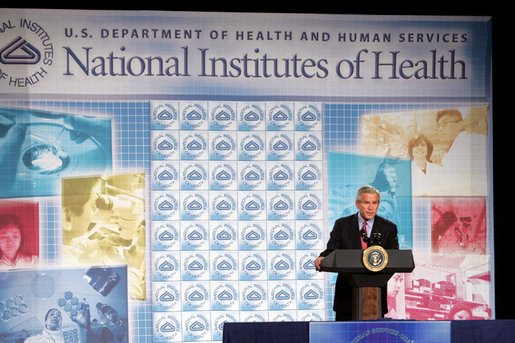
President Outlines Pandemic Influenza Preparations and Response

President Outlines Pandemic Influenza Preparations and Response, William Natcher Center, National Naval Medical Center, Bethesda, Maryland, 10:04 A.M. EST

President George W. Bush delivers his remarks regarding his National Strategy for Pandemic Influenza Preparedness and Response Tuesday, Nov. 1, 2005. 'Today, I am announcing key elements of that strategy. Our strategy is designed to meet three critical goals: First, we must detect outbreaks that occur anywhere in the world; second, we must protect the American people by stockpiling vaccines and antiviral drugs, and improve our ability to rapidly produce new vaccines against a pandemic strain; and, third, we must be ready to respond at the federal, state and local levels in the event that a pandemic reaches our shores,' said President Bush. White House photo by Paul MorsePresident George W. Bush delivers his remarks regarding his National Strategy for Pandemic Influenza Preparedness and Response Tuesday, Nov. 1, 2005. "Today, I am announcing key elements of that strategy.
Our strategy is designed to meet three critical goals: First, we must detect outbreaks that occur anywhere in the world; second, we must protect the American people by stockpiling vaccines and antiviral drugs, and improve our ability to rapidly produce new vaccines against a pandemic strain; and, third, we must be ready to respond at the federal, state and local levels in the event that a pandemic reaches our shores," said President Bush. White House photo by Paul Morse.

THE PRESIDENT: Thank you all. Michael, thank you very much for your introduction. And thanks for the warm reception here at the National Institute of Health. It's good to be back here again.

For more than a century, the NIH has been at the forefront of this country's efforts to prevent, detect and treat disease, and I appreciate the good work you're doing here. This is an important facility, an important complex, and the people who work here are really important to the security of this nation. The scientists who have been supported by the folks who work here have developed and improved vaccines for meningitis and whooping cough and measles and mumps and rubella and chickenpox, and other infectious diseases. Because of the revolutionary advances in medicine pioneered with the help of the NIH, Americans no longer fear these dreaded diseases -- many lives have been saved.

At this moment, the men and women of the NIH are working to protect the American people from another danger -- the risk of avian and pandemic influenza. Today, I have come to talk about our nation's efforts to address this vital issue to the health and the safety of all Americans. I'm here to discuss our strategy to prevent and protect the American people from a possible outbreak.

I appreciate members of my Cabinet who are here. More importantly, I appreciate the hard work you've done on this issue. Secretary Rice, Secretary Johanns, Secretary Mineta, Secretary Nicholson, Secretary Chertoff. I appreciate the fact that Dr. J.W. Lee, Director-General of the World Health Organization has joined us. Dr. Lee, thank you for being here.

I want to recognize Dr. David Nabarro, the Senior United Nations System Coordinator for Avian and Human Influenza. Thanks for being here. This is -- you're about to hear me talk about an international scope of response and detection necessary to protect not only our own people, but people around the world. And the fact that these two gentlemen are here is an important signal.

I want to thank Dr. Elias Zerhouni, he's the Director of the NIH; doing a fine job. I want to thank Julie Gerberding, who's the Director of the Centers for Disease Control and Prevention. I appreciate Dr. Rich Carmona, U.S. Surgeon General. Dr. Tony Fauci, Director of the National Institute of Allergy and Infectious Diseases. I want to thank Dr. Bruce Gellin, Director of the National Vaccine Program Office. I want to thank Dr. Andy von Eschenbach, who is the Acting Director of the FDA and the Director of the National Cancer Institute.

I appreciate all the members of the health care community who have joined us today. I want to thank state and local officials who are here. I particularly want to thank Senators Specter and Kennedy for coming, as well as Congressmen Linder, Burgess and Price. I appreciate you all taking time to be here.

Most Americans are familiar with the influenza or the "flu" as a respiratory illness that makes hundreds of thousands of people sick every year. This fall as the flu season approaches, millions of our fellow citizens are once again visiting their doctors for their annual flu shot. I had mine. For most, it's just simply a precautionary measure to avoid the fever or a sore throat or muscle aches that come with the flu. Seasonal flu is extremely dangerous for some -- people whose immune systems have been weakened by age or illness. But it is not usually life-threatening for most healthy people.

Pandemic flu is another matter. Pandemic flu occurs when a new strain of influenza emerges that can be transmitted easily from person to person -- and for which there is little or no natural immunity. Unlike seasonal flu, most people have not built up resistance to it. And unlike seasonal flu, it can kill those who are young and the healthy as well as those who are frail and sick.

At this moment, there is no pandemic influenza in the United States or the world. But if history is our guide, there is reason to be concerned. In the last century, our country and the world have been hit by three influenza pandemics -- and viruses from birds contributed to all of them. The first, which struck in 1918, killed over half-a-million Americans and more than 20 million people across the globe. One-third of the U.S. population was infected, and life expectancy in our country was reduced by 13 years. The 1918 pandemic was followed by pandemics in 1957 and 1968 which killed tens of thousands of Americans, and millions across the world.

Three years ago, the world had a preview of the disruption an influenza pandemic can cause, when a previously unknown virus called SARS appeared in rural China. When an infected doctor carried the virus out of China, it spread to Vietnam and Singapore and Canada within a month. Before long, the SARS virus had spread to nearly 30 countries on six continents. It infected more than 8,000 people and killed nearly 800. One elderly woman brought the virus from Hong Kong to Toronto, where it quickly spread to her son and then to others. Eventually, four others arrived with the virus and hundreds of Canadians fell ill with SARS, and dozens died.

By one estimate, the SARS outbreak cost the Asian-Pacific region about $40 billion. The airline industry was hit particularly hard, with air travel to Asia dropping 45 percent in the year after the outbreak. All this was caused by a limited outbreak of a virus that infected thousands and lasted about six months. A global influenza pandemic that infects millions and lasts from one to three years could be far worse.

Scientists and doctors cannot tell us where or when the next pandemic will strike, or how severe it will be, but most agree: at some point, we are likely to face another pandemic. And the scientific community is increasingly concerned by a new influenza virus known as H5N1 -- or avian flu -- that is now spreading through bird populations across Asia, and has recently reached Europe.

This new strain of influenza has infected domesticated birds like ducks and chickens, as well as long-range migratory birds. In 1997, the first recorded outbreak among people took place in Hong Kong, when 18 people became infected and six died from the disease. Public health officials in the region took aggressive action and successfully contained the spread of the virus. Avian flu struck again in late 2003, and has infected over 120 people in Thailand, Cambodia, Vietnam and Indonesia, and killed more than 60 -- that's a fatality rate of about 50 percent.

At this point, we do not have evidence that a pandemic is imminent. Most of the people in Southeast Asia who got sick were handling infected birds. And while the avian flu virus has spread from Asia to Europe, there are no reports of infected birds, animals, or people in the United States. Even if the virus does eventually appear on our shores in birds, that does not mean people in our country will be infected. Avian flu is still primarily an animal disease. And as of now, unless people come into direct, sustained contact with infected birds, it is unlikely they will come down with avian flu.

While avian flu has not yet acquired the ability to spread easily from human to human, there is still cause for vigilance. The virus has developed some characteristics needed to cause a pandemic: It has demonstrated the ability to infect human beings, and it has produced a fatal illness in humans. If the virus were to develop the capacity for sustained human-to-human transmission, it could spread quickly across the globe.

Our country has been given fair warning of this danger to our homeland -- and time to prepare. It's my responsibility as President to take measures now to protect the American people from the possibility that human-to-human transmission may occur. So several months ago, I directed all relevant departments and agencies in the federal government to take steps to address the threat of avian and pandemic flu. Since that time, my administration has developed a comprehensive national strategy, with concrete measures we can take to prepare for an influenza pandemic.

Today, I am announcing key elements of that strategy. Our strategy is designed to meet three critical goals: First, we must detect outbreaks that occur anywhere in the world; second, we must protect the American people by stockpiling vaccines and antiviral drugs, and improve our ability to rapidly produce new vaccines against a pandemic strain; and, third, we must be ready to respond at the federal, state and local levels in the event that a pandemic reaches our shores.

To meet these three goals, our strategy will require the combined efforts of government officials in public health, medical, veterinary and law enforcement communities and the private sector. It will require the active participation of the American people. And it will require the immediate attention of the United States Congress so we can have the resources in place to begin implementing this strategy right away.

The first part of our strategy is to detect outbreaks before they spread across the world. In the fight against avian and pandemic flu, early detection is our first line of defense. A pandemic is a lot like a forest fire: if caught early, it might be extinguished with limited damage; if allowed to smolder undetected, it can grow to an inferno that spreads quickly beyond our ability to control it. So we're taking immediate steps to ensure early warning of an avian or pandemic flu outbreak among animals or humans anywhere in the world.

In September at the United Nations, I announced a new International Partnership on Avian and Pandemic Influenza -- a global network of surveillance and preparedness that will help us to detect and respond quickly to any outbreaks of disease. The partnership requires participating countries that face an outbreak to immediately share information and provide samples to the World Health Organization. By requiring transparency, we can respond more rapidly to dangerous outbreaks.

Since we announced this global initiative, the response from across the world has been very positive. Already, 88 countries and nine international organizations have joined the effort. Senior officials from participating governments recently convened the partnership's first meeting here in Washington.

Together, we're working to control and monitor avian flu in Asia, and to ensure that all nations have structures in place to recognize and report outbreaks before they spread beyond human control. I've requested $251 million from Congress to help our foreign partners train local medical personnel, expand their surveillance and testing capacity, draw up preparedness plans, and take other vital actions to detect and contain outbreaks.

A flu pandemic would have global consequences, so no nation can afford to ignore this threat, and every nation has responsibilities to detect and stop its spread.

Here in the United States, we're doing our part. To strengthen domestic surveillance, my administration is launching the National Bio-surveillance Initiative. This initiative will help us rapidly detect, quantify and respond to outbreaks of disease in humans and animals, and deliver information quickly to state, and local, and national and international public health officials. By creating systems that provide continuous situational awareness, we're more likely to be able to stop, slow, or limit the spread of the pandemic and save American lives.

The second part of our strategy is to protect the American people by stockpiling vaccines and antiviral drugs, and accelerating development of new vaccine technologies. One of the challenges presented by a pandemic is that scientists need a sample of the new strain before they can produce a vaccine against it. This means it is difficult to produce a pandemic vaccine before the pandemic actually appears -- and so there may not be a vaccine capable of fully immunizing our citizens from the new influenza virus during the first several months of a pandemic.

To help protect our citizens during these early months when a fully effective vaccine would not be available, we're taking a number of immediate steps. Researchers here at the NIH have developed a vaccine based on the current strain of the avian flu virus; the vaccine is already in clinical trials. And I am asking that the Congress fund $1.2 billion for the Department of Health and Human Services to purchase enough doses of this vaccine from manufacturers to vaccinate 20 million people.

This vaccine would not be a perfect match to pandemic flu because the pandemic strain would probably differ somewhat from the avian flu virus it grew from. But a vaccine against the current avian flu virus would likely offer some protection against a pandemic strain, and possibly save many lives in the first critical months of an outbreak.

We're also increasing stockpiles of antiviral drugs such as Tamiflu and Relenza. Antiviral drugs cannot prevent people from contracting the flu. It can -- but they can reduce the severity of the illness when taken within 48 hours of getting sick. So in addition to vaccines, which are the foundation of our pandemic response, I am asking Congress for a billion dollars to stockpile additional antiviral medications, so that we have enough on hand to help treat first responders and those on the front lines, as well as populations most at risk in the first stages of a pandemic.

To protect the greatest possible number of Americans during a pandemic, the cornerstone of our strategy is to develop new technologies that will allow us to produce new vaccines rapidly. If a pandemic strikes our country -- if a pandemic strikes, our country must have a surge capacity in place that will allow us to bring a new vaccine online quickly and manufacture enough to immunize every American against the pandemic strain.

I recently met with leaders of the vaccine industry. They assured me that they will work with the federal government to expand the vaccine industry, so that our country is better prepared for any pandemic. Today, the NIH is working with vaccine makers to develop new cell-culture techniques that will help us bring a pandemic flu vaccine to the American people faster in the event of an outbreak. Right now, most vaccines are still produced with 1950's technology using chicken eggs that are infected with the influenza virus and then used to develop and produce vaccines. In the event of a pandemic, this antiquated process would take many, many months to produce a vaccine, and it would not allow us to produce enough vaccine for every American in time.

Since American lives depend on rapid advances in vaccine production technology, we must fund a crash program to help our best scientists bring the next generation of technology online rapidly. I'm asking Congress for $2.8 billion to accelerate development of cell-culture technology. By bringing cell-culture technology from the research laboratory into the production line, we should be able to produce enough vaccine for every American within six months of the start of a pandemic.

I'm also asking Congress to remove one of the greatest obstacles to domestic vaccine production: the growing burden of litigation. In the past three decades, the number of vaccine manufacturers in America has plummeted, as the industry has been flooded with lawsuits. Today, there is only one manufacturer in the United States that can produce influenza vaccine. That leaves our nation vulnerable in the event of a pandemic. We must increase the number of vaccine manufacturers in our country, and improve our domestic production capacity. So Congress must pass liability protection for the makers of life-saving vaccines.

By making wise investments in technology and breaking down barriers to vaccine production, we're working toward a clear goal: In the event of a pandemic, we must have enough vaccine for every American.

The third part of our strategy is to ensure that we are ready to respond to a pandemic outbreak. A pandemic is unlike other natural disasters; outbreaks can happen simultaneously in hundreds, or even thousands, of locations at the same time. And unlike storms or floods, which strike in an instant and then recede, a pandemic can continue spreading destruction in repeated waves that can last for a year or more.

To respond to a pandemic, we must have emergency plans in place in all 50 states and every local community. We must ensure that all levels of government are ready to act to contain an outbreak. We must be able to deliver vaccines and other treatments to frontline responders and at-risk populations.

So my administration is working with public health officials in the medical community to develop -- to develop effective pandemic emergency plans. We're working at the federal level. We're looking at ways and options to coordinate our response with state and local leaders. I've asked Mike Leavitt -- Secretary Leavitt -- to bring together state and local public health officials from across the nation to discuss their plans for a pandemic, and to help them improve pandemic planning at the community level. I'm asking Congress to provide $583 million for pandemic preparedness, including $100 million to help states complete and exercise their pandemic plans now, before a pandemic strikes.

If an influenza pandemic strikes, every nation, every state in this Union, and every community in these states, must be ready.

To respond to a pandemic, we need medical personnel and adequate supplies of equipment. In a pandemic, everything from syringes to hospital beds, respirators, masks and protective equipment would be in short supply. So the federal government is stockpiling critical supplies in locations across America as part of the Strategic National Stockpile. The Department of Health and Human Services is helping states create rosters of medical personnel who are willing to help alleviate local shortfalls during a pandemic. And every federal department involved in health care is expanding plans to ensure that all federal medical facilities, personnel, and response capabilities are available to support local communities in the event of a pandemic crisis.

To respond to a pandemic, the American people need to have information to protect themselves and others. In a pandemic, an infection carried by one person can be transmitted to many other people, and so every American must take personal responsibility for stopping the spread of the virus. To provide Americans with more information about pandemics, we're launching a new website, pandemicflu.gov. That ought to be easy for people to remember: pandemicflu.gov. The website will keep our citizens informed about the preparations underway, steps they can take now to prepare for a pandemic, and what every American can do to decrease their risk of contracting and spreading the disease in the event of an outbreak.

To respond to a pandemic, members of the international community will continue to work together. An influenza pandemic would be an event with global consequences, and therefore we're continuing to meet to develop a global response. We've called nations together in the past, and will continue to call nations together to work with public health experts to better coordinate our efforts to deal with a disaster.

Now, all the steps I've outlined today require immediate resources. Because a pandemic could strike at any time, we can't waste time in preparing. So to meet all our goals, I'm requesting a total of $7.1 billion in emergency funding from the United States Congress. By making critical investments today, we'll strengthen our ability to safeguard the American people in the awful event of a devastating global pandemic, and at the same time will bring our nation's public health and medical infrastructure more squarely in the 21st century.

The steps I have outlined will also help our nation in other critical ways. By perfecting cell-based technologies now, we will be able to produce vaccines for a range of illnesses and save countless lives. By strengthening our domestic vaccine industry, we can help ensure that our nation will never again have a shortage of vaccine for seasonal -- seasonal flu. And by putting in place and exercising pandemic emergency plans across the nation, we can help our nation prepare for other dangers -- such as a terrorist attack using chemical or biological weapons.

Leaders at every level of government have a responsibility to confront dangers before they appear, and engage the American people on the best course of action. It is vital that our nation discuss and address the threat of pandemic flu now. There is no pandemic flu in our country or in the world at this time -- but if we wait for a pandemic to appear, it will be too late to prepare, and one day many lives could be needlessly lost because we failed to act today.

By preparing now, we can give our citizens some peace of mind knowing that our nation is ready to act at the first sign of danger, and that we have the plans in place to prevent and, if necessary, withstand an influenza pandemic.

Thank you for coming today to let me outline my strategy. Thank the United States Congress for considering this measure. May God bless you all. (Applause.)

END 10:30 A.M. EST, For Immediate Release, Office of the Press Secretary, November 1, 2005

RELATED: Thursday, October 27, 2005
HHS Buys Vaccine Preparations For Potential Influenza Pandemic. Sunday, October 16, 2005 FLU VIRUS REPORTED TO RESIST DRUG ENVISIONED FOR PANDEMIC . Sunday, October 09, 2005 Researchers Reconstruct 1918 Pandemic Influenza Virus . Tuesday, August 09, 2005 Bird Flu Cases Increase . Sunday, August 07, 2005 universal flu vaccine . Tuesday, April 05, 2005 Avian Influenza in Asia . Sunday, March 27, 2005 Experimental Avian Flu Vaccine

more at and or and and or and or and or and

Monday, October 31, 2005

President Nominates Judge Samuel A. Alito (VIDEO)

President Nominates Judge Samuel A. Alito as Supreme Court Justice, FULL ETREAMING VIDEO, The Cross Hall 8:01 A.M. EST

With President George W. Bush looking on, Judge Samuel A. Alito acknowledges his nomination Monday, Oct. 31, 2005, as Associate Justice of the U.S. Supreme Court. White House photo by Paul MorseWith President George W. Bush looking on, Judge Samuel A. Alito acknowledges his nomination Monday, Oct. 31, 2005, as Associate Justice of the U.S. Supreme Court. White House photo by Paul Morse
THE PRESIDENT: Good morning. I'm pleased to announce my nomination of Judge Samuel A. Alito, Jr., as Associate Justice of the Supreme Court of the United States. Judge Alito is one of the most accomplished and respected judges in America, and his long career in public service has given him an extraordinary breadth of experience.

As a Justice Department official, federal prosecutor and judge on the United States Court of Appeals, Sam Alito has shown a mastery of the law, a deep commitment of justice, and a -- and he is a man of enormous character. He's scholarly, fair-minded and principled, and these qualities will serve our nation well on the highest court of the land.

Judge Alito showed great promise from the beginning in studies at Princeton and Yale Law School; as editor of the Yale Law Journal; as a clerk for a federal court of appeals judge. He served in the Army Reserves and was honorably discharged as a captain. Early in his career, Sam Alito worked as a federal prosecutor and handled criminal and civil matters for the United States. As assistant to the solicitor general, he argued 12 cases before the Supreme Court, and has argued dozens of others before the federal courts of appeals.

He served in the Justice Department's Office of Legal Counsel providing constitutional advice for the President and the executive branch. In 1987, President Ronald Reagan named him the United States Attorney for the District of New Jersey, the top prosecutor in one of the nation's largest federal districts, and he was confirmed by unanimous consent by the Senate. He moved aggressively against white-collar and environmental crimes, and drug trafficking, and organized crime, and violation of civil rights.

In his role, Sam Alito showed a passionate commitment to the rule of law, and he gained a reputation for being both tough and fair. In 1990, President Bush nominated Sam Alito, at the age of 39, for the United States Court of Appeals for the 3rd Circuit. Judge Alito's nomination received bipartisan support and he was again confirmed by unanimous consent by the United States Senate. Judge Alito has served with distinction on that court for 15 years and now has more prior judicial experience than any Supreme Court nominee in more than 70 years.

Judge Alito's reputation has only grown over the span of his service. He has participated in thousands of appeals and authored hundreds of opinions. This record reveals a thoughtful judge who considers the legal matter -- merits carefully and applies the law in a principled fashion. He has a deep understanding of the proper role of judges in our society. He understands that judges are to interpret the laws, not to impose their preferences or priorities on the people.

In the performance of his duties, Judge Alito has gained the respect of his colleagues and attorneys for his brilliance and decency. He's won admirers across the political spectrum. I'm confident that the United States Senate will be impressed by Judge Alito's distinguished record, his measured judicial temperament, and his tremendous personal integrity. And I urge the Senate to act promptly on this important nomination so that an up or down vote is held before the end of this year.

Today, Judge Alito is joined by his wife, Martha, who was a law librarian when he first met her. Sam and I both know you can't go wrong marrying a librarian. Sam and Martha's two children, Phil and Laura, are also with us, and I know how proud you are of your dad today. I'm sure, as well, that Judge Alito is thinking of his mom, Rose, who will be 91 in December. And I know he's thinking about his late father. Samuel Alito, Sr., came to this country as an immigrant child from Italy in 1914, and his fine family has realized the great promise of our country.

Judge, thanks for agreeing to serve, and congratulations on your nomination.

JUDGE ALITO: Thank you, Mr. President. Thank you very much, Mr. President. I am deeply honored to be nominated to serve on the Supreme Court, and I am very grateful for the confidence that you have shown in me.

The Supreme Court is an institution that I have long held in reverence. During my 29 years as a public servant, I've had the opportunity to view the Supreme Court from a variety of perspectives -- as an attorney in the Solicitor General's Office, arguing and briefing cases before the Supreme Court, as a federal prosecutor, and most recently for the last 15 years as a judge of the Court of Appeals. During all of that time, my appreciation of the vital role that the Supreme Court plays in our constitutional system has greatly deepened.

I argued my first case before the Supreme Court in 1982, and I still vividly recall that day. I remember the sense of awe that I felt when I stepped up to the lectern. And I also remember the relief that I felt when Justice O'Connor -- sensing, I think, that I was a rookie -- made sure that the first question that I was asked was a kind one. I was grateful to her on that happy occasion, and I am particularly honored to be nominated for her seat.

My most recent visit to the Supreme Court building was on a very different and a very sad occasion: It was on the occasion of the funeral of Chief Justice William Rehnquist. And as I approached the Supreme Court building with a group of other federal judges, I was struck by the same sense of awe that I had felt back in 1982, not because of the imposing and beautiful building in which the Supreme Court is housed, but because of what the building, and, more importantly, the institutions stand for -- our dedication as a free and open society to liberty and opportunity, and, as it says above the entrance to the Supreme Court, "equal justice under law."

Every time that I have entered the courtroom during the past 15 years, I have been mindful of the solemn responsibility that goes with service as a federal judge. Federal judges have the duty to interpret the Constitution and the laws faithfully and fairly, to protect the constitutional rights of all Americans, and to do these things with care and with restraint, always keeping in mind the limited role that the courts play in our constitutional system. And I pledge that if confirmed I will do everything within my power to fulfill that responsibility.

I owe a great deal to many people who have taught me over the years about the law and about judging, to judges before whom I have appeared, and to colleagues who have shown me with their examples what it means to be a fair and conscientious and temperate judge.

I also owe a great deal, of course, to the members of my family. I wish that my father had lived to see this day. He was an extraordinary man who came to the United States as a young child, and overcame many difficulties and made many sacrifices so that my sister and I would have opportunities that he did not enjoy.

As the President mentioned, my mother will be celebrating her 91st birthday next month. She was a pioneering and very dedicated public school teacher who inspired my sister and me with a love of learning. My wife, Martha, has been a constant source of love and support for the past 20 years. My children, Philip and Laura, are the pride of my life and they have made sure that being a judge has never gone to my head -- they do that very well on a, pretty much, daily basis. And my sister, Rosemary, has always been a great friend and an inspiration as a great lawyer, and as a strong and independent person.

I look forward to working with the Senate in the confirmation process. Mr. President, thank you, once again, for the confidence that you've shown in me and for honoring me with this nomination.

END 8:11 A.M. EST, For Immediate Release, Office of the Press Secretary, October 31, 2005

more at or
and or and or and or

Vice President appointed David S. Addington chief of staff

The Vice President today appointed David S. Addington of Virginia to be the chief of staff to the Vice President. The Vice President also appointed John P. Hannah of the District of Columbia as the Assistant to the Vice President for National Security Affairs.

Mr. Addington has served in the position of Counsel to the Vice President since January 20, 2001. In prior Federal service, Mr. Addington served at the Central Intelligence Agency, the Department of Defense, the White House, and four congressional committees. In the private sector, he headed a multicandidate political action committee, practiced law with two firms, and headed the law department of a trade association. Mr. Addington is a graduate of the Georgetown University School of Foreign Service and the Duke University School of Law.

Mr. Hannah has served on the national security staff in the Office of the Vice President since March 2001 and is currently the Principal Deputy Assistant to the Vice President for National Security Affairs. In prior Federal service, Mr. Hannah served at the Department of State. In the private sector, Mr. Hannah practiced law in Washington, D.C. and served as a senior official of a Washington-based foreign policy research organization. Mr. Hannah is a graduate of Duke University and the Yale Law School.

# # # For Immediate Release, Office of the Vice President, October 31, 2005, Personnel Announcement

more at
and or and

Proclamation by the President: Death of Rosa Parks

Proclamation by the President: Death of Rosa Parks, A Proclamation by the President of the United States of America

President George W. Bush and Laura Bush present the Executive Branch Wreath during a wreath-laying ceremony in honor of Rosa Parks, in the Rotunda of the U.S. Capitol in Washington, D.C., Sunday Oct. 30, 2005. White House photo by Shealah CraigheadPresident George W. Bush and Laura Bush present the Executive Branch Wreath during a wreath-laying ceremony in honor of Rosa Parks, in the Rotunda of the U.S. Capitol in Washington, D.C., Sunday Oct. 30, 2005. White House photo by Shealah Craighead
As a mark of respect for the memory of Rosa Parks, I hereby order, by the authority vested in me by the Constitution and laws of the United States of America, that on the day of her interment, the flag of the United States shall be flown at half-staff at the White House and upon all public buildings and grounds, at all military posts and naval stations, and on all naval vessels of the Federal Government in the District of Columbia and throughout the United States and its Territories and possessions until sunset on such day. I also direct that the flag shall be flown at half-staff for the same period at all United States embassies, legations, consular offices, and other facilities abroad, including all military facilities and naval vessels and stations.

IN WITNESS WHEREOF, I have hereunto set my hand this thirtieth day of October, in the year of our Lord two thousand five, and of the Independence of the United States of America the two hundred and thirtieth.

GEORGE W. BUSH

# # # For Immediate Release, Office of the Press Secretary, October 30, 2005

more at
and