Friday, January 27, 2006

State Department Podcast and Text 01/25/06

Daily Press Briefing, Sean McCormack Spokesman, file is MP3 for PODCAST, running time is 46:49 , Washington, DC, January 25, 2006
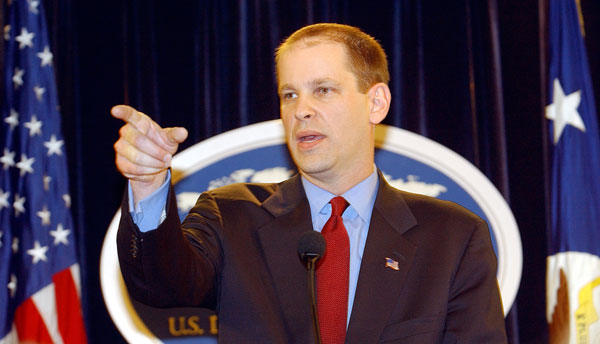
Department Spokesman Sean McCormack (shown during the  Daily Press Briefing) was sworn in as Assistant Secretary for Public Affairs and Department Spokesman on June 2, 2005. Immediately prior to returning to the State Department, Mr. McCormack served as Special Assistant to the President, Spokesman for the National Security Council, and Deputy White House Press Secretary for Foreign Policy. State Department Photo by Michael Gross.Department Spokesman Sean McCormack (shown during the Daily Press Briefing) was sworn in as Assistant Secretary for Public Affairs and Department Spokesman on June 2, 2005. Immediately prior to returning to the State Department,
Mr. McCormack served as Special Assistant to the President, Spokesman for the National Security Council, and Deputy White House Press Secretary for Foreign Policy. State Department Photo by Michael Gross.TRANSCRIPT: 12:10 p.m. EST

MR. MCCORMACK: Good afternoon. I don't have any opening statements so I'll be pleased to get right into questions. Who's got the first one? Ann Gearan.

QUESTION: What do you make of the latest from Iran on the Russian offsite enrichment proposal and is -- do you think this is a stalling tactic or is it likely to stymie the push to the IAEA meeting next week?

MR. MCCORMACK: There are no changes in our plans and our views on the matter. We believe that at the February 2nd Board of Governors meeting that there should be a vote for referral to the Security Council. As we've said many times before, we believe we have the votes for that referral. Iran, time and time again, has been given chance after chance in order to answer the questions of the international community, the IAEA and to assure -- give objective assurances to the international community that Iran is not seeking to build a nuclear weapon under cover of a civilian nuclear program. They have been found in noncompliance with their treaty obligations. They have broken their promises to the EU-3 in an agreement that they made with the EU-3. So there's a long trail here of broken promises on behalf of the Iranian -- from the Iranians.

Now, what I have seen -- I have seen the news reports about what Mr. Larijani has said resulting -- as a result from his talks. He offers more words. The quote here, I believe from an AP story, is, "Our view of this offer is positive and we tried to bring the positions of the sides closer. This plan can be perfected in the future during further talks that will be held in February." He went on to say that if Iran is referred to the Security Council that they would not engage in discussions with the Russians on this matter. This, frankly -- and all the while they're doing this, they are continuing to get their centrifuge operation up and running.

All of this is to say they, again, want to have it both ways: They want to continue down the road of the behaviors that are the exact source of concern for the international community while they continue to try to draw out discussions on those very same concerns without actually getting to any agreeable diplomatic end point.

QUESTION: Are they going to forestall the vote?

MR. MCCORMACK: Over the years, they have made every effort to try to avoid being referred to the Security Council. I think that this is just one more move that they're making. I would expect that you'll probably continue to see these, this kind of behavior. A lot of rhetoric without any action, and that's what we have again here.

QUESTION: One more follow on that. You said you have the votes. Do you have assurances from Russia that even with this sort of half on the table or whatever state it's in, that Russia will vote for referral?

MR. MCCORMACK: Well, we encourage the Russian Government to vote for referral. We believe it's time. Many other members of the international community believe it's time as well. Ultimately, how the Russian Government decides to vote will be up to them on this particular matter. But there is a baseline of common understanding among the United States, the European Union states, Russia, China, that they all believe that Iran should not be allowed to obtain a nuclear weapon and that Iran, through its recent actions, has crossed a line.

So that's a common base of operating assumptions. Right now, we're talking with the Russians as well as others about what the diplomatic next steps should be. We believe those next steps should be a Board of Governors meeting on February 2nd followed by referral to the Security Council, and we are currently discussing with the Russians as well as others about once the issue does arrive at the Security Council how it will be -- how it should be dealt with.

Yes.

QUESTION: You say Iran is all word, no action. What kind of action they should take?

MR. MCCORMACK: Well, I guess I should say action in the wrong direction. The direction that they're taking is starting up the centrifuges, machining parts -- replacement parts -- for their centrifuges, getting this cascade up and running so they can introduce the uranium hexafluoride, which after time and once you've perfected the techniques, you can produce highly enriched uranium which can be used to build a nuclear weapon. So the Secretary has talked about this previously. If, in fact, they are serious about arriving at a diplomatic solution, they should take actions to address the concerns of the international community concerning their behavior. We have seen none of that so far and, in fact, they're headed the other direction.

QUESTION: What action? What exactly?

MR. MCCORMACK: Well, the source of concern for the international community is their -- there are many sources of concern. We are concerned -- continue to be concerned about the conversion program, but the main critical point -- technological point -- in the process for developing a nuclear weapon is the enrichment technology and perfecting how you do that: getting the materials for it, getting the know-how to perfect the techniques to enrich uranium, so ultimately you can have the highly enriched uranium. Our concerns and the world's concerns center primarily around their activities concerning enrichment.

QUESTION: So there is no specific measure Tehran could take to avoid --

MR. MCCORMACK: Again, this is not for the international community to say, well, if you do x, y, and z. This has gotten to the point where it is up to Iranians now to demonstrate to the international community that they are ready to engage in a diplomatic solution that will arrive at a mutually agreed solution to this problem. They want to make this an issue of their rights. Well, it's not about their rights; it's about their obligations. And continuously, over the course of time, they have sought to undermine what they have committed to do under the Nonproliferation Treaty. They have sought to develop a nuclear weapon under the cover of a civilian nuclear program.

So we believe that the appropriate diplomatic next step, which we and others hope will lead to a diplomatic solution, is to go to the Security Council. And perhaps the weight of going to the Security Council, the context of discussing this issue in the Security Council will provide some incentive for the Iranian regime to reconsider the steps that it has taken, in the direction and the path that it has followed.

QUESTION: If I can have another one, can you give us some details about what you expect from the meeting on Monday in London?

MR. MCCORMACK: Oh, thanks for bringing that up. Update on the Secretary's schedule: We'll be leaving this weekend to go to London for the previously announced visit to the Afghanistan conference. Also while in London there will be a Quartet meeting as well as a dinner at the ministerial level of the P-5, at which time they'll talk about Iran and diplomatic next steps. So that's what's on the agenda of the P-5 dinner.

Saul.

QUESTION: So what are you doing about what happens at the Security Council? Just now you said, you know, the weight of the Security Council to discuss it is important. I just wonder if you're opening the door to the possibility that the Feb. 2 meeting won't actually be for a formal referral but will be a report to --

MR. MCCORMACK: We made clear referral is referral is referral.

QUESTION: New subject?

MR. MCCORMACK: I don't know. Everybody agreeable to that?

All right, Nicholas, you have the floor.

QUESTION: The Mexican Government has announced that it's going to be issuing maps of dangerous places along the border with the United States, of places with cell phone coverage. I wonder what do you think about that and is that not going to basically encourage people to cross the border illegally?

MR. MCCORMACK: I've seen these reports and we're trying to verify them. Let me just say that no government, including the Government of Mexico, should facilitate or encourage its citizens to try to enter the United States outside established legal procedures. We have worked for some time with the Mexican Government on these issues. The President has made his views clear on these issues in terms of trying to deal with this question of immigration. He has outlined his views on the matter and it's a source of continuing discussion, not only in the United States but also with the Mexican Government.

That said, every government around the world should expect the United States is going to take whatever steps it deems necessary to protect its own borders and to protect the sovereignty of the United States and uphold the laws of the United States. So while there is this ongoing discussion concerning the issue of immigration, it's certainly in the news --while that discussion is going on, certainly we in the United States Government will watch carefully other governments' attitudes towards respect for our border.

QUESTION: And that includes -- when you say to protect the borders, that includes use of force?

MR. MCCORMACK: Well, again, how and what way the borders are monitored is a question for the Department of Homeland Security.

QUESTION: Just one more thing. I'm sorry. Do you have anything to say on the incident a few days ago with Texas police and the Mexicans who were dressed like policemen, but apparently now the Mexican Government is saying they were drug smugglers, drug traffickers?

MR. MCCORMACK: Again, on that, there have been some preliminary reports from local U.S. law enforcement. And the Department of Homeland Security has also been apprised of this incident. We have communicated at the diplomatic level with the Government of Mexico on the matter and request that they investigate the matter and that U.S. authorities are already investigating the incident. So on our side, people are already looking into it and we've asked the Mexicans to look into it as well.

QUESTION: Can I follow up on that? This is in relation to a letter that Senator Kyl sent to the Secretary about the military incursions. Is there any reaction to what he's proposing and -- I mean, what kind of action are you considering on the part of the U.S.?

MR. MCCORMACK: I haven't seen the letter that Senator Kyl sent the Secretary, but I think I've stated clearly a general principle that reflects our view concerning borders and the issue of immigration.

QUESTION: Well, but this is particularly about the military. This is particularly about military incursions by the Mexican military crossing the border to go after Mexican citizens. I mean --

MR. MCCORMACK: Well, you bring this up in the context of the letter from Senator Kyl. I haven't seen what's in the letter from Senator Kyl. I do -- I am aware of the fact that there have been reports of these kinds of incursions. Certainly, these reports are a source of concern and I would expect that the Department of Homeland Security would look into each and every one of these. I know that they would be concerned by these reports.

As for the validity of and the particular circumstances surrounding these alleged incursions, I don't have the information for you and that's really a question better posed to the Department of Homeland Security.

QUESTION: But at the same time, I mean, you talk about that you should respect U.S. sovereignty in terms of U.S. -- Mexican citizens crossing the border. I mean, wouldn't something like that be an also a kind of egregious violation of U.S. sovereignty if another military is crossing the U.S. border?

MR. MCCORMACK: Again, I just talked about the fact that these are reports. The Department of State is not the cabinet agency responsible for monitoring the U.S. border. I have talked about generally the principle of sovereignty and the importance of that to the United States Government and the American people. Now, in terms of any particular incidents that are alleged to have occurred and the details surrounding that and the context in which they may or may not have taken place, that's the Department of Homeland Security.

QUESTION: Can you check, Sean, whether -- make sure that the letter's been received here that the Senator -- Senator Kyl sent?

MR. MCCORMACK: If there's anything I have to add, I'll -- we can find out. I'll let you know. we don't comment on every piece of correspondence that comes in from Capitol Hill.

QUESTION: Well, he said he sent it so, I mean, I'm sure it's been received.

MR. MCCORMACK: Again, I have no doubt. But what I'm also saying is that we do not offer comment on every piece of correspondence that comes in from Capitol Hill, as a rule.

QUESTION: Only when you want to.

QUESTION: Well, I understand, Sean, but he's --

MR. MCCORMACK: Well, you only ask about it when you want to, so there's two sides to that.

QUESTION: He's calling specifically for an investigation into these particular matters, so -- of the military incursions.

MR. MCCORMACK: If we have anything to add on that, I'll let you know.

QUESTION: Okay, thank you.

MR. MCCORMACK: Saul.

QUESTION: Can I take you back to the Quartet meeting?

MR. MCCORMACK: Sure.

QUESTION: The last Quartet statement, if I remember rightly, was very clear about the makeup of any Palestinian Authority, saying that there shouldn't be a cabinet member who belongs to a party that hasn't renounced violence. Is that --

MR. MCCORMACK: That's right.

QUESTION: Is that still the case? That's still valid even though we've --

MR. MCCORMACK: Yes.

QUESTION: -- we've got these elections where Hamas may do well?

MR. MCCORMACK: Yeah. Well, certainly, we have the issue of Palestinian elections before us. I think that, first off, I would say that it's a great day for the Palestinian people. This is a historic moment for them. And the violence -- the elections, as I understand it, have unfolded in a way that has been relatively free from violence. Turnout has been high. And this should be a day for celebration for the Palestinian people. They are able to express their views and express their will through the ballot box.

As for the results of the election, we'll see. I think that in some places the polls are still open, so we'll see over the next 24 to 48 hours what the results of the election are, what government results from those elections and what policies that government pursues. So that's several steps down the line.

But what I can tell you is that our policy reaction to any policies that might be pursued by a future Palestinian Authority at this point will be guided by -- I would point you to three things.

One, the roadmap. All the parties in the region have signed up to the roadmap. And one particular part of that, of the roadmap, calls for the -- calls upon the Palestinian Authority to act to prevent acts of terror, as well as to dismantle terrorist networks. That is an obligation that the Palestinian Authority has committed itself to and one that the international community -- not just the United States, the international community -- expects them to live up to.

The second is the Quartet statement that you mentioned, Saul. And in that statement there are a couple of sentences that I would refer you back to specifically.

The Quartet -- on behalf of the Quartet, that "Ultimately, those who want to be part of the political process should not engage in armed group or militia activities for there is a fundamental contradiction between such activities and the building of a democratic state. In this regard, the Quartet calls on all participants to renounce violence and recognize Israel's right to exist and disarm."

And the second sentence is the one you cited, "In particular, the Quartet expressed its view that a future Palestinian Authority cabinet should include no member who is not committed to the principles of Israel's right to exist in peace and security and an unequivocal end to violence and terrorism."

And the third I would refer you to, the third statement I would refer you to, is the Secretary's January 11th statement about Palestinian elections in which she refers back to the Quartet statement of December 28th which I just read from. And she also goes on to add, "Development of a Palestinian democracy based on tolerance and liberty is a key element of the roadmap. To participate in a peace process of Israelis and Palestinians, the Palestinian partner must at least accept Israel's right to exist. To implement agreements on movement and access for the Palestinian territories, the Palestinian partner must be committed to preventing violence. In short, the Palestinian partner must be committed to peaceful development."

So these are the essential elements, which will be guiding us as well as other members of the Quartet as we move forward in this process. Today is a day of celebration for the Palestinian people. We will see what these elections bring, what government, what the composition of that government is and what the policies are that that government pursues.

QUESTION: Can I just -- you said they're the essential elements that are going to guide you.

MR. MCCORMACK: Mm-hmm.

QUESTION: But is it tantamount to laying down conditions for how Hamas could join a government?

MR. MCCORMACK: Again, we are several steps away from what -- who might comprise a Palestinian government. But the sentence that you refer to and the one that I just read in the Quartet statement is still operative. In our view, and the Secretary said this over and over again and it's in the January 11th statement, the Palestinian people need to resolve the fundamental contradiction of groups and individuals who want to have one foot in the camp of terror and one foot in the democratic political process. You can't have that. There needs to be a choice that is made.

President Abbas has stated very clearly that the Palestinian Authority is committed to the rule of one law and one gun, that the Palestinian Authority should be the sole authority that provides security for the Palestinian people and that secures a better future for the Palestinian people. You can't have armed militias running around in a democracy outside the rule of law, which is the situation that you have now. That, of course, needs to change; that is, of course, what is called for in the roadmap. That is what the Quartet has very clearly stated.

So again, as for what the future Palestinian Authority looks like, we'll see. But in terms of our views of the matter, we'll be guided by the principles that have been outlined in the Quartet statement as well as the roadmap and the statements from the Secretary. As for Hamas, we view Hamas as a terrorist organization. We don't deal with Hamas. And under the current circumstances, I don't see that changing.

QUESTION: Can I follow up?

MR. MCCORMACK: Sure.

QUESTION: There was a similar situation, as you know, in Lebanon with some members of Hezbollah becoming part of the cabinet. And what did the United States do in terms of U.S. aid to the particular ministries that they run? And there have been some reports that the U.S. might reconsider or, you know, kind of review and take another look at the aid that it's giving to the Palestinians should Hamas become part of the cabinet. How do you think this will affect U.S. aid to the Palestinians directly?

MR. MCCORMACK: Well, as for the situation in Lebanon, I believe there's one cabinet minister who's a member of Hezbollah and I think, actually, at the moment, they are not active in the cabinet because of some political disagreements in Lebanon.

As for aid levels to Lebanon, I don't have those facts in front of me. Hezbollah is a terrorist organization. We don't deal with Hezbollah. We certainly have continued to deal with Prime Minister Senor, as well as other members of his cabinet who have been democratically elected, who are committed to the course of a peaceful democracy.

As for what potential future policy actions the United States or the Quartet takes, we'll see. Again, those -- any particular policy course will be guided by what decisions the Palestinians make concerning their cabinet, concerning their government and the policies that they pursue. We certainly stand prepared to work with a Palestinian government that is committed to achieving the two-state solution through peaceful means, across the bargaining table, across the negotiating table, not at the point of a gun.

Yes.

QUESTION: I mean, but do whatever arrangements or accommodations the U.S. had to make in order to steer clear of the one Hezbollah cabinet minister in Lebanon provide any model for how you might proceed with the Palestinians?

MR. MCCORMACK: I think the Quartet statement is very clear on this matter, that the Palestinian Authority cabinet should include no member who is not committed to the principles of Israel's right to exist in peace and security and an unequivocal end to violence and terrorism. Those are two conditions currently that Hamas does not meet.

QUESTION: For sure. But the fact remains that if, even in the face of that statement, such cabinet ministers exist, is the Hezbollah situation in Lebanon any sort of a model for how you proceed?

MR. MCCORMACK: I wouldn't point -- necessarily point you in that direction.

QUESTION: I think the question is, Sean, that that's a recommendation from the Quartet. There's no condition put on it. There's no, "There should not be a minister or else." And so I'm wondering, if your recommendation is ignored, then what do you do?

MR. MCCORMACK: Well, I think that's what I've been trying to convey here is that what I've outlined is a set of principles that will guide us, that will guide the Quartet. As for any policy reactions to any changes in the Palestinian Authority or different policies that they might pursue, these are the principles that will guide us. Currently, you have a Palestinian Authority that is committed to the roadmap, that is committed to be a peaceful partner with the Israeli Government in seeking to resolve differences between the two across the negotiating table in a peaceful manner. Certainly, if there are any changes in that policy, which I have not heard from President Abbas, these principles would guide us.

QUESTION: There's one phrase that you've used which is: "We don't deal with Hamas and I don't see that changing." Can you just --

MR. MCCORMACK: I say given the current circumstances, I don't see that changing. I don't see any material change in their actions --

QUESTION: Yeah. Just --

MR. MCCORMACK: -- or their charter.

QUESTION: Just to clarify sort of the parameters of that, the way you might interpret that is you can still deal with a Palestinian Authority that has a Hamas cabinet member.

MR. MCCORMACK: Again, you know, that's getting several steps down the line here. That's not the -- those aren't the facts, as we have right them now. The Quartet has made it very clear that the Palestinian cabinet should not include any member who does not recognize Israel's right to exist or has not renounced violence.

QUESTION: But are you conditioning U.S. aid on that?

MR. MCCORMACK: Again, I have been saying several times over here that these are the principles that will be guiding us. As for what policies the United States and the Quartet pursues, based on what kind of Palestinian Authority there is, what kind of policies they pursue, we'll see. We're not there yet. Today is election day. The polls haven't even closed in every place so we don't have results of the election. We don't know what the Palestinian Authority cabinet is going to look like. We don't know what the policies are that they are going to pursue. President Abbas has said that he is committed to pursuing the policy -- pathway to peace through negotiations, based on the roadmap.

QUESTION: I'm sorry, but it’ll be just one more. You say that your policies will be guided by that, but is there something to be said for making it clear what you will do if certain policies by the Palestinian government are or are not pursued? I mean, are you going to make it clear to the new Palestinian government that this is what you expect to see and your policies will be guided by that? I mean, the way you talk about it is you're going to be reactive rather than preventative or proactive.

MR. MCCORMACK: Well, our assumption is the Palestinian Authority will continue to pursue the policies -- the course that it has followed. Certainly, that is our hope, that is our encouragement. That is the way for the Palestinian people to realize a better way of life -- commitment to the roadmap, commitment to fight terror, commitment to dismantle terrorist organizations, a commitment to build the institutions, democratic institutions, that could form the foundation of a state. That is the current pathway that the Palestinian Authority is on.

QUESTION: Can you clarify something Ambassador Jones is reported to have said in Israel? Haaretz says that he actually did cite the Hezbollah situation as a model for how the Administration would deal with a Hamas cabinet member

MR. MCCORMACK: I've seen these news reports. I hadn't talked about it. I don't know if that's an accurate quote or not. I think what I have done here is outlined what our thinking is on the matter.

QUESTION: Do we have to understand that the meeting of -- the Quartet meeting this weekend will be organized to coordinate the positions of the Quartet on Hamas?

MR. MCCORMACK: I think that the issue isn't Hamas. The issue is the Palestinian people, what does the Palestinian Authority look like, what are the decisions that that cabinet takes in terms of its policies. This is a transitional period for the Palestinian people, for the Palestinian political process. I think we're seeing that. And what the Quartet has done is they have gotten together on a regular basis to exchange views and to coordinate those views and coordinate our policies so that we can all make those policies and our subsequent actions, based on those policies, helpful in getting to the end state that we all desire, and that is the two-state solution. And that's going to be the topic of discussion at the London meeting.

Yes, Libby.

QUESTION: I just -- Reuters is reporting that 40 percent -- exit polls show 40 percent of the vote going to Fatah and 30 percent going to Hamas. I know that's early exit polling, but is there any initial reaction to that?

MR. MCCORMACK: Well, first thing, you know, citing Reuters -- (laughter) -- Sorry, Saul, just joking.

QUESTION: Sorry. I'll just say wires.

MR. MCCORMACK: Just joking, just kidding, just kidding. Look, I think the media in the U.S. and certainly this Administration, I think, is a bit wary of exit polling, so we're going to wait to see what we have in terms of a little more solid information concerning the results before we have any particular comment on the outcome.

QUESTION: Differently about the elections, you've encouraged that the Palestinian Authority to hold elections today, you've even celebrated the fact that they're happening.

MR. MCCORMACK: Mm-hmm.

QUESTION: Isn't there a logic that you have to accept the results?

MR. MCCORMACK: Well, the results, we hope, will reflect the will of the Palestinian people. There evidently was among the Palestinian people some support for Hamas and that wasn't created by these elections; it existed. Now, what the reasons were for individuals choosing Hamas in the vote or choosing to support them, you know, I'm not going to get into trying to analyze those. But we'll see what the international observers have to say about the elections and whether or not they were free and fair, whether or not they reflect the will of the Palestinian people. We have every expectation at this point, based on what we have seen, that they will.

Now, in terms of, you know, in terms of who is seated in the Palestinian Legislative Council, that will be based on these elections. Now, in terms of what cabinet the Palestinian officials choose to form and the policies that that cabinet pursues is an open question; they have a choice in that regard. And certainly, we have demonstrated that we are committed to working with a Palestinian Authority that is a partner for peace and that it is committed to its obligations under the roadmap and the other obligations that it has made. It is certainly our hope that we will continue to work with such a Palestinian Authority, but we will see what the outcome of these elections brings in terms of a Palestinian cabinet and the policies that it pursues. Our policy response to any changes in those regards will be guided by the principles that we've talked about during this briefing.

QUESTION: Can I just go on a more philosophical note? You said this is a day for celebration, but there's one element I don't understand why we should celebrate, and that is a group that you say is a terrorist group, that vows to destroy Israel, that is proud of having killed people with suicide bombs, is out in the streets campaigning, has people, you know, having political rallies and celebrating their, you know, election votes. What's good about that?

MR. MCCORMACK: Well, it gets back to a little bit of what I was just saying, and that is that support for Hamas among a certain quarter of the Palestinian people existed before and it wasn't created by this election. But what you have now, in terms of an election, is the ability of the Palestinian people to participate and invest in a political process. And we have seen, time and again, that the opening of a political process and getting individual citizens to invest in that political process can have a transformative effect on a society, on a political class. Our view is that democracy, a well-governed democracy, is the way for the Palestinian people to realize their goal of a Palestinian state. Having democratic elections where there is open, peaceful debate about the future for the Palestinian people is a positive development.

Now, what the Palestinian people do with this opportunity that is presented to them, in part through these elections, is going to be up to them. What decisions their leaders take in terms of what the government looks like, what policies they pursue, is a choice. They have a choice before them. And certainly, we would look forward to working with a Palestinian Authority that is committed to its obligations under the roadmap and its previous obligations to be a good, serious partner for peace with the Israeli Government and the international community.

Yes.

QUESTION: Do you extend that analysis at all, though, to what Abbas has said that participation in the government could have a transformative effect on Hamas itself?

MR. MCCORMACK: Well, we've gone over this ground before in terms of what our views are of a group that is committed to the destruction of Israel and committed to the use of violence participating in the cabinet.

QUESTION: A group that has support within -- as you've just said, some significant swath of the Palestinian people presumably share some of those same goals.

MR. MCCORMACK: Yeah. Again, I can't --

QUESTION: (Inaudible) elections transformative for them.

MR. MCCORMACK: Sure. Well, let me just make one point about this. And I can't go through a political analysis of why the Palestinian people may or may not support Hamas, but it is interesting that Hamas, a group that we consider a terrorist group, has not been campaigning on the basis of use of violence. They've been campaigning on the basis of good governance. That has been -- that is what they have -- that is where they have focused their efforts. So again, this is -- it's a transitional period for the Palestinian political class.

The Palestinian people now have opportunities to express themselves that they never had before, and they have certain choices before them. There is the -- a pathway open to them where they have the opportunity to realize what they have been dreaming of, and that is a state of their own, Palestine. That pathway, though, is only along the pathway to peace. It is via the negotiating table and not through the use of violence.

QUESTION: So can I follow up, Sean?

MR. MCCORMACK: Yes.

QUESTION: If you say that they're not campaigning on the use of violence, but on good governance, are you -- then you -- are you suggest --

MR. MCCORMACK: That's just an -- it's an observation.

QUESTION: But is it -- when you observe that, like, what are you saying? Are you saying that perhaps that's the path they want to go down or are you saying that they're using that campaign tactic because they know that the rest of the Palestinian population wants to pursue peace?

MR. MCCORMACK: Well, I think what it could reflect is the fact that the Palestinian people yearn for institutions that serve their needs. They had more than a decade's worth of the corrupt rule of Yasser Arafat and they suffered under institutions that did not respond to their needs; that instead of providing services for the Palestinian people, resources were siphoned off to provide for a few, not for the greater good.

So I think what the Palestinian people want is they want a government that is well-governed, that is transparent, that works on their behalf and that is non-corrupt. And we have been working with the Palestinian Authority to try to encourage the building of those kind of democratic institutions. They have made some progress in that regard. There's certainly some ways to go. And we would hope we have the opportunity to continue working with them in that regard.

Yes.

QUESTION: I wanted to go back to Iran. Is everybody going to shell me?

MR. MCCORMACK: Nicholas has one more.

QUESTION: Yeah -- I'm wanting to ask about (inaudible) of the Rafah crossing. But before I do, I think we made a mistake earlier when we talked about the Mexican issue. I think it's not Senator Kyl, but a member of the House from Arizona.

QUESTION: No, it's Senator Kyl.

QUESTION: I thought it was -- okay. I just wanted to --

MR. MCCORMACK: So use congressional correspondence. Yes.

QUESTION: Okay. Yeah, on the Rafah crossing and the agreement that was signed and reached when the Secretary was there in November, the Israeli Home and Foreign Affairs and Security Committee has been actually coming very hard on the Defense Minister for the lack of the security protocol that the Palestinians rejected and Israel signed with some objections. And they say that the lack of that protocol which would have (inaudible) the document of enforcing the agreement that was signed, the general agreement, is the reason for continued smuggling and other activities going on through the Rafah crossing. I wonder if you've been in touch with the Israelis and the Palestinians on measures to -- or perhaps even some sort of a document to -- that would enforce the agreement because clearly there are many deadlines that have been missed and I was just wondering.

MR. MCCORMACK: Well, I'm not aware of this particular issue, Nicholas, that's been brought up. Let me just say, both sides agreed to a text; both understood what they were signing up for.

QUESTION: Right.

MR. MCCORMACK: Both committed themselves to it. Both fully understood what was contained in the text. And as in any agreement, neither party was completely happy with it; that's the nature of compromise.

As for the regulation of the Rafah crossing, I think there was a very clear understanding among all the various parties as to how that would work. And it is being implemented with the assistance of the EU, who has devoted a great deal of resources to making this work. And I would say only that in terms of the implementation, work continues on making improvements in that. It was a built-from-the-ground-up enterprise and they have gotten off to a good start. Is it perfect? No. Are there improvements that are needed? Yes. Are people committed to seeing that those improvements are made and that all parties are satisfied with how the agreement is implemented? Yes. That's what we, the EU, the Israelis and the Palestinians, as well as the Egyptians, are committed to.

Yes. In the back, sir.

QUESTION: Can you comment on the situation of Lucia Pinochet who was arrested today with her three sons at Dulles airport and she's a fugitive of justice? Will she be deported in the next few hours or days?

MR. MCCORMACK: Well, at this point, and the folks over at the Department of Homeland Security, which oversee the Customs and Border Enforcement folks, they're in the best position to give you a real-time update. My understanding of it is where it stands right now, is that she is still being interviewed by the Customs and Border officials and I don't believe that Homeland Security has made the decision one way or the other regarding her case.

QUESTION: Can I ask an Iran question?

MR. MCCORMACK: You can, yes.

QUESTION: Thank you very much. I don't know if you guys covered this. The U.S. Ambassador to India is being quoted as saying that this landmark civilian nuclear program that they've agreed to would die -- in the quote -- if India does not vote against Iran at the upcoming IAEA meeting. Can you confirm that that's true?

MR. MCCORMACK: Well, I didn't sit in the interview so I didn't --

QUESTION: No, I don't care if the interview is true. Is the issue that if Iran -- if India votes against Iran, is that true that --

MR. MCCORMACK: If you look at the news stories that have come out on this, the various wire reports, it includes comments from Ambassador Mulford's spokesman at the U.S. Embassy in New Delhi. What he said is the Ambassador was expressing his personal opinions about what the potential political outcome might be. He was giving his personal assessment of how the Congress might react to such an action by India.

Let me be clear. Ultimately, how India votes on this matter is going to be a decision for the Indian Government. They voted to find Iran in noncompliance the last time around and we certainly would encourage and hope that they vote for referral this time around. But I think what the Ambassador was doing was talking about and reflecting the view that on Capitol Hill there are very strongly held feelings about Iran and the need to -- need for the international community to act decisively and firmly and with a single voice concerning Iran's pursuit of a nuclear weapon.

And we -- you know, not to go through Civics 101, but we've got three separate branches of government here. We're in the Executive Branch. And Congress and Senators and Representatives will have views of their own. And I think what Ambassador Mulford was doing was expressing an opinion about how the Congress might react, given that outcome.

QUESTION: So what is the Executive Branch's view on that as far as the understanding?

MR. MCCORMACK: Our view is that we would certainly encourage and we would hope that India would vote for a referral to the Security Council.

QUESTION: And if it doesn't?

MR. MCCORMACK: We continue to work with the Indian Government on implementation of the agreement that President Bush and Prime Minister Singh signed during the Prime Minister's recent visit here. We would certainly hope that we would be in a position to -- before or as part of the President's visit to India to make progress on this issue. Part of making progress on this issue is for the Indian Government to present a workable plan that would separate the Indian civilian and military nuclear programs. We're still talking about that issue with the Indian Government and I expect that those discussions will continue.

QUESTION: And is there any relevance between progress on that issue related to their needing to give you a program and their vote at the IAEA?

MR. MCCORMACK: I think that what Ambassador Mulford was doing was offering some political analysis about how the Hill might react.

QUESTION: Right, but leaving Mulford alone, is there --

MR. MCCORMACK: Well, that's why we're talking about this.

QUESTION: It is but -- it is because that's where it came up. But is there any relevance between how India votes at the IAEA and how their civilian nuclear agreement with the United States proceeds?

MR. MCCORMACK: Well, we deal with the Indian Government on these two issues as separate issues. Certainly, they come up in the same conversations, I'll tell you that. And we continue to encourage the Indian Government to vote for referral. Ultimately, that is going to be their decision. And we also have been talking to them about the importance of making progress on their implementation plan for separating the civilian and military nuclear programs.

Yes.

QUESTION: I have a quick follow-up on the Pinochet question. Is there any U.S. policy towards the handling of the children or the spouses of deposed leaders in the case that there might be political considerations?

MR. MCCORMACK: Well, the -- I think the relevant and pertinent issues here are the fact that there are some arrest warrants that have been issued by the Chilean Government and that are related to some charges that have been made against her. I think that is the issue in question here and not what her ancestry is.

Joel.

QUESTION: Any comments concerning Venezuela? Hugo Chavez appears to be both hosting and has enabled a huge world social forum with 80,000 attendees. And in recent days, you've spoken about Harry Belafonte in Venezuela and now Cindy Sheehan is there. It's a very anti-U.S. forum.

MR. MCCORMACK: You know, I can only say what I've said before, Joel, and that is that, you know, we're prepared to work with left-of-center governments, right-of-center governments, governments that are right down the middle. Our only concerns are how those democratically elected governments govern: Do they practice good governance; do they fight corruption, do they encourage and promote economic opportunities for their people expanding trade? That's what our concern is.

QUESTION: Thank you.

MR. MCCORMACK: Thank you.

QUESTION: I have a -- sorry, I have another question about --

MR. MCCORMACK: A late-breaking question. Yes.

QUESTION: -- South Korea.

MR. MCCORMACK: South Korea.

QUESTION: South Korea apparently warned today the U.S. that there could be some friction with Seoul if U.S. was pushing too hard against North Korea, especially on this counterfeiting --

MR. MCCORMACK: I hadn't seen those comments, but you know we've made very clear our views with regard to illicit activity. The United States is going to take steps to protect itself in this regard, whether it's counterfeiting or drug smuggling or money laundering, and we would expect any state would act in a similar manner.

QUESTION: Okay. Thank you.

(The briefing was concluded at 12:58 p.m.), DPB # 14, Released on January 25, 2006

more at
and or and , or and or , or and , or ,

Related: Keywords State Department, Friday, January 27, 2006
Rice on Palestinian Elections (PODCAST), Tuesday, January 24, 2006 State Department Podcast and Text 01/23/06 , Friday, January 20, 2006 State Department Podcast and Text 01/19/06, Thursday, January 19, 2006 Secretary Rice, South Korean Foreign Minister PODCAST 01/19/06, Wednesday, January 18, 2006 State Department Podcast, Text 01/17/05,

Rice on Palestinian Elections (PODCAST)

Secretary Rice speaks on screen by video link, during a plenary session entitled 'The Guiding Principles and Values for U.S. Politicies' at the World Economic Forum in Davos, Switzerland, Thursday Jan. 26, 2006. [© AP/WWP]

Secretary Condoleezza Rice, Remarks at the World Economic Forum in Davos, Switzerland, Via Digital Videoconference, January 26, 2006, (9:05 a.m. EST)

Well, thank you very much. Thank you for the very probing question and I want to thank the members of this distinguished panel. There are old friends on this panel, people for whom I -- I've known for years. I want to thank Klaus Schwab for making this opportunity available.

And I would like very much to turn to the question just asked, but if you will permit me, I would like to start with a statement on something that I think is very much on all of our minds this morning because I'm certain that people will have seen the preliminary results of the Palestinian elections. We're going to be talking about democracy in this session and I'd like to begin by making a statement on those elections before turning to the question asked of me.

While we await the confirmation of those final results from the Palestinian elections, we've seen the predictions regarding the Palestinian Legislative Council elections. We offer our congratulations to President Abbas and the Palestinian people on an election process that was peaceful and free of violence and, by all accounts, fair and where there was very heavy turnout of the Palestinian population.

The Palestinian people have apparently voted for change, but we believe that their aspirations for peace and a peaceful life remain unchanged. Those aspirations can only be met through a two-state solution, which requires a renunciation of violence and turning away from terrorism and accepting the right of Israel to exist and the disarmament of militias. As we have said, you cannot have one foot in politics and the other in terror. Our position on Hamas has therefore not changed.

I have spoken to President Abbas today, who was elected by the Palestinian people on a platform of peace. The Palestinians have a constitutional process that they will now follow and we ask all parties to respect this process so that it can unfold in an atmosphere of calm and security.

I've also spoken to Secretary General Annan, to Foreign Minister Livni of Israel and to others to share views on the way forward. There will soon be a meeting of the Quartet that is devoted to the roadmap and to Middle East peace.

Thank you for allowing me to make that statement.

2006/91, Released on January 26, 2006

more at
and or and , or and or , or and , or ,

Related: Keywords State Department, Tuesday, January 24, 2006
State Department Podcast and Text 01/23/06 , Friday, January 20, 2006 State Department Podcast and Text 01/19/06, Thursday, January 19, 2006 Secretary Rice, South Korean Foreign Minister PODCAST 01/19/06, Wednesday, January 18, 2006 State Department Podcast, Text 01/17/05,

Thursday, January 26, 2006

Gonzales to Lead U.S. Delegation to Honduras Inauguration

President Announces Attorney General Gonzales to Lead U.S. Delegation to Attend Honduras Inauguration

President George W. Bush today announced the designation of a Presidential Delegation to Tegucigalpa, Honduras to attend the Inauguration of His Excellency Jose Manuel Zelaya Rosales, President of the Republic of Honduras on January 27, 2006.

The Honorable Alberto R. Gonzales, Attorney General, will lead the delegation.

Members of the Presidential Delegation are:

The Honorable Charles A. Ford, U.S. Ambassador to Honduras

Ambassador Cresencio Arcos, Assistant Secretary for International Affairs, Department of Homeland Security

Mr. Miguel A. Estrada, Partner, Gibson, Dunn & Crutcher, LLP

Mr. Redmond James Hogan, President, Latin America and Caribbean Resources, LLP

# # # For Immediate Release, Office of the Press Secretary, January 25, 2006

more at
and or and or and or and or

Related: Keyword Honduras, Thursday, February 17, 2005
Organization of American States Environmental Cooperation Agreement, Tuesday, May 03, 2005 President to Welcome Presidents from Central American and Dominican Republic, Friday, May 20, 2005 Honduras, Millennium Challenge Corporation (MCC)

Press Conference of the President 01/26/06 (VIDEO)

Press Conference of the President, FULL STREAMING VIDEO, James S. Brady Briefing Room 10:15 A.M. EST.

President George W. Bush smiles as he listens to reporter's question Thursday, Jan. 26, 2006, during a press conference at the White House that covered several topics including economy, the upcoming election year and fiscal policy. White House photo by Kimberlee Hewitt.President George W. Bush smiles as he listens to reporter's question Thursday, Jan. 26, 2006, during a press conference at the White House that covered several topics including economy, the upcoming election year and fiscal policy.
White House photo by Kimberlee Hewitt.

THE PRESIDENT: Sorry to interrupt. (Laughter.) Thank you all very much. I look forward to answering some of your questions here in a minute. I'm also looking forward to going up to Capitol Hill next Tuesday to give my State of the Union address. I thought it probably best not to practice my speech in front of you here, so you'll pay attention to it when I deliver it. But I do want to give you some thoughts about what I'm thinking about.

First, I recognize we live in a momentous time. For those of you watching, we seem to have a mechanical flaw. (Laughter.)

Q That was an accident, right?

THE PRESIDENT: Are you wearing your helmets?

Q It's that renovation project.

THE PRESIDENT: Exactly. (Laughter.) I'll take it up with the First Lady. (Laughter.)

I'm going to remind people we're living in historic times, and that we have a chance to make decisions today that will help shape the direction of events for years to come. I'm going to continue to talk about an optimistic agenda that will keep -- that will remind folks we've got a responsibility to lead. We've got a responsibility to lead to promote freedom and a responsibility to continue to put policies in place that will let us be a leader when it comes to the economy in the world.

I recognize this is an election year, but I believe that we can work together to achieve results. In other words, I think we can set aside the partisanship that inevitably will come with an election year, and get some stuff done. And that's what I'm going to call Congress to do.

We've got -- must work together to protect our nation's security. I'm going to continue do everything within my authority to protect the American people. We're going to stay on the offense in the war against terror. We'll hunt down the enemies in Afghanistan and Iraq and elsewhere. We'll continue our terrorist surveillance program against al Qaeda. Congress must reauthorize the Patriot Act so that our law enforcement and intelligence and homeland security officers have the tools they need to route the terrorists -- terrorists who could be planning and plotting within our borders. And we'll do all this and at the same time protect the civil liberties of our people.

We're going to continue to lead the cause of freedom in the world. The only way to defeat a dark ideology is through the hopeful vision of human liberty.

Here at home, we're also -- we've got great opportunities. And to seize those opportunities, we have got to lead. Our economy is growing, it is strong. This economy has created millions of new jobs, yet it's an economy that is changing rapidly. And we live in a competitive world. And so policies must be put in place to recognize the competition of the global economy and prepare our people to be able to continue to compete so America can continue to lead.

Of course, we'll talk about fiscal policy in my State of the Union, talking about the Congress to be wise about how we spend the people's money and to make the tax cuts permanent.

I will talk about initiatives to make sure our health care and education and energy recognizes the realities of the world in which we live today and anticipates the problems of the world tomorrow so that we can remain competitive.

I will talk about the values that are important for our country. I'm going to remind people we show the character and compassion of America by taking focused action to confront disease and to help devastated areas of our country that have been -- areas that have been devastated by natural disasters, and ensure that medical research is conducted in a manner that recognizes the dignity of every human life.

I look forward to the speech, I really do. As you can imagine, it's an interesting experience to walk out there and not only talk to members of Congress, but as importantly, talk to the American people.

I'm also looking forward to the Senate finishing its business on the confirmation of Sam Alito. He's a man of character and he's a man of integrity. He understands that the role of a judge is to interpret the law. He understands the role of a judge is not to advance a personal or political agenda. Yesterday I had an interesting experience standing with his law clerks, and I could -- started reading the notes that, of course, were adequately prepared for me, and the first person said he's a Democrat who supports Alito; the second person was a person who voted Green that supported Alito; the third a left-leaning woman Democrat who supported Alito; the fourth person I talked about was somebody who worked in the John Kerry campaign who supported Alito. I was wondering, where are all those Republican clerks.

My point is, is that he has broad support from people who know him, people from both political parties, because he's a decent man who has got a lot of experience and he deserves an up or down vote on the floor of the Senate. I was interested in Ed Rendell's comments -- he's the Governor of Pennsylvania. He was the former Chairman of the Democrat National Committee. He did not like the way the debate was headed. He believed that Sam Alito should be confirmed. And so do I. The Senate needs to give him an up or down vote as quickly as possible.

Listen, thank you all for giving me a chance to share some thoughts with you. I'd be glad to answer some questions, starting with you, Terry.

Q Mr. President, is Mideast peacemaking dead with Hamas' big election victory? And do you rule out dealing with the Palestinians if Hamas is the majority party?

THE PRESIDENT: Peace is never dead, because people want peace. I believe -- and that's why I articulated a two-state solution early in my administration, so that -- as a vision for people to work toward, a solution that recognized that democracy yields peace. And the best hope for peace in the Middle East is two democracies living side-by-side.

So the Palestinians had an election yesterday, and the results of which remind me about the power of democracy. You see, when you give people the vote, you give people a chance to express themselves at the polls -- and if they're unhappy with the status quo, they'll let you know. That's the great thing about democracy, it provides a look into society.

And yesterday the turnout was significant, as I understand it. And there was a peaceful process as people went to the polls, and that's positive. But what was also positive is, is that it's a wake-up call to the leadership. Obviously, people were not happy with the status quo. The people are demanding honest government. The people want services. They want to be able to raise their children in an environment in which they can get a decent education and they can find health care.

And so the elections should open the eyes of the old guard there in the Palestinian territories. I like the competition of ideas. I like people who have to go out and say, vote for me, and here's what I'm going to do. There's something healthy about a system that does that. And so the elections yesterday were very interesting.

On the other hand, I don't see how you can be a partner in peace if you advocate the destruction of a country as part of your platform. And I know you can't be a partner in peace if you have a -- if your party has got an armed wing. The elections just took place. We will watch very carefully about the formation of the government. But I will continue to remind people about what I just said, that if your platform is the destruction of Israel, it means you're not a partner in peace. And we're interested in peace.

I talked to Condi twice this morning. She called President Abbas. She also is going to have a conference call today about the Quartet -- with the Quartet, about how to keep the process on the road to peace.

Steve.

Q If I can follow up, sir.

THE PRESIDENT: Yes.

Q Are you cautioning Prime Minister Abbas not to resign? And --

THE PRESIDENT: We'd like him to stay in power. I mean, we'd like to stay in office. He is in power, we'd like him to stay in office. Sorry to interrupt. I knew this was a two-part question, so I tried to head it off.

Q Will this affect aid to the Palestinians? Will you be able to work with Hamas if they're -- assuming they take on a large share of the government?

THE PRESIDENT: Well, I made it very clear that the United States does not support political parties that want to destroy our ally, Israel, and that people must renounce that part of their platform. But the government hasn't formed yet. They're beginning to talk about how to form the government. And your question on Abbas was a good one. And our message to him was, we would hope he would stay in office and work to move the process forward.

Again, I remind people, the elections -- democracy is -- can open up the world's eyes to reality by listening to people. And the elections -- the election process is healthy for society, in my judgment. In other words, it's -- one way to figure out how to address the needs of the people is to let them express themselves at the ballot box. And that's exactly what happened yesterday. And you'll hear a lot of people saying, well, aren't we surprised at the outcome, or this, that, or the other.

If there is corruption, I'm not surprised that people say, let's get rid of corruption. If government hadn't been responsive, I'm not the least bit surprised that people said, I want government to be responsive.

And so that was an interesting day yesterday in the -- as we're watching liberty begin to spread across the Middle East.

Let's see here. Yes, David.

Q Mr. President, good morning. I have a different question, but I'd like to pin you down on this point about Hamas because I don't think you've completely answered it. Are you ruling out dealing with a Palestinian government comprised, in part, of Hamas?

THE PRESIDENT: Dave, they don't have a government yet, so you're asking me to speculate on what the government will look like. I have made it very clear, however, that a political party that articulates the destruction of Israel as part of its platform is a party with which we will not deal.

Q Okay, can I --

THE PRESIDENT: No, it's --

Q But, sir, I'm sorry --

THE PRESIDENT: Well, it's unfair to the other people.

Q No, I'm just -- I'm just following up --

THE PRESIDENT: You're trying to hoard. (Laughter.)

Q I'm not trying -- I have a question about New Orleans, sir.

THE PRESIDENT: This is -- I agree with you. I can see the expressions on your colleagues' faces that it's --

Q Well, I hope it will be worth your time. (Laughter.)

THE PRESIDENT: They don't think so. (Laughter.)

Q The administration has rejected a local plan to rebuild New Orleans, and your administrator down there, Don Powell, said that the focus for federal money should be to rebuild for those 20,000 homeowners who were outside the flood plain. Critics, local officials say that that ignores so many people in New Orleans, the poorest of the poor, the hardest hit areas, people who didn't have flood insurance or didn't expect the levees to break. And they feel, sir, that this is a certain betrayal of your promise that New Orleans would rise again. So why did you reject it? And do you think that the people of New Orleans have to expect that there is a limit for the extent to which the city can be rebuilt?

THE PRESIDENT: The Congress has appropriated $85 billion to help rebuild the Gulf Coast. And that is a good start; it's a strong start; it's a significant commitment to the people whose lives were turned upside down by that -- by those -- by that hurricane.

Secondly, we have said that we look forward to the time when each state develops its recovery plan. I, early on in the process, said it's important for the folks in Mississippi to come forward with a recovery plan. And it's important for New Orleans and the state of Louisiana to work together to develop a state recovery plan. And the reason I said that is because I was aware that folks in Congress will want to spend money based upon a specific strategy. We've got to get comfortable with how to proceed. Those plans haven't -- the plan for Louisiana hasn't come forward yet, and I urge the officials, both state and city, to work together so we can get a sense for how they're going to proceed.

Now, having said that, I recognize there were some early things we needed to do to instill confidence. One of them was to say that we will make the levees stronger and better than before, and study further strengthening of the levees. In other words, I recognize that people needed to be able to say, well, gosh, we can't even get started until we got a commitment from the federal government on the levees.

A lot of the money we're spending is prescribed by law, but we also went a step further and proposed to Congress, and they accepted, the CDGB money so that monies can actually go directly to individual families that need help. We'll continue to work with the folks down there. But I want to remind the people in that part of the world, $85 billion is a lot, and secondly, we were concerned about creating additional federal bureaucracies, which might make it harder to get money to the people.

Q But is there a limit, sir?

Q I have five questions, sir. I hope you'll indulge me. (Laughter.)

THE PRESIDENT: Two-and-a-half times more --

Q On the NSA eavesdropping program, there seems to be growing momentum in Congress to either modify the existing law or write some new law that would give you the latitude to do this, and at the same time, ensure that people's civil liberties are protected. Would you be resistant to the notion of new laws if Congress were to give you what you need to conduct these operations?

THE PRESIDENT: The terrorist surveillance program is necessary to protect America from attack. I asked the very questions you asked, John, when we first got going. Let me tell you exactly how this happened. Right after September the 11th, I said to the people, what can we do -- can we do more -- "the people" being the operators, a guy like Mike Hayden -- can we do more to protect the people? There's going to be a lot of investigation and a lot of discussion about connecting dots and we have a responsibility to protect the people, so let's make sure we connect the dots. And so he came forward with this program. In other words, it wasn't designed in the White House, it was designed where you expect it to be designed, in the NSA.

Secondly, I said, before we do anything, I want to make sure it's legal. And so we had our lawyers look at it -- and as part of the debate, discussion with the American people as to the legality of the program. There's no doubt in my mind it is legal. And thirdly, will there be safeguards for the -- to safeguard the civil liberties of the American people? There's no doubt in my mind there are safeguards in place to make sure the program focuses on calls coming from outside the United States in, with an al Qaeda -- from a -- with a belief that there's an al Qaeda person making the call to somebody here in the States, or vice versa -- but not domestic calls.

So as I stand here right now I can tell the American people the program is legal, it's designed to protect civil liberties, and it's necessary. Now, my concern has always been that in an attempt to try to pass a law on something that's already legal, we'll show the enemy what we're doing. And we have briefed Congress -- members of Congress. We'll continue to do that, but it's important for people to understand that this program is so sensitive and so important, that if information gets out to how it's -- how we do it, or how we operate, it will help the enemy. And so, of course, we'll listen to ideas. But, John, I want to make sure that people understand that if it -- if the attempt to write law makes this program -- is likely to expose the nature of the program, I'll resist it. And I think the American people understand that. Why tell the enemy what we're doing if the program is necessary to protect us from the enemy? And it is. And it's legal. And we'll continue to brief Congress. And we review it a lot, and we review not only at the Justice Department, but with a good legal staff inside NSA.

Yes.

Q What do you hear or your staff hear about releasing of photographs of Jack Abramoff with you, Mr. President? If you say you don't fear anything, tell us why you won't release them?

THE PRESIDENT: She's asking about a person who admitted to wrongdoing and who needs to be prosecuted for that. There is a serious investigation going on, as there should be. The American people have got to have confidence in the -- in the ethics of all branches of government. You're asking about pictures -- I had my picture taken with him, evidently. I've had my picture taken with a lot of people. Having my picture taken with someone doesn't mean that I'm a friend with them or know them very well. I've had my picture taken with you -- (laughter) -- at holiday parties.

My point is, I mean, there's thousands of people that come through and get their pictures taken. I'm also mindful that we live in a world in which those pictures will be used for pure political purposes, and they're not relevant to the investigation.

Q Do you know how many?

THE PRESIDENT: I don't have any idea.

I'm coming your way. Carl.

Q Thank you, Mr. President. Good morning. On the subject of Iran, what parameters might the U.S. be willing to accept Iran having a nuclear power program? And to the extent that you've said in the past that the United States supports the Iranian people, would you support expedited legislation, or a move that would send resources to such groups in Iran that might hasten regime change or democratic reform?

THE PRESIDENT: I have made it clear that I believe that the Iranians should have a civilian nuclear program -- power program under these conditions: that the material used to power the plant would be manufactured in Russia, delivered under IEEE -- IAEA inspections -- inspectors to Iran to be used in that plant, the waste of which will be picked up by the Russians and returned to Russia. I think that is a good plan. The Russians came up with the idea, and I support it.

And the reason why I think it makes sense is because I do believe people ought to be able to be allowed to have civilian nuclear power. However, I don't believe non-transparent regimes that threaten the security of the world should be allowed to gain the technologies necessary to make a weapon. And the Iranians have said, we want a weapon.

And it's not in the world's interest that they have a weapon. And so we are working hard to continue the diplomacy necessary to send a focused message to the Iranian government, and that is, your desires for a weapon are unacceptable. Part of that is -- part of that diplomacy was to provide an acceptable alternative to the Iranian desire to have a civilian nuclear power industry.

And secondly, we will support freedom movements all around the world. I constantly talked about today's reformers will be tomorrow's leaders, and therefore, we will work with groups that demand for people to be given the natural rights of men and women, and that right is to live in a free society.

Dana.

Q Mr. President, you talked about Jack Abramoff in the context of pictures, but it may not necessarily just be about pictures. He also had some meetings with some of your staff. So you remember, you ran on the idea of restoring honesty and integrity to the White House. So why are you letting your critics perhaps attack you and paint you with maybe a guilt by association? Why not just throw open your books and say, look, here is --

THE PRESIDENT: There is a serious investigation going on by federal prosecutors, and that's their job. And they will -- if they believe something was done inappropriately in the White House, they'll come and look, and they're welcome to do so. There's a serious investigation that's going on.

Q But, sir, don't you want to tell the American people look, as I promised, this White House isn't for sale and I'm not for sale?

THE PRESIDENT: It's hard for me to say I didn't have pictures with the guy when I did. But I have also had pictures with thousands and thousands of people. I mean, people -- it's part of the job of the President to shake hands and -- with people and smile. (Laughter.) And I do. And the man contributed to my campaigns, but he contributed, either directly or through his clients, to a lot of people in Washington. And this needs to be cleared up so the people have confidence in the system.

Yes, Peter.

Q Mr. President, the U.S. government has spent about $2 million to help promote the Palestinian Authority in the lead-up to this week's elections. I wonder, sir, whether you feel like it's consistent with your push to spread democracy around the world if the U.S. puts its thumb on the scale? Or are there moments when it's okay to compromise that because you want to keep organizations with a terrorist threat out of government?

THE PRESIDENT: I talked to Secretary Rice about the story that you're referring to, and what she told me was, is that this money was part of a USAID package that had been in the pipeline for a while. The -- kind of the allegation or the insinuation that we were funding a political effort just simply isn't the case, as far as I can tell.

Q It was designed to promote the image of the Palestinian Authority among its own people --

THE PRESIDENT: As I say, this money was part of a USAID package. We had -- I proclaimed, I made it very clear that Jim Wolfensohn was going to be in the region with an economic aid package to help the Palestinian people. Our programs are aimed to help the people. And --

Q I'm talking about who gets credit. Part of the thing was there would be no --

THE PRESIDENT: Obviously --

Q Credit would go to the Authority.

THE PRESIDENT: Yes, well, our attempt was to help the Palestinian people through a active USAID program. And you saw the results of the election.

Q Why, then, not disclose the USAID involvement?

THE PRESIDENT: It is disclosed -- you just disclosed it. (Laughter.)

Elisabeth. Are you trying to help the man out there?

Q He's my colleague.

THE PRESIDENT: Okay, good.

Q Members of your administration have said that the secret eavesdropping program might have prevented the September 11th attacks. But the people who hijacked the planes on September 11th had been in this country for years, having domestic phone calls and emails. So how, specifically, can you say that?

THE PRESIDENT: Well, Michael Hayden said that because he believes that had we had the capacity to listen to the phone calls from those from San Diego to elsewhere we might have gotten information necessary to prevent the attack. And that's what he was referring to.

Q They were domestic calls --

THE PRESIDENT: No, domestic outside -- we will not listen inside this country. It is a call from al Qaeda, al Qaeda affiliates, either from inside the country out, or outside the country in, but not domestically.

Q Can I ask you again, why won't you release the photos of yourself with Jack Abramoff?

THE PRESIDENT: I just answered the question.

Yes.

Q Your explanation on the monitoring program seems to say that when the nation is at war, the President, by definition, can order measures that might not be acceptable or even, perhaps, legal in peacetime. And this seems to sound like something President Nixon once said, which was "when the President does it, then that means it is not illegal," in the areas involving national security. So how do the two differ?

THE PRESIDENT: Well, I said yesterday that other Presidents have used the same authority I've had to use technology to protect the American people. Other Presidents -- most Presidents believe that during a time of war, that we can use our authorities under the Constitution to make decisions necessary to protect us.

Secondly, in this case, there is an act passed by Congress in 2001 which said that I must have the power to conduct this war using the incidents of war. In other words, we believe there's a constitutional power granted to Presidents, as well as, this case, a statutory power. And I'm intending to use that power -- Congress says, go ahead and conduct the war, we're not going to tell you how to do it. And part of winning this war on terror is to understand the nature of the enemy and to find out where they are so we can protect the American people.

There's going to be -- there will be a constitution -- there will be a legal debate about whether or not I have the authority to do this; I'm absolutely convinced I do. Our Attorney General has been out describing why. And I'm going to continue using my authority. That's what the American people expect.

Yes, Mark.

Q Mr. President, the Pentagon recently studied U.S. forces overseas and concluded that, between Iraq and Afghanistan, that the military was very seriously over-extended. Then Secretary Rumsfeld told us yesterday, well, that's really not what the study concluded. But this morning General Casey told us, in Iraq, U.S. forces there are stretched. Who's right here?

THE PRESIDENT: I haven't seen General Casey's comments, his specific comments. I will tell you this; that after five years of war, there is a need to make sure that our troops are balanced properly, that threats are met with capability. And that's why we're transforming our military. The things I look for are the following: morale, retention, and recruitment. And retention is high, recruitment is meeting goals, and people are feeling strong about the mission, Mark. But I also recognize that we've got to make sure that our military is transformed. And that's what's taking place right now -- we're transforming the United States Army so that capabilities and the threats are better aligned.

And I'll give -- go ahead.

Q It's not over-extended then?

THE PRESIDENT: The question is whether or not we can win victory in Iraq. Our troops will have what they -- I mean, our commanders will have the troops necessary to do that. The question is, can we help the peace in a place like the Far East? Absolutely.

And let me use the Far East as an example of what I'm talking about. There was some 30,000 troops on the South Korean peninsula. As you might remember, we reduced the amount of manpower, replaced it with technology. A lot of people -- some people at the time said, well, wait a minute, they're lessening their commitment to peace and security in the Far East by moving people out. I made the case that, no, what we're doing is replacing manpower -- we're transforming our military presence in South Korea to be able to meet the threats of the 21st century. And that's what you're seeing all throughout our military.

And so this is a time where we've been in theater for -- been in this war against terror for five years, and at the same time, transforming. And I think if you look at what our commanders are saying, and what are people like Pete Schoomaker are saying is that this transformation is going to make it more likely America will be able to continue in the out-years of doing what we need to do to keep the peace.

Yes, Holly.

Q Mr. President, do you think you need to be more aggressive with vetoing or at least threatening to veto more spending bills this year? I mean, every year you say, I want Congress to show spending restraint; this is important for our budget and our economy. But do you think they're doing enough? Do you need to be more aggressive --

THE PRESIDENT: Yes, I do think they are when they meet our budget targets. And here's the way -- let me finish, please. Here's the way it works: We sit down and say, here's what we'd like you to do. We'd like you to reduce non-security discretionary spending. We present a budget target, and they meet them. They have met those targets.

And I -- and I am pleased that I've got a working relationship with the Speaker and Leader Frist and other members of Congress to help meet those targets.

Go ahead, you've got a follow-up?

Q So, essentially, then, you think everything is going fine with the budget and there's no need to use a veto or anything like that?

THE PRESIDENT: Well, I'm fully prepared to use a veto if they overspend. They've got a chance now to continue to show the American people that they're willing to be -- have fiscal discipline by voting on the reconciliation package in the House of Representatives. We've still got a lot of work to do, don't get me wrong. And I'll present a -- in the process of laying out a budget that will continue to eliminate programs that don't work or that are duplicative in nature, one that says we can cut our deficit in half by 2009 and make sure the American people still get their tax relief.

We don't need to be running up the taxes right now, in my judgment. And I think it is -- you know, people say, well, let's raise the taxes and balance the budget -- that's not how it works; they're going to raise your taxes, and they're going to continue to expand the government. And I understand that.

Now, in terms of how they spend the money, once they meet the budget targets, that's going to be an interesting discussion on Capitol Hill. That's about this business about earmarks and people making special deals in the budget. And they need to -- there needs to be earmark reform. And we look forward to working with responsible members on the Hill about earmark reform.

Yes.

Q Mr. President, last year your administration imposed a package of economic sanctions on North Korea. Now North Korea says it will not come back to the table in the nuclear talks unless those sanctions go. South Korea is warning of a dispute on the issue. Would you consider removing them, suspending them, making some gesture to get North Korea back to the negotiation table?

THE PRESIDENT: Actually, I think what you're referring to is the fact that we're trying -- that we are cutting off the transfer of monies generated by illicit activities. When somebody is counterfeiting our money, we want to stop them from doing that. And so we are aggressively saying to the North Koreans, just -- don't counterfeit our money. And we are working with others to prevent them from illicit activities. That's different from economic sanctions.

Q Fair enough.

THE PRESIDENT: And, no, we think it's very important for the North Koreans to come back to the table. There's a six-party talk framework that is hopeful and positive for them. It requires them to make some difficult decisions, and, of course, one of them is to get rid of their nuclear arsenal. But we're more than willing to -- and want the six-party talks to continue forward. I think the framework is a framework that can eventually yield to a peaceful settlement of the issue. But the other issue is one that I just wanted to make sure I clarify for you why we're doing what we're doing.

Jonathan.

Q You see this as completely separate then, sir?

THE PRESIDENT: I think --

Q There's no room to suspend them or --

THE PRESIDENT: Well, if somebody is cheating on us, we need to stop it. I mean, the American people -- if we know people are counterfeiting our money, they expect the government to act. And there is no compromise when it comes to, you know, "Hey, come back to the table so you can counterfeit our money; just counterfeit 20s and not 100s, or whatever it is?" I mean, no. We are going to uphold the law and protect the currency of the American people.

Jonathan.

Q Stepping back from the immediate NSA debate that's going on right now, Vice President Cheney recently said that the White House is reasserting its executive power. Is the NSA program part of that effort? And what do you say to Democrats who charge that you are abusing your constitutional authority?

THE PRESIDENT: I would say that there has been a historical debate between the executive branch and the legislative branch as to who's got what power. And I don't view it as a contest with the legislative branch. Maybe they view it as a contest with the executive; I just don't. I view it -- I view the decisions I've made, particularly when it comes to national security, as necessary decisions to protect the American people. That's how -- that's the lens on which I analyze things, Jonathan. And I understand we're at war with an enemy that wants to hit us again. Osama bin Laden made that clear the other day, and I take his words very seriously. And I also take my responsibility to protect the American people very seriously.

And so we're going to do what is necessary, within the Constitution and within the law, and at the same time guaranteeing people's civil liberties, to protect the people. And that's how I look at this debate. Now, there's all kinds of people taking a step back and saying well, this is this, this is that. And I recognize throughout history, people -- there have been a debate about legislative power and executive power. Part of the questions asked here today kind of reflect that debate.

I'm going to leave that to the lawyers. I believe I've been hired by the people to do my job, and that's to protect the people, and that's what I'm going to do, mindful of my authorities within the Constitution, mindful of our need to make sure that we stay within the law, and mindful of the need to protect the civil liberties of the people.

Q Mr. President, though -- this is a direct follow up to that -- the FISA law was implemented in 1978 in part because of revelations that the National Security Agency was spying domestically. What is wrong with that law if you feel you have to circumvent it and, as you just admitted, expand presidential power?

THE PRESIDENT: May I -- if I might, you said that I have to circumvent it. There -- wait a minute. That's a -- there's something -- it's like saying, you know, you're breaking the law. I'm not. See, that's what you've got to understand. I am upholding my duty, and at the same time, doing so under the law and with the Constitution behind me. That's just very important for you to understand.

Secondly, the FISA law was written in 1978. We're having this discussion in 2006. It's a different world. And FISA is still an important tool. It's an important tool. And we still use that tool. But also -- and we -- look -- I said, look, is it possible to conduct this program under the old law? And people said, it doesn't work in order to be able to do the job we expect us to do.

And so that's why I made the decision I made. And you know, "circumventing" is a loaded word, and I refuse to accept it, because I believe what I'm doing is legally right.

Bob.

Q There are going to be hearings on Capitol Hill starting February 6th regarding --

THE PRESIDENT: Regarding that point, right. And Al Gonzales has recently given a speech laying out the administrative position, and I'm sure you analyzed it carefully.

Deans.

Q Sir, you said a few minutes ago the United States needs to continue to lead in the cause of freedom around the world, and yet in recent weeks, a couple of groups -- Human Rights Watch, and Amnesty International -- have criticized the U.S. handling of terrorist suspects. They say that has undermined the U.S. voice as a champion of human rights, and even, perhaps, undercut a generation of progress in human rights. And my question, sir, is how do you -- how do you respond to that?

THE PRESIDENT: I haven't seen the report, but if they're saying we tortured people, they're wrong. Period.

Q Could you call on your Texas straight talk and make a clear and unambiguous statement today that no American will be allowed to torture another human being anywhere in the world at any time --

THE PRESIDENT: Yes. No American will be allowed to torture another human being anywhere in the world. And I signed the appropriations bill with the McCain amendment attached on because that's the way it is. I know some have said, well, why did he put a qualifier in there? And one reason why presidents put qualifiers in is to protect the prerogative of the executive branch. You see, what we're always doing is making sure that we make it clear that the executive branch has got certain responsibilities. Conducting war is a responsibility in the executive branch, not the legislative branch.

But make no mistake about it, the McCain amendment is an amendment we strongly support and will make sure it's fully effective.

Let's see, Richard.

Q Mr. President, you mentioned earlier that this is an election year. Republicans [sic] are expressing great confidence that they're going to be able to take --

THE PRESIDENT: Who are?

Q The Democrats, I mean, they're expressing --

THE PRESIDENT: We already have the Congress. (Laughter.)

Q They say that they can use issues such as corruption and the war in Iraq and high energy prices against Republicans and against you. How much do you plan to go out and campaign --

THE PRESIDENT: I'm looking forward on the campaign, but I'm also looking forward to reminding people we have a responsibility to get some things done. And that's part of what the State of the Union is going to be about, but, no, I'm looking forward to getting out there. I've got one more off-year campaign in me as a sitting President, and I'm looking forward to it, Richard. As you know, I like to get out and tell people what's on my mind, explain to people we're a party with ideas, we know how to lead, that -- remind people of the stakes in the world in which we live, and that we have a plan to deal with them.

And we've got a good record here in Washington, D.C., and I'm looking forward to talking about the economy, for example. That seems like a debate worthwhile having -- not only what we have done to make sure that we've overcome a lot of hurdles, but how to make sure policies are put in place that this economic growth continues, and remind people we've added a lot of jobs since April of 2003, that the economy is pretty strong this year given the fact -- in spite of the fact there was high energy prices and storms. I look forward to debating people whether or not we ought to raise their taxes. I don't believe we should. Matter of fact, I think raising taxes will hurt the economy. And that's a debate I look forward to having with the people as we get closer to the 2006 elections.

And so, look, I don't blame people for saying, I'm confident about the elections. Can you imagine right here at the election year saying, I'm not very confident about the elections? (Laughter.) No wonder the Democrats are saying that.

But we've got a record, and a good one. And that's what I intend to campaign on, and explain to people why I've made the decisions I've made, and why they're necessary to protect the American people, and why they've been necessary to keep this economy strong, and why the policies we've got will keep this economy strong in the future. And this election is about peace and prosperity. And I intend to get out there and campaign.

Abril -- April.

Q Yes, Mr. President. Good morning.

THE PRESIDENT: You're going to have to speak loudly because somebody took your seat. Your name was on my seating chart, and you're not sitting down.

Q Isn't that a shame?

THE PRESIDENT: Well, I mean, look, you're probably going to blame it on me. (Laughter.)

Q I'm going to let you pass that time.

THE PRESIDENT: Just trying to rattle you before you get going.

Q I know. Mr. President, as you're saying Hurricane Katrina and the aftermath is one of your top priorities.

THE PRESIDENT: Yes.

Q Why is it that this administration is not allowing the senior -- your senior staff that you conversated [sic] with prior to Hurricane Katrina, during and after, to testify, to interview or talk with congressional leaders? And why not push Michael Brown, who is now a private citizen, to go before them, as he is what many are calling a linchpin to the whole issue?

THE PRESIDENT: Well, let me make sure you have the facts. We have given 15,000 pages of White House documents to the investigators, congressional investigators; some -- I think it's 600,000 pages, administrative documents. We have sent a fellow named Rapuano to talk about -- he's a White House staffer -- to talk to the committee. There have been a lot of interviews. There have been public testimony.

As a matter of fact, we are so concerned about this that we've started our own investigation to make sure that lessons -- that we understand the lessons learned from this. This is a problem we want to investigate thoroughly so we know how to better respond on behalf of the American people.

And so we're fully cooperative with the members of the House in -- of the Senate, and we'll do so without giving away my ability to get sound advice from people on my staff. You see, April, here's -- and this is an issue that comes up all the time, and you might -- we've had several discussions like this since I've been the President. If people give me advice and they're forced to disclose that advice, it means the next time an issue comes up I might not be able to get unvarnished advice from my advisors. And that's just the way it works. But we've given thousands of pages of documents over for people to analyze.

Q Does that include Michael Brown?

THE PRESIDENT: Pardon me?

Q Does that include Michael Brown?

THE PRESIDENT: People who give me advice, it will have a chilling effect on future advisors if the precedent is such that when they give me advice that it's going to be subject to scrutiny.

Now, we've analyzed -- we've given out all kinds of pages of documents for people, and we're cooperating with the investigators. And that's important for the American people to know. What's also important is we want to know how we can do a better job. And so we're having a lessons-learned investigation, led by Fran Townsend. And -- anyway, we need to know.

Let's see here -- yes, Mark.

Q Sir, back on lobbying. Never mind about the photographs, but can you say whether --

THE PRESIDENT: It's easy for a radio guy to say. (Laughter.)

Q Can you say, sir, whether you were lobbied by Jack Abramoff or other lobbyists, and what your policy is about lobbyists meeting with senior staff?

THE PRESIDENT: You know, I, frankly, don't even remember having my picture taken with the guy. I don't know him. And this investigation will -- needs to look into all aspects of his influence on Capitol Hill, and if there's some in the White House, I'm sure they're going to come and knock on the door. But I -- I can't say I didn't ever meet him, but I meet a lot of people. And evidently, he was just like you were the other day, at a holiday party -- came in, put -- the grip-and-grin, they click the picture and off he goes. And that's just -- I take thousands of -- I mean, somebody told me I maybe take over 9,000 pictures this holiday season. And he obviously went to fundraisers, but I've never sat down with him and had a discussion with the guy.

Q Do you meet with lobbyists?

THE PRESIDENT: I try not to. Have I ever met with one? Never having met with one is a -- if I ever say that, sure enough, you'll go find somebody. But, no, I don't have them come in.

Now, when, for example, people are helping on issues -- like on promoting trade -- you bet, we bring them in and I say, thank you for promoting CAFTA; or, thanks for working on the vote; or, thanks for helping on tax relief. That may be -- if you consider that a meeting, the answer is, yes, I'm sure I have, in a roomful of people as we either thank people for success in policy or thank people for going out of their way to get a piece of legislation passed on the Hill.

Listen, thank you all very much. Looking forward to Tuesday evening -- I hope you are, as well. Thank you.

END 11:01 A.M. EST, For Immediate Release, Office of the Press Secretary, January 26, 2006.

more at
and or and or and or and or and or and

Related: Keyword Iraq, Wednesday, January 25, 2006
President Discusses War on Terror at K-State (VIDEO), Wednesday, January 04, 2006 President Discusses War on Terror Following Pentagon Briefing (VIDEO), Monday, December 19, 2005 President's Address to the Nation (VIDEO) 12/18/05, Thursday, December 15, 2005 President, McCain, Warner, Discusses Interrogation, Wednesday, December 14, 2005 Iraqi Elections, Victory in the War on Terror (VIDEO), Monday, December 12, 2005 President Discusses War on Terror and Upcoming Iraqi Elections (VIDEO), Sunday, July 17, 2005 Soldiers charged with assault on suspected insurgents, Sunday, July 24, 2005 Iraqi, American Women Discuss Constitution, Women's Rights, Thursday, July 28, 2005 Killing of Algerian Diplomats to Iraq, Saturday, August 06, 2005 Operation Quick Strike, Monday, August 08, 2005 The Independent Inquiry Committee into the Iraq Oil-for-Food Programme, Thursday, August 11, 2005 President Meets with Defense and Foreign Policy Teams, Friday, August 12, 2005 Interview of the President by Israeli Television, Monday, August 15, 2005 Iraq Draft Constitution, Monday, August 15, 2005 U.S. Support for Women in Iraq, Tuesday, August 16, 2005 President's Statement Iraqi Draft Constitution, Tuesday, August 16, 2005 Zalmay Khalilzad, U.S. Ambassador to Iraq, Wednesday, August 17, 2005 Condoleezza Rice, Iraqi National Assembly, Iraqi Constitution, Monday, August 22, 2005 Iraq's National Assembly pass draft constitution, Tuesday, August 23, 2005 President Discusses Iraqi Constitution, Tuesday, August 23, 2005 Secretary Condoleezza Rice Iraqi Draft Constitution, Thursday, August 25, 2005 Two Infantry Battalions to Deploy to Iraq for Election, Friday, August 26, 2005 Iraqi Constitution Drafting Process, Monday, August 29, 2005 President, Hurricane Katrina, Iraqis Draft Constitution, Wednesday, September 07, 2005 President to Welcome Iraqi President Jalal Talabani, Tuesday, September 13, 2005 Bush, Talabani (VIDEO), Wednesday, November 30, 2005 Strategy for Victory in Iraq (Strategy for Victory in Iraq (VIDEO), Monday, December 05, 2005 Rice war on terror (Audio MP3), Wednesday, December 07, 2005 President Discusses War on Terror (VIDEO),

Wednesday, January 25, 2006

Funeral of Kosovo President Ibrahim Rugova

President Announces Secretary Jackson to Lead U.S. Delegation to Attend Funeral of Kosovo President Ibrahim Rugova

President George W. Bush today announced the designation of a Presidential Delegation to Pristina, Kosovo to attend the Funeral of His Excellency Ibrahim Rugova, President of Kosovo, on January 26, 2006.

The Honorable Alphonso Jackson, Secretary of Housing and Urban Development, will lead the delegation.

Members of the Presidential Delegation are:

The Honorable Philip S. Goldberg, Chief of Mission, Kosovo

The Honorable Frank Wisner, Ambassador, Special Representative of the Secretary of State to the Kosovo Status Talks

# # # For Immediate Release, Office of the Press Secretary, January 24, 2006

more at
and or and or and or and or

Related: Keyword Kosovo, Wednesday, March 23, 2005
Illicit Arms Transfers, Kosovo Liberation Army , Tuesday, March 08, 2005 Ramush Haradinaj, Kosovo, Resolution 1244